Is Plovdiv A Nicer City Than Sofia?
Plovdiv, Bulgaria's second city, against the capital: what Plovdiv offers, how the two cities differ in feel, and how to travel between them in one trip.
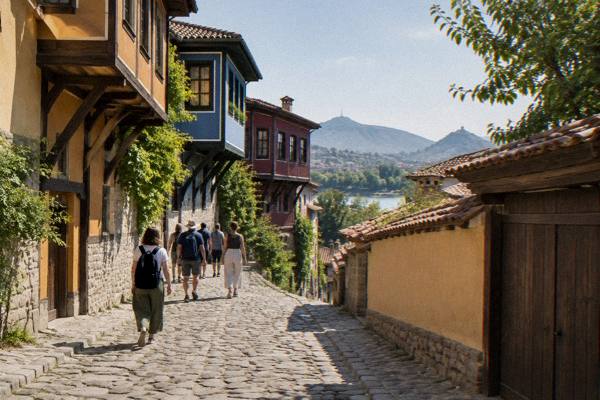
Plovdiv sits in southern Bulgaria, an inland city built around six hills, with no sea coast anywhere near it, and it answers a question travellers ask often: is it nicer than Sofia, the capital a couple of hours to the north-west? "Nicer" is a matter of what a trip needs. Plovdiv is compact, walkable and layered with visible antiquity, a Roman theatre still standing at the top of the Old Town, a maze called Kapana below it, and the Rhodope Mountains on the southern horizon. Sofia is bigger, busier and the country's transport hub. This page lays out what each city does with a visitor's time, using the city tourism site and timetable data, and closes with which city suits which kind of trip. The Plovdiv Travel Guide covers this comparison from the ground in Plovdiv itself.
Is Plovdiv A Nicer City Than Sofia?
For walkable history, a compact centre and a relaxed pace, Plovdiv is the easier city to enjoy, while Sofia works better as an arrival hub and a base for western Bulgaria. Plovdiv packs the Ancient Theatre of Philippopolis, the Old Town revival houses, Kapana and the Roman Stadium into a space you cross on foot in half an hour, so a short stay goes a long way. Neither city outranks the other; they simply do different jobs.
Plovdiv is Bulgaria's second-largest city, home to about 333,994 people at the end of 2025 according to the National Statistical Institute figures for the municipality. That scale matters. Everything a visitor comes for sits inside a contiguous core: Main Street, the pedestrian spine, runs from the Central Square up to the Old Town, and the whole route is under two kilometres end to end.
The city is often described as one of the oldest continuously inhabited cities in Europe, and the official city tourism site dates the first settlement on Nebet Tepe, the hill at the Old Town's edge, to the 4th millennium BC. It shares its 2019 European Capital of Culture title with Matera in Italy. Sofia, by contrast, is the capital, the point where international flights, intercity trains and government institutions concentrate, and a city whose own character is covered properly on the site's Sofia day-trip page and in is Sofia Bulgaria worth visiting?.
What Makes Plovdiv Feel Different From Sofia?
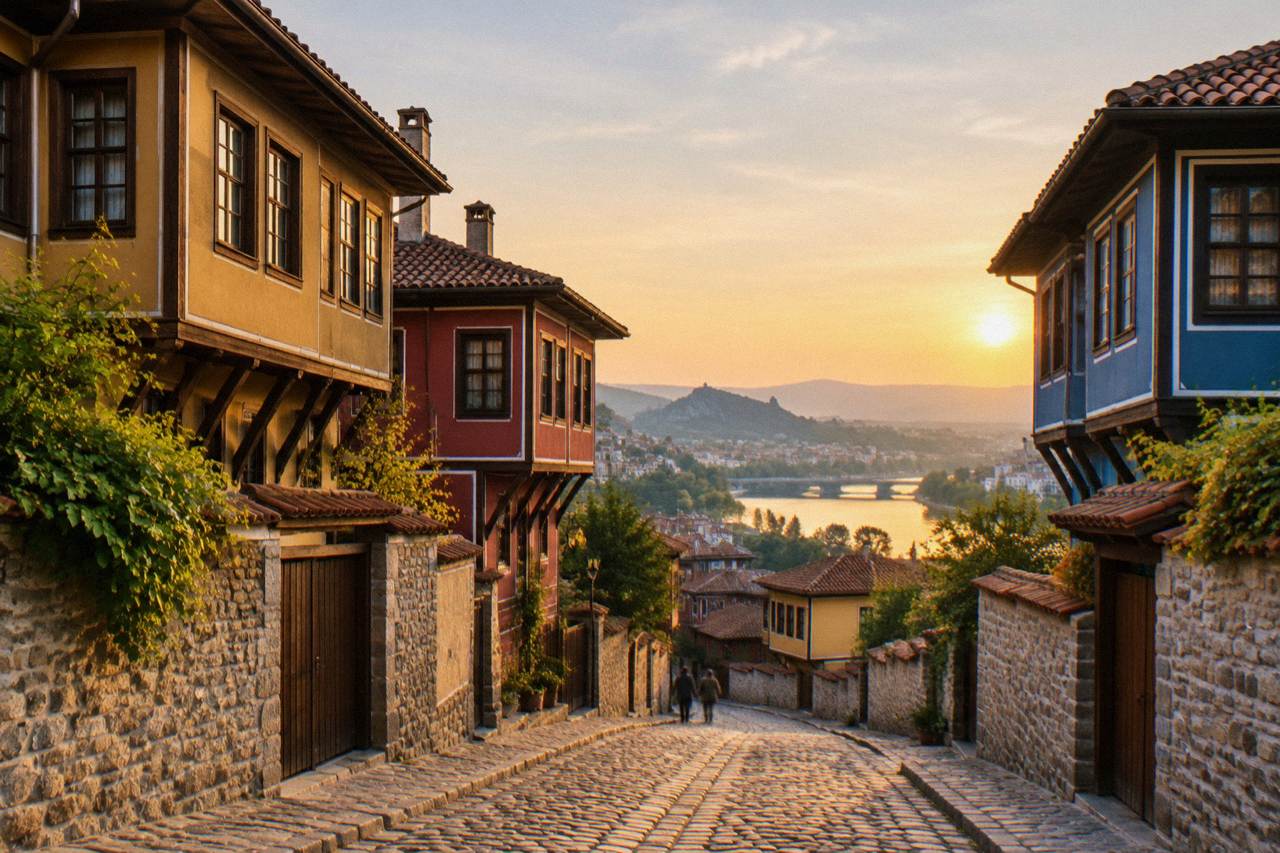
Plovdiv's ancient, Ottoman and revival-era layers all stand within a few minutes' walk of each other, on and around six hills, so the city reads like a single open-air site rather than a spread-out metropolis. The Ancient Theatre, built in the 90s of the 1st century AD with 28 concentric rows of marble seats, sits at the top of the Old Town, and Kapana spreads its narrow streets just south of it.
Six hills, not seven: there were seven until Markovo Tepe was partly quarried away in the 1930s, and the municipal tourism site is clear on that point. Nebet Tepe, Dzhambaz Tepe and Taksim Tepe form the Three Hills group under the Old Town; Bunardzhika carries the Alyosha monument, unveiled in 1957; Sahat Tepe and Youth Hill complete the set. All are free, public, open at all hours, and each gives a different view over the city towards the Rhodopes.
The entry prices keep a stay cheap. The Old Plovdiv ticket page lists any single site, the Ancient Theatre or a revival house such as Balabanov or Hindliyan, at 3.58 euro for an adult, with a combined ticket for up to five sites at 10.74 euro. The Bishop's Basilica, with over 2,000 square metres of floor mosaics, is priced separately at 7.57 euro. The Roman Stadium lies beneath Main Street, its northern sphendone visible for free, and Nebet Tepe, Kapana, Hisar Kapia cost nothing at all. There is no Plovdiv city card, so there is nothing extra to buy or optimise.
Sofia's own draw, and whether it beats this, is a question the site handles where it belongs, in is it okay to travel to Sofia Bulgaria as an American for fun?. What can be said here is structural: Sofia is a capital city, with the distances, traffic and administrative weight that implies, while Plovdiv holds its sights inside one walkable bowl.
How Do You Travel Between Plovdiv And Sofia?
Direct BDZ trains link Sofia and Plovdiv in about 2 hours 40 minutes to 3 hours 5 minutes, with several departures a day, while buses cover the same road in about 1 hour 45 to 2 hours 20 (reported), so the two cities work easily as a pair in one trip. The BDZ timetable is the place to check exact departures, because times shift with the season.
Prefer the bus between the two cities? Book a Sofia to Plovdiv bus ticket here.
The Sofia to Plovdiv guide breaks the journey down stop by stop. One caution: trains routed via Karlovo take far longer, up to around five hours, so check whether the service is direct before boarding. Plovdiv's railway junction is in the middle of a modernisation programme that was 85 percent complete in November 2025 and due to finish in 2026, which can mean access changes around the central station.
| Journey | Time | Where To Check |
|---|---|---|
| Sofia to Plovdiv, direct train | about 2 h 40 to 3 h 05 | the BDZ timetable |
| Sofia to Plovdiv, train via Karlovo | far longer, avoid for speed | the BDZ timetable |
| Sofia to Plovdiv, bus | about 1 h 45 to 2 h 20 (reported) | operator listings |
| Plovdiv Airport to centre | about 20 to 35 min by bus (reported) | the airport site |
Plovdiv Airport at Krumovo has a small route list: its own flight search shows Belfast, Birmingham, Bratislava, London, Manchester, Milan and Tel Aviv. Ryanair to Milan Malpensa and Wizz Air to Bratislava were announced from late 2025, but schedules change, so the airline is the authority. For nearly everyone else, Sofia's larger airport is the arrival point and the train south is the connection. The full index of guides sits on Plovdiv Travel Guide.
What Does A Split Trip Between Plovdiv And Sofia Look Like?
A sensible split gives Sofia the arrival and departure days, when flights and long-distance connections matter, and gives Plovdiv the middle of the trip, when walking, ruins and wine country matter. Two or three nights in Plovdiv covers the Old Town, the theatre, Kapana and one or two day trips, and a Koprivshtitsa stop on the road between the two cities turns the transfer itself into a sightseeing day.
The site's own planning advice on how many days in Plovdiv Bulgaria argues the length of stay in detail. And there is a tour that does exactly the Koprivshtitsa stop, a half-day trip from Plovdiv that visits the town of six house museums, whose combined ticket runs about 10 euro, on the way toward Sofia. The listing describes the route and what it covers, and the price and current details render on its own page.
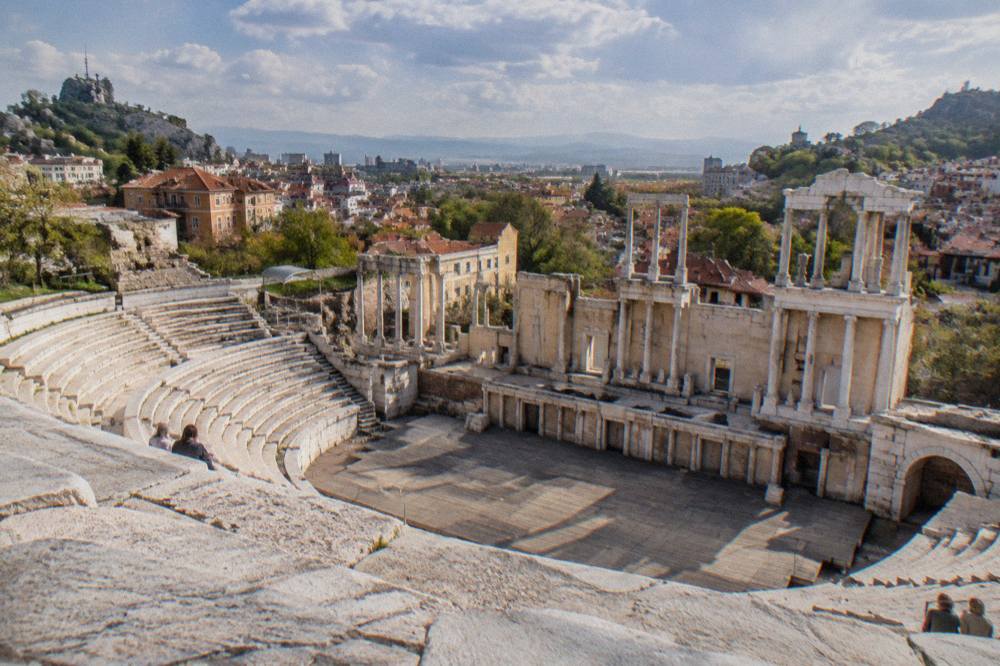
Timing the visit matters more than the city choice. The ERA5 reanalysis for Plovdiv, 1991 to 2020, puts the mean daily high at 28.2 C in July and 28.6 C in August, with January lows around -2.6 C. August is the driest month at 25.2 mm of rain and May the wettest at 56.8 mm, which shapes whether an Old Town day feels like a stroll or a sweat. Opera Open fills the Ancient Theatre with performances from late June to early September, and Kapana Fest ran across two weekends in October 2026, so autumn competes well with summer.
If the trip can stretch beyond both cities, the Sofia Plovdiv Rila itinerary strings the capital, Plovdiv and Rila Monastery into one route, and the wider Bulgaria itinerary adds the rest of the country for anyone undecided.
Which City Suits Which Trip?
Choose Plovdiv for a short, walkable stay built around Roman ruins, revival architecture, a creative quarter and easy day trips into the Rhodopes and the Thracian Valley wine country; keep Sofia for the flight in, the flight out and the museums of a capital. Plovdiv rewards slowing down, Sofia rewards connections. A traveller who does both loses nothing, because the train between them takes under three hours.
Plovdiv's day-trip range is part of the answer. Bachkovo Monastery, about 30 km away with minibuses from the Rodopi station taking 35 to 45 minutes, is free to enter. Asen's Fortress stands above Asenovgrad on the same road, though its entry fee figure is unclear and should be confirmed on site. Wine estates in the Thracian Valley sit 15 to 45 minutes out. Sofia, sitting at the foot of Mount Vitosha, points its own day trips west towards Rila and the Serbian border, a different geography for a different itinerary.
The honest verdict on "nicer" is that the word measures the trip, not the city. Two nights in Plovdiv with a fortress morning and a wine afternoon feels like a holiday; two nights in Sofia with a museum pass feels like a city break. Both are cheap by western standards, both use the euro since 1 January 2026, and both sit inside a Schengen area Bulgaria joined fully on 1 January 2025, so there are no border formalities between arriving in one and sleeping in the other.
Common Questions About Plovdiv Versus Sofia
Is Plovdiv A Nicer City Than Sofia?
For walkable history, compactness and a relaxed pace, Plovdiv is the easier city to enjoy, while Sofia works better as an arrival hub and a capital-city base. Neither city outranks the other; they do different jobs, and the direct train between them takes under three hours, so a single trip can include both.
Is Plovdiv older than Sofia?
Plovdiv is often described as one of the oldest continuously inhabited cities in Europe, and the city tourism site dates the first settlement on Nebet Tepe to the 4th millennium BC. The site does not rank it against Sofia or make any single "oldest" claim, and neither should a traveller's plans depend on one.
Is Plovdiv cheaper than Sofia?
Plovdiv is inexpensive by western standards: a single Old Plovdiv site costs 3.58 euro, the five-site combined ticket 10.74 euro, and Nebet Tepe, Kapana and the Roman Stadium sphendone are free. Crowd-reported prices put an espresso or a beer at around 2 euro. Exact comparisons with Sofia depend on the stay, so confirm at booking.
Can you visit Plovdiv and Sofia in one trip?
Yes, easily. Direct BDZ trains run between the two in about 2 h 40 to 3 h 05, several times a day, and buses take about 1 h 45 to 2 h 20 (reported). A common pattern flies into Sofia, trains south for two or three nights in Plovdiv, and returns for the departure, with a Koprivshtitsa stop possible on the way.
Does Plovdiv have an airport?
Yes, Plovdiv Airport at Krumovo, about 12 to 14 km south-east of the centre, with a small route list including Belfast, Birmingham, Bratislava, London, Manchester, Milan and Tel Aviv. Sofia's larger airport serves far more routes, and the train connection makes it the practical arrival point for many visitors.
Is Plovdiv a UNESCO World Heritage Site?
No. "The Ancient Plovdiv" sits on Bulgaria's Tentative List, submitted in 2004, which is a waiting list and not an inscription. The Old Town's protection is national, and the site itself makes no world heritage claim.