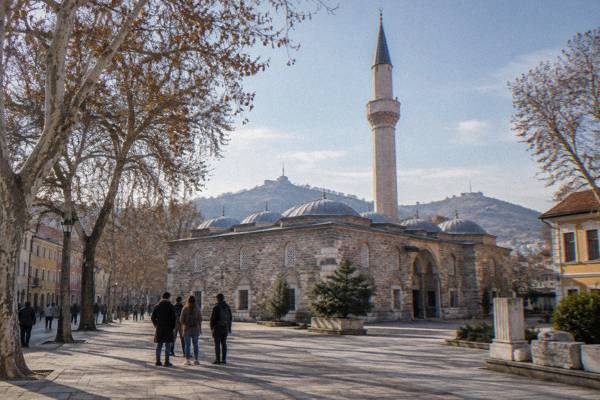
Is Sofia, Bulgaria Worth Visiting?
An honest look at whether Sofia deserves days on a Bulgaria trip: how to pair the two cities.
Bulgaria trips usually start with a choice about Sofia, because Sofia is where the flights land. Plovdiv, in southern Bulgaria, is the country's second-largest city, an inland city built around six hills with no sea coast, often described as one of the oldest continuously inhabited cities in Europe. The two cities are close enough that the question is rarely either-or. This page answers it from the Plovdiv side, using the train timetable, the official Old Plovdiv ticket list and the site's own day-trip research, and it explains how travellers in a hurry move between the two without losing a day.
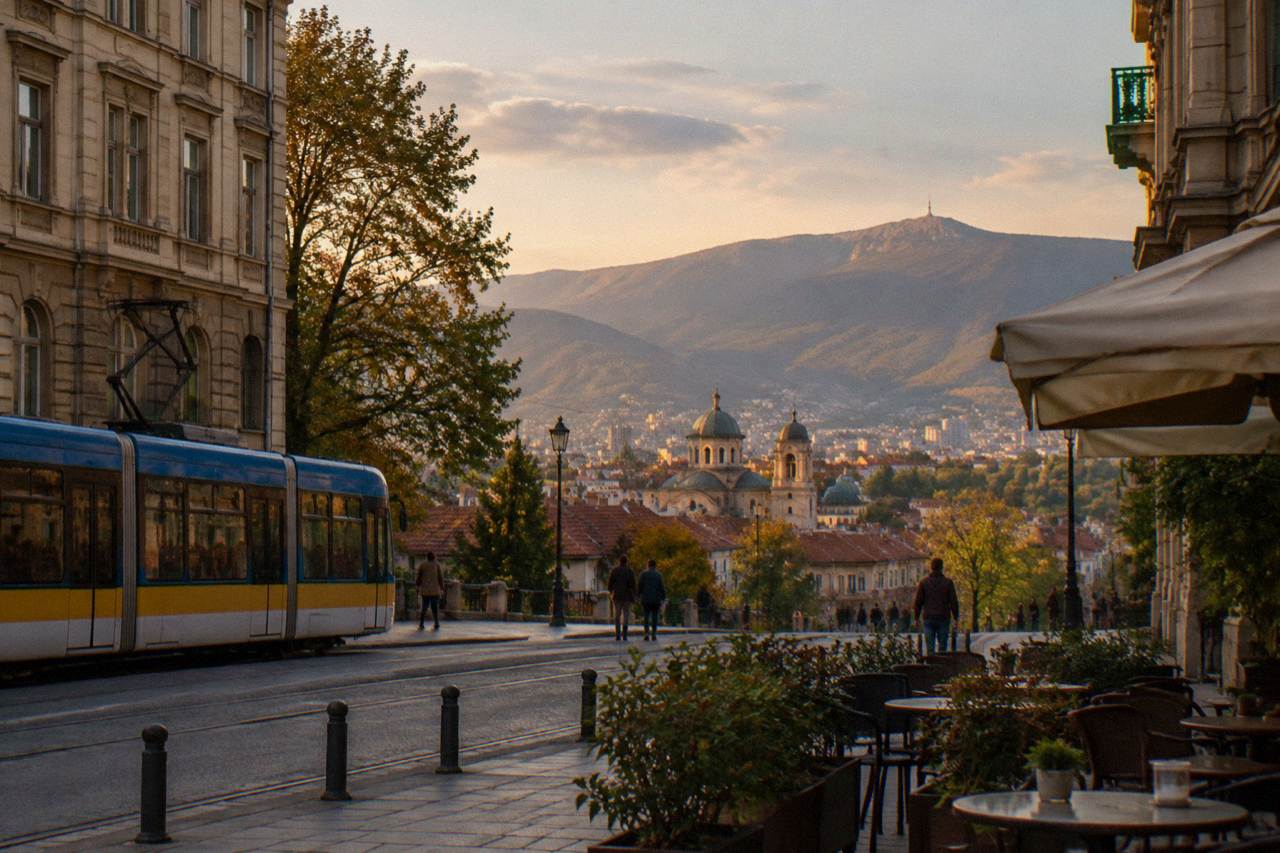
Is Sofia, Bulgaria Worth Visiting?
Whether Sofia is worth visiting depends entirely on the shape of the trip, and this site can only report the Plovdiv side honestly: Sofia is the main international gateway, the two cities are about 2 h 40 to 3 h 05 apart by direct train, and Plovdiv rewards at least a full day on its own with the Ancient Theatre, the Old Town houses and Kapana. A short Bulgaria visit can reasonably land in Sofia, spend time there, and still reach Plovdiv comfortably. A longer visit can use either city as a base, because the day-trip geography overlaps.
What this page will not do is review Sofia's attractions. This page treats Sofia as a gateway from Plovdiv, not as a city of museums, churches and restaurants. For the Sofia half of the question, the site's own Sofia guide pages collect what a Plovdiv-based traveller needs: how the cities connect and what fits between them. Readers weighing the two against each other can also compare directly in is Plovdiv a nicer city than Sofia?, which makes the case for the smaller city without pretending to grade the capital.
The honest framing is this: Sofia is the practical front door, and Plovdiv is where the itinerary earns its keep. Bulgaria was a full Schengen member from 1 January 2025 and has used the euro since 1 January 2026, so a single-entry trip moving between the two cities involves no border, no currency exchange and one visa rule throughout. That practical simplicity is itself an argument for seeing both.
How Do You Travel Between Sofia And Plovdiv?
Direct BDZ trains run between Sofia and Plovdiv in about 2 h 40 to 3 h 05, with several departures a day from Sofia Central Station, while trains routed via Karlovo take far longer, about 4 h 50 to 5 h 50, and buses cover the road in roughly 1 h 45 to 2 h 20 from Sofia's Central Bus Station to Plovdiv's Yug station. The rail and bus hubs sit side by side on Hristo Botev Boulevard in Plovdiv, so arriving by either mode puts you within walking or short-taxi range of the centre. The full guide to the route is at Sofia to Plovdiv.
The timetable matters more than the averages. Fast direct departures leave Sofia through the day, and the journey time difference between a direct train and one via Karlovo is close to two hours, so checking the BDZ timetable before committing to a departure saves real time. On the road side, several operators run the Sofia corridor, arriving at Plovdiv Yug.
| Route | Mode | Typical time | Where it arrives | Note |
|---|---|---|---|---|
| Sofia to Plovdiv (direct) | BDZ train | about 2 h 40 to 3 h 05 | Plovdiv Central Station | several daily departures |
| Sofia to Plovdiv (via Karlovo) | BDZ train | about 4 h 50 to 5 h 50 | Plovdiv Central Station | much slower routing |
| Sofia to Plovdiv | intercity bus | about 1 h 45 to 2 h 20 | Plovdiv Yug bus station | departs Sofia Central Bus Station |
| Sofia Airport onward | bus via central station | connection required | Plovdiv stations | often routed via the city centre |
One caveat from the infrastructure file: the Plovdiv railway junction modernisation was reported 85 percent complete in November 2025 with completion due in 2026, so station access can change while works finish.
What Does Plovdiv Give You Once You Arrive?
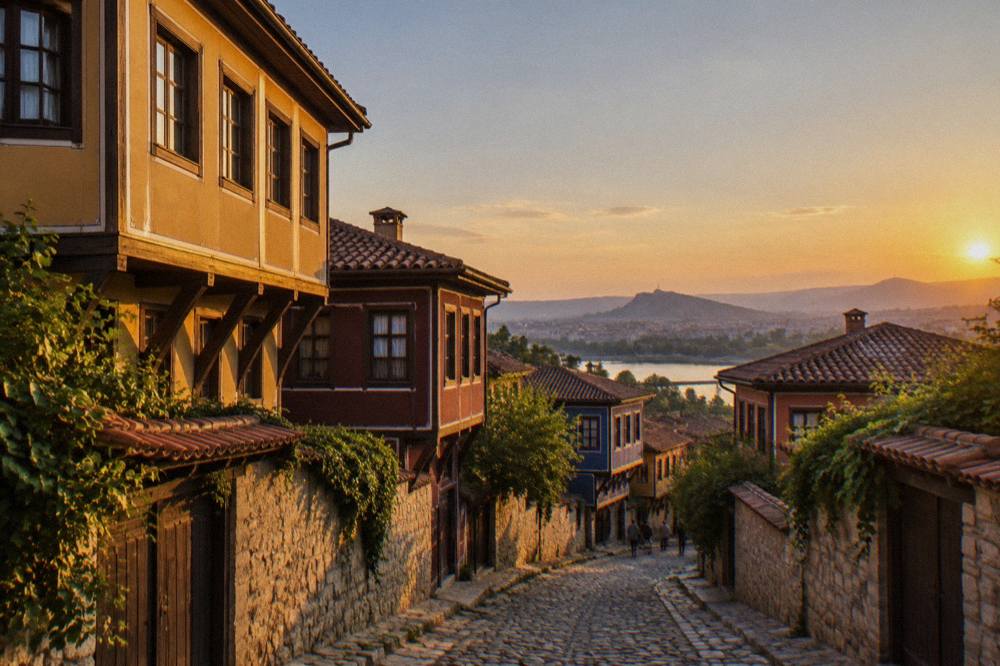
Plovdiv's core is walkable and cheap by western European standards: the Ancient Theatre of Philippopolis costs 3.58 euro on the Old Plovdiv ticket list, the Bishop's Basilica with its mosaics is 7.57 euro, a combined ticket covering up to five Old Plovdiv sites is 10.74 euro, and Nebet Tepe, Kapana and Hisar Kapia cost nothing at all. The Roman Stadium's open-air sphendone is likewise free to view. That density of paid and free sights inside a compact centre is the practical answer to anyone wondering whether Plovdiv justifies the transfer from Sofia.
The ticket structure rewards a little planning. The Old Plovdiv combined ticket excludes the two basilicas, and the Bishop's Basilica is priced separately from the one-site ticket, so a visitor who wants theatre plus basilica buys two tickets rather than one. The Ancient Theatre keeps daily hours, 9:30 to 18:00 from April to October and 9:00 to 17:30 from November to March, with a lunch break at 12:30. The Ethnographic Museum is closed on Monday, as is the Regional Archaeological Museum.
| Sight | Entry (euro) | Hours note |
|---|---|---|
| Ancient Theatre of Philippopolis | 3.58 adult, one-site ticket | daily, lunch break 12:30 to 13:00 |
| Bishop's Basilica | 7.57 adult | daily 9:00 to 18:00 |
| Old Plovdiv combined ticket, up to 5 sites | 10.74 adult | excludes both basilicas |
| Regional Ethnographic Museum | about 3.07 | closed Monday |
| Nebet Tepe, Kapana, Hisar Kapia, Roman Stadium sphendone | free | open public access |
For a fuller argument on the city itself, is Plovdiv, Bulgaria worth visiting? covers the case in depth, and how many days in Plovdiv, Bulgaria? breaks the stop into realistic day counts. The short version: one packed day covers the core, two lets the Old Town breathe.
Which City Works Better As A Base For Day Trips?
From Plovdiv, Bachkovo Monastery sits about 30 km away with minibuses from the Rodopi station taking 35 to 45 minutes and entry free, Asen's Fortress is a short further run near Asenovgrad, Koprivshtitsa's six house museums cost about 10 euro combined, and the Rhodopes start at the city's southern edge, a spread of day trips this site has researched in detail. Plovdiv's day-trip range is the strongest reason to base there rather than only passing through on the way from Sofia.
No claim about Sofia's own excursion options belongs here. What the research does support is the overlap: Koprivshtitsa sits between the two cities, and trips to it run from both directions. That makes a one-way itinerary practical. A traveller moving Sofia to Plovdiv, or the reverse, can break the journey in the town rather than paying for a round trip from either base. The full index of guides sits on Plovdiv Travel Guide.
That is exactly the shape of this site's featured tour for the route, a half-day trip from Plovdiv toward Sofia that stops in Koprivshtitsa, covered on its own page at Koprivshtitsa half-day from Plovdiv. Anyone planning that one-way move can Check availability while drafting the itinerary. For a multi-stop plan that strings the capital, Plovdiv and Rila Monastery together, the site's Sofia Plovdiv Rila itinerary does the sequencing.
What About Weather, Money And Practical Questions On A Two-City Trip?
Bulgaria has used the euro since 1 January 2026 at a fixed rate of 1.95583 lev per euro, it has been a full Schengen member since 1 January 2025, and Plovdiv's climate is continental, with ERA5 reanalysis for 1991 to 2020 showing a mean daily high of 28.2 C in July and 5.9 C in January, so both cities sit in the same money and border system and roughly the same weather pattern. There is nothing administrative separating Sofia from Plovdiv on a single trip: no exchange, no roaming decision that matters, one emergency number, 112.
Budgeting is straightforward. A tourist tax may be charged by accommodation, but the 2026 euro rate is not published in a form this site can quote, so confirm it at booking.
Timing the visit matters less between the two cities than within the season. Spring and early autumn balance the two. The site's season breakdowns live at best time to visit Plovdiv.
Should You Split Your Days Between Sofia And Plovdiv?
A sensible split gives Plovdiv at least one full day and ideally two, uses Sofia as the arrival and departure hub the flights dictate, and moves between them once on a direct train of about 2 h 40 to 3 h 05 rather than bouncing back and forth, because every repeated transfer costs half a day of sightseeing. The one-way Koprivshtitsa stop is the classic way to make the transfer itself productive. Travellers with a week can add the Rhodopes or Rila and let the itinerary pages sequence it.
The "is it worth it" verdict, a strong case for Plovdiv and a practical case for Sofia as a gateway. Readers who want the fuller comparison, including the safety angle for American visitors, can follow is it safe for Americans to travel to Bulgaria right now? and how safe is Plovdiv?. The two cities are a single direct train ride apart; a trip that lands in Sofia and never reaches Plovdiv misses the part of Bulgaria this site can document line by line.
Common Questions About Sofia And Plovdiv
Is Sofia, Bulgaria worth visiting?
That depends on trip shape. Sofia is the main international gateway, and the practical case for it as an arrival hub is strong. For Sofia's attractions, read the capital's own coverage elsewhere and weigh it against the Plovdiv case on these pages.
How long is the train from Sofia to Plovdiv?
Direct BDZ trains take about 2 h 40 to 3 h 05. Trains routed via Karlovo take about 4 h 50 to 5 h 50, so check the timetable and pick a direct departure.
Can you do Plovdiv as a day trip from Sofia?
Yes, and guided options exist each direction; the tour listings on this site include day trips from Sofia that cover Plovdiv's must-see sights. Independent travellers can do the same on a direct train and the Old Plovdiv ticket list.
Is Plovdiv cheaper than Sofia?
No comparable Sofia figures were collected, so no comparison is printed.
What is the best month to visit Plovdiv?
Late spring and early autumn balance warmth and rain; the full breakdown is on the best time to visit guide.