Bulgaria Itinerary: Sofia, Plovdiv And Rila In One Week
A seven-day Bulgaria itinerary that starts in Sofia, spends its middle days in Plovdiv and closes the loop through Rila Monastery, with the train times, ticket prices and day trips that official sources publish.
Short answer
Spend two nights in Sofia, three in Plovdiv and use the last two days for Rila Monastery and the return. Direct Sofia to Plovdiv trains take about 2 h 40 to 3 h 05, Plovdiv's Old Town sites cost 3.58 euro each on the municipal ticket list, and Rila Monastery pairs with Plovdiv on a single organized day trip from Sofia.
A one-week Bulgaria itinerary works best as a triangle: Sofia at the start, Plovdiv in southern Bulgaria for the middle stretch, and Rila Monastery on the way back west. Plovdiv, the country's second-largest city, is inland and built around six hills, and it carries the Roman layers that a first trip to Bulgaria usually comes for, the Ancient Theatre of Philippopolis, the Roman Stadium and the Old Town houses. This page lays the week out day by day, using the ticket prices the Old Plovdiv institute publishes, the train times the BDZ timetable shows, and the climate figures from the ERA5 reanalysis for Plovdiv, 1991-2020.
How Many Days Does A Bulgaria Itinerary Need?
Seven days is the comfortable minimum for a Bulgaria itinerary that covers Sofia, Plovdiv and Rila Monastery without rushing: two days in Sofia, three based in Plovdiv, one day for Rila Monastery and one travel or buffer day. In five days the same triangle is possible but tight, since the Sofia to Plovdiv leg alone takes about 2 h 40 to 3 h 05 by direct train. Ten days would add the Rhodopes or Koprivshtitsa.
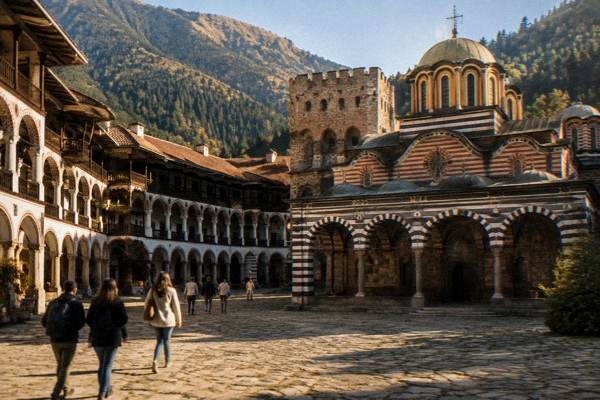
The logic of the triangle is simple. Sofia has the largest airport and the country's main rail hub, so nearly every international arrival lands there. Plovdiv sits about 150 km to the south-east and holds the densest cluster of Roman and revival-era sights. Rila Monastery lies west of Sofia in the Rila Mountains, so it slots in either at the start or the end, or as a combined day trip from Sofia that also takes in Plovdiv.
For readers with more time in the city itself, the site's fuller Plovdiv itinerary page breaks the city down street by street, and the Sofia, Plovdiv and Rila itinerary expands this same triangle into a longer plan.
| Day | Base | What the day covers |
|---|---|---|
| 1 | Sofia | Arrival, city centre, the larger airport hub |
| 2 | Sofia | Sofia sights, or a first day trip |
| 3 | Plovdiv | Train or bus to Plovdiv, Old Town afternoon |
| 4 | Plovdiv | Roman sites, Kapana, the Three Hills |
| 5 | Plovdiv | Day trip: Bachkovo, Asen's Fortress or the Rhodopes |
| 6 | Sofia | Return west, with Rila Monastery on the route |
| 7 | Sofia | Rila Monastery day trip or departure |
What Should Days 1 And 2 In Sofia Cover?
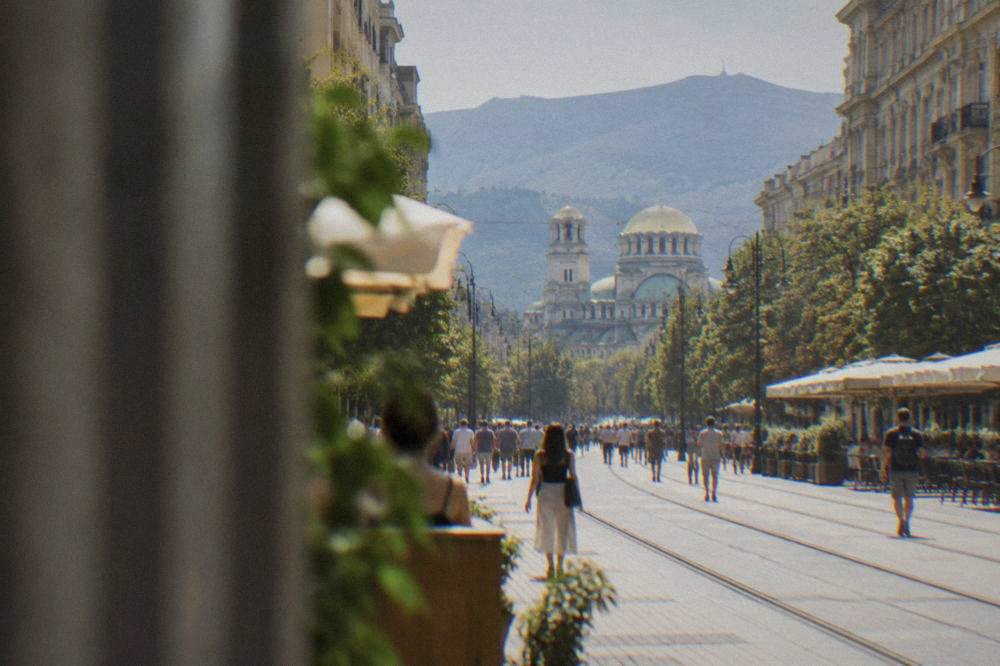
Two days in Sofia cover the city centre's landmarks, one museum-heavy morning, and either Vitosha Boulevard or a half-day excursion, because the capital rewards walking rather than driving. Sofia is the main international gateway for this itinerary, and every onward leg to Plovdiv leaves from its central station or bus station, which sit next to each other, so the arrival days set up the whole week.
Sofia's role in this itinerary is twofold: it absorbs the jet lag and it launches the triangle. The city centre is compact, and the landmarks cluster around a single square, so a first day on foot is realistic even after a late arrival. A second day can go deeper into the museums or head out of town, and the Sofia day trips page lists the excursions that work from the capital.
The question of whether Sofia or Plovdiv deserves more of the week is genuinely contested among travellers, and the site's comparison page on whether Plovdiv is a nicer city than Sofia lays out the trade-offs: Sofia for scale and connections, Plovdiv for the Old Town and the Roman sites. For a first visit, the answer below assumes two days in each direction around Plovdiv.
If Sofia itself is the draw, the site's page on whether Sofia Bulgaria is worth visiting and the practical answer on travelling to Sofia as an American for fun cover the arrival questions that a one-week plan does not have space for.
For travellers who would rather compress the triangle, one organized option covers both Plovdiv and Rila Monastery in a single day from Sofia. The Plovdiv and Rila Monastery tour in one day pairs the two headline destinations of this itinerary, and the booking page shows the current price and availability: Check availability.
How Do You Travel From Sofia To Plovdiv On Day 3?
The Sofia to Plovdiv leg takes about 2 h 40 to 3 h 05 by direct BDZ train, or about 1 h 45 to 2 h 20 by bus, with trains running from Sofia Central Station several times a day and buses leaving from the adjacent central bus station. The BDZ timetable shows direct departures through the day, while trains routed via Karlovo take far longer, so the direct services are the ones to book.
To compare the two for your travel dates, book a bus or train ticket here.
The train is the leg this itinerary recommends by default. The direct services are the ones to aim for: the BDZ timetable for the route lists direct trains taking roughly two hours forty to three hours five, while the via-Karlovo routings stretch to nearly five hours and are not worth the saving. The fare is not printed on the timetable page, so confirm it at booking.
The bus is the faster paper option and runs roughly one hour forty-five to two hours twenty, arriving at Plovdiv's Yug (South) bus station, which stands next to the central railway station on Hristo Botev Boulevard. Either way, the arrival point is a fifteen-minute walk or one short bus ride from the Old Town, and the site's Sofia to Plovdiv guide has the full detail on every departure.
| Leg | Time | Notes |
|---|---|---|
| Direct BDZ train, Sofia to Plovdiv | about 2 h 40 to 3 h 05 | Several direct departures daily per the BDZ timetable |
| Train via Karlovo | about 4 h 50 to 5 h 50 | Much slower; avoid on a tight itinerary |
| Bus, Sofia to Plovdiv | about 1 h 45 to 2 h 20 | Arrives at Yug station, next to the railway station |
| Plovdiv Airport to centre | about 20 to 35 min by bus | Small route list; taxi about 13 to 20 euro, reported |
One works note for the arrival: Plovdiv's railway junction has been under modernisation, reported 85 percent complete in November 2025 with completion due in 2026, so expect possible access changes around the central station while the works finish.
For travellers flying into the country through the smaller airport instead, the Plovdiv Airport guide covers the route list, which the airport's own flight search shows as Belfast, Birmingham, Bratislava, London, Manchester, Milan and Tel Aviv.
What Should Day 4 In Plovdiv Cover?
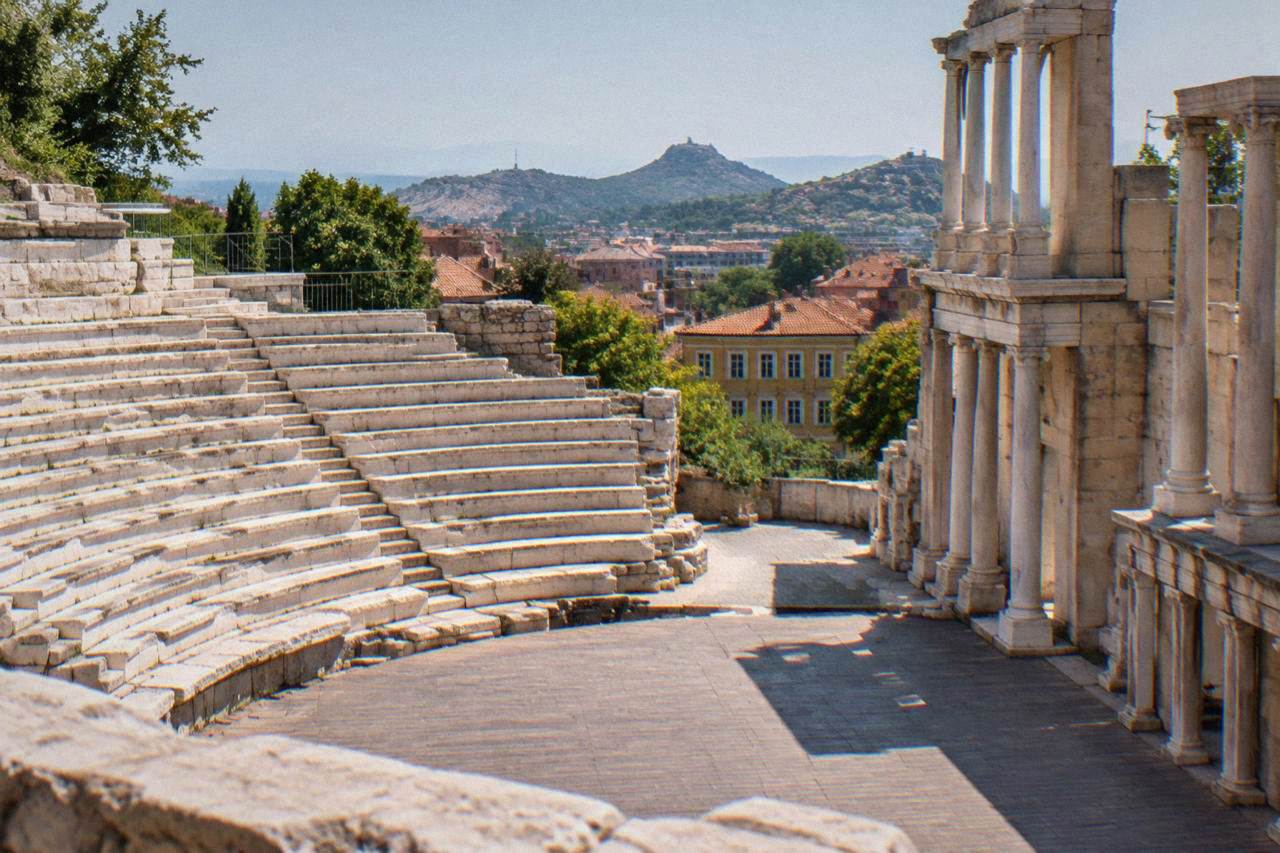
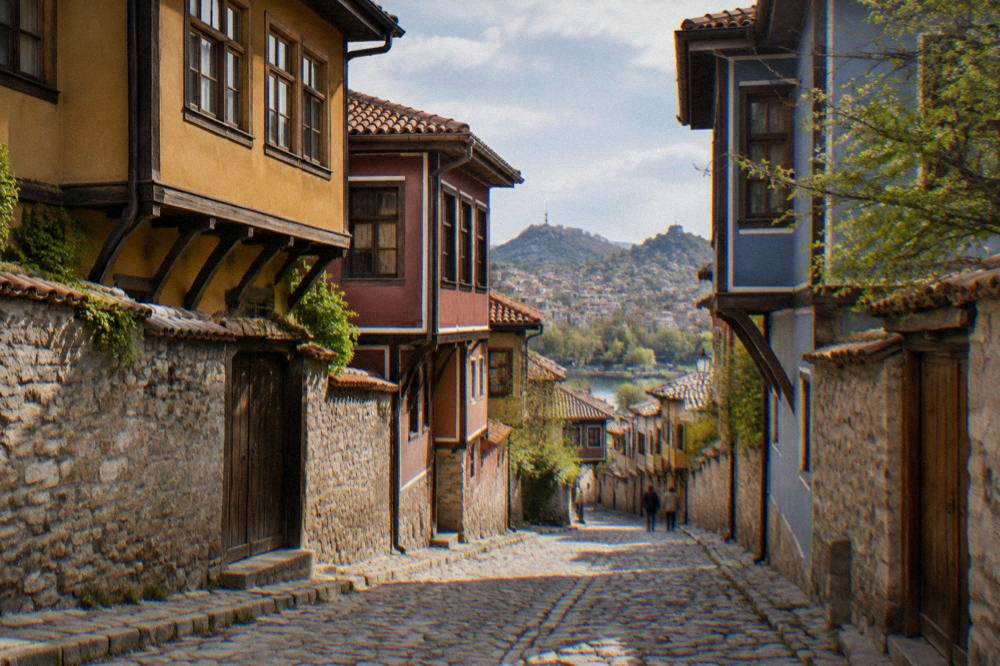
Day 4 in Plovdiv should cover the Ancient Theatre, the Roman Stadium sphendone, Nebet Tepe and the Old Town houses, because all of them sit within a fifteen-minute walk of each other and the municipal Old Plovdiv ticket prices them at 3.58 euro per site or 10.74 euro for a combined ticket covering up to five sites. The Ancient Theatre is open daily, 9:30 to 18:00 from April to October.
The Old Town is the reason Plovdiv anchors this itinerary. The Ancient Theatre of Philippopolis, built in the 90s of the 1st century AD and described by the city's tourism site as having 28 concentric rows of marble seats, is the single most striking ruin. The Ancient Theatre page covers its hours and ticket in detail. The Roman Stadium, built in the 2nd century AD on the model of the Stadium at Delphi and described as holding up to 30,000 spectators, is only partly excavated: the northern sphendone is free to view, and the Roman Stadium page explains what is and is not accessible.
Nebet Tepe, the hill where the city's tourism site dates the first settlement to the 4th millennium BC, is free and open at all hours after a restoration project that officially opened in March 2025. The three hills together form the Trimontium core, and the Three Hills area page maps them.
| Old Plovdiv ticket | Adult price | Notes |
|---|---|---|
| Any one site (except Bishop's Basilica) | 3.58 euro | Theatre, Small Basilica, Old Town houses |
| Combined, up to 5 sites | 10.74 euro | Excludes Small Basilica and Bishop's Basilica |
| Bishop's (Great) Basilica | 7.57 euro | Priced separately; daily 9:00 to 18:00 |
| Roman Stadium sphendone | free | Open-air northern curve |
| Nebet Tepe, Kapana, Hisar Kapia | free | Public spaces, open at all hours |
Children under 7 enter free, and the first Thursday of the month is free for students and seniors at the Old Plovdiv sites, per the listing.
After the ruins, the afternoon belongs to Kapana, the creative district whose name means "The Trap", a maze of narrow streets that is free and open at all hours. A guided walk compresses the whole Old Town into a single outing: the Plovdiv walking tour covers the city's headline layers, and its listing carries the current price.
For a slower pace, the site's Plovdiv in two days and Plovdiv in three days pages stretch the same material across more time, and the self-guided Plovdiv walk works for readers who prefer no guide at all.
Which Day Trips Work From Plovdiv On Day 5?
Day 5 belongs to a day trip, and three options stand out: Bachkovo Monastery, about 30 km away with free entry and minibuses from the Rodopi station taking 35 to 45 minutes, Asen's Fortress near Asenovgrad with a small but unconfirmed entry fee, and the Rhodope villages further south. Koprivshtitsa, with its six house museums combined at about 10 euro, also works as a full-day excursion.
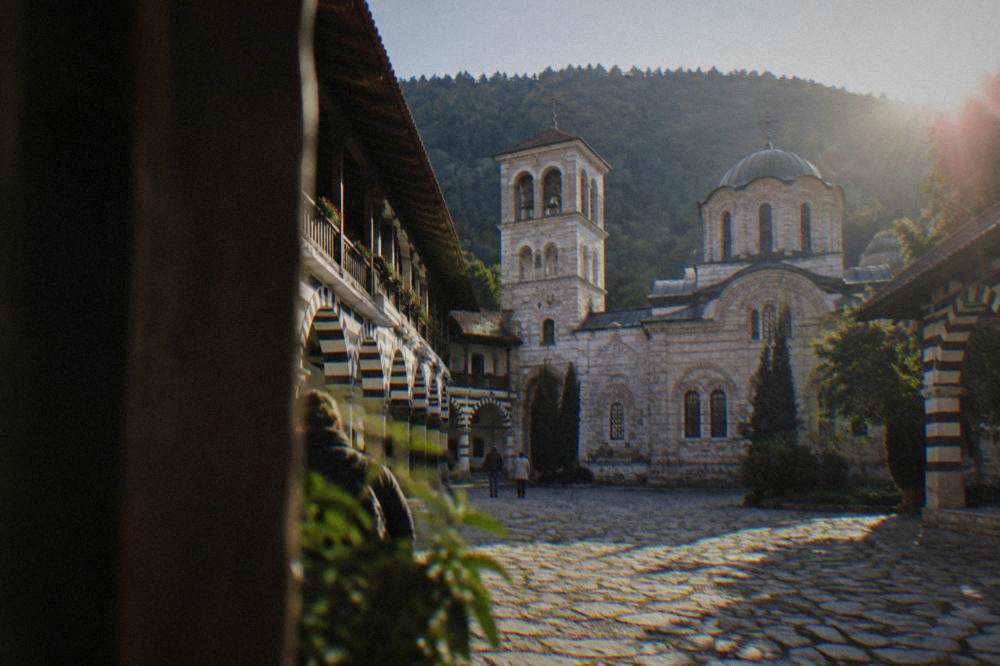
Bachkovo Monastery is the easiest of these. It is a working monastery with free entry, reached by minibus from Plovdiv's Rodopi bus station, and it pairs naturally with Asen's Fortress above Asenovgrad on the same road. The fortress charges a small fee, but the figure is unclear, so confirm on site rather than trusting a printed number.
The Rhodopes need a full day and reward the effort. The site's Plovdiv and the Rhodopes page covers the southern routes toward Smolyan and the gorges, and an organized small-group trip handles the driving on roads where public transport thins out.
| Day trip from Plovdiv | Distance or time | Entry | Notes |
|---|---|---|---|
| Bachkovo Monastery | about 30 km; minibus 35 to 45 min | free | Working monastery, reported |
| Asen's Fortress, Asenovgrad | on the Bachkovo road | small fee, figure unclear | Confirm on site |
| Koprivshtitsa house museums | full-day excursion | about 10 euro combined, reported | Six houses |
| Rhodope villages and gorges | full-day drive | varies | Car or organized tour |
Organized trips remove the transport guesswork. The monastery-and-fortress combination is a popular half-day from Plovdiv, and the listing below carries the current price and availability for that route.
How Does Rila Monastery Fit Into Days 6 And 7?
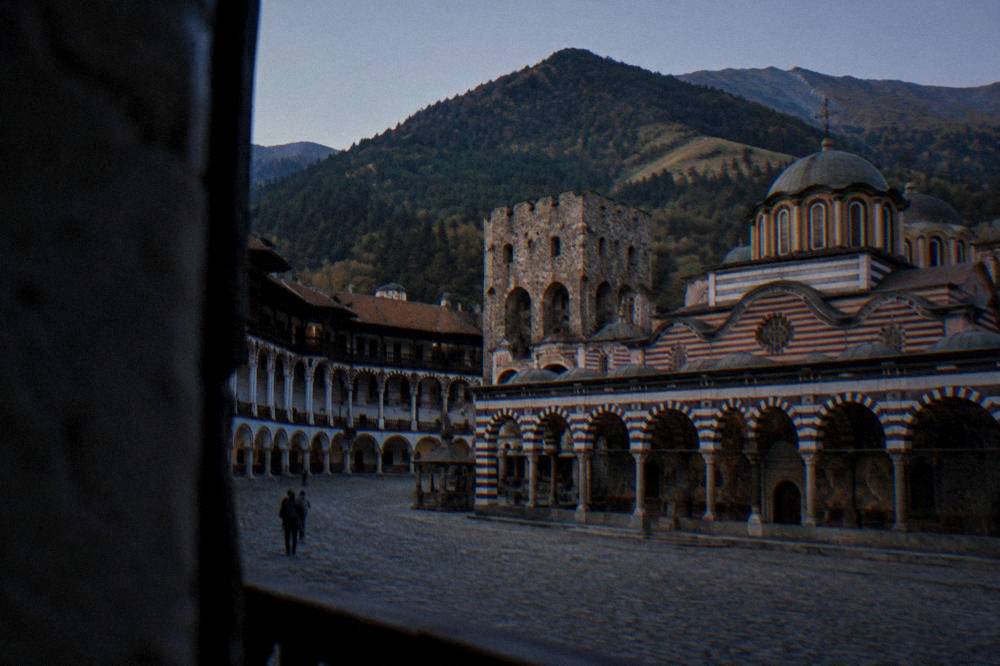
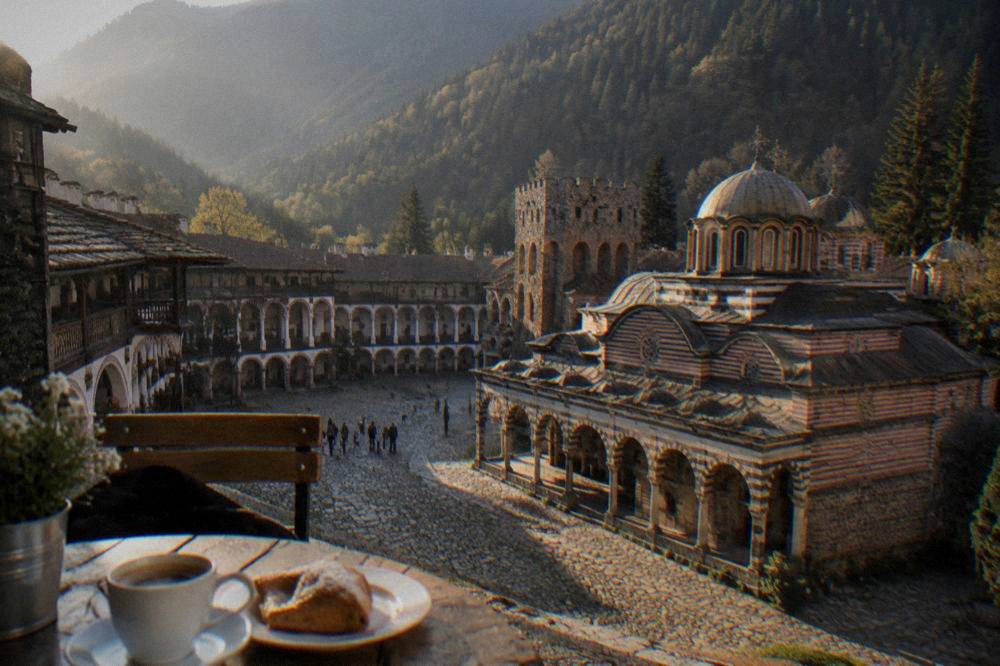
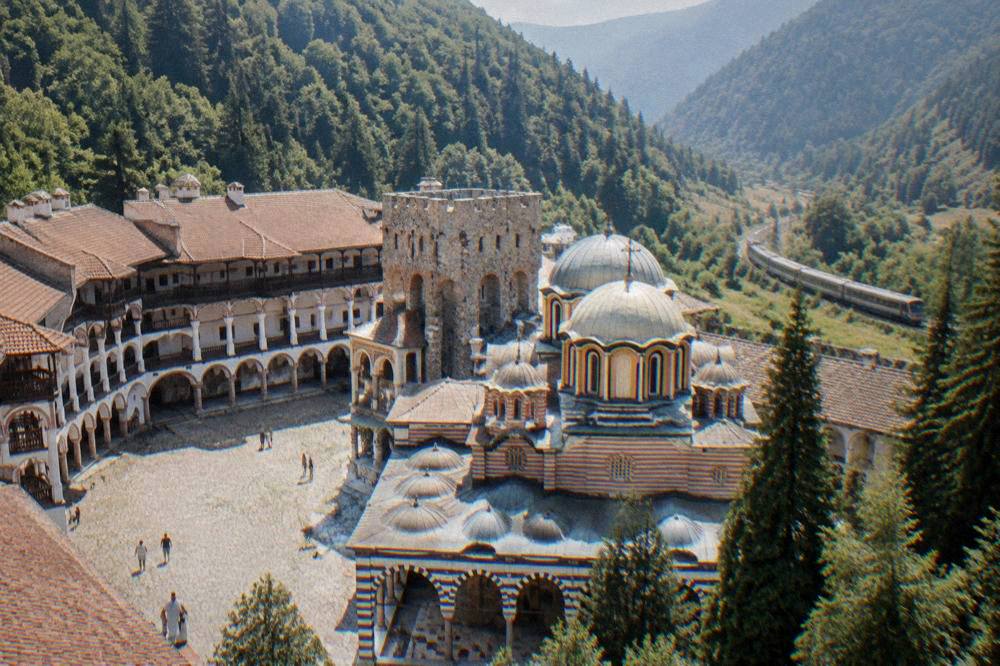
Rila Monastery fits the itinerary on day 6 or 7 as either a dedicated day trip from Sofia or a stop on the drive back west, because it sits in the Rila Mountains about two hours from the capital and pairs naturally with the return leg of this triangle. The Rila Monastery day trips page covers the routes, and organized tours run there year-round from Sofia.
The sequencing choice is real. Travellers returning to Sofia by train on day 6 cannot reach the monastery by rail, since it lies well off the main line, so the practical options are a day trip from Sofia on day 7, a rental car for the return leg, or an organized combined tour that does both Plovdiv and Rila in one day. The Plovdiv car rental guide covers self-driving, which suits the monastery and the mountain roads better than the rail network does.
For readers who want both headline sights without a rental car, the combined day trip from Sofia is the efficient answer, and it is the tour this itinerary recommends for the final days of the week. Its listing carries the current price, rating and availability.
Day 7 then closes the week in Sofia with a departure from the larger airport, or, if the flight leaves from Plovdiv instead, the small Krumovo airport's route list should be checked against the traveller's home city before the itinerary is booked, since the list is short and seasonal.
When Is The Best Month For This Bulgaria Itinerary?
The best months for this Bulgaria itinerary are May, June and September, because the ERA5 reanalysis for Plovdiv, 1991-2020, shows mean daily highs of 21.9 C in May, 25.9 C in June and 23.8 C in September, with rainfall spread evenly, while July and August run 28.2 and 28.6 C and January sits at 5.9 C. The summer months also bring the Opera Open season to the Ancient Theatre.
The climate figures matter for this itinerary more than for most, because day 5 and day 6 both involve time outdoors, on hills and in mountain courtyards. The reanalysis numbers are modelled grid-cell values, so they smooth out the urban heat of the city centre, but they give a fair picture of the seasons.
| Month | Mean daily high | Mean daily low | Rain |
|---|---|---|---|
| January | 5.9 C | -2.6 C | 41.0 mm |
| April | 17.1 C | 6.4 C | 47.7 mm |
| May | 21.9 C | 11.5 C | 56.8 mm |
| July | 28.2 C | 17.9 C | 45.6 mm |
| August | 28.6 C | 18.1 C | 25.2 mm |
| September | 23.8 C | 13.8 C | 42.8 mm |
May carries the highest monthly rain total in the table at 56.8 mm, and August the lowest at 25.2 mm, so late summer is the driest window, though the midday heat on the unshaded Roman sites is the trade-off. Winter travel works too, and the site's pages on Plovdiv in winter cover the rainy-day alternatives; the Christmas season in Plovdiv ran 28 November 2025 to 4 January 2026 in its latest edition, and the 2026/27 edition is billed for 1 December 2026 to 7 January 2027.
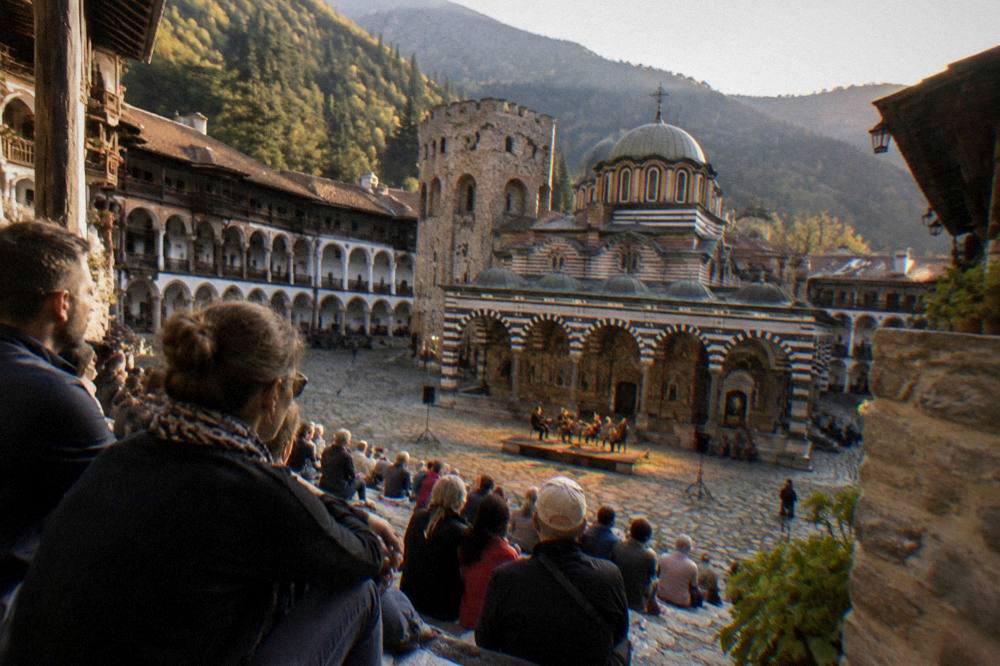
The event calendar can anchor the dates. Opera Open at the Ancient Theatre ran 23 June to 9 September 2026, the autumn Kapana Fest ran its two October weekends, and the Plovdiv Jazz Fest fall edition runs 6 to 8 November 2026. Dates for the following year's editions had not been announced, so check the municipal listings before locking flights.
What Should A One-Week Bulgaria Itinerary Budget Look Like?
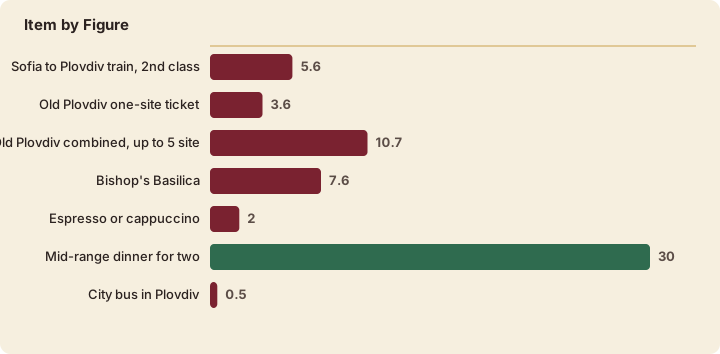
A one-week Bulgaria itinerary budgets mainly for accommodation, intercity transport, sightseeing tickets and food, and the costs are modest: Old Plovdiv sites cost 3.58 euro each or 10.74 euro combined, an espresso runs about 2 euro and a mid-range dinner for two runs roughly 30 to 40 euro. Hotel rates vary by season and are best checked at booking.
The euro changeover simplifies the money question. Some official lists, including the Old Plovdiv ticket page, still print both currencies, and the euro column is the one to read.
| Item | Figure | Where it comes from |
|---|---|---|
| Old Plovdiv one-site ticket | 3.58 euro | The official ticket page |
| Old Plovdiv combined, up to 5 sites | 10.74 euro | The official ticket page |
| Bishop's Basilica | 7.57 euro | The official ticket page |
| Espresso or cappuccino | about 2 euro | Crowd data |
| Mid-range dinner for two | about 30 to 40 euro | Crowd data |
| City bus in Plovdiv | 0.50 euro e-ticket | Municipal e-ticketing |
Two practical notes finish the money picture. A tourist tax may be charged by accommodation, but its 2026 euro rate is not published as a single confirmed figure, so confirm at booking. And the Entry/Exit System, the biometric border registration that replaces passport stamps, has been fully deployed at Schengen external borders since 10 April 2026, which affects non-EU arrivals at Sofia Airport but adds no cost.
Can You Do This Bulgaria Itinerary Without A Car?
Yes, this Bulgaria itinerary works without a car, because the Sofia to Plovdiv leg is a direct train of about 2 h 40 to 3 h 05, the Plovdiv city sites are all walkable, and the two car-dependent pieces, Rila Monastery and the Rhodope day trips, are both covered by organized small-group tours from Sofia and Plovdiv respectively. Only travellers adding remote villages or the fortress roads benefit from renting.
The car-free version of the week runs cleanly. Days 1 and 2 in Sofia need no vehicle, day 3 is the train, day 4 is entirely on foot in Plovdiv, and day 5 swaps a rental for either the Rodopi-station minibus to Bachkovo or an organized day trip. Days 6 and 7 are the only genuinely car-shaped part, and the combined Plovdiv-and-Rila day trip from Sofia exists precisely to close that gap.
The trade-off is flexibility. A rental car opens the Starosel Thracian complex, the back roads of the Rhodopes and the smaller villages at whatever pace the week allows, and the Bulgaria road trip page covers that version of the country. But the triangle of Sofia, Plovdiv and Rila Monastery was built around the rail line, and the organized tours fill the two gaps the rails leave.
For a shorter taste of the city without the full week, the one-day Plovdiv plan compresses the Old Town, the Roman sites and Kapana into a single visit, and the main things to do in Plovdiv page lists the full range of options across the city.
Common Questions About A One-Week Bulgaria Itinerary
How many days do you need for a Bulgaria itinerary?
Seven days covers Sofia, Plovdiv and Rila Monastery at a comfortable pace: two days in Sofia, three based in Plovdiv and two for the Rila leg and departure. Five days can compress the same triangle, but the Sofia to Plovdiv transfer alone takes about 2 h 40 to 3 h 05 by direct train.
Is Plovdiv worth including in a Bulgaria itinerary?
Yes. Plovdiv is Bulgaria's second-largest city, often described as one of the oldest continuously inhabited cities in Europe, and it holds the Ancient Theatre, the Roman Stadium, Nebet Tepe and the Old Town revival houses, most of them within a short walk of each other and priced at 3.58 euro per site on the municipal ticket list.
How do you get from Sofia to Plovdiv?
Direct BDZ trains take about 2 h 40 to 3 h 05 and run several times a day from Sofia Central Station, per the BDZ timetable. Buses take about 1 h 45 to 2 h 20 and arrive at Plovdiv's Yug station next to the railway station. The site's Sofia to Plovdiv guide carries the detail.
Can you visit Rila Monastery and Plovdiv in one day?
Yes, as an organized day trip from Sofia. The combined tour covers both headline destinations in a single outing, and the booking page shows the current price, rating and availability. Independent travellers need a rental car for the monastery, since it lies off the rail network.
What is the best month for a Bulgaria itinerary?
May, June and September, going by the ERA5 reanalysis for Plovdiv, 1991-2020: mean daily highs of 21.9 C, 25.9 C and 23.8 C respectively, against 28.2 C in July and 5.9 C in January. Summer adds the Opera Open season at the Ancient Theatre, which ran 23 June to 9 September in 2026.
Does Bulgaria use the euro?
Yes, Bulgaria adopted the euro on 1 January 2026 (fixed rate 1.95583 lev per euro). Bulgaria has been a full Schengen member since 1 January 2025, so there are no internal border checks on any leg of this itinerary.
The week holds together because the rail line does the heavy lifting and the two car-shaped gaps, Rila Monastery and the Rhodope day trips, are both served by organized small-group tours whose listings carry the live prices. More detail on every piece of the triangle sits in the Sofia, Plovdiv and Rila itinerary, and Plovdiv Travel Guide covers the city's sights, food and transport in full.