How Many Days In Plovdiv, Bulgaria?
How many days do you need for Plovdiv, Bulgaria? A day-by-day breakdown of one, two and three day visits, with day trips to Bachkovo, Asen's Fortress and the Rhodopes.
Plovdiv, in southern Bulgaria, is an inland city built around six hills, and the honest answer to how long it needs is two days for the core sights and three if you want a day trip into the Rhodope Mountains. The municipal tourism site presents the Old Town, the Roman sites and the Kapana creative district as a walkable centre, and the Old Plovdiv ticket page prices its sites individually, which shapes how fast you can move through them. Bulgaria's second-largest city was European Capital of Culture in 2019, shared with Matera, and the layers from that year are still visible in the renewed museum spaces.
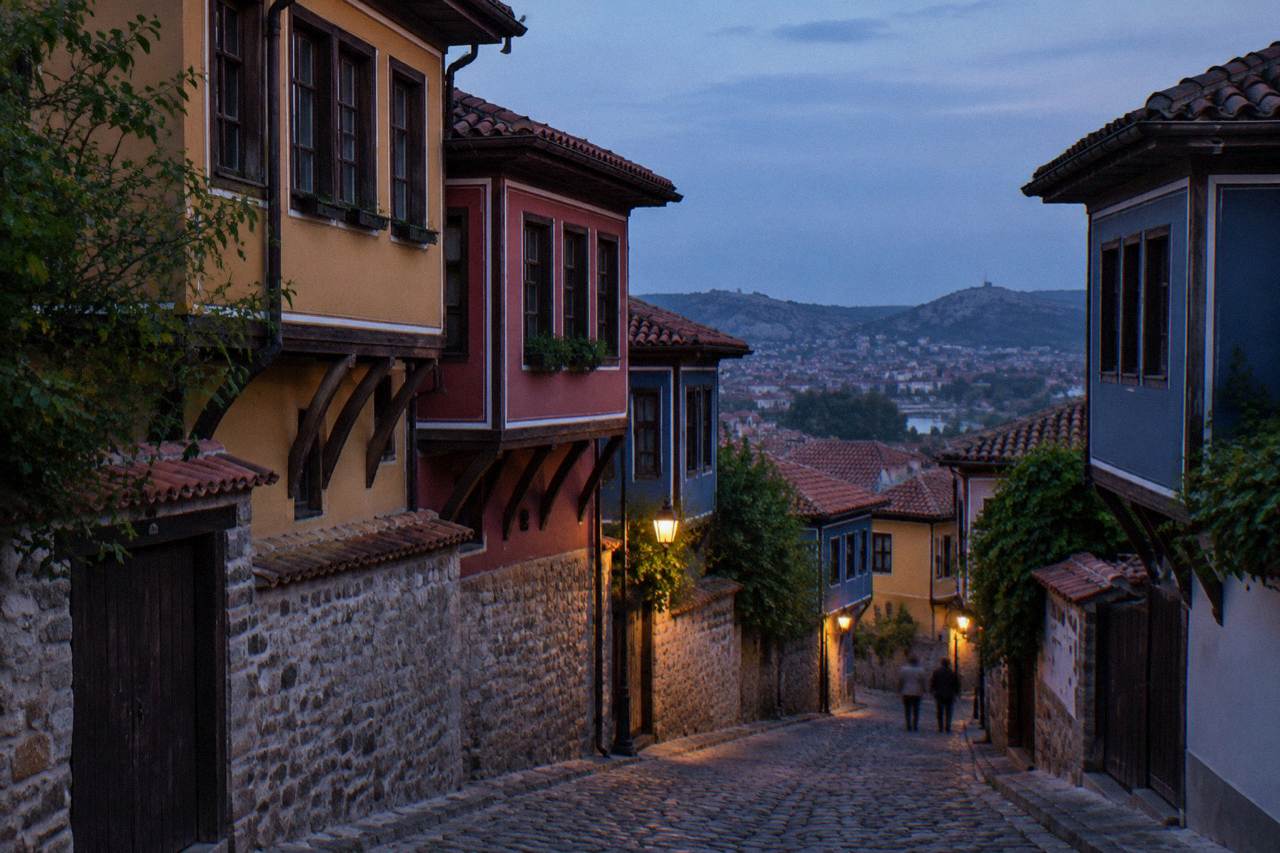
This page breaks the question into one, two and three day scenarios, with the ticket prices and opening constraints that actually decide the pace. The Plovdiv Travel Guide desk draws each figure from the official price lists and timetables rather than from impressions.
How Many Days In Plovdiv, Bulgaria?
Two days is the practical answer for Plovdiv itself: day one for the Old Town, the Ancient Theatre of Philippopolis and Nebet Tepe, day two for the Roman Stadium, the Bishop's Basilica mosaics, the museums and Kapana. A third day turns the stay into a different trip, because Bachkovo Monastery, Asen's Fortress and the Rhodope gorges sit 30 km or more from the centre and each needs most of a day.
Once the day count is set, book a hotel room here.
The reason two days work is concentration. The Ancient Theatre, the Small Basilica, the revival houses of the Old Town, Hisar Kapia and Nebet Tepe all sit close to one another, and the Old Plovdiv price list sells any single site for 3.58 euro, with a combined ticket covering up to five sites for 10.74 euro. A determined walker could compress the headline sights into a single long day, and the one-day itinerary below explains when that is a fair trade.
What a single day cannot absorb is the museum layer. The Regional Ethnographic Museum is closed on Mondays, the Regional Archaeological Museum renewed about 150 exhibits of its permanent display in November 2025, and the Bishop's Basilica, with over 2,000 square metres of floor mosaics spread across a building about 83 m long, rewards time rather than a doorway glance. Two days let you visit museums at their own pace instead of triaging them.
| Stay length | What fits comfortably | What gets cut |
|---|---|---|
| One day | Old Town, Ancient Theatre, Nebet Tepe, Kapana, Main Street | Museums, Bishop's Basilica interior time, any day trip |
| Two days | Everything above plus the basilicas, Roman Stadium 3D hall, two or three museums | Bachkovo, Asen's Fortress, the Rhodopes |
| Three days | Two city days plus one day trip into the Rhodopes or the Thracian Valley | Nothing on the standard list |
What Does One Day In Plovdiv Actually Cover?
One day covers the walkable core: Nebet Tepe and the Three Hills, the Ancient Theatre with its 28 concentric rows of marble seats, the cobbled lanes of the Old Town, Hisar Kapia, the Roman Stadium sphendone on the Main Street, and Kapana, whose name means The Trap, for the evening. Expect to skip the museums or to enter only one, and expect to move at a march.
The geometry helps. The city's tourism site groups the Ancient Theatre, the Roman Stadium, the Odeon and the Forum as the Roman layer of the centre, and the open-air parts cost nothing except at the Theatre, where the single ticket is 3.58 euro. The sphendone of the Roman Stadium, the visible northern curve of a 2nd century AD structure modelled on the stadium at Delphi, can be viewed free; the 3D projection hall beside it costs 3.68 euro.
A one-day visit works best as a spine: start on Nebet Tepe in the morning light, where the tourism site dates the first settlement to the 4th millennium BC, then descend through the Old Town houses, cross Hisar Kapia, and finish the daylight hours on the Main Street before dinner in Kapana. The Ancient Theatre keeps summer hours of 9:30 to 18:00 between April and October, with a lunch break from 12:30 to 13:00, so the morning matters. If your day is a stop on a Sofia-Plovdiv rail run, note that direct BDZ trains take about 2 h 40 to 3 h 05 each way, which eats into the schedule; the case for the city survives even a short visit, but the pacing question changes.
Guided walks compress a one-day visit further. A city walk anchors the geography in a single outing, and the booking page shows the current times and prices. A walking option sits alongside the itinerary pages: the two day itinerary remains the reference if you can stretch the stay.
Is Two Days In Plovdiv The Right Length For Most Trips?
Two days is the length the city's own sight list rewards: the first day for the hills and the Roman Theatre, the second for the Bishop's Basilica, the Small Basilica, the Ethnographic Museum and the Archaeological Museum, with Kapana and the Main Street filling both evenings. Ticket pricing supports it, because the combined Old Plovdiv ticket covers up to five sites, and spreading five sites over two days costs no more than rushing them.
Day two is where the basilicas come in. The Bishop's Basilica of Philippopolis, daily 9:00 to 18:00 year round, charges 7.57 euro for an adult, priced separately from the one-site ticket that covers the other Old Plovdiv locations. Its two layers of floor mosaics are described on the official site as the largest such surface from a 4th to 6th century basilica in Bulgaria, and the visitor centre around it changed how much time a basilica visit takes, in the direction of longer.
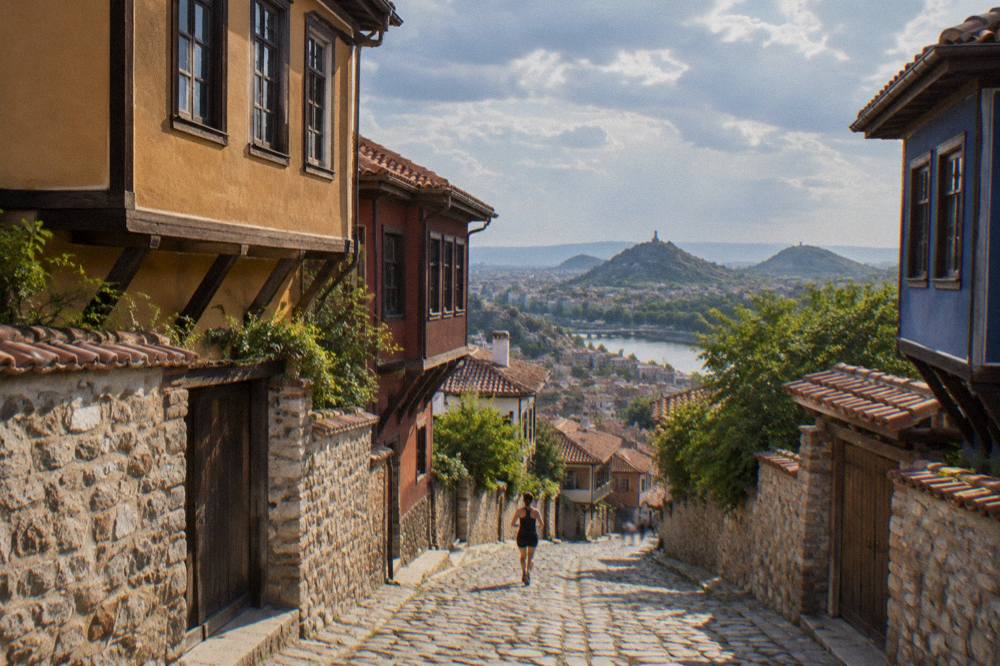
The museum day also carries the closure rules. The Ethnographic Museum in the Kuyumdzhiev House is closed on Mondays, with summer hours of 9:00 to 18:00 from April to October, and the Regional History Museum is free on the first Thursday of the month. Plan day two around whichever day of the week it is, because a Monday second day forces a reshuffle toward the daily-open basilicas and the open-air sites.
Two days also let the evenings do work. Kapana is a district of free, open streets, the Dzhumaya Mosque welcomes visitors outside prayer times with free entry and modest dress, and the singing fountains in the Tsar Simeon Garden run on summer evenings. A two-day visitor gets two of those evenings instead of one.
When Do Three Days In Plovdiv Make Sense?
Three days make sense when the Rhodopes are part of the plan, because the headline excursions from Plovdiv, Bachkovo Monastery, Asen's Fortress, the Wonderful Bridges and the Trigrad gorge caves, all lie south of the city and none is a half-hour errand. Bachkovo sits about 30 km away with minibus rides of 35 to 45 minutes from the Rodopi bus station, and the deeper gorge destinations take half a day of driving alone.
Bachkovo Monastery is a working monastery with free entry, reported across the listings, and Asen's Fortress stands above Asenovgrad on the same road; a small entry fee applies but the figure is unclear across sources, so confirm the price on arrival. Combining the two with the Wonderful Bridges is exactly the shape of the site's featured day trip, which covers the monastery, the fortress and the bridges in one loop: Check availability on the operator's live listing for current departure days.
The public-transport version is possible but slow: minibuses toward Smolyan stop at the monastery approach, and no onward connection is known beyond that, so a guided or self-driven day is the usual shape. The Plovdiv and the Rhodopes itinerary lays out the multi-day version if the mountains, rather than the city, are the point of the trip.
A third day can also point north or west instead. Koprivshtitsa, with its six house museums on a combined ticket of about 10 euro, Starosel's Thracian temple, and the Rose Valley toward Kazanlak are all realistic day trips, and the three day itinerary sequences them. Whichever direction you choose, count the third day as a day-trip day, not a slower city day, because two days already clear the city's core list.
| Day trip from Plovdiv | Distance and time given | Entry cost |
|---|---|---|
| Bachkovo Monastery | about 30 km; minibus 35 to 45 min from Rodopi station | free entry, reported |
| Asen's Fortress | on the same road via Asenovgrad | small fee, figure unclear; confirm on site |
| Starosel Thracian temple | Thracian Valley route | pre-euro figure printed in old sources; confirm on site |
How Does The Season Change The Number Of Days?
Summer days run long enough that two days can absorb a festival evening at the Ancient Theatre, while winter's 5.9 C mean daily high in January, from the ERA5 reanalysis 1991-2020, pushes sightseeing indoors and argues for the slower two-day pacing that keeps museums in the plan. The July mean daily high of 28.2 C from the same dataset makes the early-morning and evening hours the useful ones, which again favours two days over one compressed march.
The event calendar can also stretch a stay. Opera Open ran at the Ancient Theatre from 23 June to 9 September in 2026, the autumn Kapana Fest occupied two weekends in October 2026, and the Jazz Fest fall edition runs 6 to 8 November 2026. A performance in the Ancient Theatre is an evening you cannot also spend walking the hills, so a festival visit effectively adds half a day to the sensible total. Season notes live on the autumn in Plovdiv page.
Rain matters less here than in most cities, because the Roman Stadium's 3D hall, the basilicas, the museums and the Kapana cafes are all indoor refills. May carries the highest monthly rainfall in the normals at 56.8 mm and August the lowest at 25.2 mm, but neither figure is a reason to add or cut a day; the indoor layer simply covers the wet hours.
Common Questions About Days In Plovdiv
How Many Days In Plovdiv, Bulgaria?
Two days for the city itself, three if a day trip to Bachkovo Monastery, Asen's Fortress or the Rhodopes is on the list. One day covers the walkable core but skips the museums.
Can You See Plovdiv In One Day?
Yes, the Old Town, the Ancient Theatre, Nebet Tepe, the Roman Stadium sphendone and Kapana fit into one long day on foot. The basilica interiors and the museums are what a single day sacrifices.
Is Plovdiv Or Sofia Better For A Short Trip?
They serve different trips: Plovdiv's core sights sit in a compact walkable centre, while Sofia is the capital with the main international airport. The comparison page works through the trade-offs.
What Is There To Do In Plovdiv On The Second Day?
The Bishop's Basilica mosaics, the Small Basilica, the Regional Archaeological Museum, the Ethnographic Museum in the Kuyumdzhiev House, and a slower pass through Kapana and the Tsar Simeon Garden fill a second day without repeating day one.
Do You Need A Third Day In Plovdiv?
Only for a day trip. The city's own sight list is comfortably finished in two days, and the third day is best spent on a Rhodope circuit or a Thracian Valley excursion rather than at a slower city pace.
The short version stands: two days for Plovdiv, three with the mountains, and one only if the schedule leaves no alternative.
