Is Plovdiv, Bulgaria Worth Visiting?
Yes: Plovdiv, Bulgaria's second city, stacks a Roman theatre, a revived old town and cheap euro prices into a walkable centre.
Plovdiv sits inland in southern Bulgaria, the country's second-largest city with a population of 333,994 at the end of 2025 according to the National Statistical Institute, built around six hills and with no sea coast anywhere near it. It was European Capital of Culture in 2019, shared with Matera in Italy, and it is often described as one of the oldest continuously inhabited cities in Europe: the municipal tourism site dates the first settlement on Nebet Tepe to the 4th millennium BC. That combination, a walkable layered historic core plus a small, liveable modern city, is what the value question really turns on.
Is Plovdiv, Bulgaria Worth Visiting?
Yes, Plovdiv is worth visiting, and the case rests on three things the official sources confirm: a Roman theatre from the 90s of the 1st century AD with 28 concentric rows of marble seats still standing in the Old Town, a city centre compact enough to cover on foot, and prices in euro that sit well below Western European levels, with a one-site Old Plovdiv ticket at 3.58 euro. It is not a beach destination and it is not a capital, so the trip has to be planned around its strengths: archaeology, atmosphere and day trips into the Rhodopes. For a deeper comparison with the capital, see how Plovdiv compares with Sofia.
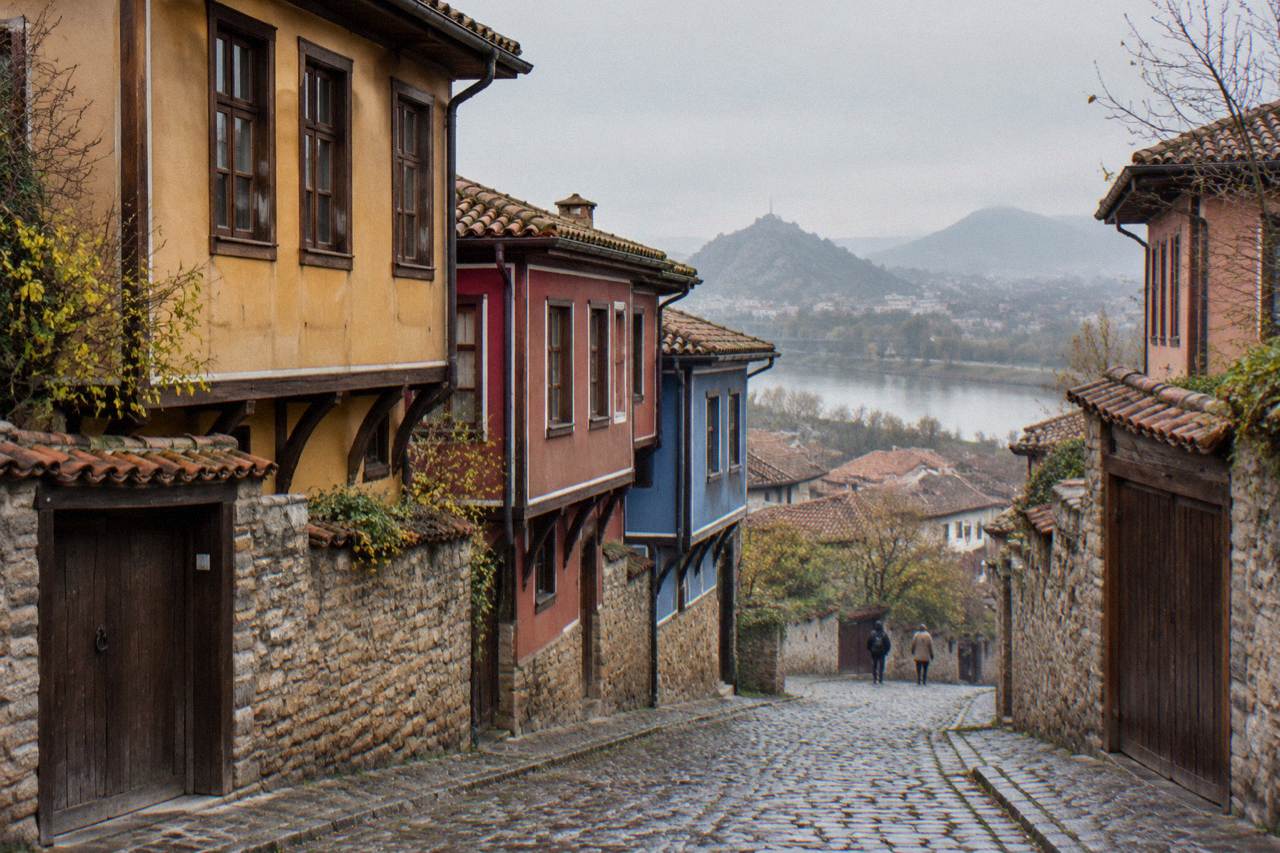
The Old Town itself deserves a status note, because it is routinely mislabelled. "The Ancient Plovdiv" is on Bulgaria's UNESCO Tentative List, submitted in September 2004, but it is not an inscribed World Heritage Site. That distinction does not weaken the place; it mainly means fewer crowds at sites that would be mobbed elsewhere in Europe. It also means the city keeps a lived-in feel: the Old Town streets remain public, free to walk at any hour, with houses, galleries and small museums set among them rather than fenced off behind a single gate.
The city's scale works in its favour. The Ancient Theatre, the Roman Stadium sphendone under the Main Street, the Bishop's Basilica mosaics, the Kapana creative district and Nebet Tepe all sit within roughly twenty minutes' walk of one another, and the city's own listings describe Kapana, whose name means "The Trap", as a free, open maze of narrow streets. You can read a fuller rundown in what Plovdiv is famous for.
What Are The Sights That Justify The Journey?
The Ancient Theatre of Philippopolis is the headline sight: built in the 90s of the 1st century AD, with 28 concentric rows of marble seats, open daily and covered by the 3.58 euro Old Plovdiv single ticket. The Bishop's Basilica, about 83 m long with mosaic floors over 2,000 sq m, is priced separately at 7.57 euro. The Roman Stadium sphendone is free to view, and Nebet Tepe, the settlement's original hill, is free and open at all hours after its restoration finished in March 2025.
A combined ticket covering up to five sites, excluding the two basilicas, costs 10.74 euro for an adult. Children under 7 enter free, and the Regional History Museum is free the first Thursday of the month. Students and seniors also get first-Thursday free entry at Old Plovdiv sites, which makes a well-timed Thursday arrival cheaper still.
The houses matter as much as the ruins. Balabanov, Hindliyan and Nedkovich houses are revival-era merchant homes on the Old Town's slopes, and a September 2026 report noted Hindliyan House moving to daily opening. The Dzhumaya Mosque, free to visit outside prayer times and modest dress required, sits between the Main Street and the Roman Stadium site; the city's own page gives no single construction date, with sources spanning a wide range of years, so treat any one year printed elsewhere with caution. On the age question in general, the site's page on whether Plovdiv is Bulgaria's oldest city separates the dated claims from the marketing.
| Site | Entry (adult, euro) | Notes from the official listings |
|---|---|---|
| Ancient Theatre of Philippopolis | 3.58 | Daily; 28 rows of marble seats; one-site Old Plovdiv ticket |
| Bishop's Basilica | 7.57 | Priced separately; mosaic floors over 2,000 sq m |
| Old Plovdiv combined, up to 5 sites | 10.74 | Excludes the Small and Bishop's Basilicas |
| Roman Stadium sphendone | Free | Open-air viewing; 3D hall 3.68 euro extra |
| Nebet Tepe | Free | Open at all hours after the 2025 restoration |
| Kapana district | Free | Public streets, galleries and cafes |
A guided walk is one way to convert these sights into a story rather than a checklist. The private city walking tour of Plovdiv covers the Old Town and the Roman landmarks with a licensed guide, and it can be booked at Check availability. Tip-based walks also run locally; confirm arrangements with the guide directly. In rain or the midday summer heat, the museums carry the day: the Ethnographic Museum in the Kuyumdzhiev House is closed Mondays, and the Archaeological Museum keeps a renewed permanent exhibition.
Is Plovdiv Expensive To Visit?
Day-to-day costs in Plovdiv are low by euro-area standards: crowd-reported averages put an espresso around 2 euro, a half-litre of draught beer around 2 euro, and the city bus e-ticket at 0.50 euro, while sightseeing tickets run from free to 7.57 euro for the basilica. Bulgaria adopted the euro on 1 January 2026, so there is no currency exchange to plan for, and the country has been a full Schengen member since 1 January 2025, meaning no border checks when arriving from another Schengen country.
Those averages come from crowd-data price trackers, not from an official municipal tariff, so treat them as planning ranges and check the individual venue. Restaurant tipping runs to about 10 percent for good service. A tourist tax may be charged by your accommodation; its 2026 euro rate is not published as a single figure, so confirm at booking. For the wider affordability picture for American travellers, see is Bulgaria cheap for Americans.
| Everyday item | Typical price (euro) | Basis |
|---|---|---|
| Espresso or cappuccino | about 2 to 2.50 | Crowd data, Oct 2026 |
| Draught beer, 0.5 l | about 2 | Crowd data, Oct 2026 |
| Mid-range dinner for two | about 30 to 40 | Crowd data, Oct 2026 |
| City bus e-ticket | 0.50 | Municipal e-ticketing |
| Old Plovdiv one-site ticket | 3.58 | Official ticket page |
Getting there is cheap too, if indirect. Direct trains from Sofia take about 2 h 40 to 3 h 05, with services via Karlovo taking far longer, so check the timetable before booking. Buses run about 1 h 45 to 2 h 20 (reported). Plovdiv Airport at Krumovo has a small route list, London, Milan, Bratislava among the announced destinations, and the details belong to where Plovdiv sits on the map and how to reach it. One practical note for rail arrivals: the Plovdiv railway junction modernisation was 85 percent complete in November 2025 and due to finish in 2026, so expect some access changes around the central station while works wrap up.
What Can You See On Day Trips From Plovdiv?
The day-trip range from Plovdiv is unusually strong for a city this size: Bachkovo Monastery about 30 km south is free to enter, Asen's Fortress stands above Asenovgrad on the road there, the Thracian temple at Starosel and the Rose Valley around Kazanlak lie to the north, and the Rhodope mountains, including the Wonderful Bridges, stretch south toward Smolyan and Trigrad. Minibuses to the Bachkovo side leave from the Rodopi bus station and take roughly 35 to 45 minutes (reported).
Wine belongs on that list as well. The Thracian Valley around Plovdiv grows the Mavrud and Rubin varieties, and estates within an hour of the city offer tastings, bookable in advance. Within the centre itself, a short Bulgarian wine tasting gives the same varietals without leaving town. Food fans can extend the same logic to the city's tables; the site's eating and drinking guide covers the dishes worth ordering, from shopska salad to kavarma.
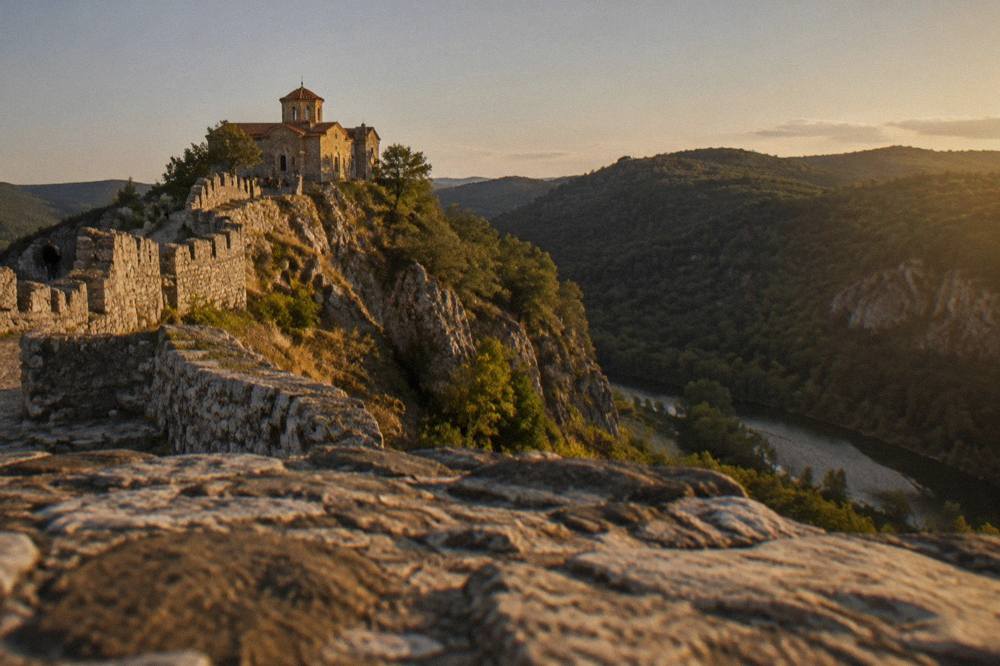
Whether Plovdiv works as a base depends on your appetite for driving. The archaeological splendours of Perperikon and the stone mushrooms sit further east in the Rhodopes and reward a full day. The full things-to-do overview covers the in-city options, and the length-of-stay question has its own page at how many days to spend in Plovdiv.
When Is The Best Time To Visit Plovdiv?
Late spring and early autumn suit Plovdiv best: ERA5 reanalysis for 1991-2020 puts the July mean daily high at 28.2 C and January's mean daily low at -2.6 C, so May, June and September trade manageable warmth, 21.9 C and 25.9 C and 23.8 C mean highs, against thinner crowds, with Kapana Fest running across two October weekends in 2026. August carries the lowest rainfall of the year at 25.2 mm, while May is the wettest month at 56.8 mm.
| Month | Mean daily high (C) | Mean daily low (C) | Rain (mm) |
|---|---|---|---|
| January | 5.9 | -2.6 | 41.0 |
| April | 17.1 | 6.4 | 47.7 |
| July | 28.2 | 17.9 | 45.6 |
| August | 28.6 | 18.1 | 25.2 |
| September | 23.8 | 13.8 | 42.8 |
| October | 18.1 | 8.8 | 44.1 |
These are modelled normals from a reanalysis grid cell near the Old Town, not a station record, and they smooth out urban heat. The event calendar is another timing lever: Opera Open fills the Ancient Theatre through the summer, the jazz festival runs 6 to 8 November in 2026, and the Christmas market edition runs into early January. Winter visitors get the theatre and museums at their quietest, with winter opening hours from November to March and lunch breaks at several sites, so a short-visit plan should still leave a spare hour around midday.
Common Questions About Visiting Plovdiv
Is Plovdiv, Bulgaria Worth Visiting?
Yes. The city combines a Roman theatre and basilica mosaics with a free, walkable Old Town and Kapana district, euro pricing that sits below Western European levels, and day trips to Bachkovo Monastery and the Rhodopes.
Is Plovdiv Old Town a UNESCO World Heritage Site?
No. "The Ancient Plovdiv" is on Bulgaria's Tentative List, submitted in 2004. It is not an inscribed World Heritage Site.
How many days does Plovdiv need?
The core sights fit into one full day; two days allow the museums at a slower pace and a first day trip. The city's compactness, with the main sites within about twenty minutes' walk of each other, is what makes short stays work.
Is Plovdiv safe for visitors?
Standard European precautions apply. The site covers safety in detail at the how-safe-is-Plovdiv page; the EU-wide emergency number 112 works in Bulgaria.
What currency does Plovdiv use?
Bulgaria is also a full Schengen member since 1 January 2025.
The short verdict: Plovdiv earns its place on a Bulgaria itinerary through density, a Roman theatre, mosaic floors, six hills and a live creative quarter all within a short walk, at prices the official ticket pages keep in single-figure euro. Add the day-trip range into the Rhodopes and the Thracian Valley, and the case strengthens further across the sight, food and itinerary pages.
