Which Is Older, Plovdiv Or Matera?
Plovdiv and Matera both claim deep roots. Here is what the record says about Plovdiv's age on Nebet Tepe, and how to think about the comparison with Matera.
Plovdiv, Bulgaria's second-largest city, sits inland in the south of the country, built around six hills with no sea coast anywhere near it, and it is often described as one of the oldest continuously inhabited cities in Europe. Matera, its Italian counterpart, is billed as another of the continent's ancient places. The two cities even share a modern distinction: Plovdiv was European Capital of Culture in 2019, an honour it held together with Matera itself. So the question of which is older is a natural one, and the answer is less tidy than a single date.
Which Is Older, Plovdiv Or Matera?
There is no authoritative ranking that declares one older than the other, and any page that hands you a winner is oversimplifying. What can be stated precisely is Plovdiv's own record: the city's tourism site dates the first settlement on the hill of Nebet Tepe to the 4th millennium BC, and Plovdiv is often described as one of the oldest continuously inhabited cities in Europe. Matera makes its own deep-antiquity claim, and the two claims are measured differently.
The comparison breaks down the moment you ask what "older" means. A settlement, a town and a city are three different things, and archaeologists date each by different evidence: pottery, walls, written records, continuous occupation. Plovdiv's case rests on continuous habitation, the idea that people have lived on and around the Three Hills without a long break, from the Thracian settlement of Evmolpias through Philippopolis, Trimontium, Filibe and finally Plovdiv. That chain of names, recorded on the city's own tourism pages, is itself part of the evidence: a city that keeps being renamed is a city that keeps being lived in.
Matera's fame rests on a different kind of continuity, its cave-dwelling districts carved into limestone, and the two claims are not measured on the same scale. Neither city's official record offers a single founding year that settles the contest. The defensible statement is that both sit in the small group of European cities with habitation stretching back several thousand years, and that Plovdiv's documented settlement on Nebet Tepe reaches the 4th millennium BC.
What Makes Plovdiv's Age Claim Different From A Founding Date?
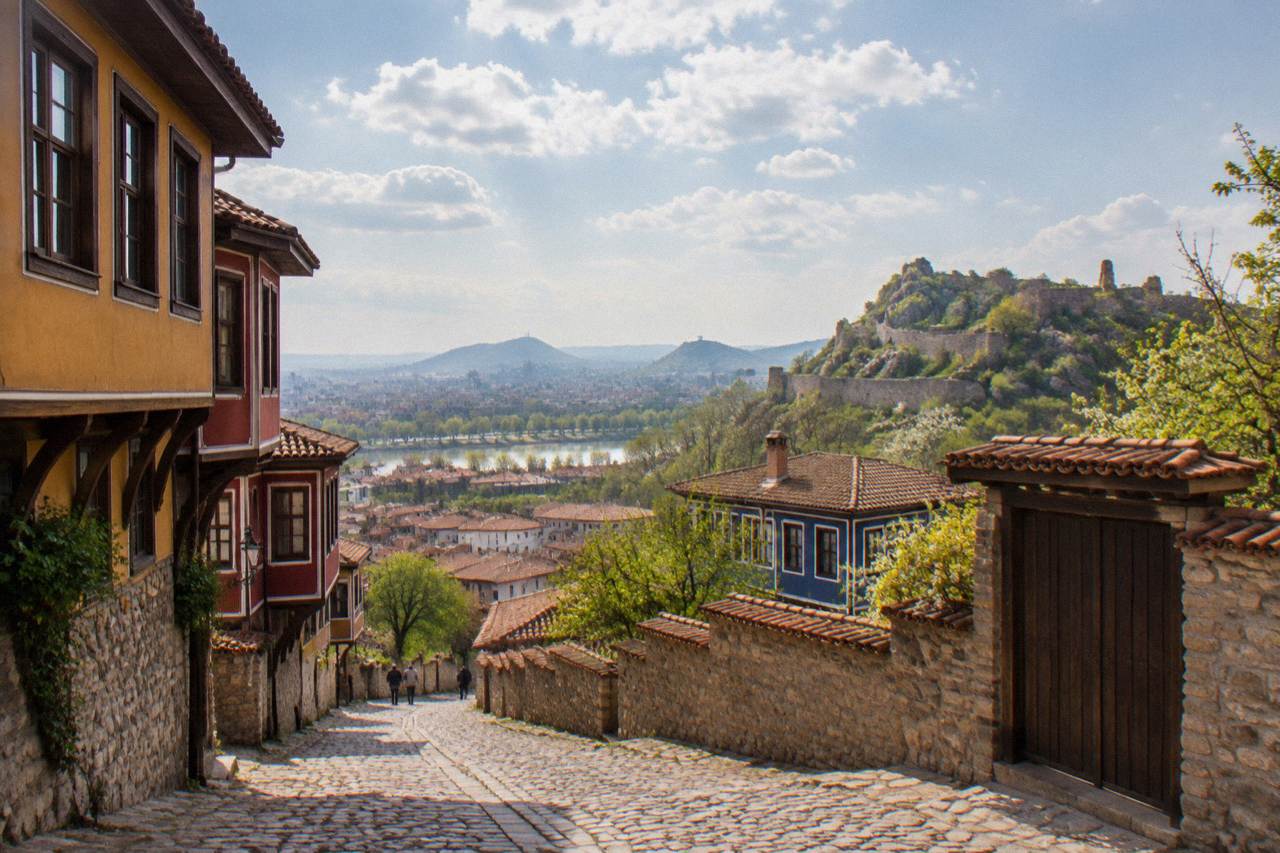
Plovdiv has no founding year because its claim is continuity, not a birthday. The city tourism site traces the first settlement on Nebet Tepe to the 4th millennium BC, then follows an unbroken line of habitation through Thracian, Roman, Byzantine, Ottoman and Bulgarian periods, each leaving architecture still standing in the city today. That standing record, from Nebet Tepe's walls to the Roman Theatre to the revival-era houses of the Old Town, is what the age claim is built on.
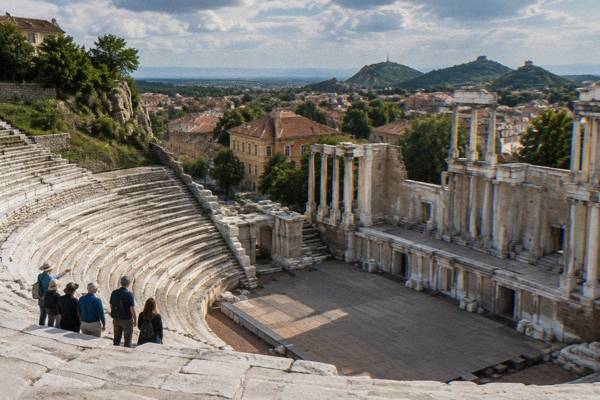
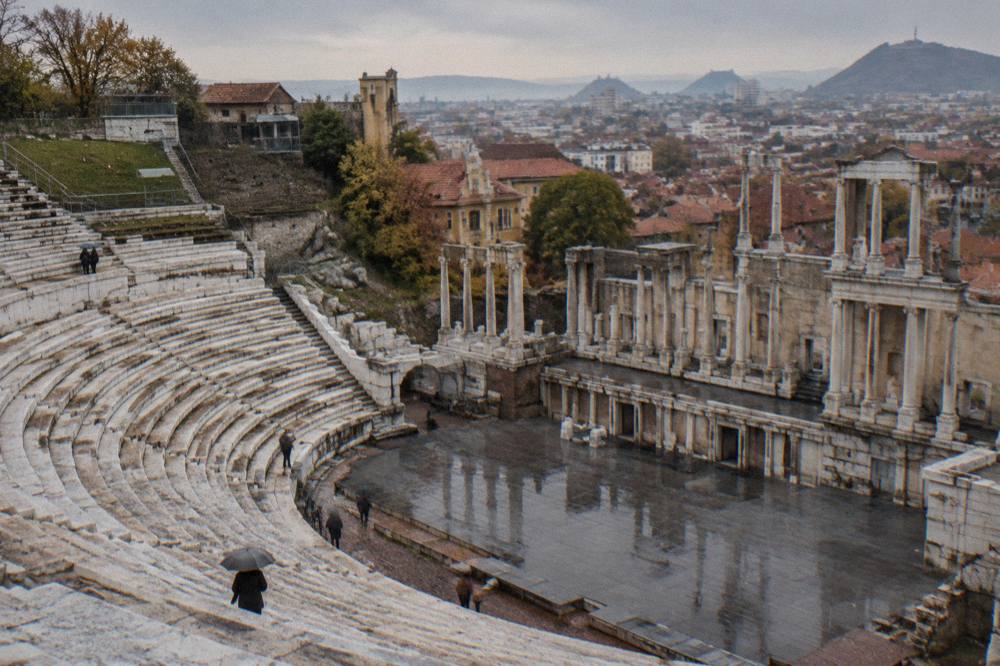
Walk the Old Town and the layers are visible in order. Nebet Tepe, the hill at the heart of the Three Hills, holds the remains of the ancient acropolis, restored and officially reopened in March 2025 as an open-air complex with free access. Below it, the Roman city survives in the Ancient Theatre with its 28 concentric rows of marble seats, the Roman Stadium, of which only the northern sphendone is excavated because the rest lies under the modern Main Street, and the great basilicas with their floor mosaics. The history of Plovdiv is not in a glass case; it is the street plan.
That is the practical difference for a visitor. In Plovdiv the depth of time is experienced by walking, not by reading a plaque, and the city's own Plovdiv history guide lays out each layer site by site. A guided walk is the efficient way to take it in, and the Jewish quarter, one of the best-preserved corners of the Old Town, tells the story of the communities that kept the city inhabited century after century. The Jewish Walking Tour of Plovdiv covers that quarter with a local guide.
How Do You Compare Two Cities When Neither Has A Founding Year?
You compare the evidence, not the slogans. For Plovdiv the evidence is the settlement layer on Nebet Tepe, dated by the city's tourism site to the 4th millennium BC, plus a documented, unbroken sequence of habitation through every later era. For any rival city the honest comparison asks the same three questions: what is the earliest dated evidence, is occupation continuous, and who did the dating. A city with older evidence but a gap in habitation is not the same thing as a continuously lived-in city.
The table below shows how the claims line up on those questions, using only what Plovdiv's own record supports.
| Question | Plovdiv's Answer | What It Means For The Comparison |
|---|---|---|
| Earliest dated settlement | 4th millennium BC, on Nebet Tepe, per the city tourism site | A specific date attached to a specific hill |
| Is habitation continuous? | Yes, described as one of the oldest continuously inhabited cities in Europe | Continuity is the claim, not a single birthday |
| What physical evidence survives? | Nebet Tepe acropolis, Roman Theatre, Roman Stadium sphendone, basilica mosaics, Old Town houses | Every era has standing architecture |
| Written name record | Evmolpias, Philippopolis, Trimontium, Filibe, Plovdiv | Renaming tracks continuous occupation |
Notice what the table does not contain: a ranking. The reason is simple. If the measure is "earliest dated evidence of people", several European sites compete and the answer changes with each excavation season. If the measure is "continuously inhabited to the present day", the field narrows and Plovdiv's claim, described as one of the oldest on the continent, is among the strongest on paper. Matera's cave-dwelling continuity is a different category again. Choose your yardstick and you choose your winner, which is why serious treatments of the question refuse to crown one city over the other. Other pages covering the same trip are gathered on Plovdiv Travel Guide.
Which City Suits Which Trip?
Plovdiv suits a trip built around walking through layered history in a compact, affordable inland city: Roman ruins under the Main Street, a restored acropolis hill, a Renaissance Old Town and the Kapana creative district, all within fifteen minutes on foot. Matera suits a trip built around cave architecture and a southern Italian landscape. The two cities shared the 2019 European Capital of Culture title precisely because they represent two different faces of Europe's deep past, and the choice between them is a choice of texture, not of merit.
For a Plovdiv trip, the practical plan is straightforward. The city rewards two days rather than one, and the suggested itinerary question is one this site answers in detail. Arrive by train from Sofia, a direct journey of about 2 h 40 to 3 h 05 on the fastest services, and base yourself in the Old Town or the centre. The municipal Old Plovdiv ticket system covers the main ancient sites, with a single site at 3.58 euro for adults and a combined ticket for up to five sites at 10.74 euro, prices quoted on the official ticket page. The Bishop's Basilica is priced separately at 7.57 euro, and the open-air Nebet Tepe complex is free.
Beyond the city, the Rhodopes rise immediately to the south, and the deeper cave country of Trigrad and the Devil's Throat makes a natural extension for anyone whose interest in deep time runs geological as well as urban. A day trip combining the caves reaches landscapes older than any city, which is a useful reminder that both Plovdiv and Matera are newcomers next to the rock they stand on.
Does The Age Claim Change How You Visit Plovdiv?
It changes the order you walk in. If Plovdiv's record is continuity, the itinerary that honors it starts on Nebet Tepe, where the first settlement stood, then descends past Hisar Kapia into the Old Town houses, then reaches the Roman Theatre and the Stadium's sphendone, ending in Kapana, where the newest layer of the city is being written. Each stop is a stratum, and the walk from one to the next is a few minutes on foot.
Costs along that walk are modest and published. Here is what the official Old Plovdiv ticket page lists in euro.
| Site Or Ticket | Adult Price | Notes |
|---|---|---|
| Any one Old Plovdiv site | 3.58 | Theatre, Small Basilica or an Old Town house |
| Combined ticket, up to 5 sites | 10.74 | Excludes the two basilicas |
| Bishop's Basilica | 7.57 | Priced separately, daily 9:00 to 18:00 |
| Roman Stadium sphendone | Free | Open-air viewing; the 3D hall is extra |
| Nebet Tepe | Free | Open-air complex, unrestricted access |
Everyday costs run low by western European standards: crowd-reported averages put an espresso and a half-litre of beer at around 2 euro each, and a mid-range dinner for two at roughly 30 to 40 euro. Whether the age question is settled or not, the visit itself is unusually easy.
Common Questions About Plovdiv And Matera
Which Is Older, Plovdiv Or Matera?
There is no single authoritative answer. Plovdiv's tourism site dates the first settlement on Nebet Tepe to the 4th millennium BC and the city is often described as one of the oldest continuously inhabited cities in Europe. Matera makes its own deep-antiquity claim, and the two claims are measured on different evidence.
Is Plovdiv The Oldest City In Europe?
No such ranking exists. The defensible phrasing, and the one this site uses, is that Plovdiv is often described as one of the oldest continuously inhabited cities in Europe, with settlement on Nebet Tepe dated to the 4th millennium BC by the city's tourism site.
Why Did Plovdiv And Matera Share 2019?
The two cities were jointly designated European Capital of Culture for 2019, Plovdiv holding the title for Bulgaria and Matera for Italy. The pairing highlighted two different models of a living ancient city.
What Is The Oldest Thing You Can See In Plovdiv?
The acropolis remains on Nebet Tepe, the hill where the first settlement stood, restored and reopened as a free open-air complex in March 2025. The site is freely accessible at any hour.
Is Plovdiv A UNESCO World Heritage Site?
No. "The Ancient Plovdiv" has been on Bulgaria's UNESCO Tentative List since 14 September 2004, which is a waiting list and not an inscription.
In the end, the question "which is older" rewards curiosity more than it rewards a verdict. Plovdiv's side of the ledger is precise where it can be: a hill, a date in the 4th millennium BC, and an unbroken chain of names and buildings down to the present day. That is a record few cities anywhere can match, and it is best checked in person, one layer at a time.