Melnik: Sandstone Pyramids And Wine Cellars, A Day Trip From Plovdiv
Melnik, in southwestern Bulgaria, is the country's famous micro-region for sandstone pyramids and heavy red wine, and it pairs naturally with a Plovdiv base. This guide covers what the town is known for, how the wine story connects back to Plovdiv, and which figures are actually published.
Short answer
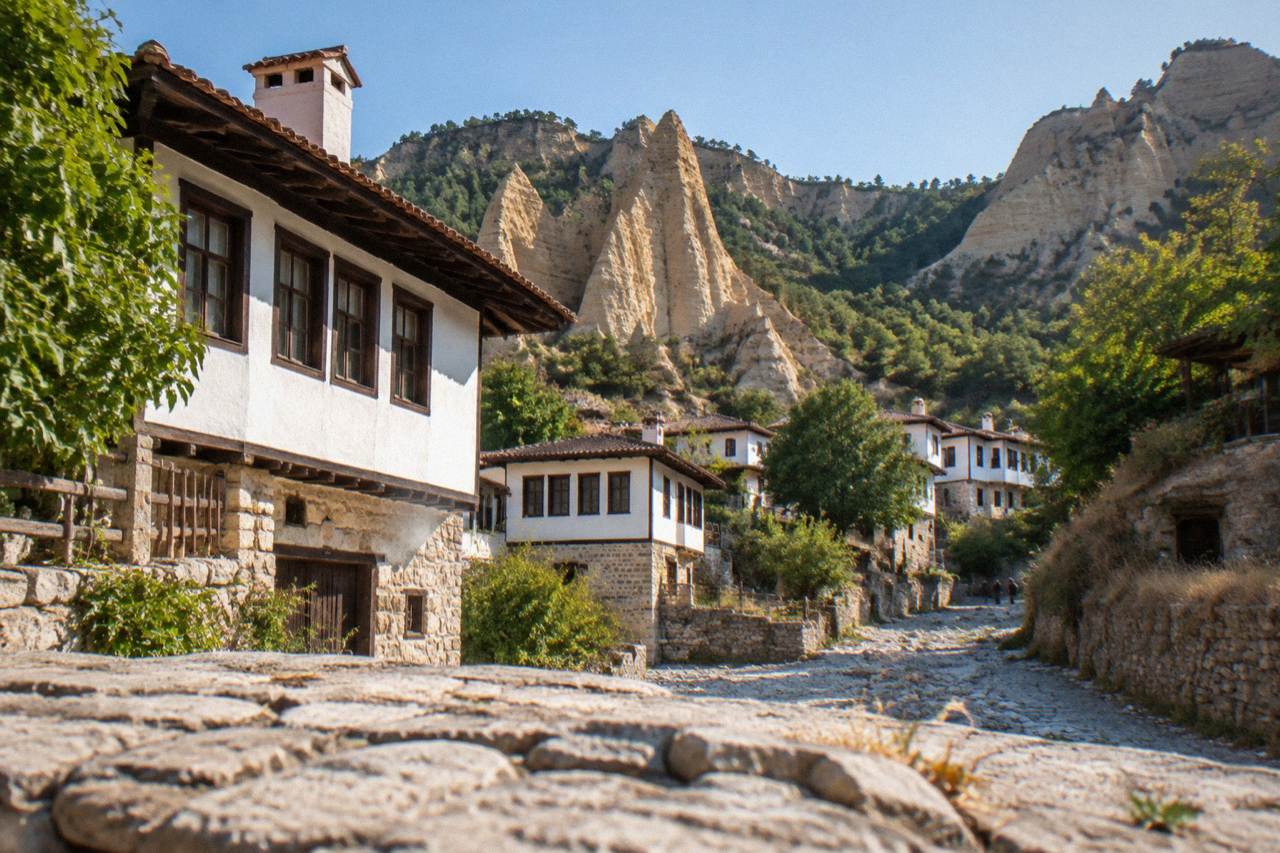
Melnik is a small wine town in southwestern Bulgaria known for its sandstone pyramids and dark red local wine. No entry fee, opening time or travel time for Melnik was published in a source this site carries, so confirm transport and cellar visits locally. The wine itself can be tasted in Plovdiv, where a tasting session runs from the city center.
Melnik, reached on a day trip from Plovdiv in southern Bulgaria, is the smallest of the country's famous wine towns and the place Bulgarian wine writing keeps returning to, because of two things: pale sandstone pyramids that erode into sculpted towers above the houses, and cellars dug deep into that same soft rock. Plovdiv, an inland city built around six hills with no sea coast, makes a practical base for the southwest, and the wine link runs in both directions, since the reds of the Struma valley appear on tasting lists back in Plovdiv itself. This page sets out what the town is known for, how to think about the journey, what a tasting in Plovdiv costs, and which practical figures are actually published rather than guessed.
Where Is Melnik And Why Does It Suit A Plovdiv Trip?
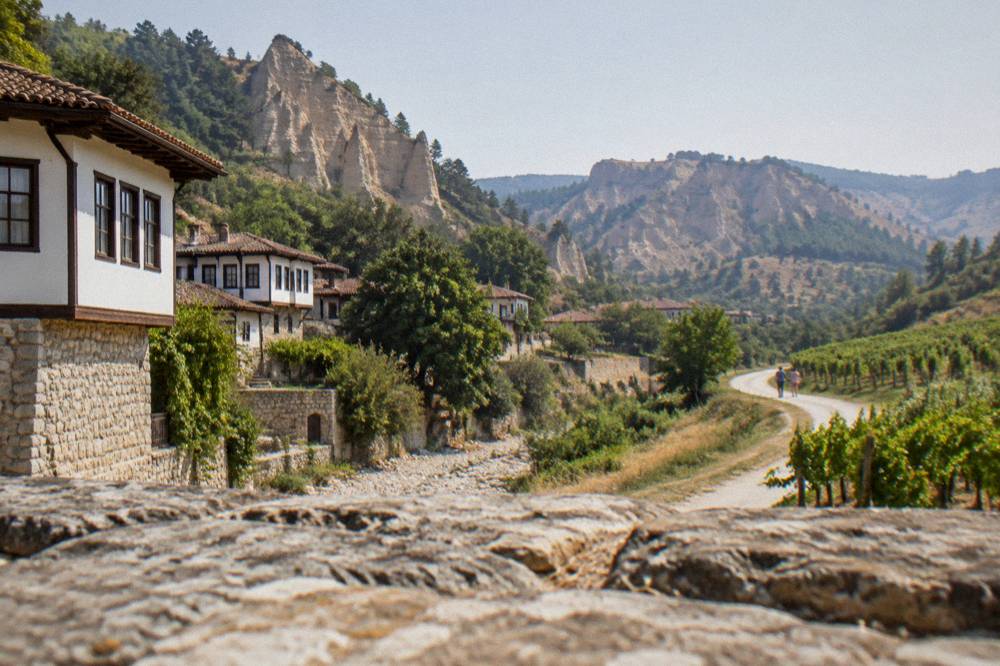
Melnik sits in the southwest of Bulgaria, in the sandstone hills of the Struma valley wine country, and it works as a day trip from Plovdiv for one simple reason: the visit itself is compact. The town is small enough that its houses, cellars and pyramid viewpoints sit within walking distance of each other, so the day is spent on foot rather than in transit between scattered sites. No journey time between Plovdiv and Melnik appears in a source this site carries, so treat the routing as something to check against a current timetable before committing to a day plan.
The contrast is the point. Plovdiv is Bulgaria's second-largest city, often described as one of the oldest continuously inhabited cities in Europe, with Roman ruins under its Main Street. Melnik inverts that scale entirely: a town of a few streets where the landscape, not the architecture, dominates. The Plovdiv Travel Guide desk reads it as a pairing, one dense city base plus one small landscape excursion, rather than two stops on a single itinerary.
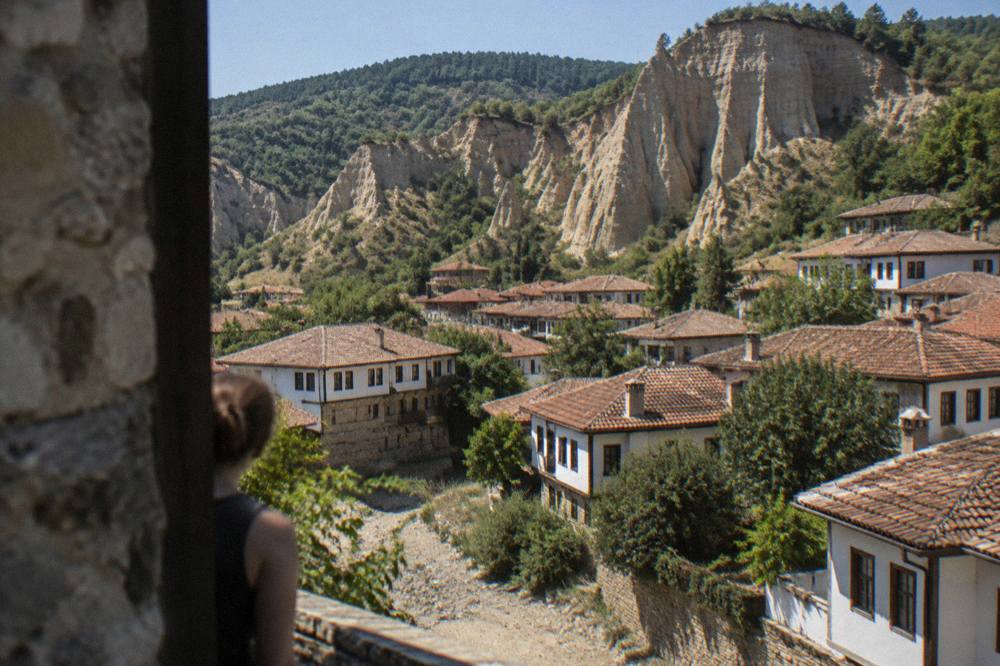
What the town is genuinely famous for is twofold. First, the pyramids: naturally eroded sandstone formations, some tens of meters tall, that frame the town from almost every angle and shift color through the day. Second, the wine: a dark, soft red from a local grape tradition that gave the region its name long before modern wine tourism arrived. Both stories are told in the sections below, and both can be rehearsed in Plovdiv before the trip, at a tasting table in the city center.
What Are The Melnik Sandstone Pyramids And Where Do You See Them?
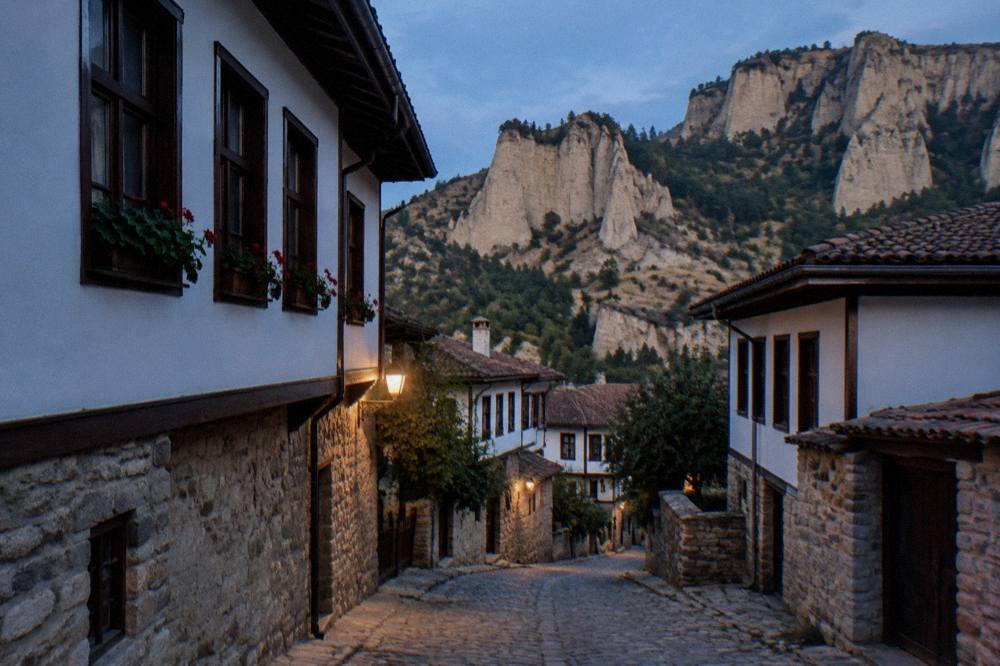
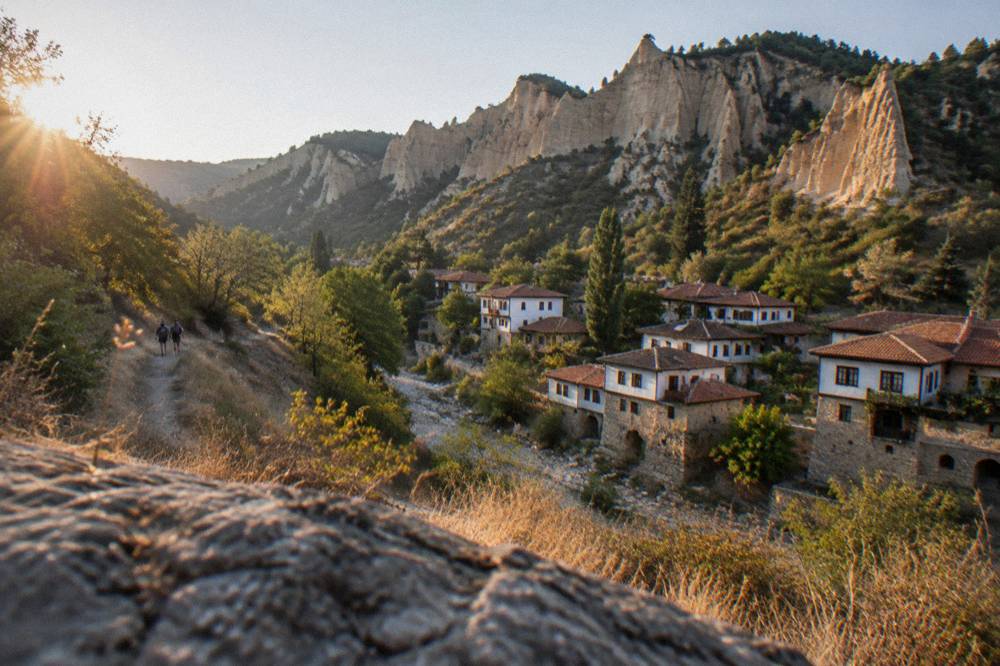
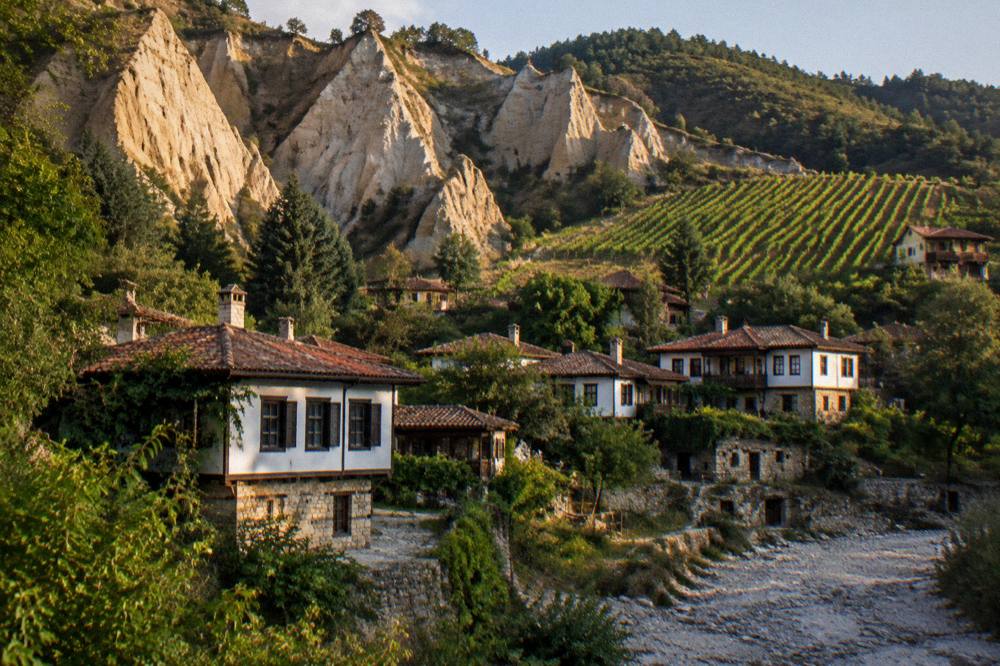
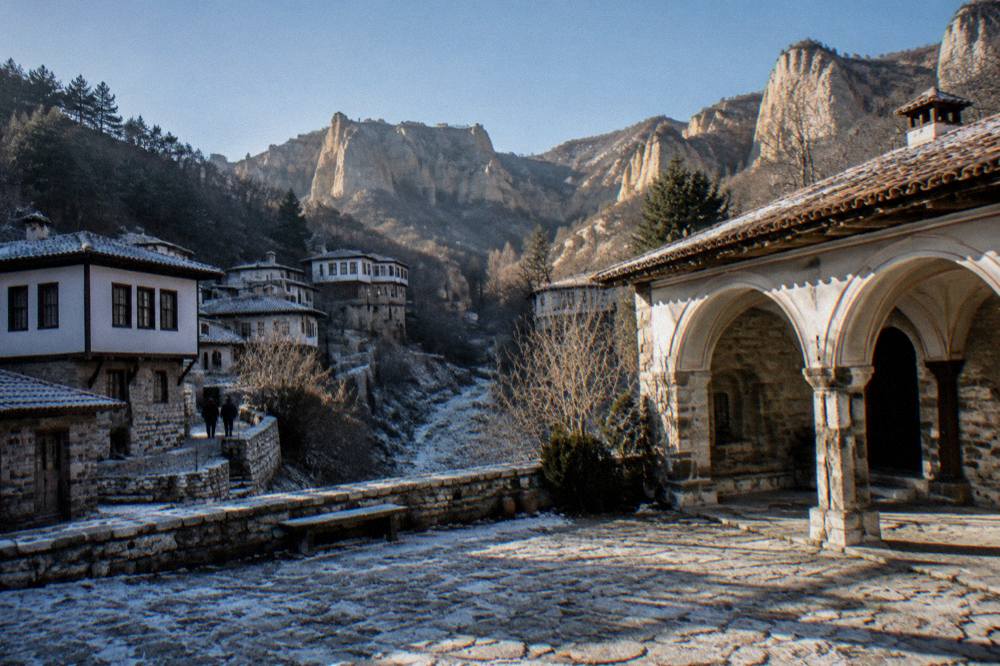
The Melnik pyramids are natural sandstone formations, erosion sculpted into towers and ridges that rise directly above and around the town, and they are viewed from walking trails and viewpoints rather than from behind a fence or a ticket gate. They are the visual signature of the region and the reason the landscape registers in photographs before the wine does. This site carries no published trail length, walking time or viewpoint name for Melnik, so plan on asking locally for the current paths and conditions rather than following a printed route.
The formations work like this: soft pale sandstone, easily carved by water and wind, erodes unevenly, leaving harder caps standing on narrower columns. The result is a field of pale, almost bone-colored towers, some leaning, some sharply vertical, with scrub clinging to the slopes between them. The rock is the same rock the wine cellars are cut into, which ties the two halves of the Melnik story together physically, not just commercially. Geology and wine storage are the same material.
Two practical cautions come with that. The trails cross loose, dry sandstone slopes, so footwear matters more than it does on Plovdiv's cobbles, and summer afternoons on exposed rock are hot by any measure: the ERA5 reanalysis for Plovdiv, 1991-2020, puts the mean daily high at 28.6 C in August, and a treeless sandstone basin will feel that fully. Carry water, start early, and treat the middle of the day as cellar time rather than trail time. That rhythm, walk in the morning, taste at midday, is the standard shape of a Melnik day.
For readers building the wider southwestern loop, the same day-trip logic that carries you to Melnik also carries you to the mountains: the pairing ideas in the Rhodope Mountains planner from Plovdiv cover the other direction, south rather than southwest.
Why Is Melnik Wine Famous And Can You Taste It In Plovdiv?
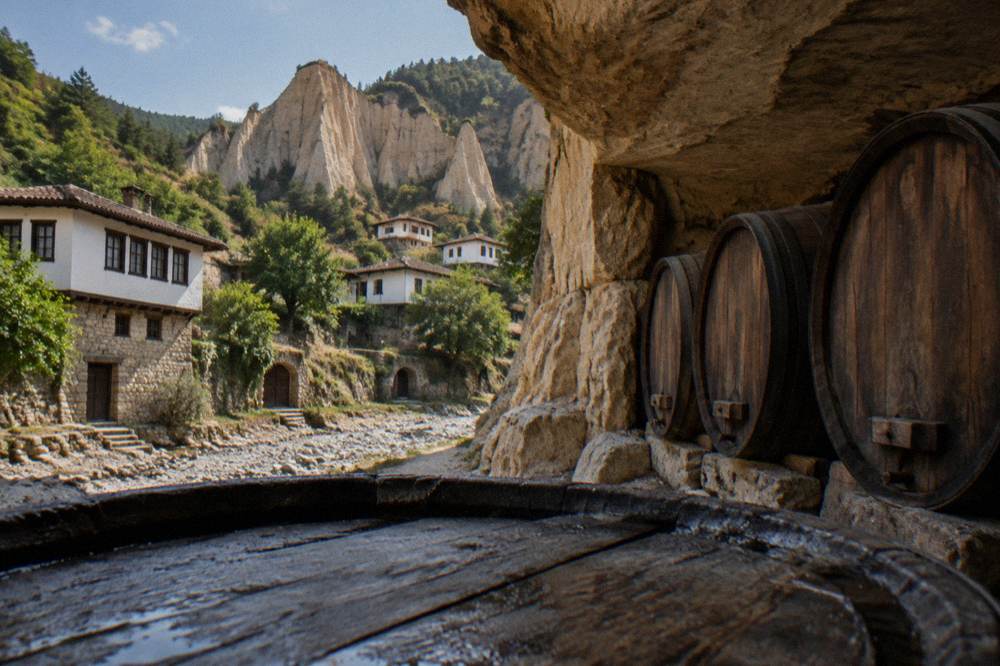
Melnik wine is a dark, soft red associated with a local late-ripening grape tradition, historically aged in cellars cut into the town's sandstone, and yes, it can be tasted without leaving Plovdiv: guided Bulgarian wine tastings run in the city center, and the reds of the country's southern valleys are exactly what they pour. The wider context is the Bulgarian wine guide, which covers how the southern regions differ from the north, and a tasting in Plovdiv is the cheapest rehearsal for the Melnik day itself.
The cellar story is the part worth understanding before you go. Because the sandstone is soft, generations of growers dug storage galleries straight into the hillsides, and the cellars became as much of the town's identity as the vineyards above them. Constant cool temperature in the rock is what the tradition was built on. Whether any specific cellar is open to visitors on any given day is a local question: this site carries no Melnik cellar names, hours or tasting fees, so confirm at your accommodation or with the local tourism office rather than arriving with a fixed list.
The connection back to Plovdiv is direct. Plovdiv sits in the Thracian valley, Bulgaria's largest wine region, and the city's wine scene pours across the country's southern appellations, Melnik included. A structured tasting in the center of Plovdiv, of the kind run as a bookable experience, typically walks through several Bulgarian wines with a guide explaining the regions. The Bulgarian Wine Tasting Experience in the Center of Plovdiv is the featured option on this site, and it is short enough to slot into an evening: Check availability if that shape of evening suits your plan.
The same logic extends to full wine-region days closer to Plovdiv. The Brestovitsa wine region day trip reaches working wineries a short drive from the city, and the Starosel Thracian complex adds a Thracian cult site to the vineyard drive. Doing one of these before Melnik gives you a baseline: you will know what a Thracian valley red tastes like, and the Melnik style will read as its own thing rather than as generic Bulgarian wine.
Want to explore these wine regions on your own schedule? Book a rental car here.
How Do You Plan The Journey From Plovdiv To Melnik?
Plan the Plovdiv to Melnik journey as a full day with a confirmed route in both directions, because this site carries no timetable, distance or fare for that exact leg, and the practical figures that do exist, the ones for other Plovdiv day trips, show why checking matters: transport options thin out fast outside the city.
| Leg from Plovdiv | What is published | Where it departs | Entry cost at the destination |
|---|---|---|---|
| Bachkovo Monastery | about 30 km, minibus 35 to 45 minutes | Rodopi bus station | free, working monastery |
| Asen's Fortress near Asenovgrad | fee exists, figure unclear | en route to Bachkovo | confirm on site |
| Koprivshtitsa | six house museums, combined about 10 euro | check timetables locally | about 10 euro combined |
| Melnik | no timetable, distance or fare published here | confirm locally | confirm locally |
The lesson of that table is not about Melnik specifically, it is about the region: the further southwest you go, the more the day depends on a departure you have confirmed the day before. Ask at your Plovdiv accommodation, check the current bus listings, or consider a private driver or an organized day trip if the public connections look thin for your dates. An organized option removes the return-leg risk entirely, which matters when the afternoon tasting runs long.
For orientation inside Plovdiv before you leave: the central railway station and the Yug bus station stand side by side on Hristo Botev Boulevard, the Rodopi bus station handles the southern routes, and the city bus that gets you between them runs on a 0.50 euro e-ticket. Those are the published figures this site carries for urban transport in Plovdiv, and they are the only transport numbers on this page you can plan around with confidence. Everything beyond the city limits, confirm against a current timetable.
What Does A Melnik Day Trip Cost Compared With Other Plovdiv Day Trips?
A Melnik day trip costs transport plus whatever a cellar tasting charges, and neither figure is published in a source this site carries, so the honest comparison is against the day trips whose costs are known: Bachkovo Monastery is free to enter, Koprivshtitsa's six house museums cost about 10 euro combined, and Asen's Fortress charges a small fee whose figure is unclear. Within Plovdiv itself the published prices are firmer, and they set the baseline for a day of sightseeing before or after the trip.
| Item | Published price | Notes |
|---|---|---|
| Plovdiv city bus, e-ticket | 0.50 euro | single ride in the city |
| One Old Plovdiv site, adult | 3.58 euro | Ancient Theatre or a museum house |
| Old Plovdiv combined ticket, up to 5 sites | 10.74 euro | excludes the two basilicas |
| Bishop's Basilica, adult | 7.57 euro | priced separately |
| Koprivshtitsa six house museums | about 10 euro | combined ticket |
| Bachkovo Monastery entry | free | working monastery |
One caution on money for this trip: no restaurant, cafe or shop in Melnik had its prices, hours or address carried by this site, so nothing here recommends one by name. For general orientation, crowd data indexed for Plovdiv puts an espresso and a half-litre of beer at around 2 euro each, which gives a rough sense of southwestern price levels, but treat it as indicative only.
Budgeting, then, works backwards from what you control: the Plovdiv nights, the city transport at 0.50 euro a ride, and any bookable experience you commit to in advance. The Melnik day itself is best budgeted with cash and flexibility, on the assumption that a cellar tasting, a meal and the return transport are all paid on the spot at prices you confirm when you are there.
When Is The Best Time Of Year For A Melnik Trip From Plovdiv?
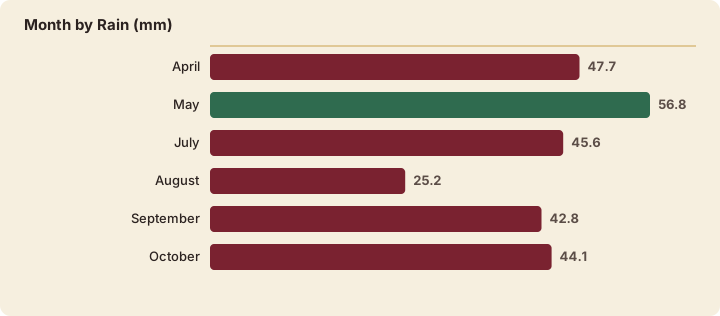
The best window for a Melnik trip is late spring through early autumn, with May, June and September as the comfortable shoulder months: the ERA5 reanalysis for Plovdiv, 1991-2020, shows mean daily highs of 21.9 C in May, 25.9 C in June and 23.8 C in September, against 28.6 C in August, and an exposed sandstone basin amplifies whatever the day gives you. Winter trips are possible but change the day entirely, with a January mean daily low of minus 2.6 C in the Plovdiv grid cell.
| Month | Mean daily high (C) | Mean daily low (C) | Rain (mm) | What it means for Melnik |
|---|---|---|---|---|
| April | 17.1 | 6.4 | 47.7 | green slopes, cool walking |
| May | 21.9 | 11.5 | 56.8 | warm days, the wettest month |
| July | 28.2 | 17.9 | 45.6 | heat on the trails, start early |
| August | 28.6 | 18.1 | 25.2 | the driest month, the strongest sun |
| September | 23.8 | 13.8 | 42.8 | harvest season in the vineyards |
| October | 18.1 | 8.8 | 44.1 | soft light on pale sandstone |
Those figures are modelled normals for the Plovdiv grid cell, ERA5 reanalysis, 1991-2020, not a station record, and reanalysis smooths local extremes, so a sun-facing sandstone slope will run hotter than the number suggests. The practical reading is simple: in high summer, walk the pyramids in the morning and taste wine at midday; in spring, carry a layer for the evening return; in September, the vineyards are at their most active and the harvest gives the day a narrative. Autumn in the wider region has its own draws, and the Plovdiv in autumn guide covers the season in the city itself.
One timing note on events, since they can either make or crowd a trip: Opera Open ran at Plovdiv's Ancient Theatre from 23 June to 9 September in 2026, and Kapana Fest's autumn edition ran across the first two weekends of October 2026. A Melnik day slots around city events easily because it is a daytime excursion, but book Plovdiv accommodation earlier if your dates overlap a festival weekend.
What Else Combines Well With Melnik On A Plovdiv-Based Holiday?
Melnik combines well with the gentler Plovdiv day trips rather than with a second long drive, and the nearby options are Bachkovo Monastery, Asen's Fortress, Koprivshtitsa and the closer wine regions of Brestovitsa and Starosel, each reachable as its own day from the city. Stacking two long drives into one day is the classic mistake on a Plovdiv base, because the published connections already show how regional transport thins outside the corridors. One southwest day, then a different direction the next, is the pattern that works.
| Day trip from Plovdiv | Character | Best paired with |
|---|---|---|
| Melnik | sandstone pyramids and red wine cellars | a quiet Plovdiv evening after |
| Bachkovo Monastery | working monastery, free entry, about 30 km | Asen's Fortress on the same road |
| Koprivshtitsa | Revival-era houses, about 10 euro combined ticket | a history-focused day |
| Brestovitsa | wineries close to the city | a half-day, any season |
| Rhodope Mountains | gorges, caves and high villages | a separate full day south |
The pairing logic also respects pacing. After a hot morning on Melnik's trails, the evening back in Plovdiv belongs to the Kapana creative district, whose name means "The Trap", a maze of narrow streets where the site's own full attractions roundup begins. And if the Melnik day whets an appetite for the heavier reds, the Perushtitsa day trip and the Brestovitsa cellars sit close enough to Plovdiv to fill a shorter day without another long drive.
Readers with more than a week can chain the southwest into a loop: Melnik one day, the Bachkovo Monastery and Asen's Fortress road another, and Koprivshtitsa on the way toward Sofia at the end. That sequence covers monastery architecture, fortress views, Revival houses and wine without ever repeating a landscape.
What Should You Confirm Before You Go To Melnik?
Confirm four things before a Melnik day: the outbound and return transport times, which cellar visits are open and at what tasting fee, the trail conditions on the pyramids paths, and whether your Plovdiv accommodation nights carry a local tourist tax, whose 2026 euro rate is not published. Everything else on the day, the walking, the tasting, the photography, is flexible enough to arrange on arrival. Those four items are the ones that can strand you or cost you the afternoon.
The reasoning behind each is short. Transport, because regional frequencies are thin and no Melnik timetable is published. Trails, because sandstone paths shift with erosion and rain, and a closed path is a local fact, not a published one. The tourist tax, because Bulgarian municipalities charge it per night through the accommodation, the exact current rate is not published here, and the fair instruction is simply to confirm at booking.
A short checklist in table form keeps the evening-before routine honest:
| Before you leave Plovdiv | Where to confirm | Why it matters |
|---|---|---|
| Return departure from Melnik | local bus listings or your host | no published timetable |
| Pyramid trail status | ask locally on arrival | paths shift with erosion |
| Tourist tax on your stay | confirm at booking | 2026 euro rate not published |
| Cash for the day | withdraw in Plovdiv | small-town card coverage varies |
None of this makes Melnik difficult. It makes it the kind of day trip that rewards one evening of questions, and pays that back with a morning on pale rock towers and an afternoon in a cool cellar, which is a fair trade by any measure.
Common Questions About Melnik Day Trips From Plovdiv
Is Melnik worth a day trip from Plovdiv?
For wine and landscape, yes: the sandstone pyramids and the rock-cut cellars are a scene nothing else within day-trip range of Plovdiv offers. The trade-off is transit time each way, and since no timetable for the route is published, confirm the connections before deciding.
How do you get from Plovdiv to Melnik?
By road, heading southwest from Plovdiv.
Can you taste Melnik wine in Plovdiv?
Yes. Bulgarian wine tastings run in Plovdiv's city center and pour across the country's southern regions, including the Melnik style. The Check availability link shows the featured tasting option on this site.
What should you wear for the Melnik pyramids?
Sturdy shoes for loose sandstone slopes and sun protection for exposed trails. The ERA5 reanalysis for Plovdiv, 1991-2020, puts the mean daily high at 28.6 C in August, and an open sandstone basin will feel the full value of that, so morning walking is the comfortable plan.
Does Melnik have an entry fee?
The town and its pyramid viewpoints are an open landscape rather than a ticketed site, and tasting fees and small local charges for Melnik cellars, museums or tours are best confirmed on arrival. Confirm tasting fees and any small local charges on arrival.
What currency do you need in Melnik?
The euro. Carry some cash for small-town cellar tastings and meals.
Melnik rewards the traveler who treats it as a landscape-and-cellar day rather than a checklist of monuments, and Plovdiv rewards the same traveler with the tasting tables, the Roman layers and the Kapana evenings that fill the hours around the drive. Confirm the four items above, book the cellar or the transfer where you can, and let the pyramids do the rest.
