Brestovitsa And The Plovdiv Wine Villages
Brestovitsa is the wine village closest to Plovdiv, in southern Bulgaria, a short drive south of the city into the Thracian valley where the Mavrud and Rubin grapes grow. Here is what the estates around it offer and how to plan the trip.
Short answer
Brestovitsa sits in the hills about 25 to 30 km south of Plovdiv and can be reached by car or taxi in well under an hour. Several wineries around the village and the nearby Thracian valley receive visitors for tastings of local grapes such as Mavrud and Rubin; book ahead, because tasting hours vary by estate.
Brestovitsa is the wine village that Plovdiv, Bulgaria's second-largest city, keeps in its backyard: a settlement in the Thracian lowlands and hills south of the city, surrounded by the vineyards that give the Plovdiv region its reputation for red wine. The village sits roughly 25 to 30 km from Plovdiv, close enough that a tasting trip can fill a half day, and it shares its wine country with estates scattered across the wider Thracian valley, from Dragomir about 15 km out to other producers a 45-minute drive from the city. None of the estates here publishes its prices or hours on a single official page, so the working rule for every winery named below is the same: check the estate or confirm at booking.
The point of the trip is grape character. Southern Bulgaria's Thracian valley, the plain and foothills around Plovdiv and further east, is the home ground of Mavrud, a dark local red, and of Rubin, a Bulgarian cross that behaves like nothing else in Europe. The region has a long wine story, and the estates around Brestovitsa pour it by the glass. This guide lays out which wineries sit where, what a tasting actually involves, how to reach the village without a car, and how the trip compares with the other wine and day-trip options around Plovdiv. For the wider picture on Bulgarian bottles, start with the site's Bulgarian Wine In Plovdiv guide and the master Things To Do In Plovdiv page.
Where Is Brestovitsa And Why Do Plovdiv Wine Travellers Go There?
Brestovitsa is a village in the Rhodope foothills about 25 to 30 km south of Plovdiv, and it gives its name to the wine country closest to the city. The village area holds working wineries that receive visitors for tastings, and the estates around it, from Dragomir roughly 15 km from Plovdiv to Villa Yustina 25 to 30 km out, sit within a 45-minute drive of the centre.
The geography matters more than the distance. Plovdiv itself sits on six hills in the Thracian plain; the land rises to the south toward the Rhodopes, and the belt between the city and the mountains is where the valley's red-grape vineyards cluster. Brestovitsa sits inside that belt, with cooler slopes than the flat valley floor, which is one reason local producers prize fruit from around the village.
The wine tradition here is not a recent invention dressed for tourism. Bulgaria's Thracian valley has grown wine since long before modern estates existed, and the valley around Plovdiv is the zone most associated with Mavrud. The village and its neighbours turned that heritage into a practical day out: cellar doors, tasting rooms, and enough concentration of estates that one drive covers several stops. A companion option with the same ancient-Thracian flavour but no wine is the Starosel Thracian Complex day trip, which pairs naturally with a wine outing on a two-day plan.
What Brestovitsa does not offer is a formal visitor infrastructure on the scale of old European wine routes. Tastings generally need to be arranged in advance, estates keep their own hours, and walking between wineries is not realistic; they sit on village edges and rural roads. Plan it as a booked itinerary, not a wander.
Which Wineries Around Brestovitsa And Plovdiv Can You Visit?
The names that come up for visits around Brestovitsa and the Thracian valley near Plovdiv are Villa Yustina, Villa Vinifera and Bendida in the Brestovitsa area, and Dragomir closer to the city, all reachable within about 45 minutes of Plovdiv. Each estate runs its own tasting programme with tour and pairing options, and each asks visitors to book ahead rather than arrive unannounced.
These four are the practical core of a Plovdiv wine day. Villa Yustina, 25 to 30 km from the city, is the estate most often named for a full visit: cellar tour, tasting of its range, and food pairings. Bendida and Villa Vinifera sit in the Brestovitsa orbit and pour the local reds alongside their other lines. Dragomir, about 15 km out, is the closest to Plovdiv and works for a shorter stop. Some estates include pairings or lunch with a tasting; the details are on each producer's listing, and prices vary by package, so treat the table below as a planning map rather than a price list.
| Estate | Location relative to Plovdiv | Known for | Visit style |
|---|---|---|---|
| Villa Yustina | 25 to 30 km, Brestovitsa area | Mavrud and Rubin, plus local white varieties | Cellar tour with tasting, pairings, book ahead |
| Bendida | Brestovitsa area | Red and white range from Thracian-valley fruit | Tasting room visits, book ahead |
| Villa Vinifera | Brestovitsa area | Small-estate reds, Mavrud focus | Tastings by arrangement |
| Dragomir | About 15 km from Plovdiv | Estate closest to the city | Short-visit tastings, book ahead |
Two honest caveats. First, opening days and tasting times change with the season and with group bookings, so the visit only counts as planned once the estate confirms it. If a day of driving and cellar doors sounds like too much, a tasting inside Plovdiv itself is the alternative: the Bulgarian Wine In Plovdiv guide covers what to look for, and a booked tasting with food is described further down this page.
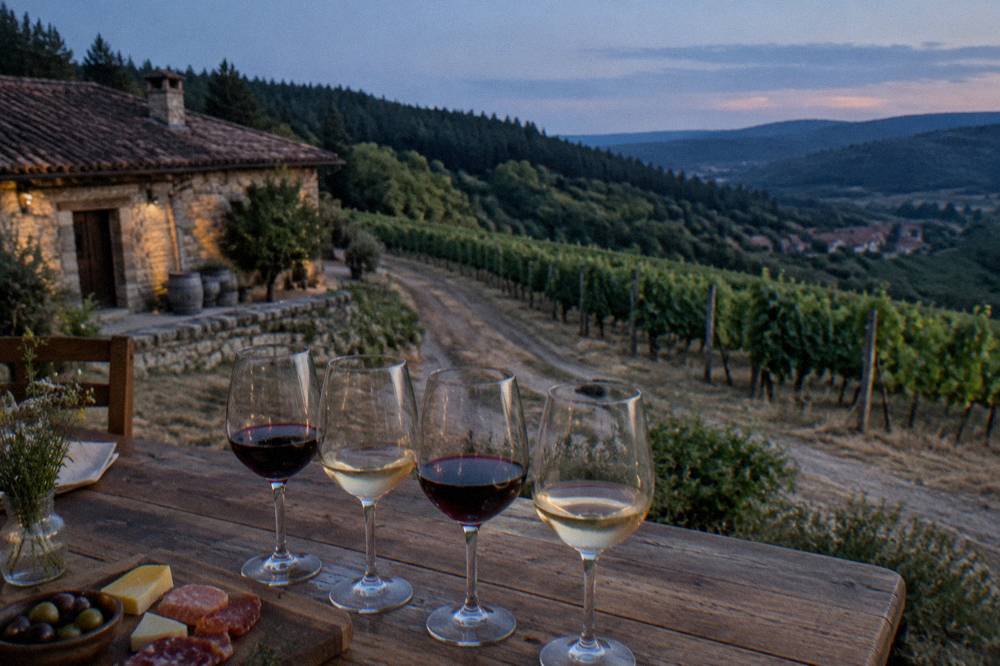
The estate list also answers a common planning question: can you do more than one winery in a day? Yes, on paper, since the drive between stops is short, but tastings run long and every extra stop adds a booking that must align. Two estates is a realistic maximum for a relaxed day; three turns the trip into logistics.
What Does A Wine Tasting In Brestovitsa Actually Include?
A tasting at a Brestovitsa area estate typically combines a walk through the cellar with a seated flight of several wines, often led by staff who explain the local grapes, and many estates add cheese, cured meats or a fuller food pairing for a higher package. Expect to spend one to two hours at a single producer, and expect to book the slot in advance rather than walk in.
The format follows the cellar-door pattern common across the Thracian valley. The visit usually opens with the production side, barrels, tanks, sometimes the bottling line, then moves to a tasting room where the estate pours its range: a white or two, then the reds the region is known for, with Mavrud almost always in the lineup. Staff walk visitors through each glass. Pairings, where offered, lean on Bulgarian table staples, cheese, cured meats and bread, which suit the local reds well.
For travellers who want the same experience without leaving the city, a booked option exists in central Plovdiv: a guided wine tasting with cheese and cured meats, where the operator's listing carries the current price and availability. Check availability on the operator's live listing. The same logic applies to valley estates: the fee and the menu are confirmed at booking, not printed on this page.
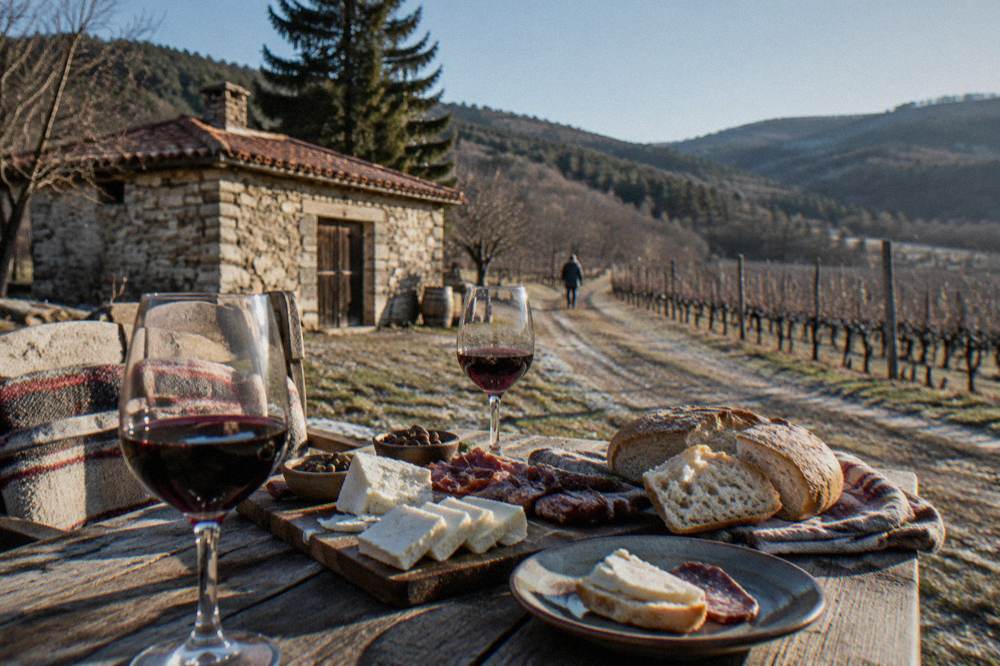
A short word on rakia, because it will appear. Bulgaria's fruit brandy is the traditional opener to a meal and sometimes ends a tasting; the site's Bulgarian Wine In Plovdiv guide and the rakia coverage there explain the custom. Treat it as part of the hospitality, not a separate event.
What Are Mavrud And Rubin, The Grapes Of The Plovdiv Wine Country?
Mavrud is a native Bulgarian red grape grown mainly in the Thracian valley around Plovdiv, making deep, tannic wines that age well, and Rubin is a 20th-century Bulgarian cross of Syrah and Nebbiolo that gives softer, aromatic reds; together they define the bottles poured at Brestovitsa area estates. Both names appear on nearly every local tasting list.
Mavrud is the region's signature. It ripens late, needs the warmth of the Thracian plain, and produces small berries with thick skins, which is where the colour and structure come from. Wines labelled Mavrud run from firmly tannic when young to mellow and spicy after time in oak and bottle. For visitors whose reference points are international, the honest comparison is a serious southern European red: full-bodied, dark-fruited, food-friendly.
Rubin is younger history, a Bulgarian crossing created in the 20th century from Syrah and Nebbiolo, and it reads exactly like its parents suggest: aromatic, medium to full, rounder than Mavrud in its youth. Estates around Brestovitsa often pour the two side by side, which is the fastest education in local wine a visitor can get.
| Grape | Type | Home region | Style in the glass | Best food match |
|---|---|---|---|---|
| Mavrud | Red, native | Thracian valley, Plovdiv area | Deep, tannic, dark fruit, ages well | Grilled meats, kavarma, aged cheese |
| Rubin | Red, Bulgarian cross (Syrah x Nebbiolo) | Thracian valley | Aromatic, softer, spicy | Roasts, cured meats, mild dishes |
| Local whites | White varieties | Thracian valley | Fresh, dry, everyday styles | Shopska salad, fish, banitsa |
Whites should not be dismissed. The valley produces clean, dry whites that locals drink with salads and starters, and a full tasting flight usually opens with one. The dishes named in the table are general Bulgarian pairings described in the site's food guides, not claims about any specific estate's kitchen.
How Do You Get To Brestovitsa From Plovdiv Without A Car?
The practical car-free routes to Brestovitsa are a taxi or ride from Plovdiv, a drive of well under an hour, or a booked wine tour that collects guests in the city; scheduled public transport to the village exists in the form of local buses toward the Rhodope foothills, but wineries sit outside the village centre, so a vehicle is effectively needed at the far end.
The honest framing first: Brestovitsa is a rural destination and the estates are not grouped on one walkable street. Local bus services run from Plovdiv's bus stations toward the southern villages, and Brestovitsa sits on that side of the city, but bus frequency and stops closest to each winery are exactly the kind of detail that shifts seasonally: check locally before committing a day to it. More of these guides are collected on Plovdiv Travel Guide.
The car-free route with the least friction is a booked tour with pickup, and the roster on this site includes private wine experiences from Plovdiv into the Thracian valley. The listing carries the current price, the pickup arrangement and the estates on the route.
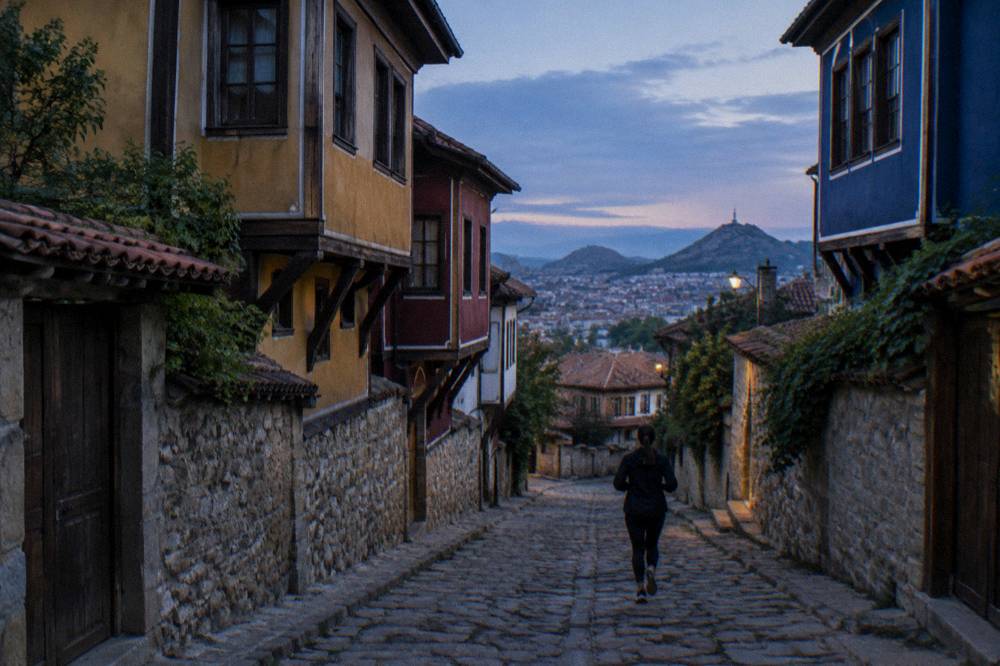
For self-drivers, the roads south of Plovdiv toward the Rhodope foothills are ordinary rural routes, and the drive doubles as scenery: the plain gives way to rolling country within half an hour. Combining Brestovitsa with a further stop works well geographically. The Asen's Fortress day trip and Bachkovo Monastery lie in the same southern direction, about 30 km on, and a car can string wine, fortress and monastery into one long day, though three bookings in a day is ambitious.
When Is The Best Time To Visit The Brestovitsa Wine Country From Plovdiv?
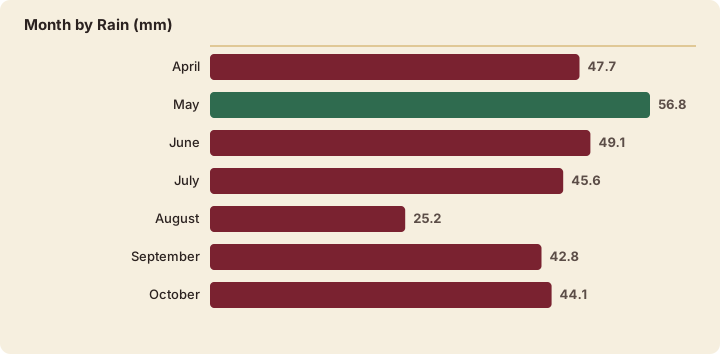
The most comfortable months for a Brestovitsa wine trip are May, September and October, when the ERA5 reanalysis 1991-2020 shows Plovdiv mean daily highs of 21.9 C, 23.8 C and 18.1 C with modest rain, and the vineyards are green or into harvest; July and August are hotter, with mean highs of 28.2 C and 28.6 C, and winter visits are perfectly possible because tastings happen indoors.
Wine travel around Plovdiv is less weather-dependent than hill walking, since the tasting room is the destination, but two moments raise the experience. Late spring, May into June, puts the vineyards in full leaf and the days are warm without valley-peak heat. Early autumn, September into October, is harvest season in the Thracian valley, the estate calendars are at their busiest, and the countryside is at its most photogenic; the site's Plovdiv In Autumn guide covers the wider season. May carries the highest monthly rainfall in the normals, 56.8 mm, so a spring visitor should keep a flexible indoor fallback, and the estates themselves are exactly that.
| Month | Mean daily high (C) | Mean daily low (C) | Rain (mm) | Wine-country character |
|---|---|---|---|---|
| April | 17.1 | 6.4 | 47.7 | Bud break, quiet estates |
| May | 21.9 | 11.5 | 56.8 | Green vineyards, wettest month |
| June | 25.9 | 15.4 | 49.1 | Long days, full canopy |
| July | 28.2 | 17.9 | 45.6 | Peak heat, indoor tastings |
| August | 28.6 | 18.1 | 25.2 | Warmest highs, driest month |
| September | 23.8 | 13.8 | 42.8 | Harvest begins, busiest season |
| October | 18.1 | 8.8 | 44.1 | Harvest and late tastings |
The figures are ERA5 reanalysis values for the 1991-2020 period, modelled over the grid cell near Plovdiv, not a station record, and reanalysis smooths the urban heat of the city itself. Winter has its own case: cellars hold a steady temperature, crowds are thin, and a December tasting pairs well with the Christmas programme in Plovdiv.
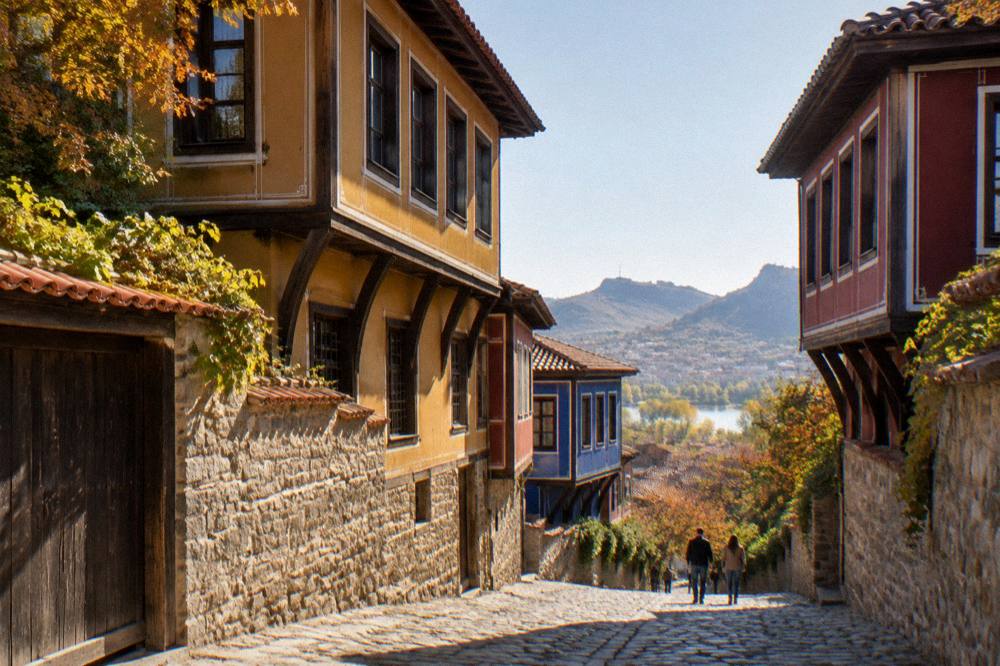
How Does Brestovitsa Compare With Bulgaria's Other Wine Regions?
Brestovitsa and the Plovdiv-area estates are the easiest wine country to reach from Bulgaria's second city, a half-day trip by car, while Melnik in the southwest is the country's most storied small wine region, a longer expedition best combined with the Rila Monastery, and the Rose Valley around Kazanlak mixes wine with rose and Thracian heritage rather than focusing on cellars alone.
Each suits a different trip. Brestovitsa wins on access: nowhere else in Bulgaria puts working estates this close to a major city. Melnik, covered in the site's Melnik day trip guide, is the destination for a wine-led overnight, with its own native grape and dramatic sand pyramids, but it is hours from Plovdiv and belongs on a southwest itinerary alongside Rila Monastery. The Rose Valley, in the Kazanlak and the Rose Valley guide, is close to Plovdiv and shares Thracian-valley vineyards, yet its headline attractions are the rose fields and Thracian tombs, with wine as a strong supporting act.
| Region | Distance from Plovdiv | Signature wines | Best combined with | Trip shape |
|---|---|---|---|---|
| Brestovitsa / Thracian valley near Plovdiv | 15 to 45 min by car | Mavrud, Rubin | Asen's Fortress, Bachkovo, Perushtitsa | Half or full day |
| Rose Valley / Kazanlak | About 1.5 to 2 h by road | Valley reds and whites | Rose heritage, Thracian tombs | Full day |
| Melnik (southwest) | Several hours by road | Melnik native red | Rila Monastery, Sofia routes | Overnight |
Can You Visit Brestovitsa On A Booked Tour From Plovdiv?
Yes: booked wine experiences from Plovdiv cover the Thracian valley estates with hotel pickup, a guide and tastings arranged in advance, which removes the driving, the booking calls and the language friction of independent visits, and the booking page shows the current price, the exact estates on the route and the cancellation terms.
For a visitor with one or two days in Plovdiv, the arithmetic is simple. Independent estate visits need a car or taxi, a confirmed booking at each producer and a sober driver; a tour bundles all three. The tradeoffs are freedom and pace, since a private tour follows its own route and a shared one follows a schedule. The options below are the site's current trio for this page: the city-centre tasting with food, a private Rose Valley and Thracian Kings day that adds heritage to the wine country, and a classic guided walking tour of Plovdiv itself for the morning before an afternoon tasting.
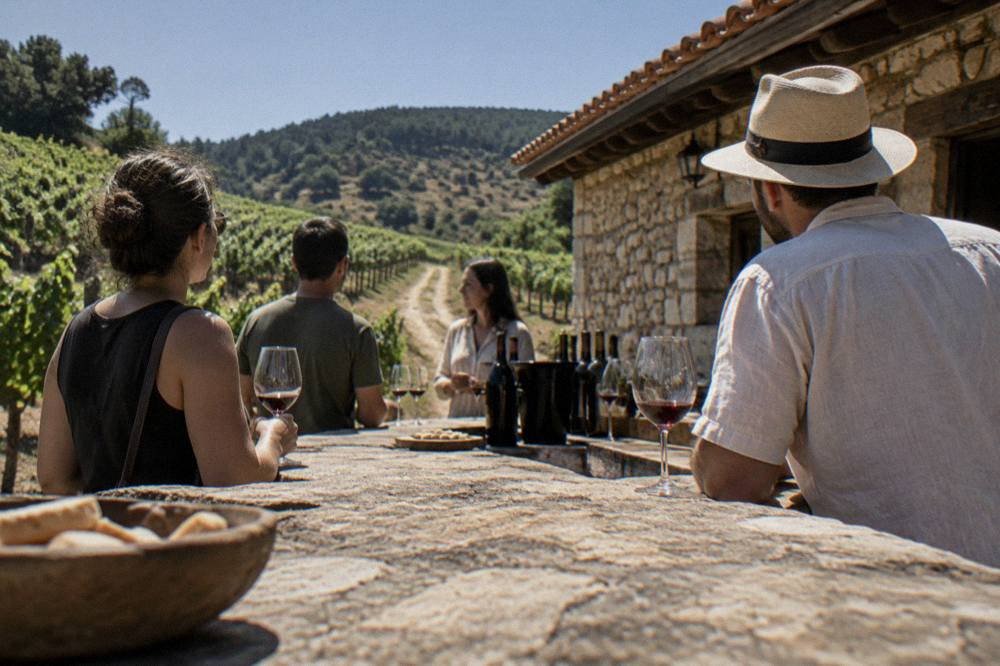
The solo option below is the city version, for days when the schedule does not allow a drive south. It pours the same regional bottles in central Plovdiv, with the pairing board included.
And for travellers basing the whole day on foot, the guided walking tour of the city pairs naturally: Old Town and Roman sites in the morning, tasting in the evening.
Want to eat your way through the city as well? Book a Bulgarian food walk here.
What Else Can You Combine With A Brestovitsa Wine Day?
The strongest combinations are Asen's Fortress and Bachkovo Monastery in the same southern direction, the village of Perushtitsa next door, and, for a longer plan, the Rhodope destinations beyond Asenovgrad, since all of them sit along the road corridor south of Plovdiv that the wine villages share.
A one-day car route writes itself: leave Plovdiv mid-morning, stop at Brestovitsa or Dragomir for a tasting, continue to Asenovgrad for the fortress above the gorge, then Bachkovo Monastery, whose entry is free and whose frescoed church is one of the great interiors of the Balkans, and return by early evening. That loop covers wine, medieval history and a working monastery in a single day, and the Bachkovo Monastery guide and the Rhodopes day tour page carry the detail. Going deeper into the mountains, the Rhodope Mountains guide opens the villages, gorges and caves of southern Bulgaria.
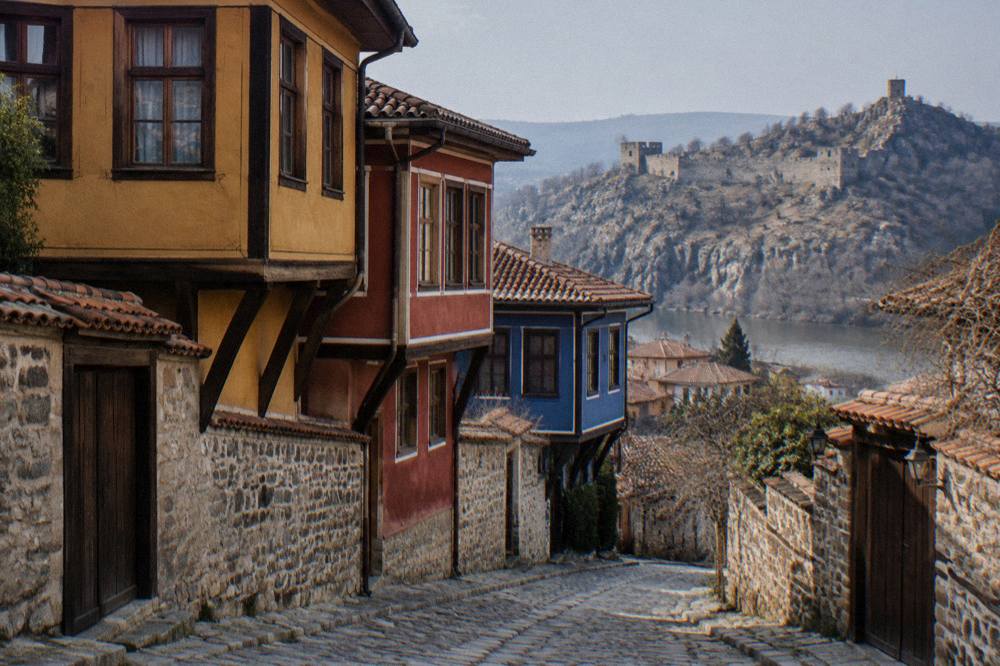
For a two-day southern plan, the second day can push to the Wonderful Bridges or the spa town of Devin, or north instead to Koprivshtitsa for the Revival-era houses. The rule of thumb is booking discipline: confirm the winery first, since cellar hours are the least flexible part of any southern itinerary, then build the fortress, monastery or village stops around the tasting slot.
Tasting fees, taxis and pairings should all be confirmed in euro at booking, and a card plus some cash covers every cellar door in the valley.
Common Questions About Brestovitsa And Plovdiv Wine Tasting
How far is Brestovitsa from Plovdiv?
The village sits about 25 to 30 km south of Plovdiv in the Thracian valley foothills, a drive of well under an hour, with estates in the wider area reachable within about 45 minutes of the city.
Do you need to book a wine tasting at Brestovitsa in advance?
Yes. Estates around Brestovitsa and the Thracian valley run their own tasting hours and group schedules, and walk-in visits are not guaranteed. Book the slot directly with the producer or through a tour before planning the day around it.
Can you get to Brestovitsa by public transport from Plovdiv?
Local buses run from Plovdiv toward the southern villages, but the wineries sit outside the village centre and schedules shift seasonally. A taxi, a rental car or a booked tour with pickup is the practical car-free option; confirm bus details locally if you want to try them.
What wines is the Brestovitsa area known for?
The region pours Mavrud, the native Thracian-valley red known for depth and structure, and Rubin, a Bulgarian cross of Syrah and Nebbiolo that is softer and aromatic, alongside fresh dry whites from the same valley.
Is Brestovitsa suitable for a half-day trip from Plovdiv?
Yes. With a pre-booked tasting at one estate, the round trip, the visit and a pairing fit comfortably into a half day, and the rest of the day can absorb a walk through Plovdiv's Old Town or a stop closer to the city.
When is harvest season in the Plovdiv wine country?
Harvest runs from late August into October in the Thracian valley. September and October combine activity at the estates with comfortable temperatures: ERA5 reanalysis 1991-2020 shows mean daily highs of 23.8 C and 18.1 C in those months.