Kapana: The Creative District For Cafes And Evenings
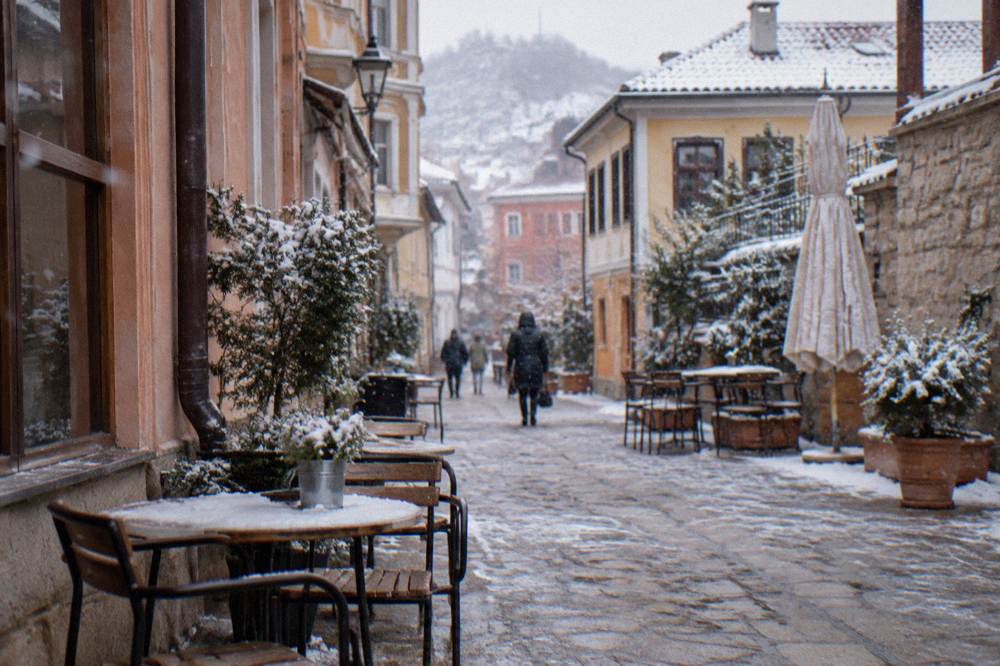
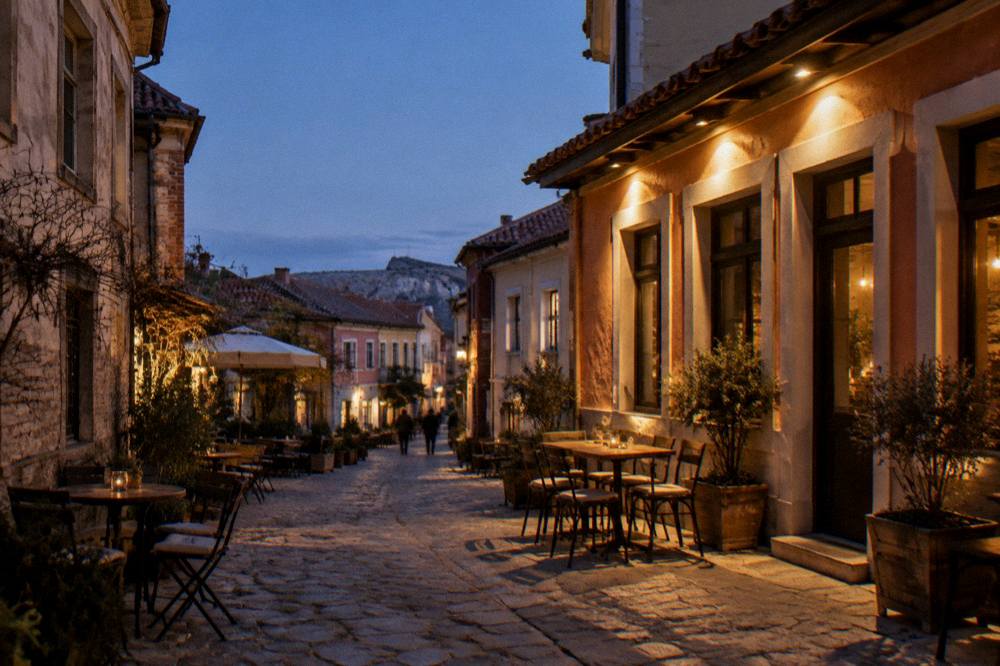
Kapana, the maze of narrow streets at the foot of Plovdiv's Old Town, is the city's creative district: free, open and busiest in the evening.
Short answer
Kapana is Plovdiv's creative district, a web of small streets whose name means The Trap. It sits between the Old Town and Main Street, is free to wander at any hour, and is the part of the city where cafes, galleries and evening life cluster.
Kapana is the web of narrow streets in central Plovdiv, the inland city in southern Bulgaria built around six hills, and its name translates as "The Trap", a reference to the tangled layout that the city's own tourism site says once left visitors wandering in circles. Today those same streets form Plovdiv's creative district, the part of the city where cafes, galleries, workshops and street art sit closest together, and the quarter that carries the city's evening life. The whole district is public street: no gate, no ticket, no closing time, and the pedestrian walk from the Roman Stadium end of Main Street to Hisar Kapia at the edge of the Old Town passes straight through it.
What Is Kapana In Plovdiv?
Kapana is Plovdiv's creative district, a compact maze of narrow interlocking streets whose Bulgarian name means "The Trap", located immediately west of the Old Town and the Roman Stadium end of Main Street. It is public street space, free and open at all hours, with no ticket, no gate and no official closing time, and it functions as the city's hub for cafes, small galleries, studios and street art.
The name is not marketing. The municipal tourism site, visitplovdiv.com, explains the district's name through its street plan: lanes that meet at odd angles, shortcuts that double back, and blocks small enough that the whole quarter reads as a single tangled knot. That layout survived the twentieth century largely intact, and after Plovdiv's year as European Capital of Culture in 2019, shared with Matera, the quarter's regeneration as a creative district accelerated. Murals, festival stages and maker spaces now sit inside a street pattern that has not changed shape.
What that means practically is density. Within a few minutes' walk a visitor can pass a print studio, a vinyl shop, a courtyard cafe and a section of the Roman Stadium, because Kapana borders the city's ancient core rather than standing apart from it. The Old Town's cobbled slopes begin at Hisar Kapia on one side; Main Street and the centre press against the other. If the Old Town is where Plovdiv keeps its history, Kapana is where it keeps its present, and the two quarters are a two-minute walk apart.
Confirm hours and prices locally before you commit to a gallery, bar or shop. The district itself, its name, its meaning and its open-street status are on the record; individual doors open and close on their own schedules, and the sensible plan is to wander and let the quarter surprise you, then confirm anything specific on the spot.
Where Is Kapana And How Do You Reach It On Foot?
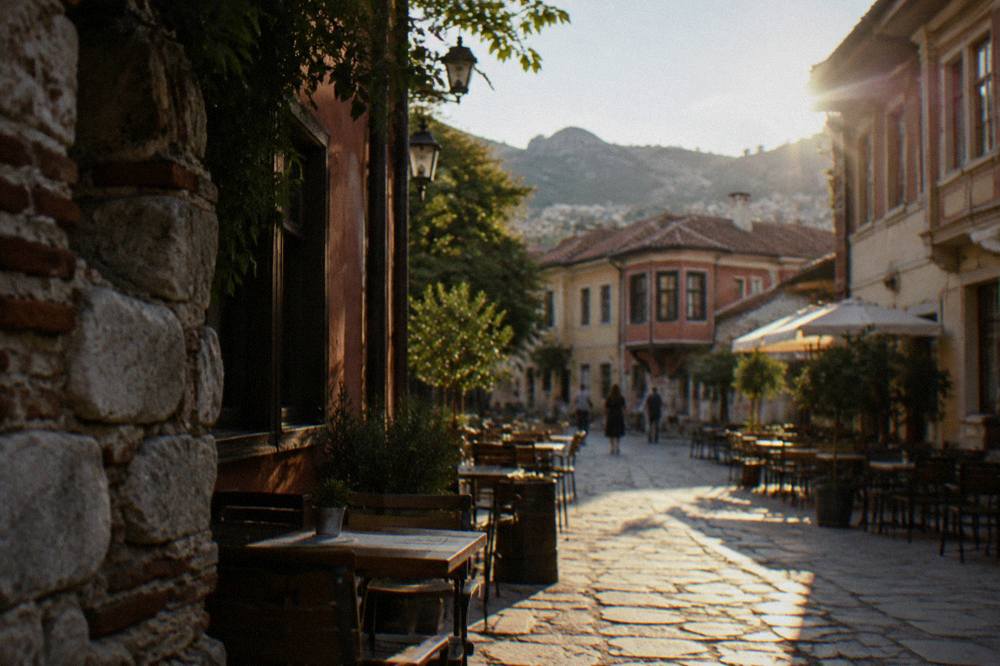
Kapana sits in central Plovdiv between the Roman Stadium, at the southern end of the pedestrian Main Street, and Hisar Kapia, the Ottoman-era gate that leads up into the Old Town. Everything in the district is within a five-minute walk of Central Square, and the whole quarter can be crossed on foot in under ten minutes, making it the natural hinge between the shopping street and the historic hill.
The geography is simple once you see it once. Plovdiv's pedestrian Main Street runs north to south and ends where the Roman Stadium's excavated northern curve, the sphendone, lies open to view; Kapana spreads west and south of that point. The Roman Stadium sphendone is free to see in the open air, so the stadium effectively marks the district's northeastern corner. Climb east instead and you reach Nebet Tepe, the free open-air archaeological complex on one of the city's hills, whose restoration officially opened in March 2025.
Directions by landmark, all walkable and free:
| From | To Kapana's edge | What marks the boundary |
|---|---|---|
| Main Street (south end) | Immediate | Roman Stadium sphendone, visible open-air |
| Central Square | About 5 minutes on foot | Kapana's lanes begin behind the square's west side |
| Hisar Kapia gate | Immediate | The gate itself opens onto the district |
| Nebet Tepe | Short climb down via Old Town steps | Hisar Kapia sits at the foot of the slope |
| Dzhumaya Mosque | About 3 to 5 minutes | Mosque square, then the stadium end of Main Street |
The district's flatness is part of its appeal. Unlike the Old Town, which is cobbled and climbs toward the Three Hills, Kapana's lanes sit on level ground, which makes it the easiest part of historic Plovdiv to walk in ordinary shoes. Visitors combining the quarter with the Old Town typically do Kapana first on the flat, then climb through Hisar Kapia, though the reverse works for anyone ending their day with dinner and a drink in the lanes. A one-day plan that stitches the two together is laid out in Plovdiv In One Day.
Because the streets are narrow and the quarter is small, the practical advice is to abandon route-finding. The Trap rewards getting lost on purpose. Every lane reconnects to another within a block or two, and the district is small enough that no wrong turn costs more than a minute.
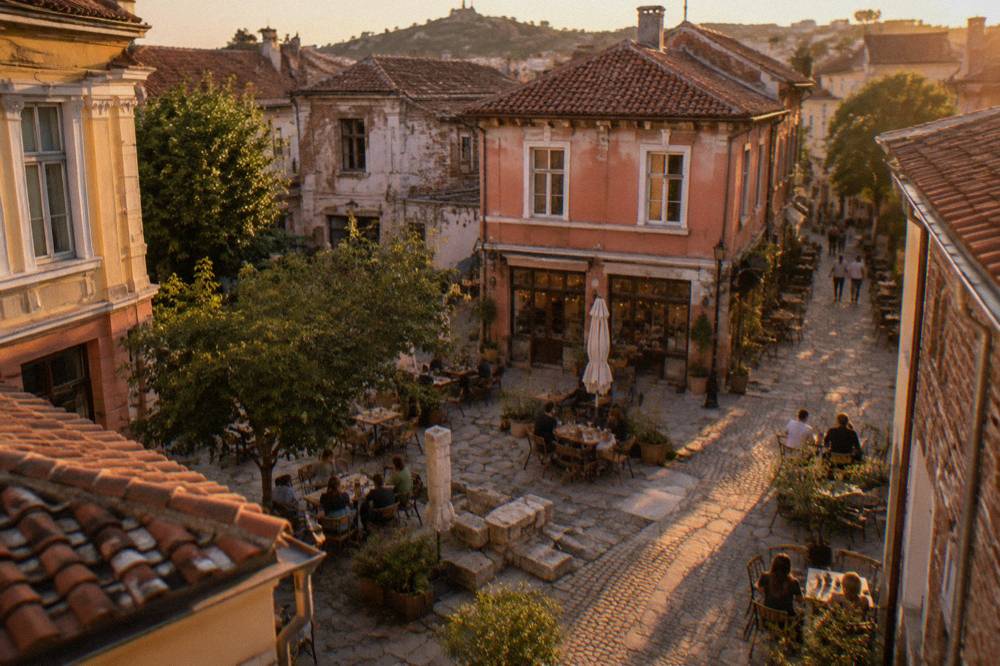
For travellers who want a structured walk before exploring freely, there are guided options that cover the ancient landmarks on the district's doorstep:
What Can You Do In Kapana During The Day?
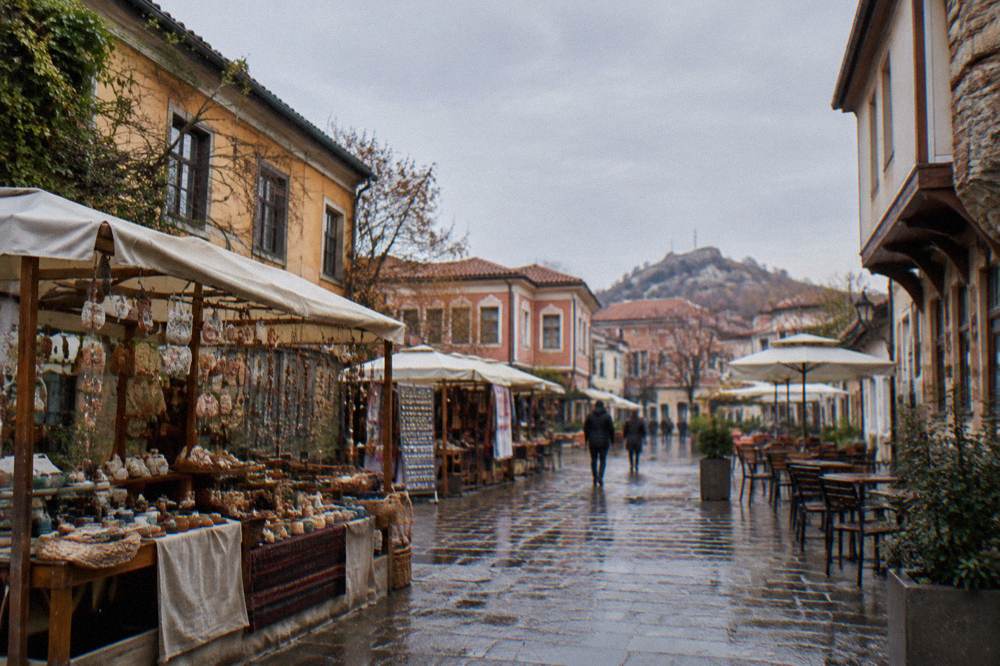
Daytime Kapana is about coffee, craft, street art and browsing: the district's lanes hold small galleries, studios and independent cafes, all set in public streets that cost nothing to walk, and the quarter also hosts a weekend artisan market tradition with handmade goods and street food. Nothing in the district requires a ticket, so a full morning here can cost nothing at all beyond what you choose to spend at a counter.
Coffee is the district's daytime ritual, and Bulgarian cafe culture runs deep. Plovdiv's cafe scene is covered in detail in Plovdiv Coffee And Cafes; the general price level, from Numbeo crowd data rather than any official tariff, puts an espresso or cappuccino at around 2 euro, a figure to treat as a rough crowd-sourced guide rather than a promise. Banitsa, the cheese-filled filo pastry that anchors the Bulgarian breakfast, is the standard companion, described more fully in the site's guide to Bulgarian food.
Street art is the second daytime draw. The walls of Kapana carry a rotating stock of murals and paste-ups, enough that the quarter functions as an open-air gallery with no entry fee and no fixed route. The site's Plovdiv street art guide covers the broader scene across the city. Add the artisan market tradition: weekend stalls with handmade goods have run in the district, though market days and hours shift with the season and no specific stall, schedule or price was confirmed for this page, so check locally on arrival.
| Daytime activity | Where it happens | Cost basis |
|---|---|---|
| Street art walk | Walls throughout the lanes | Free, public street |
| Artisan and craft browsing | Weekend market tradition, shops in lanes | Free to browse; goods priced per maker |
| Coffee and banitsa | Independent cafes | Around 2 euro per coffee, Numbeo crowd data |
| Galleries and studios | Small venues across the district | Free or low; confirm at each door |
| Photography | Corners, murals, gate views | Free |
The district also works as a base for the paid sights around it, and the Old Plovdiv municipal price list gives firm euro figures for those. A single Old Plovdiv site, which includes the Ancient Theatre of Philippopolis and houses such as Balabanov House, is 3.58 euro for an adult; a combined ticket covering up to five sites, excluding the two basilicas, is 10.74 euro. The Bishop's Basilica is priced separately at 7.57 euro. The Ethnographic Museum sits just up the hill. Those tickets are the only compulsory spending anywhere near Kapana, and none of them is inside the district itself.
What Is There To Eat And Drink In Kapana?
Kapana is Plovdiv's densest cluster of cafes, bars and small kitchens, and the dishes to look for are the Bulgarian standards: shopska salad, kavarma, kebapche and banitsa, with rakia and Thracian Valley wine as the drinks. Plan to read boards and menus on the street and treat the meal as part of the wandering.
The food is general Bulgarian custom rather than anything invented for tourists. Shopska salad, tomatoes, cucumbers, peppers and sirene cheese, is the universal starter; kebapche and kyufte are the grilled minced-meat mains; kavarma is a clay-pot stew; tarator, cold yogurt and cucumber soup, appears in summer. The site's guides to what to eat in Plovdiv and to shopska salad and starters cover each dish in detail. For a rough planning level only, Numbeo crowd data puts a mid-range three-course meal for two at about 30 to 40 euro, attributed as crowd data, never as an official price.
Drinks are where the district leans local. Bulgaria's wine heartland, the Thracian Valley, begins at Plovdiv's southern edge, and local varieties led by Mavrud and Rubin pour in the quarter's bars. Rakia, the fruit brandy, is the national aperitif and the subject of its own guide to rakia on this site. A half-litre of domestic draught beer runs around 2 euro by the same Numbeo crowd data. Tipping follows national custom: around 10 percent in restaurants and cafes for good service, or simply rounding up.
| Dish or drink | What it is | When it fits |
|---|---|---|
| Shopska salad | Tomatoes, cucumber, pepper, sirene cheese | Starter, any season |
| Banitsa | Cheese filo pastry | Breakfast with coffee |
| Kebapche and kyufte | Grilled minced meat | Lunch or dinner |
| Kavarma | Clay-pot meat and vegetable stew | Colder evenings |
| Rakia | Fruit brandy, usually shared | Aperitif |
| Mavrud and Rubin | Local Thracian Valley red wines | With dinner |
For travellers who want the wine part of the evening decoded rather than discovered by trial, a guided tasting is the efficient route, and the site's featured pick is a private Thracian Valley wine-tasting day tour from Plovdiv (Check availability), which pairs the city's food culture with the wineries of the valley south of town. The same page explains what distinguishes Mavrud from Rubin, useful knowledge before ordering by the glass in Kapana.
When Is The Best Time To Visit Kapana?
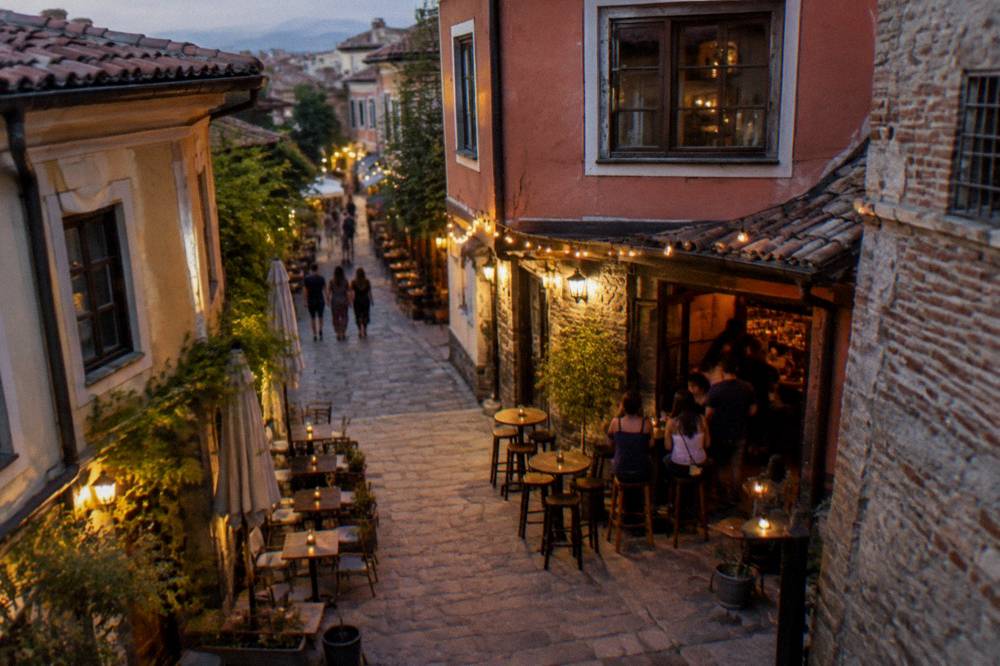
Kapana is busiest and at its best from late afternoon into the evening, when the cafes and bars fill and the district's lanes light up, and the strongest months are May to September, when Plovdiv's modelled mean daily highs run from 21.9 C to 28.6 C and the quarter's terraces stay open late. Winter evenings are quieter but far from dead, with the Christmas market tradition moving onto the Central Square and Kapana areas from 1 December 2026 to 7 January 2027.
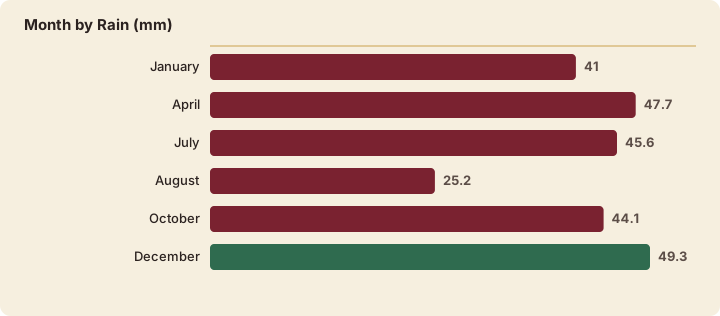
The climate framing comes with a label: these figures are ERA5 reanalysis, 1991-2020, modelled normals for a grid cell near the Old Town, not a station record. They show a continental pattern, warm summers and cold winters, with July's mean daily high at 28.2 C and January's at 5.9 C, January's mean daily low at -2.6 C. Rain is fairly even through spring, with May the wettest modelled month at 56.8 mm, while August is the driest at 25.2 mm.
| Month | Mean daily high (C) | Mean daily low (C) | Rain (mm) |
|---|---|---|---|
| January | 5.9 | -2.6 | 41.0 |
| April | 17.1 | 6.4 | 47.7 |
| July | 28.2 | 17.9 | 45.6 |
| August | 28.6 | 18.1 | 25.2 |
| October | 18.1 | 8.8 | 44.1 |
| December | 7.0 | -0.8 | 49.3 |
Figures: ERA5 reanalysis, 1991-2020, a modelled grid cell that smooths urban heat.
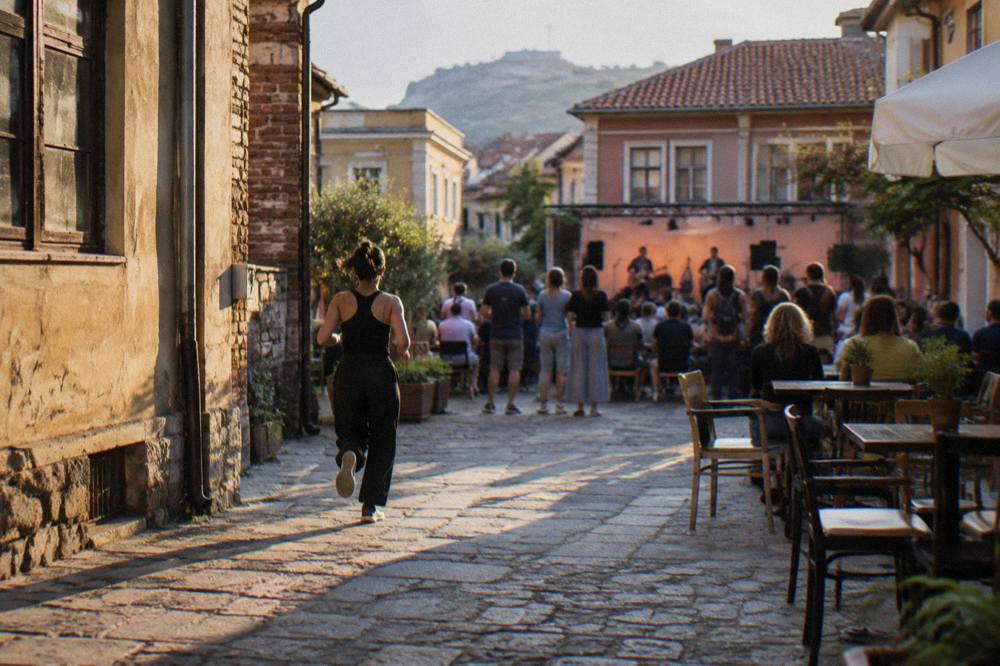
Two seasonal notes shape the choice. First, the district's festival calendar: Kapana Fest ran its autumn 2026 edition over two weekends, 2 to 4 and 9 to 11 October, on the bridge over Gladstone Street and Central Square, a street festival format that fills the quarter's edge with stages and stalls. Second, winter: the Christmas in Plovdiv edition runs 1 December 2026 to 7 January 2027 under the name "Soul of Christmas", across Kapana and Central Square, which makes early December a surprisingly strong date for a city break built around this district. Rainy-day alternatives are covered in Plovdiv In The Rain.
How Does Kapana Compare With Plovdiv's Other Quarters?
Kapana is the creative, social quarter; the Old Town is the museum quarter of revival-era houses and Roman ruins; Main Street is the shopping spine; and the two residential quarters across the river, Kichuk Parizh and Karshiyaka, are where locals live rather than where sights cluster. A first visit usually pairs Kapana with the Old Town, since the two share a border at Hisar Kapia and complement rather than compete.
The Old Town, covered separately, holds the ticketed sights: the Ancient Theatre, the Roman houses, the ethnographic collection and the basilicas. Kapana holds almost none of that and all of the city's maker energy, which is why the standard route descends from the Old Town through Hisar Kapia into the lanes for the evening. The Three Hills rise above both quarters, and the view across the rooftops from Nebet Tepe takes in the whole tangled district at once.
| Quarter | Character | Best for | Ticket needed |
|---|---|---|---|
| Kapana | Creative district, lanes, cafes, bars | Evenings, street art, food | No |
| Old Town | Revival houses, Roman theatre, basilicas | History, views, museums | Yes for sights |
| Main Street and centre | Pedestrian shopping spine | Retail, the Roman Stadium sphendone | No |
| Kichuk Parizh | Residential quarter west of centre | Local pace, quiet walks | No |
| Karshiyaka | Quarter north of the Maritsa river | Parks and everyday life | No |
Kapana is also the natural ending point for almost any day in the city. The evening scene, squares and ancient walls in artificial light, is the subject of the site's Plovdiv nightlife and Plovdiv at night guides, and opening times for venues change with the season. Anyone weighing where to sleep relative to the district can start from Where To Stay In Plovdiv; the centre is compact enough that any central base puts the lanes within a short walk.
Is Kapana Free To Visit?
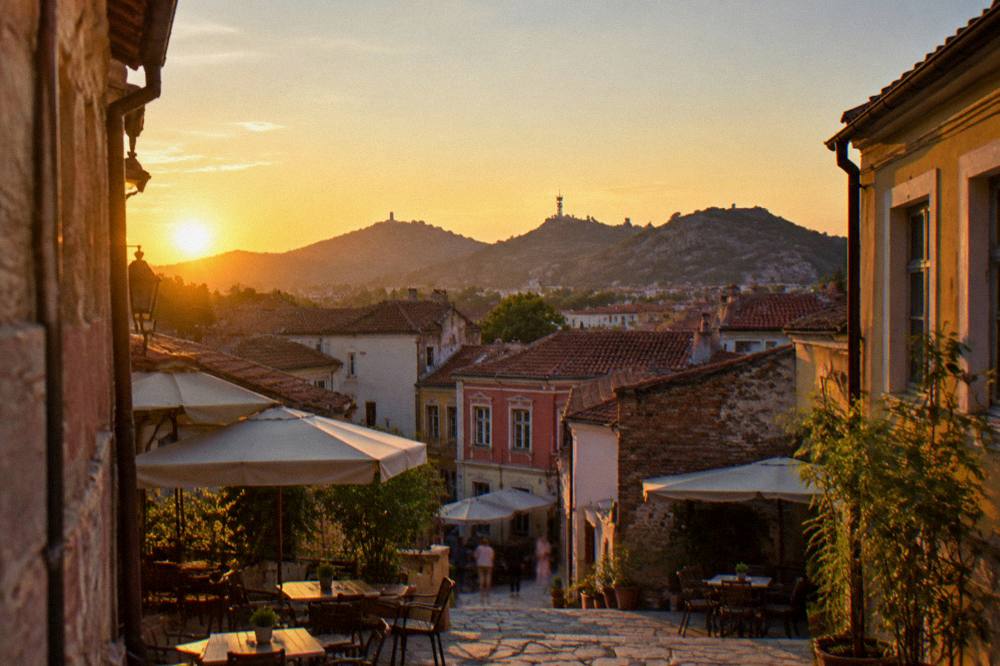
Yes, Kapana costs nothing to enter or wander: the district is ordinary public street, open at all hours, with no ticket, gate or official closing time, and its name meaning "The Trap" refers only to the street layout, not to anything commercial. Every euro spent inside the district is optional, spent at a counter or a stall, and the free sights on its borders, including the Roman Stadium sphendone and Nebet Tepe, are also open public space.
The free list around the district is long, and it is worth planning a zero-spend day deliberately. Nebet Tepe's open-air complex has been free since its restoration opened in March 2025, per reporting on the opening. Hisar Kapia, the gate at Kapana's edge, is a public landmark with no ticket. The Dzhumaya Mosque is free to visit outside prayer times, with modest dress expected. The sphendone of the Roman Stadium is viewable in the open air at no cost. All of this lies within a few minutes of the lanes, and the site's guide to free things to do in Plovdiv extends the list citywide.
Two cautions keep expectations honest. There is no official Plovdiv city card that bundles sights, so any product sold as one should be read carefully before purchase. And no official figure exists for the local tourist tax; it is charged per night by accommodation providers and varies by category, so confirm the amount at booking rather than trusting a number quoted in a forum.
For structured alternatives to wandering alone:
What Should You Know Before Going To Kapana At Night?
Evening Kapana runs late by Bulgarian custom, with dinner often starting around 8 p.m. or later, and the district's bars and small venues carry the city's after-dark energy through the lanes around Hisar Kapia. Streets stay public and lit, opening hours shift with the season, and the practical rules are simple: carry euro cash for small counters, book nothing you cannot cancel, and treat the lanes' uneven cobbles as the price of the atmosphere.
Money first. Cards are widely accepted in the city, but small counters and market stalls in the lanes may prefer cash, and the city bus e-ticket is 0.50 euro. The country has been a full Schengen member since 1 January 2025, which removed land border checks for travellers arriving overland from the EU. More of this is laid out in the site's money in Plovdiv and Plovdiv travel tips guides.
Practicalities, briefly:
| Topic | The practical answer |
|---|---|
| Currency | Euro since 1 January 2026; no exchange needed |
| Getting there at night | Central; a short walk from any central base |
| Dinner time | Bulgarian custom runs late, often from 8 p.m. |
| Tipping | Around 10 percent for good service, or round up |
| Emergency number | 112, the EU-wide free number |
| Footwear | Cobbles and lanes; ordinary flat shoes fine in Kapana |
The evening itself needs no plan beyond a direction of travel. Begin at Central Square as the light drops, walk past the sphendone of the Roman Stadium, let the lanes take over, and finish with a glass of Mavrud within sight of Hisar Kapia's lit arch. On festival weekends the streets do the programming for you, and in December the Christmas market ties the district to the square in one continuous lit walk. Anyone wanting the route written out in order can follow Plovdiv Self-Guided Walk or extend across a weekend with Plovdiv In Two Days. For the wider picture of everything the city offers beyond this quarter, the root guide on this site, Plovdiv Travel Guide, collects it in one place, and the full things to do in Plovdiv page is where the city's paid tours and sights sit side by side.
Common Questions About Kapana In Plovdiv
What does Kapana mean?
Kapana is the Bulgarian word for "The Trap". The municipal tourism site attributes the name to the district's maze of narrow, tangled streets, which historically left visitors disoriented. Today the name is worn as a badge by the creative district that fills those same lanes.
Is Kapana in Plovdiv free to visit?
Yes. Kapana is ordinary public street space with no ticket, gate or closing time. Everything you spend inside the district is optional, at a cafe, bar or market stall. The free public sights on its borders include the Roman Stadium sphendone, Hisar Kapia and Nebet Tepe.
How far is Kapana from the Old Town of Plovdiv?
The two quarters share a border. Kapana's lanes sit directly below Hisar Kapia, the gate at the foot of the Old Town, so the walk from one to the other takes about two minutes. Central Square and the Main Street are roughly five minutes away on foot.
What is the best time of day to visit Kapana?
Late afternoon into the evening. The district's cafes and bars fill after the day's sightseeing ends, and the lanes are at their liveliest then. In summer, modelled mean daily highs reach 28.2 C in July, so evening is also the comfortable time to be outdoors.
Does Kapana have a market?
The district has a weekend artisan market tradition with handmade goods and street food, and its streets host festivals, including the autumn Kapana Fest, which ran 2 to 4 and 9 to 11 October 2026. Market days and hours vary with the season, so confirm locally on arrival.
What food and drink should you try in Kapana?
The Bulgarian standards: shopska salad, kebapche, kavarma and banitsa, with rakia and local Thracian Valley wines such as Mavrud and Rubin. No individual venue in the district had its menu or hours confirmed for this page, so read the boards on the street and choose what looks good.
