Three Days In Plovdiv: Adding Bachkovo Or Asen's Fortress
Three days is enough to see Plovdiv's Roman sites, walk the Old Town and Kapana, and still spend a day in the Rhodope foothills at Bachkovo Monastery and Asen's Fortress.
Short answer
Spend day one on the Ancient Theatre, Nebet Tepe and the Old Town, day two on the Roman Stadium, the Bishop's Basilica mosaics, Main Street and Kapana, and day three out of the city at Bachkovo Monastery and Asen's Fortress, about 30 km south.
Plovdiv, in southern Bulgaria, is an inland city built around six hills, and three days is the comfortable span for it: two days inside the city and a third in the Rhodope foothills. The city is often described as one of the oldest continuously inhabited cities in Europe, it was European Capital of Culture in 2019 together with Matera, and its core sights, the Ancient Theatre of Philippopolis, the Roman Stadium, the Old Town revival houses and the Kapana creative district, sit close enough to walk between. A third day reaches Bachkovo Monastery and Asen's Fortress, about 30 km south, a combination that turns a city break into a fuller trip. This page lays out the three days hour by hour, with the euro ticket prices the Old Plovdiv ticket page lists and the transport facts that matter.
What Does Three Days In Plovdiv Look Like?
Three days in Plovdiv splits naturally into two city days and one mountain day: day one covers the Three Hills, Nebet Tepe and the Old Town, day two covers the Roman Stadium, the Bishop's Basilica mosaics, Main Street and Kapana, and day three leaves the city for Bachkovo Monastery and Asen's Fortress in the Rhodope foothills. The geography makes this easy. Almost everything in the first two days is within a 20-minute walk of the central square, and the third day is a single road south through Asenovgrad. The structure also spreads the hills sensibly, since climbing Nebet Tepe and the Old Town lanes on the same morning is tiring enough.
Bulgaria has used the euro since 1 January 2026, so all prices below are in euro. A tourist tax may be charged by your accommodation, and its 2026 rate is not published in a single confirmed figure, so confirm at booking.
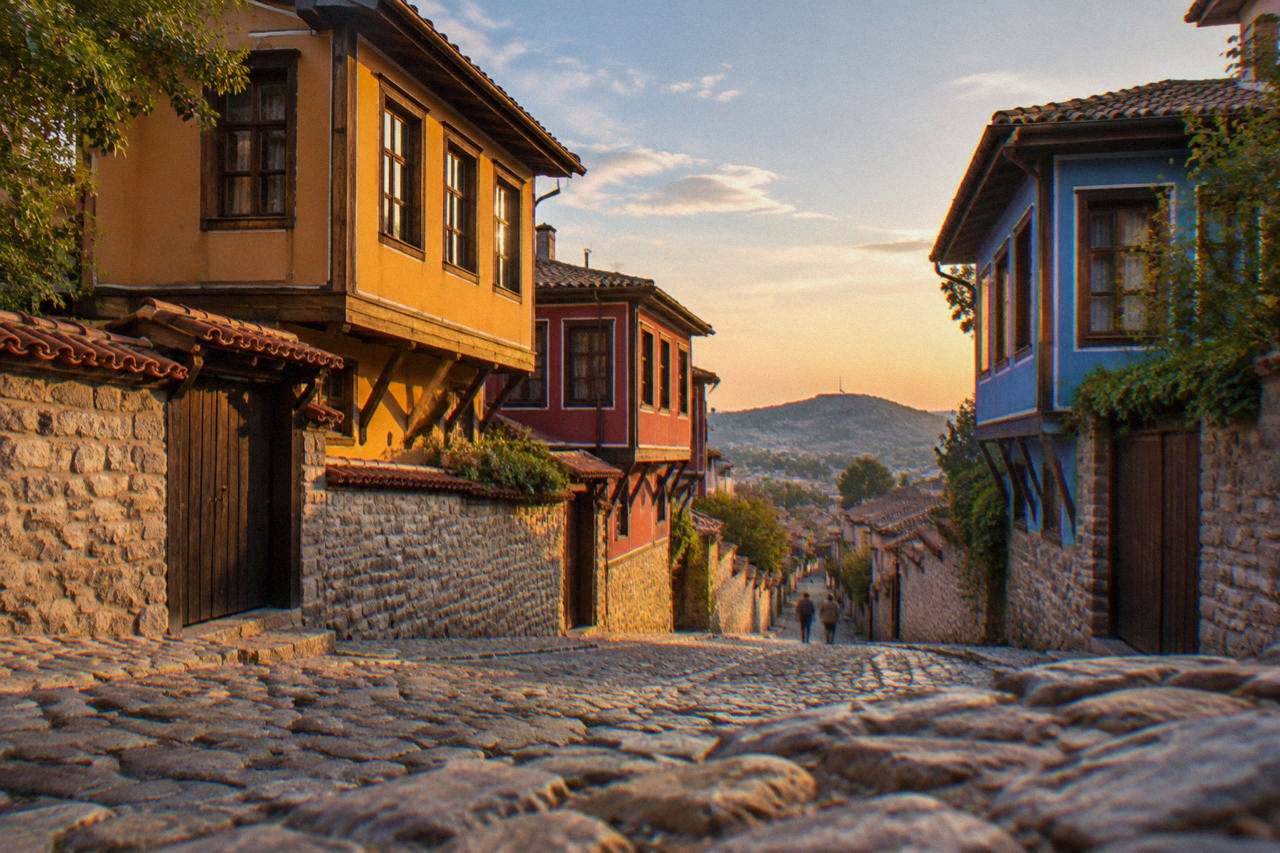
Day one starts where the city did, on Nebet Tepe, the settlement hill, moves through the Old Town houses and ends at the Ancient Theatre. Day two works the flat city: the Roman Stadium sphendone under Main Street, the Bishop's Basilica mosaics, and Kapana in the evening. Day three is the Bachkovo Monastery day trip with Asen's Fortress on the same road. If you only have two days, the two-day Plovdiv plan compresses the city and drops the mountains.
| Day | Morning | Afternoon | Evening |
|---|---|---|---|
| One | Nebet Tepe, the Three Hills | Old Town houses, Hisar Kapia | Ancient Theatre at golden hour |
| Two | Roman Stadium sphendone, 3D hall | Bishop's Basilica mosaics, Main Street | Kapana dinner and bars |
| Three | Drive or tour to Asen's Fortress | Bachkovo Monastery, return | Last walk on Main Street |
How To Spend Day One In Plovdiv?
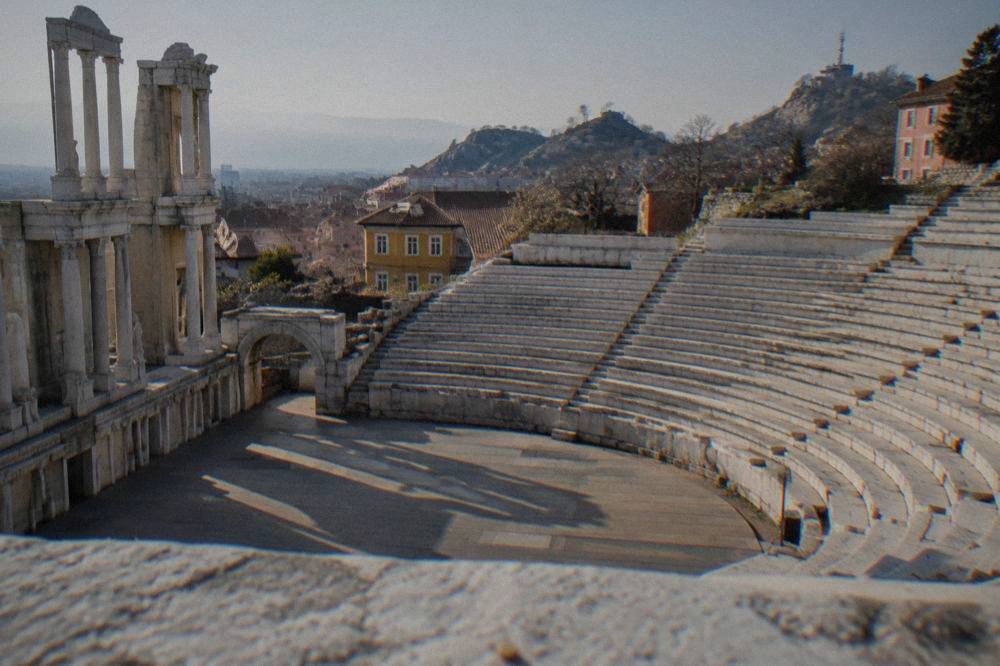
Day One belongs to the high ground: start at Nebet Tepe, the free open-air archaeological complex where the city's tourism site dates the first settlement to the 4th millennium BC, walk down through the Old Town revival houses to Hisar Kapia, and finish at the Ancient Theatre of Philippopolis, where the one-site ticket is 3.58 euro for an adult. The theatre's official page describes 28 concentric rows of marble seats, built in the 90s of the 1st century AD. It is open daily, April to October 9:30 to 18:00 and November to March 9:00 to 17:30, with a lunch break at 12:30.
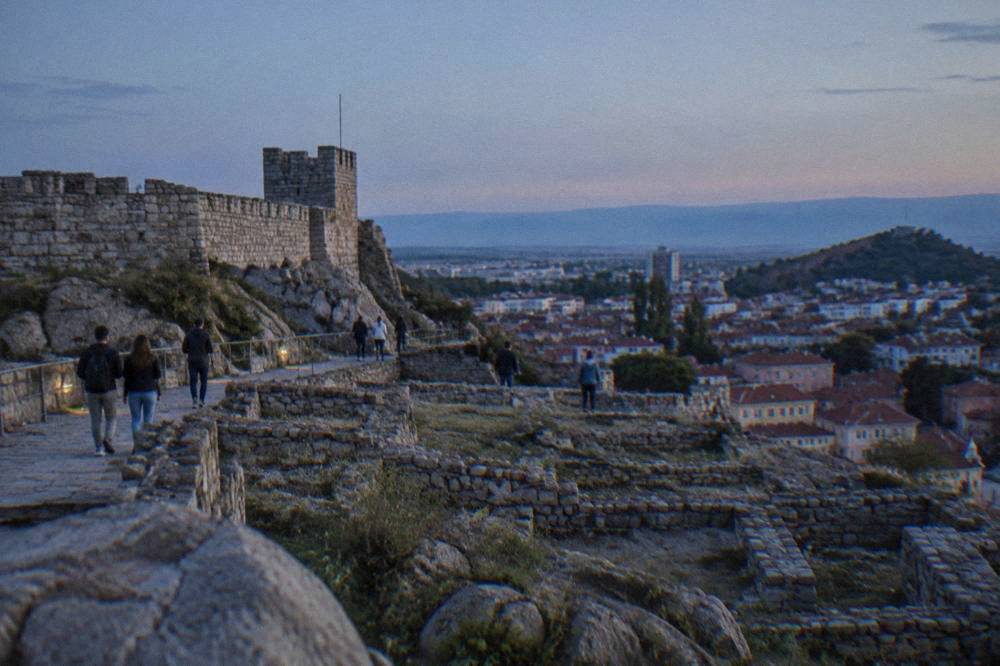
The logic of the order is simple. Nebet Tepe is the highest of the Three Hills group and gives the overview, so it works best first, while legs are fresh. The descent through the Old Town passes the Balabanov, Hindliyan and Nedkovich houses; the Old Plovdiv ticket page lists any one of these sites at 3.58 euro for adults, 1.53 euro for students, with a family ticket at 7.16 euro. A combined ticket covering up to five sites, excluding the two basilicas, is 10.74 euro. Children under 7 and visitors with over 50% disability enter free.
| Old Town stop | What it is | Adult entry |
|---|---|---|
| Nebet Tepe | Open-air hill complex, free | Free |
| Balabanov or Hindliyan House | Revival-era house museums | 3.58 euro |
| Hisar Kapia | Medieval gate, public street | Free |
| Ancient Theatre | Roman theatre, 28 rows of marble seats | 3.58 euro |
| Combined ticket | Up to 5 Old Plovdiv sites | 10.74 euro |
End the day at the theatre rather than starting there. The official listing notes evening events: the Opera Open festival ran 23 June to 9 September 2026 on the theatre stage, and a September 2026 concert appears in the city's event calendar. On a normal evening the seats face a sunset over the plain, and the site closes at 18:00 in summer. If a performance is scheduled, ticketed access hours can shift, so check the Old Plovdiv site for the day you go.
A guided option for this first day exists inside the city: the site's featured Plovdiv walking tour covers the Old Town and the Roman landmarks with a guide, and the fuller one-day Plovdiv itinerary runs the same ground on foot if you prefer to self-guide.
To walk the first day's ground with a guide, book a guided walking tour here.
How To Spend Day Two In Plovdiv?
Day Two stays on the flat: the Roman Stadium sphendone is free to view, the 3D projection hall next to it costs 3.68 euro, the Bishop's Basilica with its over 2,000 square metres of floor mosaics costs 7.57 euro, and the afternoon belongs to Main Street and the Kapana creative district, both free public space. The stadium's official page records that it was built in the 2nd century AD on the model of the Stadium at Delphi and held up to 30,000 spectators; only the northern part, the sphendone, is accessible, because the rest lies under the modern Main Street.
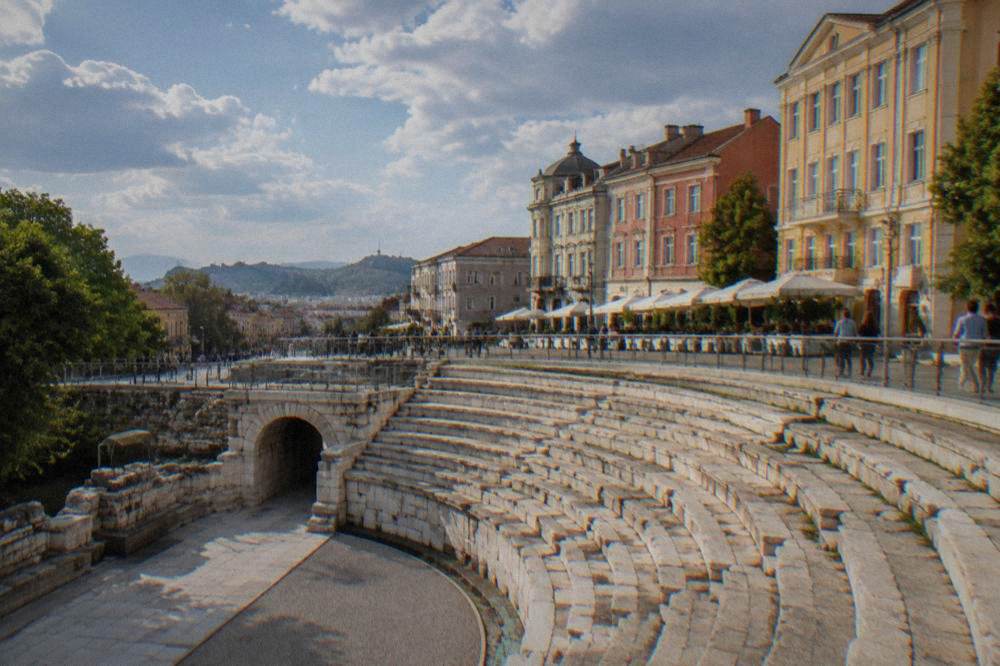
Start at the sphendone, which sits at the top end of Main Street. The viewing is free, and the 3D hall, daily with the same seasonal hours as the theatre, sells a reconstruction of the stadium as it stood. From there, walk the length of Main Street south to the Bishop's Basilica. The basilica is priced separately from the Old Plovdiv one-site and combined tickets, a detail the ticket page makes explicit: adults 7.57 euro, students 3.58 euro. The site's own description calls it the largest 4th to 6th century basilica in Bulgaria, about 83 m long and 36 m wide, with two layers of floor mosaics covering over 2,000 square metres.
If museums matter more than mosaics, swap the basilica morning for the Regional Ethnographic Museum in the Kuyumdzhiev House, closed Monday, adult entry about 3.07 euro, or the Regional Archaeological Museum on Saedinenie Square, also closed Monday, whose renewed permanent exhibition added about 150 new exhibits in November 2025. The Ancient Theatre guide page carries the full ticket breakdown if you want to plan the purchases.
| Day Two stop | Type | Adult entry |
|---|---|---|
| Roman Stadium sphendone | Open-air ruins | Free |
| Stadium 3D hall | Reconstruction hall | 3.68 euro |
| Bishop's Basilica | Mosaic floors, daily | 7.57 euro |
| Regional Ethnographic Museum | House museum, closed Mon | About 3.07 euro |
| Kapana district | Public streets | Free |
Keep the late afternoon loose for Kapana. The name means "The Trap", and the municipal tourism site explains it by the maze of narrow streets that makes newcomers lose their way. The district is free, open at all hours, and its artisan market generally runs weekends. For the evening, the food and drink guide to Plovdiv is the sibling page that covers restaurants in detail; a Bulgarian dinner order here usually means shopska salad, grilled kebapche and a glass of local wine or a small rakia, topics the rakia guide unpacks.
How To Spend Day Three: Bachkovo Or Asen's Fortress?
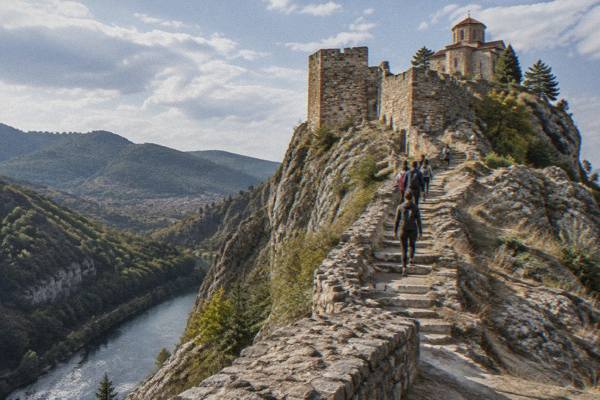
Day Three is the mountain day: Bachkovo Monastery, about 30 km south of Plovdiv, is a working monastery with free entry, Asen's Fortress sits on the same road below Asenovgrad with a small entry fee whose figure is unclear so confirm on arrival, and minibuses from the Rodopi bus station reach the monastery in 35 to 45 minutes. The two sights pair naturally because they lie within a short drive of each other.
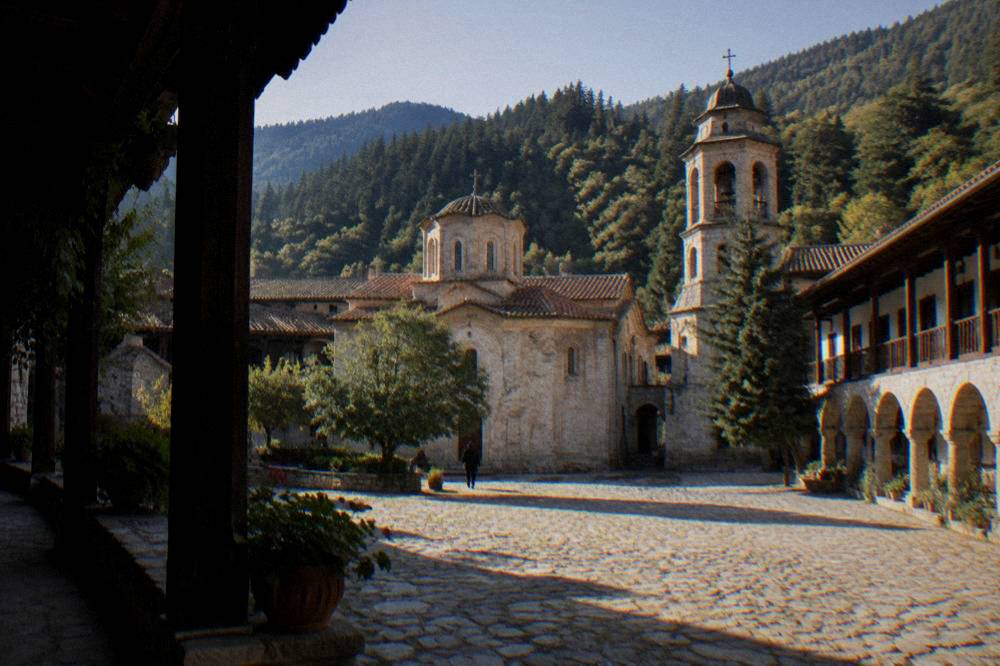
Bachkovo Monastery is the anchor. Entry is free, it functions as a monastery, and the Asen's Fortress day-trip page covers the fortress cliffs above the Asenovgrad gorge. The fortress ruin sits high over the road, and the Arapovo chapel and the village of Bachkovo fill any spare hour. Public transport is workable: minibuses toward Smolyan leave from the Rodopi bus station on Macedonia Boulevard and stop at the monastery approach, with the journey quoted at 35 to 45 minutes. Confirm return times locally, because the frequency of these minibuses is not published anywhere this site could verify.
The easiest version of the day is a booked tour. The featured Bachkovo Monastery and Asen's Fortress day tour covers both stops from Plovdiv with a guide, and there is an inline option: Check availability.
If you would rather walk than ride, the Rhodopes offer a different third day: the Rhodopes day tour from Plovdiv or the deep-south pages on Trigrad Gorge and Devil's Throat Cave and Tsepina Fortress and Peshtera map out longer mountain routes. For hikers there is also a fortress hike option with pickup and breakfast included, though the details and current price sit on the operator's live listing:
| Day Three option | Getting there | Entry |
|---|---|---|
| Bachkovo Monastery | Minibus from Rodopi station, 35 to 45 min | Free |
| Asen's Fortress | Same road, below Asenovgrad | Small fee, confirm locally |
| Combined guided day tour | Pickup in Plovdiv | From the listing |
| Fortress hike with breakfast | Pickup in Plovdiv | From the listing |
When Is The Best Time For A Three-Day Plovdiv Trip?
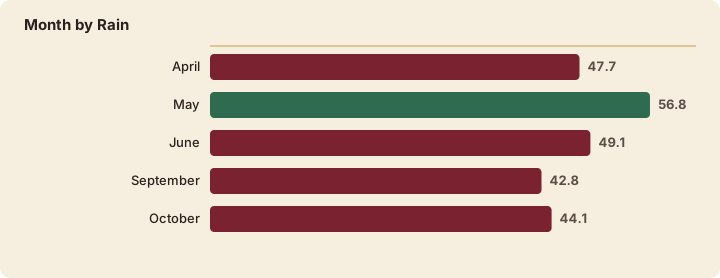
The shoulder months suit a three-day Plovdiv trip best: the ERA5 reanalysis, 1991-2020, puts the July mean daily high at 28.2 C and August at 28.6 C, while May mornings average 11.5 C lows with 56.8 mm of rain, the wettest month in the normals, so April, early June, September and October balance warmth against rain and crowds. August is the driest month at 25.2 mm of rain, but it also carries the highest mean daily highs. Winter days average 5.9 C highs in January, cold enough to make the hill climbs short work rather than pleasant lingering.
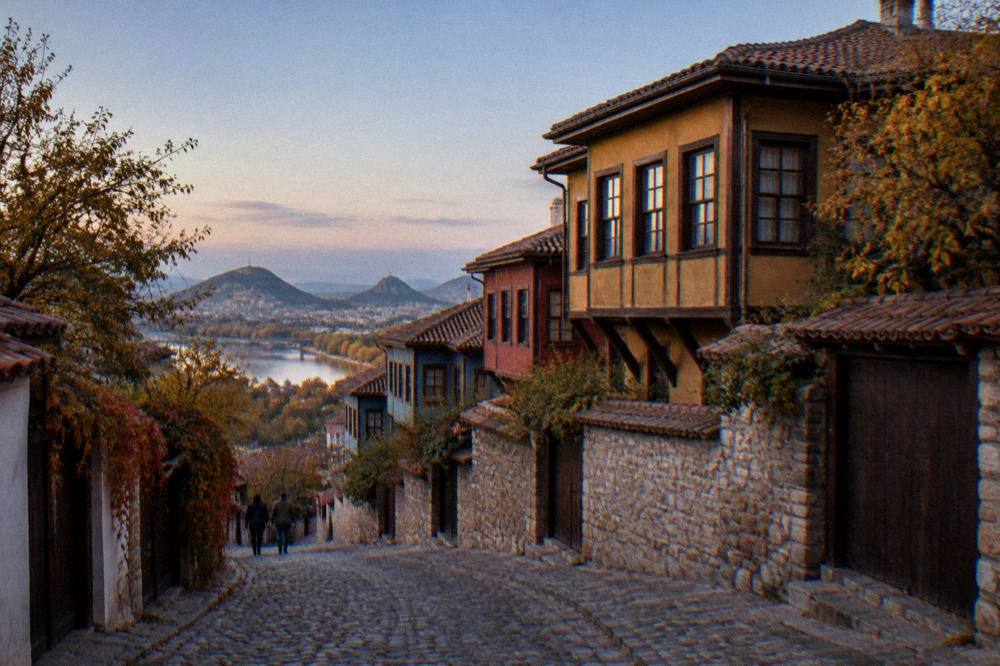
The event calendar adds its own timing logic. Opera Open fills the Ancient Theatre stage from late June to early September, the autumn Kapana Fest ran across two weekends, 2 to 4 and 9 to 11 October 2026, and the Plovdiv Jazz Fest fall edition runs 6 to 8 November 2026. The Christmas edition runs from late November or early December into January, with the 2026/27 "Soul of Christmas" programme listed for 1 December 2026 to 7 January 2027. The autumn in Plovdiv guide expands the October case, and the broader best time to visit Plovdiv question has its own page.
| Month | Mean daily high | Mean daily low | Rain |
|---|---|---|---|
| April | 17.1 C | 6.4 C | 47.7 mm |
| May | 21.9 C | 11.5 C | 56.8 mm |
| June | 25.9 C | 15.4 C | 49.1 mm |
| September | 23.8 C | 13.8 C | 42.8 mm |
| October | 18.1 C | 8.8 C | 44.1 mm |
One October-specific note: the Opera Open season ends in early September, so an October trip trades theatre performances for the Kapana Fest weekends and warmer walking light on the hills. These are ERA5 reanalysis figures for the grid cell near the Old Town, modelled normals rather than a station record, and reanalysis smooths urban heat, so treat them as a planning baseline rather than a forecast.
How Much Does Three Days In Plovdiv Cost?
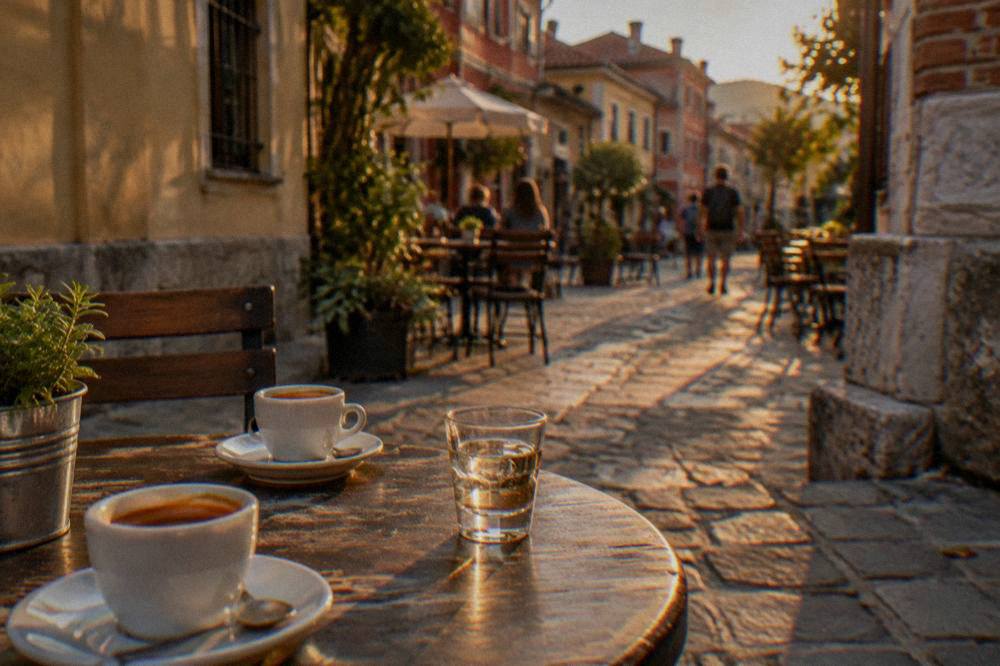
Three days in Plovdiv is inexpensive by euro-area standards: the combined Old Plovdiv ticket is 10.74 euro, the Bishop's Basilica adds 7.57 euro, city bus e-tickets are 0.50 euro each, and crowd-reported price sites put an espresso around 2 euro and a 0.5 litre draught beer a little above 2 euro, so sightseeing and food for two city days can stay under 40 euro per person before lodging. The third day adds transport or a tour. The minibuses toward Bachkovo are quoted at about 3.60 euro per ride in secondary sources, and the monastery itself is free.
The museum free-day rule is worth building a plan around: the Regional History Museum is free the first Thursday of the month, and Old Plovdiv sites offer a free first Thursday for students and seniors. The Ethnographic Museum and the Archaeological Museum are both closed Monday, which matters if your day two falls on a Monday; in that case swap the museum morning for the stadium and basilica, both of which run daily.
| Item | Cost |
|---|---|
| Old Plovdiv combined ticket, up to 5 sites | 10.74 euro |
| Bishop's Basilica, adult | 7.57 euro |
| Ancient Theatre, single site | 3.58 euro |
| City bus e-ticket | 0.50 euro |
| Bachkovo Monastery | Free |
| Espresso, crowd-reported average | About 2 euro |
Lodging is the variable. Hotel prices vary, so check rates for your dates directly. The where to stay in Plovdiv page explains the districts, and the how expensive is Plovdiv page carries the fuller cost picture, including tipping at roughly 10% in restaurants for good service, a norm reported but not mandatory.
What If You Have More Or Fewer Than Three Days?
If you have fewer than three days, cut day three and keep the two city days, since the Old Town, the theatre, the stadium and Kapana are the core; if you have four or more, add Koprivshtitsa with its six house museums at a combined ticket of about 10 euro, or push deeper into the Rhodopes to Smolyan, Pamporovo or the Trigrad Gorge caves. The how many days in Plovdiv question has its own answer page, and the comparison is simple: one day covers the theatre and the Old Town, two days add the stadium, the basilica and Kapana, three days add the mountains.
For a country-wide frame, the Bulgaria itinerary and the Sofia, Plovdiv and Rila itinerary place Plovdiv in a longer route, and the Bulgaria road trip page does the same for drivers. Arriving from the capital is straightforward: direct Sofia to Plovdiv trains run about 2 h 40 to 3 h 05 per the BDZ timetable, and the Sofia to Plovdiv page covers the options, including the same journey by booked coach tour on days when you would rather not handle the train yourself. A variant that starts in Sofia and brings Bachkovo into the same day exists as a small-group tour:
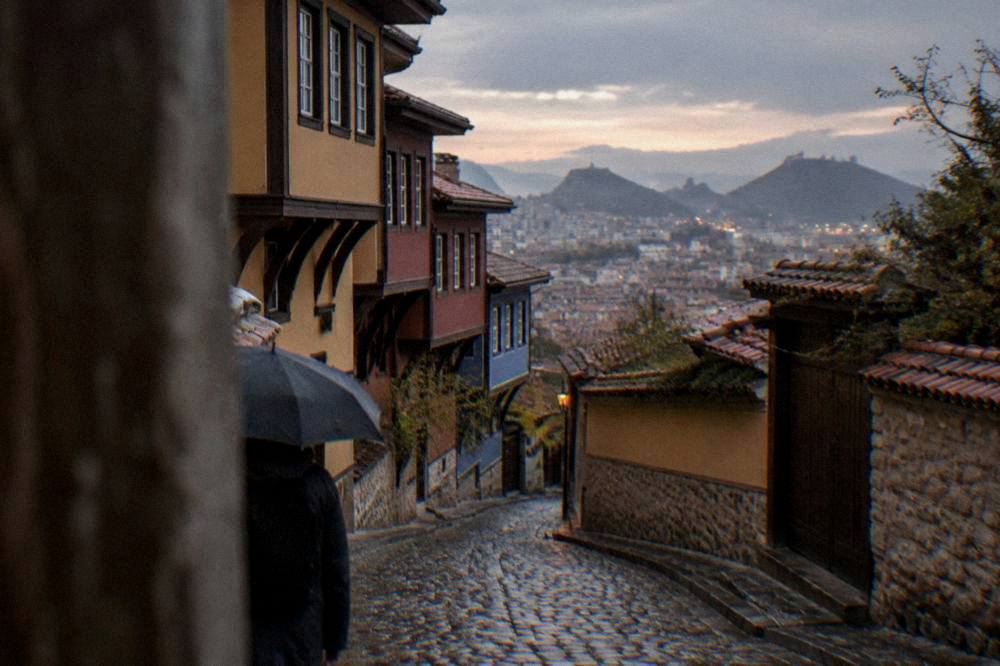
Rain changes the shape of a day rather than cancelling it. The 3D hall at the stadium, the basilica visitor centre and the two museums are all indoor stops, and the Plovdiv in the rain page sequences them. The fuller walking route, turn by turn, sits on the self-guided Plovdiv walk page, and the general Plovdiv itinerary page holds the framework behind all of these versions. Whatever the day count, the advice on Plovdiv Travel Guide holds: buy tickets at the Old Plovdiv sites in euro, keep Monday closures in mind, and save a hill for the evening light.
Common Questions About Three Days In Plovdiv
Is three days in Plovdiv enough?
Yes. Two days cover the Old Town, the Ancient Theatre, the Roman Stadium, the Bishop's Basilica and Kapana on foot, and the third day reaches Bachkovo Monastery and Asen's Fortress, about 30 km south. A fourth day is only needed for deeper Rhodope trips or Koprivshtitsa.
What should I skip with only two days in Plovdiv?
Skip day three, the mountain day. The city core, the theatre, Nebet Tepe, the stadium sphendone, the basilica mosaics and Kapana, is walkable in two days, as the two-day itinerary on this site lays out.
Can you visit Bachkovo Monastery by public transport?
Yes. Minibuses from the Rodopi bus station toward Smolyan stop at the monastery approach, with the ride quoted at 35 to 45 minutes. Entry to the monastery is free. Confirm return times locally.
Do I need to book the Ancient Theatre in advance?
No, tickets are sold at the site, 3.58 euro for adults. But check the events calendar first: the Opera Open festival uses the theatre stage in summer, and performance days can change visiting access.
Is Plovdiv Old Town a UNESCO site?
No. "The Ancient Plovdiv" sits on Bulgaria's UNESCO Tentative List, submitted in 2004, which is a waiting list and not an inscription.