Two Days In Plovdiv: Roman Plovdiv Then The Hills
Two days is the comfortable minimum for Plovdiv, in southern Bulgaria: one day for the Roman core and the Old Town revival houses, a second for the hills, Kapana and one trip beyond the city.
Short answer
Spend day one on the Roman core (Ancient Theatre, Roman Stadium, Bishop's Basilica) and the Old Town houses, then day two on Nebet Tepe, the other hills, Kapana and one day trip such as Bachkovo Monastery or the Rhodopes.
Plovdiv, Bulgaria's second-largest city in the south of the country, repays exactly two unhurried days: one for the Roman core and the National Revival houses of the Old Town, and one for the hills, the creative district of Kapana and a single trip out beyond the six hills. The city is often described as one of the oldest continuously inhabited cities in Europe, and its centre stacks layer on layer, a 1st century theatre beside merchant houses of the Revival period beside a pedestrian main street that runs directly over a buried Roman stadium. This itinerary walks that stack in order, with the ticket prices, opening patterns and walking logic that decide whether two days feel generous or rushed. For a shorter cut there is a one day plan, and for slower travellers a three day version; this page is the middle path.
Is Two Days In Plovdiv Enough?
Two days is enough for the entire historic core, all six hills and one day trip, because Plovdiv's sights sit within a walkable rectangle between the Central Square and the Three Hills, and the Old Plovdiv ticket system sells multi-site access suited to a single focused morning. The Ancient Theatre, Roman Stadium, both basilicas, Nebet Tepe and Kapana all lie within a short walk of each other. What two days cannot absorb is more than one excursion, so the day-trip choice matters more than the hotel.
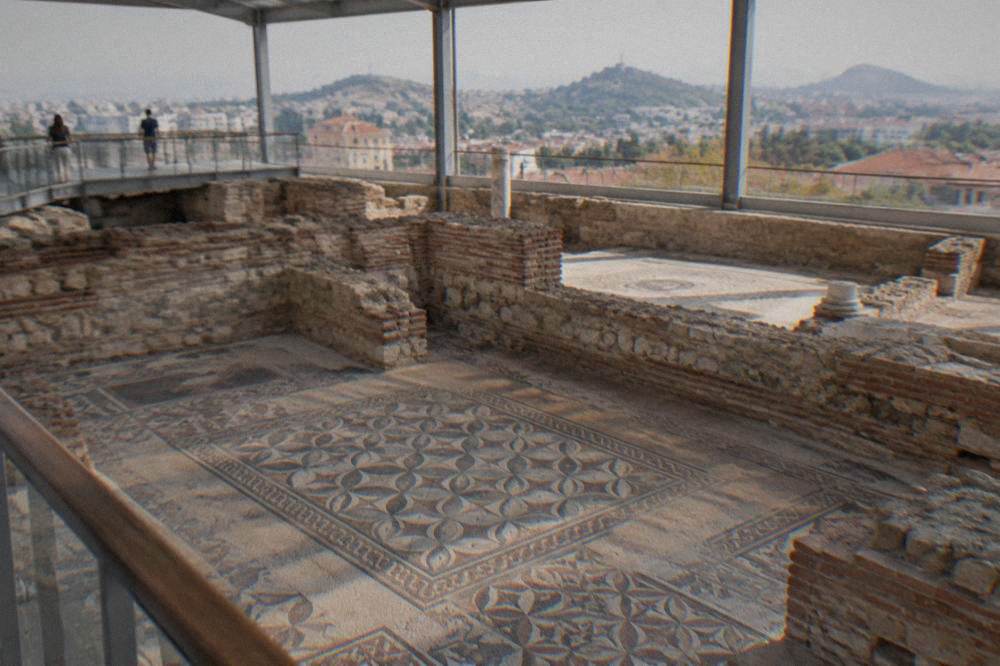
The geometry of the city does the planning for you. The pedestrian Main Street, built over the length of the Roman Stadium, runs east to west and ends at the Central Square, where the Bishop's Basilica's mosaic floors lie under a modern canopy. South of the Main Street the ground climbs steeply to the Three Hills, the Trimontium of Roman times, where Nebet Tepe, Dzhambaz Tepe and part of the Old Town stand. The Old Town guide covers the houses in detail; this itinerary threads them into two days rather than listing them exhaustively.
What Does Day One In Plovdiv Look Like?
Day one is Roman Plovdiv and the Old Town: start at the Central Square and the Bishop's Basilica mosaics in the morning, walk the Ancient Theatre and the revival houses through the late morning, descend past the Roman Stadium's sphendone to the Main Street, and end with the Dzhumaya Mosque and an evening in Kapana. The one-site Old Plovdiv ticket is 3.58 euro per adult, and the Bishop's Basilica is priced separately at 7.57 euro, per the Old Plovdiv ticket page.
Begin at the bottom of the hill, not the top. The Bishop's (Great) Basilica of Philippopolis stands by the Central Square: about 83 m long and 36 m wide, the largest 4th to 6th century basilica in Bulgaria, with two layers of floor mosaics covering over 2,000 sq m, open daily 9:00 to 18:00 year round. The Small Basilica, 5th to 6th century with its own mosaic floors, sits a short walk south and uses the standard one-site Old Plovdiv ticket. Together they set up the Roman story the rest of the day completes.
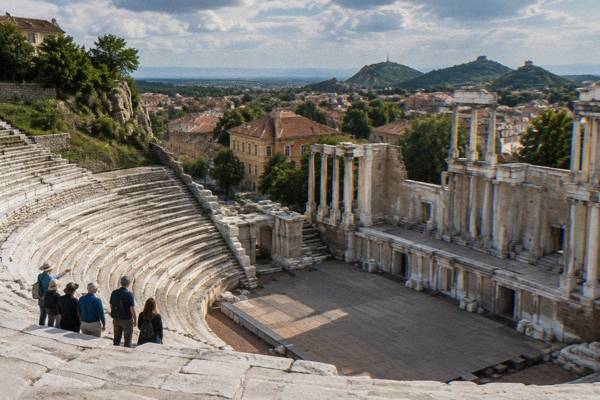
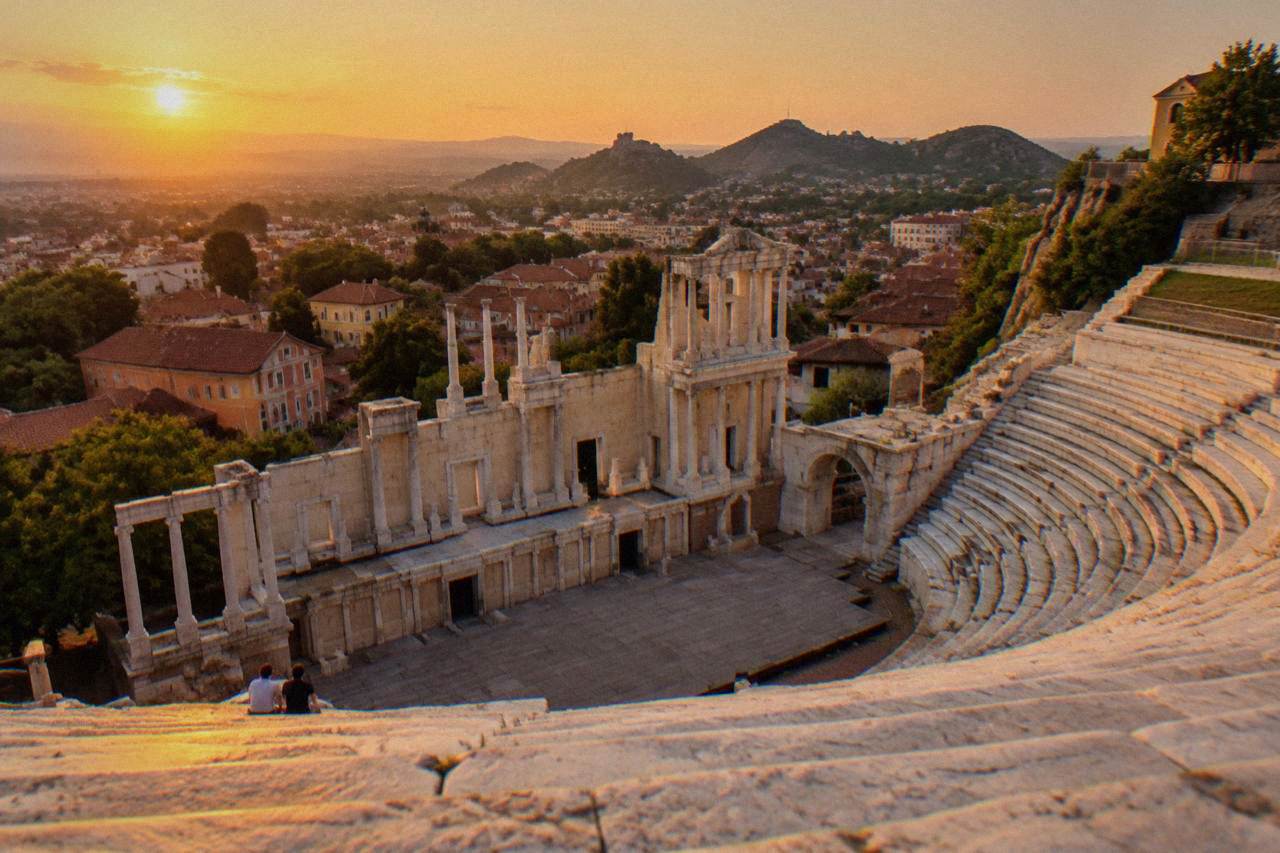
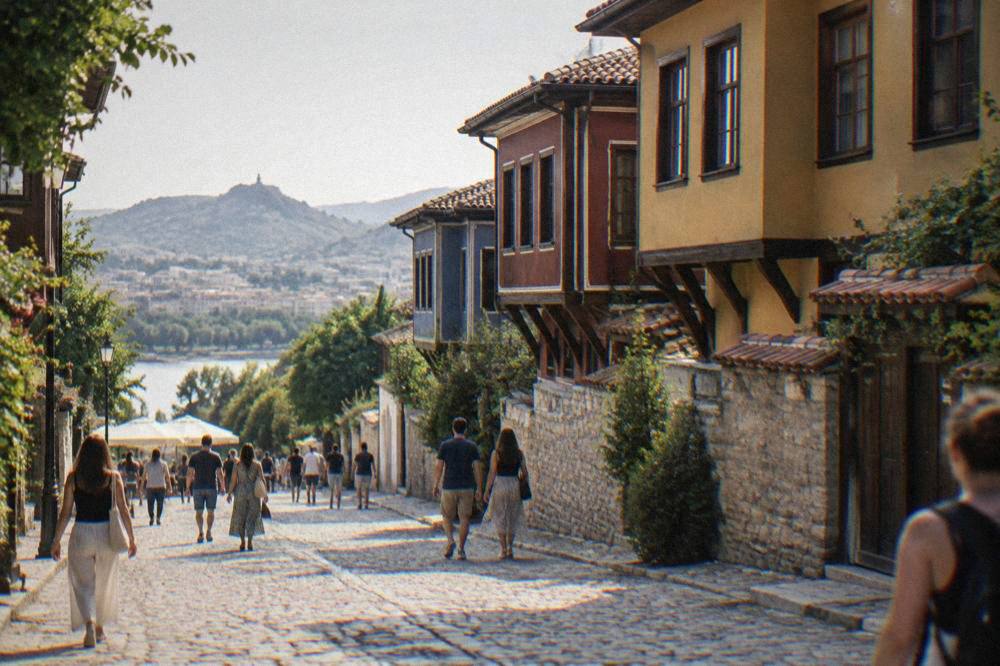
From the basilicas the route climbs. The Ancient Theatre of Philippopolis, built in the 90s of the 1st century AD, keeps its 28 concentric rows of marble seats facing the plain below; between April and October it opens 9:30 to 18:00, and from November to March 9:00 to 17:30, both with a 12:30 to 13:00 lunch break. The theatre also hosts the summer Opera Open season, which ran 23 June to 9 September 2026, so an event evening can shift visiting hours; the Ancient Theatre page tracks the pattern. Around the theatre spreads the Old Town proper: Balabanov House, Hindliyan House, Nedkovich House and Lamartine House, each on the same 3.58 euro one-site ticket, or on the combined ticket covering up to five sites for 10.74 euro. Individual houses vary on Monday closures, so check the Old Plovdiv listings before locking the route.
A guided option compresses the morning. The Old Town and Roman Theatre guided walk pairs the theatre with the revival houses and is the featured walk on this site for exactly this route; Check availability if a guide beats a guidebook for the Roman layer. Visitors on a strict budget can also join a tip-based walk, confirming arrangements directly with the guide.
Descend in the mid afternoon. The Roman Stadium, built in the 2nd century AD on the model of the stadium at Delphi and once holding up to 30,000 spectators, survives only in part: the northern sphendone, unearthed in the 1970s, is viewable free of charge, while the rest lies under the modern Main Street. A 3D projection hall beside it costs 3.68 euro for adults, and a combined eastern sector plus 3D ticket is 5.11 euro. The Roman Stadium page explains what is visible and what is not. End the day at the Dzhumaya Mosque, open to visits 6:00 to 23:00 with free entry and modest dress expected, and then in Kapana, the quarter whose name means "The Trap", a maze of narrow streets now filled with studios and small venues.
What Does Day Two In Plovdiv Look Like?
Day two is the hills and one day trip: take the early morning up Nebet Tepe while the light is low, cross the Old Town ridge to Hisar Kapia, then spend the middle of the day out of the city, with Bachkovo Monastery, Asen's Fortress or the Rhodopes all reachable for an afternoon return, and close with the Alyosha monument on Bunardzhik at sunset. Nebet Tepe is free, and Bachkovo Monastery is free to enter, so day two can run almost without tickets.
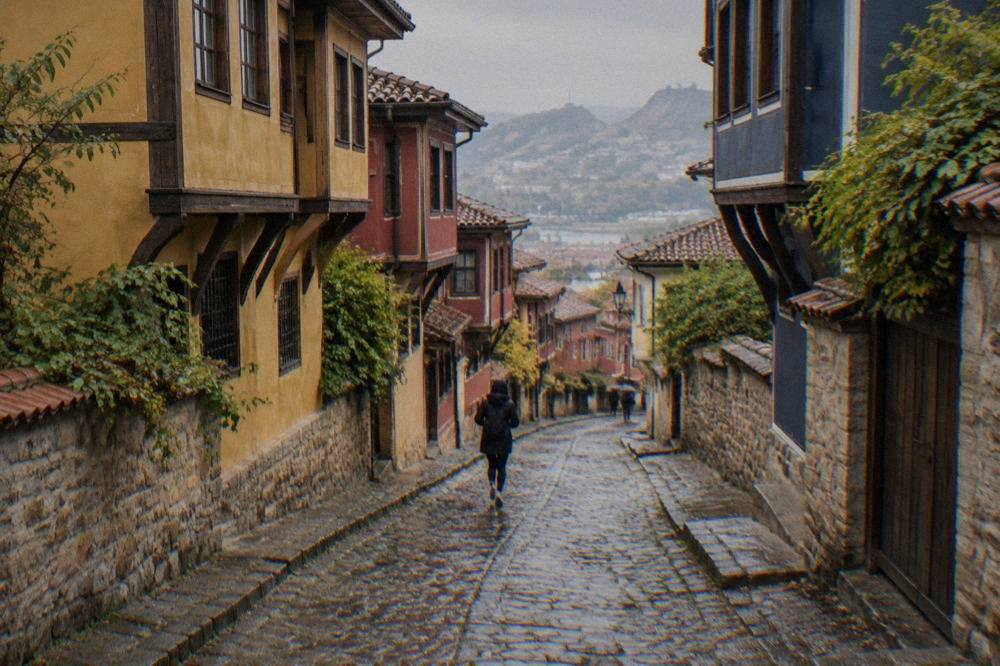
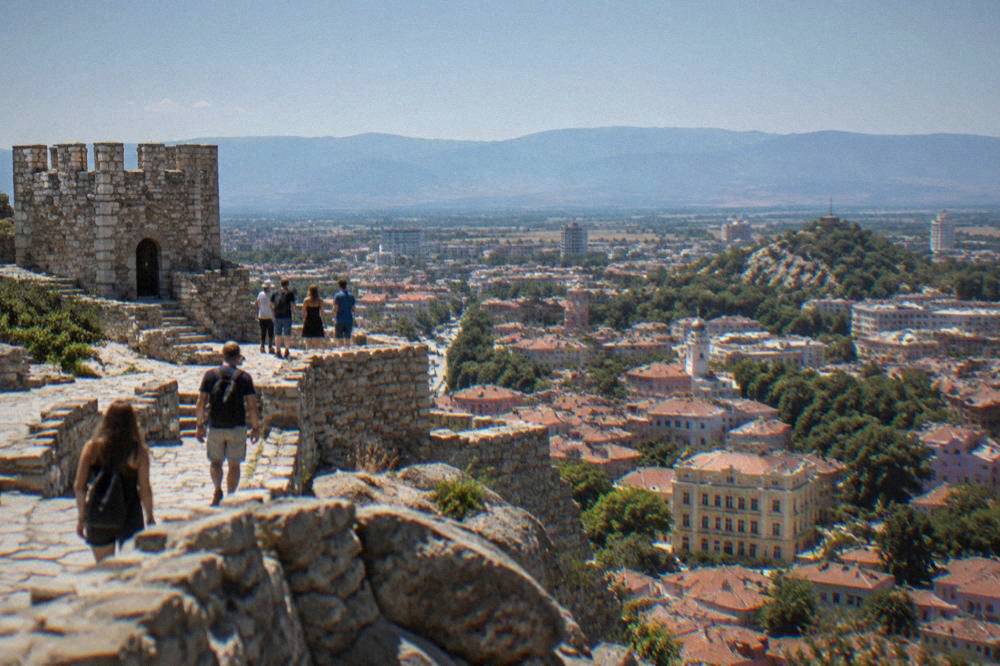
Nebet Tepe is the city's origin point: the municipal tourism site dates the first settlement on the hill to the 4th millennium BC, and the open-air archaeological complex, freshly conserved, carries no ticket and no fixed hours. The view from the top takes in the whole two-day geography at once: the Three Hills, the plain, the Rhodopes to the south. Walk the ridge to Hisar Kapia, the public gate that is open at all hours, then drop into the morning streets of the Old Town for anything day one skipped, such as the Ethnographic Museum's neighbours among the revival houses. The Three Hills area guide maps the ridge walk.
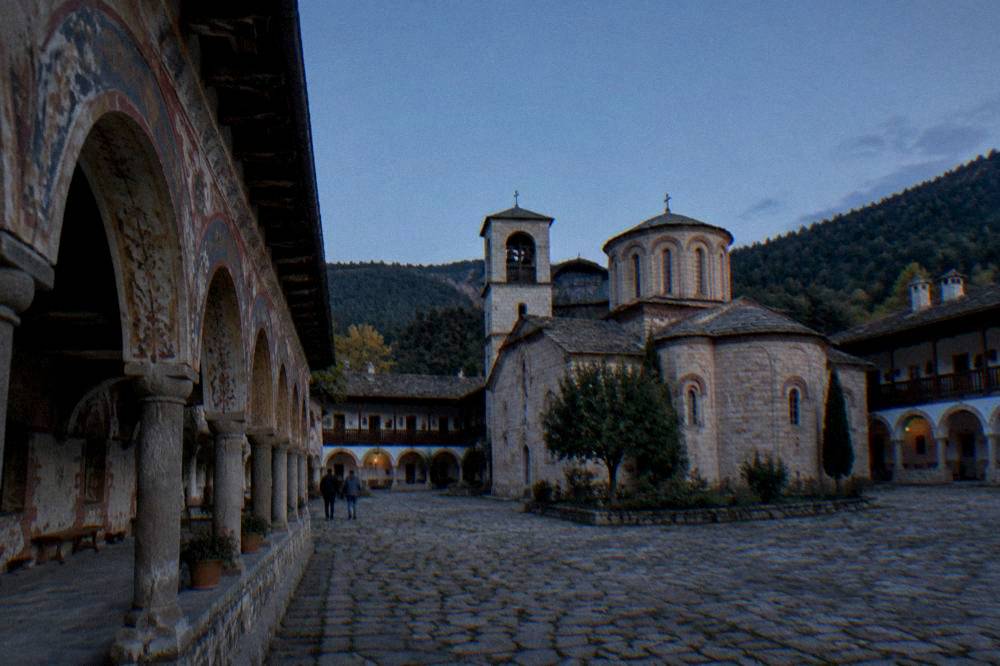
The afternoon belongs out of town. Bachkovo Monastery lies about 30 km away; minibuses from the Rodopi bus station take 35 to 45 minutes, and entry to the working monastery is free. Asen's Fortress, perched above Asenovgrad on the same road, charges a small entry fee whose figure is unclear in current sources, so confirm on arrival. Further south the Rhodopes open out, and the Rhodopes itinerary extends the same road into a longer trip. For a deeper historical excursion, the ruined Thracian city of Perperikon also runs as a guided day trip from Plovdiv.
Back in the city, spend the last hours on Bunardzhik, the Hill of the Liberators, 265 m high and free to access at any hour, crowned by the Alyosha monument unveiled in 1957. The Roman Plovdiv guide then collects the scattered pieces, the Odeon and the Forum, for travellers who want a third layer of the ancient city before dinner.
What Should A Two Day Plovdiv Budget Look Like?
A two day Plovdiv sightseeing budget centres on the Old Plovdiv tickets: 3.58 euro per single site, a 10.74 euro combined ticket for up to five sites, and 7.57 euro for the Bishop's Basilica, so a full Old Town day costs about 18 euro per adult, while day two can cost nothing at all if Nebet Tepe and the hills replace a paid excursion.
Food sits near 2 euro for a coffee and 30 to 40 euro for a mid-range dinner for two, per crowd-reported cost data for 2026.
The table below lays out the entrance figures for the two days. Confirm Asen's Fortress and Starosel entry prices locally, and a tourist tax may apply at accommodation, with the 2026 rate to be confirmed at booking.
| Site | Adult price | Hours pattern | Day |
|---|---|---|---|
| Any one Old Plovdiv site (Theatre, Small Basilica, houses) | 3.58 euro | Apr to Oct 9:30 to 18:00, Nov to Mar 9:00 to 17:30, lunch break 12:30 to 13:00 | 1 |
| Old Plovdiv combined ticket, up to 5 sites | 10.74 euro | same as single sites | 1 |
| Bishop's Basilica | 7.57 euro | daily 9:00 to 18:00 | 1 |
| Roman Stadium 3D hall | 3.68 euro | daily, seasonal hours as above | 1 |
| Nebet Tepe | free | open air, no fixed hours | 2 |
| Kapana, Hisar Kapia, Bunardzhik, Dzhumaya Mosque | free | public spaces, mosque 6:00 to 23:00 | 1 to 2 |
Discounts matter at the margins. Students pay 1.53 euro at single Old Plovdiv sites and 4.09 euro on the combined ticket; children under 7 enter free, as do visitors with over 50 percent disability; and the first Thursday of the month brings free entry for students and seniors at Old Plovdiv sites, with the Regional History Museum free for everyone that day. A family ticket for two parents and children aged 7 to 16 costs 7.16 euro per site. Group rates apply from eleven people upward.
How Should You Split Plovdiv Between Morning And Evening?
Mornings belong to the ticketed Roman sites and the Old Town houses, because the 9:30 opening and the 12:30 lunch break give a tight three-hour window, while evenings belong to Kapana and the hills, which are free, always open and at their social best after dark. The Ancient Theatre's lunch break at 12:30 to 13:00 and the Monday closures of several museums make the sequencing non-optional: Roman sites before noon, hills and Kapana after.
Monday is the day to avoid for the museum layer. The Regional Ethnographic Museum and the Regional Archaeological Museum are both closed on Mondays, and some Old Town houses close Mondays too, so a two-day trip landing Monday to Tuesday should flip the plan and put the free outdoor layer on Monday. Summer adds a second constraint: the Opera Open season fills the Ancient Theatre with evening performances, which can close the site to casual visits, so check the theatre's event calendar for your dates. Other pages covering the same trip are gathered on Plovdiv Travel Guide.
Evening Plovdiv rewards the walker. The night guide covers the after-dark city; the short version is that Kapana fills up after sunset, and the view from Bunardzhik or Nebet Tepe outlasts every dinner reservation. A guided city walk with a wine tasting at sunset is another way to compress the evening layer.
Which Day Trip Fits Day Two If You Skip The Hills?
Bachkovo Monastery is the easiest fit for a half-day window: about 30 km from Plovdiv, reachable by minibus from the Rodopi station in 35 to 45 minutes, and free to enter, while the Rhodopes and Perperikon demand most of a day and suit travellers who accept a shorter city visit. A wine tasting in the Thracian Valley is the compact alternative, leaving the evening free for the Old Town.
The trade is simple. Bachkovo plus Asen's Fortress gives history and mountains in an afternoon; Perperikon, further east, is a full-day excursion that returns you to the city only at nightfall. The Bulgaria itinerary places Plovdiv in a national route for travellers deciding whether the day trip deserves the whole second day.
| Day trip option | Travel basis | Entry cost | Time needed |
|---|---|---|---|
| Bachkovo Monastery | minibus from Rodopi station, 35 to 45 min | free | half day |
| Asen's Fortress | same road via Asenovgrad | small fee, confirm on site | add 1 hour |
For wine specifically, a tasting with cheese and cured meats in the centre works as a late-afternoon anchor on either day, and the Bulgarian wine guide names the local grapes, Mavrud and Rubin among them, worth knowing before the first glass.
When Is The Best Season For A Two Day Plovdiv Trip?
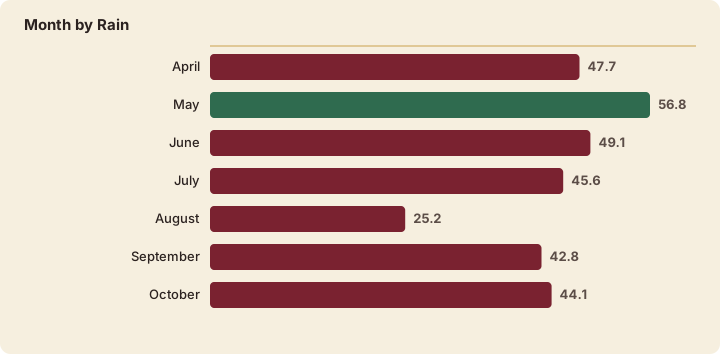
Late April to early June and September to October suit a two-day Plovdiv trip best: the ERA5 reanalysis for 1991 to 2020 puts the mean daily high at 21.9 C in May and 23.8 C in September, against 28.6 C in August and 5.9 C in January, while rain peaks at 56.8 mm in May against 25.2 mm in August, so spring and autumn trade a little rain for comfortable walking temperatures across the hills.
The hills are the deciding factor. Day two of this itinerary spends hours on exposed slopes, and the modelled normals show why midsummer and midwinter squeeze that walking into short comfortable windows. Winter travellers should read the cold-weather notes on the autumn guide and the rain plan, while summer visitors should exploit the long evenings, the Opera Open season and the 9:30 site openings, doing the climbs before noon.
| Month | Mean daily high | Mean daily low | Rain |
|---|---|---|---|
| April | 17.1 C | 6.4 C | 47.7 mm |
| May | 21.9 C | 11.5 C | 56.8 mm |
| June | 25.9 C | 15.4 C | 49.1 mm |
| July | 28.2 C | 17.9 C | 45.6 mm |
| August | 28.6 C | 18.1 C | 25.2 mm |
| September | 23.8 C | 13.8 C | 42.8 mm |
| October | 18.1 C | 8.8 C | 44.1 mm |
Figures are ERA5 reanalysis for 1991 to 2020, a modelled grid cell that smooths urban heat, so treat them as planning normals rather than a forecast. The best time to visit guide extends the month-by-month picture.
Where Should You Stay For Two Days In Plovdiv?
The Old Town and the streets just north of the Central Square put every stop of this itinerary within a ten-minute walk, and the Kapana district puts the evening layer on the doorstep, while Karshiyaka and the western districts trade walkability for quieter rooms and require transport back over the Maritsa. For a strict two-day trip, staying inside the walking rectangle between the Central Square and the Three Hills saves more time than any other planning decision.
Ready to pick your base? Book a hotel room here.
The two-day traveller moves on foot almost continuously, so the base matters. The where to stay guide compares the districts in full. Hotel rates are not printed on this site; confirm current prices and any tourist tax at booking.
| Area | Position | Fits this itinerary because |
|---|---|---|
| Old Town | on the Three Hills slope | theatre and houses on the doorstep, quiet at night |
| Around Central Square | north end of the walking rectangle | basilica, Main Street and stadium within minutes |
| Kapana | south of the Main Street | evening layer, studios and venues at the door |
| Karshiyaka | west, across the Maritsa | quieter, but transport needed each morning |
What Practical Facts Change A Two Day Plovdiv Plan?
Bulgaria uses the euro since 1 January 2026 and is a full Schengen member since 1 January 2025, the city bus e-ticket is 0.50 euro, and the 112 emergency number works, so the practical friction for a two-day trip is low, with the only real planning hazards being the Monday museum closures, the 12:30 to 13:00 lunch breaks at Old Plovdiv sites and possible evening closures of the Ancient Theatre during the summer event season.
Money first. Cards are widely accepted; the small costs that matter, a 0.50 euro bus e-ticket, a 2 euro coffee, are minor against the ticket budget. Full Schengen membership since 1 January 2025 means no border checks arriving from elsewhere in the zone.
Timing quirks matter more than money. The lunch break at Old Plovdiv sites is short but real: arriving at a house museum at 12:35 means waiting. Several museums close Monday. Summer event evenings close the Ancient Theatre to visitors. And the central railway station is undergoing a modernisation programme due to finish in 2026, so rail arrivals should expect access changes around the station. The Plovdiv train station guide and the getting around guide cover both.
For weather contingency, the rain itinerary reroutes the same two days indoors, and the self-guided walk maps the whole route for travellers who prefer paper to screens.
Common Questions About Two Days In Plovdiv
Is two days enough for Plovdiv?
Yes, for the historic core, all six hills and one day trip. The Ancient Theatre, Roman Stadium, both basilicas, Nebet Tepe and Kapana sit within a short walk of each other, and the Old Plovdiv combined ticket covers up to five sites.
How Many Days In Plovdiv Bulgaria Is The Right Number?
Two days covers the city and one excursion; three allows a second day trip such as the Rhodopes or Koprivshtitsa. The full comparison is on the how many days page.
What is the best order for the Plovdiv sights?
Basilicas first while legs are fresh, Ancient Theatre and Old Town houses through the late morning, the stadium sphendone and Main Street in the afternoon, then the hills and Kapana on day two, when the free open-air sites suit a later start.
Can you see the Ancient Theatre and the Roman Stadium on the same day?
Yes, they are a few minutes apart on foot. The theatre is a paid Old Plovdiv site, while the stadium's northern sphendone is free to view and the rest lies under the Main Street.
Does the Plovdiv Old Town ticket cover everything?
It covers the Ancient Theatre, the Small Basilica and the revival houses, but the Bishop's Basilica is priced separately at 7.57 euro, per the Old Plovdiv ticket page.
Is a day trip possible on a two-day Plovdiv visit?
Yes. Bachkovo Monastery is about 30 km away, with minibuses from the Rodopi station taking 35 to 45 minutes, and entry is free. Longer options such as Perperikon or the Rhodopes take a full day.