What Is A Typical Breakfast In Bulgaria?
A plain answer to what a typical breakfast in Bulgaria is, from banitsa and boza to ayran and coffee, with what to expect from a Plovdiv morning.
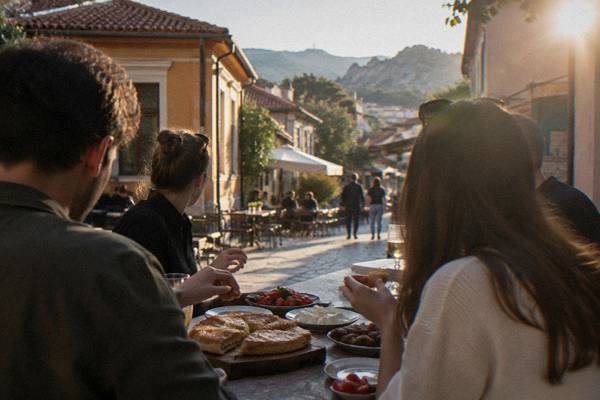
Breakfast in Bulgaria is a modest, savoury affair, and in Plovdiv, the country's second-largest city, built around six hills in the south of the country, it usually means a warm slice of banitsa, a flaky pastry filled with eggs and sirene cheese, bought from a neighbourhood bakery and eaten quickly, standing or on a bench, before the day starts. Coffee, ayran and boza are the drinks that go with it. This page sets out what a typical Bulgarian breakfast actually contains, what each item is, where to find it in Plovdiv, and how the morning meal differs from the long restaurant breakfasts of western Europe.
What Is A Typical Breakfast In Bulgaria?
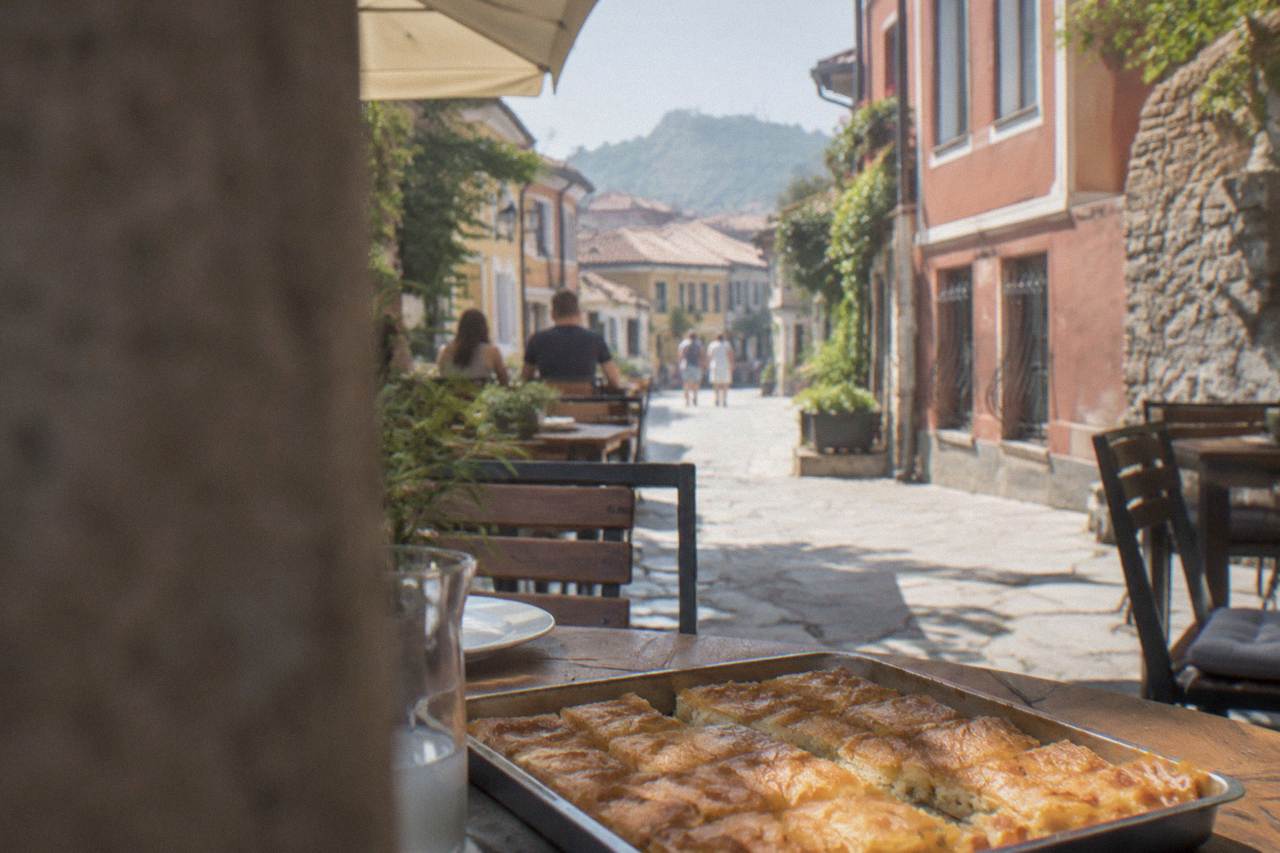
A typical breakfast in Bulgaria is banitsa, a filo pastry layered with eggs and white sirene cheese, eaten warm, usually accompanied by boza, a sweet fermented grain drink, ayran, a salted yogurt drink, or coffee. Bakeries sell it by the slice through the morning, and it is the everyday working breakfast across the country, including Plovdiv. Sweet versions with pumpkin or walnuts also appear.
Banitsa is the anchor. It is built from thin sheets of filo dough brushed with butter or oil, stacked with a mixture of beaten eggs and crumbled sirene, a brined white cheese that is close in character to feta, then baked until the top is golden and the inside settles into soft layers. Bakers in Plovdiv pull trays out from early morning, and slices go into paper sleeves for people on their way to work. Sirene appears at practically every Bulgarian meal of the day, so breakfast is simply where it shows up wrapped in pastry.
Around banitsa sits a small rotation of other morning items, none of them complicated. Kifla, a soft rolled bun, sometimes with cheese or a trace of chocolate, is the sweeter cousin. Mekitsi, flattened pieces of fried dough dusted with sirene or sugar, are the weekend version, more associated with slow mornings at home than with a Tuesday walk to the office. Full guide coverage of the pastry side of the morning, including more on how banitsa is made and served, sits on the site's banitsa and Bulgarian breakfast page.
Bulgarian breakfast is not a restaurant occasion in the way an English fry-up or a Dutch hotel spread is. Cafes serve breakfast, and the tourist core of Plovdiv certainly has spots that cater to a slower morning, but the default local pattern is fast, cheap and savoury, bought over a counter rather than ordered from a menu. That single fact answers half the questions visitors arrive with.
| Item | What it is | When it is eaten |
|---|---|---|
| Banitsa | Filo pastry with eggs and sirene cheese | Every day, bakery slice |
| Banitsa with pumpkin (tikvenik) or walnuts | Sweet filo variants | Autumn and winter, holidays |
| Kifla | Soft rolled bun, plain or filled | Daily, with coffee |
| Mekitsi | Fried dough, dusted with cheese or sugar | Weekends, home cooking |
| Boza | Sweet fermented grain drink | With banitsa, classic pairing |
| Ayran | Salted thin yogurt drink | Daily, any meal |
Banitsa, White Cheese And The Savoury Core Of The Plovdiv Morning
The savoury core of a Bulgarian breakfast in Plovdiv is the pairing of sirene cheese with warm pastry: banitsa for the classic slice, mekitsi for a fried weekend treat, and kifla for a lighter café option. Sirene, a brined white cheese, is the ingredient that ties all three together, and it appears again later in the day in shopska salad.
The cheese deserves the attention, because a visitor who understands sirene understands Bulgarian food. It is a salty, crumbly white cheese kept in brine, made from cow, sheep, goat or mixed milk. At breakfast it goes inside banitsa. At lunch it crowns shopska salad, the tomato, cucumber and pepper salad whose grated cheese snowfall is a national signature. In the evening it can be baked or grilled. The site's page on shopska salad and starters follows that thread.
The sweet variants of banitsa are not an afterthought. Tikvenik wraps spiced pumpkin in the same filo, and a walnut-and-sugar version appears for holidays, above all around Christmas and New Year, when Plovdiv's seasonal market fills Central Square and the Kapana quarter. If a morning visit lands in December, the pastry tray in a Plovdiv bakery looks different from the July tray, and the difference is worth noticing. The seasonal angle is covered in more detail on the site's Plovdiv Christmas and New Year guide.
Two practical notes shape the experience. First, banitsa is best warm, and bakeries sell out of the good trays by mid-morning, so the early hours are the right hours. Second, there is no firm rule that breakfast must be eaten at a table. Eating a slice while walking down Main Street toward the Old Town is entirely normal local behaviour, not a shortcut.
What Does Breakfast Cost In Plovdiv?
Bakery prices vary, so confirm the price of a slice of banitsa at the counter. Crowd-sourced cost data for the city puts an espresso and a half-litre of draught beer at around 2 euro each, which signals a generally low cost of living, and Bulgaria has used the euro since 1 January 2026. Confirm prices at the counter.
What the crowd data collected by Numbeo does support, as an approximate average reported by users, is that coffee in Plovdiv is cheap by western European standards, and the same pattern runs through beer and everyday food. Treat those as broad indicators, not as a menu.
The currency point matters for anyone reading older guides. Some official price lists, including the Old Plovdiv heritage sites, still show both currencies side by side, but the euro figure is the one that counts. The changeover and day-to-day money questions are covered on the site's money in Plovdiv page.
For budgeting a whole trip rather than one breakfast, the site's page on how expensive Plovdiv is gathers the numbers that exist. The short version: food is inexpensive, heritage-site tickets are a few euro each, and the biggest costs are usually accommodation and travel to the city, not eating in it.
Coffee, Boza And Ayran: What Bulgarians Drink At Breakfast In Plovdiv
The three classic Bulgarian breakfast drinks are coffee, boza and ayran. Coffee is the everyday constant, served as a small espresso-style cup or with milk. Boza, a thick, sweet, mildly fermented grain drink, is the traditional partner to banitsa. Ayran, a salted thin yogurt drink, is the savoury counterweight that many locals pick instead.
Coffee culture in Bulgaria runs deep, and Plovdiv, which was a European Capital of Culture in 2019, has a cafe scene to match, concentrated in the Kapana quarter, whose name means "The Trap" and whose narrow streets hold a dense cluster of small roasters and cafes. The morning espresso is a fixture rather than an event: a quick cup standing at the bar or a longer one on a Kapana bench. The site's Plovdiv coffee and cafes guide covers the scene in full.
Boza is the drink that surprises visitors. It is made from fermented grains, often millet or wheat, thick as a thin milkshake, dark beige, and sweet in a malted way, with a light tang from fermentation. Paired with a warm banitsa slice, boza and banitsa is the traditional Bulgarian breakfast pairing, an old combination that bakeries in Plovdiv still sell side by side. It is not to every visitor's taste on first sip, but it is the authentic item, and a breakfast postcard from Bulgaria without it is incomplete. The wider set of guides lives on Plovdiv Travel Guide.
| Drink | What it is | Typical breakfast role |
|---|---|---|
| Coffee (espresso or with milk) | Small strong cup | Daily default in cafes |
| Boza | Thick sweet fermented grain drink | Traditional partner to banitsa |
| Ayran | Salted thin yogurt drink | Savoury option, any meal |
| Tea | Herbal, often mountain herbs | Secondary choice |
Ayran rounds out the trio. It is yogurt whipped thin with water and salt, served cold, and it does the job a glass of milk does elsewhere: it cools the palate against the warm, buttery pastry. Between ayran and boza, a visitor can assemble a fully traditional breakfast order in any Plovdiv bakery with four words: banitsa, boza, ayran, kafe.
Where To Eat Breakfast Around Old Town Plovdiv And Kapana
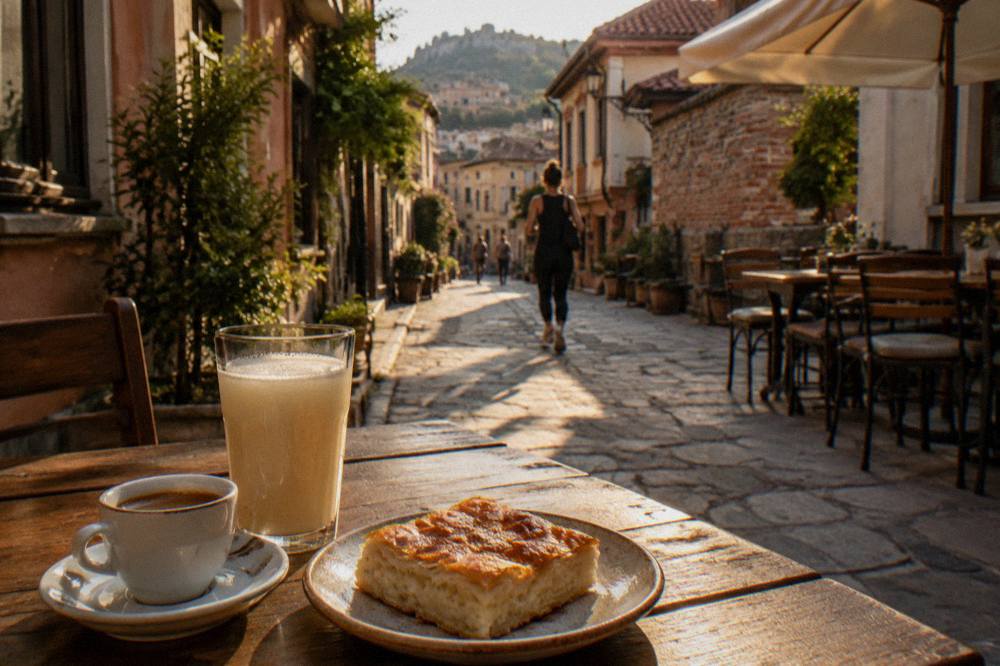
The practical answer for Plovdiv is the Kapana creative district and the streets around the eastern end of Main Street, where bakeries and cafes cluster within a short walk of the Old Town. No individual venue is named here, so the reliable advice is geographic: head for Kapana and the Old Town edge and choose by the tray in the window.
Kapana is the natural first stop. The quarter sits just south of the Old Town's slope, its maze of narrow streets, the very maze that gave it the name "The Trap", holds the densest concentration of cafes in the city, and mornings there are active from early. The site's Kapana guide maps the quarter. On a first morning, the combination that works is a bakery slice eaten on the way in, then a proper coffee sitting down inside the quarter, then the walk up into the Old Town while the light is still low on the coloured Revival-period houses.
The Old Town itself is more about the view than the breakfast. The hillside lanes hold museums and heritage houses rather than bakeries, and the big sights, the Ancient Theatre of Philippopolis, Nebet Tepe, Hisar Kapia, reward the early start far more than any cafe does, since tour groups arrive later in the morning. A sensible pattern pairs a fast Kapana breakfast with an early Old Town circuit, and the site's Plovdiv in one day itinerary builds exactly that sequence.
Sunday adds a wrinkle: an antique and flea market runs near the central bus station in the earlier part of the day, though its hours vary, and it is a morning activity rather than a breakfast destination. Between that and the weekend mekitsi tradition, Sunday mornings in Plovdiv have their own slower rhythm. Visitors planning around meals more broadly can follow the thread through the site's page on what to eat in Plovdiv and the answers on where to eat and drink in Plovdiv.
Turning A Plovdiv Breakfast Into A Full Food Day
A Plovdiv breakfast scales up naturally into a food day: the morning banitsa, a lunch built on shopska salad and grilled kebapche, an afternoon tasting of Thracian Valley wine or rakia, and dinner late in the Bulgarian style. Each stage is its own Bulgarian tradition, and Plovdiv sits inside the Thracian wine lowlands, so the day can end in the vineyards without leaving the region.
Keen to try the Thracian Valley wines yourself? Book a Bulgarian wine tasting here.
The progression works because Bulgarian food customs are strongly ordered by time of day. Breakfast is fast and baked. Lunch is the main cooked meal, and the grill, kebapche and kyufte, minced meat rolls and patties, sits at its centre. The afternoon belongs to coffee again, or to a small rakia, the fruit brandy that anchors Bulgarian hospitality. Dinner runs late, a custom covered in the site's answer to what time Bulgarians eat dinner. A traveller who eats banitsa at eight, shopska at one and grilled meat at eight in the evening has eaten Bulgarian by the clock.
The wine thread is the one that pulls a food day out of the city. Plovdiv sits on the edge of the Thracian Valley, Bulgaria's core wine region, home to the local red varieties Mavrud and Rubin, and a private tasting day from Plovdiv into the surrounding estates is a natural extension of a food-focused visit. The related tour below does exactly that, and its details and price sit on its own listing page rather than being typed out here.
For visitors who want the food explained rather than just eaten, a guided food walk through Plovdiv pairs the bakery slice with the stories behind it, and the site's Plovdiv food tour guide lays out the options. Either way, the breakfast is where the day of Bulgarian eating starts, and it starts early, warm and savoury.
Common Questions About Breakfast In Plovdiv
What Is A Typical Breakfast In Bulgaria?
A warm slice of banitsa, filo pastry filled with eggs and sirene cheese, with a drink of boza, ayran or coffee. Bakeries sell it by the slice through the morning, and it is the standard working breakfast in Plovdiv as everywhere else in the country.
Is Bulgarian breakfast sweet or savoury?
Savoury by default, because the cheese and egg filling of banitsa leads. Sweet variants exist, including pumpkin tikvenik and walnut rolls, and mekitsi, fried dough, can be dusted with sugar, but the everyday slice is cheese-based.
What is boza?
A thick, sweet, mildly fermented drink made from grains such as millet or wheat. It is the traditional partner to banitsa and has a malty flavour with a light tang.
What time do Bulgarians eat breakfast?
Early and briefly. Bakery slices move from the opening of the morning, and the meal is typically finished in minutes rather than sat over. The long, slow meal of the Bulgarian day is lunch.
Can I get a full hotel-style breakfast in Plovdiv?
Cafes in the centre and Kapana serve longer breakfasts, but the local default is a bakery counter, not a menu. For what a whole day of eating in the city looks like, see the site's what to eat in Plovdiv guide.