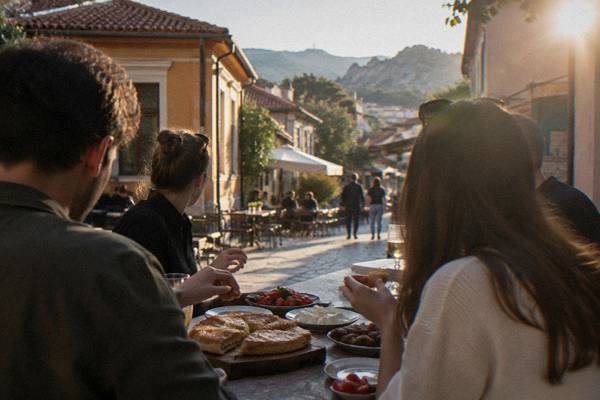
Banitsa And The Bulgarian Breakfast
Banitsa is the filo-and-cheese pastry that anchors the Bulgarian breakfast table, and in Plovdiv it is the fastest way to understand how the city eats in the morning.
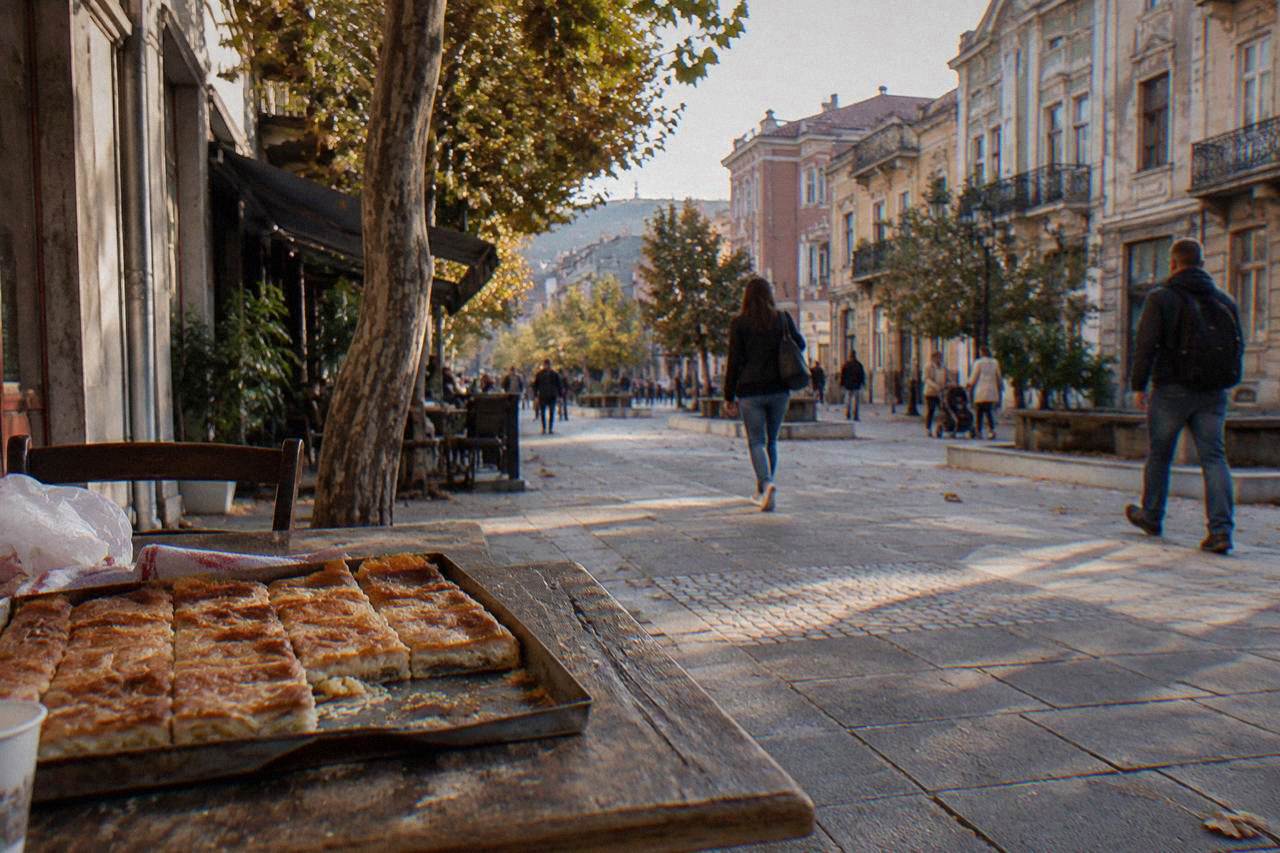
Short answer
Banitsa is a baked pastry of layered filo sheets filled with sirene cheese and eggs, the standard Bulgarian breakfast, sold warm from bakeries across Plovdiv and eaten by hand with boza or ayran.
Banitsa is the dish that opens the Bulgarian day, and in Plovdiv, Bulgaria's second-largest city, an inland city built around six hills in the south of the country, it is a morning ritual rather than a novelty food. The concept is simple: thin sheets of filo pastry layered with a filling of beaten eggs and sirene, the salty white cheese that appears at nearly every Bulgarian meal, then baked until the top turns deep gold. What surrounds that core is a whole breakfast culture, from the fermented millet drink boza to the yoghurt-and-water ayran, and understanding it is one of the quickest ways into the city's daily rhythm. This page from the Plovdiv Travel Guide lays out what banitsa is, what else sits on a Bulgarian breakfast table, how the meal fits a morning of sightseeing, and how to taste it with a guide.
What Is Banitsa, The Bulgarian Breakfast Pastry?
Banitsa is a baked Bulgarian pastry made by layering thin filo sheets with a filling of eggs and crumbled sirene cheese, sometimes with added yoghurt or leeks, cooked until the top is crisp and golden, and it is eaten warm at breakfast, cut into squares and held in the hand rather than served on a plate with cutlery. The name covers a family of dishes rather than one fixed recipe. The classic version is the cheese one, but the filling changes with the season, the region and the household. It is general Bulgarian custom, not a Plovdiv invention, though the city eats it with the same enthusiasm as the rest of the country.
The pastry matters as much as the filling. Filo sheets are brushed with melted butter or oil as they are stacked, which is what produces the striated, flaky structure when the tray comes out of the oven. A well-made banitsa should crackle on top, give way in soft layers, and taste distinctly of sirene, a brined cheese saltier and firmer than feta but close in spirit. Bulgarian breakfast habits treat it as everyday food, the sort of thing bought on the way to work rather than saved for a weekend.
Two drinks complete the traditional serving. Boza is a thick, slightly sweet fermented drink made from millet or wheat, with a texture that surprises first-timers and a history that runs through the whole Balkan region. Ayran is the other half of the pairing: yoghurt thinned with water and salt, cold and sharp against the richness of the pastry. Coffee, usually a short espresso-style cup, stands beside them. Crowdsourced cost data puts an espresso in Plovdiv at around 2 euro, a figure to treat as a rough guide rather than an official price.
Where Does Breakfast Fit In A Morning In Plovdiv?
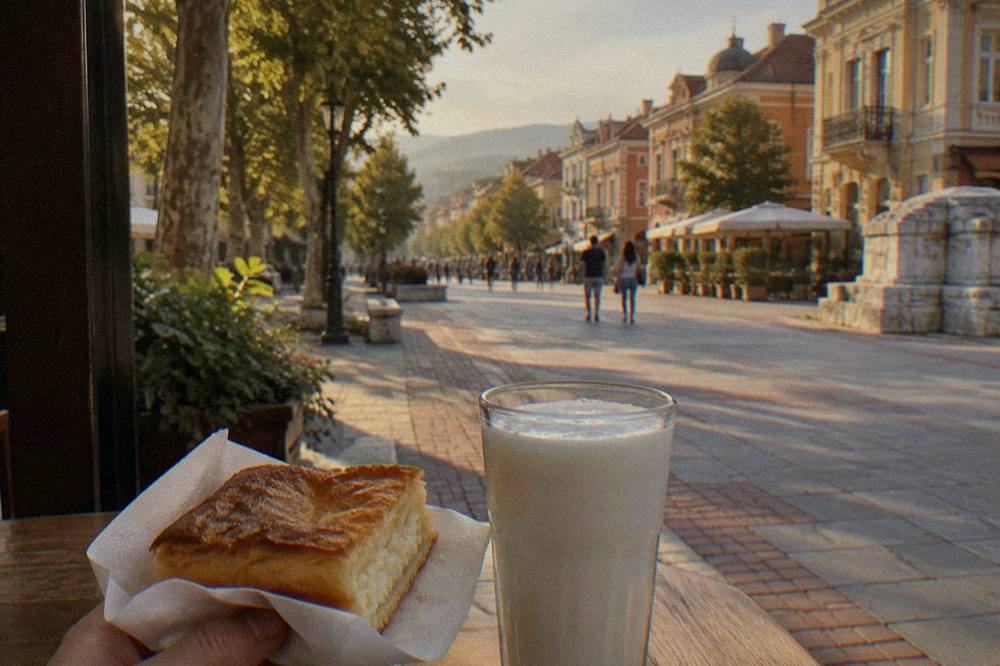
Breakfast in Plovdiv fits the walkable shape of the city centre: bakeries selling warm banitsa cluster along the Main Street pedestrian axis and around its side streets, so a morning pastry can be picked up between Kapana, the Central Square area and the foot of the Old Town, eaten on the move or at a small table within a few minutes of the Roman Stadium and the Ancient Theatre of Philippopolis. No individual bakery in Plovdiv had its address, hours or prices confirmed for this page, so none is named here; visitors should choose by the queue at the counter, which is the reliable local signal, and confirm details on the spot.
The geography rewards the habit. Plovdiv's Main Street is a long pedestrian spine, and part of the Roman Stadium lies directly beneath it, its northern curve visible from the surface for free. Kapana, the creative district whose name means "The Trap", sits a short walk from its western end, a maze of narrow streets that is free and open at all hours. A breakfast bought near any of these landmarks can be finished before the Old Town's museums open their doors, which makes banitsa the practical start of a sightseeing day rather than a detour from it.
The morning schedule of the sites sets the pace. The Ancient Theatre of Philippopolis opens daily, from 9:30 in the April-to-October season and from 9:00 in the November-to-March season, with a short lunch break at 12:30, and a one-site Old Plovdiv ticket costs 3.58 euro for an adult. That leaves a natural window, roughly the first hour after sunrise, when the city belongs to people buying pastry and coffee. An early start also beats the summer heat: the ERA5 reanalysis for Plovdiv, 1991 to 2020, puts the mean daily high at 28.2 C in July and 28.6 C in August.
| Morning stop | What it is | When it works best |
|---|---|---|
| Main Street bakeries | Warm banitsa sold by the piece along the pedestrian axis | Weekday mornings before 9:00 |
| Kapana coffee stops | Espresso and pastry in the creative district's lanes | From mid-morning onward |
| Roman Stadium sphendone | Free open-air view of the stadium's northern curve | Any daylight hour |
| Ancient Theatre of Philippopolis | 1st-century hillside theatre, 28 rows of marble seats | From opening at 9:00 or 9:30 |
| Nebet Tepe | Free hilltop archaeological complex with city views | Morning, before the sun climbs |
A guided walk is another way to organize the same morning, and the classic guided walk through the Old Town and the Roman landmarks pairs naturally with a breakfast eaten beforehand. The taste walk this site features, Plovdiv Unlocked: Taste the City, Feel the Culture, covers the city's foods and their background in a single short loop, and you can Check availability on the operator's live listing. Tip-based walks also run locally; confirm arrangements with the guide directly.
What Do Bulgarians Drink With Breakfast In Plovdiv?
The traditional breakfast drinks in Bulgaria are boza, a thick fermented millet drink served cold, and ayran, salted thin yoghurt, and both are standard companions to banitsa, while coffee in Bulgaria is a short, strong cup drunk slowly, and the full national pairing of banitsa with boza is treated as the classic Bulgarian breakfast combination rather than a café curiosity. The three drinks are as much a part of the meal as the pastry itself, and each carries its own logic against the cheese-and-filo richness.
Boza deserves an open mind. It is dense, faintly sweet, malt-flavoured and the colour of cocoa, and across the Balkans it is a breakfast drink with a long regional history rather than a dessert. Bulgarians who grow up with it often consider it inseparable from banitsa, the sweetness offsetting the salt of the sirene. Ayran works the opposite way: cold, salted and thin, it cuts the butter in the pastry. Coffee, by contrast, follows the Balkan café tradition, small cups and unhurried minutes, and Plovdiv's café culture, strong since the city's year as European Capital of Culture in 2019, gives it plenty of room.
| Drink | What it is | How it is served with breakfast |
|---|---|---|
| Boza | Fermented, thick millet or wheat drink, mildly sweet | Cold, in a glass, beside a piece of banitsa |
| Ayran | Yoghurt thinned with water, salted | Cold, as a savoury counterpoint to the pastry |
| Espresso | Short strong coffee, Balkan café style | Small cup, drunk slowly, often standing at the bar |
| Bulgarian yoghurt | Thick set yoghurt, a national staple | Sometimes eaten plain alongside savoury pastries |
| Herbal tea | Mountain herbs, incl. mint (mursalski tea tradition) | An alternative in colder months |
Wine has a place in Bulgarian food culture, mainly the Thracian Valley reds such as Mavrud, but not at breakfast; the Bulgarian wine guide covers that half of the table, and the rakia guide covers the fruit brandy that belongs to the evening. For the fuller picture of the national table, see the Bulgarian food overview.
Curious about the Thracian Valley reds? Book a Bulgarian wine tasting here.
What Else Is On A Bulgarian Breakfast Table?
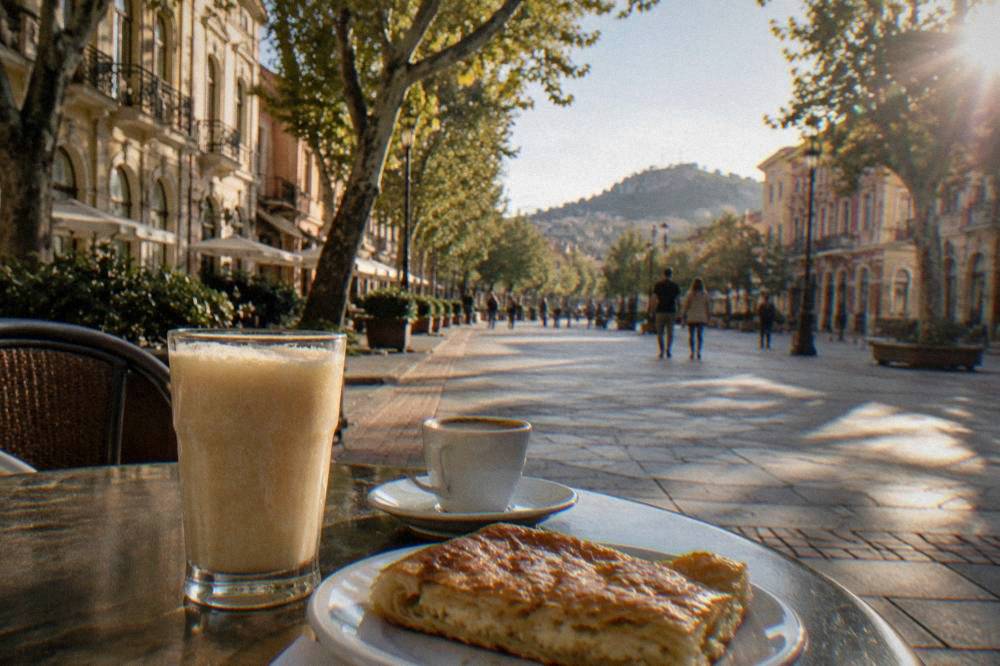
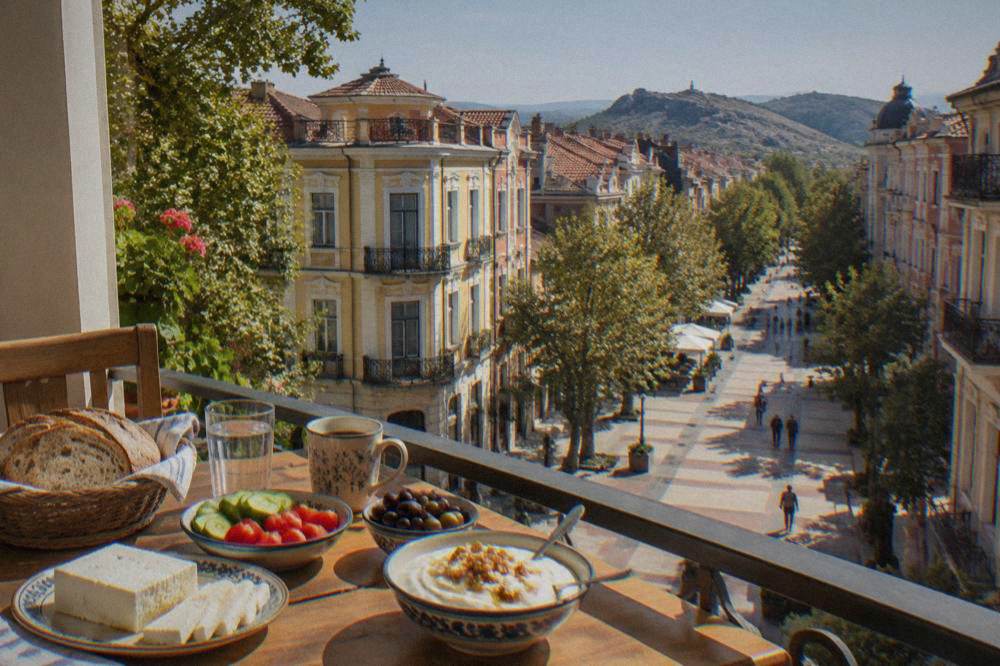
Beyond banitsa, a Bulgarian breakfast table typically carries sirene cheese with bread, yoghurt with honey or walnuts, banitsa's sweeter cousin tutmanik, gevrek sesame bread rings, and simple things like tomatoes and cucumbers in summer, with breakfast eaten early and savoury rather than sweet, which surprises visitors expecting a pastry-and-jam pattern. The constant across all of it is sirene and yoghurt: Bulgarian food culture is built on its dairy, and the morning meal shows that more plainly than any restaurant dinner does.
Tutmanik is the soft entry point. It uses a milkier, richer cheese filling in a brioche-like dough, and it reads as comfort food rather than street food. Mlechna banitsa, "milk banitsa", is a custardy baked version served in squares, closer to a dessert but still breakfast-legal. Gevrek, the local sesame ring, is the grab-and-go option, chewy and glossy. In homes, breakfast may simply be bread, sirene, and whatever the garden has. The pattern is savoury, and it holds year-round.
The bigger meals come later, and that rhythm matters for planning. Bulgarians eat their main meal at midday and dinner in the evening, a schedule covered in more depth in the site's guide to what to eat in Plovdiv. Breakfast is deliberately light because lunch is not. For a fuller answer to the question of national morning habits, the site's typical Bulgarian breakfast page goes dish by dish.
| Item | What it is | When Bulgarians eat it |
|---|---|---|
| Banitsa with sirene | Layered filo, egg and cheese pastry | Every day, bought warm from bakeries |
| Tutmanik | Soft rich dough with milky cheese filling | Weekends and village breakfasts |
| Mlechna banitsa | Custard-style milk banitsa, served in squares | Late breakfast, at home |
| Gevrek | Chewy sesame bread ring | Grab-and-go mornings |
| Sirene with bread | Brined white cheese, tomatoes, cucumbers | Summer home breakfasts |
| Yoghurt with honey and walnuts | Thick set yoghurt, sweetened | Any morning, light option |
How Does Banitsa Change Across Bulgaria?
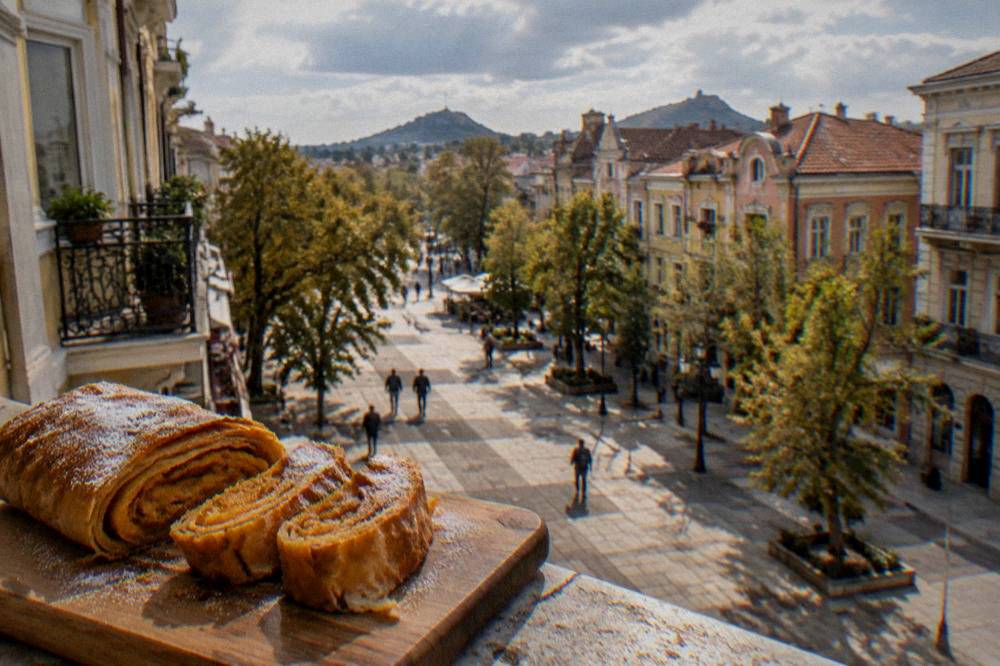
Banitsa varies across Bulgaria by filling and by season: the classic cheese version is national, but the dish's family includes pumpkin banitsa (tikvenik) at Christmas, cabbage banitsa in winter, leek banitsa, and spinach versions, and ritual versions with lucky charms or written wishes are baked for holidays such as New Year's Eve and Christmas Eve, when a coin hidden in the pastry is a national custom. The pastry is the constant; everything inside it is negotiable.
The holiday customs are the part worth knowing before a winter visit. On New Year's Eve many Bulgarian households bake banitsa with a coin or small charms folded into the filling, and whoever finds the coin in their slice is said to carry the luck for the year. For Christmas in Plovdiv, the city's market runs across Central Square and Kapana in late December and early January, and pastry, mulled drinks and street food are part of it. Tikvenik, the pumpkin-and-walnut version rolled in filo and dusted with sugar, belongs to that season specifically.
Regionally, the Rhodope mountains to the south of Plovdiv have their own layered-pastry traditions, part of a broader Rhodope cuisine that several guided day trips from the city include with lunch. The Rhodopes day trip guide covers that terrain. None of these variants is hard to find in Plovdiv itself: a bakery counter in the morning usually holds at least two of them.
| Banitsa type | Filling | Season or occasion |
|---|---|---|
| Classic banitsa | Sirene cheese and eggs | Year-round, daily |
| Tikvenik | Pumpkin and walnuts, sweetened | Autumn and Christmas |
| Zelnik | Cabbage or leek with herbs | Winter |
| Spanachena banitsa | Spinach and cheese | Spring |
| Mlechna banitsa | Milk custard in filo | Home breakfasts |
| Lucky banitsa | Cheese with a coin or charms folded in | New Year's Eve |
Can You Make Banitsa At Home From Plovdiv?
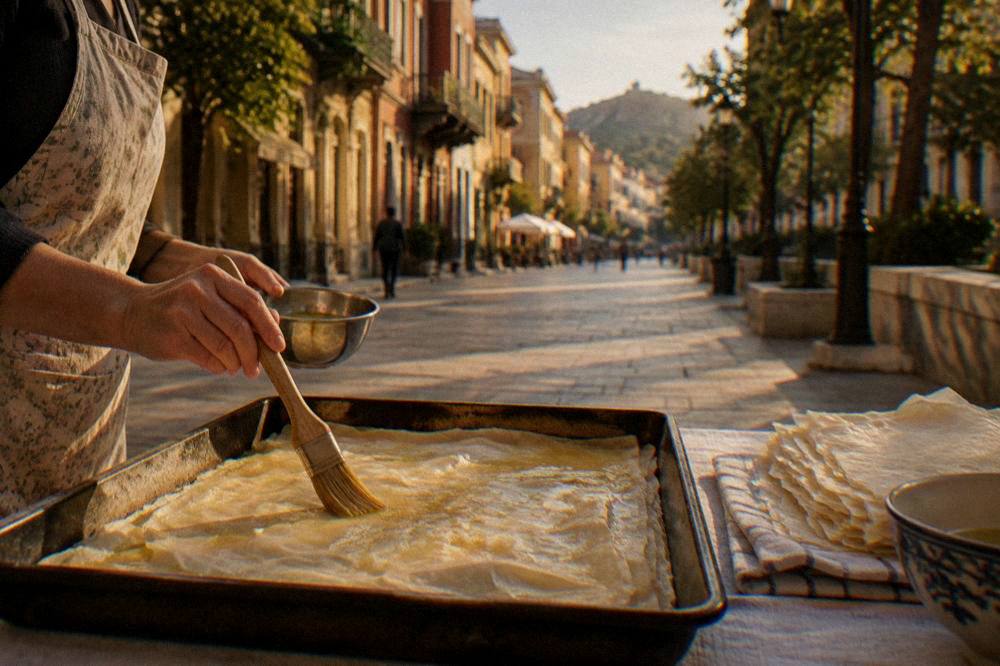
Yes, banitsa can be made at home with ready filo sheets, sirene or a firm brined white cheese, eggs, butter and a little yoghurt or soda water in the egg mixture, and the standard method is to butter each sheet, scatter the cheese-and-egg filling across the tray, layer, score the top into squares, and bake at a hot oven temperature until the top is deep gold, then rest it before cutting. The dish was born as home cooking, and Bulgarian households keep it that way.
The substitutions matter if you are cooking outside Bulgaria. The cheese itself is the authentic base, but a salted feta works in its place, and the filo must be fresh or fully thawed, since dry sheets crack and refuse to layer. The egg mixture is where home recipes diverge: some add yoghurt for softness, some a splash of soda water for lift, and the filling should be loose enough to settle between the sheets but not watery. Scoring before baking is what gives clean squares afterward.
Timing is forgiving. A home tray bakes in under an hour and feeds several people, which is why it survives as a family dish even as city dwellers buy single pieces from bakeries. The main pitfall is soggy pastry from too much liquid in the filling, and the second is cutting too early, before the layers set. Served warm rather than hot, with ayran on the side, it reproduces the Plovdiv bakery counter closely enough.
How Much Does Breakfast Cost In Plovdiv?
A breakfast of banitsa and a drink in Plovdiv sits at the inexpensive end of European café prices: crowd-reported cost data puts an espresso or cappuccino at roughly 2 euro and a half-litre draught beer, for later in the day, at a similar level, while individual bakeries set their own piece prices that no official source publishes, so the honest answer is that breakfast costs a few euro per person and exact figures should be checked at the counter.
Those drink figures come from crowd-sourced cost-of-living data, not from any official price list, and they shift with the season. The site's guide to how expensive Plovdiv is and its money guide cover the wider picture, from mid-range dinners to tipping, which runs at around 10 percent in cafés and restaurants for good service. A tourist tax may be charged by accommodation, but its exact euro rate is not published in a form this site can confirm, so confirm it at booking.
The value logic of the city helps breakfast specifically. The landmarks that anchor a Plovdiv morning are mostly free or cheap: the sphendone of the Roman Stadium is free to view, Nebet Tepe is free, Kapana is free, and the first Old Town site costs 3.58 euro. A two-euro coffee and a piece of pastry therefore sit inside a morning whose biggest possible expense is a museum ticket, a point developed further in the free things to do in Plovdiv guide.
What Is A Full Breakfast-To-Lunch Food Day In Plovdiv?
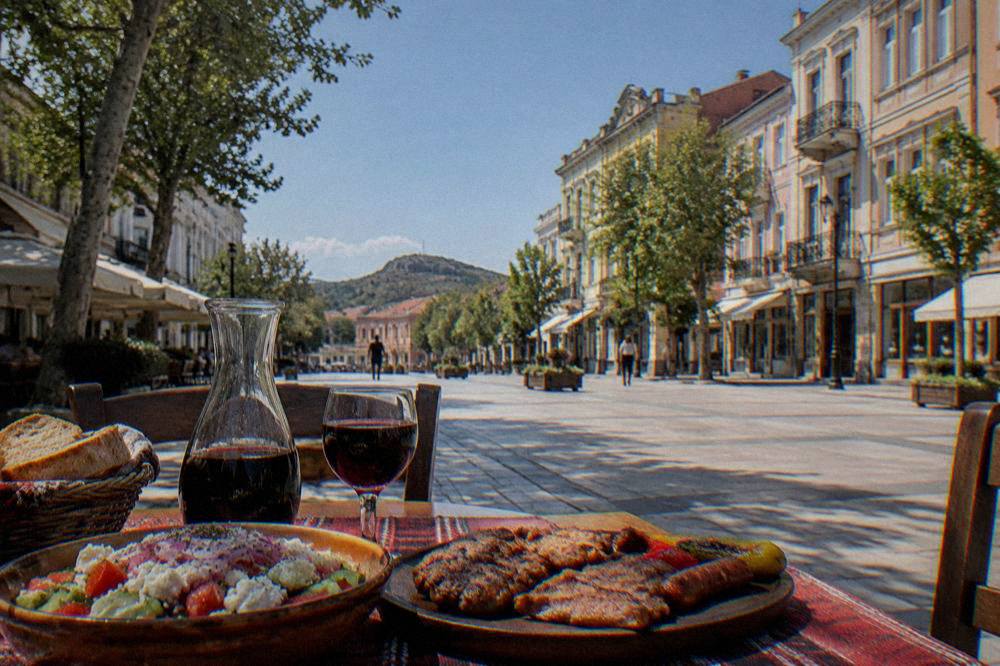
A realistic food day in Plovdiv runs banitsa and boza in the morning from a bakery near Main Street, a mid-morning coffee in Kapana while the Old Town opens, a late and substantial lunch of shopska salad, grilled kebapche and Thracian Valley wine at midday, an afternoon pastry or yoghurt stop, and dinner later in the evening, matching the Bulgarian schedule in which the midday meal is the big one and breakfast stays deliberately light. The city's compact centre makes the whole arc walkable.
The midday meal deserves the planning. Shopska salad, tomatoes, cucumbers, peppers and sirene, kebapche and kyufte grilled minced meat, kavarma clay-pot stew and tarator cold yoghurt soup in summer are the backbone of the Bulgarian table, and the site's restaurants guide covers where to look, with the caution that no individual venue was price-checked. Rakia, the fruit brandy, traditionally opens a long lunch rather than ending it, and the salad course arrives first.
The afternoon belongs to walking it off. The six hills of Plovdiv each offer a short climb, Bunardzhik with the 1957 Alyosha monument among them, and the free things to do guide lists the ascents. In the evening, Kapana fills with bars and the city's nightlife picks up the thread the bakeries started, and a short evening taste walk is another way to sample several stops without committing to a full dinner.
| Time | Stop | What to eat or drink |
|---|---|---|
| Early morning | Bakery near Main Street | Banitsa with boza or ayran |
| Mid-morning | Kapana coffee stop | Espresso, gevrek |
| Midday | Mehana lunch | Shopska salad, kebapche, Thracian red wine |
| Afternoon | Hill walk and pastry stop | Yoghurt or tutmanik |
| Evening | Kapana bars | Rakia or local wine |
Which Guided Food Experiences Include Banitsa In Plovdiv?
Guided food experiences in Plovdiv include short taste walks that sample several classic foods with a local guide, a longer Bulgarian food-and-culture walk built around the national dishes, seated wine tastings of Thracian Valley reds in the centre, and city tours that end with a sunset tasting, with every price, rating and duration shown on the booking page, and free cancellation before the start on the featured taste walk. A guided hour is the efficient way to taste several things and learn their background at once.
The featured walk on this site, Plovdiv Unlocked: Taste the City, Feel the Culture, is built exactly for that: the city's classic tastes, and the stories behind them; Check availability shows the current dates. The food tour guide compares the options in depth, and for visitors basing themselves in the city, the where to stay guide maps the districts against the food streets.
For visitors arriving from the capital, the Sofia-to-Plovdiv train runs direct in about 2 h 40 to 3 h 05, and the Sofia to Plovdiv guide covers it, which means a breakfast in Plovdiv is reachable from Sofia before noon.
Common Questions About Banitsa And Bulgarian Breakfast In Plovdiv
What is banitsa made of?
Banitsa is made of thin filo pastry sheets layered with a filling of eggs and crumbled sirene, the Bulgarian brined white cheese, brushed with butter or oil and baked until golden. Variants use pumpkin, spinach, cabbage or leeks.
What do Bulgarians eat for breakfast in Plovdiv?
Bulgarians eat a savoury, light breakfast: banitsa or tutmanik with boza or ayran, gevrek sesame rings, or bread with sirene, tomatoes and yoghurt at home. The main meal of the day comes at midday.
Is banitsa sweet or savoury?
Classic banitsa is savoury, built on salty sirene cheese. Sweet versions exist, notably tikvenik with pumpkin and walnuts and mlechna banitsa with a milk custard, and they are treated as part of the same pastry family.
What is boza?
Boza is a thick, mildly sweet fermented drink made from millet or wheat, served cold, and it is the traditional companion to banitsa across Bulgaria and the wider Balkans.
Where can I try banitsa in Plovdiv?
Bakeries along the Main Street pedestrian axis and around Kapana sell warm banitsa by the piece each morning, and no specific bakery is recommended here, so choose by the local queue and confirm prices at the counter. A guided taste walk is another way to sample it.
Is breakfast in Plovdiv expensive?
Breakfast is at the inexpensive end of European prices: crowd-reported data puts a coffee at around 2 euro, and a piece of banitsa costs a few euro, with exact prices set by each bakery. Bulgaria has used the euro since 1 January 2026.
Banitsa is the edible summary of the Bulgarian morning: cheap, savoury, layered and unpretentious, and in Plovdiv it comes surrounded by free Roman ruins, free hills and a walkable old city, which makes it the single easiest local habit for a visitor to adopt on the first day and keep for the rest of the trip.