Shopska Salad, Tarator And The Bulgarian Starters
Shopska salad is the dish every Plovdiv menu opens with, and the row of cold starters around it follows a logic of its own. Here is what each one is, how Bulgarians eat them and what to drink alongside.
Short answer
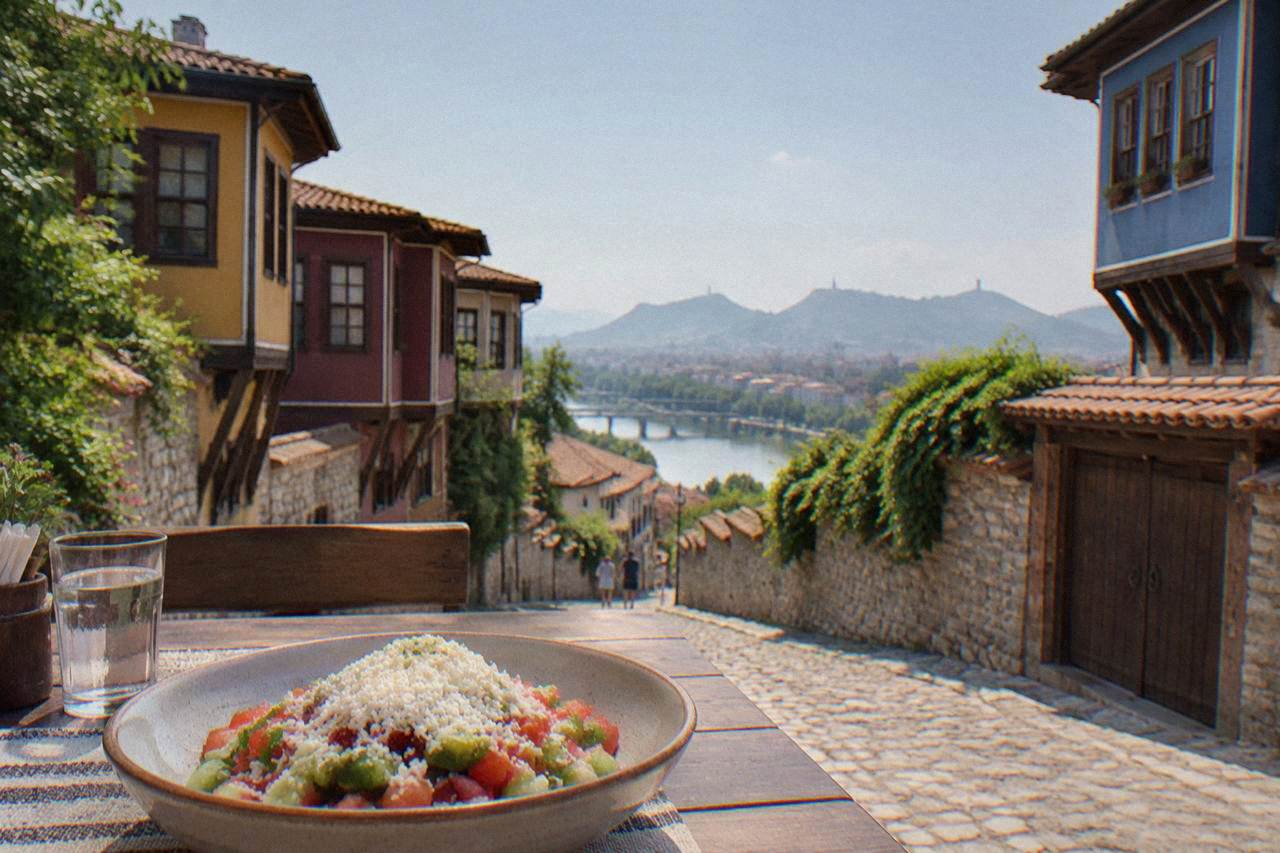
Shopska salad is diced tomatoes, cucumbers, peppers, onion and grated sirene cheese, dressed with oil and vinegar, and it is the standard opener at a Bulgarian table alongside tarator cold soup and a small glass of rakia. Plovdiv restaurants serve all of them everywhere in the city.
Plovdiv, in southern Bulgaria, is an inland city of six hills with no sea coast, and its table shows it: the starters that open a Bulgarian meal here are garden vegetables, yogurt and cheese rather than seafood. The first plate to land is almost always shopska salad, followed by tarator in summer and whatever cured, pickled or baked things the kitchen keeps in its cold larder. This guide explains each dish, the customs around them and how the whole opening course fits together, in plain terms and without invented folklore. For the broader food picture, start with the Plovdiv food overview and the guide to Bulgarian food.
What Is Shopska Salad And Why Is It Everywhere In Plovdiv?
Shopska salad is a cold salad of diced tomatoes, cucumbers, roasted or raw peppers, onion and sirene, a salty white brine cheese, grated generously over the top so the vegetables sit under a white cap, all dressed with sunflower oil and vinegar. It is the standard opening dish of the Bulgarian table, served in essentially every restaurant in Plovdiv, and it is treated less as a salad course and more as the shared base of the whole meal, eaten straight through the evening alongside the grills that follow.
The white cap of grated sirene over red tomatoes and green peppers is not an accident of plating. Balkan tourism industry cookbooks of the socialist era are credited with codifying it, which makes shopska salad one of the few national dishes with a documented, relatively recent origin. Its staying power comes from the ingredients: every component grows in Bulgaria, and the Thracian plain around Plovdiv is a major vegetable-growing region, so the raw material is local and cheap.
The name points at the Shopi, the population of western Bulgaria and the Sofia region, though the dish itself is now universal. In Plovdiv it appears on every menu, usually first, usually in a portion meant for two or three people to share. Ordering it for one person is possible but the portion sizes assume a table.
What arrives is never tossed. The vegetables are diced small and dressed in the kitchen, and the cheese is grated over the top at the last moment so it stays cold and dry. Diners mix it themselves, or do not. The oil is usually sunflower, the vinegar mild, and there is no lettuce anywhere in it.
How Is Shopska Salad Actually Built, Layer By Layer?
The classic build is equal parts tomato and cucumber, a smaller amount of roasted or raw pepper, a little onion, a pinch of salt, sunflower oil and vinegar, and a heavy grating of sirene over the finished pile. Nothing is cooked except, optionally, the pepper. Everything is diced to roughly the same small cube so each forkful carries every ingredient, and the cheese is added only after dressing so it does not weep into the vegetables.
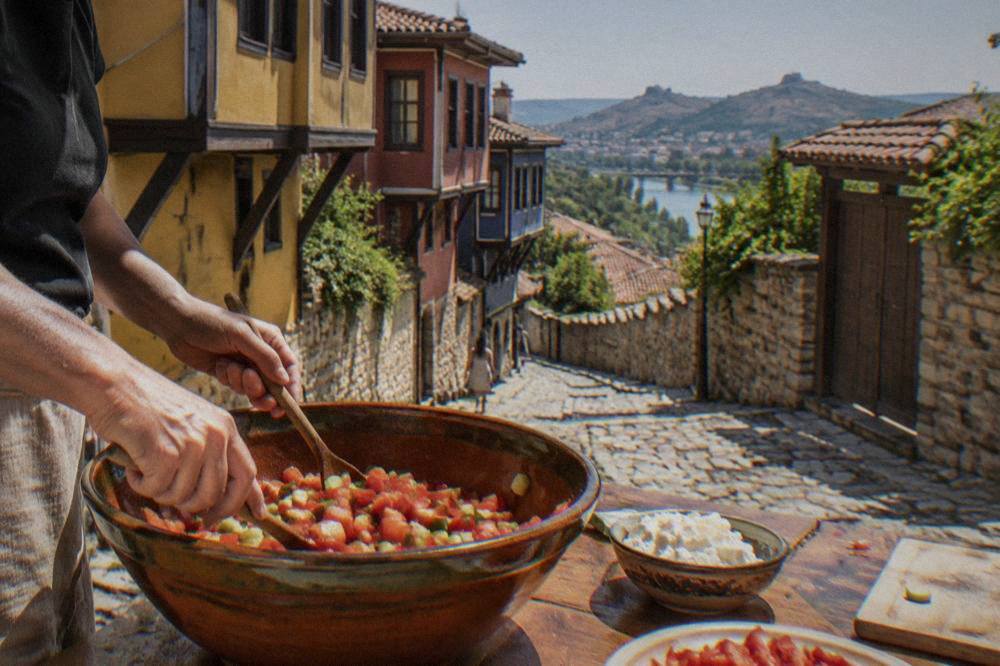
The component list, in the order a Bulgarian kitchen assembles it:
| Component | Usual form | Role in the dish |
|---|---|---|
| Tomatoes | Ripe, deskinned or not, diced | The base, the bulk and the juice |
| Cucumbers | Fresh, seeded, diced | Crunch and coolness |
| Peppers | Roasted or raw, diced | Sweetness and a faint smoke if roasted |
| Onion | Raw, finely diced, sometimes soaked | Sharpness, used sparingly |
| Sirene | Brine-cured white cheese, grated | Salt, fat and the white topping |
| Sunflower oil | Plain, not extra virgin | The dressing fat |
| Vinegar | Mild wine vinegar | Acidity to cut the cheese |
| Salt | A pinch | Draws out the tomato juice |
Two things are consistently absent: lettuce and any bottled dressing. Asking for either marks the order as foreign, and kitchens will usually oblige anyway, but the dish is designed to be at its best in the first ten minutes after it is made. The tomato juice, oil and vinegar form their own light dressing as the salad sits.
If a food-focused walk through the city appeals, the Food Walk: Bulgarian Food and Culture Tour in Plovdiv is this site's featured tour for the topic, with Check availability showing live dates. A food walk is also the easiest way to taste several starters in one evening without committing to full portions of each.
What Starters Join Shopska Salad On A Plovdiv Menu?
Beyond shopska salad, the standard cold starters in Plovdiv are tarator cold yogurt soup, lyutenitsa roasted-pepper spread, snezhanka or snow-white salad, shopska-style pepper and tomato mixes, pickled vegetables, and small baked or fried items such as filo-wrapped cheese. Rakia, the fruit brandy, sits beside them as the drink the whole category was built for. Together these dishes form the meze course, meant to be shared and grazed slowly through the meal.
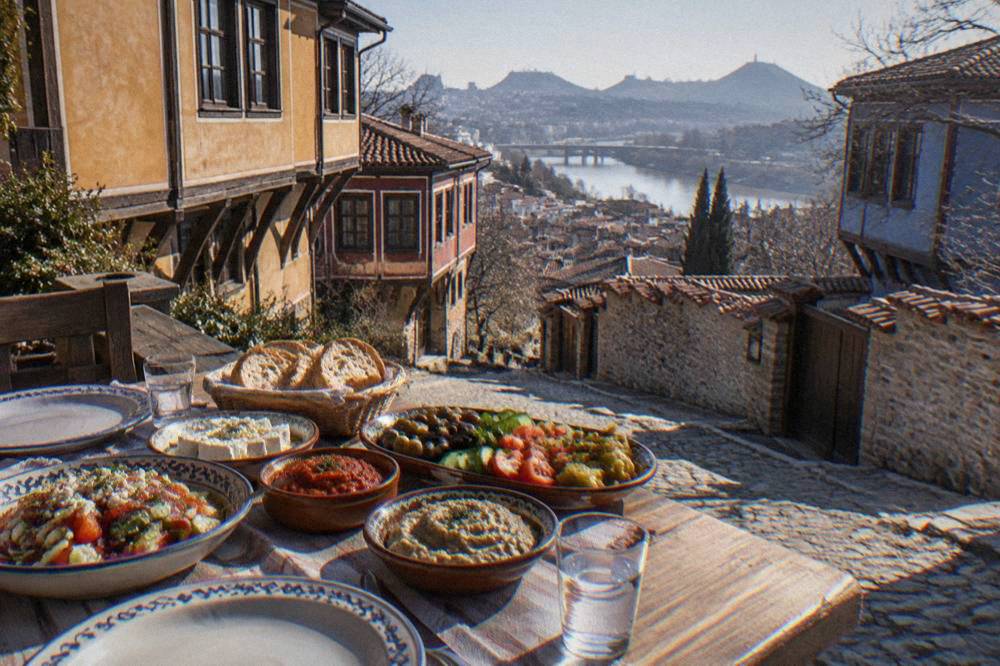
The category is broad but each dish has a fixed identity:
| Starter | What it is | Eaten with | Notes for visitors |
|---|---|---|---|
| Tarator | Cold yogurt, cucumber, garlic, dill, water, oil | A spoon, as a soup | Summer dish, served icy |
| Snezhanka | Strained yogurt, cucumber, garlic, walnuts | Bread | The thick cousin of tarator |
| Lyutenitsa | Roasted peppers and tomato cooked to a spread | Bread, or as a side | Sold in jars in every shop |
| Kyopolou | Roasted aubergine and pepper spread | Bread | Smoky, garlicky |
| Pickles | Pickled cucumbers, peppers, cabbage | Rakia | The classic brandy companion |
| Filo cheese parcels | Fried or baked filo with sirene | Hands | Known generically, not by one fixed name |
The logic of the course is pace. Bulgarians eat slowly in the evening, and the starters exist so the table has food long before any meat arrives. Ordering everything at once, starters and grills together, is possible but it flattens the meal; the traditional sequence lets the cold dishes carry the first hour and the rakia or wine carry the conversation.
A guided option that puts the starter course in context, together with the grill mains and the sweets, is worth considering on a short stay:
For deeper background on how these dishes fit the wider cuisine, the Bulgarian food guide covers the mains, and the best restaurants in Plovdiv covers where to sit down for them.
What Is Tarator, The Cold Soup That Defines Plovdiv Summers?
Tarator is a cold soup of diluted yogurt, finely diced cucumber, crushed garlic, dill, sunflower oil and often crushed walnuts, served chilled and sometimes over ice, and it is the defining summer starter of the Bulgarian table. It is drunk as much as eaten, straight from the bowl or by the spoonful, and its whole point is temperature. In a Plovdiv August, when the ERA5 reanalysis, 1991-2020, puts the mean daily high at 28.6 C, it works as cooling food.
The base is plain Bulgarian yogurt, which is richer and more sour than the sweetened western kind, thinned with water until it pours. Cucumber is diced small or grated, garlic is crushed to a paste, dill is chopped fine, and a little oil floats on top. Walnuts are traditional but optional and some kitchens leave them out.
Tarator and snezhanka share a family: the same yogurt, cucumber, garlic and dill, but snezhanka uses strained yogurt and no water, making a thick dip rather than a soup. Both appear everywhere in Plovdiv from late spring to early autumn, and both disappear or retreat in winter, when hot soups take the starter slot instead.
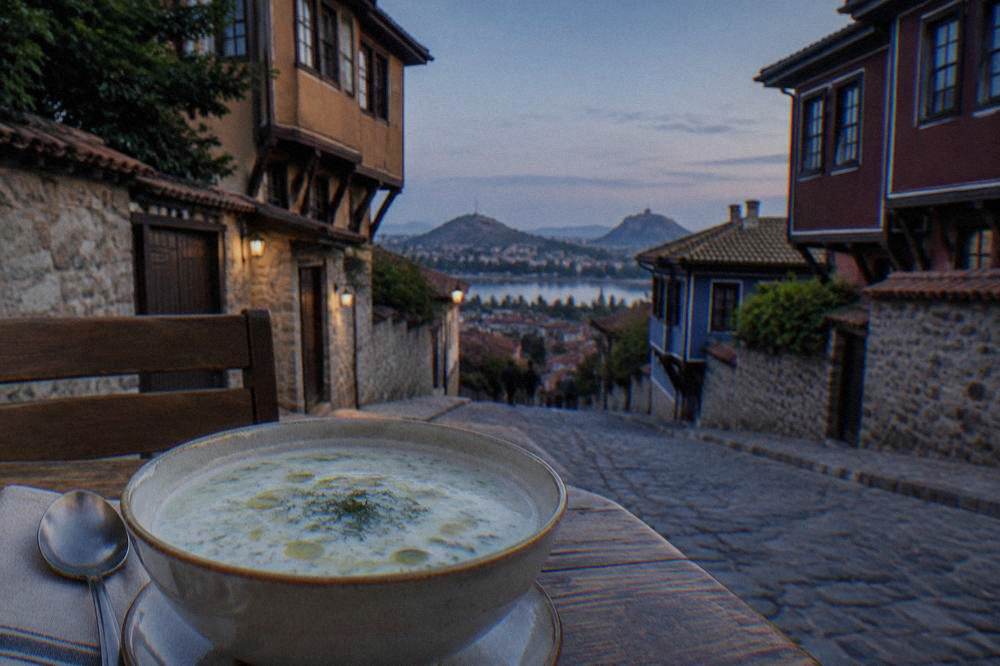
There is no trick to ordering it. It arrives in a deep bowl or a tall glass, already dressed, and nothing needs to be added. Asking for it hot is not a thing; the dish is defined by being cold.
How Do Rakia And Shopska Salad Go Together In Plovdiv?
The pairing of rakia and the cold starter table is the oldest custom on the menu: rakia, a fruit brandy usually distilled from grapes or apricots, is drunk in small glasses, slowly, alongside shopska salad, tarator and pickles, and the fat, salt and acid of the starters exist partly to pace the alcohol. The salad and the brandy are served together, not in sequence, and a toast before the first sip remains standard practice.
Rakia is not a shot drink in Bulgarian custom, despite the small glasses. It is sipped across a long evening, and the meze table is what makes that possible. The salt of the sirene, the acid of the vinegar and the fat of the oil each reset the palate between sips, which is why the starter course grows whenever the brandy bottle does. The full index of guides sits on Plovdiv Travel Guide.
| Rakia style | Usual fruit | Classic meze partner |
|---|---|---|
| Grape | The default in most of the country | Shopska salad |
| Apricot | Common in the south | Cured and smoked meats |
| Fig | A regional variant | Hard cheese and pickles |
| Honey-infused | Sweetened, often homemade | Dessert-adjacent, end of meal |
Wine is the other pairing, and Plovdiv sits in reach of the Thracian valley, the wine region behind the local reds. The Bulgarian wine guide covers the Mavrud and Rubin grapes that grow there, and the local tasting rooms of the city itself. For the rest of the evening after the starters, the Plovdiv nightlife page picks up where the meze table ends.
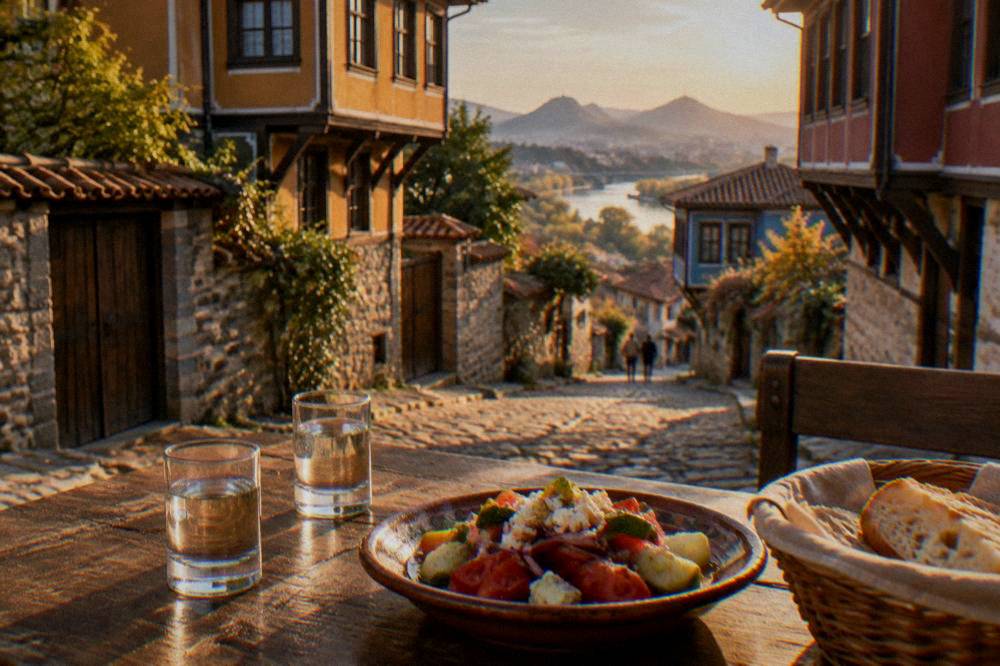
For travellers who prefer the whole starter course arranged for them, one guided format stands out.
What Do Starters And Drinks Cost In Plovdiv?
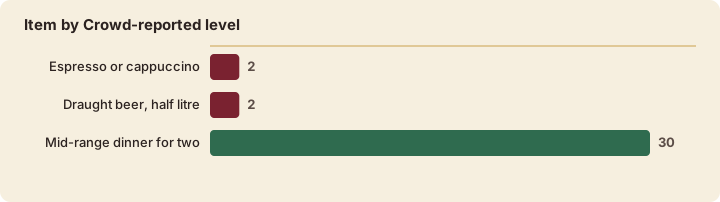
Starters are the cheap end of a Plovdiv menu, and Numbeo crowd data puts an espresso or a half-litre of draught beer at roughly two euro each, with a three-course mid-range dinner for two reported at around 30 to 40 euro, all attributed to user-reported data rather than official prices. Bulgaria has used the euro since 1 January 2026, so menus in the city display euro figures directly. Individual dish prices are not published on this site because none was confirmed.
The cost structure is simple and works in the visitor's favour: the cold starters cost little, the grills cost more, and the drinks cost less than in western Europe. A table that builds a meal from two or three shared starters and bread, then one grill each, lands at the lower end of the range above.
| Item | Crowd-reported level | Basis |
|---|---|---|
| Espresso or cappuccino | About 2 euro | Numbeo user data, Oct 2026 |
| Draught beer, half litre | About 2 euro | Numbeo user data, Oct 2026 |
| Mid-range dinner for two | Around 30 to 40 euro | Numbeo user data, three courses |
For the wider budget picture, including transport and sights, the how expensive is Plovdiv and money in Plovdiv pages set out the numbers that are known and flag the ones that are not. A tourist tax may be charged by accommodation, and its exact 2026 euro rate is not confirmed, so confirm at booking.
Is Shopska Salad Really A Salady Side, Or A Whole Course?
In Bulgarian practice, shopska salad is the first course of the meal, not a garnish beside one. It is ordered for the table, shared from a single bowl, and eaten continuously from the moment it lands until the plates are cleared, running in parallel with the grills rather than being finished before them. Treating it as a side dish is the biggest ordering mistake visitors make, because the kitchen sends it first regardless.
The practical consequence is ordering strategy. A table of two that orders one shopska salad, one other starter and one or two grill mains has a full, correctly paced meal. Ordering a salad each, western-style, produces more food than the table can finish, because Bulgarian portions assume sharing and the bread that arrives unasked is part of the course.
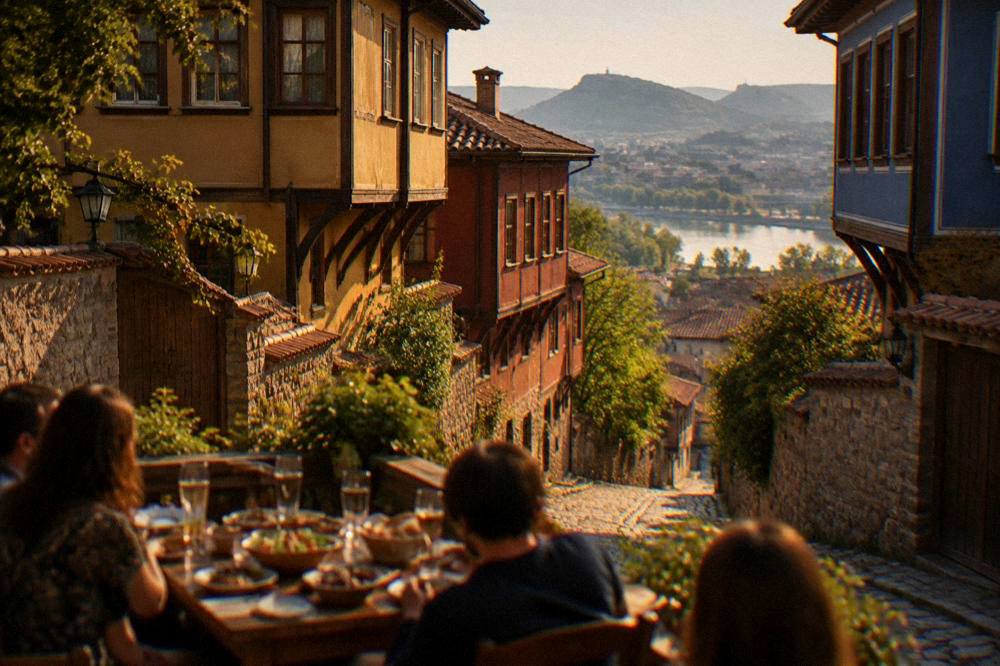
Bread is part of the deal. It arrives automatically in nearly every restaurant, it is used with the spreads and the cheese-parcels more than with the salad itself, and it is billed per basket in some places, a small amount worth checking on the bill rather than disputing. The custom of a shared table, one that the whole Plovdiv food scene is built around, is the frame for everything else on this page.
Can You Build A Plovdiv Starter Spread Around The City's Sights?
Yes, and the geography helps: the Old Town, the Kapana creative district and the Main Street pedestrian axis sit within a short walk of each other, so a day of Roman Plovdiv or the Ancient Theatre can end with a starter table minutes away. Kapana, whose name means The Trap in a maze of narrow streets, is the district most associated with small venues and creative kitchens, and it is free and open to walk through at any hour.
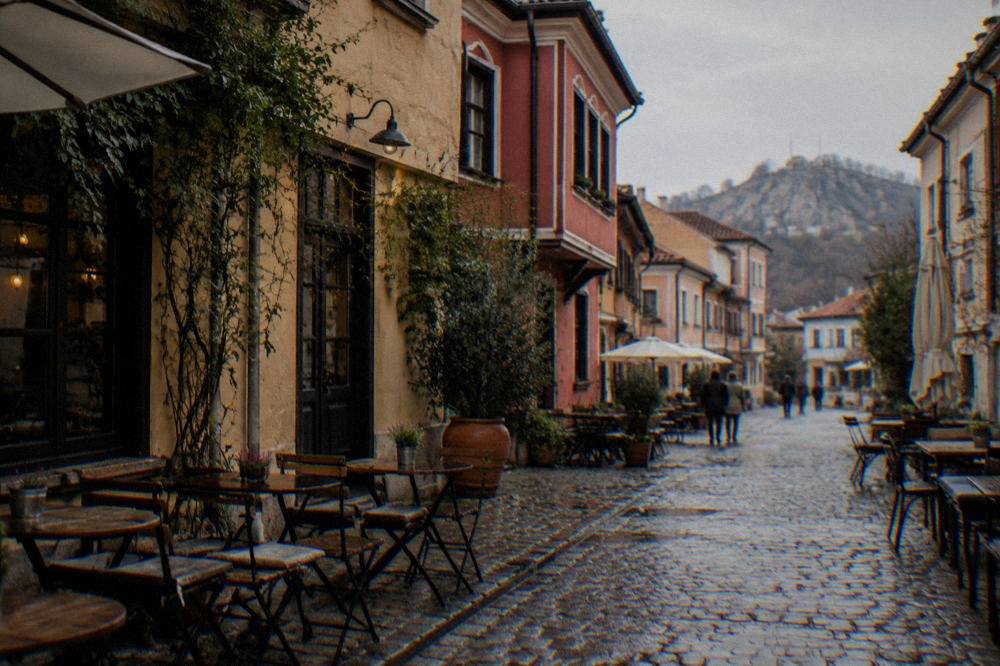
A day that pairs the two halves of Plovdiv, the ruins and the table, is the pattern this site's itineraries follow. The things to do in Plovdiv page lists the sights, the Roman Plovdiv page covers the ancient layer under the city centre, and the best time to visit Plovdiv page explains why late spring and early autumn give both the walking weather and the vegetable season at once.
Two guided formats suit travellers who want the context without arranging it alone. A themed walk through the city's streets and stories, and a half-day trip into the Rhodopes with food stops along the way:
The first is the featured food walk of this article:
The second covers a different layer of the city's past:
And the third heads out of town:

Common Questions About Shopska Salad And Bulgarian Starters In Plovdiv
What is shopska salad made of?
Shopska salad is diced tomatoes, cucumbers, roasted or raw peppers and onion, dressed with sunflower oil and vinegar, with grated sirene, a salty white brine cheese, generously grated over the top. There is no lettuce and no bottled dressing, and it is served cold.
Is shopska salad vegetarian?
The salad itself is vegetarian, since sirene is a dairy cheese and no meat product is used. Strict vegetarians should still ask, because some kitchens add a little shredded dried meat as a garnish, though that is not the standard recipe.
What is the difference between tarator and snezhanka?
Tarator is a thin, drinkable cold soup of yogurt diluted with water, cucumber, garlic, dill and oil. Snezhanka uses strained, undiluted yogurt with the same flavourings, making a thick dip served with bread rather than a soup.
Why do Bulgarians drink rakia with starters?
Custom pairs rakia with the cold meze table because the salt, fat and acid of the salads and pickles pace the alcohol across a long evening. The brandy is sipped from small glasses, not thrown back, and a toast before the first sip is standard.
Do you tip on a meal in Plovdiv?
Ten percent for good service in restaurants and cafes is the reported Bulgarian norm, or rounding up the bill. It is customary rather than mandatory, and the same crowd-reported sources put an espresso or a half-litre of beer at about two euro each.
Can I get shopska salad in winter in Plovdiv?
Yes, it stays on menus year round, though the tomatoes are at their best from late spring to early autumn. In winter the hot soups take a bigger share of the starter course and tarator retreats from many menus.
The starter table is the part of Bulgarian eating that travels easiest: no language barrier, no ordering risk and no technique required, just a shared bowl, cold yogurt and a small glass of something strong, kept on the table until the plates are cleared.