Plovdiv Cafes: Where To Linger Over A Coffee
Plovdiv's cafe scene runs through Kapana's lanes, the Main Street pedestrian strip and the Old Town's cobbles. Here is what to order, roughly what it costs, and how to plan a slow day around it.
Short answer
Plovdiv cafe culture centres on the Kapana creative district and the pedestrian Main Street; an espresso runs about 2 euro by crowd data, banitsa is the standard accompaniment, and summer sitting stretches late into the evening.
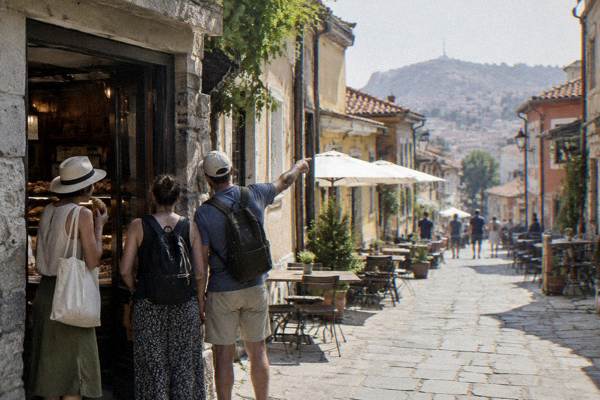
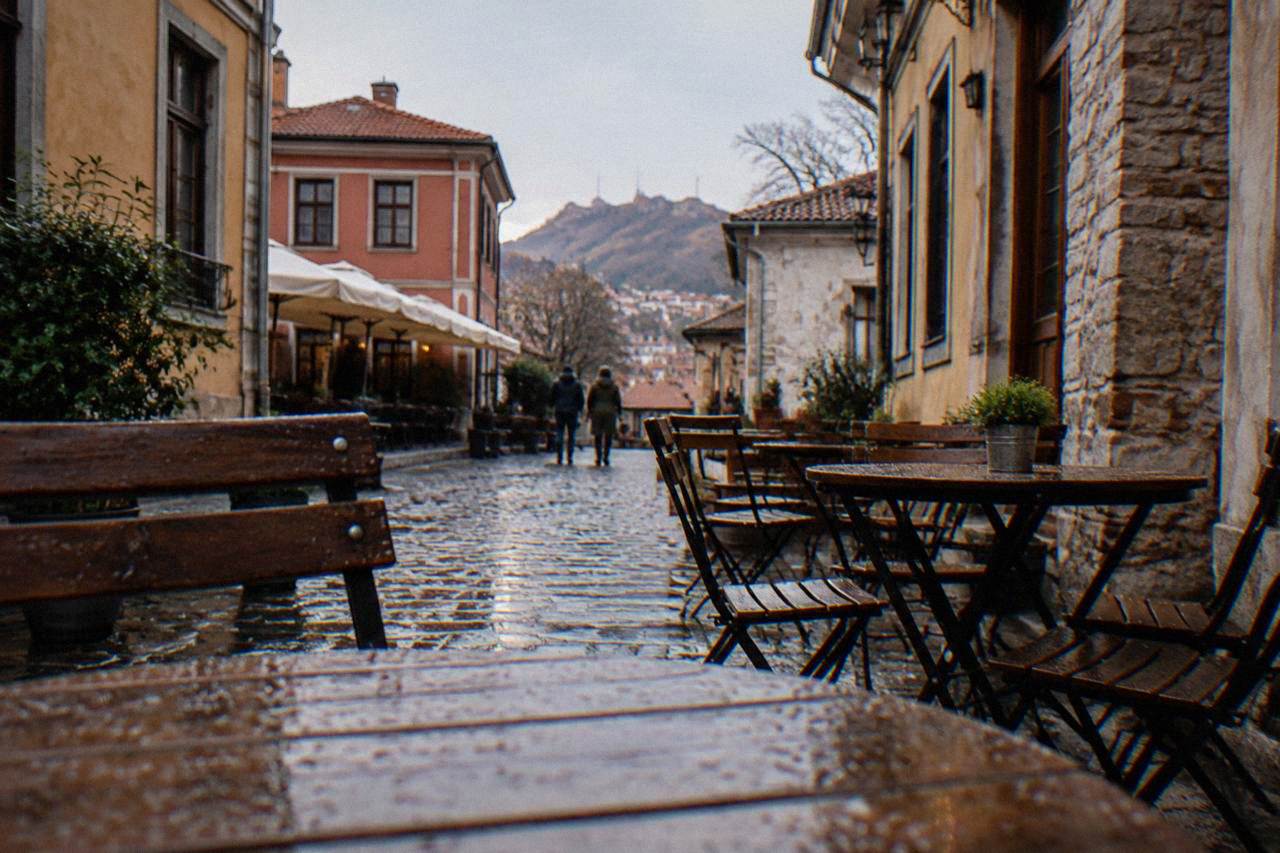
Plovdiv, Bulgaria's second-largest city, drinks its coffee slowly and in public. The cafe is not a stop between sights here, it is one of the sights: tables spill across the pedestrian Main Street, crowd the lanes of the Kapana creative district, and perch on the cobbles below the Old Town's revival houses on almost any afternoon of the year. The continental climate helps. ERA5 reanalysis, 1991-2020 puts the mean daily high at 28.2 C in July and 5.9 C in January, so terrace season runs long, and when it ends the sitting simply moves indoors. This guide covers what to order, roughly what it costs, which streets reward lingering, and how a cafe day fits around everything else the city offers.
What Makes Plovdiv Cafes Different From Cafes Elsewhere?
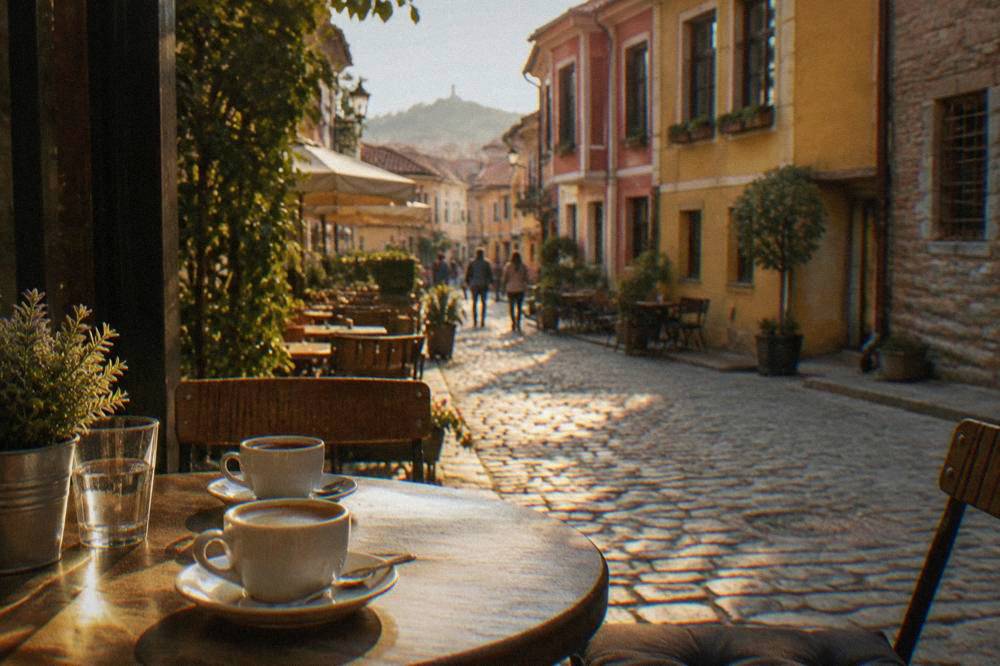
Plovdiv's cafe culture is built on three things at once: a pedestrianised city centre where almost every prime street is closed to traffic, a creative district, Kapana, whose name means The Trap and whose maze of narrow lanes is itself free and open to wander, and prices low enough that lingering carries no pressure. The municipal tourism site describes Kapana as a district of tangled streets, and that layout produces dozens of small squares and corners where tables can sit. The city was European Capital of Culture in 2019, shared with Matera, and that year left Plovdiv with a denser layer of independent venues than a city of its size usually carries. Nothing about the scene depends on a view or a monument, though both are easy to find.
The other structural fact is the Old Town. It sits on the Three Hills, next to Kapana, so a morning coffee can be a two-minute walk from the Ancient Theatre of Philippopolis or the free open-air complex of Nebet Tepe. The geography compresses everything: Roman ruins, revival architecture and the cafe district stack on top of each other rather than spreading out. A visitor can sit with an espresso, finish it, walk five minutes, and be standing on a 1st-century theatre's marble rows.
That density changes the rhythm of the day. In many cities the cafe break is scheduled around the sightseeing. In Plovdiv the two alternate in short cycles, and the standard itinerary pages on this site, such as how to spend a day in Plovdiv, end up built around exactly that pattern.
A third factor is scale. The city counts 333,994 residents as of 31 December 2025 in the official national statistics estimate, large enough to sustain a full cafe ecosystem through the winter, yet compact enough that no car is ever needed to reach it. The scene also runs late by custom: summer evenings stretch, and a table taken at five can still be occupied at nine with nothing but a second order in between. Staff do not rush tables, and a single coffee is a normal thing to hold for an hour.
Which Plovdiv Streets Are The Best For Cafe Sitting?
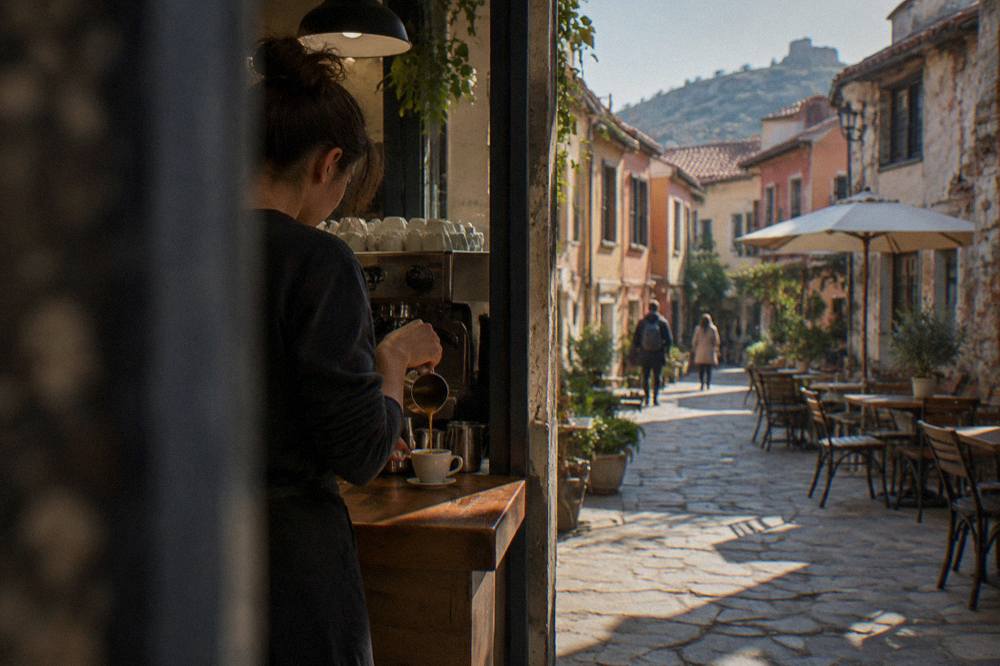
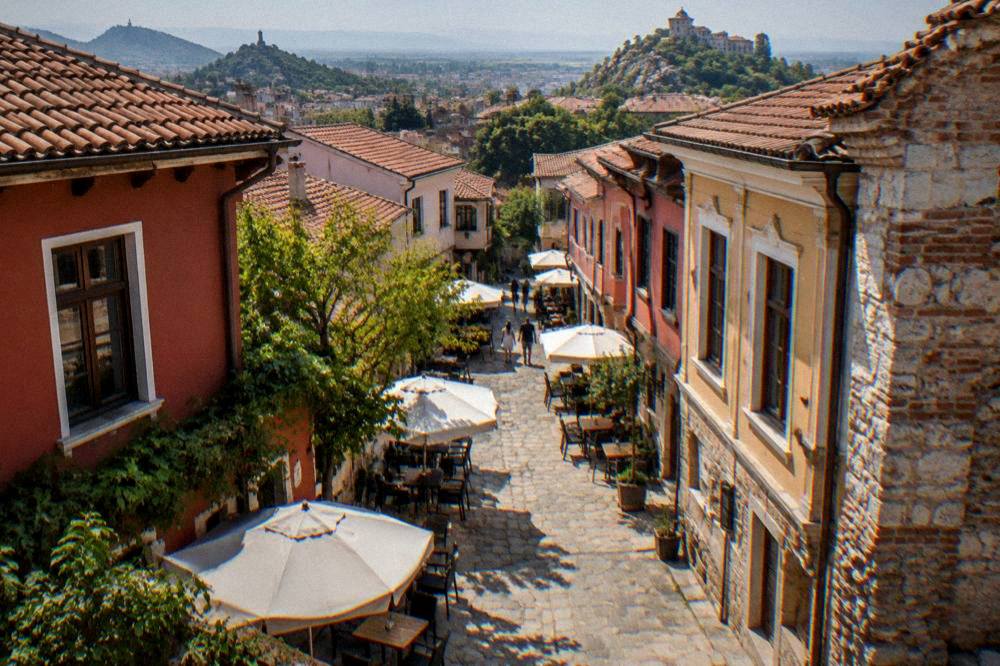
The three cafe streets that matter are the pedestrian Main Street, the lanes of Kapana just south of it, and the cobbles of the Old Town around Hisar Kapia, in that order of density: the Main Street carries the big terraces, Kapana the small independents, and Hisar Kapia the scenic tables under the gate and the revival houses. The Main Street, covered in detail on this site's central Plovdiv guide, is the city's spine, fully pedestrianised, and its cafe rows run for its whole length. Kapana, covered on the Kapana area page, is a district rather than a street: a web of lanes where the name literally means The Trap, because visitors lose their bearings in it.
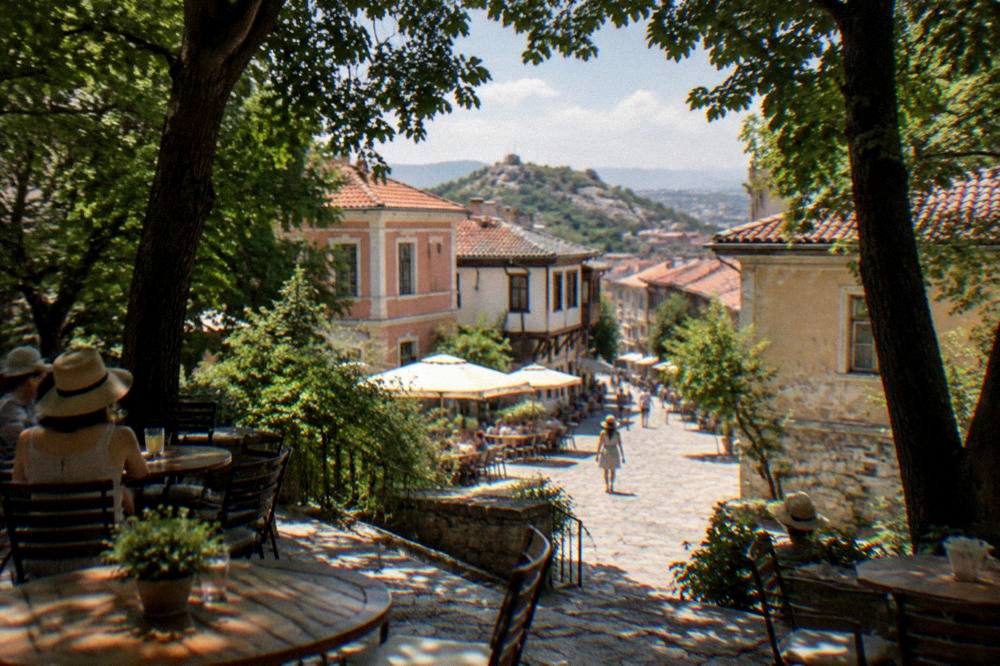
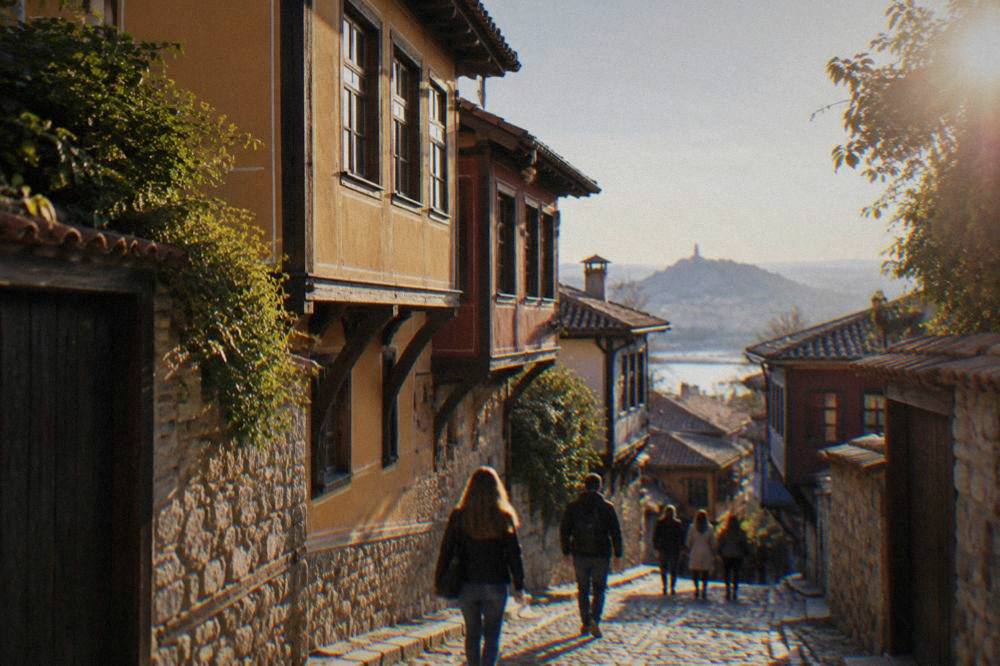
Hisar Kapia, the old gate at the edge of the Old Town, is the third node. The gate itself is a public landmark, open at all hours with no ticket, and the tables around it look up at timber-framed houses on the hillside. It is the setting people picture when they imagine Plovdiv cafe sitting, and it is a short climb from either the Main Street or Kapana.
Each zone suits a different part of the day:
| Area | Character | Best Part Of Day | What Is Nearby |
|---|---|---|---|
| Main Street | Wide terraces, chain and independent mix, people-watching | Morning and early evening | Roman Stadium sphendone, Dzhumaya Mosque |
| Kapana | Small independents, creative district, street art | Afternoon into evening | Hisar Kapia, Old Town gate |
| Hisar Kapia | Scenic tables, cobblestones, house facades | Late afternoon light | Old Town houses, Nebet Tepe |
| Tsar Simeon Garden | Park benches and kiosk tables, green shade | Midday in summer | Singing fountains, city centre edge |
The garden, covered on the Tsar Simeon Garden page, is the fourth option and the one locals use most on hot afternoons. Shade matters in July and August, when ERA5 reanalysis, 1991-2020 puts mean daily highs at 28.2 C and 28.6 C respectively. Between zones, the transitions take minutes rather than half-hours, which is why the table above can be followed almost literally as a schedule. Comfortable shoes beat anything else on the packing list, because the cobbles in the upper two zones punish thin soles.
A guided walk is a natural companion to a cafe day, because the two formats alternate well: an hour or two on foot, then a table. The classic option among the picks above is the city walking tour, which covers the Old Town and the Roman landmarks, and the free alternatives are covered on this site's free walking tour page, where tip-based walks are explained without any single operator named.
What Should You Order In A Plovdiv Cafe?
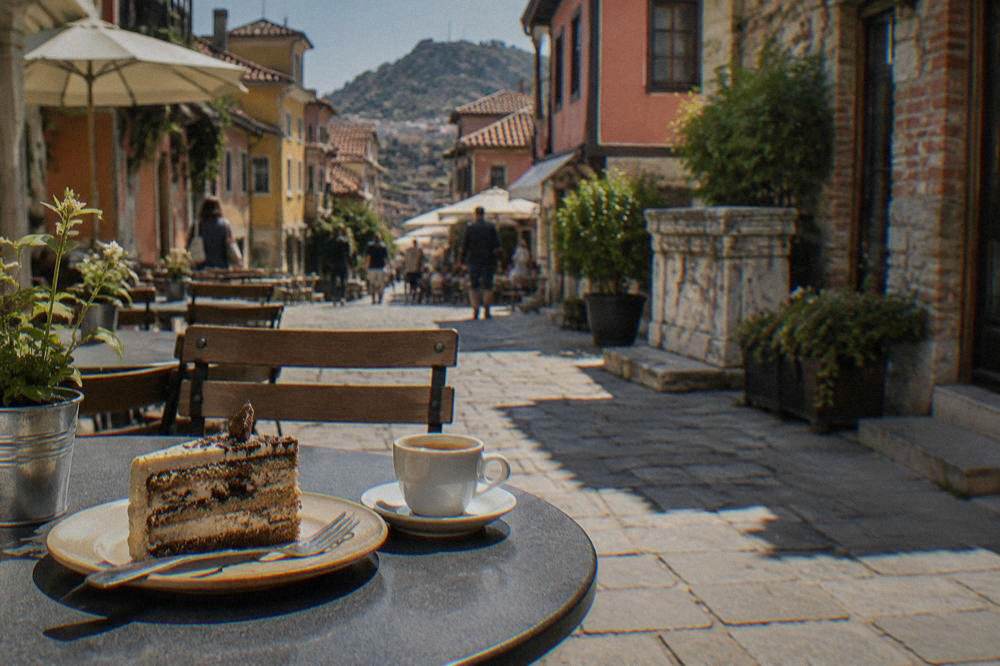
The standard orders are espresso or a cappuccino-style coffee, plus one of three Bulgarian accompaniments: banitsa, the cheese filo pastry that is the national breakfast item, a slice of cake from the display case, or in summer a cold tarator or a soft drink, and the coffee itself is served short and strong in the regional style. Bulgarian breakfast customs are covered fully on this site's banitsa and Bulgarian breakfast page. The short version: the morning pairing of coffee and banitsa is general Bulgarian custom, not a Plovdiv invention, and cafes across the city follow it.
The cake display is a serious institution. Bulgarian cafe counters typically carry a wide tray selection, cream-and-biscuit layered cakes chief among them, and a slice plus a coffee is a recognised mid-afternoon meal in its own right. In the evening the same tables often switch from coffee to wine or rakia, the fruit brandy covered on this site's rakia guide, and the boundary between cafe and bar is genuinely soft in Kapana after dark.
A practical order guide:
| Time Of Day | Typical Order | Accompaniment | Where It Fits |
|---|---|---|---|
| Morning | Espresso or cappuccino | Banitsa | Main Street, on the way in |
| Mid-morning | Flat white or filter | Nothing, or a pastry | Kapana independents |
| Afternoon | Coffee or cold brew | Cake slice from the display | Kapana, Hisar Kapia |
| Summer midday | Cold coffee, soft drink | Cold tarator or shopska salad | Tsar Simeon Garden |
| Evening | Wine or rakia | Meze board | Kapana, Old Town |
The meze board is the bridge into dinner, and the full food context is on the what to eat in Plovdiv and Bulgarian food pages. No individual venue on any of those pages promises a fixed menu, so treat the dishes as custom rather than as a promise of what a specific counter will hold. Payment is straightforward since the euro changeover on 1 January 2026: card acceptance is common in the centre, but carrying a few coins for a kiosk table or a garden stand is still sensible, and receipts are normally offered without asking.
That last pick is the evening version of the same impulse: a seated tasting of Bulgarian wines with cheese and cured meats, in the city centre, which is the natural end point of a day that began with espresso. Booking conditions and the live price are on the operator's listing.
If that slide from espresso to local wine appeals, book a Bulgarian wine tasting here.
How Much Does A Coffee Cost In Plovdiv?
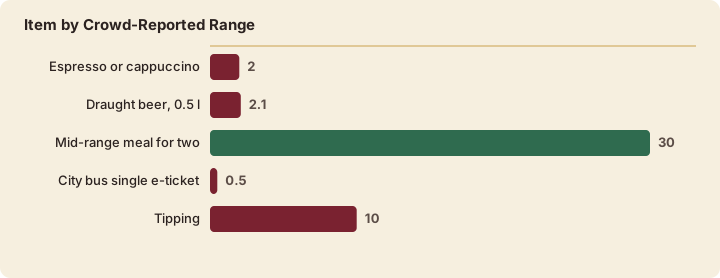
Crowd-reported pricing data puts an espresso or cappuccino in Plovdiv at roughly 2 to 2.50 euro, with a half-litre draught beer at a similar level, around 2 euro, and a three-course mid-range meal for two at roughly 30 to 40 euro; these are user-submitted averages, not official tariffs, so treat them as planning ranges and check the menu at the table. The figures come from cost-of-living crowd data rather than from any municipal price list, which is why they are given as ranges.
The relevant ranges for a cafe day:
| Item | Crowd-Reported Range | Notes |
|---|---|---|
| Espresso or cappuccino | About 2.00 to 2.50 euro | City-average crowd data |
| Draught beer, 0.5 l | About 2.10 to 2.30 euro | Same data set |
| Mid-range meal for two | About 30 to 40 euro | Three courses |
| City bus single e-ticket | 0.50 euro | Official fare |
| Tipping | About 10 percent, or round up | Custom, not mandatory |
Against that, the sightseeing side of the day is also cheap. Any single Old Plovdiv site, the Ancient Theatre among them, is 3.58 euro on the official ticket list, and several of the best spots to sit near, Nebet Tepe, Hisar Kapia and Kapana itself, cost nothing at all, a point this site's free things to do in Plovdiv page builds on. The wider cost picture, including accommodation categories, sits on the how expensive is Plovdiv page.
Put plainly, a full day of two coffees, a cake slice and a tip lands within the price of a single Old Town ticket, which explains why the terraces fill on ordinary weekdays and not only in high season. Visitors arriving from euro-area cities will find the menu arithmetic almost disorienting at first, and visitors arriving from outside the euro area have nothing to convert since the changeover.
When Is The Best Season For Cafe Sitting In Plovdiv?
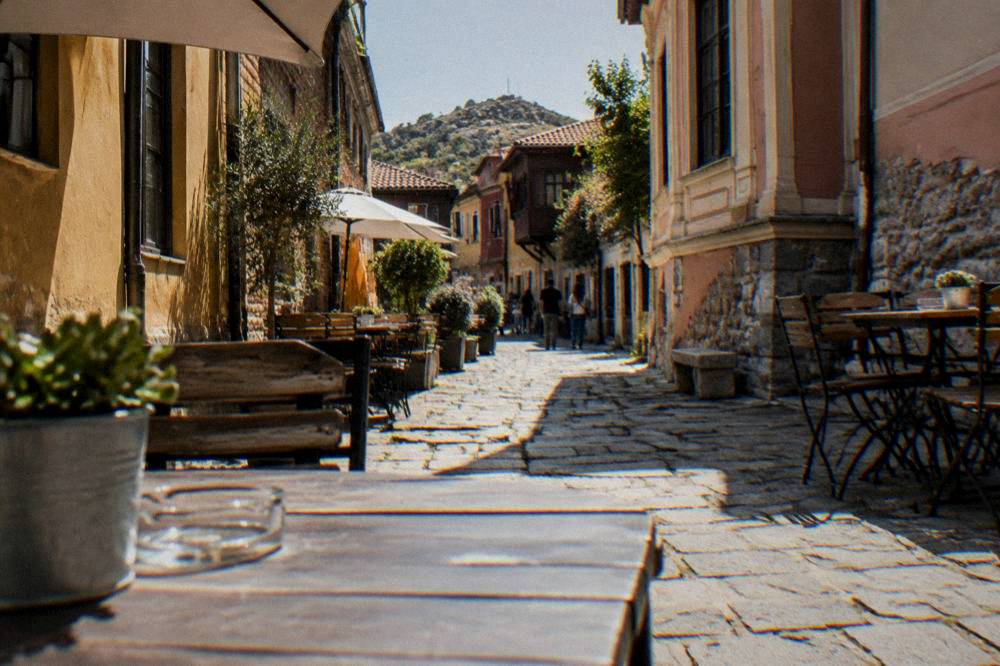
The terrace season in Plovdiv runs roughly April through October, when ERA5 reanalysis, 1991-2020 mean daily highs climb from 17.1 C in April through 28.6 C in August and back to 18.1 C in October, though August is also the month with the lowest mean rainfall at 25.2 mm, while May and March are the wettest at 56.8 mm and 55.0 mm respectively. Those are modelled normals, not a station record, and reanalysis smooths urban heat, but the shape is right: long dry sitting weather from early summer, a peak in August, and a wetter shoulder in spring.
The seasonal trade-offs:
| Season | Mean Daily High | Mean Rainfall (Wettest Month) | Cafe Verdict |
|---|---|---|---|
| Spring (Mar to May) | 12.1 to 21.9 C | 55.0 to 56.8 mm | Mild, showery, indoor backup needed |
| Summer (Jun to Aug) | 25.9 to 28.6 C | 25.2 to 49.1 mm | Full terrace season, sit late |
| Autumn (Sep to Oct) | 18.1 to 23.8 C | 42.8 to 44.1 mm | Long warm evenings, thinner crowds |
| Winter (Nov to Feb) | 5.9 to 12.3 C | 39.7 to 49.3 mm | Indoors, Christmas market season |
Winter sitting does not stop, it relocates. The Christmas in Plovdiv market ran 28 November 2025 to 4 January 2026 in its latest edition, and its 2026/27 edition, billed as Soul of Christmas, runs 1 December 2026 to 7 January 2027 across Kapana and Central Square, which puts hot drinks and tables right back at the centre of the city. The full seasonal picture is on the best time to visit Plovdiv and Plovdiv weather pages.
September deserves a particular mention for cafe purposes. The mean daily high of 23.8 C is close to ideal terrace weather, the rainfall mean of 42.8 mm is moderate, and the Old Town festival days that ran 16 to 23 September 2026 put free performances and exhibitions in the streets between the tables. Late spring is equally warm on paper but wetter on average, so a May visit should carry an indoor fallback among its plans.
How Does A Cafe Day Fit Into A Plovdiv Itinerary?
The workable pattern is a morning coffee on the Main Street, the Roman sites and the Old Town through the middle of the day, an afternoon table in Kapana, and an evening that slides from coffee into wine or dinner, because all four zones sit within a ten-minute walk of each other and none of the walking legs needs transport. The city's compactness does the planning. The Ancient Theatre, the Roman Stadium sphendone, Nebet Tepe, Hisar Kapia and Kapana form a loop that can be walked, sat in, and walked again.
A sample structure:
| Time | Activity | Zone |
|---|---|---|
| Morning | Coffee and banitsa, then the Ancient Theatre | Main Street, Old Town |
| Midday | Nebet Tepe and the Old Town houses, then lunch | Old Town |
| Afternoon | Cake and a second coffee, galleries and street art | Kapana |
| Early evening | Sunset from the hills or Hisar Kapia tables | Hisar Kapia |
| Evening | Wine tasting or dinner | Kapana, centre |
The itinerary pages on this site expand this into full days: one day in Plovdiv for the compressed version, and Plovdiv in the rain for the indoor-heavy version when a March or May shower arrives, which the rainfall normals say is a real possibility. Families can follow the same skeleton, since the garden and the fountains give children an open run between sittings, and the pedestrian streets remove any traffic worry for the walking legs.
A guided walk slots neatly into the midday slot of that table, covering the Old Town and the Roman landmarks while the weather is at its most reliable, leaving the afternoon free for the Kapana tables.
Can You Combine Plovdiv Cafes With A Day Trip?
Yes, and the two most common pairings are a morning table in the city followed by an afternoon trip into the Rhodopes to Bachkovo Monastery and Asen's Fortress, or the reverse, a day out followed by a return to Kapana for the evening, since the monastery is about 30 km from Plovdiv and minibuses from the Rodopi bus station take roughly 35 to 45 minutes. The wider regional options, from the Wonderful Bridges to the Rhodope mountains, all work on the same out-then-back rhythm.
The point for this page is that the cafe day does not have to be sacrificed to the day trip. A departure after breakfast still reaches the monastery before noon, and the return lands in Plovdiv with the whole Kapana evening ahead. In the other direction, coffee travel is easy: the Sofia to Plovdiv connection takes about 2 h 40 to 3 h 05 by direct train, short enough that a Sofia morning can become a Plovdiv afternoon table.
What Else Should You Know Before A Plovdiv Cafe Day?
Practicalities are simple: Bulgaria is a full Schengen member since 1 January 2025 and uses the euro since 1 January 2026, tipping runs about 10 percent or a round-up for good cafe service, plugs are type C and F at 230 V, and the emergency number is 112. A tourist tax may be charged by accommodation, and its 2026 euro rate is unverified, so confirm at booking. The city bus e-ticket is 0.50 euro if the tables need reaching by transport, though the cafe districts themselves rarely do. The full run of these details, from luggage storage to useful phrases, sits on the Plovdiv travel tips page, and the evening continuation of the cafe scene is on the Plovdiv nightlife page.
One habit worth importing from local custom rather than from elsewhere: nobody rushes a table. The crowd-data prices above mean an hour with a second coffee costs less than a museum ticket, and the outdoor season is long. The site's wider coverage, starting from things to do in Plovdiv and the Plovdiv Travel Guide home page, treats the sitting as seriously as the sights.
Common Questions About Plovdiv Cafes
Is coffee expensive in Plovdiv?
No, by Western European standards. Crowd-reported cost-of-living data puts an espresso or cappuccino at roughly 2 to 2.50 euro. Treat that as a planning range and check the menu, since no venue's own prices were confirmed individually.
What is a typical breakfast in a Plovdiv cafe?
Coffee with banitsa, the cheese filo pastry that is the standard Bulgarian breakfast item, sometimes with boza or ayran alongside. This is general Bulgarian custom rather than a Plovdiv speciality.
Can you sit outside all year?
Not comfortably. ERA5 reanalysis, 1991-2020 puts mean daily highs at 28.6 C in August but only 5.9 C in January, so terrace season runs roughly April to October. In winter the sitting moves indoors and around the Christmas market, whose 2026/27 edition runs 1 December 2026 to 7 January 2027.
Is Kapana good for cafes?
Yes, it is the centre of the independent scene. Kapana means The Trap, a name the municipal tourism site explains by its maze of narrow streets, and its lanes hold the city's densest cluster of small cafe tables. The district itself is free and open.
Do Plovdiv cafes serve alcohol?
Commonly, yes, especially in Kapana, where many venues shift from coffee to wine and rakia in the evening. Bulgarian wine from the Thracian Valley, covered on this site's Bulgarian wine page, is the usual pour, and a seated tasting with cheese and cured meats can be booked in the centre.
Do you need to tip in Plovdiv cafes?
Custom suggests about 10 percent in restaurants and cafes for good service, or simply rounding up. It is common practice rather than an obligation.