Money In Plovdiv: Euro, Cards, Cash And Tipping
Bulgaria switched to the euro on 1 January 2026, and Plovdiv's ticket desks, cafes and minibuses all operate in the new currency. This page lays out what the changeover means for a visitor: what things cost, where cards work, where a few coins still matter, and how tipping is handled.
Short answer
Bulgaria has used the euro since 1 January 2026 at a fixed rate of 1.95583 lev per euro. Cards are widely accepted in Plovdiv's centre, small cash amounts remain useful at markets, minibuses and church donation boxes, and rounding up or leaving about a tenth of the restaurant bill is the local tipping habit.
Bulgaria became the 21st euro area country on 1 January 2026, and Plovdiv, the country's second-largest city, now prices everything from Ancient Theatre tickets to market tomatoes in euro. This page sets out what to know about spending money in the city.
What Currency Does Bulgaria Use Now?
Bulgaria uses the euro, and has since 1 January 2026, when it became the 21st country in the euro area.
The euro column is the one that matters. A ticket listed at 3.58 euro costs 3.58 euro, and that is what a card or cash payment settles at. Reading the euro figure straight off the list avoids any mental conversion entirely, which is the point of printing both.
The dual circulation period ran from 1 to 31 January 2026, when prices had to be displayed in both currencies. After that the euro stood alone. For budgeting, this means no exchange desks are needed for a euro-area resident, and no currency risk for anyone holding euro. Visitors arriving with other currencies exchange once, at a bank or a licensed exchange office, and are done.
The cost overview for Plovdiv on this site works only in euro figures for exactly this reason. The same caution applies to tipping advice found in print guides from earlier years: the percentages and habits they describe referred to a different currency era, and the practical etiquette has carried over unchanged while the numbers now read in euro.
There is a second, quieter effect of the changeover worth knowing. Because the rate is fixed by law rather than floating, a euro price on a menu or a ticket page cannot drift day to day the way a converted price would. A figure printed today holds until the operator changes it, so a screenshot of a price list taken weeks before a trip stays useful.
Do You Need Cash In Plovdiv, Or Are Cards Enough?
Cards cover the large majority of spending in central Plovdiv: restaurants, cafes, hotels, museums and shops all take them, and contactless is normal. Cash still earns its pocket space in specific places, including minibuses, the Sunday market, small Old Town kiosks and church and monastery donation boxes, so carrying a modest amount in coins and small notes is the practical choice.
The city bus system prices its electronic single ticket at 0.50 euro, and validators and app payments are expanding through 2026, but drivers on some routes still prefer coins. The same logic applies to the minibus lines south towards Bachkovo Monastery from the Rodopi bus station: exact change makes boarding simpler. Getting around the city is covered in detail on the Plovdiv transport guide, and the Plovdiv bus stations page explains which terminal serves which direction.
Markets are the other cash stronghold. The Sunday antique market near the central bus station and the weekend artisan stalls in Kapana operate on cash more often than not, and haggling is easier with notes in hand. Kapana itself, the creative district whose name means "The Trap", is free to wander, which makes it the rare neighbourhood where the cheapest option is also the best one, as the free things to do in Plovdiv page shows.
Card acceptance is close to universal where prices are printed: the Old Plovdiv ticket desks, the Bishop's Basilica visitor centre, restaurants along Main Street and the cafes of Kapana. Tellers may ask whether you want to pay in euro on a foreign card terminal: choosing euro, rather than your home currency, avoids a dynamic conversion spread.
How much cash is enough? A handful of coins covers a day's buses; a couple of small notes handle a market browse, a donation box at the Dzhumaya Mosque or Bachkovo Monastery, and a coffee at a stall without a terminal. Nobody needs a wallet full of paper. The pattern that works: pay by card wherever a terminal exists, keep the cash for the edges, and withdraw rarely, in machines attached to banks rather than freestanding ones, which carry better rates and lower fees in general.
What Do Plovdiv's Sights And Tickets Cost?
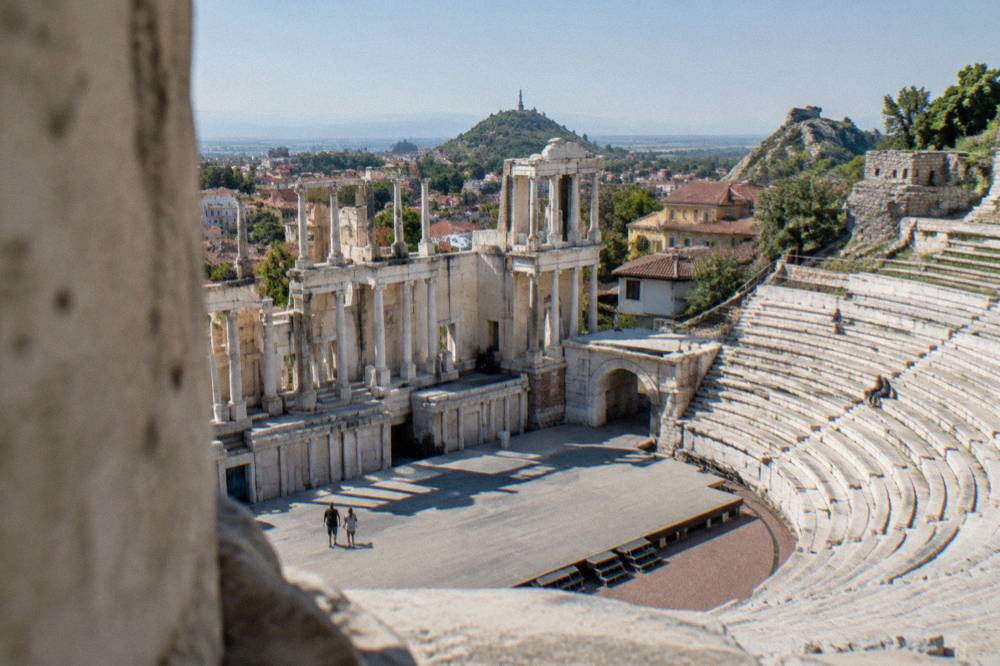
The core sightseeing prices are set by the Old Plovdiv municipal institute: any one of its sites costs 3.58 euro for an adult, a combined ticket covering up to five sites costs 10.74 euro, and the Bishop's Basilica is priced separately at 7.57 euro because it sits under a different tariff. Several of the city's landmarks, including Nebet Tepe, Kapana and the Roman Stadium sphendone, cost nothing at all.
The single ticket covers the Ancient Theatre of Philippopolis, the Small Basilica and the restored Old Town houses such as Balabanov, Hindliyan and Nedkovich. Students pay 1.53 euro, a family ticket for parents with children aged 7 to 16 is 7.16 euro, and children under 7 enter free. Groups of more than 10 pay 3.07 euro per adult. More of these guides are collected on Plovdiv Travel Guide.
| Old Plovdiv ticket | Adult | Student | Family |
|---|---|---|---|
| One site (except Bishop's Basilica) | 3.58 euro | 1.53 euro | 7.16 euro |
| Combined, up to 5 sites | 10.74 euro | 4.09 euro | 21.47 euro |
| Bishop's Basilica, single | 7.57 euro | 3.58 euro | 15.34 euro |
| Roman Stadium 3D hall | 3.68 euro | 1.23 euro | listed on site |
| Stadium eastern sector + 3D hall | 5.11 euro | 2.05 euro | listed on site |
The combined ticket earns its price quickly. At 10.74 euro against 3.58 euro per site, it pays for itself at the fourth house or basilica entrance, and an Old Town wander naturally passes three or more of them in a morning. Note the exclusion: it does not cover the Small Basilica or the Bishop's Basilica, which sit on their own tariffs. The validity period of the combined ticket is not stated on the ticket page this desk uses, so check at the desk when buying rather than assuming.
Two museums sit outside this system. The Regional History Museum charges 5.00 euro for one site, 8 euro for two and 10 euro for three, and is free on the first Thursday of the month. The Regional Archaeological Museum closed its price gap by simply not publishing a figure on its English page; the price is quoted on arrival. Its permanent exhibition was renewed in November 2025 with about 150 new exhibits and a bilingual audio guide.
| Museum | Day to know | Why it matters for money |
|---|---|---|
| Regional History Museum | Free first Thursday of the month | Full savings on the 5.00 euro ticket |
| Regional Ethnographic Museum | Closed Monday | Plan around it, no refund logic |
| Regional Archaeological Museum | Closed Monday | Same, plan the week accordingly |
| Old Plovdiv sites, students and seniors | Free first Thursday of the month | Applies to student and senior entries |
If ticket-desk logistics sound like friction, a guided visit bundles them: the classic Plovdiv guided walking tour moves through the Old Town and the Roman landmarks with a guide handling the practicalities, and it can be checked at the operator's live listing.
How Much Do Everyday Things Cost In Plovdiv?
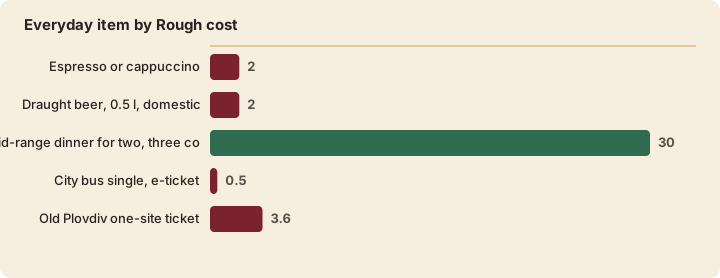
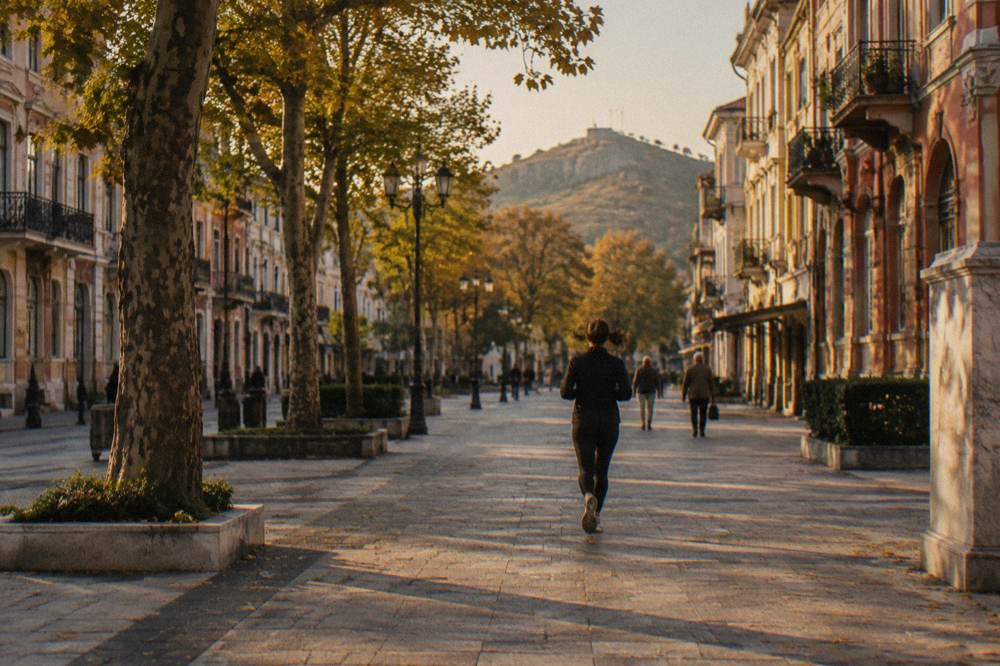
Crowd-sourced cost data puts an espresso or cappuccino in Plovdiv at around 2 euro, a half-litre of draught domestic beer at around 2 euro, and a three-course mid-range dinner for two at roughly 30 to 40 euro, figures that sit well below western European equivalents. A city bus ride is 0.50 euro with the e-ticket, making the daily transport spend close to negligible.
Those figures come from crowd-sourced cost-of-living data (numbeo.com, gathered from user reports), not from any official tariff, so treat them as a planning range rather than a promise. A coffee in Kapana and a coffee on Main Street can differ by half a euro, and a restaurant bill depends on whether wine enters the picture. Bulgarian wine, covered on the Bulgarian wine guide, is one of the better value lines on any Plovdiv menu, with local reds from the Thracian Valley region carrying prices that surprise visitors from further west.
| Everyday item | Rough cost | Basis |
|---|---|---|
| Espresso or cappuccino | around 2 euro | Crowd-sourced cost data |
| Draught beer, 0.5 l, domestic | around 2 euro | Crowd-sourced cost data |
| Mid-range dinner for two, three courses | roughly 30 to 40 euro | Crowd-sourced cost data |
| City bus single, e-ticket | 0.50 euro | Municipal e-ticketing |
| Old Plovdiv one-site ticket | 3.58 euro | Official ticket page |
| Nebet Tepe, Kapana, Hisar Kapia | free | Public spaces |
Food spending stretches further with street staples. Banitsa, the cheese filo pastry that anchors Bulgarian breakfasts, and the grill plates described on the what to eat in Plovdiv page sit at the cheap end of the range, while the restaurant selection on the best restaurants in Plovdiv guide runs from neighbourhood taverns to finer dining in restored Old Town houses. The Bulgarian food overview explains the dishes worth paying for.
A simple structure keeps a food budget honest. Coffee and a pastry in the morning sits near the bottom of the scale; a lunch of salad, grill and a soft drink lands mid-range; and the evening meal is where the 30 to 40 euro figure for two comes from, wine included in that arithmetic at Bulgarian prices rather than subtracted from it. Street food, profiled on the Plovdiv street food guide and reachable through the site's food pages, undercuts all of it when time matters more than sitting down.
How Does Tipping Work In Bulgaria?
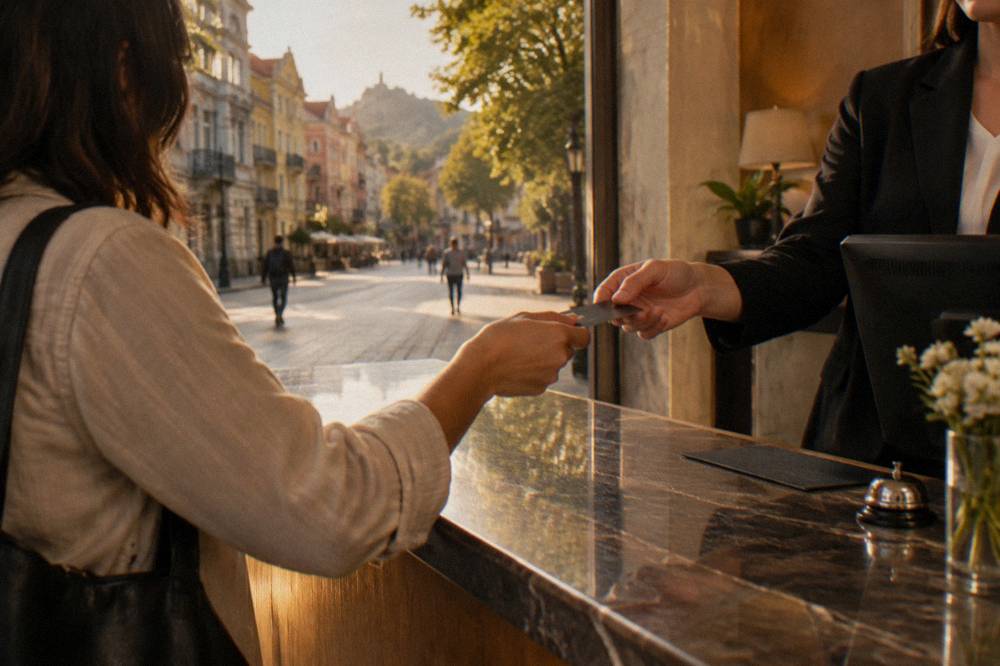
Bulgarian tipping follows a simple habit: leave roughly a tenth of the bill in restaurants and cafes when the service was good, or round the total up, and there is no obligation to tip in taxis or other services. The amount is a gesture rather than a fixed percentage written into law, and nobody will chase you for it.
The rounding habit matters more than precision. On a lunch bill, leaving a note and waving away the change is a completely normal local move; on a larger dinner, adding a couple of euro to the card terminal amount or leaving cash on the table both work. Some terminals ask the customer to enter the tip before the charge, so have a number in mind.
Where tipping also appears: tip-based walking tours. Free or pay-what-you-want walks operate locally in Plovdiv, and the guide's entire income is the tip, so budget accordingly and confirm arrangements directly with the guide, since no platform details belong on this page. The paid alternative, the guided walking tour mentioned above, prices itself up front.
For services beyond the table, hairdressers and spa staff are sometimes tipped by rounding up, but it is not expected the way it is in the United States. Tour guides on paid trips are usually tipped if the day went well, at the traveller's discretion. Hotel porters and housekeeping sit in the same optional category: appreciated, never demanded. The emergency number in Bulgaria, as everywhere in the EU, is 112, and no service there ever involves money.
A note on receipts and service charges: Bulgarian restaurant menus display prices with VAT included, so the bill you are handed matches the menu arithmetic. If a service charge line appears, it is rare and printed, not sprung. Tipping sits on top of the printed total, or it does not happen at all, and both outcomes are unremarkable to staff.
What Does A Trip To Plovdiv Actually Budget Out To?
The honest answer is that Plovdiv's printed prices are low by European standards while its hotel rates are not published as an official city average, so the two figures a traveller can plan on firmly are sightseeing, where a combined Old Plovdiv ticket is 10.74 euro, and transport, where the bus e-ticket is 0.50 euro and intercity fares run to single digits. Accommodation and any tourist tax are confirmed at booking.
Hotel prices vary by season and star rating, so confirm nightly rates at booking. What is certain: a per-night tourist tax may be charged by the accommodation, so confirm the 2026 euro rate and the total, tax included, when booking. The where to stay in Plovdiv guide explains the districts, which affects price more than any other single choice.
Intercity travel is cheap and priced openly. Trains from Sofia take about 2 h 40 to 3 h 05 direct, with timetables on the BDZ site, and the Sofia to Plovdiv page covers the options. Flying in, the Plovdiv Airport guide explains the small route list, while most international visitors still arrive through Sofia, a connection walked through on the how to get to Plovdiv page.
Seasonality moves prices more than negotiation does. The best time to visit Plovdiv and Plovdiv weather pages pair the calendar with the ERA5 reanalysis, 1991-2020 modelled normals: mean daily highs of 28.6 C in August against 5.9 C in January. The festival calendar, from Opera Open at the Ancient Theatre to the autumn Kapana Fest, fills rooms and raises rates around its dates, so checking the Plovdiv festivals and events page before locking accommodation is worthwhile.
Put together, a comfortable day in the city needs very little: a combined ticket at 10.74 euro covers the headline sights, a bus or two adds under a euro, and the remaining spend is food, which the ranges above let each traveller dial up or down. Add a tasting, a guided walk or a day trip and the day's shape changes more than its arithmetic. The one line item that resists planning is the room, and the one rule that solves it is booking early around festival dates.
What Money Mistakes Do Visitors Make In Plovdiv?
The recurring mistakes are quoting lev prices from old sources, assuming everywhere takes cards, paying in a home currency on card terminals, and budgeting for attractions on a Sunday-Monday pattern without checking the museum closing days, since the Ethnographic and Archaeological museums both close on Mondays and free-entry Thursdays can change a whole itinerary.
Bulgaria has used the euro since 1 January 2026, the fixed rate is 1.95583, and no visitor needs to convert anything mentally if they read the euro column of every price list.
Dynamic currency conversion is the quiet one. When a card terminal offers to charge in dollars, pounds or another home currency, the exchange rate applied is worse than the card network's own. Declining it and paying in euro is a one-button saving on every transaction of a trip.
Planning mistakes cost more than arithmetic ones. A Monday arrival that banks on the Ethnographic Museum wastes a slot; the first-Thursday free entries can save a family ticket's worth of spending if the calendar cooperates. The Plovdiv travel tips page collects the non-money versions of the same advice, and the Plovdiv museums overview lists what each institution charges where a figure exists.
Day trips change the budget shape more than anything inside the city. Wine country sits close to Plovdiv, and a tasting in the centre is an easy evening spend, while a longer outing towards Starosel pairs Thracian heritage with a full day away from city prices.
For a fuller escape, the Rhodopes day tour from Plovdiv and the countryside options on the things to do in and around Plovdiv overview give the wide picture, with per-person prices shown on each operator's live listing rather than guessed here.
Common Questions About Money In Plovdiv
Can I pay by card everywhere in Plovdiv?
Nearly everywhere in the centre, including museums, restaurants and the Old Plovdiv ticket desks. Carry a small amount of cash for minibuses, markets, small kiosks and donation boxes at churches and monasteries.
How much should I tip in Plovdiv restaurants?
Round the bill up or leave roughly a tenth for good service. It is a customary gesture, not a mandatory charge, and it applies to cafes as well as restaurants. Taxi tipping is not expected.
Is Plovdiv expensive?
By western European standards, no. Crowd-sourced data puts a coffee and a beer each at around 2 euro and a three-course dinner for two at roughly 30 to 40 euro, and the bus e-ticket is 0.50 euro. Hotel rates vary and are best compared directly at booking.
Are Plovdiv's museums free on any day?
The Regional History Museum is free on the first Thursday of the month, and Old Plovdiv sites offer free entry to students and seniors on that day. The Ethnographic and Archaeological museums close on Mondays.
Is there a tourist tax in Plovdiv?
Accommodation may add a per-night tourist tax. The current euro rate is not published, so confirm the total, tax included, when booking your stay.
