What To Be Careful Of In Bulgaria?
Practical cautions for visitors to Bulgaria and Plovdiv: euro changeover prices, ticket offices, taxis, Schengen entry rules and seasonal weather, reported from primary sources.
Plovdiv, in southern Bulgaria, is an inland city built around six hills, and the honest answer to what needs care here is rarely drama: it is small practical frictions. Bulgaria has used the euro since 1 January 2026 and has been a full Schengen member since 1 January 2025, so the old assumptions about changing money and border checks are outdated. What remains is a city where ticket offices close on Mondays, lunch breaks are real, street names are written in Cyrillic, and a little planning removes nearly every snag. This page walks through the cautions that actually apply, in the voice of what the official pages and reported data say.
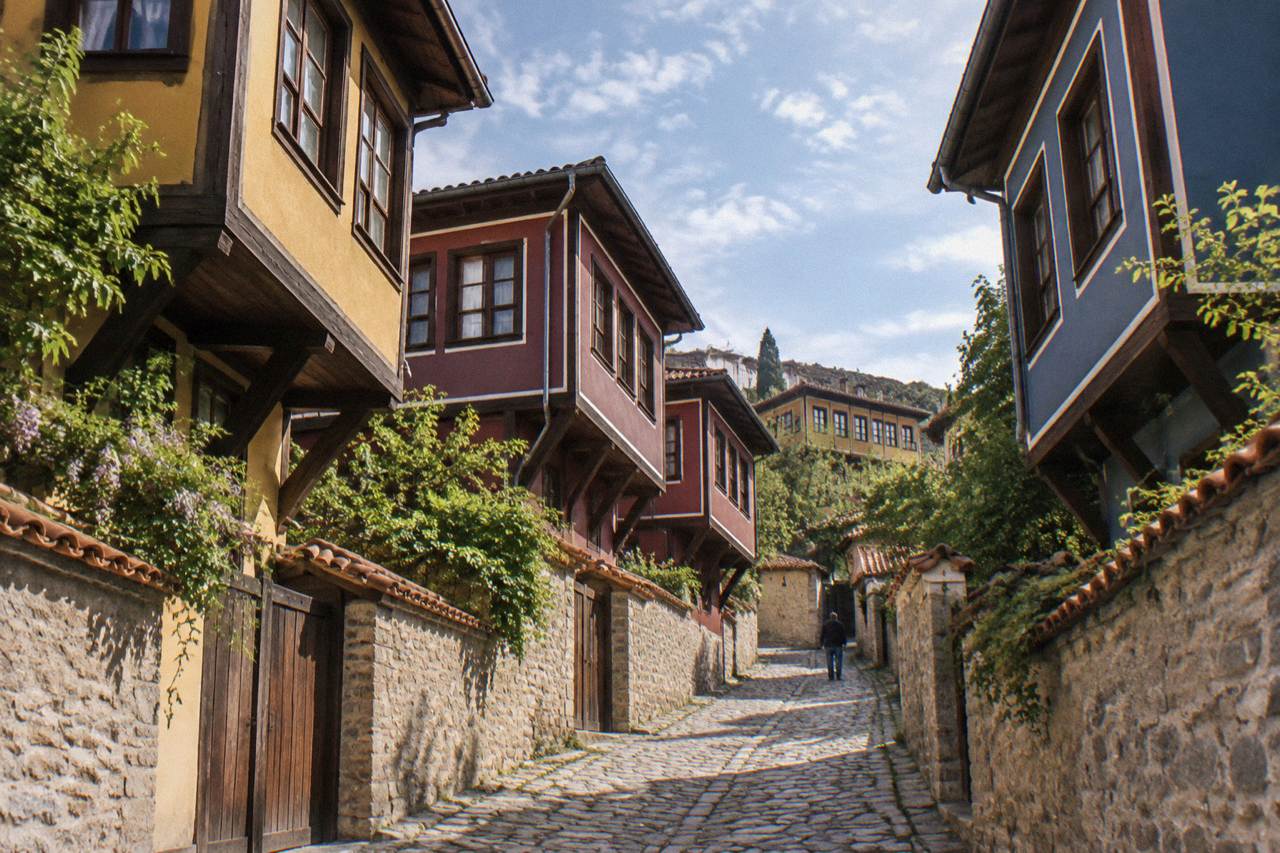
What To Be Careful Of In Bulgaria?
The main things to be careful of in Bulgaria are outdated advice, not danger: the country has used the euro since 1 January 2026 and is fully in Schengen since 1 January 2025, prices are still dual-displayed on some official lists, several Plovdiv museums close on Mondays, and the single European emergency number is 112. The municipal and national sources paint a picture of a routine European destination. Violent trouble against visitors is not a theme the official tourism materials flag.
Start with the currency.
Entry rules are the second trap, and they cut the other way. Because Bulgaria is a full Schengen member, visitors from the United States, United Kingdom, Canada and Australia are reported to enter visa-free for 90 days in any 180-day period under the standard Schengen rule, and confirm current rules with official sources before travel. The Entry/Exit System was deployed at all Schengen external borders as of 10 April 2026, so biometric registration replaces passport stamps at the border. Any article still describing Bulgaria as "outside the Eurozone" or "non-Schengen" is years out of date.
Money And Ticket Prices In Plovdiv After The Euro Changeover
Every official price in Plovdiv is now in euro, with the fixed rate of 1.95583 lev per euro applied since 1 January 2026, and the main caution is reading a lev figure by mistake on a dual-displayed list such as the Old Plovdiv ticket page, where a 3.58 euro ticket may also show a lev figure. The euro is the only currency to budget in. Card payment is normal in the city, and the small day-to-day costs reported by crowd data run around 2 euro for an espresso, around 2 euro for a half-litre of draught beer, and around 30 to 40 euro for a three-course mid-range meal for two. Treat those as planning ranges and check the room you are in.
| Old Plovdiv ticket | Adult | Student | Family |
|---|---|---|---|
| Any one site except the Bishop's Basilica | 3.58 euro | 1.53 euro | 7.16 euro |
| Combined ticket, up to 5 sites | 10.74 euro | 4.09 euro | 21.47 euro |
| Bishop's Basilica, single | 7.57 euro | 3.58 euro | 15.34 euro |
| Roman Stadium 3D hall, single | 3.68 euro | 1.23 euro | on the ticket page |
A few cautions sit inside that table. The Bishop's Basilica is priced separately from the one-site and combined Old Plovdiv tickets, so a combined ticket does not cover it. The validity period of the combined ticket is not stated on the page, so confirm it at the ticket desk before buying. Under-7s and visitors with more than 50% disability enter Old Plovdiv sites free, and the Regional History Museum is free the first Thursday of the month.
Two crowd-data cautions round this out. A tourist tax may be charged by your accommodation, and its 2026 euro rate is not published as a single official figure, so confirm at booking rather than trusting an old blog number. And restaurant prices in the centre of Plovdiv are low by Western European standards, which makes it easy to stop checking the menu at all; a printed menu with euro prices is the norm, and anything quoted only verbally deserves a written confirmation.
A guided walk is one practical answer to several cautions at once: opening hours, Cyrillic signage and steep lanes all become someone else's problem. The Jewish heritage walk through central Plovdiv is one such option, and Check availability covers it, alongside the detailed write-up on the Jewish walking tour page.
Opening Hours, Closed Days And Lunch Breaks In Plovdiv
The timing cautions in Plovdiv are specific and predictable: the Regional Ethnographic Museum and the Regional Archaeological Museum close on Mondays, Old Plovdiv sites take a daily lunch break from 12:30 to 13:00, and summer and winter hours differ, with April to October sites open 9:30 to 18:00 and November to March 9:00 to 17:30. Plan around them and the city opens up. The Ancient Theatre runs those hours daily. The Bishop's Basilica keeps 9:00 to 18:00 year round. Public spaces, meaning Nebet Tepe, Hisar Kapia, Kapana and the hills, are free and open at all hours, so a Monday in Plovdiv is a walking day, not a lost day.
The lunch break is the detail that quietly ruins tight itineraries. A visitor who arrives at a museum house at 12:40 waits until 13:00, and a visitor who arrives at 17:20 in winter misses the last entry. The Dzhumaya Mosque is a working mosque open to visits outside prayer times, and modest dress applies: shoulders and knees covered, shoes off, and avoid the Friday midday prayer. Everything else covered here is indexed on Plovdiv Travel Guide.
Weather timing matters too. The climate is continental with hot summers and cold winters: the ERA5 reanalysis, 1991-2020, shows a mean daily high of 28.2 C in July and 28.6 C in August, against 5.9 C in January and a mean daily low of -2.6 C in January. May carries the highest monthly rainfall total at 56.8 mm and August the lowest at 25.2 mm. For more on timing a visit, the best time to visit Plovdiv guide breaks the year down month by month, and the question is Plovdiv Bulgaria worth visiting is a fair one to weigh first.
Taxis, Buses And Getting Around Plovdiv Honestly
The transport caution in Plovdiv is simple price hygiene: the city bus e-ticket is 0.50 euro, crowd data puts the taxi start fare around 1.10 euro with per-kilometre rates around 0.70 to 0.90 euro in the day, so a fare wildly above those numbers deserves a question before the door closes. Use a meter or an app-based car, and agree the fare in advance if no meter runs. The numbers here are crowd-reported ranges, not official tariffs, so treat them as a sanity check rather than a rulebook.
| Getting around | What it costs | Caution |
|---|---|---|
| City bus e-ticket | 0.50 euro | Paper-ticket pricing has been under discussion; the e-ticket is the figure in force |
| Taxi start fare | about 1.10 euro (crowd data) | Confirm the meter runs or agree the fare first |
| Taxi per km, daytime | about 0.70 to 0.90 euro (crowd data) | Night rates run higher |
| Airport taxi to centre | about 13 to 20 euro (reported) | Agree the price before loading bags |
Longer journeys have their own figures. Direct trains from Sofia take about 2 h 40 to 3 h 05, and the BDZ timetable is the source to check, since trains routed via Karlovo take far longer. One live caution: the Plovdiv railway junction modernisation was reported 85% complete in November 2025 with completion due in 2026, so expect possible access changes around the central station and check before travelling. Buses from Sofia take about 1 h 45 to 2 h 20 (reported) and arrive at the Yug station, which sits beside the railway station on Hristo Botev Boulevard.
If you are pairing the capital with the second city, the Sofia to Plovdiv guide covers the routes, and for a first visit the question of how many days in Plovdiv Bulgaria deserves an honest answer: the core sights compress well, and the Plovdiv in one day itinerary shows how.
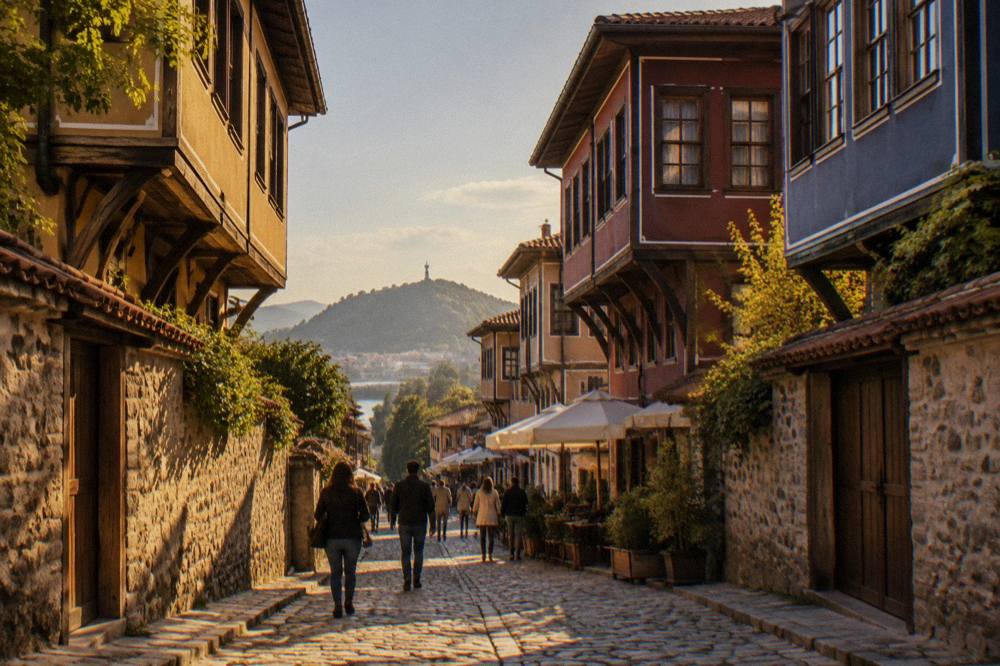
Language, Documents And Small Cautions In Plovdiv
Bulgarian is written in Cyrillic, the emergency number is 112, plugs are type C and F at 230 V, and the country sits on Eastern European Time, so the small cautions are reading street signs and carrying the right adapter, while violent or targeted trouble is not something the official tourism materials treat as a theme. English works in tourist-facing settings, and the question can I speak English in Bulgaria goes into the detail. Learning to read a Cyrillic street sign or two pays off quickly, because the Old Town lanes change names at the hilltops.
On safety specifically, the honest framing is the absence of warnings: no official page advises visitors to avoid the city centre, the hills or the night-time Kapana district. Normal city habits apply. Keep valuations of pickpocket-style risks in proportion to a mid-sized European city, and use the same judgement you would anywhere with crowded pedestrian streets. For a fuller discussion, how safe is Plovdiv covers the question directly, and Americans weighing the wider trip can read is it safe for Americans to travel to Bulgaria right now.
Two closing cautions about information itself. Never trust a guide that says Plovdiv has seven hills: there were seven until the 1930s, when Markovo Tepe was partly quarried away, and six remain. And never trust a claim that Plovdiv Old Town is a UNESCO World Heritage Site: "The Ancient Plovdiv" sits on Bulgaria's Tentative List, submitted in 2004, which is a waiting list and not an inscription. Old numbers and borrowed prestige are the two errors that survive longest in print about this city.
Common Questions About Being Careful In Bulgaria
What To Be Careful Of In Bulgaria?
Outdated advice, mainly. Bulgaria uses the euro since 1 January 2026 and is fully in Schengen since 1 January 2025, so the cautions are practical: read euro prices on dual-displayed lists, mind museum Mondays and the 12:30 to 13:00 lunch break, confirm taxi meters, and dial 112 in an emergency.
Is Bulgaria Safe For Tourists?
The official tourism materials do not treat violence against visitors as a theme, and the practical cautions are the ordinary ones of any mid-sized European city: pickpocket-level care in crowds and price hygiene in taxis. The emergency number is 112.
Do I Need A Visa For Bulgaria?
Reported rules say citizens of the United States, United Kingdom, Canada and Australia enter visa-free for 90 days in any 180-day period under the Schengen rule. The Entry/Exit System registers biometrics at external borders as of 10 April 2026, replacing passport stamps. Confirm current rules with official sources before travel.
What Should I Be Careful Of At Plovdiv Museums?
Closed days and lunch breaks. The Regional Ethnographic Museum and the Regional Archaeological Museum close on Mondays, Old Plovdiv sites pause from 12:30 to 13:00, and winter hours from November to March are shorter than summer ones. The Regional History Museum is free the first Thursday of the month.
Is Tap Water Safe In Plovdiv?
That question is covered in detail on the tap water page of this site, and the cautious answer while travelling anywhere unfamiliar is to carry a bottle you can refill and confirm locally. Pack an adapter for type C and F plugs at 230 V as well.
