The Wonderful Bridges (Chudnite Mostove)
The Wonderful Bridges, a pair of natural marble arches deep in the Rhodope Mountains, sit south of Plovdiv and are one of the biggest day-trip draws from the city. This page covers how to reach them, what a guided tour includes, when to go and what to eat on the road.
Short answer
The Wonderful Bridges (Chudnite Mostove) are two natural rock arches in the Rhodope Mountains, reached from Plovdiv by road through the mountains toward Smolyan or Pamporovo. A guided small-group day tour from Plovdiv that pairs the bridges with Rhodope food is the easiest option; independent travel means a bus toward Smolyan plus local transfer, and the trip works best between late spring and early autumn.
Plovdiv, Bulgaria's second-largest city and an inland city built around six hills in the south of the country, sits at the northern foot of the Rhodope Mountains, and the Wonderful Bridges (Chudnite Mostove) are one of the region's headline natural sights within day-trip range. The formation is a pair of natural arches carved in rock, described in standard accounts of the site as the remains of a collapsed cave system through which a mountain river once ran. The bigger of the two arches is the one photographed for every brochure; the smaller sits close by on the same walking route. This guide sets out what the site is, how the journey from Plovdiv works, what a guided day tour covers, when to go and what to eat along the way, all from the desk of Plovdiv Travel Guide using what the destination's own materials say.
What Are The Wonderful Bridges Near Plovdiv?
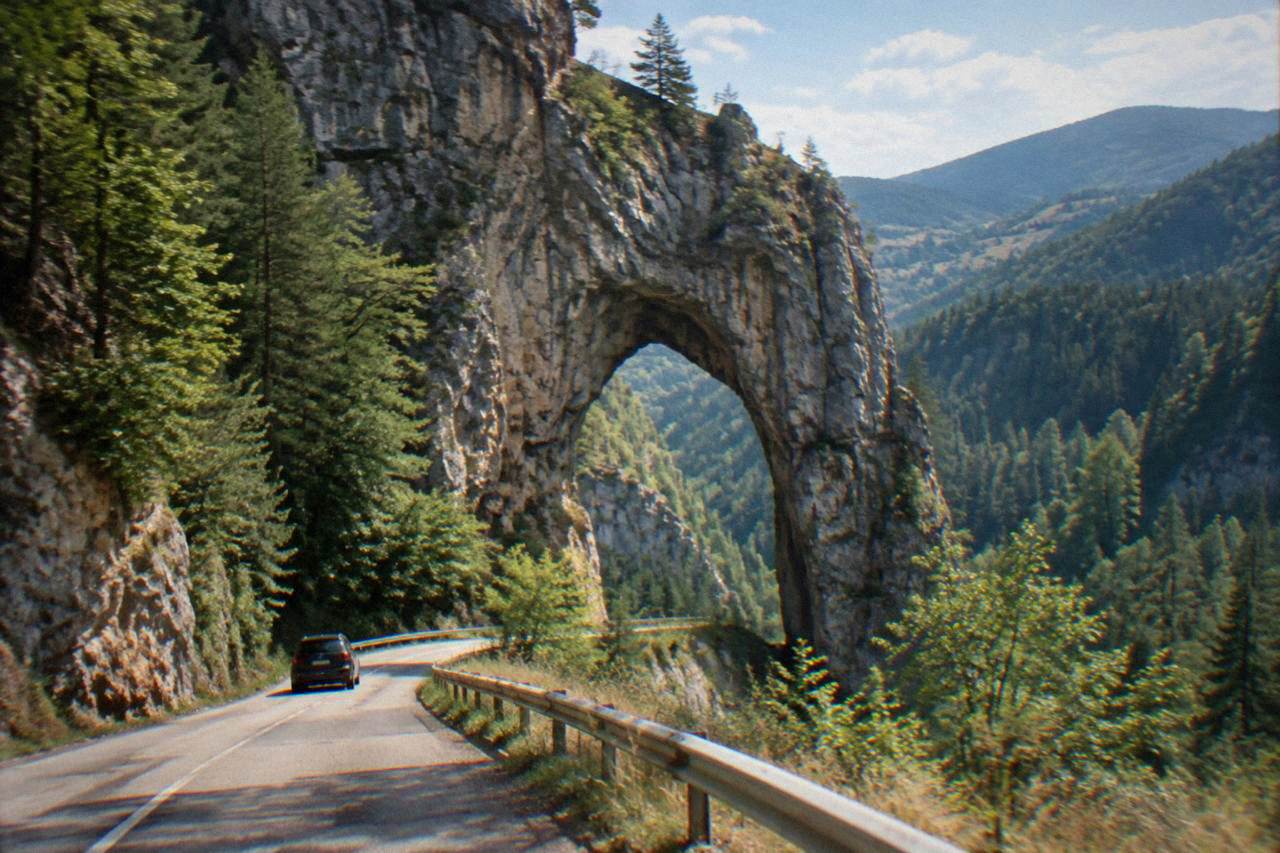
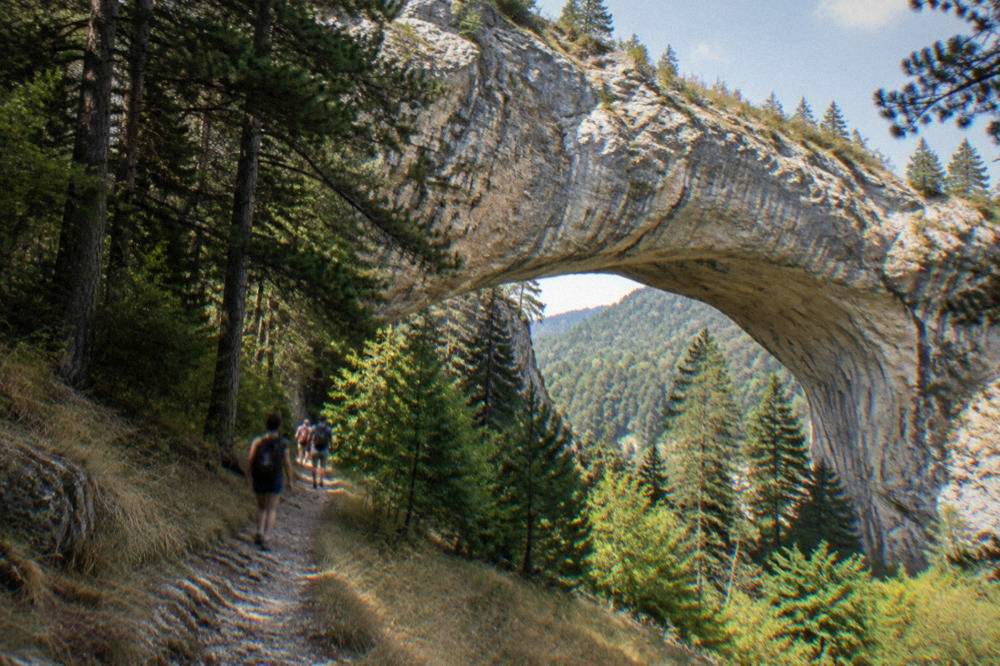
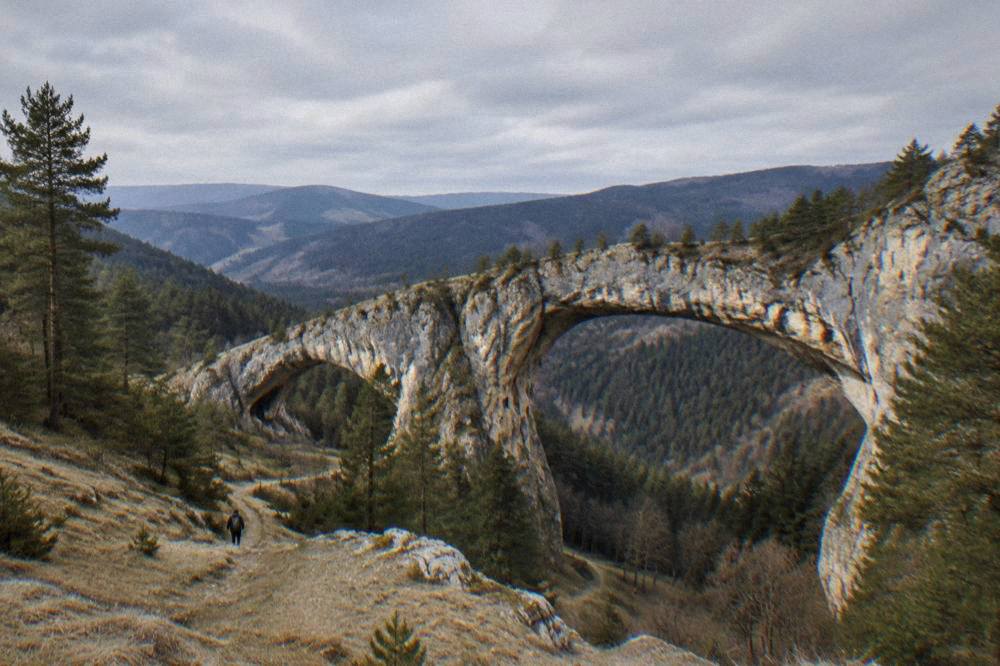
The Wonderful Bridges (Chudnite Mostove) are two natural rock arches in the Rhodope Mountains south of Plovdiv, formed, as standard accounts of the site describe, when the ceiling of an ancient river cave collapsed and left marble spans standing over the gorge. They sit in thick mountain forest, reached by a short walking trail, and they are the single best-known natural formation in this part of the Rhodopes for visitors based in Plovdiv.
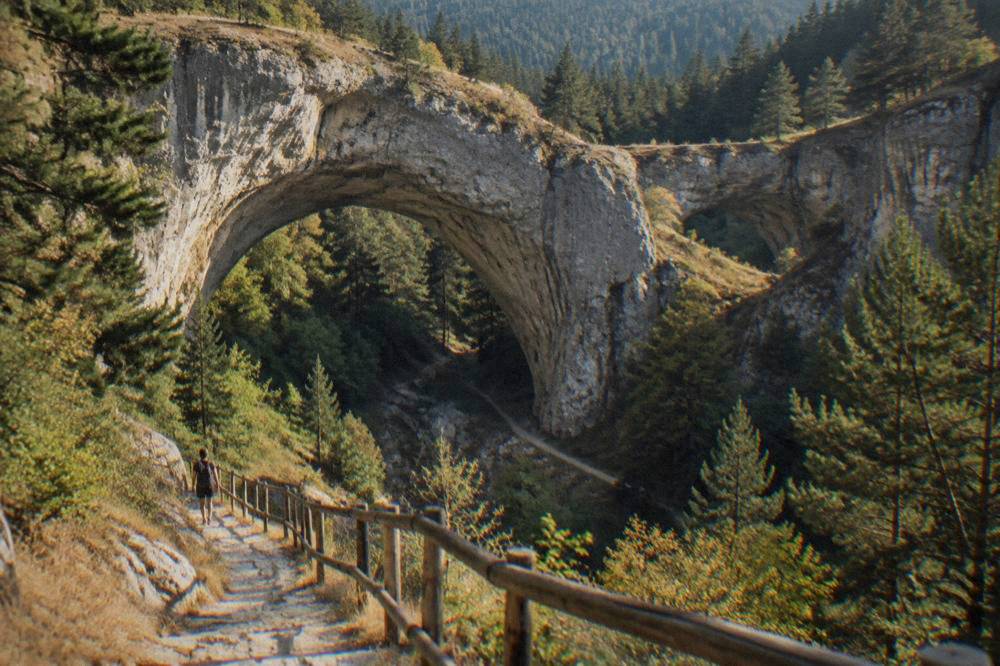
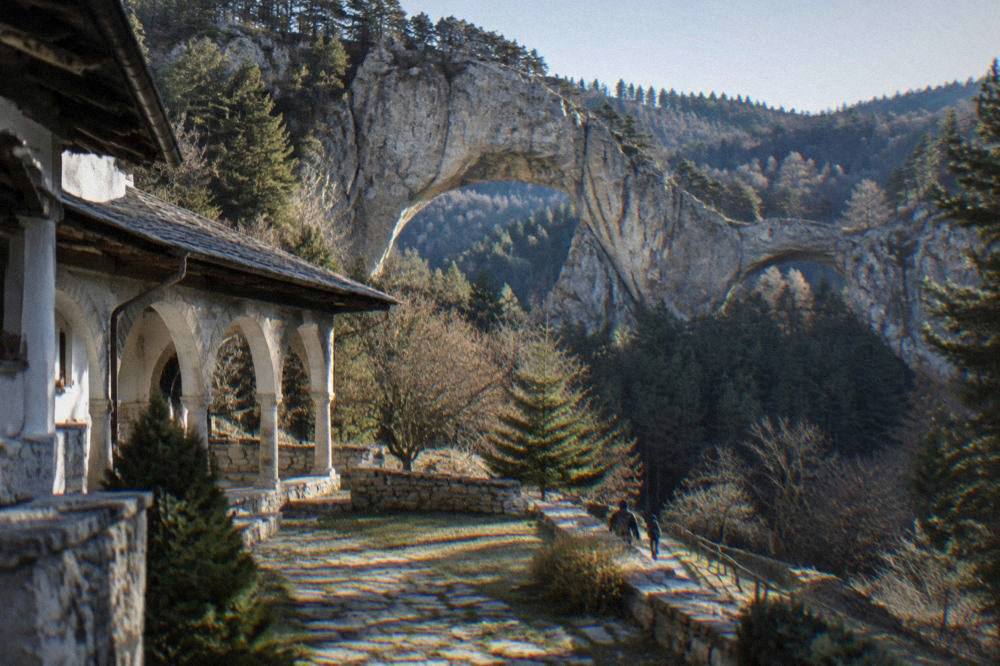
The name translates directly: "Chudnite Mostove" means "the wonderful bridges", and the plural matters because there are two arches, not one. The larger arch is the postcard view, a soaring opening you can walk beneath; the smaller arch sits further along the trail, and the loop between them is the walk people mean when they talk about visiting. Water still runs through the gorge below in places, a reminder that the arches are a river's work rather than a cliff's.
Geologically the site belongs to the marble karst belt that runs through the central Rhodopes, the same landscape that produces the caves and gorges of the Trigrad area further south. The Rhodope Mountains guide covers that wider region, of which the bridges are one small but spectacular piece. The formation is protected, and the trail is managed as a natural landmark rather than a theme-park attraction: there is a car park area, a walking path and food stalls in season, not much else.
For a Plovdiv itinerary the bridges fill a specific slot. The city itself is Roman ruins, Revival-era houses and the Kapana district; the bridges are none of that. They are the mountain half of a Plovdiv holiday, the reason to rent a car or join a tour for a day, and they pair naturally with the food of the Rhodope villages on the road south.
How Do You Get From Plovdiv To The Wonderful Bridges?
Getting from Plovdiv to the Wonderful Bridges means road travel into the Rhodopes: the practical options are a guided day tour from Plovdiv, a rental car driven south through the mountains, or a bus from Plovdiv's Rodopi bus station toward Smolyan or Pamporovo combined with local transfer for the final stretch. No train serves the Rhodopes, and no direct public transport link to the site itself was confirmed, so the last leg always needs a car, a taxi or a tour vehicle.
The transport facts that are confirmed: buses into the southern Rhodopes leave from Plovdiv's Rodopi bus station (Avtogara Rodopi, on Macedonia Blvd), and Smolyan, the main town of the southern Rhodopes, is about 104 km from Plovdiv with bus journeys of roughly 2 to 2.5 hours. Pamporovo, the resort on the same road, is about an hour from Plovdiv by road, with a drive distance in the 85 to 100 km range. The bridges themselves sit off this southern corridor, and for the final approach the practical answer is a car, a tour vehicle or a local transfer arranged from the nearest town; confirm current options locally, because mountain bus schedules are thin.
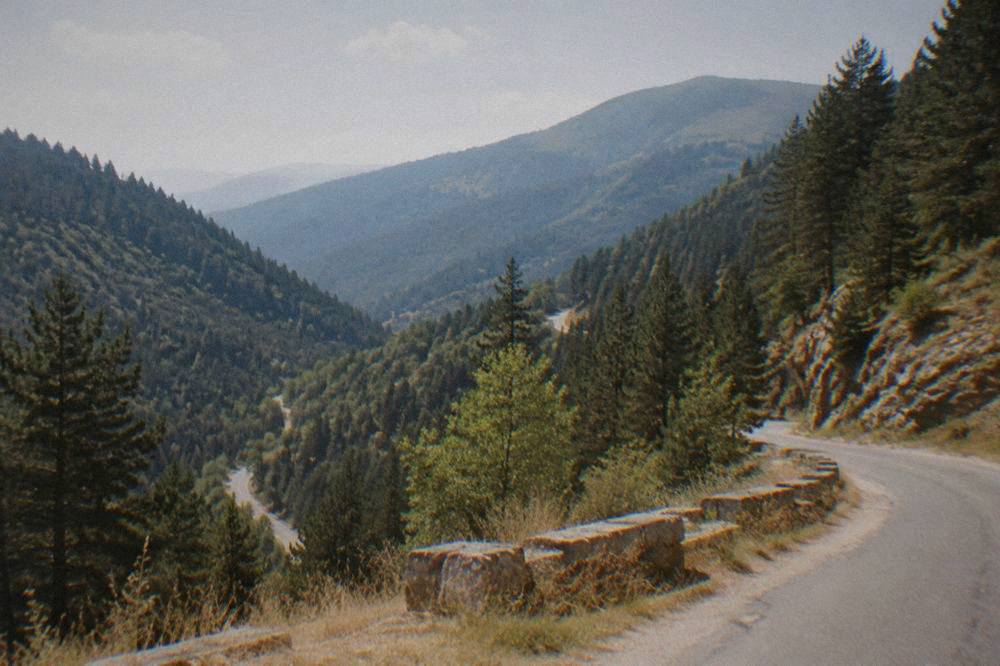
A rental car is the flexible option. The route climbs out of the Thracian plain, and the higher you go the more the landscape turns to pine ridges and karst. Winter changes the calculus: mountain roads can carry snow and ice between roughly December and March, and the ERA5 reanalysis, 1991-2020, puts Plovdiv's own January mean daily low at -2.6 C, with the mountains colder still. If you drive in winter, check conditions on the day.
If that flexibility appeals, book a rental car here.
The guided option removes all of this. A small-group day tour from Plovdiv handles the drive, the parking and the timing, and one such trip pairs the bridges with a Rhodope meal; it has its own page at Wonderful Bridges and Rhodope Cuisine, a small-group day trip from Plovdiv, and you can Check availability on the operator's live listing. For anyone without a car, that category of tour is the difference between doing this trip and reading about it.
For orientation, the useful reference points are the towns on the road south. The table below gathers the Rhodope access facts; confirm anything not in it locally on the day.
| Destination from Plovdiv | Confirmed travel fact | Notes |
|---|---|---|
| Smolyan (southern Rhodopes) | About 104 km, bus 2 to 2.5 hours | Buses from Rodopi station, reported figures |
| Pamporovo resort | About 1 hour by road, reported 85 to 100 km range | Same southern corridor |
| Trigrad gorge area | Limited direct public transport | Car or organized tour reported as the practical answer |
| Bachkovo Monastery (en-route south via Asenovgrad) | About 30 km, minibus 35 to 45 minutes from Rodopi station | Free entry, a working monastery |
| Wonderful Bridges | No direct public link confirmed | Tour, rental car or local transfer for the final leg |
What Does A Wonderful Bridges Tour From Plovdiv Include?
A guided Wonderful Bridges tour from Plovdiv covers the round-trip road journey into the Rhodopes, the walk to the two arches and, on the tours that pair the site with food, a sit-down Rhodope meal in a village restaurant, with a guide handling the mountain driving and the timing. Prices, ratings and exact durations render on each operator's live listing rather than being printed here, and the small-group format is the standard for this route.
The related tour on this site is the Wonderful Bridges and Rhodope Cuisine small-group day trip, which exists precisely because the two halves of the day, the arches and the food, come from the same mountains. The cuisine angle is not decoration: the Rhodopes have their own cooking traditions, and the restaurants on the road south serve the mountain version of the Bulgarian table, grilled meats, clay-pot stews and dairy, at village prices rather than city ones. Confirm with the operator what the meal includes at booking.
What a tour buys you, concretely: the drive, which is the hardest part of an independent trip; a guide who can time the arrival to avoid the midday crowding that the site's popularity produces in high summer; and, in the small-group format, a vehicle small enough for the mountain roads. What a tour does not buy you: technical gear. This is a walking trail, not a via ferrata, and the section on difficulty below covers what footwear and fitness actually mean here.
Comparing the site's Rhodope-area tours by what they cover, rather than by figures that belong on their listings:
| Tour from Plovdiv | What the day covers | Best fit |
|---|---|---|
| Wonderful Bridges and Rhodope Cuisine, small group | The two arches plus a Rhodope village meal | First-time visitors wanting the classic trip without driving |
| Hiking trip to Eagle's Eye and Devil's Throat | High-mountain viewpoint hiking and a show cave in the deep Rhodopes | Fit travellers who want a bigger walking day |
| Devil's Throat and Yagodinska Caves day trip | Two of the Rhodopes' signature caves | Cave and geology enthusiasts |
| E-Motorcycle tour in the Rhodope Mountains | A guided electric-motorcycle ride to a canyon viewpoint | Travellers who want the ride to be the point |
The trio of tiles above expands that comparison with live prices and ratings, and the individual pages carry full itineraries. Whichever you choose, book ahead in July and August: mountain capacity is small, and the operators' listings show what dates remain.
When Is The Best Time To Visit The Wonderful Bridges From Plovdiv?
The best window for the Wonderful Bridges from Plovdiv runs from late May to early October, when the mountain trail is dry, the forest is in full leaf and the road south is free of snow complications; midsummer brings the crowds and the year's warmest weather, while late September and early October trade thinner crowds for shorter days and cold mountain nights. Winter visits are possible with a tour or an experienced driver but are not the default plan.
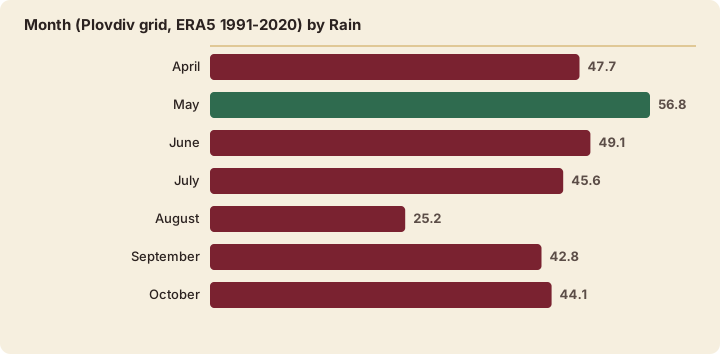
The climate picture comes from the ERA5 reanalysis, 1991-2020, modelled for the Plovdiv grid cell, and it frames the seasons honestly. The plain around Plovdiv is hot in summer, a mean daily high of 28.6 C in August, but the bridges sit well above the city in the mountains, where the same day can feel ten degrees cooler, especially under the forest canopy. Rain is spread across the year: May carries the largest monthly total in the table, 56.8 mm, and August the smallest, 25.2 mm. Reanalysis smooths extremes, so treat these as planning normals, not forecasts.
| Month (Plovdiv grid, ERA5 1991-2020) | Mean daily high | Mean daily low | Rain |
|---|---|---|---|
| April | 17.1 C | 6.4 C | 47.7 mm |
| May | 21.9 C | 11.5 C | 56.8 mm |
| June | 25.9 C | 15.4 C | 49.1 mm |
| July | 28.2 C | 17.9 C | 45.6 mm |
| August | 28.6 C | 18.1 C | 25.2 mm |
| September | 23.8 C | 13.8 C | 42.8 mm |
| October | 18.1 C | 8.8 C | 44.1 mm |
Two seasonal notes from the events calendar. First, if the trip falls in the last third of June through early September, the Ancient Theatre of Philippopolis in Plovdiv runs its Opera Open season, which ran 23 June to 9 September in 2026; a mountain day pairs neatly with an evening performance back in the city. Second, from 1 December 2026 to 7 January 2027 the Christmas programme in Plovdiv runs in Kapana and around Central Square, a different season and a different trip, but relevant if you are weighing a winter visit against a festive city break.
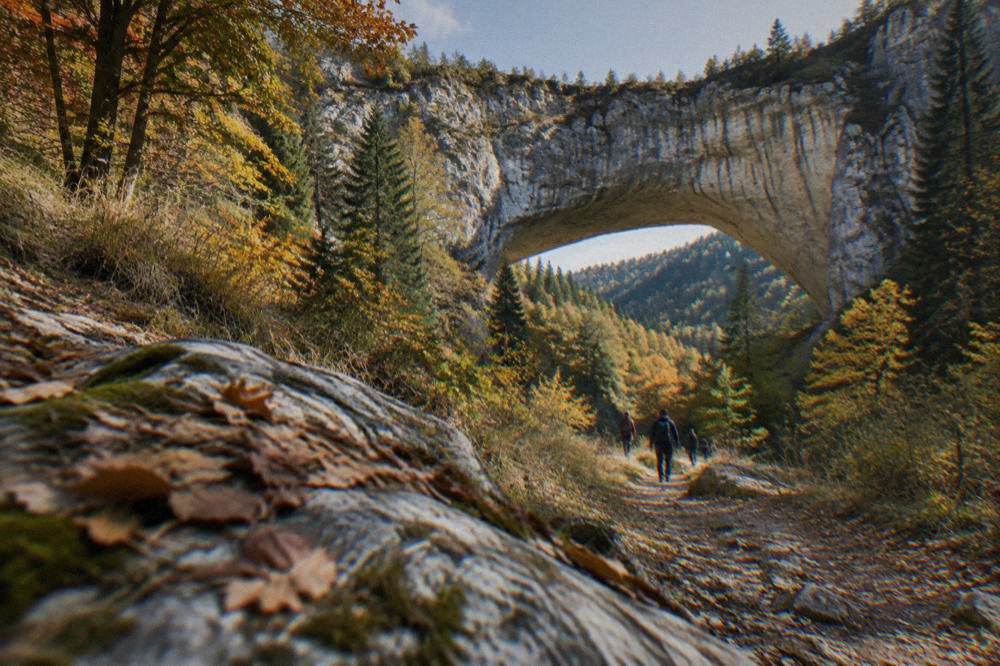
Autumn is the connoisseur's pick. The September festivals in Plovdiv, including the Old Town "Revived Heritage" days that ran 16 to 23 September 2026, fill the city end of the trip, the mountain forests turn, and the afternoon light on white marble arches is at its best. Whenever you go, start early: the drive each way eats the morning, and the trail is nicer before the tour buses arrive.
How Hard Is The Walk At The Wonderful Bridges?
The walk at the Wonderful Bridges is a short, established mountain trail rather than a hike: the path runs from the parking area to the two arches and back along a loop that standard descriptions of the site rate as easy to moderate, with sturdy shoes recommended and the main obstacles being uneven rock steps, tree roots and wet patches after rain. No climbing or equipment is involved, but the elevation and the weather deserve respect, especially outside summer.
Two honest caveats. First, trail length and gradient are not given here; the walking route is short by mountain standards, but confirm current trail conditions locally, particularly after storms or in snow. Second, the terrain underfoot is karst: the rock is smooth where feet have polished it, and the gorge stays damp. Trainers are fine in dry summer weather; anything with grip is better in the other three seasons.
For context, the alternatives in the region demand far more. The hiking tours from Plovdiv into the deep Rhodopes, such as the trip combining the Eagle's Eye viewpoint with the Devil's Throat cave, are full walking days for people who want them, and the Trigrad Gorge and Devil's Throat Cave guide covers that harder country. Against those, the bridges are the family-friendly option, the one mountain sight you can show children or less mobile travellers and still give everyone the view.
What to carry, by season:
| Season | Footwear | Clothing | Extras |
|---|---|---|---|
| Late spring | Shoes with grip | Layers, light rain shell | Water, sun cream for open stretches |
| Summer | Trainers acceptable | Hat, light clothing | Plenty of water, early start |
| Autumn | Shoes with grip | Warm layer, rain shell | Camera, daylight ends earlier |
| Winter | Boots | Full winter kit | Check road and trail conditions first |
What Else Combines With The Wonderful Bridges From Plovdiv?
The natural pairings for a Wonderful Bridges day from Plovdiv are the Rhodope sights on the same southern corridor: Pamporovo and Smolyan on the road itself, the Trigrad gorge and the caves of the Devin area further south, and, on the way out of Plovdiv via Asenovgrad, Bachkovo Monastery and Asen's Fortress. A single long day can combine the bridges with one of these, but trying to chain all of them turns the trip into driving with brief pauses.
The classic combination is the monastery first, the arches second. Bachkovo Monastery, about 30 km from Plovdiv with minibuses from the Rodopi station taking 35 to 45 minutes, is a working monastery with free entry, and its own guide covers the visit. Asen's Fortress above Asenovgrad adds a ruined castle wall and a cliff-edge church on the same road; a small entry fee exists there, but its figure is unclear, so check at the gate. Together with the bridges they make the standard southern loop, and it is exactly this loop that many guided tours run.
Going deeper instead of wider, the southern Rhodopes around Trigrad and Devin hold the Trigrad Gorge and Devil's Throat Cave and the spa town of Devin, with Smolyan and Pamporovo as the practical bases. Trigrad has limited direct public transport, with car or organized tour as the practical answer, which is why these deeper trips are usually overnight or full guided days rather than add-ons.
If your appetite is less for mountains and more for plains and history, the alternative day trips from Plovdiv run north and east: the Thracian temple complex at Starosel, the rose-valley country around Kazanlak, and the museum-town of Koprivshtitsa, whose six house museums cost about 10 euro combined on a reported figure. The tiles below compare the bridges trip with two of those as booking options.
Where Do You Eat On A Wonderful Bridges Day Trip From Plovdiv?
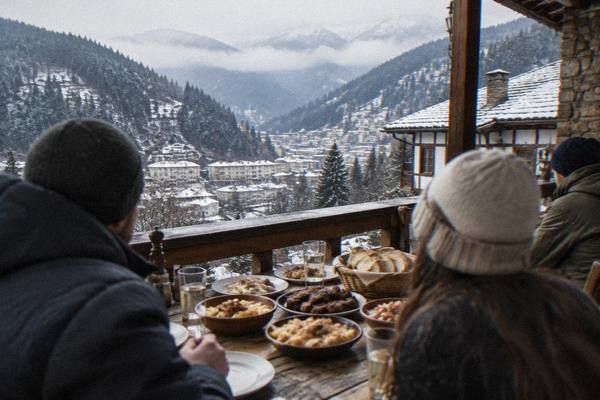
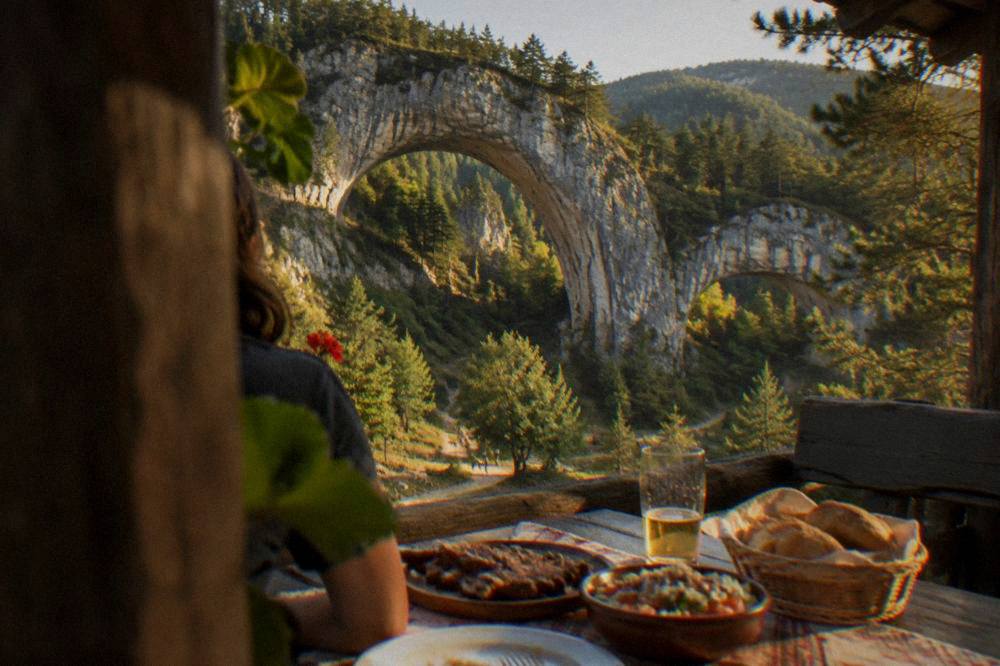
Eating on a Wonderful Bridges day happens in three places: the stalls and small kitchens at the site itself, which run in the warm season; the village restaurants of the Rhodope road, which serve grilled meats, clay-pot stews and mountain dairy at prices well below Plovdiv's centre; and, on guided tours that include it, a planned Rhodope meal booked as part of the day. The Rhodope table overlaps the national one, shopska salad, kavarma, kebapche and banitsa, with mountain portions and village prices.
The Bulgarian staples to know before you order are covered in the site's food pages, and they hold in the mountains. Shopska salad, tomatoes, cucumbers, peppers and sirene cheese, is the universal starter; kavarma is a clay-pot stew; kebapche and kyufte are the grilled minced meats; tarator, cold yogurt and cucumber soup, appears in summer; banitsa, cheese filo pastry, is the breakfast standard. The Rhodope versions lean on potatoes and dairy, and portions run large. Typical city prices reported by crowd data put an espresso around 2 euro and a mid-range three-course meal for two around 30 to 40 euro, with mountain villages usually cheaper than that; treat those as ballpark planning figures, not menus.
Cards are widely accepted in Plovdiv; small mountain kitchens and site stalls can be cash-only, so carry some euro cash for the day. A tourist tax may be charged by your accommodation in Plovdiv, but its exact euro rate is not a settled published figure, so confirm at booking.
What Should You Know Before Booking A Wonderful Bridges Trip From Plovdiv?
Before booking, decide the three things that shape the day: your transport (tour, rental car or bus-plus-transfer), your season (late May to early October is the reliable window), and your appetite for combining the bridges with Bachkovo Monastery, Asen's Fortress or the deeper Rhodope caves. Confirm the trail conditions and weather on the day, carry cash for mountain stops, and book mountain tours ahead in July and August.
The booking mechanics matter less than the fit. If the point of your Plovdiv stay is the city's Roman layer and Revival houses, outlined across the things to do in Plovdiv guide, then one mountain day is enough, and the small-group bridges-and-cuisine tour is the lowest-friction way to spend it. If the mountains are why you came, flip the ratio: base a night in Smolyan or Devin and treat Plovdiv as the gateway. The Devin guide and the Rhodope Mountains guide cover that version.
A closing checklist for the practical side:
| Item | What to do |
|---|---|
| Currency | Euro only since 1 January 2026; carry some cash for stalls and village kitchens |
| Season check | Aim for late May to early October; check mountain road conditions outside that |
| Tickets | The bridges are a natural landmark; any entry arrangement for the trail should be confirmed locally |
| Tour booking | Reserve ahead in July and August; cancellation terms are on the operator's listing |
| Time budget | The drive each way takes most of the morning or afternoon; start early |
| Combos | Bachkovo Monastery and Asen's Fortress pair naturally on the southern route |
Common Questions About The Wonderful Bridges From Plovdiv
What are the Wonderful Bridges in Bulgaria?
The Wonderful Bridges (Chudnite Mostove) are two natural rock arches in the Rhodope Mountains south of Plovdiv, described in standard accounts as the remains of a collapsed cave system through which a river once flowed. The larger arch is the famous view; a short walking trail connects both.
How far are the Wonderful Bridges from Plovdiv?
The site lies in the central Rhodopes on the southern road corridor from Plovdiv, the same direction as Pamporovo and Smolyan; Smolyan itself is about 104 km from Plovdiv by road. No direct public transport link to the bridges was confirmed, so the final approach is by tour vehicle, rental car or local transfer, and total travel time should be confirmed with your chosen operator or route planner.
Can you visit the Wonderful Bridges without a car from Plovdiv?
Yes, but not by a single bus. Buses from Plovdiv's Rodopi station run toward Smolyan and Pamporovo, and the practical answer for the final stretch is a guided day tour, a local transfer or a rental car. The small-group Wonderful Bridges and Rhodope Cuisine tour from Plovdiv is the site's featured option, and its details and dates are on the operator's live listing.
When is the best time of year for the Wonderful Bridges?
Late May to early October. The trail is dry, the forest is green and the mountain roads are clear. July and August are the busy months; late September and early October bring thinner crowds, autumn colour and colder nights. Winter visits need a hard look at road and trail conditions first.
Is the Wonderful Bridges walk difficult?
No. It is a short, established trail from the parking area to the two arches, rated easy to moderate in standard descriptions, with uneven rock and tree roots as the main hazards. Sturdy shoes are recommended, and the site's own trail figures should be confirmed locally rather than assumed.
What food is included on a Wonderful Bridges tour from Plovdiv?
Tours that pair the bridges with Rhodope cuisine include a village meal, typically grilled meats, clay-pot stews, salads and dairy from the mountain table. Confirm exactly what the meal covers and how dietary needs are handled at booking; the specifics sit on each operator's listing.