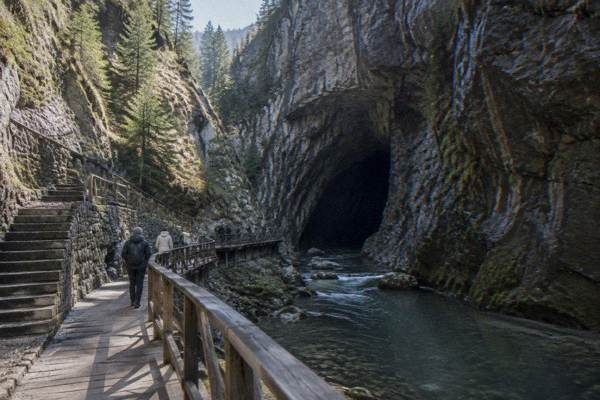
Trigrad Gorge And The Devil's Throat Cave
Trigrad Gorge cuts a narrow lane of vertical limestone through the western Rhodope Mountains south of Plovdiv, and at its head the Devil's Throat Cave drops its entrance hall into the rock. This guide covers what both are, how the trip works from Plovdiv, and what to check before setting off.
Short answer
Trigrad Gorge is a limestone canyon in the western Rhodopes, reached from Plovdiv by road through Smolyan or Devin; the Devil's Throat Cave at its edge is a huge eroded hall linked to the Orpheus myth. No cave entry price or direct public transport link was confirmed for this trip, so check locally or take a tour from Plovdiv.
Trigrad Gorge is a narrow limestone canyon in the western Rhodope Mountains, the range that rises directly south of Plovdiv, and the Devil's Throat Cave sits at its edge as one of the largest cave entrance halls in Bulgaria. The trip is a real mountain day: buses from Plovdiv's Rodopi station reach Smolyan in roughly 2 to 2.5 hours, with Trigrad further south again and limited direct public transport, so the practical choice for a single day is a car or an organised tour. This page sets out what the gorge and the cave actually are, what the Orpheus story has to do with them, and how the day fits into a wider southern-Bulgaria itinerary from Plovdiv.
What Is Trigrad Gorge Near Plovdiv?
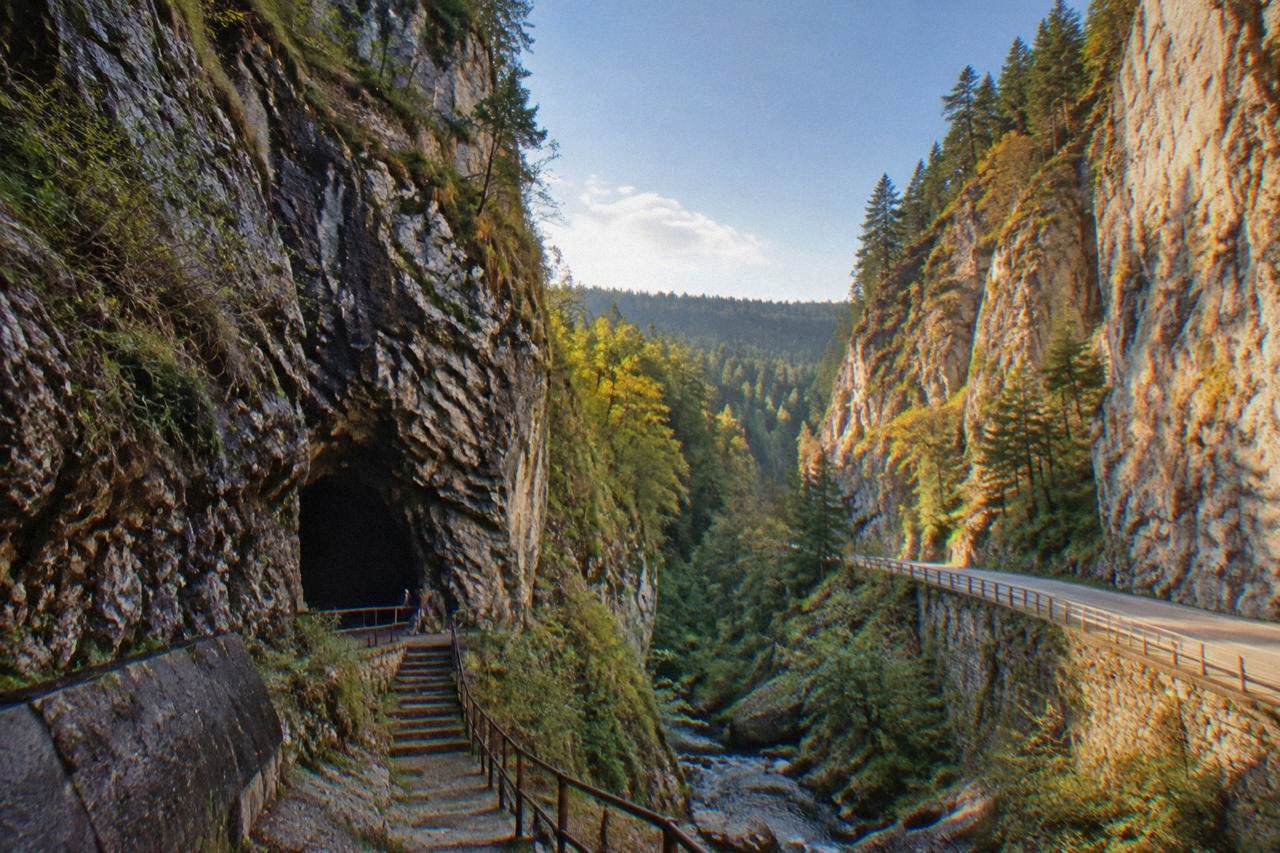
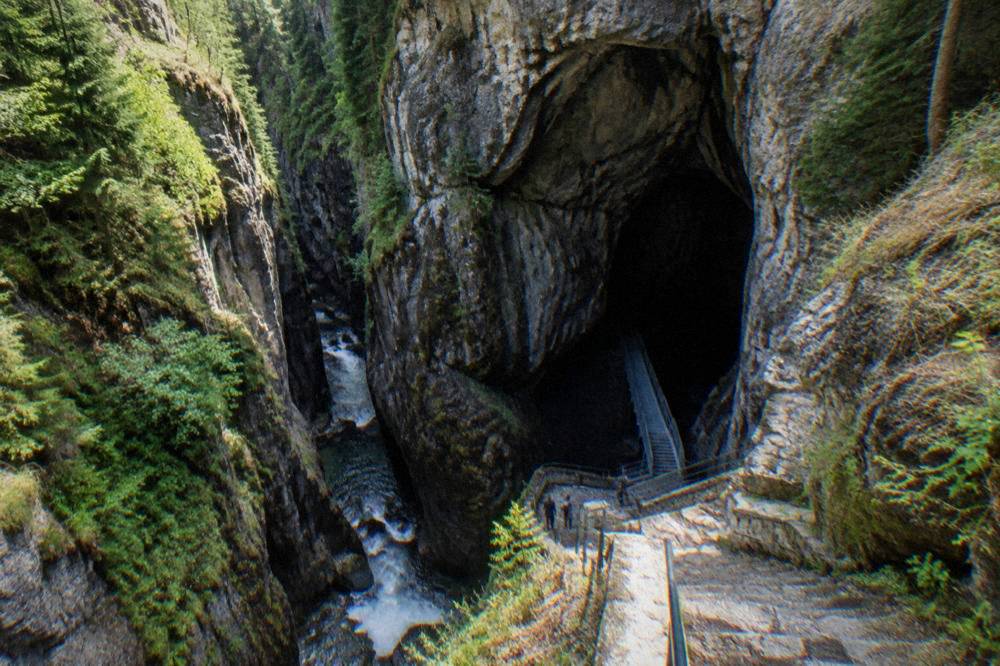
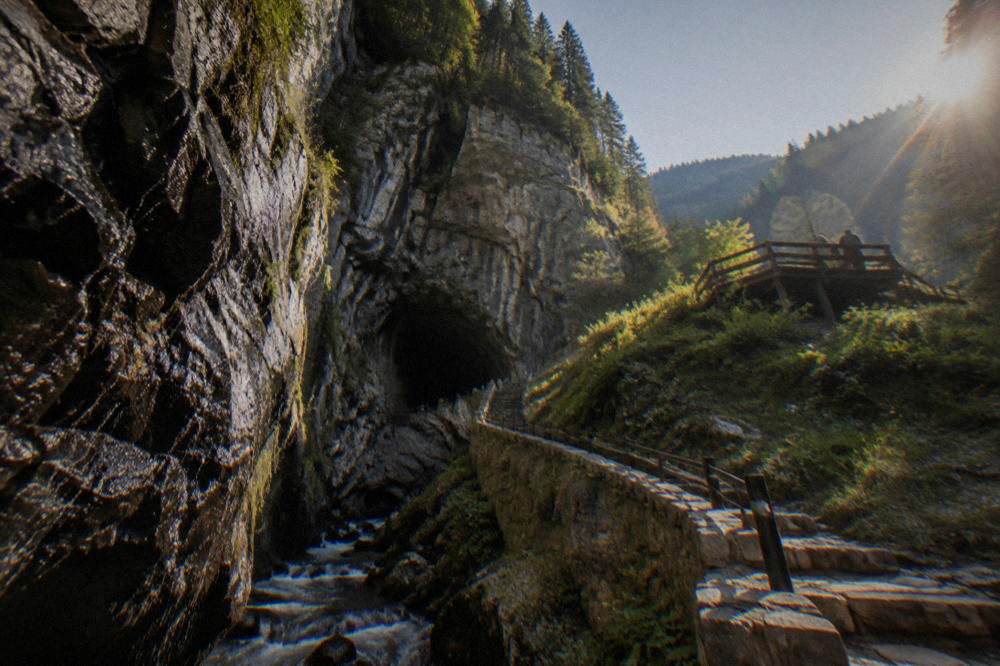
Trigrad Gorge is a canyon of vertical limestone walls cut by the Trigradska River in the western Rhodope Mountains, the range that begins directly south of Plovdiv and runs to the Greek border. The gorge sits above the village of Trigrad, and its walls close in on a narrow road that threads between them. It is public open landscape with no gate, no ticket and no closing time, and it ranks among the Rhodope sights reached from Plovdiv by road through Devin.
The gorge is a product of the same geology that shapes the whole western Rhodopes: water-worn karst. Rivers running off the high plateaus cut down through limestone, and where the rock was fractured the water went both sideways and down, producing gorges, arches and the deep cave systems the region is known for. The Wonderful Bridges, another Rhodope landmark covered in the site's Wonderful Bridges day-trip guide, are arches left by the same kind of process, and the Yagodinska and Devil's Throat caves are its underground version.
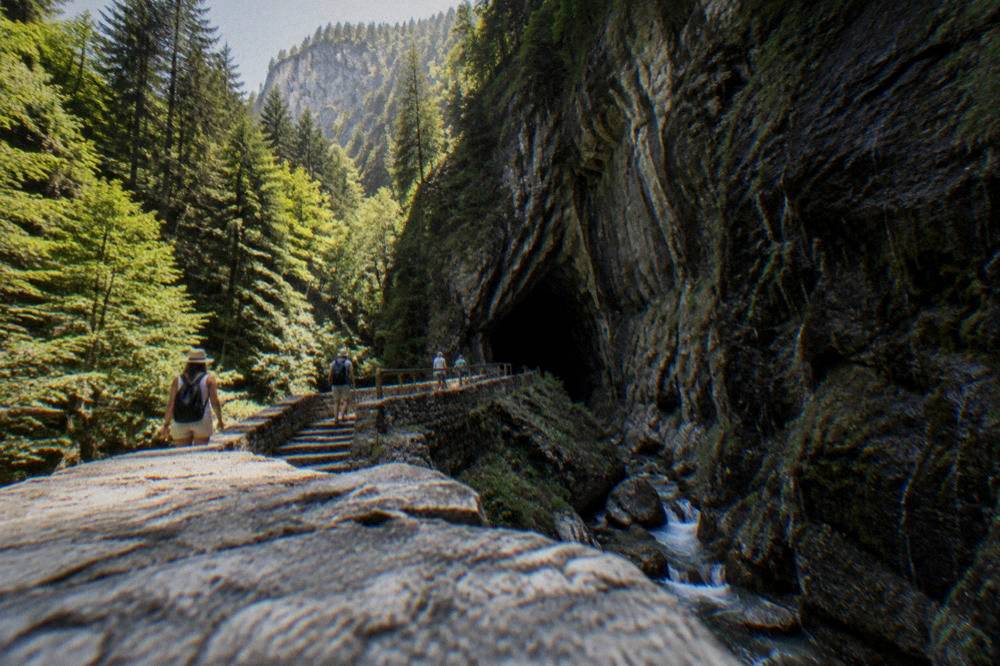
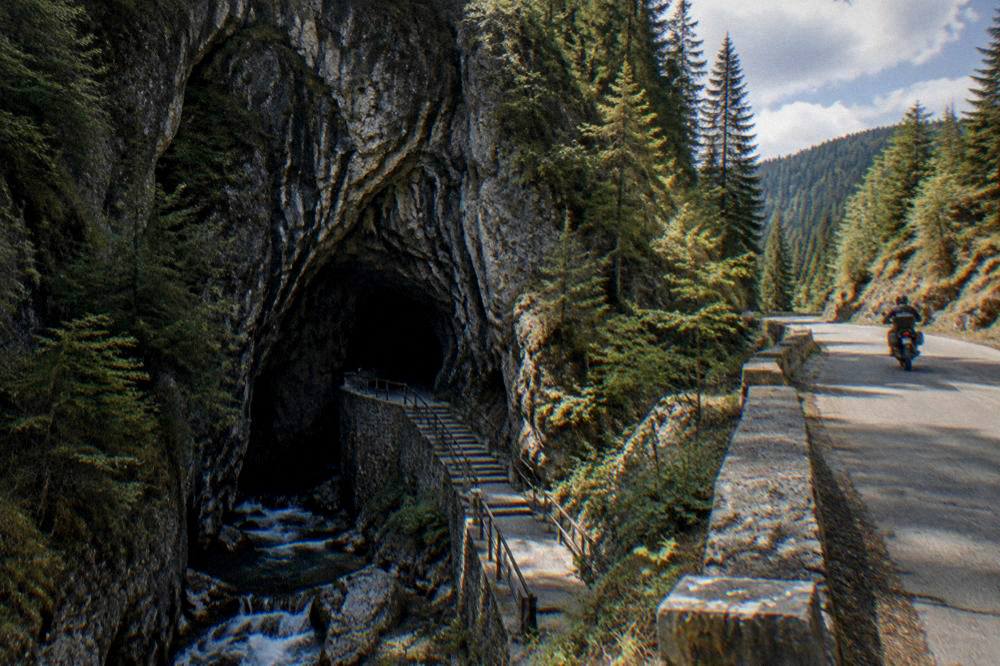
What makes Trigrad distinct is the tightness of the walls. The road through the gorge is hemmed in by rock faces on both sides, with the river appearing and disappearing as it sinks into the karst and resurfaces. For anyone planning photography, the same principles as in the Rhodope Mountains apply here too: the light in a north-south canyon arrives at an angle for much of the day, and the walls are closest and most dramatic near the village end.
The practical starting point from Plovdiv is the Rodopi bus station, from where southbound buses run toward Smolyan, roughly 104 km and 2 to 2.5 hours away. Trigrad lies beyond, deeper into the mountains, and direct public transport to the gorge area is limited, with a car or an organised tour recommended for the villages and caves of that southern zone. That single sentence should shape the whole plan: this is not a hop-on-hop-off destination.
What Is The Devil's Throat Cave And Why Is It Tied To Orpheus?
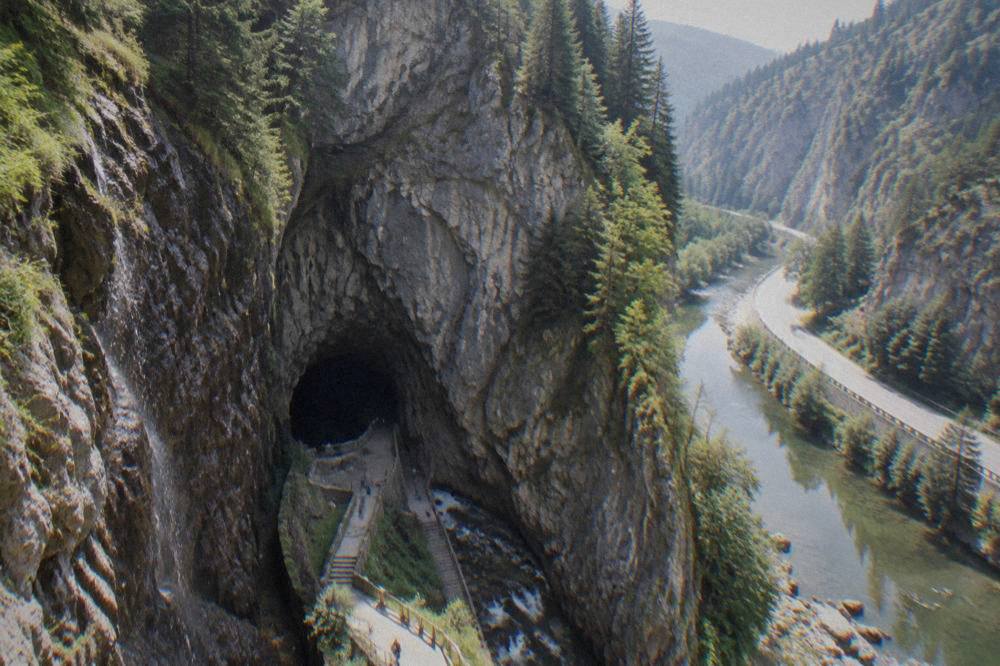
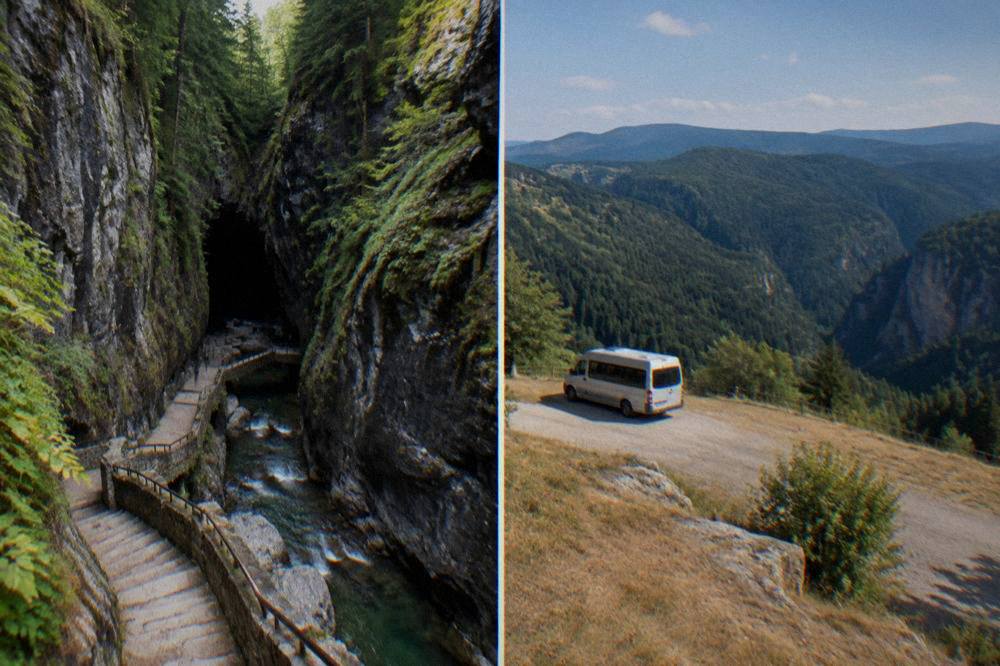
The Devil's Throat Cave is a massive eroded cave hall whose ceiling has collapsed into a gaping entrance, located at the edge of Trigrad Gorge near Plovdiv's southern mountains, and Bulgarian tradition links it to the Orpheus myth: the story places Orpheus's descent into the underworld to retrieve Eurydice at this cave. The man-made staircase descends inside the entrance hall, and an underground waterfall is the cave's signature feature. Confirm the cave fee on site.
The Orpheus connection is the reason this cave, rather than one of the region's many others, carries a mythological name. In the Thracian and Greek story, Orpheus, a musician of extraordinary power, went down into the realm of the dead to bring back his wife Eurydice. The Thracian tribes of the Rhodopes are part of that heritage, and the Devil's Throat, with its chasm-like entrance reading as a literal mouth of the underworld, is the local anchor for the tale. Guides in the region tell the story as part of the visit.
Geologically the cave works differently from show caves such as Yagodinska, which is known for its coloured formations. The Devil's Throat is a hall of erosion and collapse: water roared through, enlarged the chamber, and the ceiling gave way, leaving the opening that gives the cave its name. Inside, the route takes visitors down and around the underground waterfall that continues the carving today. The two caves are close neighbours and are often paired on tours, which is exactly what the Devil's Throat and Yagodinska Caves day trip from Plovdiv does.
The cave operates as a ticketed show cave, and the fee and season should be checked locally or covered by a tour. What can be stated is the pairing logic: the gorge itself is free open landscape, while the cave is the ticketed attraction, and a day that combines both is the standard shape of the trip.
How Do You Get From Plovdiv To Trigrad Gorge?
From Plovdiv, Trigrad Gorge is reached by road south through the Rhodope Mountains: buses from Plovdiv's Rodopi station to Smolyan take about 2 to 2.5 hours over roughly 104 km, with Pamporovo about an hour along the way and Trigrad further south beyond Devin, where direct public transport is limited. For a one-day visit from Plovdiv, the practical options are a rental car, an organised tour, or a longer overnight plan using Smolyan or Devin as a base.
The bus geography matters. Plovdiv has separate bus stations by direction, and the Rodopi station is the one for southern routes, including the Smolyan services that pass through the Rhodope resort belt. Smolyan sits about 104 km away, which sets the scale of the day: the gorge is not a suburban outing but a full crossing of the northern Rhodopes. The site's guide to getting around Plovdiv covers the city side of the journey, and the Smolyan and Pamporovo page covers the first stage of the mountain leg.
For drivers, the route is the same corridor: south past Asenovgrad, up through the mountains, and along the road that threads Trigrad Gorge itself. The Trigrad area, with its gorge and caves, is typically reached by car or tour from the Smolyan or Pamporovo direction because public transport thins out. Winter is the caveat: the Rhodopes hold snow, and mountain roads in the colder months, when the ERA5 reanalysis 1991-2020 shows Plovdiv itself averaging a mean daily low of -2.6 C in January, can require winter tyres and patience. Check conditions before committing.
The tour option solves the geometry problem. A guided day trip from Plovdiv handles the driving, the cave logistics and the timing in one booking, which is the difference between a feasible day and a stressful one when the return leg is long. The site's Rhodopes day tour from Plovdiv is the broader scenic option, while the cave-focused and hiking-focused tours listed above target the Trigrad area specifically.
What Does A Trigrad Gorge Day Trip From Plovdiv Look Like?
A Trigrad day from Plovdiv is built around a long southern drive, a stop at the gorge itself, and a cave visit at its edge, with the Yagodinska Cave, the village of Trigrad and viewpoints along the gorge road as the natural add-ons. The direction and the transport limits are settled, but no schedule, walking time or opening hours exist for the gorge area, so the shape below is a planning frame whose timings and fees should be confirmed locally or through a tour.
The typical frame, assembled from the region's geography rather than any invented timetable: leave Plovdiv early, drive south through the Rhodope corridor past Asenovgrad toward Devin, work down to the Trigrad area, and use the afternoon for the gorge and the Devil's Throat. Tour versions of this day fold in the Eagle's Eye viewing platform above Yagodina, reached by a short shuttle and walk, which is the structure of the site's featured hike, the Eagle's Eye and Devil's Throat hiking tour from Plovdiv.
Independent travellers should think in blocks. The table below is a planning frame, not a timetable.
| Block | What it involves | Notes |
|---|---|---|
| Plovdiv to the Rhodope corridor | Southbound drive or bus past Asenovgrad | Pack: Rodopi station serves southern routes |
| Devin area | Mountain town on the approach to Trigrad | See the site's Devin guide |
| Trigrad Gorge | Drive or walk the narrow canyon | Free open landscape, no ticket |
| Devil's Throat Cave | Ticketed cave with the Orpheus link | Fee and hours: confirm on site |
| Optional: Yagodinska Cave | Formation-rich show cave nearby | Often paired on tours |
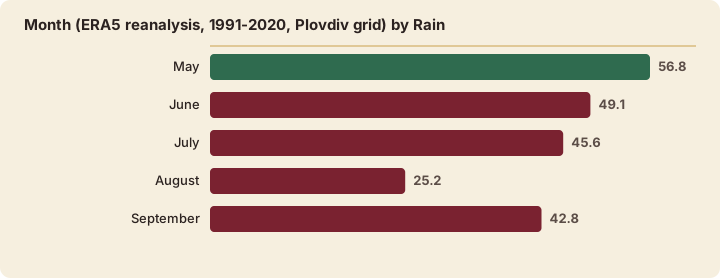
Sturdy shoes for cave steps and gorge-side paths, a layer for the cave's constant cool interior, and water for the road. In late spring and early summer, the months the ERA5 reanalysis 1991-2020 shows as the wettest for the region around Plovdiv, May at 56.8 mm, a rain shell earns its place. Camera batteries do not like cold, and the gorge's shadows are deep even on bright days.
When Is The Best Time To Visit Trigrad Gorge From Plovdiv?
The best months for a Trigrad Gorge trip from Plovdiv are late spring through early autumn, May to September, when the mountain roads are clear, the caves run their full visiting season and the ERA5 reanalysis 1991-2020 shows the Plovdiv area at its warmest, with mean daily highs of 25.9 C in June, 28.2 C in July and 28.6 C in August. Winter visits are possible in principle but depend on road conditions and reduced cave hours, so confirm both before travelling.
The reasoning is road-first. The gorge road is a mountain road, and snow changes the calculus entirely. The site's best time to visit Plovdiv page carries the city-side month-by-month picture; the Rhodopes run a couple of degrees cooler and hold their snow longer than the Thracian Plain where Plovdiv sits. Autumn is the quiet compromise: the September mean daily high of 23.8 C in the ERA5 reanalysis 1991-2020 for the Plovdiv grid cell, with the mountains fresher again, and the summer domestic holiday crowds gone.
| Month (ERA5 reanalysis, 1991-2020, Plovdiv grid) | Mean daily high | Mean daily low | Rain |
|---|---|---|---|
| May | 21.9 C | 11.5 C | 56.8 mm |
| June | 25.9 C | 15.4 C | 49.1 mm |
| July | 28.2 C | 17.9 C | 45.6 mm |
| August | 28.6 C | 18.1 C | 25.2 mm |
| September | 23.8 C | 13.8 C | 42.8 mm |
Two seasonal notes deserve weight. First, May carries the highest monthly rain total of the year in the modelled normals, so a May trip trades fresh greenery for a real chance of a wet gorge. Second, these figures are a reanalysis of a grid cell near Plovdiv, modelled rather than recorded at a station, and they smooth out the temperature differences of the higher mountains: assume the gorge area runs cooler than the numbers suggest.
How Hard Is The Walking At The Gorge And The Devil's Throat Cave?
The gorge itself involves almost no committed walking: the road and viewpoints sit beside the canyon, and the effort is optional. The Devil's Throat Cave is the physical test, because its route descends and reascends man-made staircases inside a large natural hall, and visitors with mobility limits or serious stair difficulty should treat it as the deciding factor. Judge the cave route as a stairs-plus-uneven-ground visit and confirm details locally.
Distinguish the three kinds of terrain on this trip. The gorge road is flat tarmac with pull-offs. The cave is steps, damp rock and railings, cool inside whatever the season outside. The optional Eagle's Eye platform, which the featured hiking tour from Plovdiv includes, is a short shuttle plus a walk on a mountain track, and it is the only part of the standard day that reads as a genuine hike. For a wider choice of active days around the city, the Plovdiv Travel Guide keeps a full set of outdoor itineraries.
Families can manage this trip, with the cave the pinch point: small children and steep internal stairs are a judgement call for the adults. The site's Plovdiv with kids page applies the same principle city-side. There is no reliable accessibility information for the cave, so anyone with a specific need should ask at the site or through the tour operator before booking.
What Else Can You Combine With Trigrad Gorge On A Plovdiv Trip?
The natural pairings with Trigrad Gorge from Plovdiv are the Yagodinska Cave, the Eagle's Eye viewpoint, the village of Trigrad itself, and, on the driving corridor, Devin and the Wonderful Bridges, all of which sit in the same western Rhodope pocket south of Plovdiv. Further out, Smolyan and Pamporovo anchor the central Rhodopes, and the whole region connects through the southbound routes from Plovdiv's Rodopi station.
To add the rock arches and Rhodope food to the same route, book a Wonderful Bridges day trip here.
The western Rhodopes cluster efficiently. A two-day southern loop from Plovdiv can take in the gorge and caves on one leg and the Wonderful Bridges with Devin on the other, which is how the site's Plovdiv and the Rhodopes itinerary frames the region. Going wider still, the three-day Plovdiv itinerary shows how a mountain day slots alongside the Old Town and the Roman sites.
| Rhodope pairing | What it adds | Site guide |
|---|---|---|
| Yagodinska Cave | Coloured formations, show-cave contrast | Day trips section |
| Eagle's Eye platform | Panoramic cliff viewing platform | Featured hiking tour |
| Wonderful Bridges | Karst stone arches | /day-trips/wonderful-bridges/ |
| Devin | Mountain town, spa reputation | /day-trips/devin/ |
| Smolyan and Pamporovo | Regional centre and resort belt | /day-trips/smolyan-and-pamporovo/ |
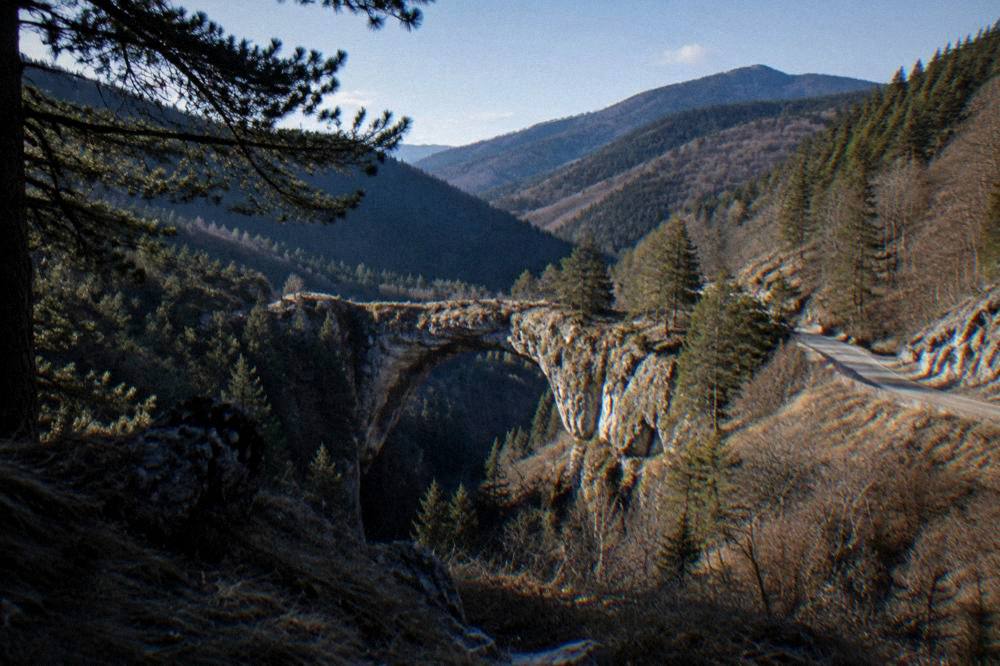
The contrast point worth knowing: the northern and western Rhodopes are karst country, caves and gorges, while the area around Bachkovo Monastery and Asen's Fortress on the Plovdiv to Smolyan road is the cultural and historical layer of the same mountains. A well-built southern day can pass Asen's Fortress in the morning and stand inside the Devil's Throat by mid-afternoon, and tour itineraries in the roster do exactly this kind of combining.
Should You Take A Tour To Trigrad Gorge From Plovdiv?
A tour is the strongest option for a single-day Trigrad Gorge visit from Plovdiv, because the gorge lies beyond the Smolyan bus corridor with limited direct public transport, meaning an independent day depends on a rental car and mountain driving. A guided day trip absorbs the driving, the cave logistics and the Eagle's Eye shuttle in one booking, and the site's roster carries cave-focused, hiking-focused and scenic Rhodope options that all reach this area.
The honest trade-off runs three ways. A rental car gives total freedom and the ability to linger in the gorge at golden hour, at the cost of a long return drive on mountain roads. Independent bus travel works for Smolyan or Devin as an overnight base but does not deliver the gorge comfortably in a day. A tour trades flexibility for feasibility, and for the Trigrad pocket specifically, feasibility is the scarce resource.
| Option | Strength | Trade-off |
|---|---|---|
| Guided tour from Plovdiv | One booking, no mountain driving | Fixed itinerary and pace |
| Rental car | Freedom to linger and detour | Long drive, winter road risk |
| Bus to Smolyan or Devin | Cheapest, works as overnight base | Not a realistic single-day gorge trip |
For the tour route, the featured hike pairs the Devil's Throat with the Eagle's Eye platform, and Check availability on the operator's live listing before locking the day. Riders and e-motorcycle travellers have their own route into the Rhodopes: the electric motorcycle canyon tour below covers the same mountain country on two wheels.
What Should You Know Before You Go To Trigrad Gorge From Plovdiv?
Before setting out from Plovdiv, know four things: Bulgaria has used the euro since 1 January 2026 at a fixed rate of 1.95583 lev per euro, the Trigrad area has limited card coverage so carry cash for cave tickets and village stops, the cave's entry fee and hours must be confirmed on site, and mountain weather changes fast even when Plovdiv is warm, so check the forecast for the Rhodopes rather than the city.
Money first. Where this page gives no price for the cave or the gorge area, that is deliberate: the site prints only figures it holds, and for the Trigrad pocket it holds none beyond the bus fare structure already covered. Bring euro cash in small notes for the cave desk and village cafes.
Timing second. The ERA5 reanalysis 1991-2020 for the Plovdiv grid gives a useful city baseline, but the Trigrad area sits high in the western Rhodopes and runs cooler. A July day that means 28.2 C in Plovdiv can mean a jacket at a shaded gorge viewpoint, and the cave interior is cool year round. Layers, water and a charged phone for maps round out the kit.
Finally, the honest framing. Trigrad Gorge and the Devil's Throat are among the most dramatic natural sights reachable from Plovdiv, and the Orpheus story gives the cave a cultural weight that pure geology cannot. The cost of that drama is distance: this is the longest-day category of Plovdiv day trip, and treating it as such, an early start, a realistic plan, or a tour that carries the logistics, is what separates a memorable day from an exhausting one. For everything else in the region, start from the things to do in Plovdiv root page and build outward.
Common Questions About Trigrad Gorge And The Devil's Throat Cave
How far is Trigrad Gorge from Plovdiv?
The site's transport data puts Smolyan at about 104 km from Plovdiv, reached by bus from the Rodopi station in 2 to 2.5 hours, with Trigrad further south beyond Devin and no direct public transport link confirmed. Plan it as a full mountain day by car or tour, not a short hop.
How much does the Devil's Throat Cave cost?
Confirm the entry price at the cave. The cave is a ticketed attraction: confirm the current euro fee and visiting hours on site or through your tour operator before travelling.
Can you visit Trigrad Gorge by public transport from Plovdiv?
Only partially.
What is the connection between the Devil's Throat Cave and Orpheus?
Bulgarian tradition places Orpheus's mythical descent into the underworld to retrieve Eurydice at this cave, whose collapsed-ceiling entrance reads as a literal mouth of the underworld. The Thracian heritage of the Rhodopes underpins the story, and local guides tell it as part of the visit.
Is Trigrad Gorge suitable for children?
The gorge road and viewpoints involve no committed walking, but the Devil's Throat Cave route uses man-made staircases inside a large hall, which is the judgement call for families.
When is the best month for a Trigrad Gorge day trip from Plovdiv?
Late spring through early autumn, May to September, when mountain roads are clear and the caves run their visiting season. The ERA5 reanalysis 1991-2020 for the Plovdiv area shows mean daily highs from 21.9 C in May to 28.6 C in August, with the Rhodopes running cooler; winter trips depend on road conditions and reduced cave hours.