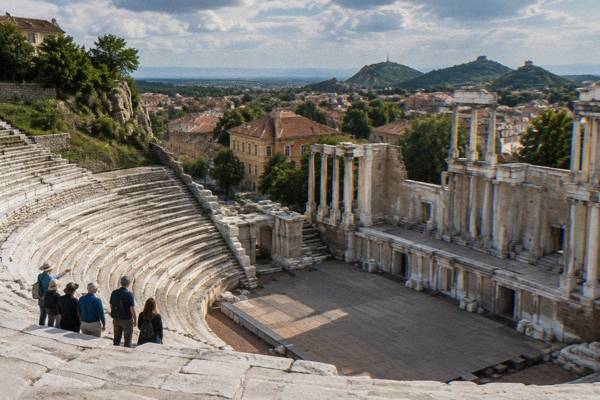
Ancient Theatre Of Philippopolis: The Roman Theatre In The Old Town
The Ancient Theatre of Philippopolis is the Roman theatre of Plovdiv, cut into the side of one of the city's six hills and still used for summer performances. Here is what the official ticket page lists, and how to plan a visit.
Short answer
The Ancient Theatre of Philippopolis in Plovdiv is open daily, 9:30 to 18:00 from April to October and 9:00 to 17:30 from November to March, with a lunch break from 12:30 to 13:00. A single Old Plovdiv site ticket costs 3.58 euro for adults; the theatre is one of several sites covered by the combined ticket at 10.74 euro.
Plovdiv, in southern Bulgaria, is an inland city built around six hills, and the Ancient Theatre of Philippopolis is its single most photographed Roman monument, cut into the slope of the Three Hills below the Old Town. The theatre was built in the 90s of the 1st century AD, when the city was the Thracian-Roman city of Philippopolis, and the official city tourism page describes 28 concentric rows of marble seats rising from the orchestra to the upper gallery. Unlike many Roman theatres, this one is not a roped-off ruin: it still hosts opera and concerts every summer, and you can walk in on an ordinary afternoon for the price of a single Old Plovdiv ticket. This page covers tickets in euro, the events calendar and what to know for a visit in 2026.
What Is The Ancient Theatre Of Philippopolis In Plovdiv?
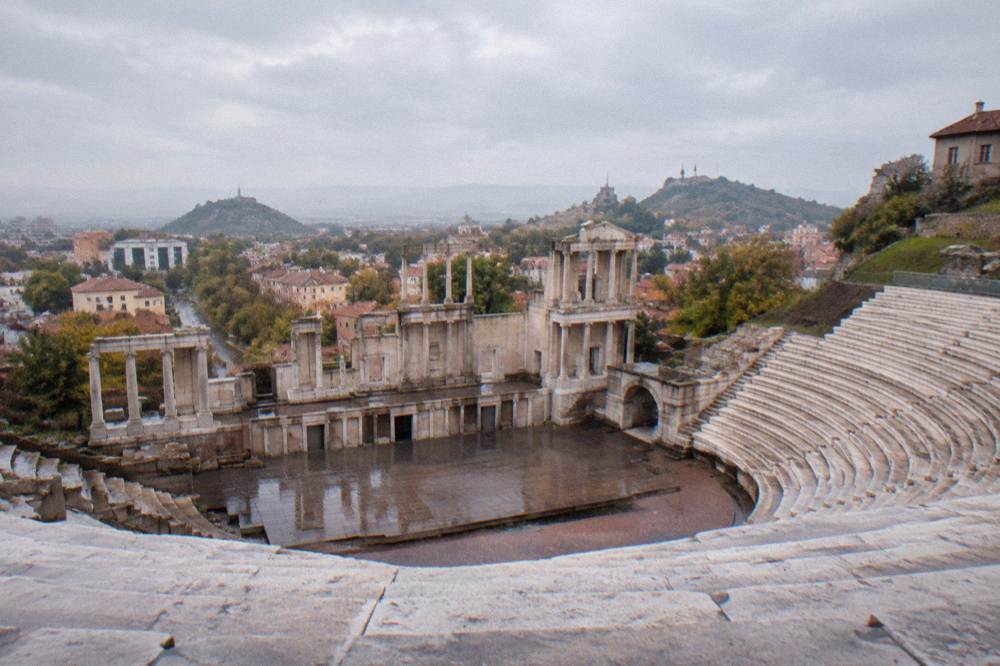
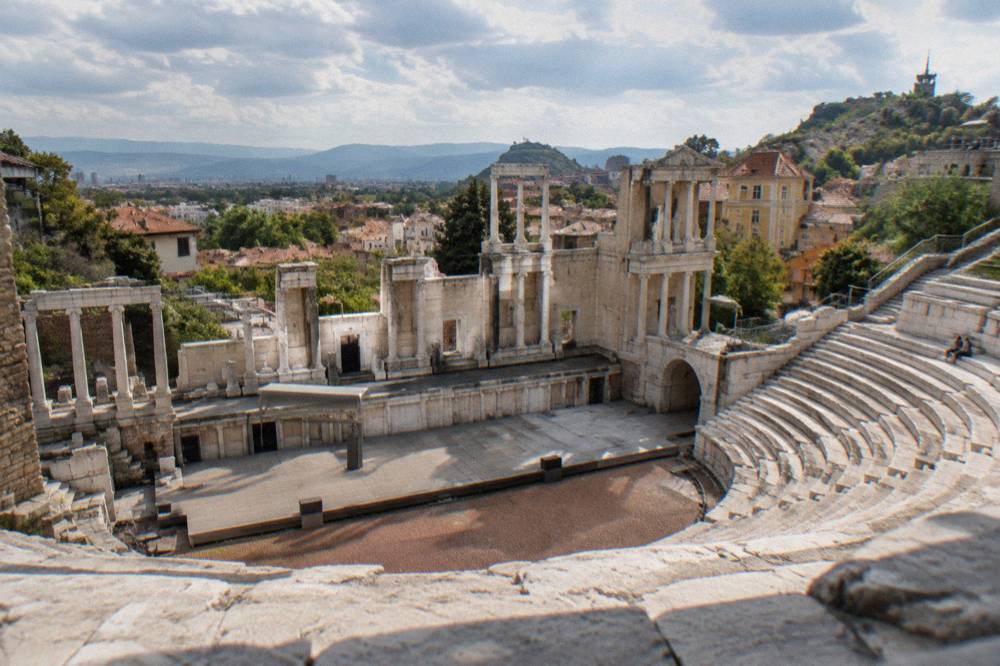
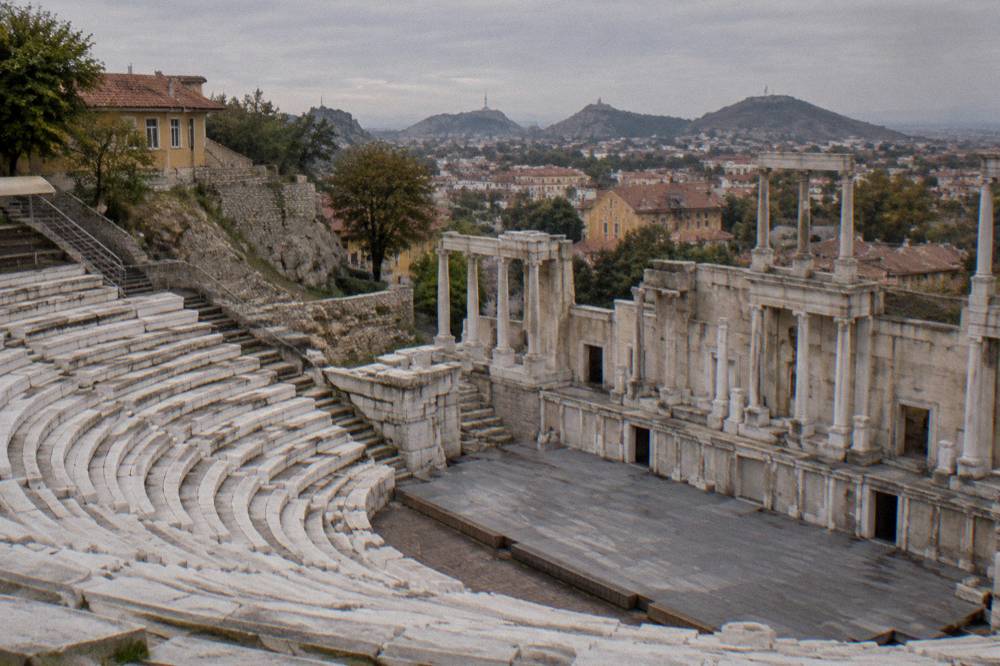
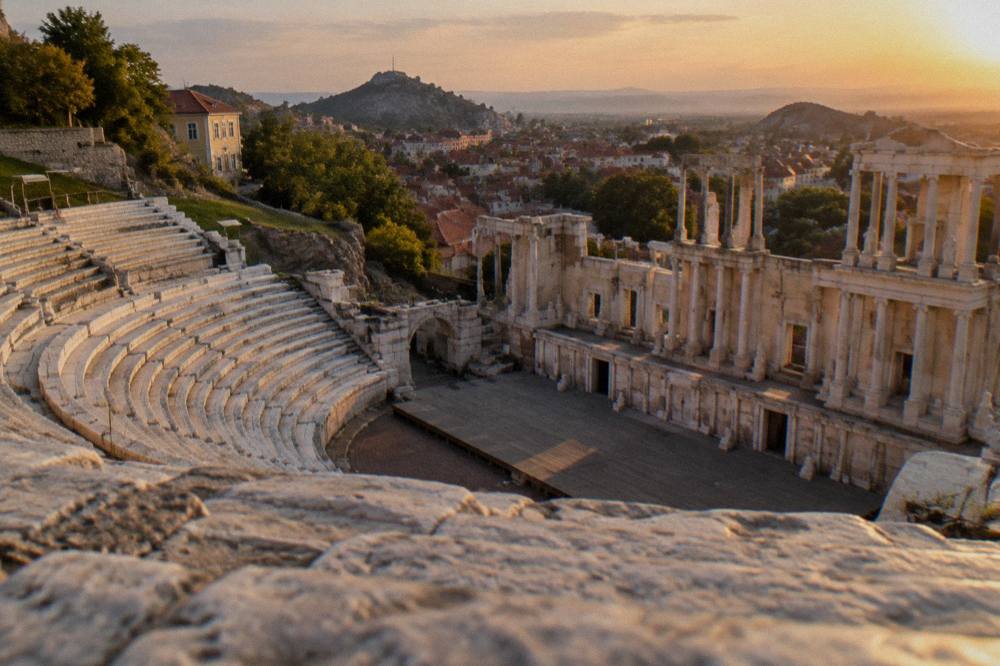
The Ancient Theatre of Philippopolis is the Roman theatre of Plovdiv, built into the hillside of the Old Town in the 90s of the 1st century AD, with 28 concentric rows of marble seats arranged in a semicircle around the stage. The city tourism site describes it as the best preserved ancient theatre in Bulgaria, and it still functions as an open-air performance venue each summer.
The theatre belongs to the Roman layer of a city often described as one of the oldest continuously inhabited cities in Europe. The official city tourism site dates the first settlement on Nebet Tepe, one of Plovdiv's six hills, to the 4th millennium BC, long before the Romans arrived and named their city Philippopolis after the Macedonian king who had refounded it. When Rome absorbed Thrace, the city gained the amenities of a provincial capital: a theatre, a stadium, an odeon and a forum, all within a walk of each other. The theatre's position, squeezed between the slopes of the Three Hills, gives every seat a view not only of the stage but over the plain to the Rhodopes on a clear day.
The building was not always visible. The reconstruction was deliberately partial: the visible rows are genuine marble where marble survived and clearly marked modern masonry where it did not, which is why the theatre can safely hold audiences again. Today the site is managed by the Old Plovdiv municipal institute, the same body that runs the Roman Stadium, the Small Basilica and the historic houses of the Old Town.
For orientation before a visit, the theatre sits at the southern edge of the Old Town, a short climb from the Dzhumaya Mosque end of the Main Street pedestrian zone and close to Hisar Kapia, the old gate that marks one of the entrances to the historic quarter. The Old Town area guide covers the lanes, houses and viewpoints around it, and the wider Roman Plovdiv guide puts the theatre in context with the other antiquities.
What Are The Opening Hours And Ticket Prices For The Roman Theatre In Plovdiv?
The theatre is open daily, April to October from 9:30 to 18:00 and November to March from 9:00 to 17:30, with a lunch break from 12:30 to 13:00. The Old Plovdiv ticket page lists an adult single-site ticket at 3.58 euro, students at 1.53 euro, a family ticket at 7.16 euro, and children aged 7 and under free.
The single ticket covers any one Old Plovdiv site except the Bishop's Basilica, so it is equally valid for the theatre, the Small Basilica or one of the revival-era houses such as Balabanov House. The combined ticket, at 10.74 euro for adults, covers up to five Old Plovdiv sites and excludes the Small Basilica and the Bishop's Basilica, the latter priced separately at 7.57 euro. For anyone planning to see the theatre plus two or three houses, the combined ticket is the arithmetic to run before buying.
| Ticket | Adult | Student | Family |
|---|---|---|---|
| Single Old Plovdiv site (theatre included) | 3.58 euro | 1.53 euro | 7.16 euro |
| Combined ticket, up to 5 sites (excludes both basilicas) | 10.74 euro | 4.09 euro | 21.47 euro |
| Bishop's (Great) Basilica, separate ticket | 7.57 euro | 3.58 euro | 15.34 euro |
Discounts worth knowing: groups of more than 10 pay 3.07 euro per adult on the single ticket, visitors with more than 50% disability enter free, and the first Thursday of the month is free for students and seniors at Old Plovdiv sites. The validity period of the combined ticket is not stated on the official page, so confirm at the desk when you buy. The Regional History Museum, a separate institution with several sites, is free the first Thursday of the month for everyone, which can usefully anchor a Thursday itinerary.
| Season | Days | Hours | Lunch break |
|---|---|---|---|
| April to October | daily | 9:30 to 18:00 | 12:30 to 13:00 |
| November to March | daily | 9:00 to 17:30 | 12:30 to 13:00 |
The lunch break is real and enforced, so a visit that arrives at 12:25 will stand outside for half an hour. In the theatre's case the practical tip is simpler than it looks: arrive near opening or after 13:00, because the seating faces south and west and midday summer light is hard on photographs. ERA5 reanalysis, 1991-2020, puts the mean daily high at 28.2 C in July and 28.6 C in August, so morning visits in high summer are the comfortable ones.
A guided walk is a common way to see the theatre with its history attached rather than as a bare ruin, and the Old Town and Roman Theatre guided walking tour is built exactly around this monument and the lanes around it.
Prefer commentary you can follow at your own pace? Book a guided audio walking tour here.
How Do You Get To The Ancient Theatre In Plovdiv?
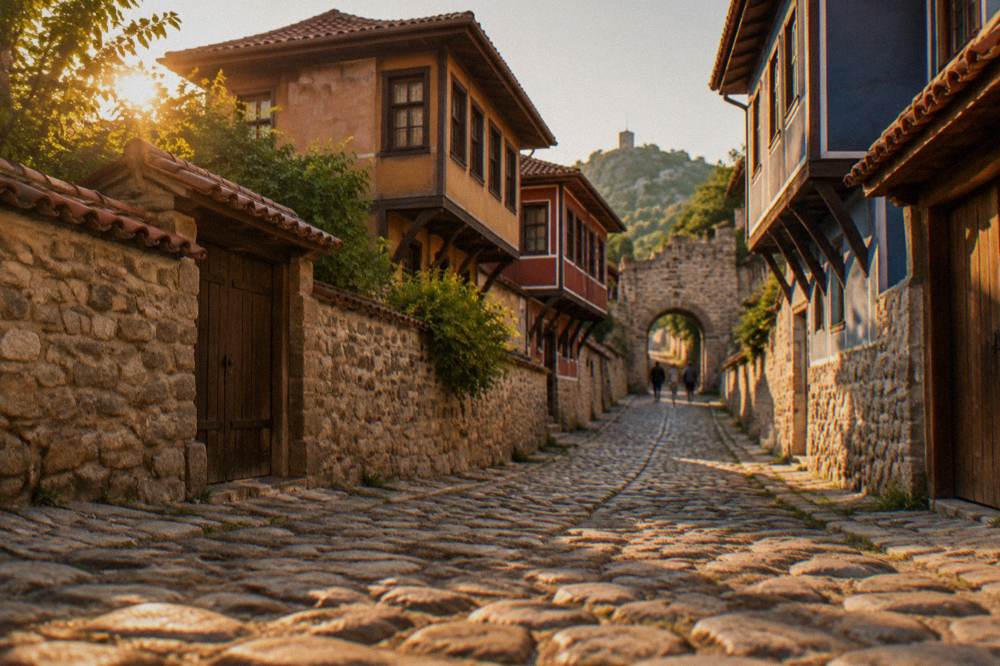
The theatre sits at the southern edge of the Plovdiv Old Town, reached on foot from the Main Street pedestrian zone by a ten-minute uphill walk from the Dzhumaya Mosque, or by city bus to a stop near the Old Town followed by the same climb. There is no vehicle access into the Old Town lanes themselves, and the final approach is stepped.
Plovdiv's centre is compact and pedestrian-first. The Main Street (Glavnata) runs from the Central Square to the Roman Stadium end, and from there the route to the theatre climbs through Old Town streets past Hisar Kapia. The climb is short but real, on cobbles and steps, so comfortable shoes matter more than they do on the flat pedestrian zone. City transport uses an e-ticket at 0.50 euro, and the getting around Plovdiv guide covers routes and ticketing in detail; anyone driving should read the Plovdiv parking guide before bringing a car anywhere near the Old Town, where restrictions apply and tariff details should be confirmed on site.
Visitors arriving from Sofia for the day should note that the theatre is the single most common first stop on Plovdiv day tours, because it compresses the Roman city into one dramatic view. The Sofia to Plovdiv transport guide covers the direct trains, which the BDZ timetable shows taking about 2 h 40 to 3 h 05, and the bus alternative. A one-day itinerary built around the theatre, the stadium and the Main Street fits comfortably in a day-trip window, and the Plovdiv in one day itinerary does exactly that.
What Can You See Inside The Roman Theatre In Plovdiv?
Inside the theatre you can walk the 28 concentric rows of marble seats, stand in the orchestra where the choir stood, cross the stage floor, and read the inscriptions on the seat backs, where carved names marked reserved places for city dignitaries of Roman Philippopolis. The scaenae frons, the decorated stage wall, survives in rebuilt column bases and fragments displayed around the stage.
The seating is the part most guides under-describe. The rows are not uniform: the lower seats are broader and were reserved, and Greek inscriptions cut into their backs name the families or offices entitled to them, a small civic directory in stone. The aisle stairs, the vomitoria that divided the cavea into wedges, and the foundations of the stage building all read clearly once you know what you are looking at, which is the honest argument for a guided visit over a solo circuit. The exhibition material on site is modest, and the theatre rewards someone who can point at a block and say what it was. More of these guides are collected on Plovdiv Travel Guide.
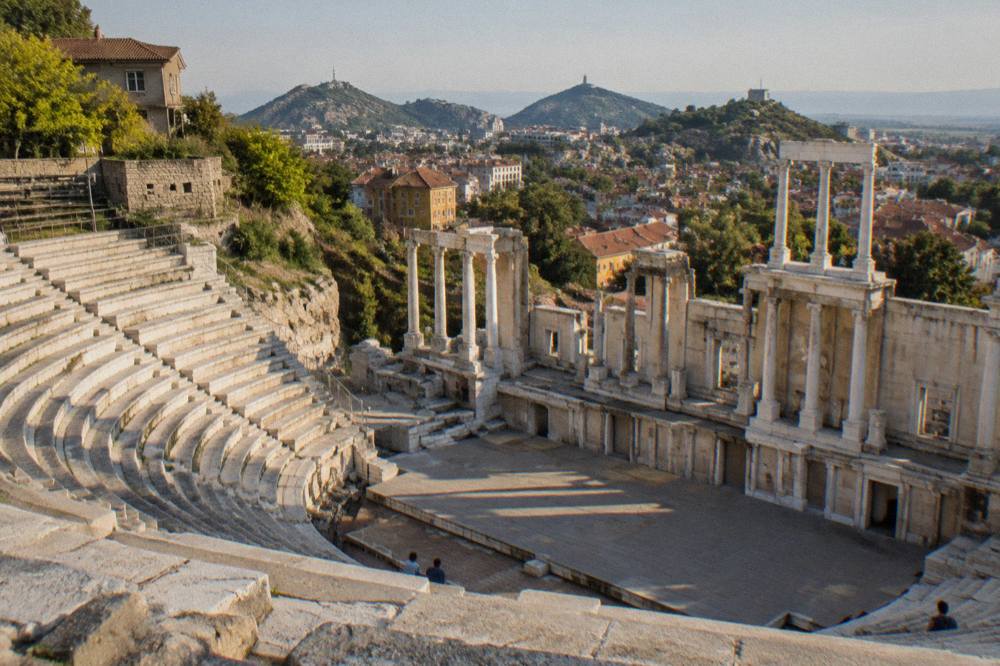
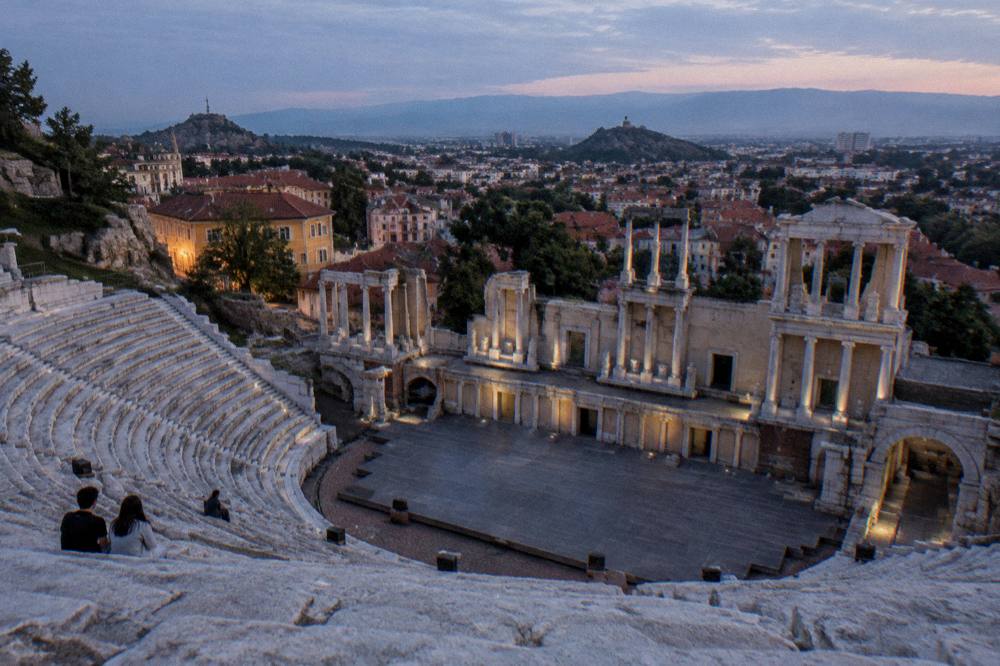
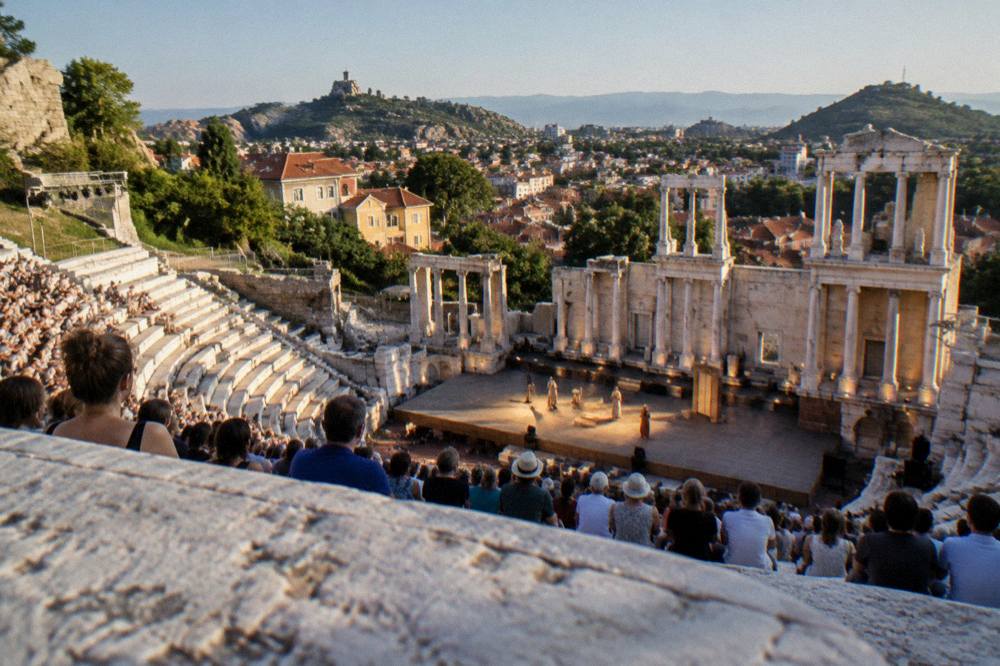
The view is part of the monument. From the upper rows the whole bowl of the modern city opens below, with the plain stretching south to the blue line of the Rhodopes, and the towers of the Church of Saints Constantine and Helena rising to one side. Photographers should plan for late afternoon light, when the marble warms up and the seating throws long shadows; the Plovdiv at night guide covers the theatre after dark, when it is sometimes lit for performances.
Around the theatre, within a few minutes on foot, sit the rest of Roman and medieval Plovdiv: the Roman Odeon, the small covered theatre used for council meetings, and the Roman Forum, the public square of ancient Philippopolis, both quieter than the theatre and free of queues.
How Does The Theatre Compare With Plovdiv's Other Roman Sites?
The Ancient Theatre is Plovdiv's performance venue, semicircular and built in the 1st century AD; the Roman Stadium, built in the 2nd century AD on the model of the stadium at Delphi, held up to 30,000 spectators for athletic games and today shows only its northern end; the Odeon was a small covered council theatre; the Forum was the civic square.
The distinction matters because first-time visitors routinely conflate them. The theatre is the one on the hillside with marble rows; the stadium is the long U-shaped structure whose visible sphendone, the northern curved end, sits at the bottom of the Main Street near the Dzhumaya Mosque, with the rest still lying beneath the modern pedestrian street. Only the northern part, unearthed in the 1970s, is accessible, and calling the stadium "fully excavated" would be wrong. A sensible route links the two in a single walk, downhill from the theatre through Hisar Kapia to the stadium sphendone, and the self-guided Plovdiv walk follows exactly that line.
| Roman site in Plovdiv | Built | What survives to see | Entry |
|---|---|---|---|
| Ancient Theatre of Philippopolis | 90s of the 1st century AD | 28 concentric rows of marble seats, stage wall, inscriptions | 3.58 euro (Old Plovdiv ticket) |
| Roman Stadium | 2nd century AD, model of Delphi's stadium | Northern sphendone with rows of seats; rest lies under the Main Street | Sphendone free; 3D hall 3.68 euro |
| Roman Odeon | Roman period | Small reconstructed council theatre near the forum | Part of Old Plovdiv ticketing |
| Roman Forum | Roman period | Foundations and colonnade fragments of the civic square | Open public area |
| Bishop's Basilica | 4th to 6th century | About 83 m long, floor mosaics over 2,000 sq m | 7.57 euro, separate ticket |
The Bishop's Basilica deserves its own line in any Roman Plovdiv comparison because it is the outlier in scale and price alike: about 83 m long and 36 m wide, the largest 4th to 6th century basilica in Bulgaria, with two layers of floor mosaics covering over 2,000 sq m, raised on its own ticket outside the Old Plovdiv system. The Eirene mosaic and Episcopal Basilica page covers it in full. If the theatre is the drama of Roman Plovdiv, the basilica is its floor show, and the two together give the fullest picture of what the city was under Rome and Byzantium.
When Is The Best Time To Visit The Roman Theatre In Plovdiv?
The theatre is at its best between late April and early October, when the long opening hours run to 18:00, and the practical window within a day is either at the 9:30 opening or after the 13:00 lunch break ends, because the seating faces the midday sun and summer afternoons are hot.ERA5 reanalysis, 1991-2020, puts the July mean daily high at 28.2 C and January's at 5.9 C, with a January mean low of -2.6 C.
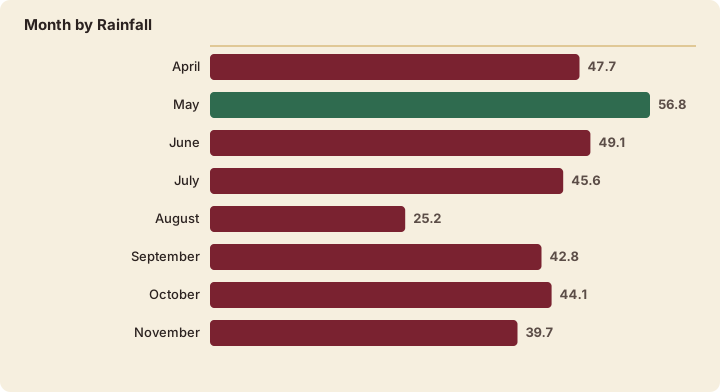
The monthly picture below is modelled data from the ERA5 reanalysis, a grid cell rather than a weather station, and it smooths the urban heat the city centre actually feels. Read it as planning ranges, not a forecast. May and March are the months with the highest modelled rainfall, at 56.8 mm and 55.0 mm respectively, and August the lowest at 25.2 mm, which makes August the dry-visit month if heat is tolerable and May the one where an umbrella earns its place in the day pack.
| Month | Mean daily high | Mean daily low | Rainfall |
|---|---|---|---|
| April | 17.1 C | 6.4 C | 47.7 mm |
| May | 21.9 C | 11.5 C | 56.8 mm |
| June | 25.9 C | 15.4 C | 49.1 mm |
| July | 28.2 C | 17.9 C | 45.6 mm |
| August | 28.6 C | 18.1 C | 25.2 mm |
| September | 23.8 C | 13.8 C | 42.8 mm |
| October | 18.1 C | 8.8 C | 44.1 mm |
| November | 12.3 C | 3.8 C | 39.7 mm |
Summer visits carry one extra consideration: performance season. When Opera Open or a concert is scheduled, the theatre can close early to general visitors for setup, so a late-afternoon August visit should check the events listing that morning. Winter visits trade heat for low light and short hours, but the theatre is open daily year round with no announced closures, and the marble under low winter sun is a quieter, colder version of the same view. Season-by-season planning is covered in the best time to visit Plovdiv guide.
What Events Are Held At The Ancient Theatre In Plovdiv?
The theatre is Plovdiv's main open-air performance venue each summer: Opera Open ran there from 23 June to 9 September 2026, with opera, galas and Carmina Burana closing the season, and rock and classical concerts are scheduled into September. Tickets for performances are sold separately from the daytime sightseeing ticket, and on show days visitor access can be restricted.
Opera Open is the headline series, confirmed on the municipal tourism site for 23 June to 9 September 2026, and the programme ran from a June gala through Nabucco to a September Carmina Burana. Beyond opera, the city books one-off concerts into the venue; a metal-and-orchestra concert was held on 19 September 2026. The season's logic is simple: the theatre is a working stage with 2,000 years of precedent, and the summer calendar treats it as one. Anyone planning a visit around a specific show should check the current listings on the city's events pages, because dates are announced season by season and 2027 dates had not been announced.
Going to a performance is a different experience from a daytime visit. The seating is the ancient bowl, so comfort expectations should adjust accordingly, and evenings cool quickly even after a hot day, with ERA5 modelled mean nightly lows around 17.9 C in July. The Plovdiv theatre and concerts guide covers the venues and ticketing habits of the city, and the Plovdiv festivals and events guide places Opera Open among the year's other fixtures, from Kapana Fest in October to the Christmas market that runs from late November into January.
Which Tours Include The Ancient Theatre In Plovdiv?
The theatre appears on Plovdiv's guided walking tours of the Old Town and on the day tours from Sofia that include Plovdiv, either as a walk-through highlight with a licensed guide or as free time in the Old Town during which you buy your own 3.58 euro ticket. Choosing between them is a matter of how much context you want and whether you are already in Plovdiv or starting from Sofia.
For visitors already in the city, a guided walk is the cheapest way to get the theatre's story told properly. The classic Plovdiv guided walking tour covers the Main Street, the stadium and the theatre in one loop, and tip-based walks also run locally; if a free walk appeals, confirm the meeting point and format with the guide directly, since arrangements change. For visitors based in Sofia, day tours bundle the theatre into a full Plovdiv stop, usually alongside Old Town free time, and some add Asen's Fortress and Bachkovo Monastery in the Rhodope foothills, a combination that makes sense only with a vehicle.
The fortress-and-monastery pairing deserves a word of explanation for readers who have not looked at a map: Asen's Fortress stands above Asenovgrad on the road into the Rhodopes, and Bachkovo Monastery, a working monastery with free entry, lies about 30 km from Plovdiv. A small-group tour that strings Plovdiv, the fortress and the monastery together is the efficient version of a day that would otherwise need a rental car or a series of minibuses from the Rodopi bus station.
Families should know the theatre is manageable with children: the climb is short, the rows are walkable with a hand on the rail, and the open bowl keeps the interest level high. The Plovdiv with kids guide has the fuller picture. For a two-day plan that gives the theatre, the basilicas and Kapana each their proper time, the Plovdiv in two days itinerary is the template this desk would point to first, and the broader things to do in Plovdiv root page carries none of this article's detail, so start here and branch out from the links above.
Common Questions About The Ancient Theatre In Plovdiv
How much does the Ancient Theatre of Philippopolis in Plovdiv cost?
The Old Plovdiv ticket page lists an adult single-site ticket at 3.58 euro, students at 1.53 euro, and a family ticket at 7.16 euro, with children aged 7 and under free. The combined ticket covering up to five Old Plovdiv sites costs 10.74 euro for adults.
Is the Roman theatre in Plovdiv open every day?
Yes. The theatre opens daily year round, from 9:30 to 18:00 between April and October and from 9:00 to 17:30 between November and March, with a lunch break from 12:30 to 13:00. On performance days access can be restricted, so check the events listing.
How old is the Ancient Theatre of Philippopolis?
The theatre was built in the 90s of the 1st century AD, when the city was Roman Philippopolis.
Is the Ancient Theatre of Philippopolis a UNESCO World Heritage Site?
No. "The Ancient Plovdiv" sits on Bulgaria's UNESCO Tentative List, submitted in 2004, which is a waiting list and not an inscription. Plovdiv itself is not a UNESCO World Heritage Site.
Can you attend a performance at the theatre?
Yes. The theatre is a working summer venue: Opera Open ran there from 23 June to 9 September 2026, and concerts continue into September. Performance tickets are sold separately from the daytime sightseeing ticket.
How long does a visit to the theatre take?
A self-guided circuit of the seating, stage and inscriptions fits comfortably inside an hour, plus the walk up through the Old Town. Visitors pairing the theatre with the Roman Stadium, the basilicas and the houses should plan half a day, as the Plovdiv in one day itinerary does.