Does It Snow In Plovdiv, Bulgaria?
Yes, snow falls in Plovdiv in winter. What the ERA5 climate normals show about temperatures, rainfall and snow in Bulgaria's second city, plus what to do and pack.
Plovdiv, Bulgaria's second-largest city, lies inland in the south of the country, built around six hills with no sea anywhere near it to soften the seasons. That geography matters for the snow question. The city has a continental climate with hot summers and cold winters, and the ERA5 reanalysis for Plovdiv, covering 1991 to 2020, puts the mean daily low in January at -2.6 C. Air that cold at night, combined with winter precipitation, means snow is a normal part of a Plovdiv winter rather than a rare event. The nuance is that it rarely stays deep for long, and the same data set shows how quickly conditions swing across the season.
Does It Snow In Plovdiv, Bulgaria?
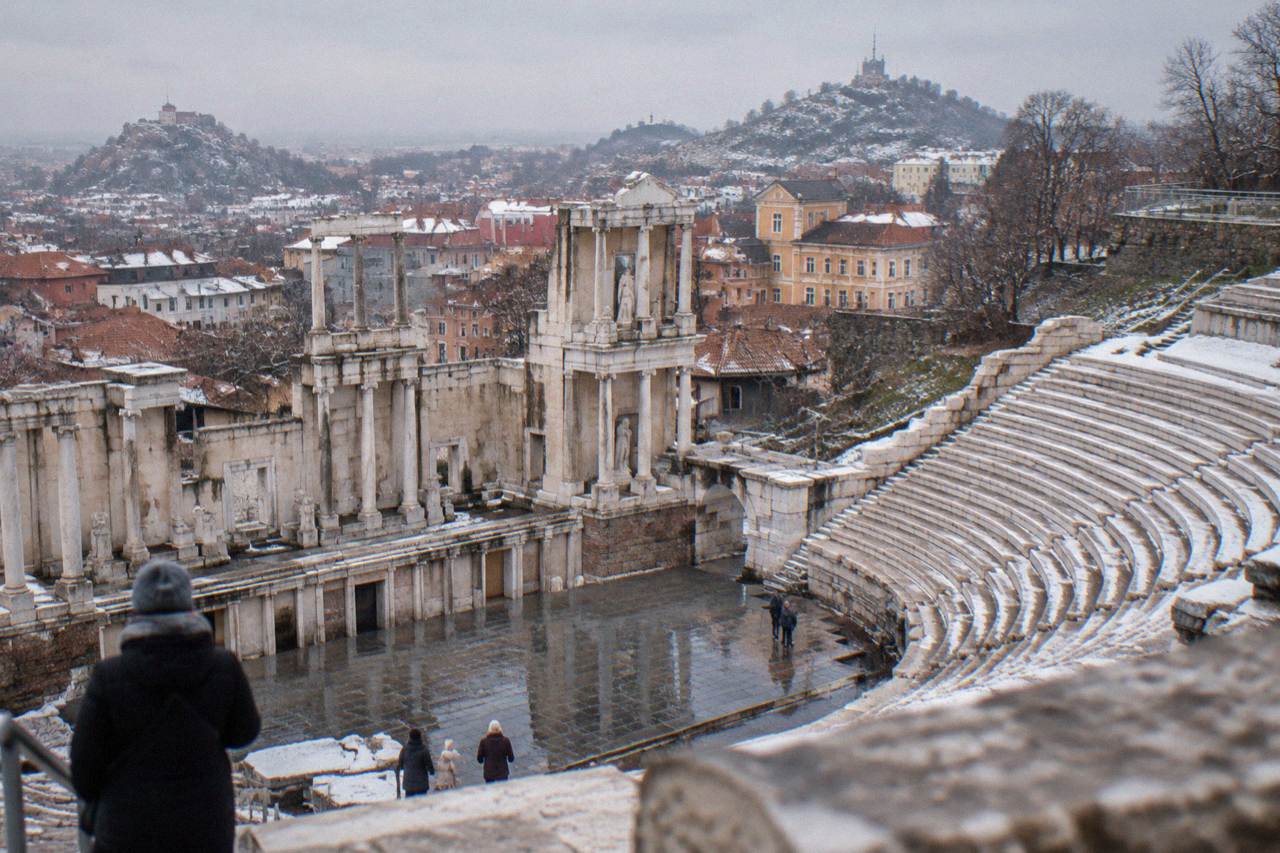
Yes, snow falls in Plovdiv. The city's continental climate produces mean daily lows below freezing from December through February, with the January figure at -2.6 C in the ERA5 reanalysis for 1991 to 2020, so winter precipitation regularly arrives as snow rather than rain. Snow does settle on the Old Town hills, but sustained deep cover is not the pattern.
The distinction worth making is between snow falling and snow lying. Plovdiv sits in the Upper Thracian Plain at a modest elevation, with the Rhodopes rising to the south. When cold air pushes down from the north and meets moisture, the city gets snow. When Atlantic or Mediterranean systems dominate, the same winter month can deliver rain instead, because the mean daily high in January is still 5.9 C, warm enough to melt a thin layer within a day or two.
The reanalysis figures describe a modelled grid cell near the Old Town, not a weather station reading, and reanalysis smooths extremes in both directions. Real winters in Plovdiv have included bitter snaps with lasting snow and mild spells with none at all. The normals are an average of thirty years, and the answer to the headline question sits inside that spread: snow, yes; a guaranteed white city, no.
For a fuller month-by-month picture, the site's Plovdiv weather guide expands on the same data set, and the Plovdiv In Winter Guide covers the season in detail.
How Cold Does Plovdiv Get In Winter?
The ERA5 reanalysis, 1991 to 2020, gives Plovdiv a mean daily high of 5.9 C and a mean daily low of -2.6 C in January, the month with the lowest figures on both measures. December and February sit close behind, with lows of -0.8 C and -1.1 C. Freezing nights are routine across all three months, while afternoon highs typically climb a few degrees above zero.
Those are means, not extremes. A continental climate is defined by its swings, and Plovdiv's position on an open plain means cold outbreaks from the northeast can drive temperatures well below the modelled average for days at a time. The reanalysis smooths those peaks and troughs, so treat the table as a planning baseline rather than a forecast for any given week.
| Month | Mean Daily High | Mean Daily Low | Mean Rainfall |
|---|---|---|---|
| November | 12.3 C | 3.8 C | 39.7 mm |
| December | 7.0 C | -0.8 C | 49.3 mm |
| January | 5.9 C | -2.6 C | 41.0 mm |
| February | 8.0 C | -1.1 C | 40.4 mm |
| March | 12.1 C | 2.1 C | 55.0 mm |
Two things stand out in the winter rows. First, the precipitation column is fairly steady through the cold months, in the 40 to 49 mm range, so moisture is available whenever the air is cold enough to turn it to snow. Second, November and March straddle the freezing line at night, which is why early and late-season snowfall happens but rarely lasts. December, January and February are the months when the question genuinely matters.
Rainfall totals across the whole year come to 536.6 mm in the same data set, with May the wettest month at 56.8 mm and August the driest at 25.2 mm. Winter is neither the wettest nor the driest season in Plovdiv; it is simply the season when some of that water arrives frozen.
When Is Snow Most Likely In Plovdiv?
January is the month when snow is most likely in Plovdiv, because the ERA5 reanalysis, 1991 to 2020, gives it both the lowest mean daily low, at -2.6 C, and the lowest mean daily high, at 5.9 C. December and February follow closely, with mean lows just below freezing and about 40 to 49 mm of precipitation falling across each month.
Within those months, snow probability depends on the pattern of any given year. A high-pressure ridge over Eastern Europe can lock in cold, dry air for a fortnight with clear skies and no snow at all. A clash between that cold air and a wet system from the Mediterranean, tracking north over Greece, is the classic setup for significant Plovdiv snowfall. The Rhodopes to the south catch more of it, and ski areas around Pamporovo depend on exactly that flow.
Travellers timing a visit around snow should not chase a specific week. The more reliable planning approach is to accept that any trip between early December and late February may meet snow, and to build an itinerary that works in either condition. That is easier in Plovdiv than in many cities, because the core sights are compact and largely reachable on foot, and indoor options cluster close together.
A guided walk of the center and Old Town is one option that holds up well in variable weather, and the Plovdiv guided walking tour covers the Roman and revival-era landmarks with a local guide who adjusts pace to conditions. The full set of guided walks and tours in Plovdiv is worth scanning for cold-day ideas.
Does Snow Settle On The Ground In Plovdiv?
Snow does settle in Plovdiv, especially on the Old Town hills and in shaded streets, but the ERA5 mean daily highs of 5.9 C in January and 8.0 C in February mean a covering often melts within a few days.
When snow does lie, the city transforms in specific ways. The cobbled lanes of the Old Town, already uneven, become slippery, and sensible footwear matters more than scenery. The hills, Nebet Tepe, Dzhambaz Tepe and the rest of the Three Hills group, hold snow longer than the flat Main Street because they catch shade and lose heat faster. The Alyosha monument on Bunardzhika stands in an open park that can hold a white crust after the streets below have cleared.
Practical consequences follow. Buses and trains in Bulgaria run through normal winter snow without dramatic disruption, though the Plovdiv railway junction has been under a major modernisation programme due to finish in 2026, so access around the central station can change during works. Airport operations at Plovdiv Airport, with its small route list, are more sensitive to fog and ice than a large hub would be, and travellers flying through Sofia should allow connection buffer on snowy days.
What Is There To Do In Plovdiv In Winter?
Winter sightseeing in Plovdiv works because the main attractions sit close together: the Ancient Theatre, the Roman Stadium sphendone, the Old Town houses, the Bishop's Basilica mosaics and the museums of the center are all within a compact walking radius, and the Old Plovdiv ticket page lists single-site entry at 3.58 euro for adults. Indoor museums and mosaic halls give warm options between outdoor stretches.
The winter rhythm of the city suits a slower visit. The Old Town houses, Balabanov, Hindliyan and Nedkovich among them, are heated museum interiors with hours listed on the Old Plovdiv ticket page, winter hours running daily from 9:00 to 17:30 with a lunch break from 12:30 to 13:00. The Bishop's Basilica keeps daily hours of 9:00 to 18:00 year round, and its visitor centre displays the floor mosaics under cover. The Regional Ethnographic Museum is closed on Mondays, a detail to remember when planning a winter weekday.
| Winter Option | Setting | Why It Suits Cold Weather |
|---|---|---|
| Bishop's Basilica visitor centre | Indoor, daily 9:00 to 18:00 | Over 2,000 sq m of floor mosaic viewed under cover |
| Old Town house museums | Indoor, winter hours 9:00 to 17:30 | Heated revival-era interiors on the hill |
| Roman Stadium 3D hall | Indoor | Model and projection of the buried stadium |
| Kapana Creative District | Outdoor streets | Cafes and small venues for warming stops |
| Ancient Theatre | Outdoor | Open daily, striking with a dusting of snow |
Day trips also run through winter. A half-day trip to Asen's Fortress and Bachkovo Monastery reaches the Rhodope foothills, where snow lies longer than in the plain, and the monastery church is an indoor destination at its heart. Closer to town, a wine tasting in the center works as an evening plan whatever the sky is doing. Confirm departure conditions with the operator before booking in a cold snap.
For a broader itinerary, the how many days in Plovdiv guide helps size the trip, and the piece on whether Plovdiv is worth visiting weighs the city against competing stops.
How Should You Pack For A Plovdiv Winter?
Pack for freezing nights and mild afternoons: with ERA5 mean daily lows of -2.6 C in January and mean daily highs of 5.9 C, Plovdiv winters demand layers, a real insulated coat, hat and gloves, and shoes with grip for the cobbles of the Old Town, which turn slick with ice or packed snow. Thermal base layers earn their place from December through February.
The cobbles deserve emphasis. The Old Town lanes are stone, old and worn, and a thin freeze or a melting snowfall makes them genuinely treacherous in smooth-soled shoes. Boots with tread are the single most useful item. A scarf matters too, because the wind funnels between the hills on cold clear days, and the same open plain that delivers the cold air lets it move fast.
| Item | Why It Matters In Plovdiv |
|---|---|
| Insulated coat | Mean daily low of -2.6 C in January |
| Boots with grip | Cobbled Old Town lanes ice over |
| Layers | Afternoon highs above freezing, cold nights |
| Hat, scarf, gloves | Wind funnels between the six hills |
| Compact umbrella | Winter months bring 40 to 49 mm each |
Money and practicalities are simple in winter as in summer. Bulgaria has used the euro since 1 January 2026, and it has been a full Schengen member since 1 January 2025, so no visa stamping wait applies for those entering the zone. A tourist tax may be charged by your accommodation, and the current euro rate is something to confirm at booking rather than assume.
Common Questions About Snow And Winter In Plovdiv
Does It Snow In Plovdiv, Bulgaria?
Yes. Deep, lasting cover on the streets is less common, because January afternoons average 5.9 C.
Which Month Has The Most Snow In Plovdiv?
January, in the modelled normals, is the month with the lowest mean daily low, at -2.6 C, and the lowest mean daily high, at 5.9 C. December and February sit close behind. Any specific year can shift the pattern.
Is Plovdiv Very Cold In Winter?
Nights are cold, with the January mean daily low at -2.6 C, but afternoons typically rise a few degrees above freezing. The ERA5 reanalysis, 1991 to 2020, is a modelled average and smooths the coolest snaps and the mildest thaws.
Does Plovdiv Have A White Christmas?
Sometimes, but it cannot be promised. The Christmas in Plovdiv programme ran from 28 November 2025 to 4 January 2026 in its latest edition, and the 2026/27 edition is listed from 1 December 2026 to 7 January 2027. Whether snow is on the ground for it depends on the year.
Can You Still Visit The Ancient Theatre When It Snows?
The Old Plovdiv ticket page lists the Ancient Theatre as open daily year round, with winter hours of 9:00 to 17:30 and a lunch break from 12:30 to 13:00. Snow on the marble rows is possible in cold spells, so footwear with grip is advised.
Are The Plovdiv Museums Open In Winter?
The Old Town houses follow winter hours of 9:00 to 17:30, and the Bishop's Basilica is open daily 9:00 to 18:00. The Regional Ethnographic Museum is closed on Mondays. Check the Old Plovdiv ticket page for any given house before heading up the hill.
A winter visit to Plovdiv, snow or no snow, is a quiet, low-cost way to see one of Europe's long-inhabited cities, and the seasonal detail on the Plovdiv Travel Guide homepage pulls the year together month by month. The guided walk below is the natural first morning in any weather.
For travelers weighing Plovdiv against a ski-centred trip, which part of Bulgaria is best to stay in compares the regions, and the month-by-month view in when to go to Bulgaria places winter in the context of the rest of the year.
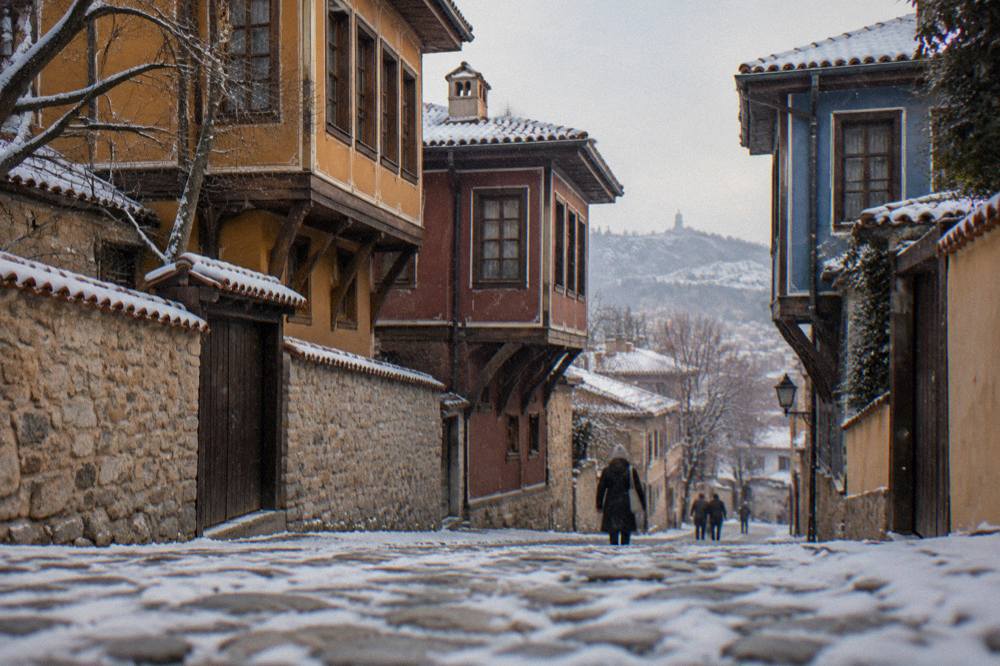
Whether the snow arrives on your dates or holds off until the week after, the city rewards a cold-weather visit, and a couple of layers plus boots with grip cover nearly everything the season can throw at a walk across the hills.
