Plovdiv Weather By Month: Temperatures, Rain And Snow
Plovdiv sits inland in southern Bulgaria, and its weather runs continental: modelled mean daily highs reach 28.6 C in August and fall to 5.9 C in January. Here is what the ERA5 reanalysis, 1991-2020, says about every month, plus rain, snow and packing notes for the Old Town.
Short answer
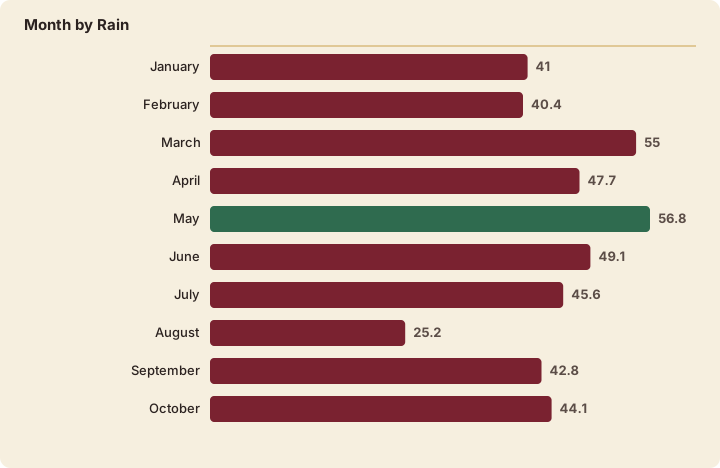
Plovdiv has a continental climate: hot summers (mean daily high 28.6 C in August), cold winters (mean daily high 5.9 C, mean daily low -2.6 C in January), and moderate rainfall spread through the year, with the largest monthly totals in May (56.8 mm) and March (55.0 mm) and the smallest in August (25.2 mm), per the ERA5 reanalysis, 1991-2020.
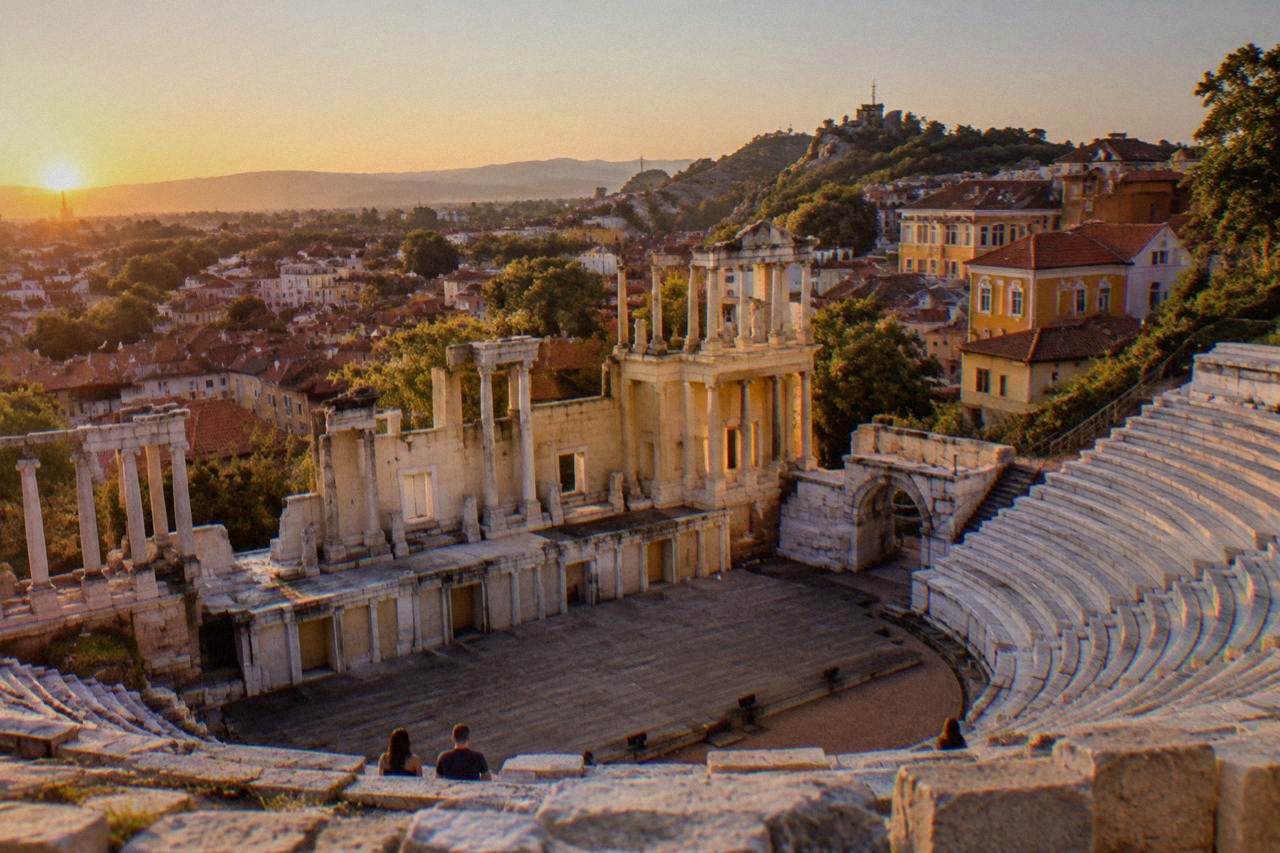
Plovdiv is an inland city in southern Bulgaria, built around six hills, and its weather follows a plainly continental pattern: warm to hot summers, cold winters, and rainfall spread across the year rather than packed into one season. The figures on this page come from the ERA5 reanalysis, 1991-2020, a modelled grid cell near the Old Town at 42.1475 N, 24.7515 E. That is not a weather station record. Reanalysis smooths extremes, so a real July afternoon on the Roman Stadium steps can run warmer than the modelled mean, and a January night on Nebet Tepe can bite harder than the modelled low. Use these numbers as a planning baseline, not a forecast, and pair them with the pages on the best time to visit Plovdiv when you pick your dates.
What Is The Weather Like In Plovdiv?
Plovdiv has a continental climate with four distinct seasons: the modelled mean daily high climbs from 5.9 C in January to 28.6 C in August, the mean daily low falls from 18.1 C in August to -2.6 C in January, and yearly rainfall totals about 536.6 mm, spread so that no month is dry and none is soaked. The ERA5 reanalysis, 1991-2020, puts May at 56.8 mm of rain and August at 25.2 mm, the year's largest and smallest monthly totals.
The shape of the year matters more than any single number. Winter settles in from December through February, with mean lows below zero in January and around it in February and December. Spring arrives quickly: March already averages a mean high of 12.1 C, and by May the modelled high passes 21.9 C. Summer, June through August, is uniformly warm, with mean highs between 25.9 C and 28.6 C. Autumn cools in steps, from 23.8 C in September to 12.3 C in November.
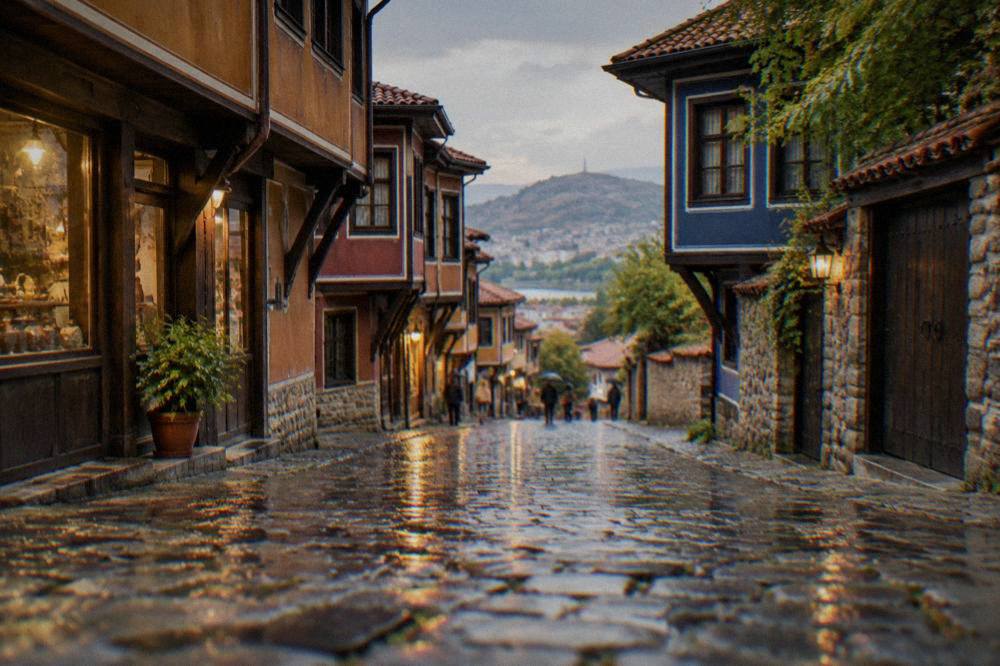
Rain is the detail people under-plan for. Because Plovdiv is inland, there is no sea to moderate anything, and because the city sits in the Upper Thracian Plain between the Rhodopes and the Balkan Range, summer downpours and winter cold snaps both arrive without much warning. The monthly rainfall table below shows how even the lighter months carry real rain.
| Season | Months | Mean daily high | Mean daily low | Character |
|---|---|---|---|---|
| Winter | Dec, Jan, Feb | 5.9 to 8.0 C | -2.6 to -0.8 C | Cold, occasional snow, short days |
| Spring | Mar, Apr, May | 12.1 to 21.9 C | 2.1 to 11.5 C | Fast warming, the year's larger rain totals |
| Summer | Jun, Jul, Aug | 25.9 to 28.6 C | 15.4 to 18.1 C | Warm days and nights, the smallest rain totals |
| Autumn | Sep, Oct, Nov | 12.3 to 23.8 C | 3.8 to 13.8 C | Steady cooling, steady rain |
Plovdiv Weather By Month: Temperatures And Rainfall
Every month of the Plovdiv year is described below from the ERA5 reanalysis, 1991-2020: mean daily highs run from 5.9 C in January to 28.6 C in August, mean daily lows from -2.6 C to 18.1 C across the same span, and monthly rainfall stays between 25.2 mm and 56.8 mm in all twelve months. The full table follows, so you can read off your travel month directly.
| Month | Mean daily high | Mean daily low | Rain |
|---|---|---|---|
| January | 5.9 C | -2.6 C | 41.0 mm |
| February | 8.0 C | -1.1 C | 40.4 mm |
| March | 12.1 C | 2.1 C | 55.0 mm |
| April | 17.1 C | 6.4 C | 47.7 mm |
| May | 21.9 C | 11.5 C | 56.8 mm |
| June | 25.9 C | 15.4 C | 49.1 mm |
| July | 28.2 C | 17.9 C | 45.6 mm |
| August | 28.6 C | 18.1 C | 25.2 mm |
| September | 23.8 C | 13.8 C | 42.8 mm |
| October | 18.1 C | 8.8 C | 44.1 mm |
| November | 12.3 C | 3.8 C | 39.7 mm |
| December | 7.0 C | -0.8 C | 49.3 mm |
Read the table with two cautions. First, these are thirty-year means, so they hide the spread: a March cold snap or a June heat burst is normal variation around them, not a contradiction. Second, reanalysis smooths urban heat, so the Old Town's stone streets in July typically feel warmer at midday than the 28.2 C mean suggests. For month-specific planning, the season pages and the guide to getting around Plovdiv cover how weather changes movement in a city whose centre is best explored on foot.
When Does It Rain In Plovdiv?
Rain falls somewhere in every Plovdiv month, but the larger totals cluster from March through July: May carries 56.8 mm, March 55.0 mm, June 49.1 mm and July 45.6 mm, while August carries only 25.2 mm, the smallest monthly figure in the ERA5 reanalysis, 1991-2020. December, at 49.3 mm, is the one winter month that matches the spring totals.
The pattern is not a monsoon-style wet season. It is a gentle tilt: late spring and early summer collect the more generous falls, often as afternoon showers, while high summer dries out and the months either side of it hold steady totals around 40 to 45 mm. For a walking city like Plovdiv, where the Old Town's cobbles and the Three Hills paths are the main draw, this matters more than a beach destination would notice. Wet stone on Saborna Street is slippery, and the climb to Nebet Tepe is better saved for a dry window.
Practical rain planning in Plovdiv is simple. Carry a light rain layer from March to July and in December, and treat September through November as steady-drizzle months where an umbrella earns its place in the daypack. August is the month where a rain jacket is close to dead weight, though a short mountain-borne shower is never impossible. On days the forecast turns, the free things to do in Plovdiv page includes indoor and covered options that cost nothing.
Does It Snow In Plovdiv?
Yes, snow falls in Plovdiv in winter: mean daily lows sit at -2.6 C in January, -1.1 C in February and -0.8 C in December, so precipitation in those months regularly arrives as snow rather than rain. The ERA5 reanalysis covers temperature and rain only, so there is no snow-day count, and December's 49.3 mm of precipitation is the winter month that most often falls as snow.
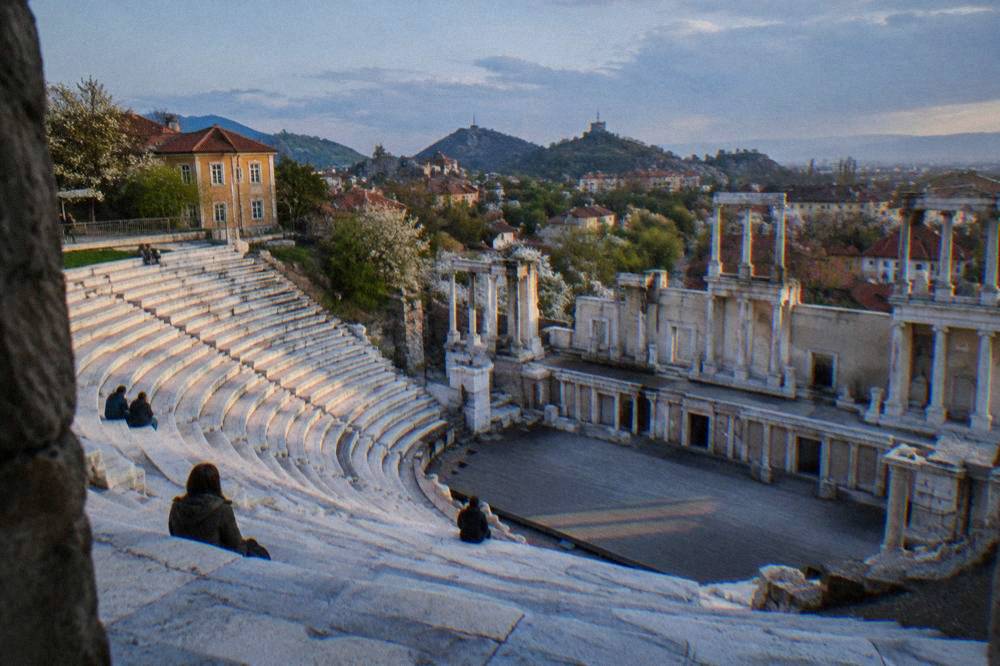
Snow in Plovdiv is usually a temporary visitor rather than a permanent guest. The city sits at about 182 m elevation on the modelled grid, low for Bulgaria, and winter mean highs stay at or above 5.9 C, so lying snow tends to melt between cold spells. What does settle transforms the Old Town: the pastel Revival houses, Hisar Kapia and the Ancient Theatre's marble rows take on a different character under white. The dedicated does it snow in Plovdiv page carries the fuller discussion, including how snow interacts with the hilly streets.
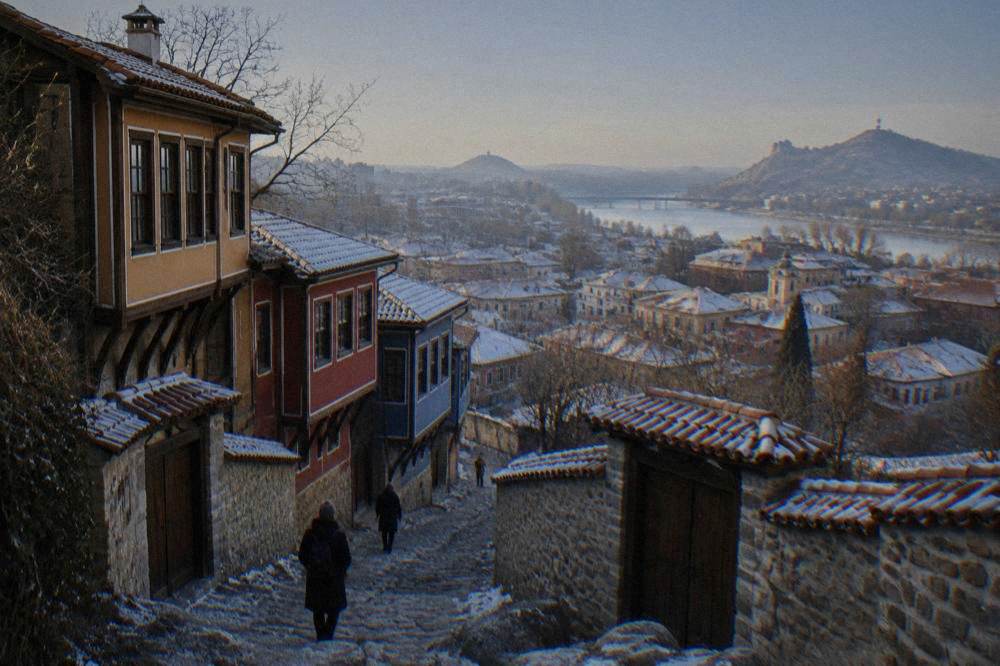
For trip planning, treat January as the month where snow is likeliest and where the mean low of -2.6 C demands real winter clothing. February warms slightly but keeps the same character. December is milder on paper, with a mean high of 7.0 C, yet the same month's higher precipitation total means a white Christmas scene is a genuine possibility rather than a fantasy. If snow is what you want, build flexibility into the itinerary and check the forecast close to travel.
How Hot Do Plovdiv Summers Get?
Plovdiv summers are reliably warm: the modelled mean daily high is 25.9 C in June, 28.2 C in July and 28.6 C in August, with mean nightly lows of 15.4 C to 18.1 C, per the ERA5 reanalysis, 1991-2020. August is also the year's least rainy month at 25.2 mm, which makes it the most weather-dependable month of the whole calendar for outdoor sightseeing.
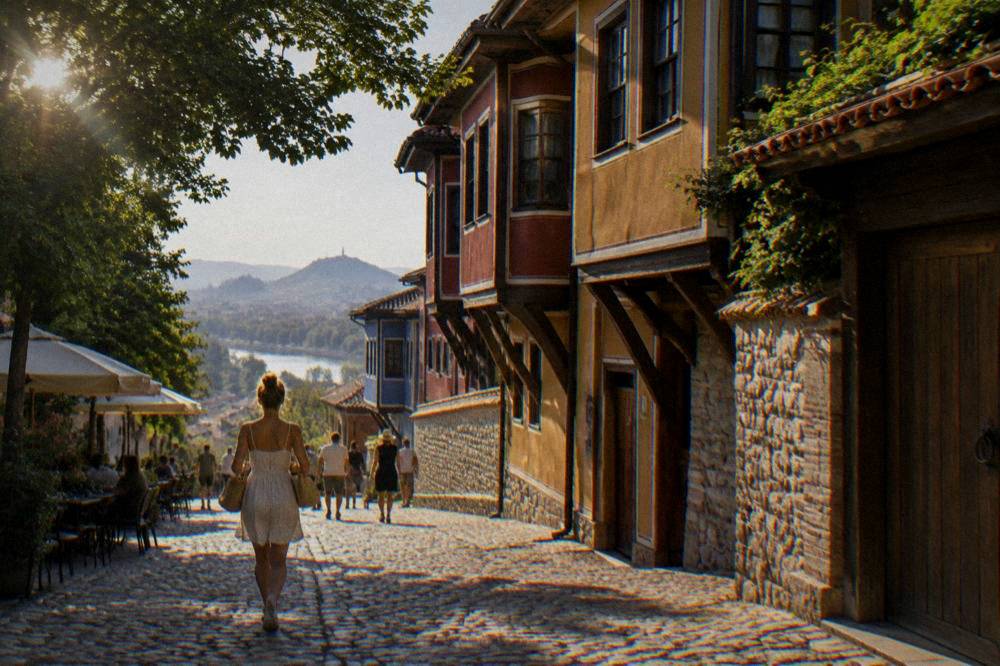
Two practical notes follow from those numbers. First, the means understate midday: on a clear July day the sun over the Roman Forum and the open stretches of Main Street pushes well past the modelled figure, and shade in Plovdiv's centre is unevenly distributed. Plan the Old Town and Nebet Tepe climbs for morning, keep the middle of the day for the museums, the Bishop's Basilica's covered mosaic halls or a long lunch, and return to the streets toward evening. Second, summer nights stay warm, so accommodation without air conditioning is a real consideration in July and August; the where to stay in Plovdiv guide addresses the neighbourhood questions, and cooling is a question to raise at booking.
Summer is also Plovdiv's festival season, and events move outdoors. Opera Open at the Ancient Theatre ran 23 June to 9 September in 2026, and the open-air rows of marble seats are exactly as exposed as they sound: an evening performance in July begins in daylight warmth and ends in a night that barely cools below the day. Water, a hat and something with sleeves for the late finish cover it.
What Should You Pack For Plovdiv?
Pack for Plovdiv by season: summer demands light clothing, sun protection and a water bottle against mean highs of 28.2 to 28.6 C; winter demands a real coat, hat and gloves against mean lows of -2.6 C; and the shoulder months of March, April, October and November call for layers that span mean highs of 12 to 21.9 C and mean lows of 2.1 to 13.8 C. A rain layer earns its place in every month but August.
| Season | Mean high / low | What to pack | Footwear note |
|---|---|---|---|
| Winter (Dec-Feb) | 5.9 to 8.0 C / -2.6 to -0.8 C | Insulated coat, hat, gloves, warm layers | Grip soles for icy cobbles |
| Spring (Mar-May) | 12.1 to 21.9 C / 2.1 to 11.5 C | Layers, light rain jacket, compact umbrella | Water-resistant shoes for showers |
| Summer (Jun-Aug) | 25.9 to 28.6 C / 15.4 to 18.1 C | Light clothing, sun hat, sunscreen, water bottle | Sandals fine; cobbles punish thin soles |
| Autumn (Sep-Nov) | 12.3 to 23.8 C / 3.8 to 13.8 C | Layers, warm evening piece, umbrella | Comfortable walking shoes |
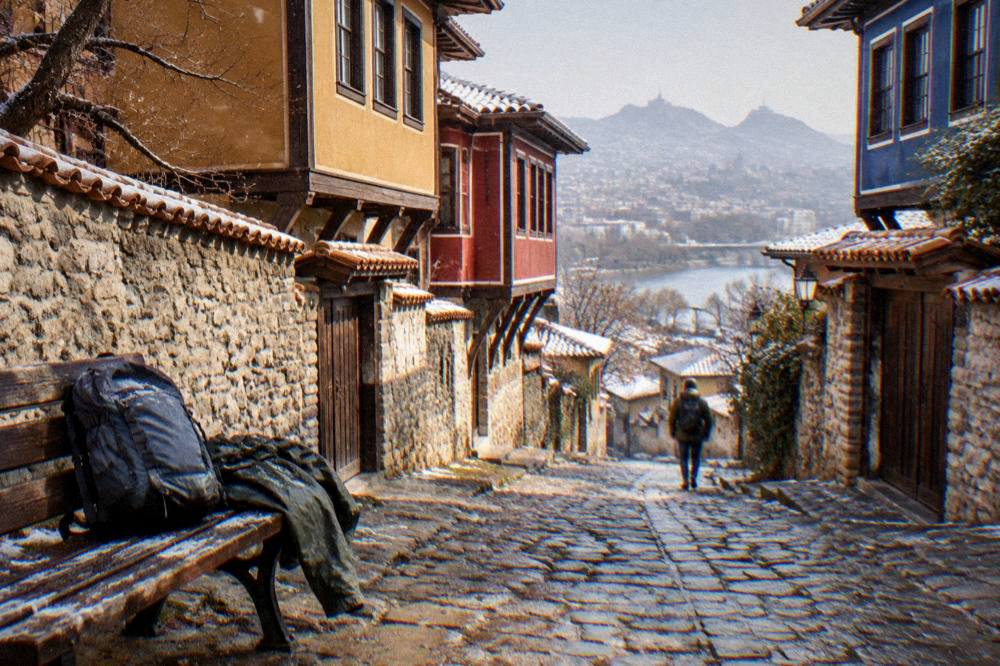
One Plovdiv-specific addition whatever the season: the city is a walking city, and its Old Town streets are cobbled, sloped and, after rain, slick. Footwear with real tread matters more here than in a flat, paved capital. The same logic applies to the six hills; each one is a short climb, and the paths around Nebet Tepe and Bunardzhik are uneven ground in any weather.
What Is The Best Month To Visit Plovdiv?
On weather alone, May and September are the strongest months for Plovdiv: May offers a 21.9 C mean high and September a 23.8 C mean high, both with nights that are mild rather than warm, 11.5 C and 13.8 C respectively, though May carries the year's largest rainfall total at 56.8 mm while September holds 42.8 mm. June and October are close behind on comfort, per the ERA5 reanalysis, 1991-2020.
May trades a little rain for green hills and long light. September trades the crowds of high summer for the most dependable warmth-to-rain ratio of the year. October, with a mean high of 18.1 C, suits walkers who prefer cool air on the climbs, and November still averages 12.3 C by day, though its 3.8 C nights and 39.7 mm of rain mark the turn toward winter. Anyone whose priority is dry outdoor days should weigh August, despite its heat, because its 25.2 mm monthly total is the smallest on the table and its rain, when it comes, is usually brief.
The full comparison, including festival calendars and daylight rhythm rather than temperature alone, lives on the best time to visit Plovdiv page, and the country-level question is covered at what is the best month to go to Bulgaria. Weather is one input among several: Plovdiv's Opera Open season, the Kapana Fest weekends and the Christmas market all sit at particular points in the weather year and can outweigh a few millimetres of rain in the balance.
What To Do In Plovdiv When The Weather Turns
Plovdiv has enough under cover to fill a wet day: the Bishop's Basilica's mosaic halls, the Regional Archaeological Museum, the Regional History Museum sites, the Ethnographic Museum's Kuyumdzhiev House and the Old Town's revival houses such as Balabanov and Hindliyan all sit indoors, and Kapana's cafes and the city's food and wine offerings absorb the hours between them. The Old Plovdiv ticket list prices a single site at 3.58 euro for adults.
The museums are the obvious first stop, and they are not filler. The Regional Archaeological Museum renewed its permanent exhibition in late 2025 with about 150 new exhibits and a bilingual audio guide, and the Bishop's Basilica holds floor mosaics covering over 2,000 sq m inside a purpose-built visitor space. Both are on the Roman Plovdiv trail, which mixes open-air and covered sites and can be re-sequenced around the forecast: forum and stadium sphendone in the dry window, basilica and museums when the rain returns.
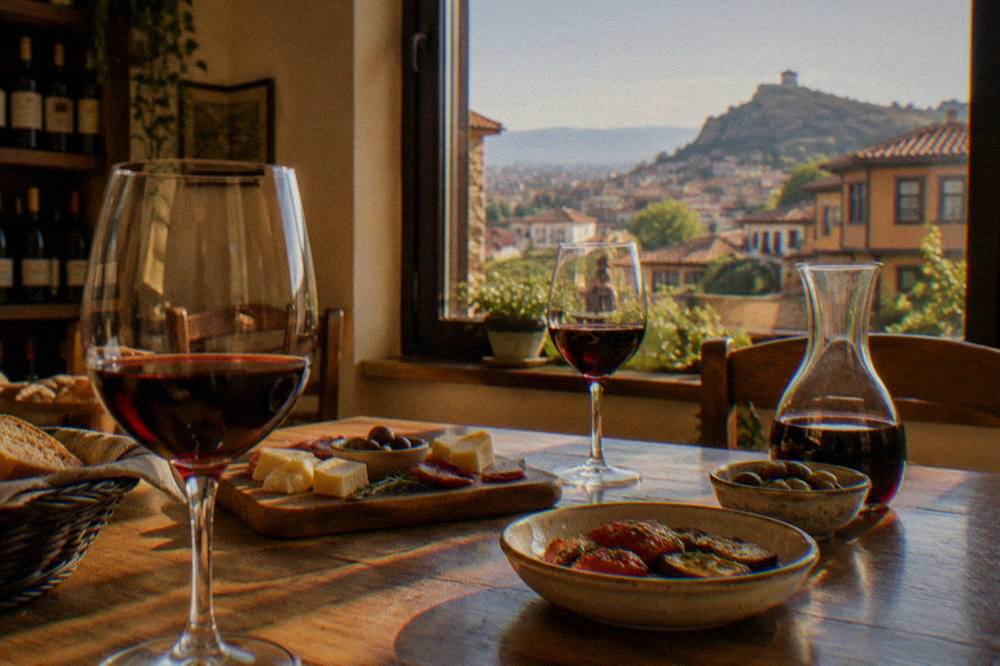
Food and drink are the other wet-weather pillar. Bulgarian custom gives the year its rhythm here: banitsa and coffee for breakfast, shopska salad and grill at midday, and rakia or a Thracian-valley wine in the evening, all described on the what to eat in Plovdiv and Bulgarian wine pages. A tasting afternoon is a way to wait out a front, and a guided food walk does the same with a structure to it. Crowd data puts an espresso or a half-litre of draught beer at around 2 euro, a figure worth holding loosely rather than tightly.
When the rain lightens rather than stops, the city still works. Main Street is largely a walking street with awnings and arcades, the Roman Stadium's northern sphendone is a short open-air stop between them, and the restaurants of Plovdiv cluster close enough that a damp dash between them is a few seconds, not a soaking. Heavy rain is the only version that genuinely stops play, and even then the museum list above is deep enough for a full day.
How Does Plovdiv Weather Affect Day Trips?
Day trips from Plovdiv change character with the season: the Rhodopes to the south sit higher and run cooler than the city, so the 28.6 C August mean in Plovdiv is a warm valley figure rather than a mountain one, and winter trips toward Bachkovo and Asen's Fortress face mountain roads where January's -2.6 C mean low in the city can mean snow and ice above it. The city's own figures are the baseline; confirm conditions before any mountain drive.
The geography is the reason. Plovdiv lies in the Upper Thracian Plain, and the Rhodopes rise directly to the south, so a day trip that leaves the city in mild autumn air can climb into genuine mountain weather within an hour. In spring and early summer, when Plovdiv carries its larger rain totals, the mountains catch more of it. In winter, the Bachkovo Monastery road and the Asen's Fortress viewpoint are the classic destinations, and both reward a check of road conditions first. Summer is the forgiving season for the mountains and the harsher one for the plain.
The same logic applies to trips north and west: Koprivshtitsa and the Rose Valley sit on the plain's edge and share Plovdiv's broad pattern, while Sofia, about 2 h 40 to 3 h 05 away by direct train, runs its own forecast that can differ from Plovdiv's on any given day. The Sofia to Plovdiv page covers the route itself. Where a tour operator runs the transport, weather decisions shift to the operator, and asking at booking how the itinerary flexes in rain is a fair question with a useful answer.
One last planning note ties the whole year together: Plovdiv's weather rewards flexibility more than perfection. The difference between a good trip and a rained-on one is rarely the month chosen, it is whether the itinerary can swap an open morning for a covered afternoon when the forecast asks for it. A city with 2,000 sq m of mosaics indoors, a museum quarter and a creative district of covered cafes gives that flexibility freely.
Common Questions About Plovdiv Weather
What is the weather in Plovdiv like?
Plovdiv has a continental climate: mean daily highs from 5.9 C in January to 28.6 C in August, mean daily lows from -2.6 C to 18.1 C, and about 536.6 mm of rain per year spread across every month, per the ERA5 reanalysis, 1991-2020.
What is the rainiest month in Plovdiv?
May carries the largest monthly rainfall total in the ERA5 reanalysis, 1991-2020, at 56.8 mm, followed by March at 55.0 mm and December at 49.3 mm. August carries the smallest total, 25.2 mm.
What is the warmest month in Plovdiv?
August has the highest mean daily high in the ERA5 reanalysis, 1991-2020, at 28.6 C, with July a fraction behind at 28.2 C. August nights average 18.1 C.
What is the coolest month in Plovdiv?
January is the coolest month, with a mean daily high of 5.9 C and a mean daily low of -2.6 C, per the ERA5 reanalysis, 1991-2020.
Does it snow in Plovdiv in winter?
Lying snow usually melts between cold spells because winter mean highs stay at or above 5.9 C.
When is the best weather in Plovdiv?
May and September combine mild warmth with usable days: mean highs of 21.9 C and 23.8 C respectively, with nights at 11.5 C and 13.8 C. For dry weather specifically, August carries the year's smallest rainfall total at 25.2 mm.
The months are the map, and the packing list follows from them. For everything beyond the forecast, from the Plovdiv Travel Guide home page onward, the city lays itself out hill by hill in every season the reanalysis describes.
