Which Part Of Bulgaria Is Best To Stay In?
Where to base yourself in Bulgaria: the case for Plovdiv, with areas to stay in, costs, and how it compares with Sofia for a first trip.
Southern Bulgaria is the part of the country that suits a single-base trip, and Plovdiv is its natural hub. The city sits inland, Bulgaria's second-largest, built around six hills (there were seven until Markovo Tepe was partly quarried away in the 20th century), with no sea coast but with the Rhodope Mountains, Bachkovo Monastery, Asen's Fortress, Koprivshtitsa and the Thracian Valley wine country all reachable on day trips. Bulgaria adopted the euro on 1 January 2026 and has been a full Schengen member since 1 January 2025, so a stay here now runs on the same practical rules as the rest of the euro area.
The case for one base rather than hopping is simple geography: the country is compact, and Plovdiv sits close to the middle of the interesting half of it. Direct trains from Sofia take about 2 h 40 to 3 h 05, and buses about 1 h 45 to 2 h 20, so the capital is an easy link rather than a competing base. If you are still weighing whether the city deserves the trip at all, the question is Plovdiv worth visiting has its own answer page, and the broader where to stay in Plovdiv guide maps the neighbourhoods street by street.
Which Part Of Bulgaria Is Best To Stay In?
For a first visit to Bulgaria, southern Bulgaria around Plovdiv is the strongest base: the city itself holds the Ancient Theatre, the Roman Stadium, the Old Town and Kapana, while the Rhodopes, Bachkovo Monastery, Asen's Fortress and the Thracian Valley sit within day-trip range. Sofia works better as an arrival point than as a full-trip base, and the coast is a seasonal, separate trip.
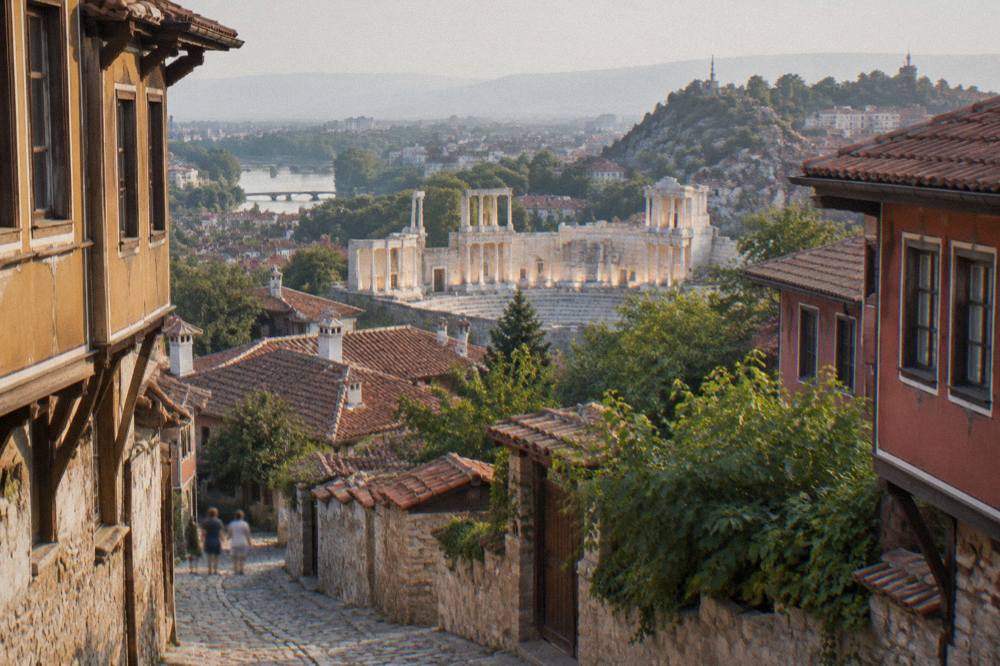
That recommendation is about density, not ranking. Plovdiv is often described as one of the oldest continuously inhabited cities in Europe, and the official city tourism site dates the first settlement on Nebet Tepe to the 4th millennium BC. The Old Town, "The Ancient Plovdiv", is on Bulgaria's UNESCO Tentative List, submitted in 2004, though it is not an inscribed World Heritage Site. Within walking distance of the Old Town you get the Roman Stadium's sphendone (free to view), the Ancient Theatre (a one-site Old Plovdiv ticket costs 3.58 euro), the Bishop's Basilica with over 2,000 sq m of floor mosaics, and the Kapana creative district, whose name means "The Trap" and whose maze of narrow streets is free and always open.
A base in Plovdiv also unlocks the region. The Rhodopes, the Wonderful Bridges, Bachkovo Monastery (free to enter, reported) and the wine estates of the Thracian Valley are all half-day or full-day outings, and the Rhodopes day tour from Plovdiv guide covers the mountain side of the ledger. If your question is really about pacing, how many days to spend in Plovdiv is the companion answer.
Where Is Plovdiv And Why Does The Location Matter?
Plovdiv sits in southern Bulgaria on the Maritsa river plain, about 2 h 40 to 3 h 05 by direct train from Sofia and about 30 km from Bachkovo Monastery by road, which places it centrally for the Rhodopes, the Thracian Valley and the historical towns of central Bulgaria. Most international travellers arrive via Sofia, since Plovdiv Airport (Krumovo) has a small route list.
The location is the whole argument. The location guide covers the geography in detail, but the short version is that Plovdiv is an inland hub with six surviving hills, no coast, and mountain and valley destinations radiating south and west. Plovdiv Airport lists Belfast, Birmingham, Bratislava, London, Manchester, Milan and Tel Aviv in its own flight search, with Ryanair to Milan Malpensa and Wizz Air to Bratislava as announced routes; anything else means flying into Sofia and taking the train or bus down.
The climate fits the base-camp plan too. The ERA5 reanalysis, 1991-2020, gives a mean daily high of 28.2 C in July and 5.9 C in January, with the highest monthly rainfall in May (56.8 mm) and the lowest in August (25.2 mm): hot summers, cold winters, and shoulder seasons that are dry enough for long walking days.
| Journey | How | Typical time |
|---|---|---|
| Sofia to Plovdiv | direct BDZ train | about 2 h 40 to 3 h 05 |
| Sofia to Plovdiv | bus from Sofia Central Bus Station | about 1 h 45 to 2 h 20 |
| Plovdiv to Bachkovo Monastery | minibus from Rodopi bus station | 35 to 45 min |
| Plovdiv to the Rhodopes (Smolyan) | bus from Rodopi bus station | about 2 to 2.5 h |
Getting oriented on day one is easiest with a guide, and the private city walking tour of Plovdiv covers the Old Town and the Roman landmarks with a local who can answer the "where do I eat tonight" questions a map cannot. There is also a classic shared Plovdiv guided walking tour for travellers who prefer a group.
What Are The Best Areas To Stay In Plovdiv?
The Old Town and the streets just below it, around Main Street and Kapana, are the best areas to stay in Plovdiv for a short visit, because every core sight is then on foot: the Ancient Theatre, Nebet Tepe, Hisar Kapia, the Roman Stadium and the singing fountains in Tsar Simeon Garden. Karshiyaka, across the river, is quieter and better value for longer stays.
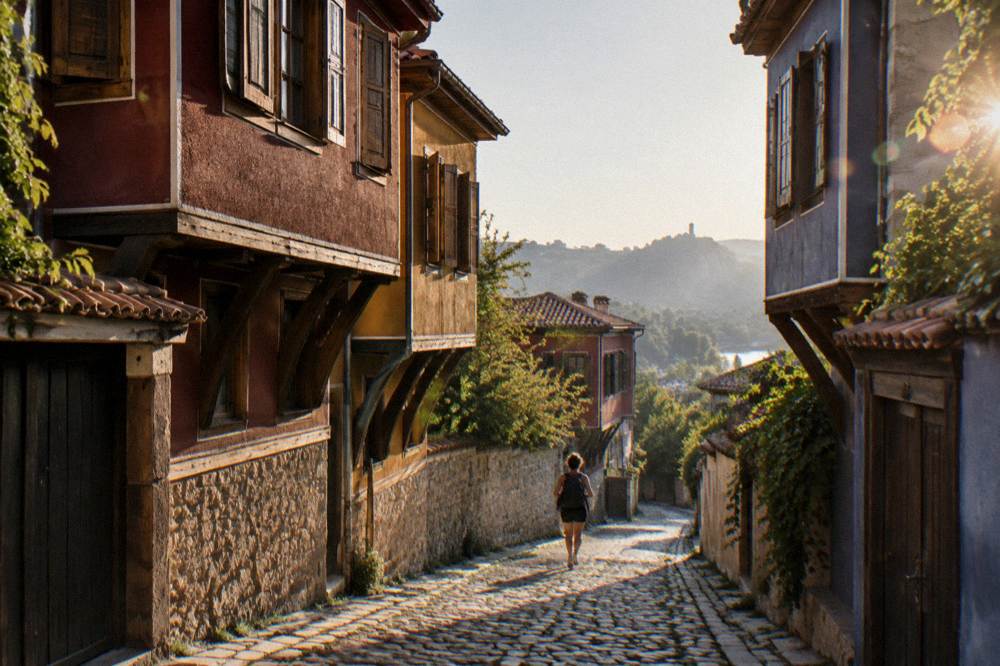
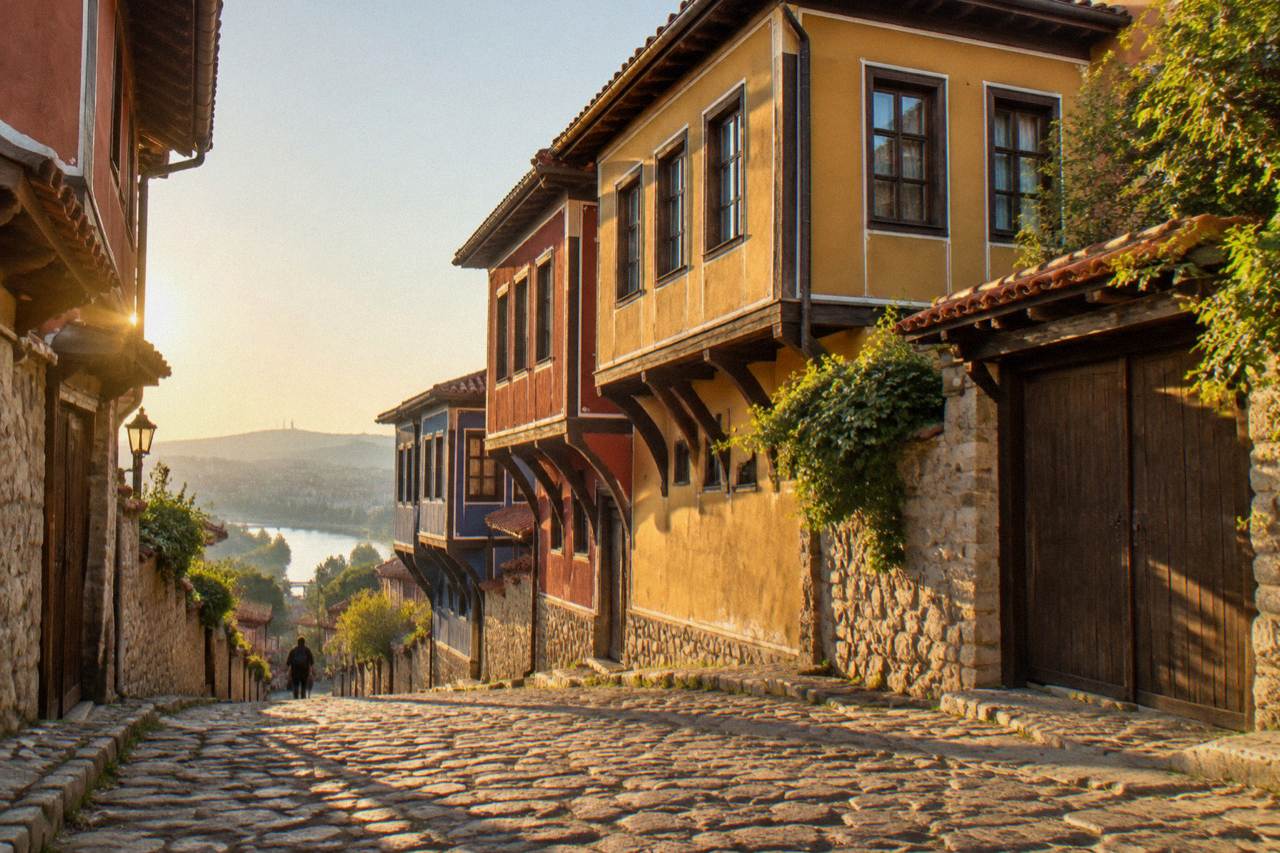
The Old Town itself is small and steep, a district of revival-era houses turned museums, so a room there trades convenience for hills. Kapana, "The Trap", puts you inside the creative district's lanes of studios, bars and small venues, and it borders the pedestrian Main Street that runs down to the Central Square. Kapana Fest's autumn edition ran 2 to 4 and 9 to 11 October 2026, and the Christmas programme "Soul of Christmas" is billed for 1 December 2026 to 7 January 2027 across Kapana and Central Square: staying in this pocket puts you inside the event calendar rather than commuting into it.
For a longer, calmer stay, Karshiyaka across the Maritsa offers residential streets with river-walk access to the centre, and the where to stay in Plovdiv guide breaks down each district, walking times and lodging styles. A per-night tourist tax may be charged by the accommodation; the 2026 euro rate is not published as a reliable figure, so confirm at booking.
| Area | Character | Best for |
|---|---|---|
| Old Town | revival houses, museums, steep cobbled lanes | one to three nights, sightseeing on foot |
| Kapana and Main Street | creative district, bars, studios, pedestrian shopping | short stays, nightlife and events |
| Karshiyaka | residential, river walks, quieter nights | longer stays, working trips |
| Around the Central Station | transport hub, Yug bus station next door | arrival and departure convenience |
How Does Staying In Plovdiv Compare With Staying In Sofia?
Sofia makes sense as the arrival city and for flying out, but Plovdiv makes the better full-trip base because the day-trip geography is tighter: from Plovdiv, Asen's Fortress, Bachkovo Monastery, Starosel and the Thracian Valley are short outings, while from Sofia the same map means long daily returns. Direct trains link the two cities in about 2 h 40 to 3 h 05.
The honest framing is "which suits which trip", not a ranking. If your trip is a weekend built around one city's restaurants and museums, either works and the choice is temperament. If your trip is a week built around Roman sites, mountains and monasteries, Plovdiv cuts the daily travel. The comparison page is Plovdiv a nicer city than Sofia walks the trade-offs, and the Sofia to Plovdiv guide covers the transfer itself: multiple daily direct trains from Sofia Central Station, and buses from Sofia Central Bus Station.
One practical note either way: the Plovdiv railway junction modernisation, reported 85 percent complete in November 2025 with completion due in 2026, means access around the central station can change during works, so allow a little extra time on transfer days. More of these guides are collected on Plovdiv Travel Guide.
How Many Days Should You Stay In Plovdiv?
Two nights is the sensible minimum for Plovdiv, three if you want a day trip, and five to seven if the city is your base for the whole region: the Old Town and the Roman sites fill two days at museum pace, and each day trip, Bachkovo and Asen's Fortress, the Rhodopes, or the Thracian Valley, adds a day.
Day one belongs to the centre. The Old Plovdiv ticket page prices any single site at 3.58 euro for adults, with the Ancient Theatre open daily (9:30 to 18:00 April to October, 9:00 to 17:30 November to March, with a 12:30 to 13:00 lunch break), and the Bishop's Basilica at 7.57 euro daily 9:00 to 18:00. Day two extends to Nebet Tepe, free since its restoration opened in March 2025, the museums, and the evening streets of Kapana. From day three, the region takes over, and the Plovdiv itinerary pages, one day through three, sequence all of it.
What Does It Cost To Stay In Plovdiv?
Bulgaria has used the euro since 1 January 2026, and Plovdiv remains a moderate-cost destination by euro-area standards: crowd-sourced cost data puts an espresso at around 2 euro, a half-litre of draught beer at around 2 euro, and a mid-range three-course dinner for two at about 30 to 40 euro. Room rates and any tourist tax should be confirmed at booking.
Those cafe and dinner figures come from crowd-sourced cost data (numbeo.com), not from an official tariff, so treat them as planning ranges. Museum and site prices, by contrast, are published figures: the Old Plovdiv combined ticket for up to five sites (excluding the basilicas) is 10.74 euro, and the Regional History Museum charges 5 euro for one site, free the first Thursday of the month. City transport runs on a 0.50 euro e-ticket. The full breakdown sits on the how expensive is Plovdiv page.
Food is a reason in itself to base here. The what to eat in Plovdiv guide maps the cuisine from shopska salad and banitsa to kavarma, and the food-and-drink side of the region pairs naturally with a wine stop in the Thracian Valley.
Common Questions About Staying In Plovdiv
Which Part Of Bulgaria Is Best To Stay In?
Southern Bulgaria, based in Plovdiv, suits a first or regionally focused trip: the city holds the Old Town, the Roman sites and Kapana, and the Rhodopes, Bachkovo Monastery and the Thracian Valley are day trips from it.
Is Plovdiv cheaper to stay in than Sofia?
Crowd-sourced cost data shows Plovdiv as moderate by euro-area standards (an espresso around 2 euro, dinner for two about 30 to 40 euro), and room rates vary by season; compare actual rates at booking, as no reliable city-average figure is published.
Do I need a car to stay in Plovdiv?
No: the centre is walkable, city buses run on a 0.50 euro e-ticket, and minibuses from the Rodopi bus station reach Asenovgrad and Bachkovo Monastery in 35 to 45 minutes. A car or an organised day tour helps for scattered mountain villages and caves.
What currency does Bulgaria use for hotel bills?
A per-night tourist tax may be added by the accommodation; confirm the amount at booking.
How many days are enough for a Plovdiv base?
Two nights for the city, three with one day trip, five to seven to cover the Rhodopes, the Thracian Valley and Koprivshtitsa without rushing.
The short version: base in Plovdiv, arrive and leave through Sofia, and let the hills, the Roman stones and the Rhodopes fill the days between.