Is Bulgaria Cheap For Americans?
Is Bulgaria cheap for Americans? What Plovdiv prices really look like in euro, from coffee and meals to museum tickets and tours, after the 2026 euro changeover.
Plovdiv sits in southern Bulgaria, an inland city built around six hills, and it prices itself in euro since 1 January 2026. For an American used to Western European tariffs, the published numbers read gently: a single museum ticket costs 3.58 euro, a city bus ride 0.50 euro, and an espresso, by crowd-sourced cost data, around 2 euro. Cheap is relative, but the arithmetic is on the visitor's side. This page lays out what the prices say, what changed when Bulgaria joined the euro area, and where the costs that actually move a budget, flights above all, need separate planning.
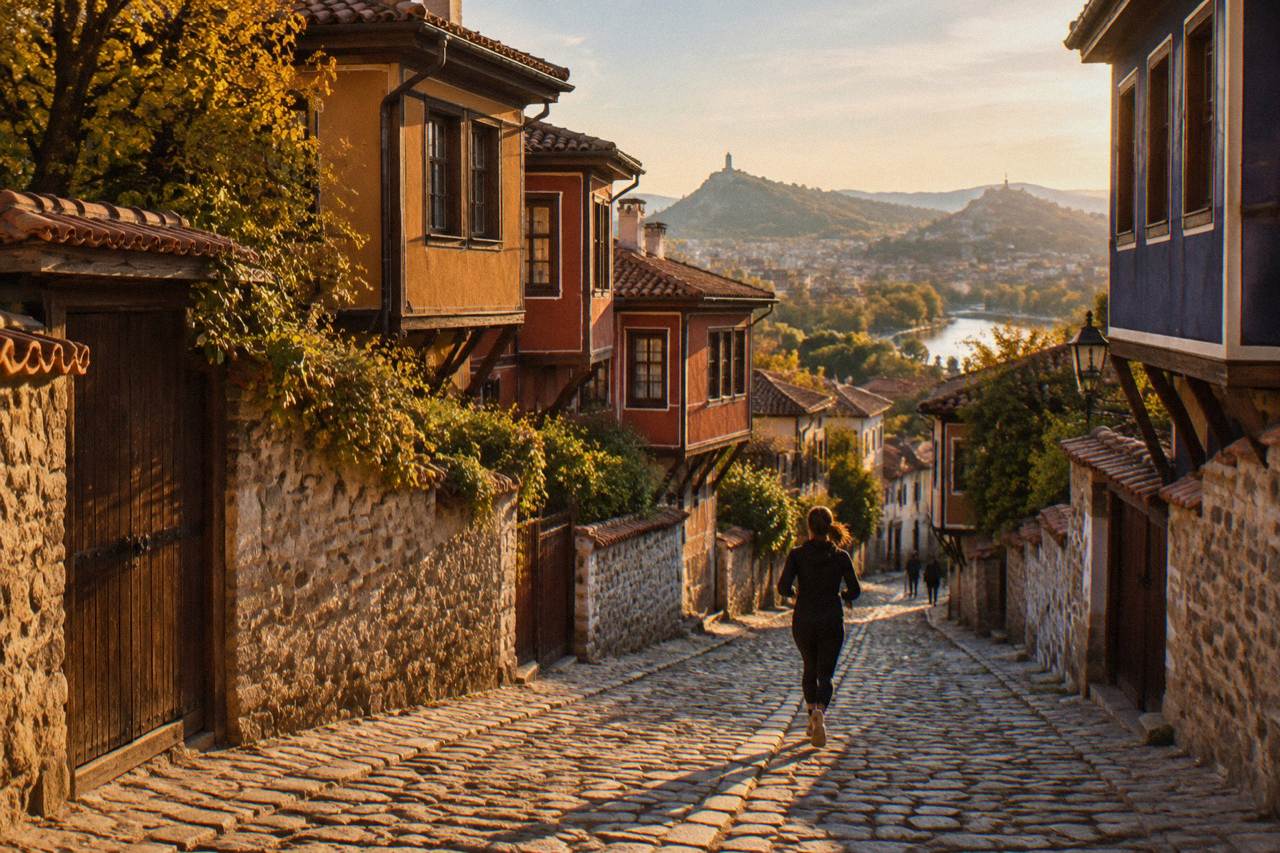
Is Bulgaria Cheap For Americans?
Yes, by most measures Americans will find Plovdiv and Bulgaria inexpensive compared with both home and Western Europe: a city bus ride is 0.50 euro, the Ancient Theatre entry ticket is 3.58 euro, and crowd-sourced cost data puts an espresso around 2 euro. Bulgaria has used the euro since 1 January 2026, so there is no currency conversion puzzle and no exchange-rate fee beyond what a US bank charges for euro transactions.
One caveat belongs in any honest answer: "cheap" depends on the line item. Coffee and museum tickets are small money. The flight across the Atlantic is not, and no domestic price list changes that. A reasonable framing is that once you have landed, the daily spend drops sharply relative to Paris, Amsterdam or even Lisbon.
The Plovdiv Travel Guide covers the city in depth, from what Plovdiv is famous for to how many days in Plovdiv Bulgaria are worth setting aside; this page stays on money.
What Things Cost In Plovdiv Right Now?
Day-to-day prices in Plovdiv run from about 0.50 euro for a city bus e-ticket to about 40 euro for a three-course mid-range meal for two, with espresso around 2 euro, a half-litre draught beer around 2 euro and a taxi starting fare around 1.10 euro, per crowd-sourced cost data from numbeo.com. Official prices are firmer: any single Old Plovdiv site, including the Ancient Theatre, costs 3.58 euro, and the Regional History Museum is 5.00 euro.
The distinction between official and crowd-sourced figures matters. Museum and site tickets come from the operators' own published lists: the Old Plovdiv ticket page prices one site at 3.58 euro for an adult, the Bishop's Basilica at 7.57 euro, and the up-to-five-site combined ticket at 10.74 euro. Students pay 1.53 euro at Old Plovdiv sites, and children under 7 enter free. Restaurant, cafe and taxi numbers are averages from crowd-sourced cost data, so treat them as planning ranges and confirm in the room.
| Item | Typical price (euro) | Basis |
|---|---|---|
| City bus, single e-ticket | 0.50 | Official fare |
| Espresso or cappuccino | around 2 | Crowd-sourced cost data |
| Draught beer, 0.5 litre | around 2 | Crowd-sourced cost data |
| Mid-range dinner for two, three courses | around 30 to 40 | Crowd-sourced cost data |
| Taxi, starting fare | around 1.10 | Crowd-sourced cost data |
| Ancient Theatre or any one Old Plovdiv site | 3.58 | Official ticket page |
| Bishop's Basilica | 7.57 | Official ticket page |
| Old Plovdiv combined ticket, up to 5 sites | 10.74 | Official ticket page |
| Regional History Museum, one site | 5.00 | Official ticket page |
A few structural notes stretch the budget further. The Roman Stadium's open-air sphendone is free to view. Nebet Tepe, Kapana, Hisar Kapia and the Alyosha monument on Bunardzhik are public spaces with no ticket at all, and the Regional History Museum is free the first Thursday of the month. If a Plovdiv itinerary leans on public hills, free sites and one combined ticket, the sightseeing bill for several days can stay under 20 euro per person, food aside.
Guided walks are the other cheap lever. The two tours above are the Old Town and Roman Theatre walk and the classic city walk, which between them cover the historic core and the general story of the city without a car or a private booking.
How Does The Euro Changeover Affect American Visitors?
Americans now pay in euro everywhere in Bulgaria, which has used the currency since 1 January 2026 at a fixed rate of 1.95583 lev per euro, so a US card that avoids foreign-transaction fees pays the sticker price with no exchange markup beyond the card network's own.
There is no haggling culture around listed prices, and rounding to the nearest cent is standard.
The banking side is ordinary European practice. Card acceptance is broad in central Plovdiv, contactless works on public transport validators where fitted, and 112 is the free European emergency number. ETIAS, the planned travel authorisation, is not operational and no start date should be relied on. The entry picture is covered in more detail in is it safe for Americans to travel to Bulgaria right now.
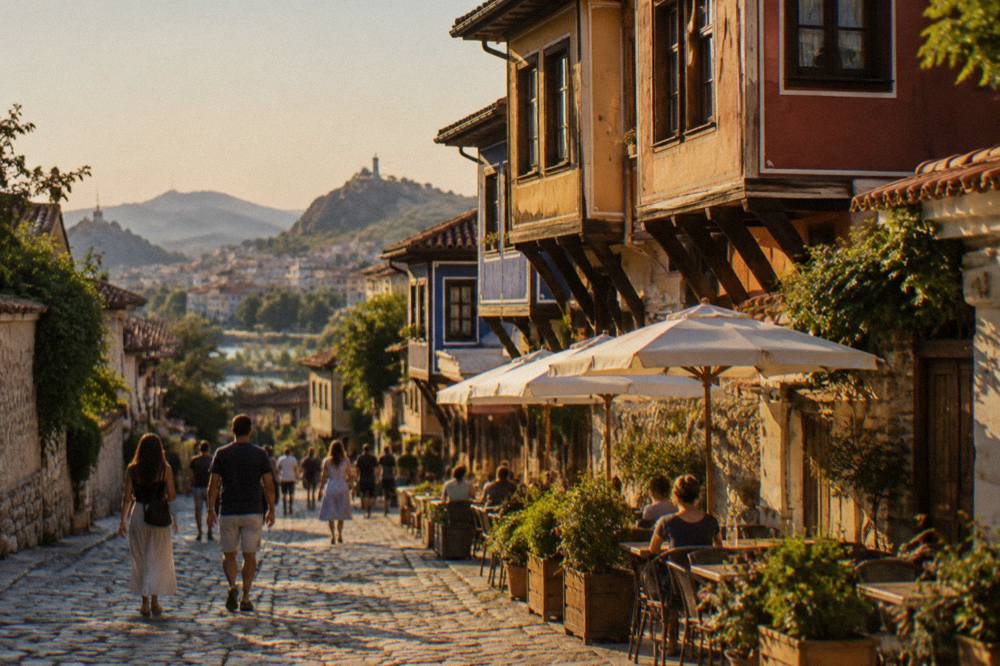
What Does Getting To Plovdiv Cost From The United States?
The flight is the expensive line: there is no direct transatlantic service to Plovdiv, so Americans fly into Sofia and continue by train or bus, with direct BDZ trains taking about 2 h 40 to 3 h 05 from the capital and the bus about 1 h 45 to 2 h 20. Plovdiv Airport at Krumovo has a small route list, London, Milan, Bratislava among the destinations, useful mainly for intra-Europe hops.
That domestic leg is where Bulgaria's pricing shows itself: the reported train fare is a small fraction of a comparable US regional rail trip, and the bus is in the same range. Within Plovdiv the 0.50 euro e-ticket covers the city network, and the main sights of the Old Town, Kapana and the centre are walkable without any transport at all. A visitor who lands in Sofia can realistically reach a Plovdiv hotel for a ground-cost in the single digits of euro.
Two planning notes. First, Plovdiv's central railway station is part of a junction modernisation due to finish in 2026, so access at the station itself may change during works; the trains keep running. Second, accommodation in Bulgaria may add a per-night tourist tax, and the amount charged in Plovdiv varies by property, so confirm it at booking rather than budgeting a fixed figure. Hotel prices swing with season, so check listings for the dates in question. Seasonality matters too: the best month to go to Bulgaria question has a cost dimension, since the Opera Open festival season and the Christmas market pull demand into otherwise shoulder months.
To keep accommodation costs down, book a hostel bed here.
Where Does An American Budget Actually Stretch Furthest In Plovdiv?
The biggest savings sit in sightseeing and food: a combined Old Plovdiv ticket at 10.74 euro covers up to five sites, a large mid-range meal for two runs around 30 to 40 euro total, and tap water in Plovdiv is drinkable, which quietly deletes the bottled-water line many American budgets carry. Free public sites, Nebet Tepe, Kapana, Hisar Kapia and the Roman Stadium sphendone, cost nothing at all.
The pattern is consistent: the things that are free or cheap elsewhere in Europe are free or cheap here too, and the things that cost money cost less. A full sightseeing day built on the combined ticket, the free sphendone and the public hills totals under 15 euro per person at official prices. A food day built on breakfast banitsa, a lunchtime shopska salad and an evening in Kapana fits crowd-sourced averages without effort. Even the paid guided options are priced as a rounding error against the airfare, which is why they appear on this page's shortlist rather than as luxuries.
For Americans specifically, the friction points are the mundane ones: whether your bank charges foreign-transaction fees on euro purchases, whether your phone plan covers EU roaming, and whether your cards work everywhere cash is preferred, which still happens in some smaller spots. The tap water point is worth repeating because it is a genuine budget line in some countries; in Plovdiv it is drinkable straight from the supply, so a refillable bottle is the whole investment. English in shops and restaurants is common enough in the centre that language is not a cost, a question examined separately under can I speak English in Bulgaria.
The Old Town and Roman Theatre walk above is the single most cost-effective paid introduction to the city: it covers the revival houses and the Ancient Theatre, the two things every visitor photographs, with a guide who carries the history. Beyond it, the free tip-based walk covers the wider story, and the food walk doubles as a meal.
Common Questions About Costs In Plovdiv For Americans
Is Bulgaria Cheap For Americans?
Yes, in daily spending: Plovdiv's official tickets run 3.58 to 10.74 euro, a city bus ride is 0.50 euro, and crowd-sourced data puts an espresso around 2 euro. The transatlantic flight is the one expensive line, since no direct service reaches Plovdiv.
Do I need to tip in Bulgaria?
No tipping norm may be stated as an official rule, so the honest answer is to follow local practice in the moment and confirm with staff if unsure. Rounding up is common in the region, but this page prints no percentage.
Is there a tourist tax in Plovdiv?
Accommodation in Bulgaria may add a per-night tourist tax, and the amount charged in Plovdiv varies by property. Confirm the amount with the accommodation at booking and budget for a small addition rather than a fixed figure.
Are credit cards accepted in Plovdiv?
Card acceptance is broad in the central areas, and contactless works on public transport validators where fitted. Carrying a small amount of euro cash covers the smaller cafes and market stalls, and 112 is the emergency number if anything goes wrong.
What is the cheapest way to see the main sights?
The Old Plovdiv combined ticket at 10.74 euro covers up to five sites, and the free public sites, Nebet Tepe, Kapana, Hisar Kapia and the Roman Stadium sphendone, cost nothing. Add the free tip-based walk for the guided version, and a full sightseeing day stays under 15 euro at official prices.
