Is Tap Water In Plovdiv Drinkable?
Is tap water in Plovdiv drinkable? A plain answer for visitors to Bulgaria's second city, covering taste, treatment, bottled alternatives and local habits.
Plovdiv, Bulgaria's second-largest city and an inland place of six hills, Kapana's lanes and Roman ruins, runs on a municipal water system that is treated, chlorinated and monitored under Bulgarian and European Union drinking water rules. Tap water there is drinkable in the ordinary sense: it comes out of the taps in homes, cafes and hotels as the normal supply, and the city's residents use it for cooking, tea and coffee every day. The real question for a visitor is less about safety and more about taste and preference, because the chlorine that keeps the supply safe also gives it a flavour plenty of people would rather avoid.
Is Tap Water In Plovdiv Drinkable?
Yes, tap water in Plovdiv is drinkable. The city's supply is treated, chlorinated and monitored under Bulgarian and European Union drinking water rules, and it flows from taps in homes, hotels and cafes as the everyday water for cooking, coffee and tea. Nobody in the city treats the tap as unsafe; the practical questions are about taste and personal preference rather than health.
Bulgaria, as an EU member state, applies the bloc's drinking water directive, which sets binding quality standards for water intended for human consumption and requires regular monitoring of the supply. Plovdiv's water is drawn from regional sources, treated at municipal facilities and delivered through the city network. The chlorine in the system is what keeps it safe on that journey, and it is the same approach used across much of Europe.
That is the honest, boring answer. The water is not a hazard. It is also not a mountain spring, and if you come from a country where the tap water is unchlorinated, the flavour will register immediately. Locals deal with this in one of three ways: they drink it anyway, they run it through a filter jug, or they buy bottled water, which is cheap and sold on every street. All three positions are reasonable, and none of them implies anything is wrong with the supply.
Two practical habits are worth copying regardless. Cold tap water tastes better than warm, so let the tap run a moment in summer. And in older buildings, including some guesthouses in the Old Town, the plumbing between the street main and your sink is the variable you cannot see, so if a building's water looks cloudy or smells strongly, let it run or switch to bottled for drinking. That is building-level caution, not a judgement on the city's water.
Why Does Plovdiv Tap Water Taste Of Chlorine?
The taste comes from chlorine added during treatment, not from anything wrong at the source. Chlorine is the standard disinfectant that keeps water safe as it travels through kilometres of city pipes, and Plovdiv's levels sit within the ranges the drinking water rules allow. The flavour fades if water is left to stand, chilled, or passed through a simple filter jug.
Chlorination is the workhorse of public water systems across Europe, and its whole point is that a residual amount stays in the water all the way to your glass. That residual is what you taste. It is stronger in some neighbourhoods than others depending on how far the water has travelled and how warm the season is, and visitors sometimes notice it more in summer than in winter for exactly that reason.
If the taste bothers you, the fixes are cheap and instant. A jug left open in the fridge for an hour loses much of the chlorine, since the gas dissipates on standing. A basic filter jug removes it almost entirely, and filter jugs are sold in supermarkets across the city. Ice helps. None of this is necessary; it is comfort engineering.
For hydration on the move, a refillable bottle works anywhere you trust the tap, and Plovdiv is a compact, walkable city where a bottle in the daypack covers a full morning between Nebet Tepe and the Roman Stadium. The Bulgarian food walk is one guided way to move through the city's kitchens and markets, and Check availability if that appeals. There is more on where the eating happens in where to eat and drink in Plovdiv.
Should You Drink Tap Water In Plovdiv As A Visitor?
Drink the tap water in Plovdiv if you are happy with chlorinated city water, and choose bottled or filtered water if you are not, because both are normal and cheap in this city. There is no advisory telling visitors to avoid the taps. Brushing teeth with tap water is standard practice, and ice in cafes and restaurants comes from the same supply.
Visitors from the United States, Canada, the United Kingdom and Australia arrive visa-free under the Schengen 90-in-180 rule, since Bulgaria has been a full Schengen member since 1 January 2025, and the water question is one they ask at the same rate as for any other European city. The answer is the same shape as for Paris or Vienna: the municipal supply is safe, the taste is the variable. Visitors with sensitive stomachs sometimes switch to bottled for the first days of any trip, anywhere, simply because the mineral profile of a new water supply differs from home. That is not a Plovdiv problem.
A few situations deserve a touch more care, and they are the same anywhere. Water from a tap that has sat unused for days, in a vacant apartment or a seasonal guesthouse, should run for a minute first. Mountain springs and fountains outside the city network are a separate question: drink from sources marked as potable, and treat any unlabelled spring as unknown. On day trips into the Rhodopes, carry bottled water rather than assuming every village fountain is a tested supply.
| Situation | Tap Or Bottled | Why |
|---|---|---|
| Hotel or guesthouse tap | Either | Municipal supply, treated and chlorinated |
| Brushing teeth | Tap | Standard practice citywide |
| Ice in cafes and bars | Fine | Made from the same municipal supply |
| First run of a rarely used tap | Run it first | Standing water in building pipes tastes stale |
| Unlabelled springs and village fountains | Bottled | Not part of the monitored city network |
| Personal taste preference | Filter or bottle | Chlorine flavour, not safety |
If the taste question is settled and you are now thinking about how to spend the days themselves, a guided tasting walk is one of the easiest first-day moves in the city, and it pairs naturally with everything above about restaurants and bottled water culture.
What Do Locals In Plovdiv Actually Drink?
Locals in Plovdiv drink the full spectrum: tap water, filtered tap water and bottled water all have their households, and no single habit defines the city. Bulgarian shops sell large volumes of inexpensive bottled mineral water, which many families keep as their table water, while cooking and hot drinks are made with tap water almost universally.
Bulgaria has a bottled mineral water culture that long predates any water quality concern. The country has spa and mineral spring traditions, including at towns like Hisarya in the region, and branded mineral waters are a normal grocery purchase at low prices. Someone pouring mineral water at a Plovdiv dinner table is making a preference statement about bubbles and minerals, not a safety statement about the tap. Meanwhile the kettle is filled from the tap, pasta is boiled in tap water, and nobody thinks twice. The rest of the planning pages sit on Plovdiv Travel Guide.
In restaurants, ordering a bottle of mineral water, still or sparkling, is the common default, and it will arrive quickly and cost little by Western European standards. Asking for a carafe of tap water is not the custom the way it is in some countries, so if you want tap, ask plainly. Bars serve coffee and cocktails made with the municipal supply without comment.
If your Plovdiv plans run beyond the city, the same logic travels. Day trips toward Devin or into the Rhodopes pass through villages where bottled water in the bag is simply easier, and the Devin area is known for its mineral springs; see Devin as a day trip for that route. For the wider picture of what the city offers a first-time visitor, start with is Plovdiv Bulgaria worth visiting and the guide to things to do in Plovdiv.
Can You Ask For Tap Water In Plovdiv Restaurants?
Yes, you can ask, and nothing bad will happen, but it is not the local default and some places may say no or look mildly puzzled. The custom in Plovdiv, as across Bulgaria, is to order bottled water, still or sparkling, with a meal, and bottles are inexpensive by EU standards. Asking for tap water works best in casual cafes and brasseries.
There is no rule against serving tap water, and plenty of places will bring a glass, particularly if you are also ordering food and coffee. But table water culture belongs to the bottle here, and in smaller establishments the request may simply be unusual. A polite "water from the tap, please" in a cafe by the Kapana lanes is a different proposition from the same request in a full restaurant at dinner, where the bottle is part of the table setting.
The cost asymmetry matters less than visitors expect. Bottled water in Plovdiv shops and restaurants is priced at a level that matches a low-cost Bulgarian city, in euro since 1 January 2026, and the difference between a bottle and a free glass of tap is small enough that it becomes a choice of taste rather than budget. Order the bottle if you prefer the flavour; ask for the tap if you do not. Both are normal.
| Where You Are | Easiest Water Order | What To Expect |
|---|---|---|
| Supermarket or corner shop | Bottled, glass or plastic | Very low price in euro |
| Casual cafe | Tap water on request | Usually fine, sometimes unusual |
| Restaurant at dinner | Bottled mineral water | The table default |
| Hotel room | Tap, or bottled from the shop | Both widely available |
| Guided food walk | Whatever each stop serves | Glasses arrive with the dishes |
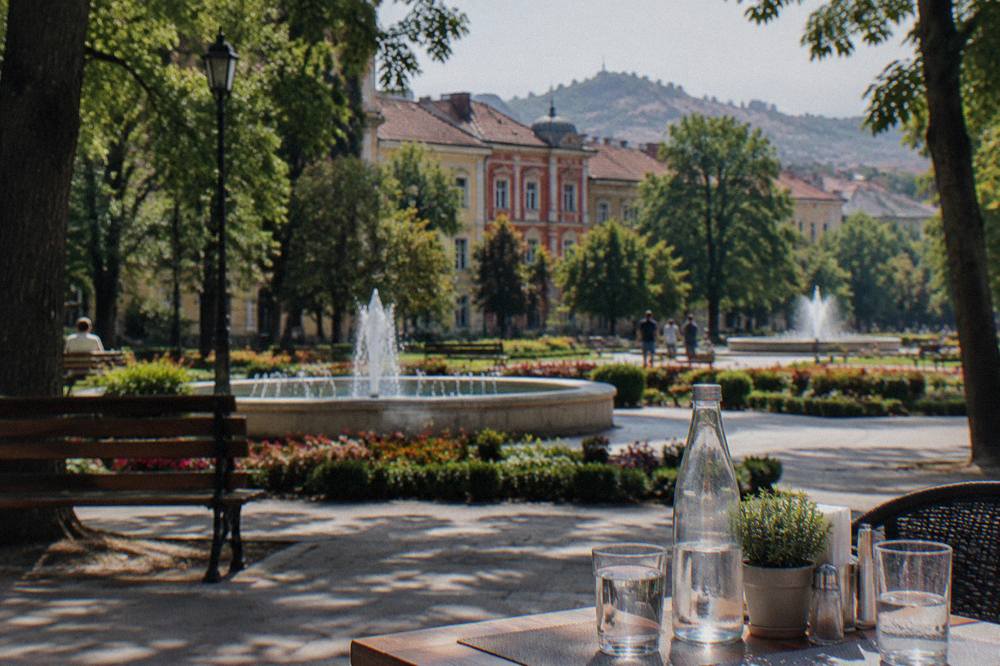
A food-focused outing is a good setting for this question in practice, because every stop pours something. The site's featured food walk moves through Plovdiv's kitchens with a local guide, and Check availability if you want tastings with context. You can also read more in what to be careful of in Bulgaria and how safe is Plovdiv for the wider practical picture.
What About Ice, Salads And Coffee In Plovdiv?
Ice, salads, coffee and everything cooked in Plovdiv is made with the same treated municipal water, and visitors do not need separate rules for any of them. If you have decided the tap is fine to drink, then everything made from it is fine too. If you have chosen bottled water for taste, that choice does not extend to ice or espresso, which come from the mains.
Consistency is the whole point here. A visitor who drinks tap water at the hotel and then declines ice at dinner has the logic backwards, since both come from the same chlorinated network. Equally, someone drinking bottled water purely for flavour loses nothing by accepting a coffee, because the chlorine boils off and the espresso tastes of coffee. Raw vegetables washed in tap water are washed in the water the whole city cooks with.
The sensible visitor posture is to relax about all of this. Carry a bottle you like, buy the cheap mineral water if that suits you, fill from the tap when it does not, and spend your attention on the Ancient Theatre instead. For trip length and pacing, how many days in Plovdiv Bulgaria covers the planning side.
Common Questions About Tap Water In Plovdiv
Is Tap Water In Plovdiv Drinkable?
Yes. Plovdiv's tap water is treated, chlorinated and monitored under Bulgarian and European Union drinking water rules, and the city's residents cook, brew tea and often drink from the tap. The chlorine taste is the main thing visitors notice, and filter jugs, chilling or bottled water handle it if it bothers you.
Does Plovdiv tap water contain chlorine?
Yes, chlorine is the disinfectant used in the municipal treatment process, as it is across much of Europe, and a residual amount keeps the water safe through the pipe network. That residual is what you taste, and it fades on standing, chilling or filtering.
Can I brush my teeth with tap water in Plovdiv?
Yes. Brushing teeth with tap water is standard practice throughout the city, and no visitor advisory suggests otherwise. The municipal supply is the everyday water for the entire population.
Is ice in Plovdiv restaurants safe?
Yes. Ice in cafes, bars and restaurants is made from the same municipal supply as the taps, so if you accept the tap water, the ice comes with it by definition.
Should I buy bottled water in Plovdiv?
That is a taste decision, not a safety one. Bottled still and sparkling water is cheap and sold everywhere, and many households keep it as their table water, but there is no need to buy it for health reasons in the city.
Can I drink from public fountains in Plovdiv?
Drink only from fountains or springs clearly marked as potable. Unlabelled springs and village fountains outside the monitored city network are unknowns, so carry bottled water on rural day trips.
