Getting Around Plovdiv On Foot, By Bus And By Taxi
This guide covers walking, buses, taxis, stations and airport transfers in Bulgaria's second-largest city.
Short answer
Plovdiv is best explored on foot: the Old Town, Kapana, the Roman Stadium and Main Street form a walkable core. Beyond it, the city bus costs 0.50 euro as an e-ticket, taxis are metered and inexpensive by Western European standards, and the central railway and Yug bus stations sit side by side on Hristo Botev Boulevard.
Plovdiv, in southern Bulgaria, is an inland city built around six hills, and almost everything a visitor comes to see sits inside a walkable rectangle between the Old Town, the Roman Stadium, Kapana and the Maritsa river. The municipal tourism site presents the center as a pedestrian-friendly core, with the pedestrian Main Street running from the Central Square to the railway station. For the wider sightseeing picture, start with things to do in Plovdiv, and for planning basics see the Plovdiv Travel Guide home page.
Is Plovdiv Easy To Get Around On Foot?
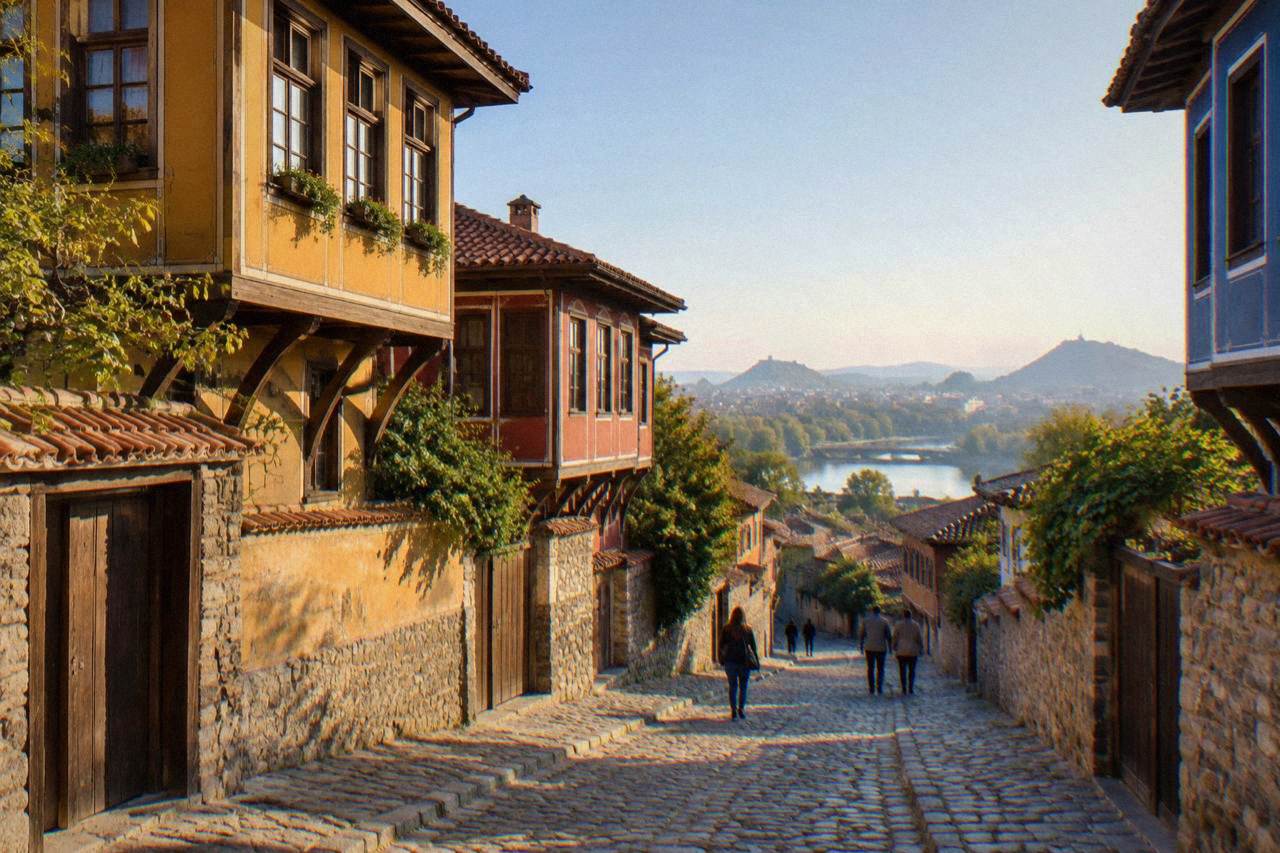
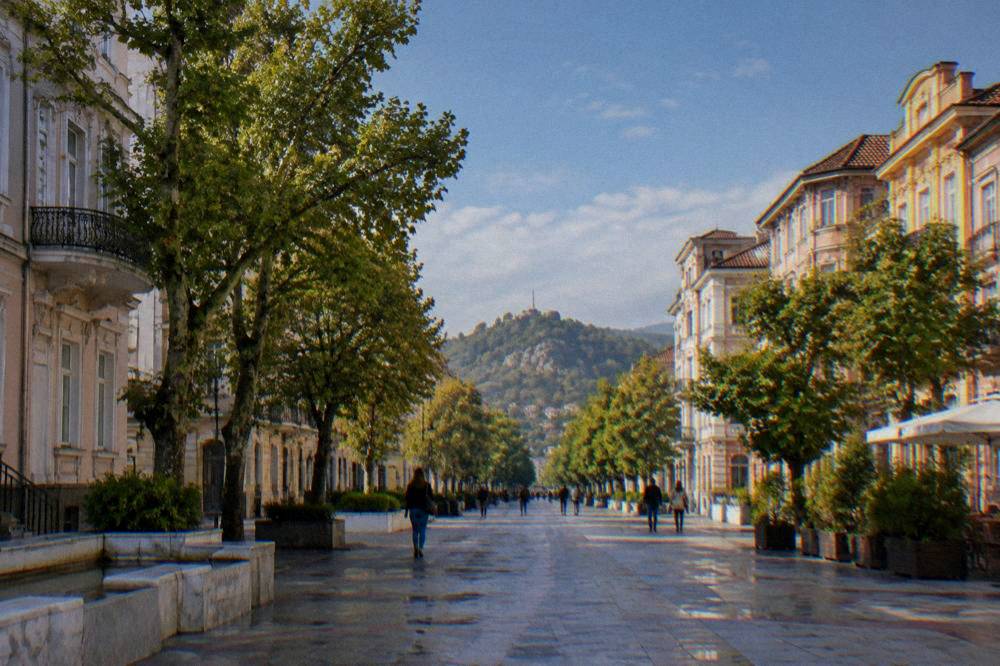
Yes, Plovdiv is one of the easiest cities in Bulgaria to explore on foot, because the Old Town, Kapana, the Roman Stadium, the Ancient Theatre and the Central Square all sit within a short walk of one another on the Three Hills plateau, and the pedestrian Main Street connects the center to the railway station without a single crossing of heavy traffic. The city's tourism site presents the Old Town and the creative district of Kapana as contiguous, walkable neighborhoods, and Nebet Tepe, the open-air archaeological complex, is free and reachable on foot from Hisar Kapia. The catch is topography: the city is built around six hills, and streets like the climb to the Ancient Theatre or the Alyosha monument on Bunardzhik are steep.
Walking is also how the layers of the city reveal themselves. The Roman Stadium's visible sphendone sits under the modern street level near Dzhumaya Mosque, and the descent from Nebet Tepe to Kapana takes you past Hisar Kapia, the Ottoman-era gate that is open at all hours. None of these transitions involves transport: they are all within a corridor a visitor can cover in a day, which is why the site's Plovdiv in one day itinerary works without a single bus ride.
A note on surfaces. The Old Town streets are cobbled, and the site's Plovdiv self-guided walk coverage describes uneven paving and stepped lanes around the revival-era houses. Footwear matters more here than in a flat grid city. In rain, the cobbles and the hills both become slip hazards, which is worth reading alongside the Plovdiv weather guide before you plan a walking day.
If you prefer a guide to structure the walk, guided and tip-based walks run locally: confirm the meeting point and the tipping convention with the guide directly before you go, since schedules and formats change. For the deeper background on the Roman layer underfoot, see Roman Plovdiv.
How Much Does The Bus Cost In Plovdiv?
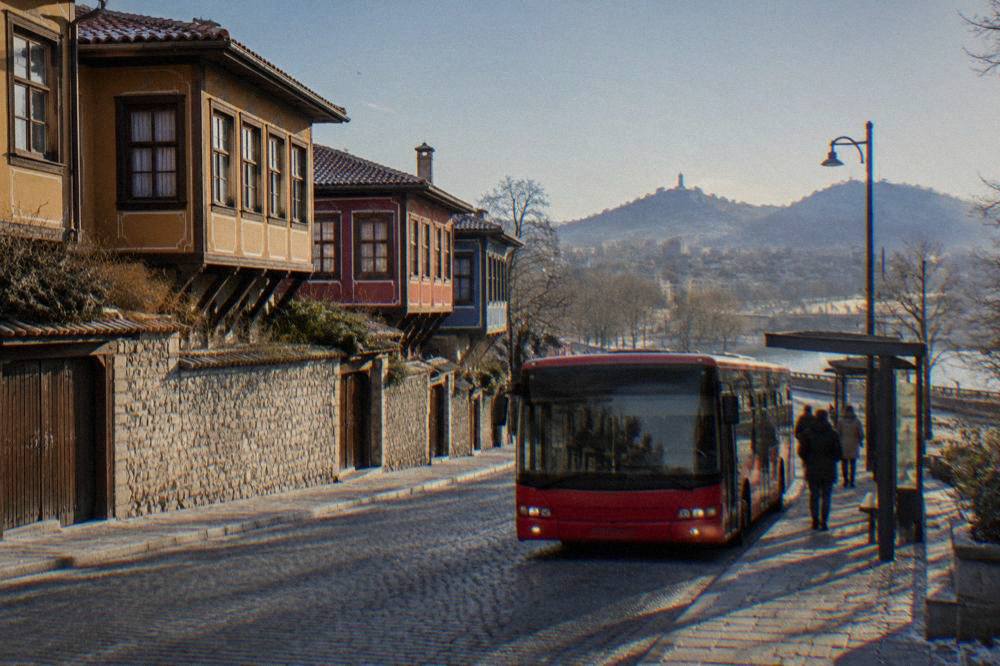
The single city-bus e-ticket costs 0.50 euro, the figure that applies since Bulgaria adopted the euro on 1 January 2026 at a fixed rate of 1.95583 lev per euro, and it is the current fare; a 1 euro paper ticket bought from the driver was only a proposal reported in August 2026 and should not be assumed to be in force, so check how to pay before you board. The e-ticket is the official fare. Local transport reporting describes contactless validators and a municipal transport app expanding across the network in 2026, with cash still accepted on many buses.
Everything else about the network remains unsettled: route maps in English, night frequencies and day-pass pricing are not published in a form this site can quote. Treat the bus as a cheap, workable option for the distances walking does not cover, such as the climb to the Alyosha monument or the cross-river neighborhoods, and confirm the route you need locally, at your accommodation or at the stop.
For what costs nothing at all, see free things to do in Plovdiv.
The table below summarizes the fares and figures, with the status of each one.
| Journey or ticket | Figure | Details |
|---|---|---|
| Paper ticket from driver | Not confirmed | A 1 euro paper ticket was an August 2026 proposal only |
| Sofia to Plovdiv train, 2nd class | Confirm at booking | Not printed in the timetable |
| Sofia to Plovdiv bus | About 6 to 9 euro, 1 h 45 to 2 h 20 | Secondary sources, Sofia Central Bus Station to Plovdiv Yug |
| Airport taxi to center | About 13 to 20 euro | Secondary sources; agree the fare or use the meter |
For journeys beyond the city, a guided day trip removes the bus-timetable problem entirely. One option covers Starosel and the village of Staro Zhelezare in a single outing from Plovdiv, with the driving handled.
Are Taxis In Plovdiv Cheap And Safe?
Taxis in Plovdiv are metered and, by crowd-sourced cost data, inexpensive: the typical start fare runs around 1.10 euro and per-kilometre rates around 0.70 to 0.90 euro in the day, with an airport-to-center trip reported at about 13 to 20 euro, though these are secondary figures, so use a metered car or an app and agree the fare before setting off. Local transport guides recommend taxi-hailing apps such as TaxiMe, which show the price before the car arrives. At night, rates rise, and the same guides advise confirming the tariff in advance rather than assuming the daytime rate.
The safe pattern is the one that works in most Bulgarian cities: order by phone or app where possible, check that the meter is running, and avoid unofficial cars that solicit at the station forecourt. For the broader safety picture, the how safe is Plovdiv reporting covers the city generally.
Taxis make sense for three journeys in particular: the run from Plovdiv Airport at Krumovo, the return from an evening in the Plovdiv nightlife quarter if the buses have thinned out, and the climb up Bunardzhik if the hill defeats you on the way back down. For everything inside the core, walking remains faster than waiting for a cab in the pedestrian streets, where cars cannot go at all.
Which Stations Serve Plovdiv, And Where Are They?
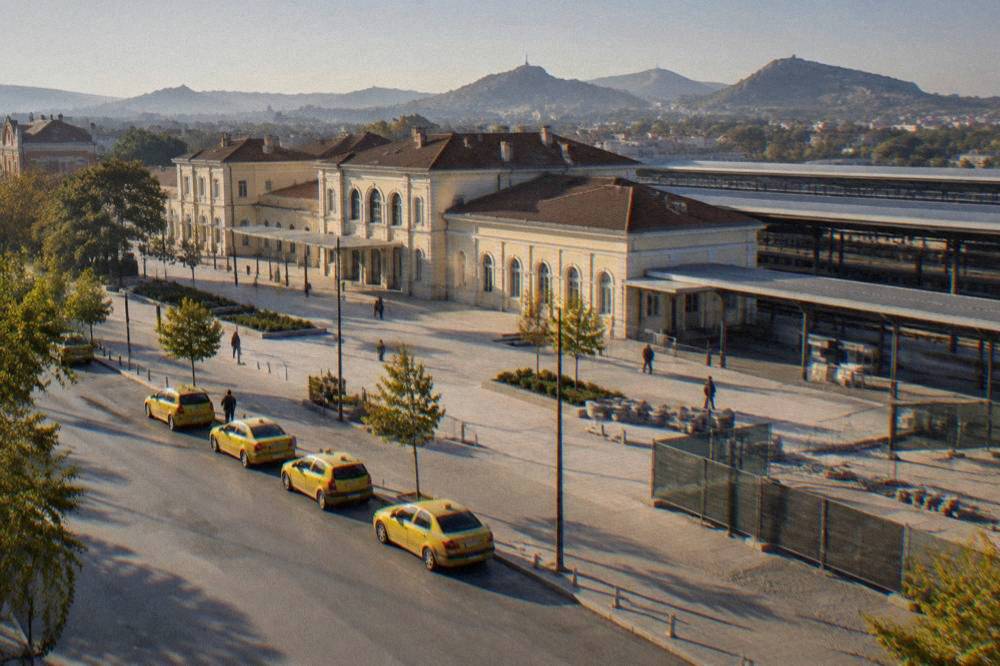
Plovdiv's central railway station and the Yug (South) bus station sit side by side on Hristo Botev Boulevard, which makes rail-to-bus transfers a matter of crossing the street, while the Rodopi bus station on Macedonia Boulevard 1 runs the southern routes toward Bachkovo Monastery and Smolyan, and the Sever (North) bus station on Dimitar Stambolov Street 2 covers the northern routes. That four-station structure, described in local transport guides, is the single most useful thing to know about arriving in the city and leaving it.
The railway station itself is in the middle of a major modernization. The Plovdiv railway junction works were reported 85 percent complete in November 2025 and are due to finish in 2026, covering platforms, signaling and a new underpass. Expect access changes at the station while the works run: entrances, taxi ranks and walking routes to the center may all shift. The Plovdiv train station page carries the detail, and the Plovdiv bus stations page does the same for the three bus terminals.
| Station | Location | Serves |
|---|---|---|
| Central railway station | 46 Hristo Botev Blvd | National rail, including Sofia trains |
| Yug (South) bus station | 47 Hristo Botev Blvd | Sofia buses, international and long-distance |
| Rodopi bus station | 1 Macedonia Blvd | Bachkovo, Asenovgrad, Smolyan, Rhodope routes |
| Sever (North) bus station | 2 Dimitar Stambolov Str | Northern regional routes |
From the station pair on Hristo Botev Boulevard, the pedestrian Main Street leads directly into the center, so arriving travelers can walk to the Old Town area rather than hunt for a bus immediately. The Sofia to Plovdiv guide covers the rail and bus options from the capital in full, and how to get to Plovdiv pulls all arrival routes into one page.
How Do You Get From Plovdiv Airport To The Center?
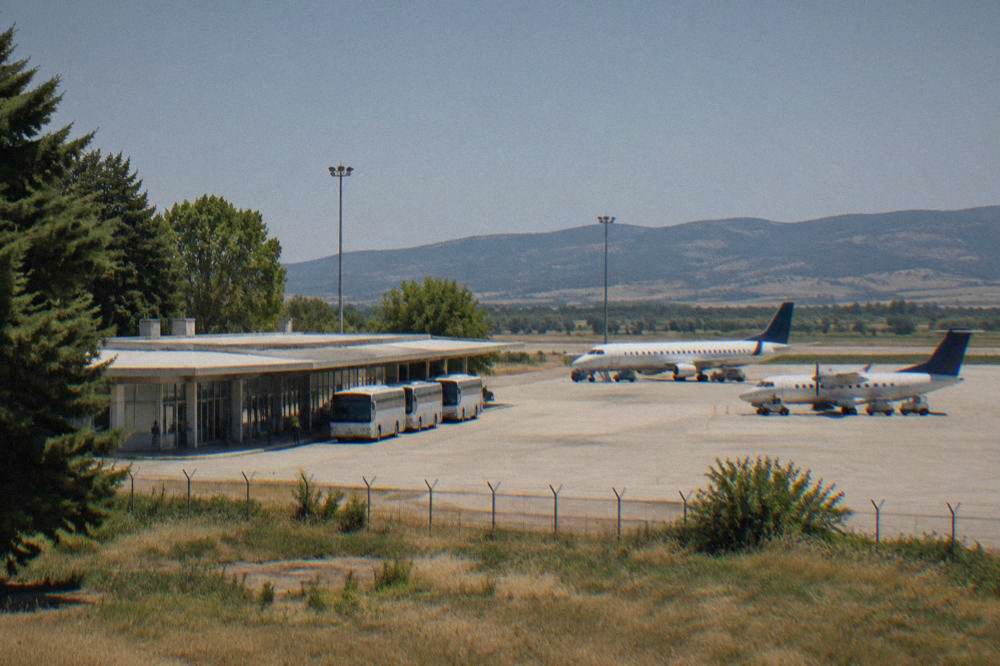
Plovdiv Airport sits at Krumovo, about 12 to 14 kilometres southeast of the center, and the transfer options are a shuttle bus taking about 20 to 35 minutes to Yug station for roughly 5 to 6 euro, or a taxi at about 13 to 20 euro taking 20 to 25 minutes, though the route list is small and seasonal, so check the airport's own flight search before planning around it. Ryanair and Wizz Air are the scheduled carriers, with London, Milan Malpensa, Bratislava, Birmingham and Manchester among the announced destinations; the Plovdiv Airport page tracks what is announced versus what is bookable.
The practical point is that the airport is a winter-charter and low-cost facility, not a hub. For a summer trip, flying to Sofia and taking the direct BDZ train, about 2 h 40 to 3 h 05 from the capital, is the pattern the timetables support. Trains routed via Karlovo take far longer, 4 h 50 to 5 h 50, so the direct services are the ones worth targeting: the BDZ timetable is the place to confirm current departures, since times change.
Is A Car Useful In Plovdiv, Or A Hindrance?
In the center a car is a hindrance, because the Old Town lanes are cobbled, partly stepped and closed to through traffic, parking tariffs are worth confirming locally, and the walkable core makes driving pointless; a car earns its keep only for the Rhodope Mountain villages, the Thracian Valley wineries and the monasteries, where public transport thins out. The trade-off is stated plainly in the site's Plovdiv car rental coverage: rent for the region, not for the city.
Where a car or a guided trip wins, the distances are real. Bachkovo Monastery lies about 30 kilometres away, with minibuses from Rodopi station taking 35 to 45 minutes toward it; the villages of the Rhodopes beyond, such as those covered in the Rhodopes day tour from Plovdiv planning pages, get harder on public transport the deeper you go. Wine country around Brestovitsa is another case where a tour or a car beats a bus connection.
Happy to drive those distances yourself instead. Book a rental car here.
A middle path is the guided day trip, which returns you to your base in the evening with no parking or route-finding at all. The Starosel and Staro Zhelezare trip is one such option, pairing a Thracian temple complex with an unusual village art project.
How Walkable Is The City Really, Hill By Hill?
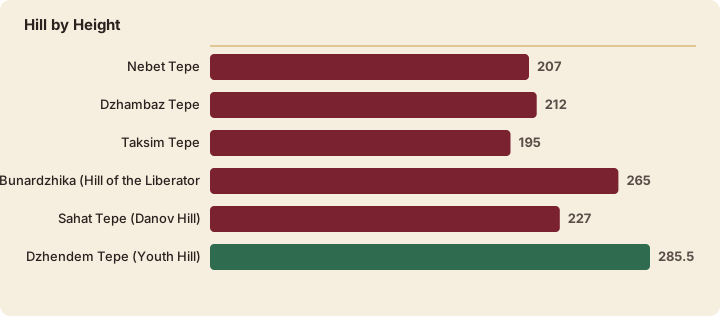
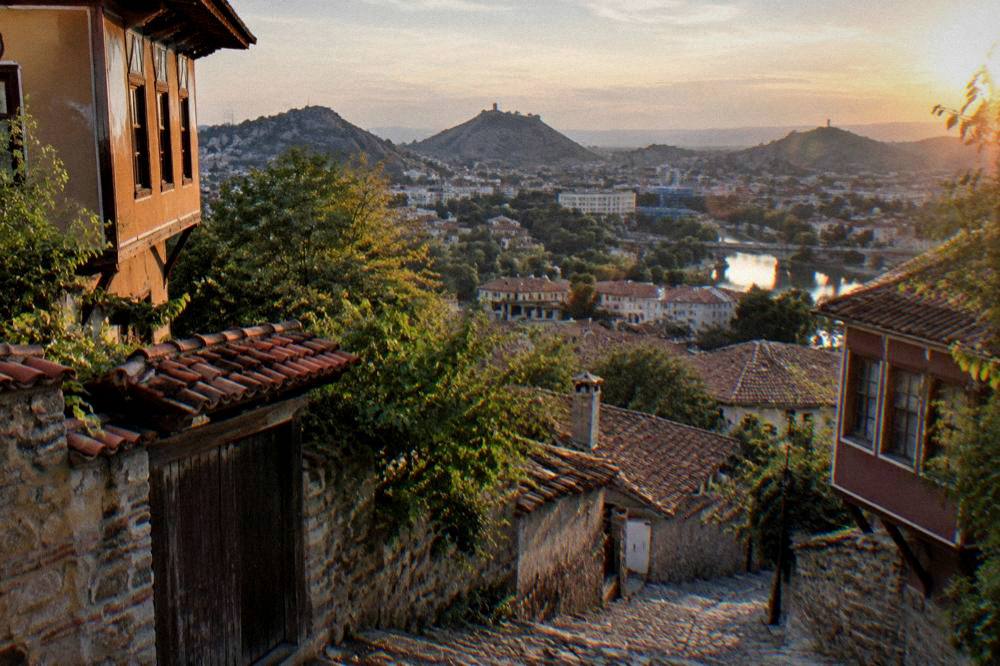
The six surviving hills, Nebet Tepe, Dzhambaz Tepe, Taksim Tepe, Bunardzhika, Sahat Tepe and Dzhendem Tepe, ring the flat valley floor where the center sits, and the practical effect is that the center is flat and easy while each hill is a separate, steep climb, with the Three Hills group, Nebet, Dzhambaz and Taksim, attached directly to the Old Town and the others a bus or taxi ride from it. The city's own relief page lists the hills and their heights, from Nebet Tepe at 207 metres to Youth Hill at 285.5 metres, and it records that a seventh hill, Markovo Tepe, was partly quarried away in the 1930s.
| Hill | Height | Getting there on foot from the center |
|---|---|---|
| Nebet Tepe | 207 m | Yes, steep lane from Hisar Kapia |
| Dzhambaz Tepe | 212 m | Yes, from the Old Town streets |
| Taksim Tepe | 195 m | Yes, shortest of the Three Hills climbs |
| Bunardzhika (Hill of the Liberators) | 265 m | Long climb; bus or taxi saves the legs |
| Sahat Tepe (Danov Hill) | 227 m | Moderate climb from Kapana |
| Dzhendem Tepe (Youth Hill) | 285.5 m | Far side of the center; bus or taxi |
The hills reward the effort unevenly. Nebet Tepe is free, open at all hours and gives the layered ancient-city view; the Alyosha monument on Bunardzhika, unveiled in 1957, gives the long panorama over the plain. Sahat Tepe carries the clock tower above Kapana and is the easiest add-on to a Kapana afternoon. Youth Hill is the farthest and the least sight-driven, more park than monument.
What About Day Trips And Longer Journeys Out?
For leaving Plovdiv, the pattern is: trains from the central station for Sofia and the national network, Yug station for long-distance buses, Rodopi station for the Rhodopes and Bachkovo, and guided day trips for everywhere the timetables serve badly, with the Sofia train taking about 2 h 40 to 3 h 05 direct and the bus about 1 h 45 to 2 h 20 for about 6 to 9 euro. The Bachkovo Monastery page details the monastery route, and minibuses from Rodopi station reach the monastery approach in 35 to 45 minutes, per secondary transport guides.
Two caveats travel with these figures. The BDZ second-class fare is not printed in the timetable, so confirm it at booking. For Plovdiv to Istanbul, the Plovdiv to Istanbul page sets out the route, and the instruction is to confirm the current connection locally or with the operator.
For domestic day trips, guided options cover the ground the buses reach slowly. Besides the Starosel trip above, a Jewish heritage walking tour stays inside the city and covers a district and a history that signposting does not explain on its own.
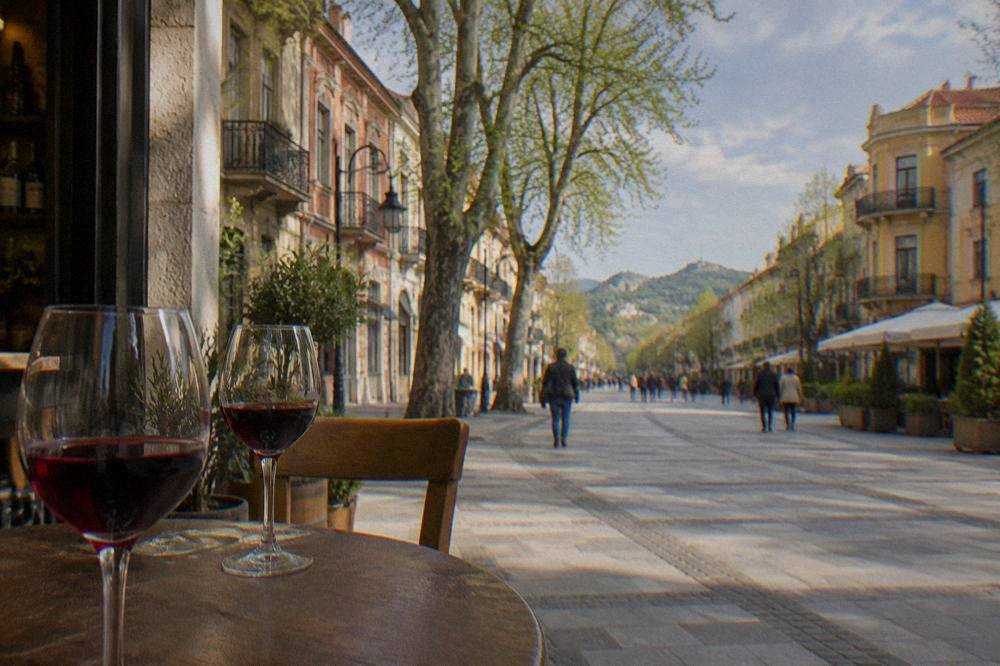
And for an evening without transport at all, a wine tasting in the center of Plovdiv puts Bulgarian wine in the glass within walking distance of the Old Town guesthouses, which closes the loop this guide opened: in Plovdiv, the best transport plan is often no transport at all.
Common Questions About Getting Around Plovdiv
Is Plovdiv walkable?
Yes. The Old Town, Kapana, the Roman Stadium, the Ancient Theatre and the Central Square sit in a compact core linked by the pedestrian Main Street. The six hills involve steep climbs, so walking works best for the center with a bus or taxi for the farther hills.
How much is a bus ticket in Plovdiv?
The single city-bus e-ticket is 0.50 euro. A 1 euro paper ticket from the driver was only a proposal reported in August 2026 and should not be assumed to be in force.
How do I get from Plovdiv Airport to the city center?
A shuttle bus runs to Yug station in about 20 to 35 minutes for roughly 5 to 6 euro, and a taxi costs about 13 to 20 euro. The route list is small and seasonal, so confirm with the airline and the airport before planning around a flight.
Where do the trains to Sofia leave from?
The central railway station at 46 Hristo Botev Boulevard. Direct trains take about 2 h 40 to 3 h 05; services via Karlovo take 4 h 50 to 5 h 50. Station works are due to finish in 2026, so expect access changes.
Do I need a car in Plovdiv?
Not for the city itself. A car is useful for the Rhodopes, the Thracian Valley wineries and the monasteries, where public transport thins out. Check parking tariffs locally before driving into the center.
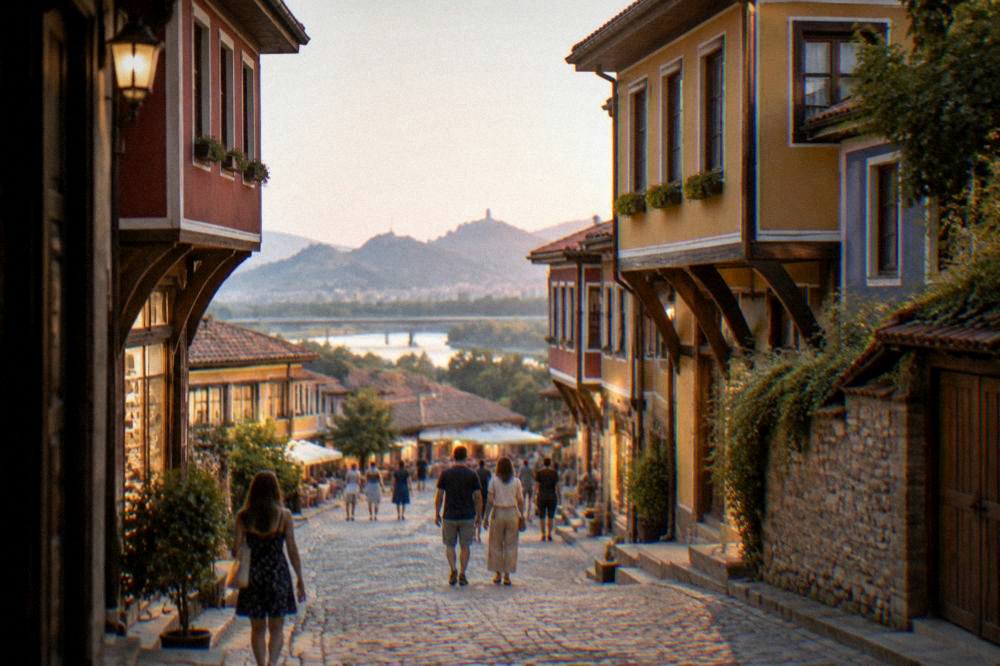
The short version of getting around Plovdiv: walk the core, bus the hills at 0.50 euro a ride, taxi the airport run with a meter or an app, and let a guided day trip carry you into the countryside where the timetables give up. Everything else, from the euro in your pocket to the hills under your feet, is in the linked guides above.
