How Safe Is Plovdiv?
How safe is Plovdiv for visitors? A practical, source-based answer covering street safety, night walking, money, taxis and emergencies in Bulgaria's second city.
Plovdiv, Bulgaria's second-largest city and an inland hill town in the south of the country, is the kind of place where the safety questions are mundane rather than dramatic. The city centre is compact, the main sightseeing areas sit close together, and the ordinary hazards are the ones shared with any European city of similar size: pickpocketing in crowds, taxi meters and late-night streets. Bulgaria has been a full Schengen member since 1 January 2025 and has used the euro since 1 January 2026, so the practical frame for a visitor is closer to Greece or Romania than to anywhere exotic.
How Safe Is Plovdiv?
Plovdiv is generally a safe city for visitors by the standards of a mid-sized European city, with no site-specific safety warnings attached to its main attractions by the municipal tourism bodies that describe them. The Old Town, Kapana, the Main Street and the Roman sites are all normal daytime walking areas, the emergency number is the EU-wide 112, and the city has no areas that official visitor information flags as no-go zones.
That answer needs its honest caveats. Petty theft in crowds and around transport hubs is the ordinary risk profile for a city of this size anywhere in Europe. Violent crime against tourists is not something the municipal tourism materials treat as a theme at all.
For US readers there is a dedicated page on the country-level picture at is it safe for Americans to travel to Bulgaria right now, and for the country-wide cautions, what to be careful of in Bulgaria covers the rest.
What Are The Common Risks For Visitors In Plovdiv?
The realistic risks are pickpocketing in busy areas, taxi overcharging, and the small stuff of any city: unattended bags, phone snatching on crowded streets and scams aimed at distraction. None of Plovdiv's main attractions carries a specific safety warning in the official descriptions, and no-go zones do not feature in the municipal visitor information. The burden of care is the ordinary European one: watch valuables on the Main Street and in stations.
The Main Street, Plovdiv's pedestrian spine, gets crowded on weekends and during events, and crowds are where pickpockets work in every European city. The same applies to the area around the central railway station and the adjacent Yug bus station on Hristo Botev Boulevard, which is standard advice for any transport hub. One structural note from the transport file: the Plovdiv railway junction modernisation was reported 85 percent complete in November 2025 with completion due in 2026, and station access can be disrupted during major works, so allow extra time and keep luggage close when moving through the station area. Bulga
A table keeps the everyday risks and their fixes in one place:
| Risk | Where it applies | What to do |
|---|---|---|
| Pickpocketing | Main Street, station areas, event crowds | Front pockets, zipped bag, no phone on café tables |
| Taxi overcharging | Unmetered or unmarked cars, airport rank | Use a taxi app or an agreed fare before boarding |
| Bag theft at stations | Central railway and Yug bus stations | Keep luggage in sight during the junction works |
Which Areas Of Plovdiv Need Extra Care?
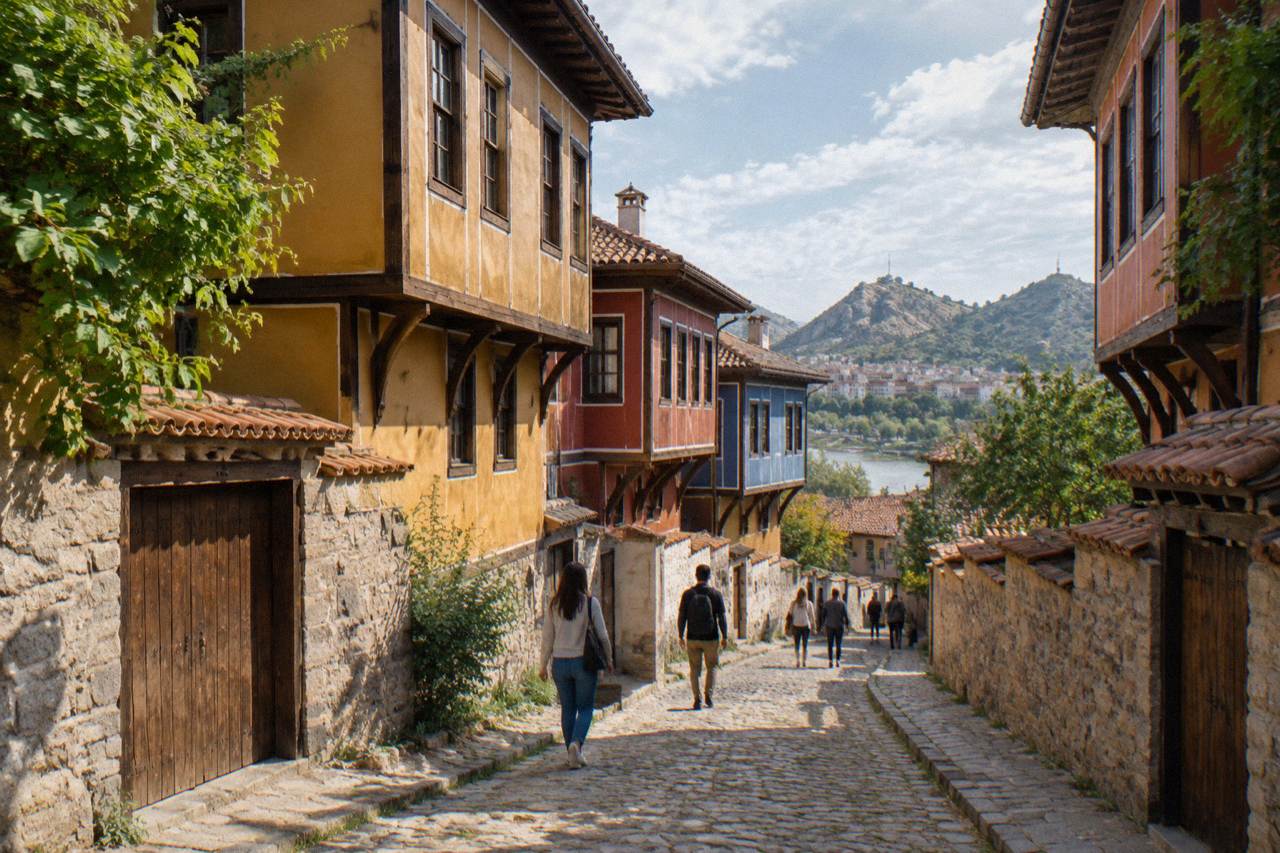
No district of Plovdiv is described as off-limits in the available visitor information, and the tourist core, the Old Town, Kapana, the Main Street and the Three Hills, is a continuous, well-lit walking zone. The places needing ordinary care are the transport hubs and the lower slopes of the Old Town at night, where cobbles and steps, not crime, are the actual hazard. The Old Town's steep cobblestone lanes are genuinely slippery in rain and ice, and the same is true of the paths up Nebet Tepe and the other hills, so a twisted ankle is a more likely outcome than a mugging.
Kapana, the creative district whose name means "The Trap" in a nod to its maze of narrow streets, is free, open and public, and it is also one of the areas where the city's evening life concentrates. It is busy rather than risky. The Dzhumaya Mosque is a working mosque open to visits, and standard etiquette applies: modest dress covering shoulders and knees, shoes off inside, and avoiding the main prayer times on Friday around midday. That is a respect issue, not a safety one, but it belongs on the same checklist.
For the wider country-level framing, including health and road cautions, read what to be careful of in Bulgaria.
Check availability for the guided Old Town walk, which covers the Ancient Theatre and the historic houses with a local guide.
Is Plovdiv Safe At Night?
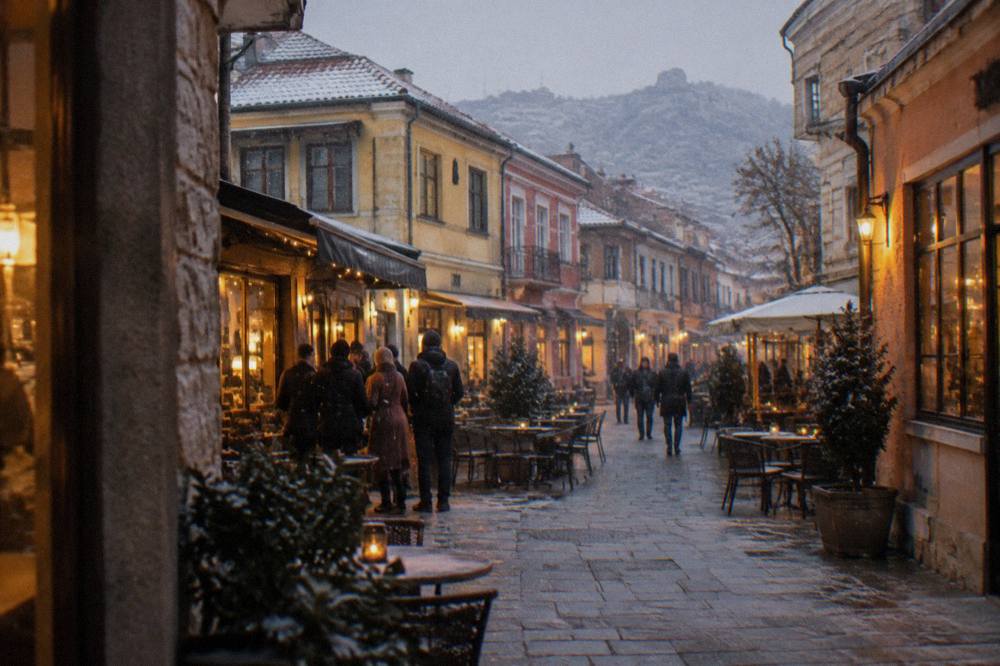
Plovdiv's central areas, the Main Street, Kapana and the squares around the Roman Stadium, are busy and lit through the evening, and nightlife concentrates there rather than in scattered outskirts. The night-time cautions are the usual ones: stick to streets you can see are populated, take a licensed taxi rather than walking far alone after midnight, and treat unlit park paths and the riverbank with normal care. The city's late-evening economy, restaurants, bars and events, sits in the walkable core.
Kapana's evening scene is the anchor: the district hosts festivals and open-air events, with the autumn Kapana Fest running two weekends in October 2026 in the area around the bridge over Gladstone Street and Central Square. Festival zones mean crowds, and crowds mean the standard pickpocket precautions. The Ancient Theatre hosts an open-air Opera Open season, which ran 23 June to 9 September in 2026, and after-show crowds leaving a Roman theatre on a hill take the same care on steep streets: the steps down toward the centre are uneven underfoot even sober.
One practical note for evening planning: Plovdiv's climate, per the ERA5 reanalysis for 1991-2020, has a mean daily low of -2.6 C in January and 18.1 C in August, so winter nights are genuinely cold and ice on the Old Town cobbles is a real hazard. A fall on marble steps is the kind of incident that ruins a trip without any crime involved.
Is Plovdiv Safe For Solo Travellers And Families?
Solo travellers and families face no Plovdiv-specific warnings in the available information, and the city's layout, a compact centre with pedestrianised streets and free open-air sites, suits both. For solo visitors the advice is the standard European set: share your itinerary, keep your phone charged, and use reputable transport after dark. For families, the hazards are physical rather than social, traffic at crossings, steps and cobbles, and the open edges of archaeological sites.
Nebet Tepe, Hisar Kapia and the sphendone of the Roman Stadium are all free, open-air public spaces, and open-air archaeology means unfenced drops and stone edges in places, so toddlers need the same supervision they would need at any ancient site. The Tsar Simeon Garden with its singing fountains is the classic family stop in the centre. The city's drinking water question has its own page: is tap water in Plovdiv drinkable.
Tip-based walking tours run locally and are a common solo-traveller choice for a first orientation; confirm the meeting point and format with the guide directly, as this site lists no platform details for them. Families planning the number of days should read how many days in Plovdiv, Bulgaria before booking anything.
What Should You Know About Money, Taxis And Emergencies In Plovdiv?
The emergency number in Plovdiv is 112, the free EU-wide line, and it is the number to call for police, ambulance or fire. Money is simple since 1 January 2026: Bulgaria uses the euro, so anyone quoting prices in lev or offering a lev exchange is behind the times or angling for something. Taxis should run on a meter or an agreed fare, and no Plovdiv taxi tariff is published, so agree the price before you get in.
Entry formalities changed too. Bulgaria is a full Schengen member since 1 January 2025, and the Entry/Exit System, biometric registration replacing passport stamps, was deployed at all Schengen external borders as of 10 April 2026. ETIAS, the travel authorisation system, is not operational and no start date should be trusted until official channels announce one. US, UK, Canadian and Australian citizens are reported to be visa-free for 90 days in any 180-day period under the Schengen rule; confirm with official sources before travel.
A tourist tax may be charged by accommodation, paid through the provider, but its 2026 euro rate is not something this page can state, so confirm at booking.
| Situation | What to do | Number or rule |
|---|---|---|
| Police, ambulance, fire | Call immediately, free from any phone | 112 |
| Overcharged taxi | Ask for a receipt, note the car number | Report via 112 |
| Lost passport | Contact your embassy, call 112 if needed | Schengen entry rules apply |
| Medical need | Emergency care via 112 | EU-wide number |
| Payment dispute | Pay by card where possible | Euro is the only current currency |
For the wider country context on costs, read is Bulgaria cheap for Americans, and the site's own overview of the city is at Plovdiv Travel Guide.
Common Questions About Safety In Plovdiv
How Safe Is Plovdiv?
Plovdiv is generally a safe, walkable mid-sized European city with no areas that official visitor information flags as no-go zones. The realistic risks are petty theft in crowds and taxi overcharging, and the emergency number is 112.
Is Plovdiv safe to walk at night?
The central areas, the Main Street, Kapana and the squares, are lit and busy through the evening. Take a licensed taxi after midnight rather than walking far alone, and watch your footing on the Old Town's cobbles, which are icy in winter.
Is tap water in Plovdiv safe to drink?
The drinking-water question has its own page on this site with the detail; the short answer is covered at the dedicated tap water article rather than restated here.
What number do I call in an emergency in Plovdiv?
112, the free EU-wide emergency number, reaches police, ambulance and fire services in Bulgaria.
Is Plovdiv safe for solo female travellers?
No Plovdiv-specific warning appears in the available visitor information, and the tourist core is compact and busy. The standard European solo precautions apply: populated streets after dark, reputable transport, and a charged phone.
