Where To Eat And Drink In Plovdiv?
Where to eat and drink in Plovdiv: the dishes, drinks and neighbourhoods to look for in Bulgaria's second city, from banitsa breakfasts to Thracian Valley wine.
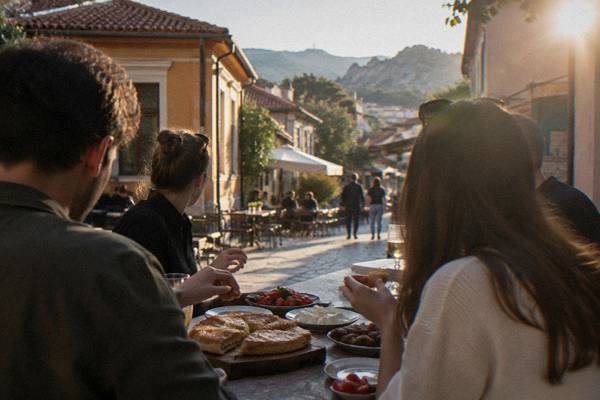
Plovdiv, Bulgaria's second-largest city, eats well and late: a banitsa and an espresso in the morning, a long lunch built on shopska salad and grill, and an evening that drifts into Kapana, the creative district whose name means "The Trap", with rakia and Thracian Valley wine. No single restaurant, cafe or bar in the city has had its address, hours or menu checked against a primary listing for this page, so nothing here is a named recommendation. What this page does instead is map the food itself: the dishes that appear on nearly every Bulgarian table, the drinks that surround them, the neighbourhoods where eating happens, and the customs, from tipping to dinner timing, that shape a meal out. For the wider sightseeing picture, see the site's things to do in Plovdiv page.
Where To Eat And Drink In Plovdiv?
Eat around Plovdiv's three food zones: Main Street (Ploshtad Centralen to the Old Town) for sit-down Bulgarian cooking, Kapana for cafes, street food and evening drinks, and the Old Town itself for slower meals between sightseeing. Drink Bulgarian: rakia before a meal, Thracian Valley reds with it, and espresso or ayran during the day. Crowd data puts an espresso and a half-litre of draught beer at about 2 euro each, a level that shapes the whole scene.
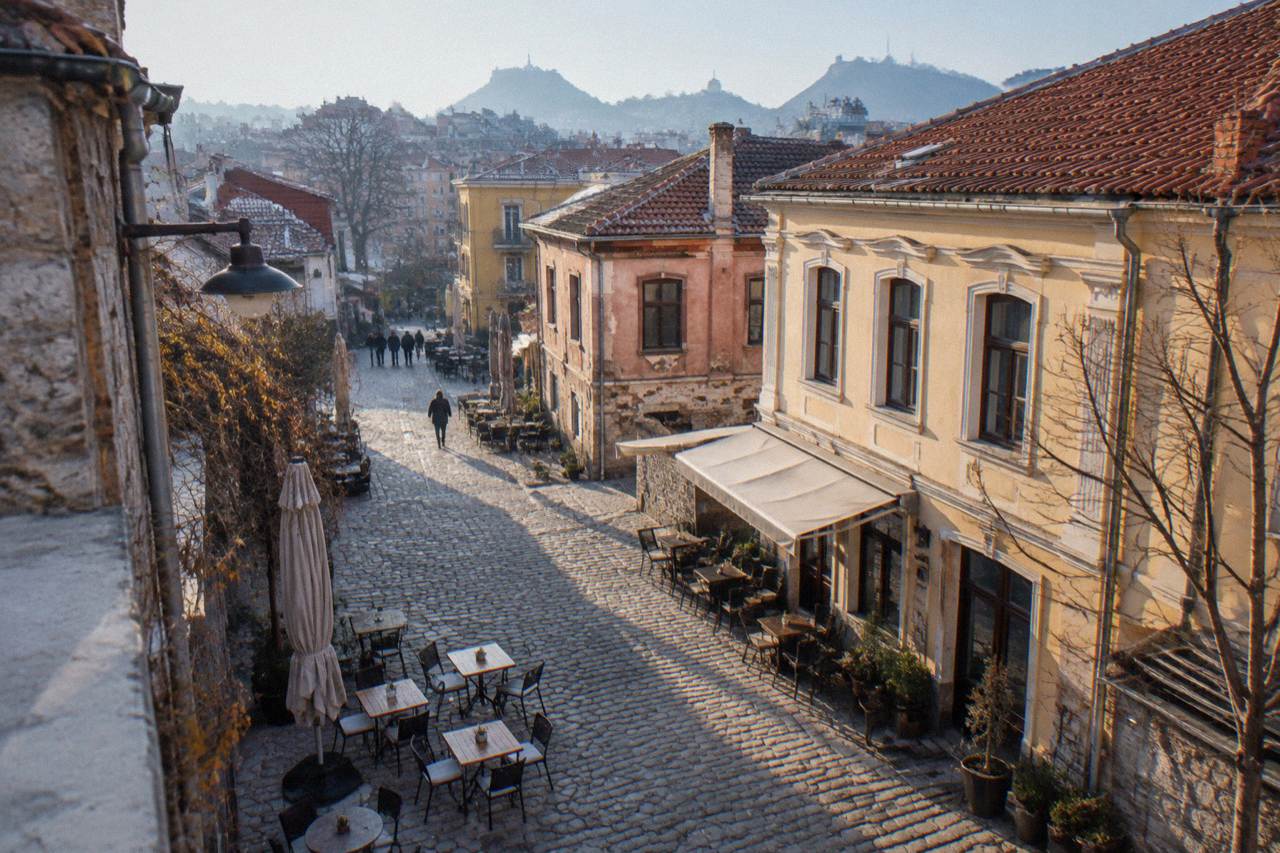
Plovdiv's food geography is unusually walkable. The pedestrian Main Street runs from the central square toward the Dzhumaya Mosque and the Roman Stadium, and every block of it carries somewhere to eat or drink. Kapana sits just south of it, a maze of narrow streets that gave the district its name, and it holds the city's concentration of small cafes, craft bars and informal kitchens. Above both, the Old Town's cobbled lanes hold terrace restaurants inside the painted revival houses, where lunch pauses between the Ancient Theatre and the facades. Nothing here requires a car, which is the practical point.
The question of timing matters as much as place. Bulgarians eat dinner later than many visitors expect, a habit covered in detail on the site's what time Bulgarians eat dinner page, and kitchens in Plovdiv stay open into the evening accordingly. Breakfast, by contrast, is often a quick standing affair: a slice of banitsa and a coffee, bought from a bakery window and eaten on the move. Planning around those rhythms, light mornings and long evenings, fits the city far better than a midday banquet.
For travellers who want the food explained rather than just found, a guided tasting changes the equation. The site's featured Plovdiv food experiences guide lists the walking options, and the card below pairs a city walk with a sunset wine tasting, the combination that covers both the streets and the glasses in one evening.
What Should You Actually Order In Plovdiv?
Order the Bulgarian standards: shopska salad as a starter, banitsa for breakfast, kavarma or kebapche as a main, tarator in summer, and a rakia or a Thracian Valley red alongside. These dishes are general Bulgarian custom rather than Plovdiv inventions, and they appear on menus across the city in the same basic form. Asking what is seasonal, tomatoes in summer, stews in winter, gets better results than any fixed list.
The core of a Bulgarian table is recognisable from any menu. Shopska salad is tomatoes, cucumbers, peppers, onion and sirene, the salty white cheese that also fills banitsa, the filo pastry that anchors Bulgarian breakfasts. Kebapche and kyufte are grilled minced meat, the former finger-shaped, the latter flattened. Kavarma is a clay-pot stew of meat and vegetables, and tarator is the cold yogurt-and-cucumber soup that Bulgarian summer cooking is built around. The site's Bulgarian food pages cover each of these in depth, including a dedicated page on shopska salad and starters and another on kebapche and the grill.
| Dish | What It Is | When To Order It |
|---|---|---|
| Banitsa | Filo pastry filled with sirene cheese, a breakfast staple | Morning, from a bakery |
| Shopska salad | Tomatoes, cucumber, pepper, onion, sirene | As a starter, best in tomato season |
| Tarator | Cold yogurt, cucumber, garlic and dill soup | Summer |
| Kebapche and kyufte | Grilled minced meat, spiced | Lunch or dinner mains |
| Kavarma | Clay-pot meat and vegetable stew | Colder months |
| Lyutenitsa | Roasted pepper and tomato spread | With bread, any time |
Two drinks frame the meal. Rakia, the fruit brandy covered on the site's rakia page, traditionally opens a Bulgarian table, often with a small salad. Wine accompanies the main course, and Plovdiv sits on the edge of the Thracian Valley, the wine region whose native Mavrud and Rubin grapes the site's Bulgarian wine guide describes. A visitor who orders by grape rather than by house label usually eats better.
Which Plovdiv Neighbourhood Suits Which Meal?
Kapana suits evenings, cafe mornings and street food; Main Street suits quick sit-down lunches; the Old Town suits long terrace meals between sights; and the area around the central square handles early breakfast runs from bakeries. Each zone is free to enter and open as public streets, so the choice is about mood and pace rather than tickets or access times.
Kapana is the district that rewards wandering. Its name means "The Trap", a reference to the tangled narrow streets that catch anyone who walks in, and it holds the city's densest mix of cafes, small kitchens and bars, with artisan and street-food markets running on weekend afternoons. Main Street, the long pedestrian spine described in the site's Main Street and the center guide, is where a shopping-day lunch happens. The Old Town, covered in the Old Town guide, puts tables inside revival-era houses a few steps from the Ancient Theatre, which is the closest Plovdiv gets to destination dining as scenery. The wider set of guides lives on Plovdiv Travel Guide.
| Area | Best For | Character |
|---|---|---|
| Kapana | Evening drinks, cafe mornings, street food | Maze of narrow streets, murals, small rooms |
| Main Street | Quick lunches while sightseeing | Busy pedestrian spine, fast turnover |
| Old Town | Long terrace meals | Cobbled lanes, painted houses, views |
| Central square area | Bakery breakfasts | Functional, early hours, on the move |
One drink-led option deserves its own mention. The featured sunset tour below walks the city and finishes with a wine tasting as the light goes, which compresses an evening's eating-and-drinking plan into a single organised block; the button opens the operator's live listing.
If that sounds like a good way to spend an evening, book a guided sunset wine tasting tour here.
How Much Does Eating And Drinking In Plovdiv Cost?
Crowd-reported data puts an espresso or cappuccino at roughly 2 to 2.5 euro, a half-litre of draught beer at about 2 euro, and a three-course mid-range dinner for two somewhere in the region of 30 to 40 euro. These are Numbeo crowd figures, not official prices, and no individual restaurant's menu has been checked. Treat them as planning ranges and read the actual menu before sitting down.
The cost level remains one of the more moderate in the European Union, which is why long meals and second coffees figure so large in the city's rhythm. Tipping follows Bulgarian custom: around 10 percent in restaurants and cafes for good service, or simply rounding up, a norm rather than an obligation. The site's how expensive is Plovdiv and money in Plovdiv pages carry the fuller picture, including cards and cash habits.
| Item | Rough Crowd-Data Level | Note |
|---|---|---|
| Espresso or cappuccino | about 2 to 2.5 euro | Numbeo crowd data |
| Draught beer, 0.5 l | about 2 euro | Numbeo crowd data |
| Mid-range dinner for two, three courses | about 30 to 40 euro | Numbeo crowd data |
| Restaurant tip | around 10 percent, or round up | Custom, not obligatory |
Two practical cautions. A tourist tax may be charged by accommodation in the city, so confirm the amount at booking rather than budgeting a figure in advance. And because no bar or cafe here has checked opening hours, closing times should be confirmed on the spot, especially in the Old Town, where kitchens in museum-houses can wind down early on quiet evenings.
Can You Drink The Tap Water With A Plovdiv Meal?
Yes, the site's dedicated page reports that Plovdiv's tap water is drinkable, so ordering tap water or filling a bottle is a normal option rather than a gamble. Bottled still and sparkling water appear on every table anyway, and ordering a bottle remains the default in restaurants. Either way, water is not a health decision in Plovdiv, only a preference and a cost one.
The fuller reasoning sits on the is tap water in Plovdiv drinkable page. What matters at the table is the surrounding etiquette: a Bulgarian meal out usually begins with a bottle of mineral water alongside whatever else is ordered, still or sparkling, and coffee arrives espresso-strength by default rather than filtered. Ayran, the salted yogurt drink, is the traditional non-alcoholic companion to grill dishes and worth ordering at least once in place of a soft drink.
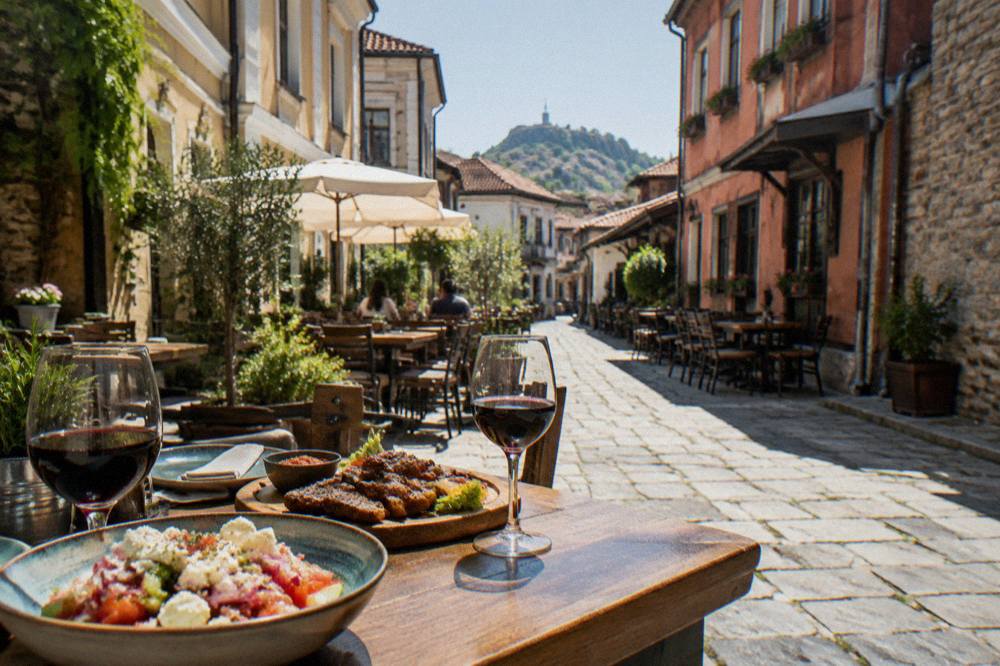
Beyond the meal, Plovdiv's cafe culture rewards attention of its own. The site's Plovdiv coffee and cafes guide covers it, and the Plovdiv street food page tracks the quick-bite side of the city, from bakery banitsa to the stalls that appear during events in Kapana. Evening options extend further, as the Plovdiv nightlife page sets out, and drinking hours in Kapana run late by central European standards.
Common Questions About Eating And Drinking In Plovdiv
Where To Eat And Drink In Plovdiv?
Eat across the Main Street, Kapana and Old Town zones: quick bakery breakfasts, Bulgarian classics such as shopska salad and kebapche at lunch, and rakia plus Thracian Valley wine in Kapana in the evening. No individual venue is named here because none had its details checked; the neighbourhoods, dishes and drinks are the reliable part of the answer.
What Food Is Plovdiv Known For?
The same dishes Bulgaria as a whole is known for: banitsa, shopska salad, tarator, kavarma, kebapche and kyufte, all built around sirene cheese, vegetables and grilled meat. Plovdiv adds proximity to the Thracian Valley wine region, whose Mavrud and Rubin reds pour widely in the city's bars and restaurants.
Is Eating Out In Plovdiv Cheap?
Crowd data puts an espresso or a half-litre beer at about 2 euro each and a three-course dinner for two at roughly 30 to 40 euro, which is a moderate level by EU standards. These are crowd-reported figures rather than official prices, so read each menu on arrival.
Do You Tip In Plovdiv Restaurants?
Yes, around 10 percent for good service, or rounding up the bill, is the customary approach in restaurants and cafes. It is a norm rather than a strict rule, and it applies mainly to table service rather than bakery counters.
What Time Is Dinner In Plovdiv?
Bulgarians eat dinner later than many northern Europeans expect, and Plovdiv kitchens serve accordingly into the evening. The site's dedicated page on Bulgarian dinner times covers the habit in full; planning an evening meal from around 19:30 or 20:00 onward fits the local rhythm.
Can You Drink Tap Water In Plovdiv?
Yes, the site's dedicated page reports Plovdiv's tap water as drinkable. Restaurants still bring bottled mineral water by default, and ordering one is normal, but tap water is a safe choice for bottles and glasses alike.