Bulgarian Food: The Dishes A First Visit Should Cover
Bulgarian food in Plovdiv runs on grilled meats, cheese pastries, chilled soups and strong spirits, and this guide covers the dishes, drinks and customs a first visit should meet.
Short answer
Order shopska salad, banitsa, kebapche or kyufte, kavarma and tarator, drink rakia before the meal and a Thracian Valley red with it, and finish with baklava or a spoon of sweet preserve. Those dishes cover the core of Bulgarian cooking, and Plovdiv serves all of them within a short walk of the Old Town and Kapana.
Bulgarian food in Plovdiv is grilled, baked, brined and poured with a heavy hand: minced meats off the grill, filo pastries filled with cheese, chilled yogurt soups in summer, and rakia, the fruit brandy that opens nearly every proper table. Plovdiv, Bulgaria's second-largest city, sits in the Thracian plain, the grain and vine country that has fed this cuisine for as long as anyone has written about it, and its Kapana district and Main Street places the whole repertoire within a short walk. This guide covers the dishes, drinks, seasons and table customs a first visit should meet, in the order you are likely to meet them.
What Is Bulgarian Food, And Where Do You Meet It In Plovdiv?
Bulgarian food is the cooking of the Thracian plain and the Rhodope mountains: grilled minced meats, brined white cheese called sirene, filo pastries, yogurt-based soups and slow vegetable stews, all washed down with rakia and red wine from local grapes. In Plovdiv the whole repertoire sits close together, concentrated in Kapana, on the Main Street and in the Old Town. Kapana, the creative district whose name means "The Trap", packs small kitchens and bars into a maze of narrow streets, the Main Street adds larger restaurants and bakery windows, and the Old Town spreads meals across courtyards in Revival-period houses. Nothing on the core menu needs the sea, which suits a city with no coast.
The cuisine leans on a short list of ingredients used repeatedly: tomatoes, peppers, cucumbers, sirene cheese, yogurt, filo dough, pork, lamb and offal. Technique is direct, grilling and clay-pot baking dominate, and the flavour comes from the produce rather than from complex sauces. That makes it an easy cuisine to read as a visitor: the menu names the dish, and the dish is what arrives.
Two products carry the structure of the table. Yogurt, made with Lactobacillus bulgaricus, the bacterium named for the country, appears in soups, drinks and cold sauces. The brined white cheese sirene appears in almost everything else, from salads to banitsa to grilled peppers. Eat those two well and you have eaten the spine of Bulgarian food.
Which Bulgarian Dishes Belong On A First Plovdiv Visit?
Six dishes cover a first visit: shopska salad as the starter, banitsa as the bakery staple, kebapche and kyufte as the grill, kavarma as the clay-pot main, tarator in the warm months, and baklava or mekitsi as the sweet ending. Order those across a few meals and you will have met the core of the Bulgarian menu in Plovdiv without guessing at anything. Each is described below in the form the kitchen actually serves it, in the order a waiter would expect to take it.
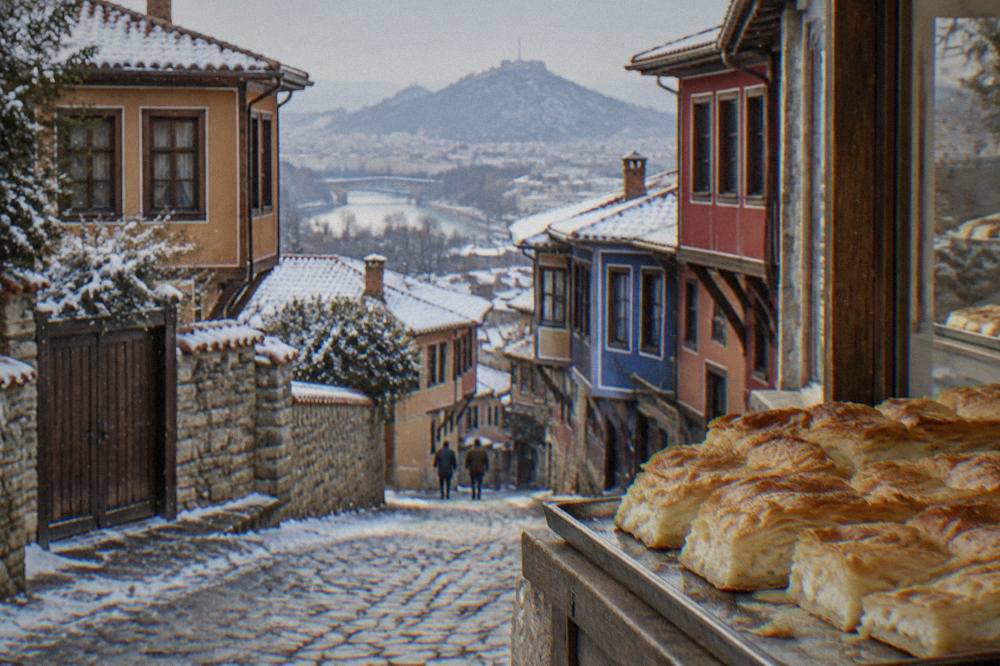
Shopska salad is the national starter and the honest test of a kitchen: chopped tomatoes, cucumbers, peppers, onion and sirene, with the cheese grated over the top rather than mixed in. It exists because it shows the produce, and in summer it needs nothing else. Banitsa is filo pastry rolled with sirene and eggs, baked in sheets and cut into squares, sold by the piece from bakery windows all morning. A related sweet version wraps pumpkin and is a winter custom.
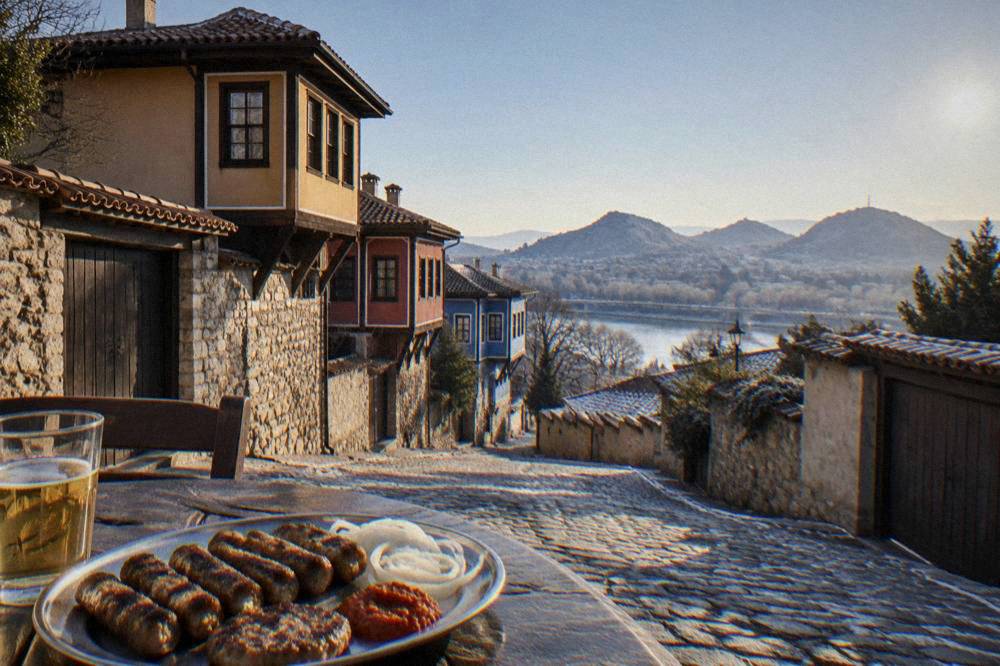
The grill section answers to kebapche, finger-shaped minced meat seasoned with cumin and grilled, and kyufte, its flattened, rounder cousin, usually pork or a pork-and-beef mix. They arrive with a raw onion ring, a scoop of lyutenitsa, the roasted pepper and tomato relish, and bread. Kavarma is the clay-pot dish: pork or chicken stewed with onion, peppers, mushrooms and wine, served bubbling in the pot it was cooked in. Tarator, the cold soup of yogurt, cucumber, walnut, garlic and dill, is the summer plate that turns a hot day around.
| Dish | What it is | When to order it |
|---|---|---|
| Shopska salad | Chopped tomatoes, cucumbers, peppers, onion, grated sirene | Every meal, best in summer |
| Banitsa | Filo pastry with sirene and egg, baked in sheets | Breakfast or a bakery snack |
| Kebapche | Grilled finger of minced pork with cumin | Lunch or dinner, off the grill |
| Kyufte | Flattened grilled minced meat patty | With kebapche as a mixed grill |
| Kavarma | Pork or chicken stewed in a clay pot with wine | Dinner, cold evenings |
| Tarator | Cold yogurt and cucumber soup with walnut and dill | Warm months only |
| Lyutenitsa | Roasted pepper and tomato relish | As a side and bread spread |
| Mekitsi | Fried dough squares, dusted with sugar or cheese | Breakfast or dessert |
For a structured route through these plates, the Plovdiv food and culture walk covers the core dishes with a guide who explains each one, and the deeper menu lives on the what to eat in Plovdiv page.
A few second-tier dishes reward a longer stay. Musaka here is potato-based rather than the Greek aubergine version, bob chorba is a bean soup that mountain kitchens treat as a meal, and guvech is the slow vegetable-and-meat casserole that gives kavarma its family name. Shkembe chorba, the tripe soup seasoned with garlic and vinegar, is the traditional end of a long night, and no description softens it: read it as a test of intent rather than an obligation.
What Do Bulgarians Eat For Breakfast In Plovdiv?
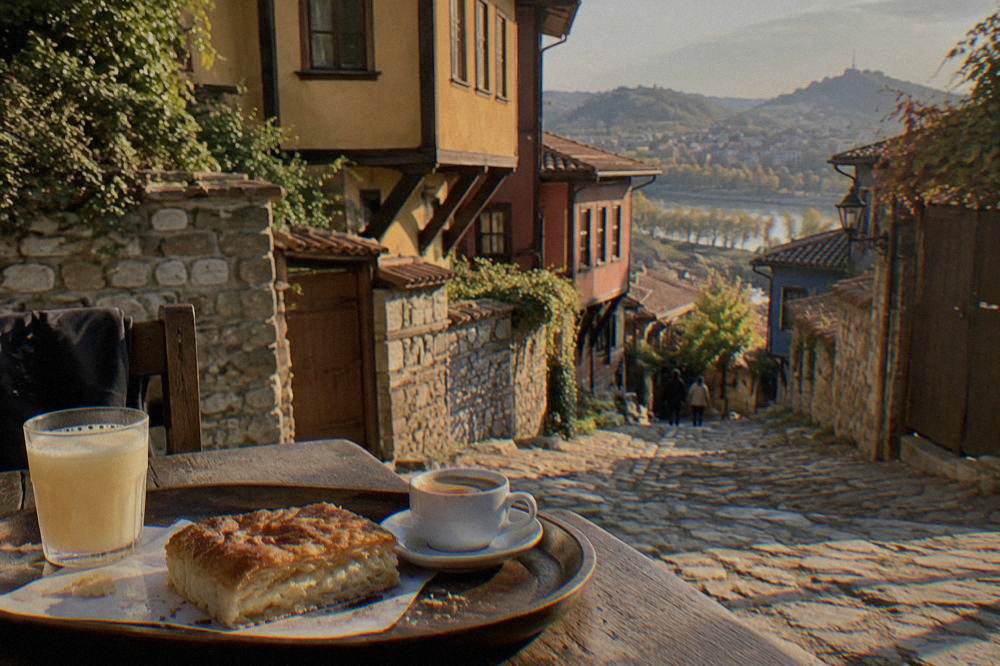
The standard Bulgarian breakfast in Plovdiv is banitsa with boza or ayran, and the sweet alternative is mekitsi, fried dough with sugar, jam or honey; coffee follows rather than leads the morning. The pattern repeats at bakery counters across the Main Street and in Kapana from early morning, and it costs less than a sit-down hotel breakfast. No single address is endorsed here, but the shape of the meal is consistent: a warm square of banitsa, a glass of the fermented grain drink boza or of salted yogurt ayran, and an espresso standing at the counter.
Crowd data collected by price-comparison sites puts an espresso in Plovdiv at around 2 euro, and a half-litre of draught beer at about the same figure. Treat those as crowd-reported averages rather than official prices, and check the menu in front of you. The Plovdiv coffee and cafe culture page carries the wider picture, and banitsa and the Bulgarian breakfast unpacks the morning table dish by dish.
| Breakfast item | What it is | How it is served |
|---|---|---|
| Banitsa | Filo sheets with sirene and egg | Warm, by the piece, in paper |
| Sweet banitsa | Filo with pumpkin or apple | Winter mornings, powdered sugar |
| Mekitsi | Fried raised dough squares | With jam, honey or sirene |
| Boza | Fermented grain drink, sweet and thick | Cold glass beside banitsa |
| Ayran | Salted thin yogurt drink | Cold glass, any hour |
| GevrEK | Bread ring with sesame or cheese | Street snack with boza |
Lunch tends to be light and fast: a soup, a salad or a single grill plate. Dinner is the main meal and starts late by northern European habit, often after eight. The blog answer on what time Bulgarians eat dinner covers the rhythm in more detail, and it matters: a kitchen caught between services will serve you, but the menu reads better at the hour the room fills.
What Should You Drink With Bulgarian Food In Plovdiv?
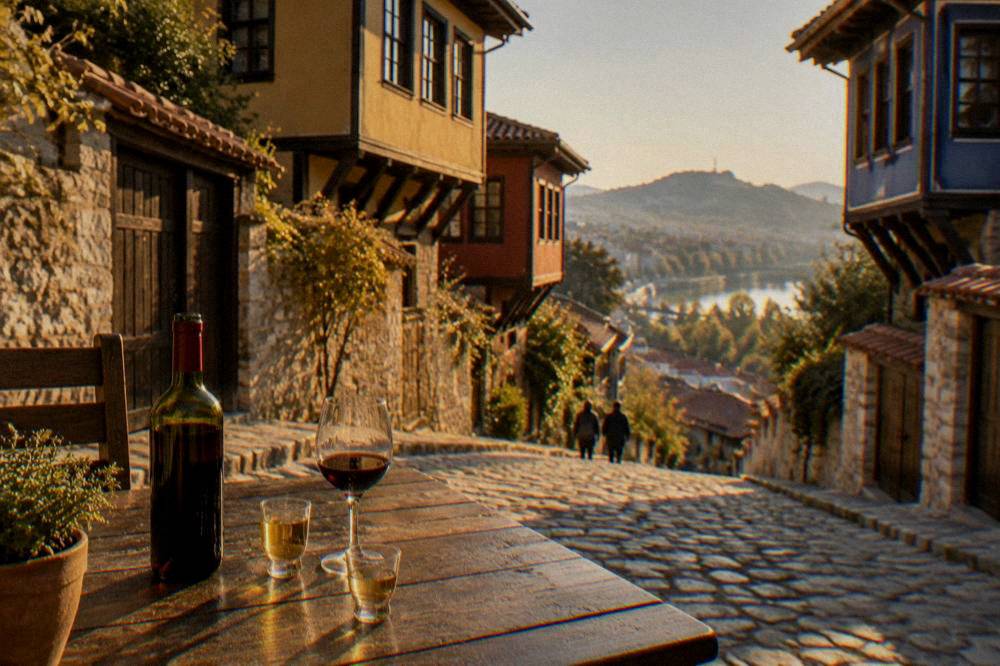
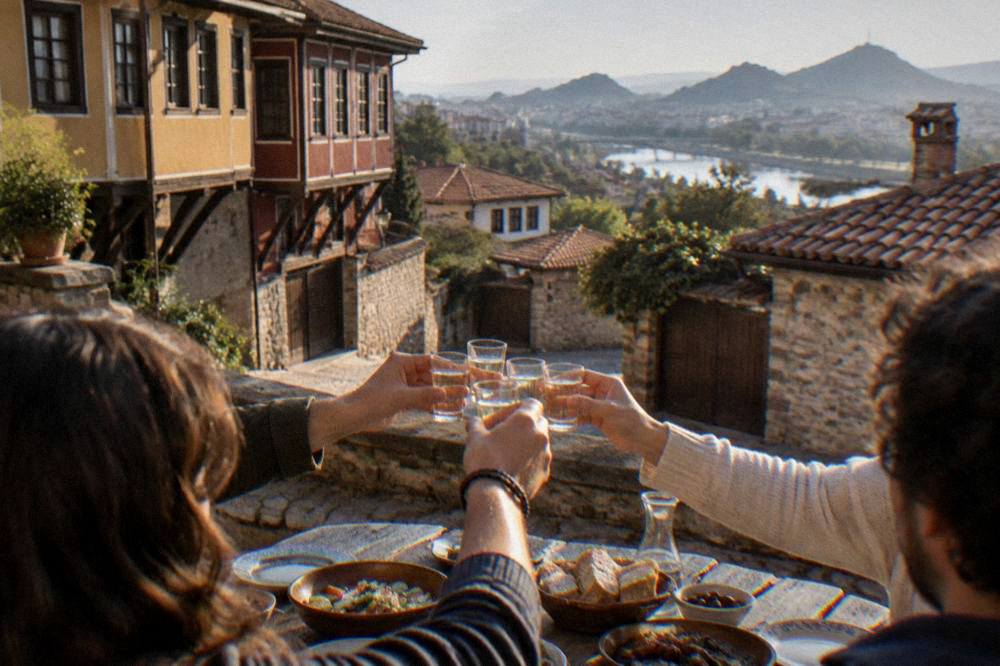
Drink rakia before the meal as the aperitif, a Thracian Valley red with the main course, and ayran or boza when the meal is breakfast; beer fills the gaps through the afternoon and mint tea closes a heavy dinner. The pairing logic is simple and forgiving, and every one of those drinks is made within a short drive of the city. Rakia is the fruit brandy that opens the Bulgarian table, served neat and cold in small glasses, raised with the word nazdrave. It comes in grape, apricot, plum, pear and quince versions, and every family guards a favourite. Wine in Plovdiv means the Thracian Valley, the plain around the city, whose native red grapes are Mavrud, a dense, age-worthy variety, and Rubin, a local cross with a soft, spicy profile.
If the pairing logic sounds appealing, book a wine tasting here.
| Drink | What it is | When it belongs |
|---|---|---|
| Rakia | Fruit brandy, grape or orchard fruit | Aperitif, with a small salad |
| Mavrud | Native Thracian Valley red grape | With kavarma and grilled meat |
| Rubin | Local red cross, soft and spicy | With lighter grilled dishes |
| Ayran | Salted thin yogurt drink | Breakfast and grill meals |
| Boza | Sweet fermented grain drink | Breakfast, with banitsa |
| Mint tea | Mountain dried-leaf infusion | End of a heavy dinner |
| Melnika red | Southwest Bulgarian red | With stews and lamb |
The Bulgarian wine page covers the bottles and the tasting-room geography in depth, and the rakia page does the same for the spirit, including the toasting rules. A guided option that pairs the two worlds, an Old Town walk ending in a rakia tasting, exists on the operator's live listing, and the walk plus the food tour together cover most of what a first visit wants from the table.
Older menus and price lists sometimes still show both figures; the euro figure is the one that matters now. Tipping runs at around 10 percent in restaurants for good service, or a rounded-up bill, and it is customary rather than obligatory.
How Does Bulgarian Food Change With The Seasons In Plovdiv?
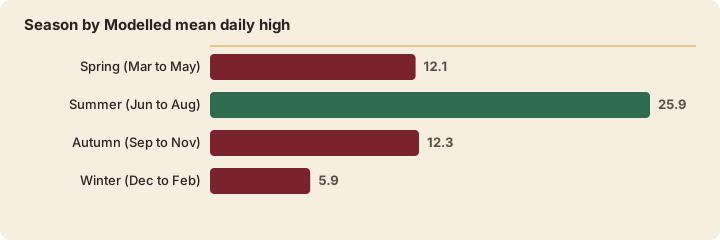
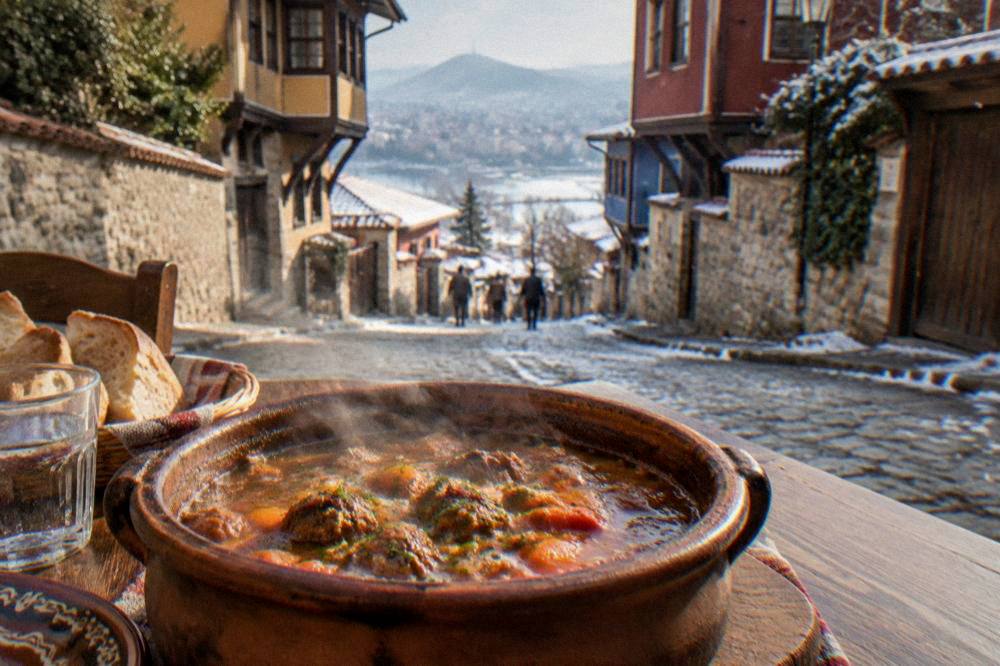
The menu rotates hard with the year: summer means tarator, shopska and grilled peppers, autumn means stews, kavarma and the new wine, winter means pork, banitsa with pumpkin and heavy clay-pot dishes, and spring means lamb and green stews. The ERA5 reanalysis, 1991-2020, puts Plovdiv's modelled mean daily high at 28.2 C in July and 5.9 C in January, a continental spread that pushes the kitchen from cold soups to bubbling pots and back each year.
| Season | Modelled mean daily high | What the kitchen serves |
|---|---|---|
| Spring (Mar to May) | 12.1 to 21.9 C | Lamb, green bean stews, fresh sirene |
| Summer (Jun to Aug) | 25.9 to 28.6 C | Tarator, shopska, grilled peppers, cold wine |
| Autumn (Sep to Nov) | 12.3 to 23.8 C | Kavarma, bob chorba, new wine, musaka |
| Winter (Dec to Feb) | 5.9 to 8.0 C | Pork pots, pumpkin banitsa, mulled wine at the Christmas market |
Two calendar moments matter for the plate. The Christmas market, which ran from 28 November 2025 to 4 January 2026 in its last edition and returns from 1 December 2026 to 7 January 2027 under the name "Soul of Christmas", brings grilled sausages, mulled wine and mekitsi to Central Square and Kapana. And the autumn brings the new wine, poured young and rough in the weeks after the harvest, which is the moment the Thracian Valley tasting rooms are at their liveliest. The Plovdiv Christmas and New Year and Plovdiv festivals and events pages carry the calendar further.
The seasons also reach the raw materials. Tomatoes and peppers arrive in quantity from the Thracian plain in high summer, and the shopska salad made in July bears no relation to one made in February. Kitchens that roast and jar their own peppers and lyutenitsa in September do so because the September pepper is the one worth keeping. Order with the calendar and the cuisine makes sense against it.
Where Should You Eat Bulgarian Food In Plovdiv?
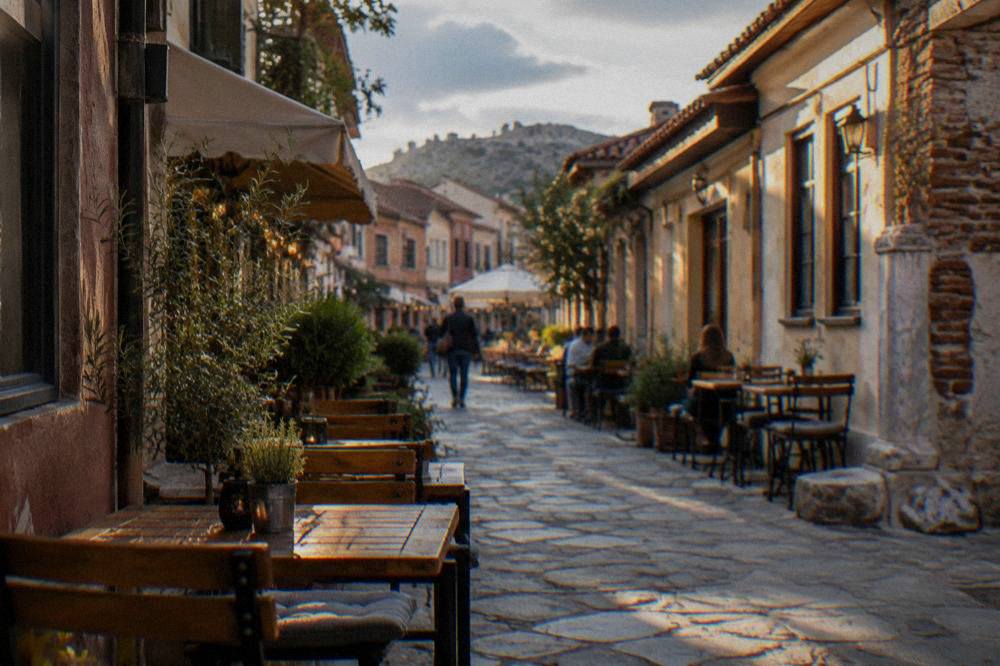
Eat in three places: Kapana for small kitchens, mehanas and wine bars inside the maze of streets whose name means "The Trap"; the Main Street for bakery windows, quick lunches and larger restaurants; and the Old Town for courtyard tables in revived Revival-period houses. No individual address, hour or price is endorsed on this page, because none was checked, but the three districts each do a distinct job and sit within a ten-minute walk of one another.
A mehana is the traditional tavern: wooden tables, folk textiles, a long menu of grills, stews and clay pots, and often live folk music in the evening. Kapana's version is smaller and louder, mixing the mehana repertoire with modern wine bars and third-wave coffee. The Old Town courtyard tables are the setting for a long dinner in warm months, with the Revival-period houses doing the decorating. The best restaurants in Plovdiv and where to eat and drink in Plovdiv pages carry the detailed picture, and Plovdiv street food covers the walking options, from gevrEK stands to grill windows.
Beyond the city, the Rhodope mountains to the south keep their own kitchen, and it is worth the drive for anyone with a spare day: dishes built on potatoes and cheese, grilled lamb, and the dense slow breads that mountain kitchens bake. Patatnik, the Rhodope potato-and-sirene bake, is the signature, and it rarely appears on Plovdiv menus in its full form. The Rhodope mountains day trips page lays out the routes, and a guided day trip that pairs the caves of Trigrad gorge with a Rhodope table runs on the operator's live listing.
What Food Customs Help In Plovdiv?
Four customs cover you: raise the glass with nazdrave and wait for eye contact, order the salad first and the grill second, expect bread on the table as standard, and finish a hosted meal with a refusal you expect to lose. Bulgarian table culture is hospitable and slightly formal at the start, and the rituals are easy to join. Rakia is poured, glasses are lifted, the word nazdrave is said, and the first sip waits until everyone has theirs. Refusing food at a hosted table is read as politeness once, and then overruled.
| Custom | What it means | What you do |
|---|---|---|
| Nazdrave | The toast, "to health" | Say it, meet eyes, sip |
| Salad first | The starter sets the pace | Order salad and rakia together |
| Bread on the table | Standard, sometimes billed | Eat it, check the bill line |
| Second helpings | Hospitality is insistence | Accept, or refuse once only |
| Tipping | About 10 percent for good service | Round up or add on the table |
Language helps more here than in a museum. Dobar den is good day, blagodarya is thank you, and nazdrave covers the toast. Menus in central Plovdiv usually carry an English section, and the Cyrillic alphabet decodes fast: look for the letters that spell salata, kebapche and rakia and you can order anywhere. The Plovdiv language and phrases page carries a fuller list.
One last habit worth adopting: eat where the room is full. Bulgarian kitchens turn over fast and grill to order, and a busy mehana at nine in the evening is serving food that left the market that day. An empty dining room at peak hour is information, and the full one next door is the answer.
Common Questions About Bulgarian Food In Plovdiv
What is the most famous Bulgarian dish?
Shopska salad is the dish Bulgaria is known for: tomatoes, cucumbers, peppers, onion and grated sirene, served cold as the standard starter. On the grill side, kebapche is the everyday national plate. Both appear on effectively every menu in Plovdiv.
Is Bulgarian food spicy?
No. Bulgarian cooking is savoury rather than hot. Heat comes, mildly, from raw onion, garlic and the occasional grilled pepper, and lyutenitsa is sweet-roasted rather than fiery. Diners who want heat can usually find a jar of hot peppers on the table, but the cuisine does not build dishes around chilli.
What do Bulgarians drink with dinner?
Rakia opens the meal as an aperitif, red wine from the Thracian Valley, especially Mavrud or Rubin, carries the main course, and beer is the everyday alternative. Ayran accompanies grill meals at any hour, and mint tea ends a heavy dinner.
Is food in Plovdiv expensive?
Relative to western Europe, no. Crowd-collected price data puts an espresso and a half-litre of draught beer at around 2 euro each, and a mid-range dinner for two with three courses is reported in the 30 to 40 euro range. Treat those as crowd-reported averages and check each menu.
Can vegetarians eat well in Plovdiv?
Yes. Shopska and other sirene salads, banitsa, tarator in summer, grilled peppers, stuffed vine leaves and the bean soup bob chorba carry a vegetarian through every meal. Vegans have a thinner time, because sirene and yogurt sit in much of the menu, but grills and stews come with vegetable sides that stand alone.
What is rakia made from?
Fermented and distilled fruit, most often grapes, but also apricot, plum, pear and quince. It is served neat and cold in small glasses as an aperitif, and homemade rakia is a point of family pride across the country. The toast is nazdrave.