Rakia: Bulgaria's Fruit Brandy And How To Order It
Rakia is Bulgaria's national drink, a fruit brandy that appears at every table in Plovdiv from Old Town taverns to Kapana bars. This guide explains what it is, how locals order it, what belongs on the table beside it and how to raise a glass the Bulgarian way.
Short answer
Rakia is a strong fruit brandy, usually distilled from grapes or plums, served in small glasses before a meal in Plovdiv. Order it by the fruit, drink it in sips with meze, and toast with Nazdrave.
Plovdiv, in southern Bulgaria, is a city built around six hills and a drinking culture that runs deeper than any single bar street, and no drink sits closer to the centre of that culture than rakia. It is a fruit brandy, distilled across the country from grapes, plums, apricots, pears, quinces and cherries, and in Plovdiv it turns up at lunch tables in the Old Town, at evening gatherings in the Kapana creative district and at every family celebration in between. The municipal tourism site describes Kapana itself as a district of tangled streets whose very name means "The Trap", and the glasses on its tables are as often rakia as wine or beer. This guide lays out what rakia is, how to order it without guesswork, what belongs beside it on the table and how to raise a toast the way Plovdiv does.
Bulgaria uses the euro since 1 January 2026, so prices you see on menus are in euro, and tipping of around 10 percent in restaurants for good service is the general custom, never mandatory. Neither fact changes the ritual of the drink itself. Rakia is ordered by the fruit, poured in small measures and taken slowly with food, and understanding that rhythm is the difference between a memorable evening and a rough morning.
What Is Rakia, And Why Does It Matter In Plovdiv?
Rakia is a strong fruit brandy made by fermenting and then distilling fruit, most often grapes or plums, and it functions in Bulgaria the way aperitifs function elsewhere in Europe: a small glass before a meal, shared, sipped and accompanied by food rather than knocked back. In Plovdiv, a city that was European Capital of Culture in 2019, rakia appears in Old Town taverns, Kapana bars and family tables alike, and it is treated as everyday culture rather than a novelty.
The drink is not uniquely Bulgarian, a point locals will make quickly if a visitor assumes otherwise. Versions of fruit brandy stretch across the Balkans and into Central Europe, and every country defends its own. What is distinct is the role the drink plays: in Bulgaria rakia is the opening act of a proper meal, the thing poured when guests sit down, and the default gift carried to someone's home. A bottle brought back from a village distillation is considered a gesture of trust, because homemade rakia is a point of family pride.
What can be said plainly is general custom: rakia is distilled from fruit, it is clear or golden depending on ageing, and it is served in small glasses because it is strong. Where a competing guide might date the drink to a specific century, this one stays with what the table in front of you shows: fruit, fire and patience.
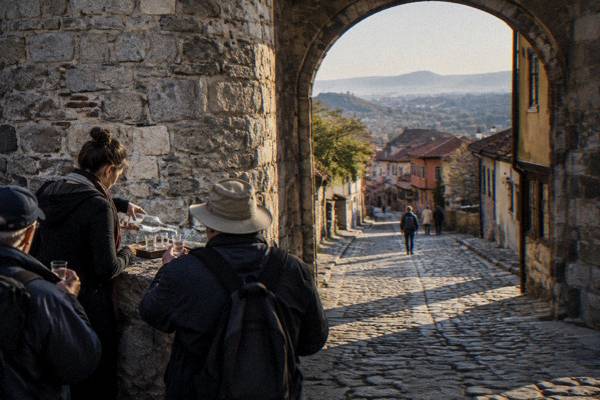
For visitors who want the drink explained while walking, one local tour pairs an Old Town walk with a rakia tasting, and the listing carries its own price and rating. The walk covers the same cobbles and revival houses described on the site's Old Town guide pages, with the tasting folded in.
How Is Rakia Made, And Which Fruits Go Into The Bottle?
Rakia begins with fruit, sugar and fermentation: the fruit is crushed, left to ferment into a low-alcohol mash, then distilled, traditionally in copper stills, into a clear spirit. Grapes and plums are the two foundations of Bulgarian rakia, with apricot, pear, quince, cherry, peach and apple versions common in different regions, and some bottles are aged in oak until they take on an amber colour and a softer edge.
The fruit matters more than the label. A grape rakia, sometimes called grozdova, tends toward a clean, slightly sweet spirit. A plum rakia, slivova, is rounder and more aromatic. Apricot and quince versions carry perfume; pear is soft and subtle. Ageing in wood changes the character again, the same way it changes grape brandies elsewhere, and an aged rakia is often reserved for guests rather than poured casually.
Homemade production is legal for personal use in Bulgaria under set limits, a fact of rural life that shapes the whole culture of the drink. Village distillation runs in autumn after the harvest, and families take their fermented mash to shared stills. The result is that many Plovdiv households keep a bottle from a grandmother's village, and being offered one is a small honour. Commercial bottles, sold in shops across the city, range from plain young spirits to aged and labeled designations, and every price on the shelf is in euro.
What follows is a working map of the main varieties a visitor will meet on Plovdiv menus and shop shelves. Serve customs are general Bulgarian practice, not a rulebook.
| Rakia | Base Fruit | Typical Character | Common Occasion |
|---|---|---|---|
| Grozdova | Grapes | Clean, dry, slightly floral | Everyday aperitif |
| Slivova | Plums | Round, rich, aromatic | Traditional favourite |
| Kaisiyeva | Apricots | Perfumed, fruity | Warm-weather tables |
| Dulyova | Quinces | Fragrant, delicate | Special occasions |
| Krusheva | Pears | Soft, subtle | Regional pours |
| Cheryeshva | Cherries | Sharp, fruity | Village distillations |
| Aged (oak) | Any of the above | Amber, smoother | Offered to guests |
How Do You Order Rakia In Plovdiv?
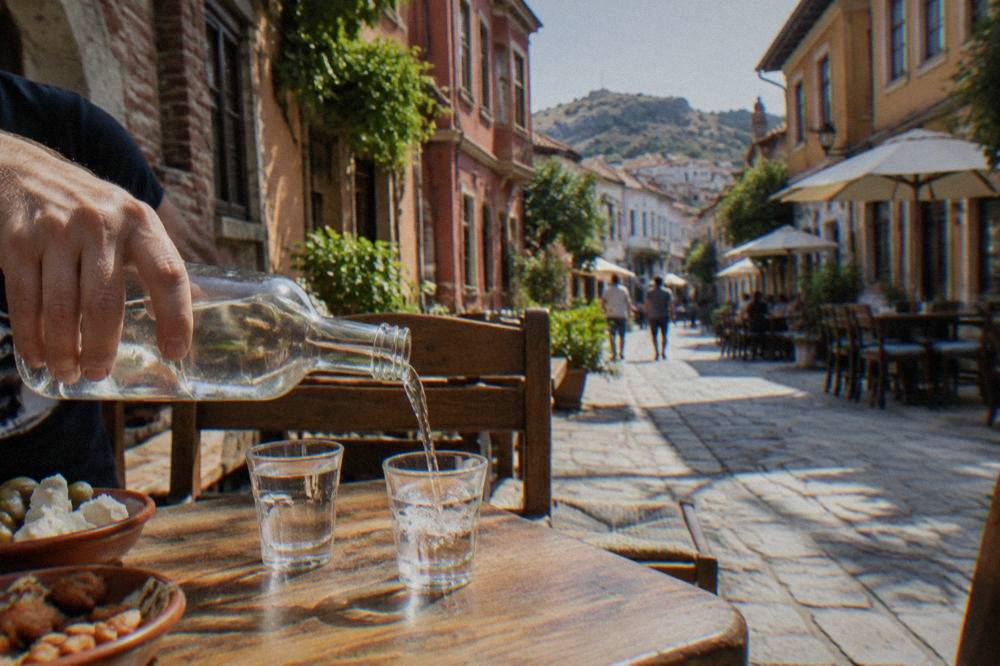
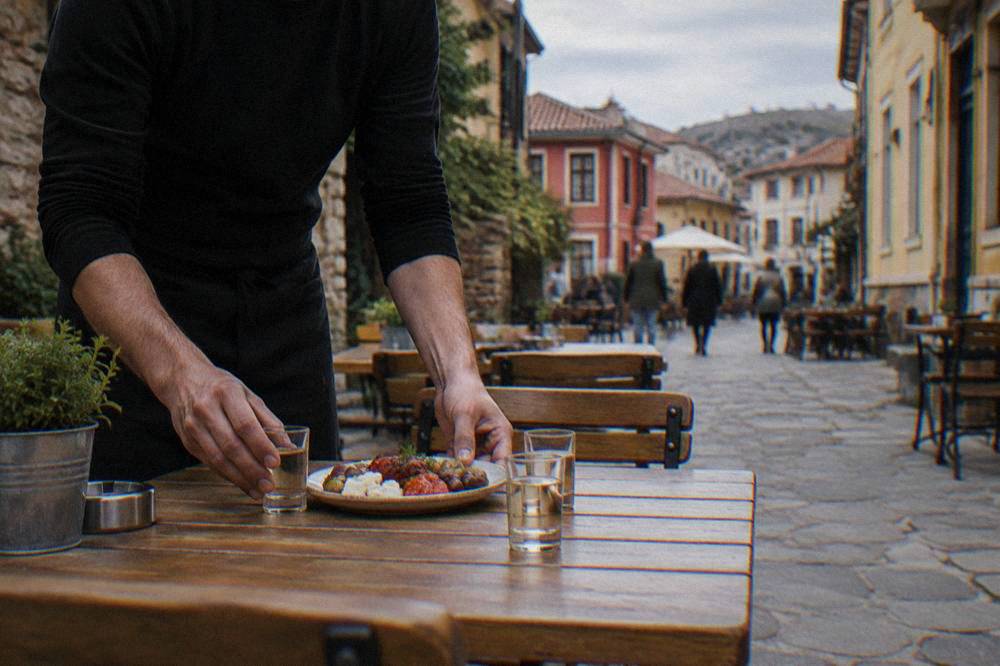
Order rakia by naming the fruit and the measure, and expect it to arrive in a small glass, cold or room temperature depending on the household, with food on the table: the standard phrases are grozdova for grape and slivova for plum, and a simple edna rakia, molya, one rakia, please, works anywhere in Plovdiv. Rakia is ordered before the meal rather than with it, and a bottle for the table is normal for groups.
Menus in Plovdiv list rakia by the fruit, by the glass and by the bottle, and since 1 January 2026 every price is in euro. If the menu does not separate the varieties, ask what the house pours: houses take pride in their choice, and the question is welcome rather than fussy. Rakia served from the freezer, ice-cold and slightly syruped, is a summer custom; room-temperature pours are the default in cooler months.
Two customs catch visitors out. First, rakia is not shot culture: the glass is small so the spirit lasts through conversation, and draining it in one go reads as haste. Second, rakia rarely arrives alone. A plate of salad, cheese, cured meat or banitsa lands with it, because drinking rakia on an empty stomach is considered a mistake, not a rite. The site's guide to Bulgarian food covers those companions in detail.
For a structured introduction that pairs the Old Town with the glass, the tour below folds a rakia tasting into a guided walk:
What Does Rakia Taste Like, And How Strong Is It?
Young rakia tastes first of its fruit and then of clean spirit heat: a grape rakia is dry and floral, a plum rakia rich and rounded, and both finish warm rather than sweet. It is a strong drink by any standard, served in small glasses precisely because of that strength, and aged versions mellow toward vanilla and wood notes the way oak-aged brandies do elsewhere.
Strength is the number visitors ask about, and no single figure belongs on this page, because commercial bottles vary by producer and homemade ones vary by still. What can be said is comparative and honest: rakia sits in the same strength family as grape brandy and fruit eaux-de-vie across Europe, stronger than wine and weaker than nothing. The practical consequence is the same in every Plovdiv tavern: small glass, slow pace, food present.
Tasting rakia properly follows the same steps as tasting any spirit. Look at the glass, since colour tells you whether it was aged. Swirl gently and breathe in over the top of the glass rather than directly into it, because the alcohol will otherwise dominate the nose. Then take a small sip and let it sit on the tongue before swallowing, letting the fruit arrive after the heat. Homemade rakia often tastes rounder than its commercial counterpart, and connoisseurs judge a still's output by smoothness rather than force.
Temperature changes everything. A rakia pulled from the freezer pours thick and dulls its own burn, which is why summer tables chill it. The same bottle at room temperature shows more fruit and more fire, which suits a winter evening. There is no wrong answer, only seasons.
Rakia And Food: What Belongs On The Table Beside It?
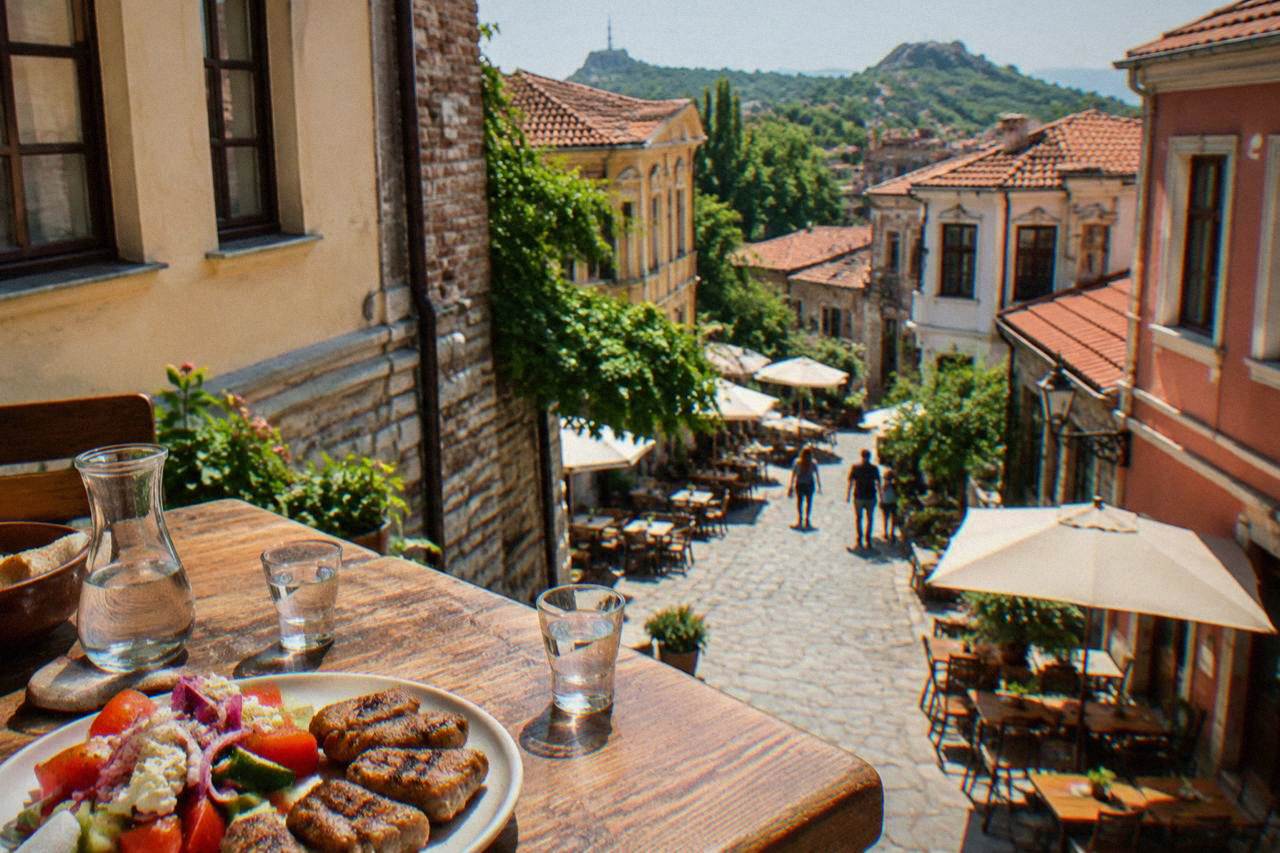
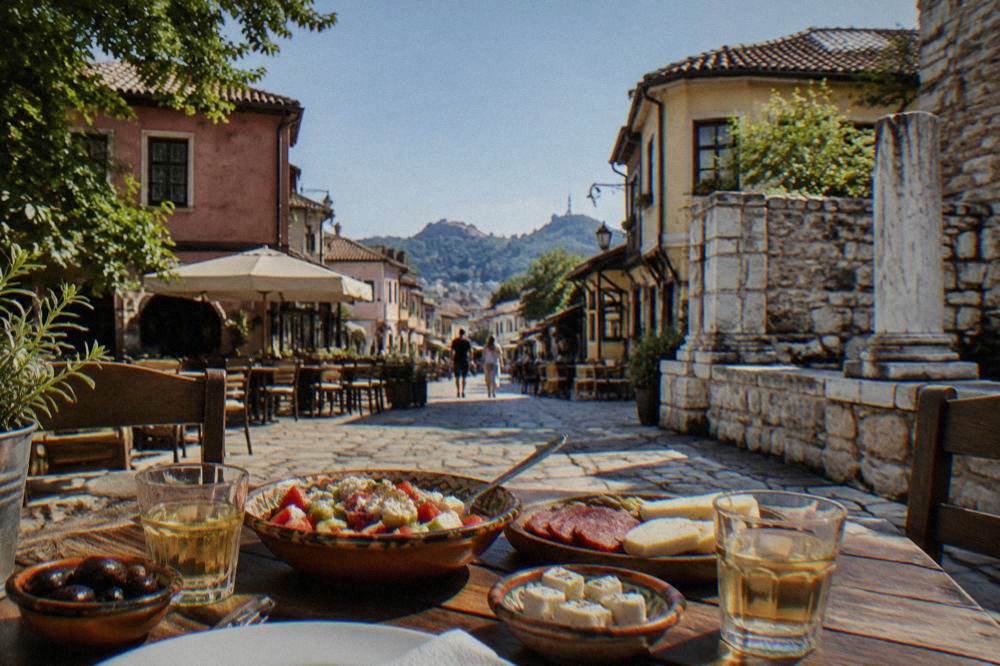
Rakia is an aperitif with a fixed supporting cast: shopska salad, white brined cheese, cured meats, pickled vegetables and banitsa are the standard meze, with grilled meat following once the glasses are empty. The pairing logic is simple, since salt and fat stand up to the spirit, and the meal proper, kebapche, kavarma and the rest of the Bulgarian grill, begins as the rakia winds down.
The opening spread matters enough that it has its own name in Balkan custom: meze, small savoury dishes that accompany spirits. In Plovdiv the meze plate typically means shopska salad, the tomato, cucumber, pepper and sirene cheese salad described on the site's shopska salad page, plus cubes of brined cheese, lukanka or other cured sausage, and pickles. Banitsa, the cheese filo pastry, appears at breakfast tables and meze tables alike, and the banitsa guide covers its place in the day.
The sequence at a proper Bulgarian table runs aperitif first, meal second. Rakia and meze occupy the first hour; wine or beer usually takes over with the main course; and rakia may return at the end of the night, poured from a bottle kept for guests. Nobody enforces this order, but following it marks you as someone who has been paying attention. The full index of guides sits on Plovdiv Travel Guide.
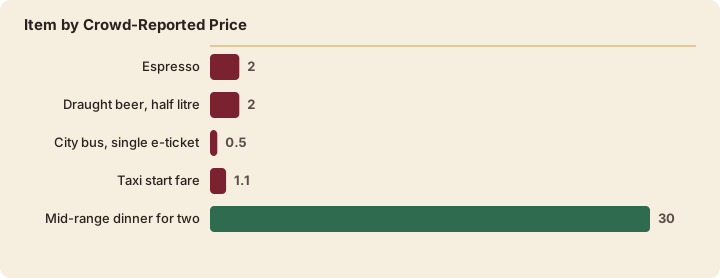
For context on what these dishes cost, crowd-reported data, not official tariffs, gives a picture of Plovdiv prices in euro:
| Item | Crowd-Reported Price | Note |
|---|---|---|
| Espresso | about 2 euro | Numbeo crowd data |
| Draught beer, half litre | about 2 euro | Numbeo crowd data |
| City bus, single e-ticket | 0.50 euro | Municipal e-ticket fare |
| Taxi start fare | about 1.10 euro | Crowd data, varies by company |
| Mid-range dinner for two | about 30 to 40 euro | Crowd data, three courses |
Confirm hours and prices locally; the restaurant guide covers where to eat in more depth.
Where To Drink Rakia In Plovdiv?
The two natural homes of a rakia evening in Plovdiv are the Old Town, where revival-era houses hold traditional tavernas with gardens and live folk music, and Kapana, the creative district whose name means The Trap, where the bars are younger, the menus shorter and the pours no less serious; both are within a short walk of each other below the Three Hills.
The Old Town experience is the classic one: a cobbled lane, a house museum by day and a taverna by night, a garden under vines in summer and a stove-warmed room in winter. The Old Plovdiv institute's own ticket list prices the houses as sights, with a single-site adult ticket at 3.58 euro and a combined ticket for up to five sites at 10.74 euro, so a visitor can spend the afternoon in the houses and the evening drinking two streets away.
Kapana runs the other way. Its narrow grid, described by the municipal tourism site as a maze that gives the district its name, holds small bars, galleries and workshops, and rakia here is served alongside natural wine and craft beer rather than instead of them. The district is free and open at all hours, and its Sunday artisan market, reported by local listings, adds handmade goods and street food to the weekend mix.
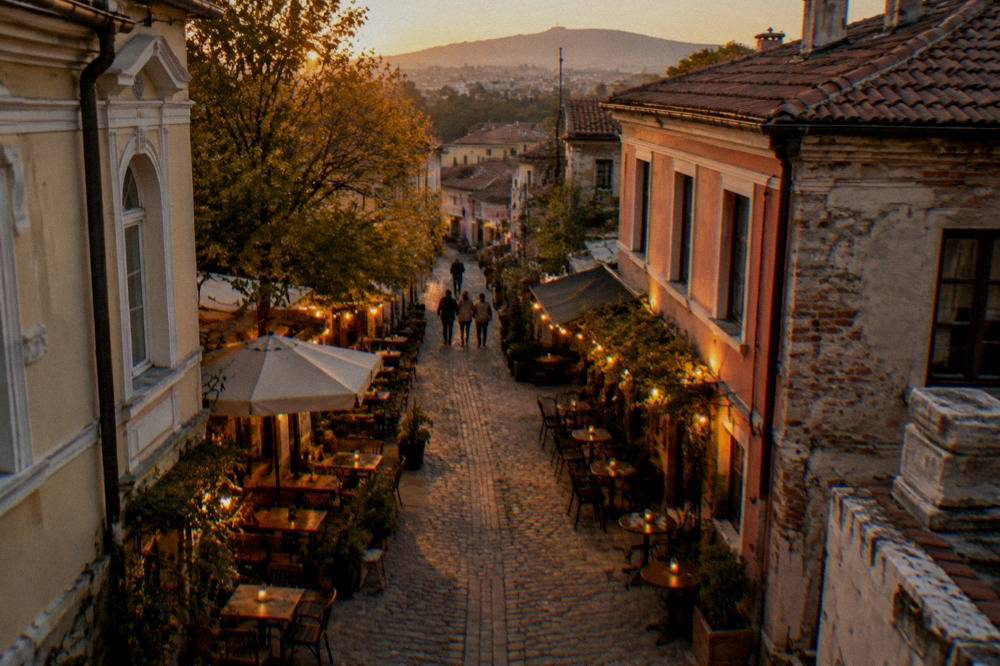
Main Street, the pedestrian spine that runs from the Central Square to the Roman Stadium, holds the chain-adjacent middle ground, and the nightlife guide maps the late hours. One structural note matters for planning: the Roman Stadium is only partly excavated, with the northern sphendone visible and the rest under the street itself, so the drinking street and the ancient monument are the same street.
The tourist entry prices around those evenings, for the sightseeing side of the day, look like this on the official Old Plovdiv list:
| Old Plovdiv Ticket | Adult | Student | Family |
|---|---|---|---|
| One site, except Bishop's Basilica | 3.58 euro | 1.53 euro | 7.16 euro |
| Combined, up to 5 sites | 10.74 euro | 4.09 euro | 21.47 euro |
| Bishop's Basilica, single | 7.57 euro | 3.58 euro | 15.34 euro |
| Roman Stadium 3D hall | 3.68 euro | 1.23 euro | not listed |
How Do You Toast In Bulgarian, And What Is The Etiquette?
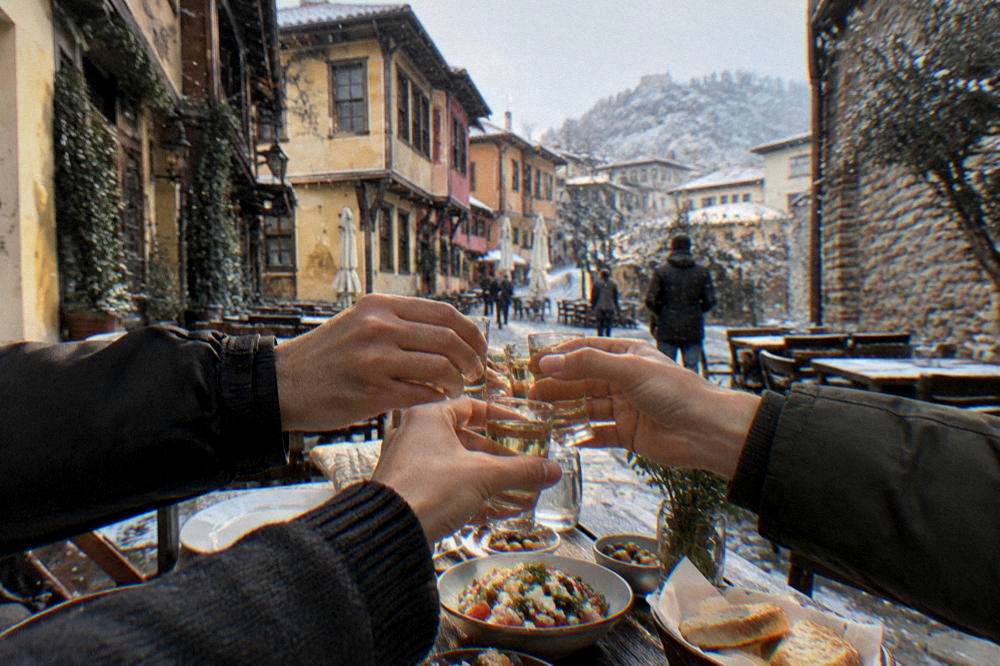
The Bulgarian toast is Nazdrave, roughly to your health, said while making eye contact before the first sip, and the etiquette that surrounds rakia is built on three habits: never drink on an empty stomach, never pour your own glass first at a hosted table, and never refuse the first glass outright, since a small sip taken slowly honours the host more than a refusal.
Eye contact is the detail visitors miss. Glasses rise, eyes meet, Nazdrave is said, and only then does the drinking begin. Skipping the look reads as carelessness rather than shyness. At a hosted table the host pours, and the guest's glass is not refilled until it is close to empty, because topping up a full glass signals the host wants you gone, an old custom that survives in country houses more than in bars.
Pace is the second habit. Rakia glasses are small by design, and the spirit is meant to last through the meze course. Drinking fast is not rude so much as pointless: the fruit never gets a chance. Third comes the reciprocal round. If someone buys a bottle for the table, the next bottle is yours to buy, and attempting to split a bill mid-session in a taverna can cause more confusion than it solves.
A few practical lines carry a visitor a long way: Nazdrave for the toast, molya for please, blagodarya for thank you, and edna rakia, molya when ordering. The full phrase set sits on the language page, and any attempt at Bulgarian is received warmly, because locals do not expect visitors to have any of it.
Can You Buy Rakia To Take Home From Plovdiv?
Yes, and the choice runs from supermarket bottles to specialist shops and, less reliably for travel, the homemade bottles families gift each other; commercial rakia is sold in euro across Plovdiv, and the decision is mostly between a young clear spirit and an aged amber one, since both travel well and neither needs refrigeration.
Supermarkets off Main Street carry the mainstream producers, with shelf prices visible and no haggling involved. Specialist shops and some Old Town boutiques stock smaller distilleries and aged bottles, and tasting before buying is often possible. Homemade rakia, the treasured kind, is not sold: it is given, which is exactly why it is not a souvenir option but a story one.
For carrying it home, the standard air-travel rule applies: bottles go in checked luggage, sealed, padded and within your airline's allowance. Bulgaria is a full Schengen member since 1 January 2025 and uses the euro since 1 January 2026, so there is no currency exchange to plan and no border formalities inside Schengen to factor into a shopping day. Travellers from outside the EU should check their home country's duty allowance rather than rely on the shop's guess.
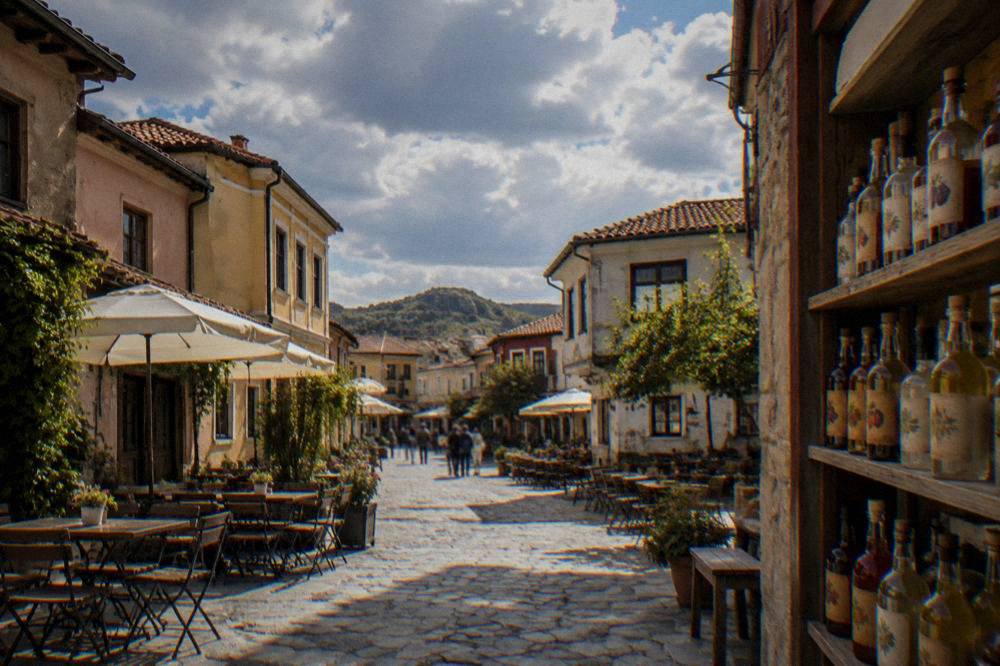
If a tasting day sounds better than a shelf purchase, the region's wineries and distillers sit in the Thracian Valley around Plovdiv, and a private tasting trip covers both the cellars and the countryside:
The Bulgarian wine guide covers the grape side of the same valley, since Mavrud and Rubin from the same soils are the usual dinner companions to rakia's opening act.
Rakia And The Seasons: When Does The Year Turn In Plovdiv?
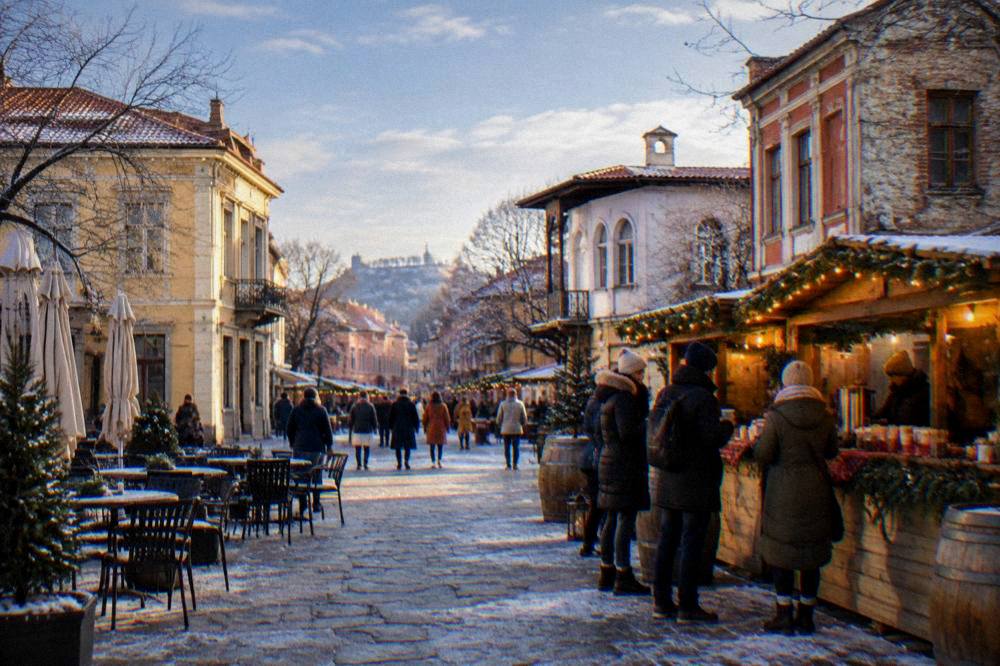
Rakia's calendar follows the fruit: autumn is distillation season, when village stills run after the plum and grape harvests, winter is the season of long indoor tables and the Christmas market, and summer shifts the drinking outdoors to garden tavernas and Kapana's street tables, so the glass changes character with the weather even though it never leaves the menu.
The climate explains the rhythm. The ERA5 reanalysis, 1991-2020, for the Plovdiv grid cell gives a mean daily high of 28.6 C in August against 5.9 C in January, with May the dampest month at 56.8 mm of rain and August the least rainy at 25.2 mm. Hot evenings push glasses into freezers and tables into gardens; cold ones pull them toward stoves. The best time to visit guide and the weather page unpack the months in detail.
| Month | Mean Daily High | Mean Daily Low | Rain |
|---|---|---|---|
| January | 5.9 C | -2.6 C | 41.0 mm |
| April | 17.1 C | 6.4 C | 47.7 mm |
| August | 28.6 C | 18.1 C | 25.2 mm |
| October | 18.1 C | 8.8 C | 44.1 mm |
The city's event calendar gives the year its fixed points, and each has its own drinking culture attached. Opera Open runs 23 June to 9 September 2026 at the Ancient Theatre of Philippopolis; Kapana Fest's autumn edition ran 2 to 4 and 9 to 11 October 2026; the Plovdiv Jazz Fest fall edition runs 6 to 8 November 2026; and the 2026/27 Christmas edition, billed as the Soul of Christmas, runs 1 December 2026 to 7 January 2027 across Kapana and the Central Square.
| Event | 2026/27 Dates | Setting |
|---|---|---|
| Opera Open | 23 Jun to 9 Sep 2026 | Ancient Theatre |
| Kapana Fest, autumn | 2 to 4 and 9 to 11 Oct 2026 | Kapana and Central Square |
| Plovdiv Jazz Fest, fall | 6 to 8 Nov 2026 | Boris Hristov House of Culture |
| Christmas in Plovdiv | 1 Dec 2026 to 7 Jan 2027 | Kapana and Central Square |
The Christmas market season is the one time rakia shares a stage with mulled wine, and the Christmas and New Year guide covers the city that hosted Europe's culture year in 2019, shared with Matera.
Can You Taste Rakia On A Guided Tour From Plovdiv?
Yes, tastings exist at three scales inside the city and beyond it: walking tours that fold a rakia tasting into an Old Town circuit, tasting rooms in the centre that pour Bulgarian spirits alongside wine, and day trips into the Thracian Valley and the Rhodopes that pair distillers and monasteries with the drive; prices and ratings for each option are listed on the operator's live listing.
The Old Town tasting walk suits a first evening. A monastery and fortress day trip, covering Bachkovo Monastery, which is free to enter, and Asen's Fortress above Asenovgrad, suits a second day, since the Rhodope foothills begin barely beyond the city and the Asen's Fortress day trip guide maps the route. The valley tasting trips suit a third, combining cellars and stills with the same soils that grow the grapes in your glass.
For a shorter pairing of the monastery road and the fortress:
Whatever the choice, the same rule that governs the taverna table governs the tasting room: small sips, food nearby, and the fruit given time to speak after the fire.
Common Questions About Rakia In Plovdiv
What is rakia?
Rakia is a strong fruit brandy made by fermenting and distilling fruit, usually grapes or plums. It is served in small glasses, most often before a meal with savoury food beside it, and it is treated in Plovdiv as an everyday cultural drink rather than a curiosity.
How do I order rakia in Plovdiv?
Name the fruit and the measure: grozdova for grape, slivova for plum, and edna rakia, molya for one rakia, please. Since 1 January 2026 all prices are in euro, and a bottle for the table is a normal order for a group.
Should rakia be drunk as a shot?
No. The glass is small because the spirit is strong and the pace is slow. Rakia is sipped through conversation with meze on the table, and draining it in one go is considered haste rather than spirit.
What do you say when toasting with rakia?
Nazdrave, said with eye contact before the first sip. At a hosted table, let the host pour, never refuse the first glass outright, and take a small sip to honour the gesture.
Can I bring rakia home from Bulgaria?
Yes. Commercial bottles are sold in euro across Plovdiv and travel well in checked luggage. Homemade rakia is gifted rather than sold, so it is not a realistic souvenir. Travellers from outside the EU should check their home country's duty allowance.
What food is served with rakia?
The standard meze: shopska salad, brined cheese, cured meats, pickles and often banitsa, followed by the grill, kebapche, kavarma and the rest of the main meal, once the glasses wind down.
The glass in front of you in Plovdiv will be small, the toast will be Nazdrave, and the table will have food on it before the bottle arrives. Everything else, the fruit, the ageing, the village the bottle came from, is a conversation waiting to happen.