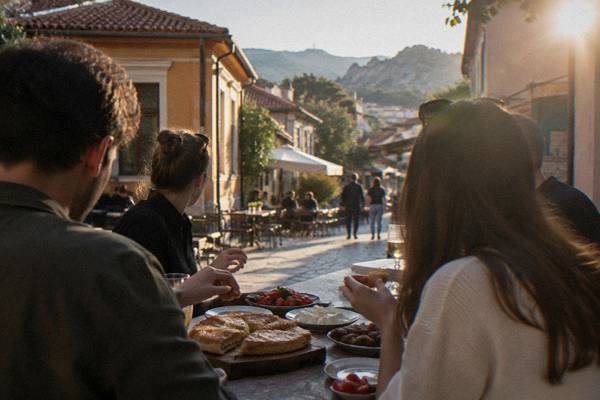
What To Eat In Plovdiv: Ten Dishes And Where To Find Them
Plovdiv, in southern Bulgaria, eats the way the Thracian plain and the Rhodopes eat: grilled meats, yogurt soups, filo pastry and strong rakia, with a Kapana district of small kitchens in between.
Short answer
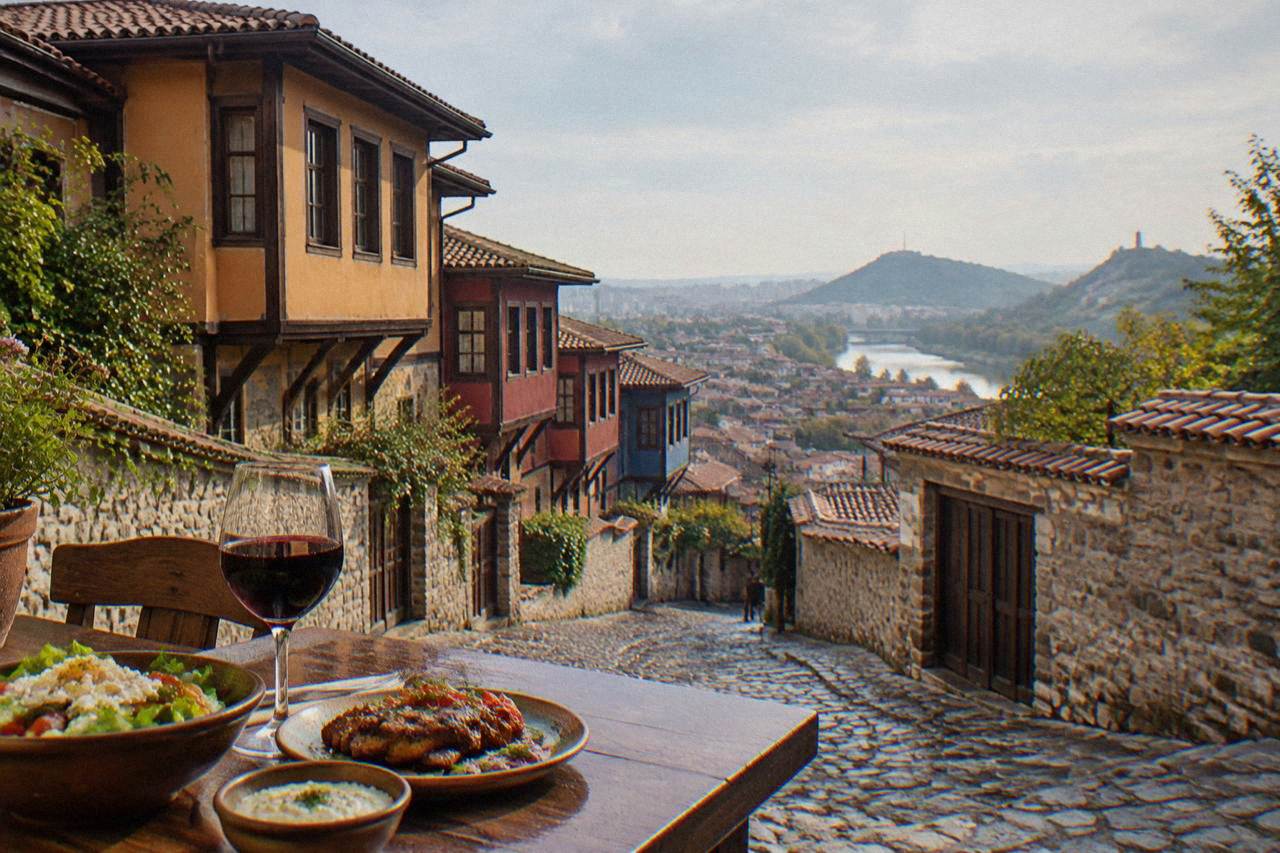
Eat shopska salad, banitsa, kebapche, kavarma, tarator and lyutenitsa in Plovdiv, drink Thracian Valley reds and rakia with them, and hunt for them around Kapana, the Main Street eateries and the Old Town rather than any single address.
Plovdiv sits in southern Bulgaria, an inland city built around six hills, and its tables reflect that position between the Thracian plain and the Rhodopes: yogurt from the mountains, grain and vegetables from the valley, grilled meat everywhere, and a wine region on the doorstep. This guide names ten dishes worth looking for, the parts of the city where each one turns up, and the drinks that go with them. The city was European Capital of Culture in 2019, shared with Matera in Italy, and the eating scene that grew around that year still clusters in the Kapana creative district, whose name means "The Trap", a maze of narrow streets where visitors routinely lose their way between kitchens and bars. For the wider sightseeing picture, start with the site's Plovdiv things overview and the Bulgarian food primer.
What Should You Eat In Plovdiv First?
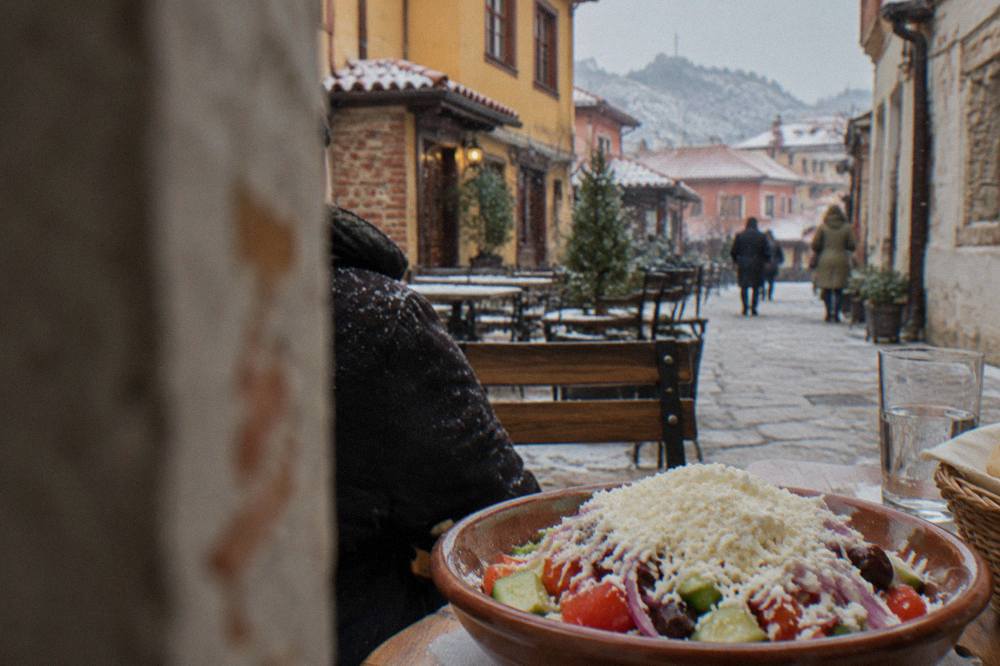
Start with shopska salad, banitsa and kebapche, the three dishes that appear on nearly every Bulgarian menu in the city, from Kapana bistros to Old Town dining rooms. Shopska is a chopped salad of tomato, cucumber, pepper, onion and sirene, a salty white cheese. Banitsa is filo pastry baked with cheese and egg. Kebapche is a hand-rolled grilled minced-meat roll served with bread and a side of lyutenitsa.
These three give you the grammar of the cuisine in one sitting. The salad arrives first and is meant to be shared; the cheese on top is grated so finely it looks like snow, which is also the joke, since the salad is arranged in the white-green-red of the Bulgarian flag. The banitsa is a breakfast food as much as anything, sold by the slice, and the kebapche comes off a grill that most kitchens run from morning until late. None of it needs translation or luck: every menu in the city carries some version of all three.
Beyond the first three, the deeper bench includes kavarma, a clay-pot stew of meat and vegetables; tarator, a cold yogurt and cucumber soup that dominates summer menus; and mish-mash, a pan of eggs, cheese, pepper and tomato that works as breakfast or a hangover cure. The city's position matters here. Plovdiv is the natural gateway to the Brestovitsa wine region and the Rhodopes, so mountain dairy and valley produce both arrive in its kitchens cheaply and fresh.
There is a vegetarian thread running through all of this that surprises visitors expecting a pure grill culture. Shopska, tarator, mish-mash, lyutenitsa, banitsa and the filo pastries are all meatless, and grilled peppers, stuffed with cheese or rice, appear everywhere in late summer and autumn. A visitor eating vegetarian in Plovdiv is not scanning menus for the one fallback option; they are ordering from the mainstream of the repertoire. Vegan eating is harder, since sirene and yogurt are near-universal, but the grilled vegetable and bean dishes, bob, a baked bean stew, chief among them, carry the load.
| Dish | What It Is | When Bulgarians Eat It |
|---|---|---|
| Shopska salad | Chopped tomato, cucumber, pepper, onion, grated sirene cheese | Lunch or dinner starter |
| Banitsa | Filo pastry with cheese and egg filling | Breakfast, by the slice |
| Kebapche | Grilled minced-meat roll with spices | Lunch or dinner main |
| Kavarma | Clay-pot stew of meat, onion, pepper | Dinner main |
| Tarator | Cold yogurt, cucumber, walnut, dill soup | Summer starter |
| Mish-mash | Fried eggs with cheese, pepper, tomato | Breakfast or brunch |
Which Ten Dishes Define Bulgarian Cooking In Plovdiv?
The ten to work through are shopska salad, banitsa, kebapche and kyufte, kavarma, tarator, mish-mash, lyutenitsa, grilled carp or trout from local rivers, and baklava or tikvenik for dessert. Each one is standard Bulgarian home cooking, appears across Plovdiv without needing a special address, and none depends on a season, although tarator is a summer dish and hearty stews move to the front of menus in winter.
The list works as a checklist because Bulgarian restaurant cooking is a national repertoire rather than a city-specific one. Plovdiv's own contribution is variety and price: as Bulgaria's second-largest city it has the full range, from snack windows selling banitsa by the slice to slow-food dining rooms in restored Old Town houses. The answers page on where to eat and drink covers the practical side of choosing a table, and the site's restaurant guide does the same in more depth.
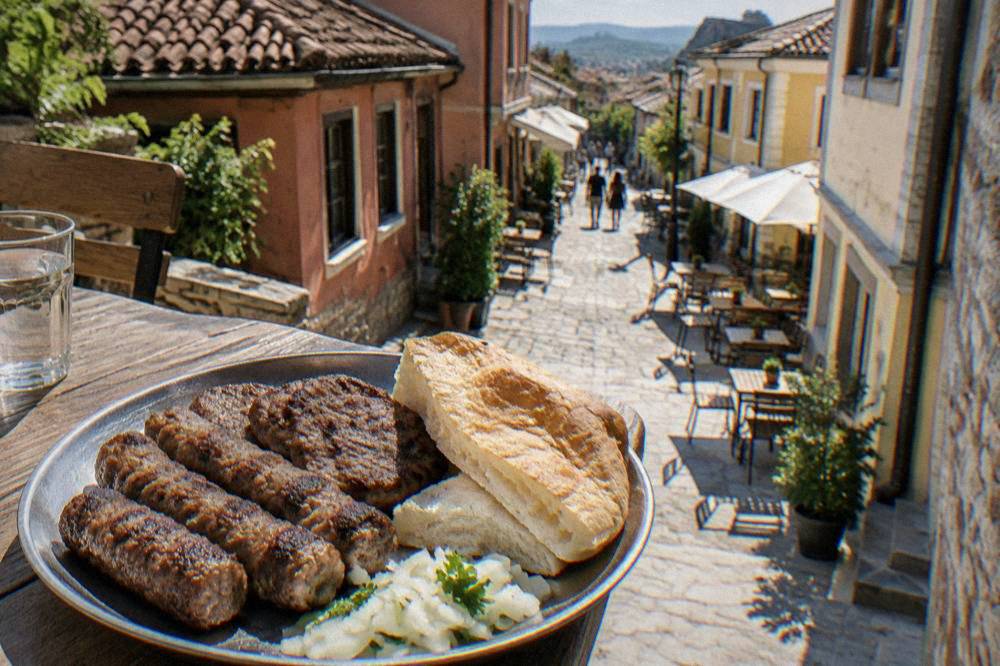
A note on the grilled half of the list. Kebapche is the elongated roll, kyufte the flattened patty, and both come from the same spiced mince. They are eaten with bread, a raw onion ring or two, and lyutenitsa, a roasted pepper and tomato relish that Bulgarians treat as a national condiment. Fish appears less often than meat on the inland table, this is a city with no sea coast, but river trout and grilled carp show up on menus supplied by local waters. Dessert is light: baklava from the pastry shops, or tikvenik, a filo roll filled with spiced pumpkin.
The ten also travel well beyond the restaurant table. Stalls and bakeries sell banitsa and gevrek through the morning, and the Sunday antique and artisan markets that appear in and around Kapana on weekends bring street food with them, so the checklist can be worked through in snack form as easily as in a dining room. That matters for a short visit: a traveller with one full day can cover the salad and grill at lunch, pastry mid-afternoon, and a clay-pot kavarma in the evening without repeating a kitchen.
Where Should You Eat In Plovdiv, Street By Street?
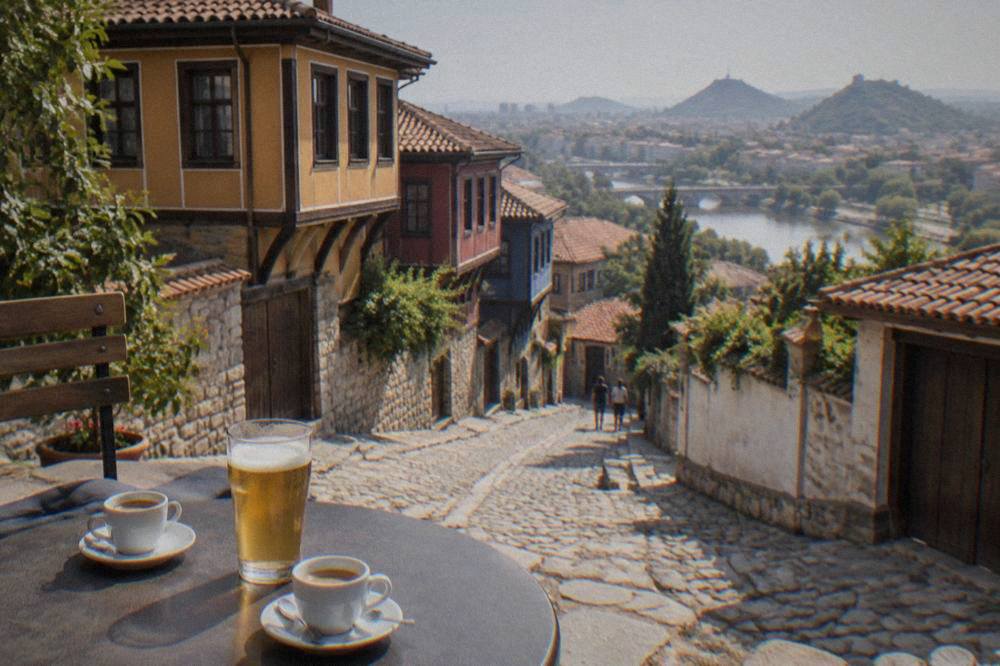
Kapana is the eating quarter: a creative district of small kitchens, mehana taverns, craft bars and coffee roasters packed into narrow streets whose name literally means "The Trap". Around it, the Main Street pedestrian axis carries the chains and quick lunches, the Old Town carries the dining rooms in restored Revival-period houses, and the neighbourhoods beyond carry the everyday grilled-meat places locals actually use.
Kapana is free to wander, open at all hours as public streets, and it is where the city's nightlife and its food culture overlap most. The district fills for Kapana Fest, whose autumn 2026 edition ran two weekends, 2 to 4 and 9 to 11 October, with street food and stalls around the Bridge over Gladstone Street and Central Square. No individual restaurant in this guide carries a reliable address, hours or price, so treat the district itself as the recommendation and pick a table by what is coming off the grill.
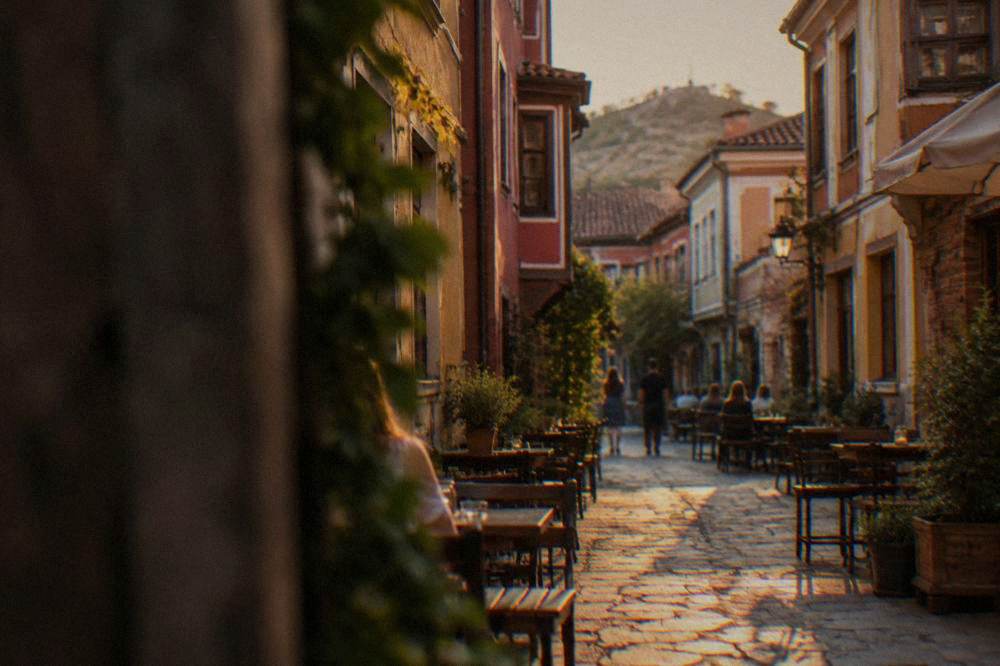
The Old Town works differently. Its houses, Balabanov, Hindliyan, Nedkovich, are museum sites by day, covered on the Old Plovdiv municipal ticket list, and the eating there leans to slower, sit-down meals with the Revival-period architecture as the backdrop. Between the two sits the Main Street and the center, the pedestrian spine where the Roman Stadium's surviving northern arc sits under the shopfronts, a reminder that people have eaten along this street's alignment since the Stadium was built in the 2nd century AD. The site's guide to free things to do in Plovdiv layers the sights into the same walk, and a food stop fits naturally at either end of it.
What Do Bulgarians Eat For Breakfast In Plovdiv?
Banitsa is the national breakfast, a filo-and-cheese pastry sold warm by the slice, and it comes with boza, a slightly fermented grain drink that divides opinion sharply. Around it sit mish-mash, the egg, cheese and pepper pan, and simple combinations of yogurt, honey and sirene. Breakfast is eaten early and quickly, and in Plovdiv it is a bakery-and-counter affair rather than a long restaurant meal.
The full detail on the morning table, including how banitsa varies by filling, is on the site's breakfast and banitsa page, and the question of timing, when Bulgarians sit down to eat at all, is answered in what time Bulgarians eat dinner. The short version: lunch is the main warm meal for many locals, dinner runs late by northern European habit, and breakfast is functional. That rhythm matters for planning, because a visitor looking for a full restaurant breakfast will find bakeries instead.
| Breakfast Item | What It Is | How It Is Served |
|---|---|---|
| Banitsa | Filo pastry, cheese and egg | Warm, by the slice, from bakeries |
| Boza | Fermented grain drink, mildly sweet | Cold glass, beside banitsa |
| Mish-mash | Eggs, sirene, roasted pepper, tomato | In a small pan, cafe breakfast |
| Yogurt with honey | Bulgarian yogurt, local honey | Bowl, often with walnuts |
| Gevrek | Sesame bread ring | Street snack with ayran |
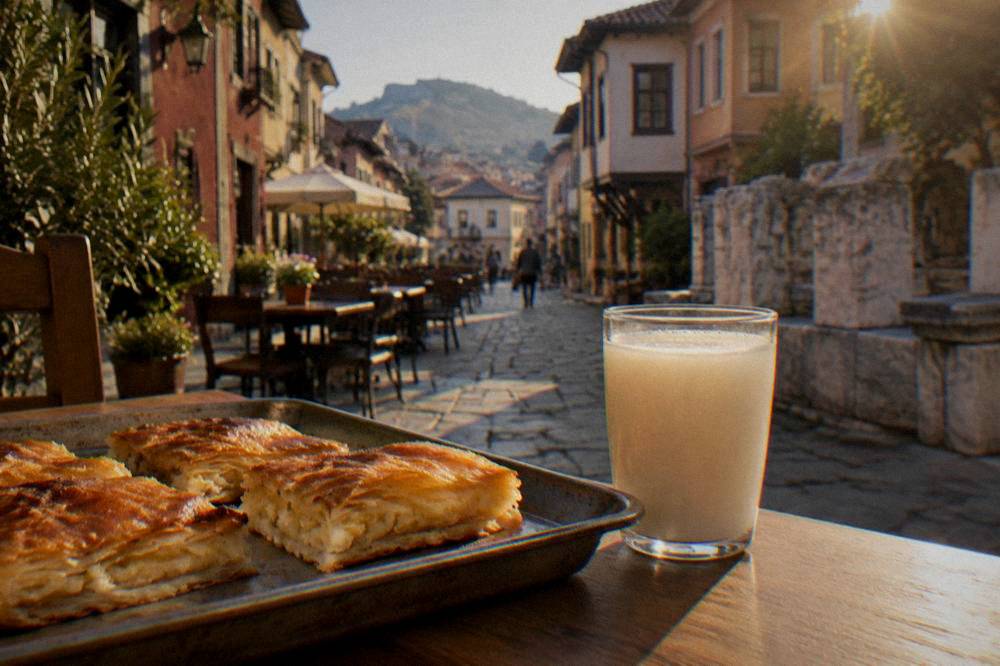
What Should You Drink With Dinner In Plovdiv?
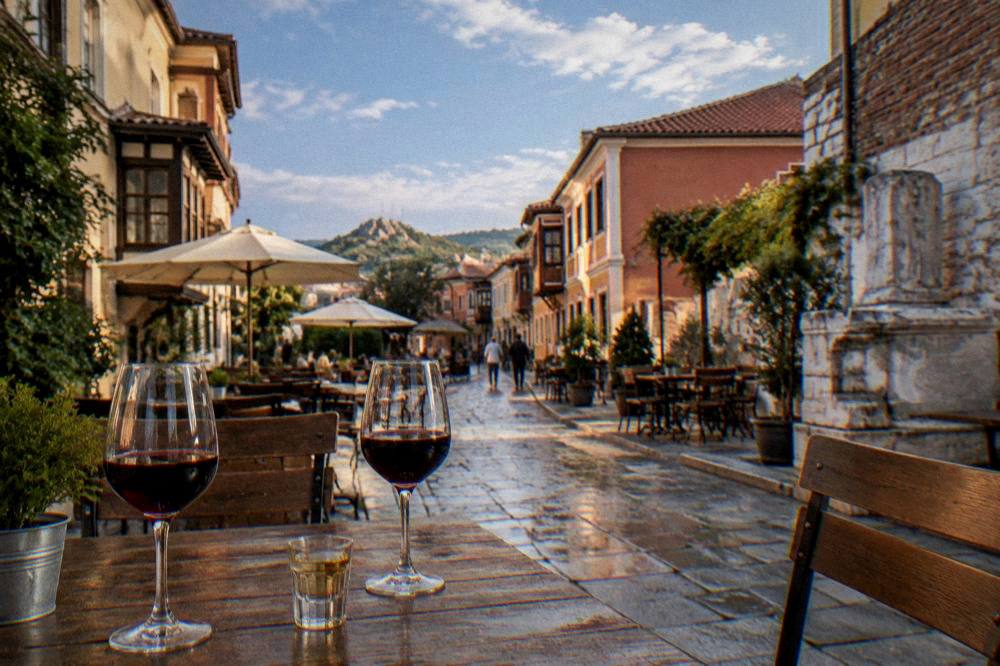
Drink Thracian Valley red wine and rakia. Plovdiv sits in the middle of one of Bulgaria's wine regions, and local grapes Mavrud and Rubin appear by the glass across the city, while rakia, the fruit brandy that opens Bulgarian meals, arrives as a small poured shot, often before the salad. For beer drinkers the standard domestic lager is everywhere, and ayran, salted yogurt drink, is the daytime pairing.
Rakia is the ritual. It is drunk slowly, in company, and traditionally with a salad to anchor it; plum and grape are the common bases. Wine is the region's quieter pride: the Thracian Valley around Plovdiv produces the local reds, and the site's Bulgarian wine guide covers the grapes and the day trips to the estates near Brestovitsa. A glass at sunset is enough of a local habit that a guided city walk with a sunset wine tasting exists as a bookable product; the booking page shows the current details.
To taste what the Thracian Valley pours, book a Bulgarian wine tasting here.
For visitors who want the food explained rather than just served, a walking food tour covers Bulgarian dishes and their background across several stops in the center; the listing states what is included and the current price.
| Drink | What It Is | When It Is Drunk |
|---|---|---|
| Rakia | Fruit brandy, plum or grape | Aperitif, before the salad |
| Mavrud | Thracian Valley red wine, local grape | With dinner |
| Rubin | Red wine, Bulgarian crossing | With grilled meat |
| Ayran | Salted yogurt drink | Daytime, with banitsa |
| Boza | Fermented grain drink | Breakfast, with pastry |
| Domestic lager | Light Bulgarian beer | Any time, by the half litre |
How Much Does Eating Out In Plovdiv Cost?
Crowd-reported price data puts an espresso and a half-litre of draught beer in Plovdiv at roughly 2 euro each, the city bus e-ticket is 0.50 euro, and Bulgaria has used the euro since 1 January 2026, so no currency math is needed. Restaurant meal prices are not published as official figures, so check each menu, but the city's cost level is one of the lower ones in the European Union.
The coffee and beer figures come from crowd-data aggregators, not from any official tariff, so treat them as a planning range rather than a promise. The site's cost guide and the money in Plovdiv explainer cover cards, cash and tipping in detail; the custom is around 10 percent in restaurants for good service, or simply rounding up.
| Item | Typical Price | Basis |
|---|---|---|
| Espresso or cappuccino | About 2 euro | Crowd data, Oct 2026 |
| Draught beer, 0.5 l | About 2 euro | Crowd data, Oct 2026 |
| City bus e-ticket | 0.50 euro | Municipal e-ticket fare |
| Taxi start fare | About 1.10 euro | Crowd data |
| Restaurant meal | Varies, check the menu | No official figure |
Does A Food Tour Help You Understand Plovdiv's Cuisine?
A guided food walk is the fastest way to connect dishes to their history, because Bulgarian cooking carries layers a menu cannot explain: Thracian, Ottoman and Slavic roots sit side by side in a single meal, and a local guide names them dish by dish. Plovdiv, often described as one of the oldest continuously inhabited cities in Europe, layers its food the same way it layers its streets.
The alternative is the city walk that ends with a tasting, which pairs the Roman and Revival-period landmarks with Thracian Valley wine as the day closes. Both styles of tour are listed on this site with current prices and availability; what follows are the picks that fit an eating-focused trip.
When Is The Best Time To Eat Your Way Around Plovdiv?
Late spring through early autumn is the eating season: from May to September the tables move onto Kapana's streets, tarator appears on every menu, and the festival calendar stacks up, with Opera Open at the Ancient Theatre running 23 June to 9 September 2026 and Kapana Fest filling two October weekends. Winter trades the terraces for the Christmas market and stew-heavy menus.
The climate case for that window comes from ERA5 reanalysis, 1991-2020: mean daily highs run 21.9 C in May, 28.2 C in July and 28.6 C in August, with January down at 5.9 C. The trade-off is rain: May averages 56.8 mm, the highest monthly figure of the year, while August averages 25.2 mm, the lowest. The site's best time to visit guide and the weather page work through the numbers month by month.
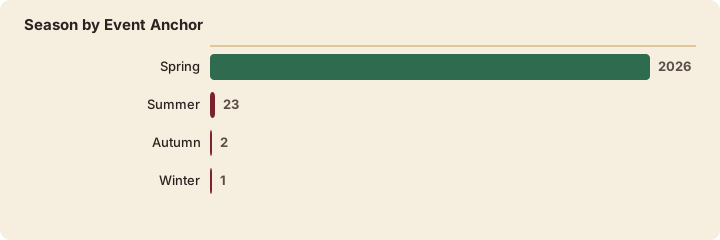
| Season | What Is On The Table | Event Anchor |
|---|---|---|
| Spring | Green salads, lamb, first terraces | Agra and Vinaria fairs, Feb 2026 ran 17 to 21 |
| Summer | Tarator, grilled meat, cold wine | Opera Open, 23 Jun to 9 Sep 2026 |
| Autumn | Roasted pepper dishes, rakia | Kapana Fest, 2-4 and 9-11 Oct 2026; Jazz Fest 6 to 8 Nov 2026 |
| Winter | Kavarma, stews, banitsa | Christmas market, 1 Dec 2026 to 7 Jan 2027 |
What About Sweets, Coffee And Late-Night Eating In Plovdiv?
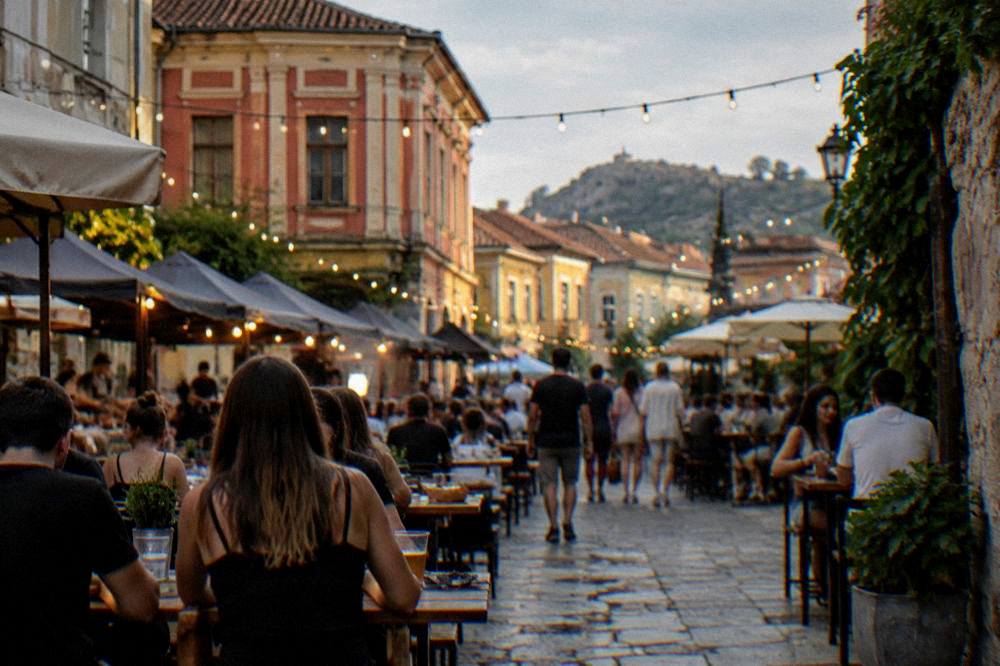
End with baklava or tikvenik from a pastry shop, drink Bulgarian coffee, thick and boiled in a small pot, or a specialty roast from Kapana's coffee scene, and when the night runs long, follow it with grilled meat from a late kitchen, because Plovdiv's grill culture keeps serving after the bars close. Sweet, bitter and greasy each have their hour in this city.
The coffee story is genuinely two-tiered: the traditional pot coffee survives alongside a roaster culture that took hold in Kapana during the years around the 2019 European Capital of Culture programme. Sweets stay simple. Baklava, tikvenik with its pumpkin filling, and cream-filled pastries are bakery counter items, eaten mid-morning or after dinner. For the full picture of the city's cafes and its evening streets, see the site's coffee and cafes guide and the after-dark nightlife page.
Planning the rest of the trip around the food is easy: the where to stay guide puts Kapana and the center within walking distance of the best eating, and the transport pages, from Sofia to Plovdiv to getting around, handle the arrival. This page names dishes and streets, and leaves the single table to the evening itself.
Common Questions About Eating In Plovdiv
What to eat in Plovdiv?
Shopska salad, banitsa, kebapche, kavarma, tarator, mish-mash and lyutenitsa are the core dishes, with baklava or tikvenik for dessert and rakia or a Thracian Valley red to drink. Look for them in Kapana, on the Main Street axis and in the Old Town dining rooms.
What is a typical Bulgarian breakfast?
Banitsa, a warm filo and cheese pastry sold by the slice, often with boza or ayran beside it. Mish-mash, a pan of eggs, cheese and roasted pepper, is the sit-down version.
What do Bulgarians drink with dinner?
Rakia as an aperitif, then red wine from local grapes such as Mavrud and Rubin. Domestic lager and ayran cover the rest of the day.
Is food cheap in Plovdiv?
Crowd data puts an espresso and a half-litre of beer at roughly 2 euro each, and the city's cost level is among the lower ones in the EU. Meal prices vary by kitchen, so check each menu.
Where is the best area to eat in Plovdiv?
Kapana, the creative district whose name means "The Trap", concentrates small kitchens, taverns and bars in a walkable maze of streets, with slower dining rooms in the Old Town and quick options along the Main Street pedestrian axis.
Can you drink the tap water in Plovdiv?
The site's dedicated water page covers this question directly; as with any travel water question, confirm locally if in doubt.