Armenian Church Of Saint Kevork
The Armenian Church of Saint Kevork stands in central Plovdiv, a working Armenian church a short walk from the Roman Stadium and Dzhumaya Mosque, in a city where no church's opening hours have been published for visitors, so this guide covers what is known and what to confirm on arrival.
Short answer
The Armenian Church of Saint Kevork is a working Armenian church in central Plovdiv, Bulgaria, close to the Roman Stadium and the Dzhumaya Mosque. No visiting hours or ticket prices are published for it: confirm locally. Plovdiv itself is a six-hill inland city, often described as one of the oldest continuously inhabited cities in Europe, and its Old Town sites charge 3.58 euro per adult on the Old Plovdiv ticket list.
Plovdiv, Bulgaria's second-largest city and an inland city built around six hills, holds one of the Balkans' longest-established Armenian communities, and the Armenian Church of Saint Kevork is its working spiritual centre in the modern era. The church sits in the city centre, within easy walking distance of the Roman Stadium, the Dzhumaya Mosque and the Main Street, which makes it one of the simplest religious buildings in Plovdiv to fold into a day of sightseeing even though, unlike the municipal Old Town sites, it publishes no visitor hours or ticket prices on any official page this site could find. What follows reports what is known about the church and its setting, and is candid about what has to be confirmed on the spot.
What Is The Armenian Church Of Saint Kevork In Plovdiv?
The Armenian Church of Saint Kevork is a working Armenian Apostolic church in central Plovdiv, serving a community that has lived in the city for centuries, and it is named for Saint Kevork, the Armenian form of the name George. It is a place of worship first and a sight second, which is why no official visitor information exists for it the way it does for the municipal Old Plovdiv sites, and any visit should be planned around that reality.
Armenians have been part of Plovdiv's commercial and cultural life for a very long time, and the community's presence is woven through the city's Ottoman-era and Revival-era history. The church functions as the community's regular place of worship rather than as a staffed visitor attraction, and that distinction shapes every practical detail of a visit. There is no ticket desk, no published schedule of visiting hours, and no municipal page carrying an official description. That is not a gap in this guide's research; it is a fact about how the church operates, and it is the single most useful thing to know before walking over.
The contrast with the sites around it is sharp. The Ancient Theatre of Philippopolis, the Roman Stadium and the Old Town houses all sit under the municipal Old Plovdiv institute, which publishes a full price list with euro figures and seasonal hours. The Armenian Church of Saint Kevork belongs to its congregation. Visitors who arrive expecting a ticketed heritage site will be disappointed; visitors who arrive expecting a living church will find exactly that.
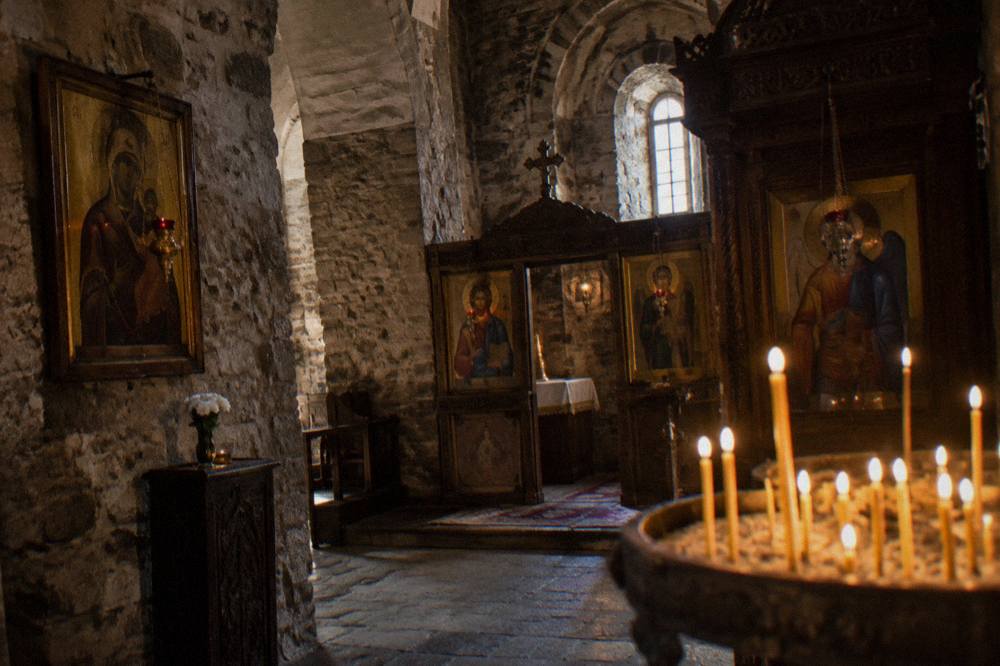
Respectful visiting norms apply, as they do at Plovdiv's other working religious buildings. At the Dzhumaya Mosque, for example, the city's own guidance asks for modest dress covering shoulders and knees, shoes removed, and avoidance of prayer times, and the same spirit applies at any working church: quiet voices, no flash photography, and stepping back if a service is running. A short visit outside service times, dressed modestly, is the pattern that works at small working churches everywhere.
Where Is The Armenian Church Of Saint Kevork In Plovdiv Located?
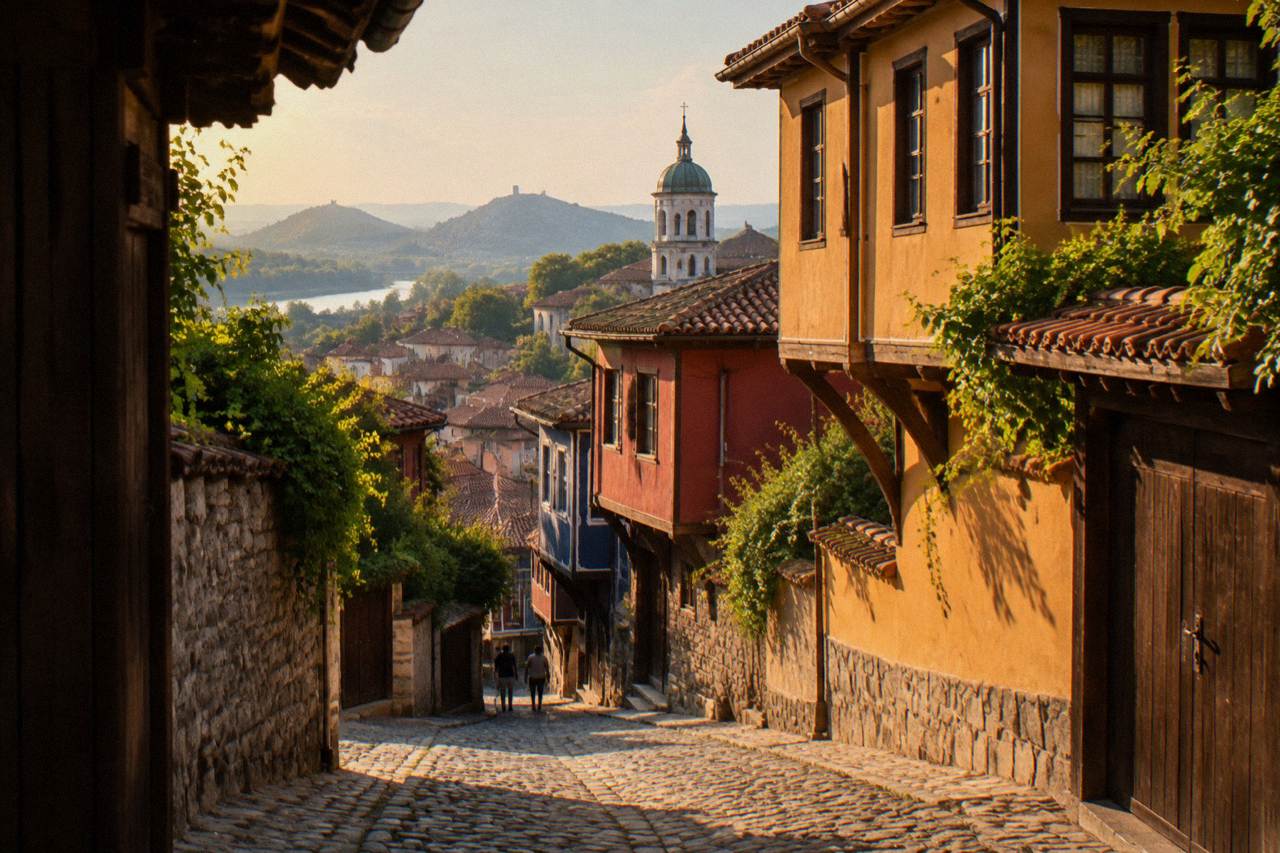
The Armenian Church of Saint Kevork stands in central Plovdiv, a few minutes on foot from the Roman Stadium and the Dzhumaya Mosque at 2 Zhelezarska Street, in the band of city-centre streets between the Main Street pedestrian axis and the Old Town hillside. Everything a visitor needs for a half-day loop, the Roman Stadium's sphendone, the mosque, Hisar Kapia and the Old Town houses, lies within a short walk of it.
That placement is the church's main practical strength. The Roman Stadium of Philippopolis, a 2nd-century AD structure built on the model of the Stadium at Delphi and able to hold up to 30,000 spectators in its day, survives visibly only in its northern part, the sphendone, and its sphendone viewing area is free to enter. The Dzhumaya Mosque, open to visits from 6:00 to 23:00 and free, is described by the city's own page as the second-largest mosque in Bulgaria by built area, at about 1,500 square metres, and its construction is dated only to a range spanning the late medieval and early Ottoman periods, which is why no single year should be trusted for it.
From there the walk climbs gently into the Old Town. Hisar Kapia, the old gate that opens into the historic quarter, is a public landmark with no ticket and no closing time, and beyond it the Revival-era houses begin: Balabanov House, Hindliyan House, Nedkovich House and Lamartine House, all covered by the Old Plovdiv ticket system described below. A loop that takes in the church, the stadium sphendone, the mosque and Hisar Kapia, then finishes with one or two houses, is the natural shape of a morning in this part of Plovdiv.
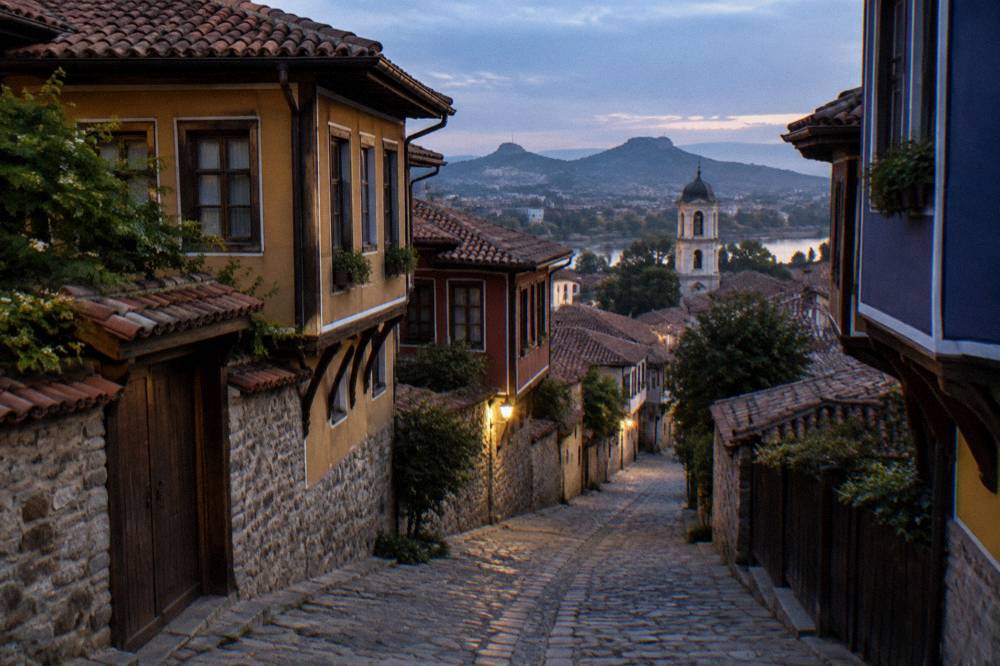
Because the church is a landmark rather than a ticketed site, it costs nothing to see from outside, and the exterior alone is worth the detour for anyone already walking this district. For travellers who want the whole neighbourhood interpreted rather than self-guided, a guided walk is the efficient option: the Old Town walk with rakia tasting covers the Revival quarter and its Roman layers, and Check availability shows the operator's live listing.
What Are The Visiting Hours And Entry Rules For The Armenian Church Of Saint Kevork In Plovdiv?
No visiting hours, ticket prices or formal entry rules for the Armenian Church of Saint Kevork have been published on any official source, so the honest answer is that hours must be confirmed locally, ideally through the community or on arrival at the door. It is a working church rather than a municipal museum site, and among Plovdiv's churches and mosques only the Dzhumaya Mosque has published visitor information, as it is free and open to visits from 6:00 to 23:00 with modest dress expected.
This is worth stating plainly because almost every competing guide prints confident hours for the church that no official page carries. The Old Plovdiv institute, by contrast, publishes everything for its own sites, and those figures are firm: the Ancient Theatre runs 9:30 to 18:00 from April to October and 9:00 to 17:30 from November to March, with a lunch break at 12:30, and the same seasonal pattern applies to the Roman Stadium's visitor spaces and the Old Town houses. The Dzhumaya Mosque's hours come from the city's own page. For the Armenian Church of Saint Kevork, nothing equivalent exists, and a page that prints a time is printing a guess.
| site near the church | Opening pattern | Entry cost |
|---|---|---|
| Roman Stadium sphendone (open-air) | Free public viewing area | Free |
| Roman Stadium 3D hall | Apr to Oct 9:30 to 18:00; Nov to Mar 9:00 to 17:30; lunch 12:30 to 13:00 | Adult 3.68 euro |
| Dzhumaya Mosque | Open to visits 6:00 to 23:00 | Free |
| Nebet Tepe | Open-air complex, unrestricted access | Free |
| Hisar Kapia | Public gate, open at all hours | Free |
| Armenian Church of Saint Kevork | Not published on any official source | Confirm locally |
The practical advice follows from the table. Treat the church as a maybe: walk past it, try the door, and if it is closed, the sphendone, the mosque and Nebet Tepe are all free and open regardless. If seeing the interior matters to the trip, ask at the hotel or at the Old Plovdiv ticket desks, which sit inside the same district and whose staff deal with these questions daily.
Modest dress is the safe default anywhere in this part of the city, since the walking loop takes in a mosque and working churches in the same hour. Shoulders and knees covered, shoes ready to remove at the mosque, and a headscarf for women at the mosque, with robes and scarves often provided on site, cover every building on the route.
What To See Around The Armenian Church Of Saint Kevork In Plovdiv?
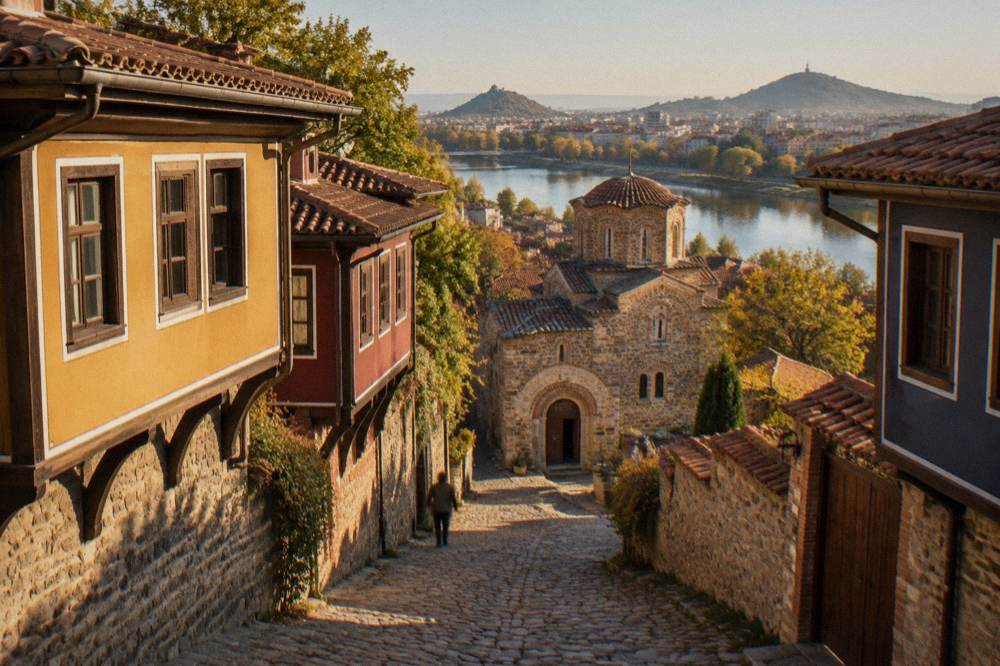
The church sits inside Plovdiv's densest sightseeing cluster: the Roman Stadium sphendone and the Dzhumaya Mosque are minutes away on foot, the Main Street pedestrian axis runs beside them, and Hisar Kapia leads up into the Old Town, where the Balabanov, Hindliyan and Nedkovich houses, the Ancient Theatre of Philippopolis and Nebet Tepe are all covered by one euro-denominated ticket system with single-site entry at 3.58 euro for adults.
The Old Plovdiv price list, published with euro figures, is the key planning document for that hillside, and it is worth reading before the walk rather than after.
| Old Plovdiv ticket | Adult | Student | Family (parents with children 7 to 16) |
|---|---|---|---|
| One site (except Bishop's Basilica) | 3.58 euro | 1.53 euro | 7.16 euro |
| Combined, up to 5 sites | 10.74 euro | 4.09 euro | 21.47 euro |
| Bishop's Basilica separately | 7.57 euro | 3.58 euro | 15.34 euro |
Children under 7 and visitors with more than 50% disability enter free, groups over 10 pay a reduced adult rate, and students and seniors get free entry at Old Plovdiv sites on the first Thursday of the month. The Bishop's Basilica of Philippopolis is priced separately from the single and combined tickets: it is the largest 4th to 6th century basilica in Bulgaria, about 83 m long and 36 m wide, with two layers of floor mosaics covering over 2,000 square metres, and it is open daily from 9:00 to 18:00 year round.
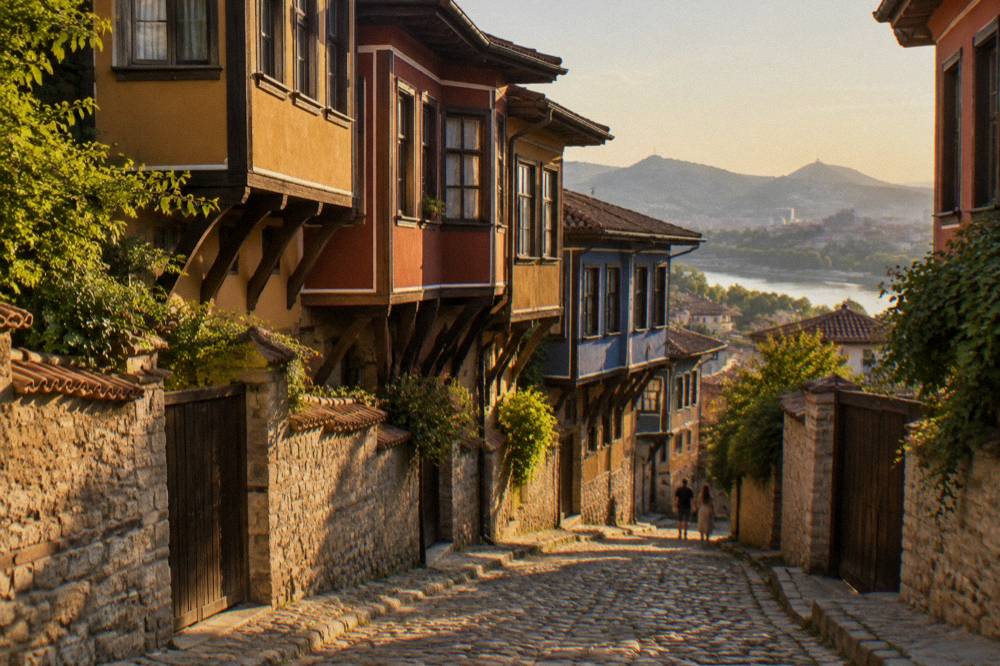
The houses deserve their own hour. Balabanov House and Hindliyan House are the best known of the Revival mansions, and a report from the autumn of 2026 noted Hindliyan House moving to daily opening, though individual house schedules shift, so the Old Plovdiv ticket page remains the authority. The Ethnographic Museum, in the Kuyumdzhiev House, is closed on Mondays and charges about 3.07 euro for adults, opening 9:00 to 18:00 in summer and 9:00 to 17:00 in winter. The Regional Archaeological Museum renewed its permanent exhibition in November 2025 with about 150 new exhibits and a bilingual audio guide, and it is also closed on Mondays.
Above the houses, Nebet Tepe is the city's origin point: the municipal tourism site dates the first settlement there to the 4th millennium BC, which is why Plovdiv is often described as one of the oldest continuously inhabited cities in Europe, and why no "oldest city" claim should be taken further than that phrase. The complex was restored and officially reopened in March 2025, and access is free and unrestricted. The Ancient Theatre of Philippopolis, built in the 90s of the 1st century AD with 28 concentric rows of marble seats, completes the climb and doubles in summer as an opera stage: Opera Open ran from 23 June to 9 September in 2026.
A food walk is the other natural companion to this district, since Kapana, whose name means "The Trap" and whose narrow streets form a free, always-open creative quarter, sits just south of the church's neighbourhood. The Bulgarian food and culture tour routes through exactly these streets, and Check availability gives the operator's current listing.
How Does The Armenian Church Of Saint Kevork Compare With Plovdiv's Other Churches?
Plovdiv's religious buildings split into two kinds: ticketed heritage sites with published euro prices, like the basilicas under the Old Plovdiv system, and working places of worship like the Dzhumaya Mosque and the Armenian Church of Saint Kevork, which are free or unlisted and publish little for visitors. The Church of Saint Marina, the Cathedral of the Dormition and the Church of Saints Constantine and Helena are working Orthodox churches that publish no visitor hours, so the same confirm-locally rule applies across all of them.
That two-kind split is genuinely useful for planning. On the heritage side, the Eirene mosaic and Episcopal Basilica and the Small Basilica, a 5th to 6th century three-nave building with mosaic floors, operate on the municipal model: posted hours, posted prices, lunch breaks at 12:30. On the worship side, the Armenian church, the Orthodox churches and the mosque operate on the congregation's rhythm, and the city's official information extends only to the mosque.
| Religious building in Plovdiv | Type | Visitor status |
|---|---|---|
| Armenian Church of Saint Kevork | Working Armenian Apostolic church | Hours not published; confirm locally |
| Dzhumaya Mosque | Working mosque, second-largest in Bulgaria by area | Free, visits 6:00 to 23:00, modest dress |
| Bishop's Basilica of Philippopolis | Museum site with mosaics | Daily 9:00 to 18:00, adult 7.57 euro |
| Small Basilica | Museum site, 5th to 6th century mosaics | One-site Old Plovdiv ticket, 3.58 euro |
| Church of Saint Marina | Working Orthodox church | Hours not published; confirm locally |
| Cathedral of the Dormition | Working Orthodox cathedral | Hours not published; confirm locally |
For a visitor building one itinerary, the split suggests an order. Do the ticketed sites in their posted windows, morning or late afternoon around the 12:30 lunch break, and slot the working churches in opportunistically: walk past, try the door, move on. The Armenian Church of Saint Kevork fits that opportunistic slot perfectly because its neighbourhood is rich enough that a closed door costs nothing.
Which Plovdiv Tours Work Well With A Visit To The Armenian Church Of Saint Kevork?
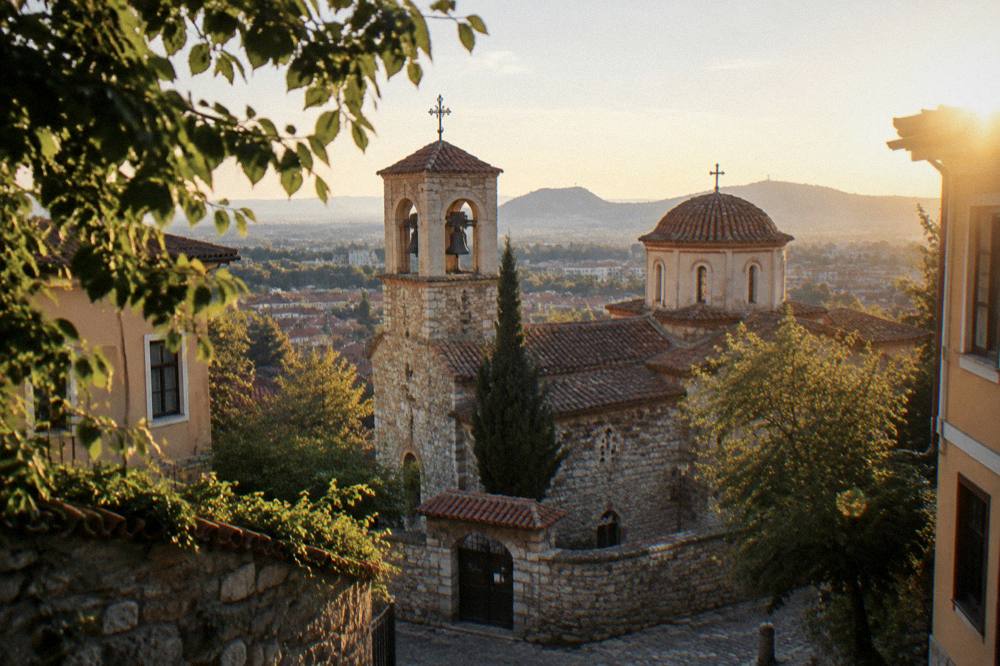
Walking tours of the Old Town and city centre pair naturally with the Armenian Church of Saint Kevork, because the church stands inside the standard guiding route rather than beside it. The strongest options on this site's roster are the Old Town guided walk with rakia tasting, the Bulgarian food and culture walk, and a Koprivshtitsa half-day trip for travellers who want to extend beyond the city. Each is described here by what it covers, with prices left to the live listings.
Since the church sits inside the standard guiding route, book a guided walking tour here.
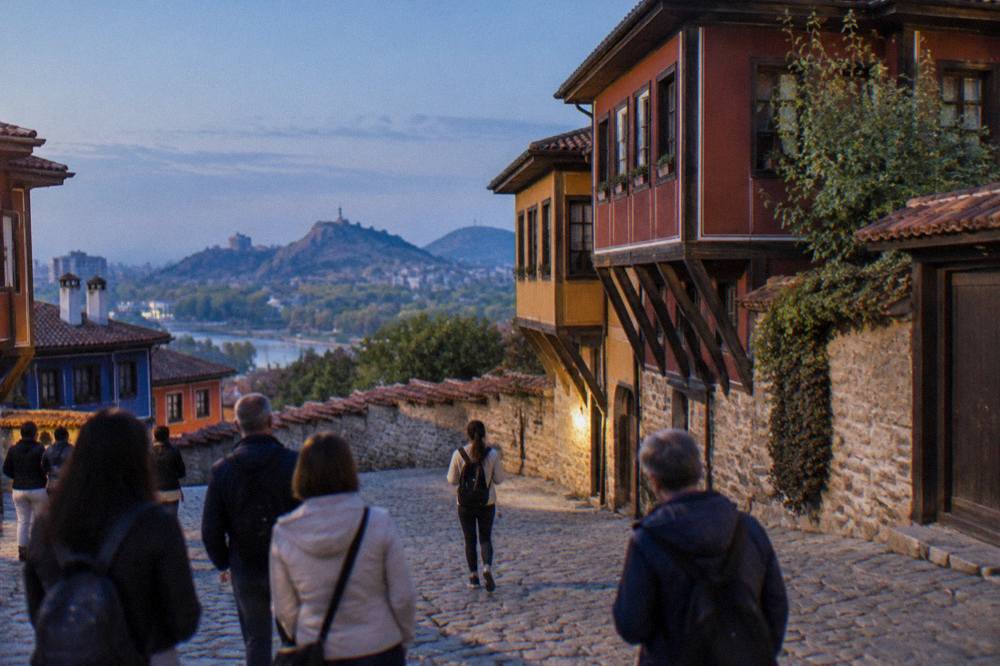
The Old Town walk with rakia tasting is the closest match. It moves through the same streets the church sits on, pairs the Revival architecture with a tasting of Bulgaria's best-known fruit brandy, and needs no car and no transfer. The food walk covers the culture through Kapana and the central streets, where the eating happens. And for a day that starts in Plovdiv and ends with an appetite for history further afield, the Koprivshtitsa half-day trip reaches the town whose six house museums can be visited on a combined ticket of about 10 euro, with free entry on the last Monday of the month.
Guided walks also solve the church's information problem in a way no printed guide can. A local guide who walks this district daily knows whether the church's door is open this season and at what hour, which is precisely the detail no official page publishes. Tip-based walks also run locally; if a free or pay-what-you-want walk comes up in conversation or on a noticeboard, confirm the meeting point and terms with the guide directly.
Travellers using this site's broader planning pages can match the church into a longer stay: the things to do in Plovdiv overview places it among the city's core sights, and the Dzhumaya Mosque page and Roman Stadium page cover its two nearest landmarks in detail.
When Is The Best Time Of Year To Visit The Armenian Church Of Saint Kevork In Plovdiv?
The comfortable months around the church's walkable district are May, September and October, when the ERA5 reanalysis 1991-2020 shows mean daily highs of 21.9, 23.8 and 18.1 C respectively, and the summer Opera Open season, which ran 23 June to 9 September in 2026, gives the evenings an added reason to be in Plovdiv. Winter is quiet and cold, with a January mean daily low of -2.6 C, and the church itself is best tried outside service times in any season.
The climate context comes from modelled normals, an ERA5 reanalysis grid cell for Plovdiv rather than a station record, and it smooths urban heat, but the pattern is clear and continental.
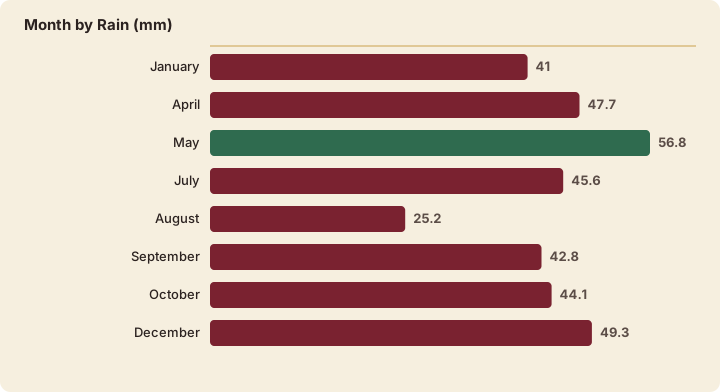
| Month | Mean daily high (C) | Mean daily low (C) | Rain (mm) |
|---|---|---|---|
| January | 5.9 | -2.6 | 41.0 |
| April | 17.1 | 6.4 | 47.7 |
| May | 21.9 | 11.5 | 56.8 |
| July | 28.2 | 17.9 | 45.6 |
| August | 28.6 | 18.1 | 25.2 |
| September | 23.8 | 13.8 | 42.8 |
| October | 18.1 | 8.8 | 44.1 |
| December | 7.0 | -0.8 | 49.3 |
May carries the highest monthly rainfall in the normals at 56.8 mm and August the lowest at 25.2 mm, so summer visitors trade heat for dry pavement, and the district's walking routes are short enough that neither extreme is punishing. The events calendar adds weight to specific windows. Kapana Fest's autumn edition ran across two weekends, 2 to 4 and 9 to 11 October 2026, the Old Town festival days ran 16 to 23 September 2026, the Plovdiv Jazz Fest fall edition runs 6 to 8 November 2026, and the Christmas market that filled Central Square from late November into early January returns from 1 December 2026 to 7 January 2027 under the name "Soul of Christmas", spreading into Kapana as well.
Practical country facts round out the timing question. A tourist tax may be charged by accommodation, but its 2026 euro rate is unverified, so confirm it at booking rather than trusting a printed figure.
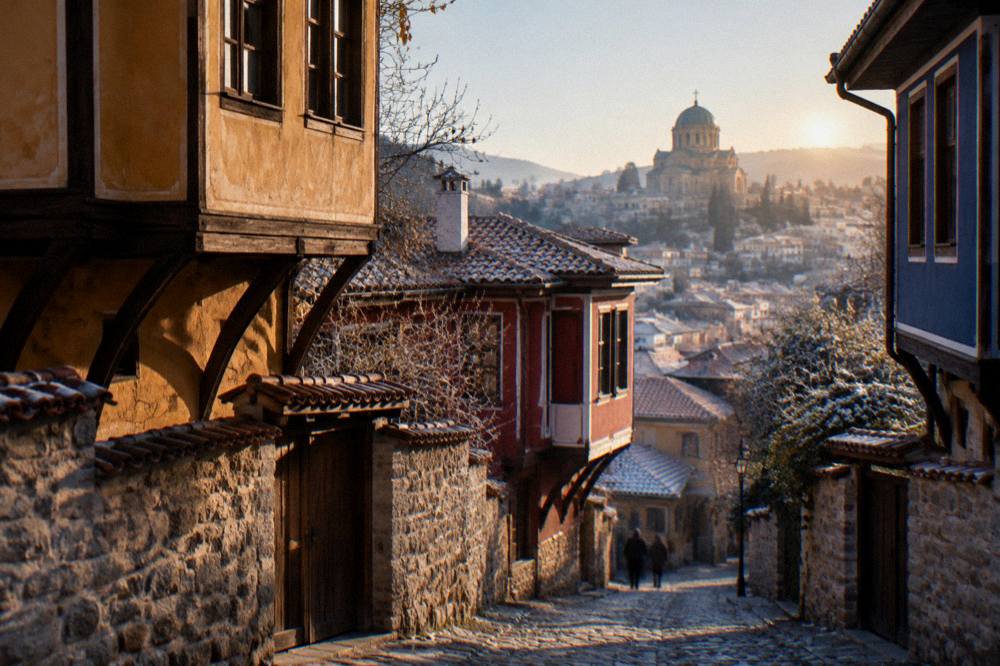
For travellers pairing the church with a wider Bulgarian route, the Koprivshtitsa half-day tour extends the Revival-era story this part of Plovdiv begins, and Check availability shows the operator's live listing.
Common Questions About The Armenian Church Of Saint Kevork In Plovdiv
Is the Armenian Church of Saint Kevork in Plovdiv free to enter?
No ticket price has been published for it on any official source, so treat entry as free but unconfirmed and be prepared for the door to be closed outside service times. The surrounding free sights, the Roman Stadium sphendone, Nebet Tepe and Hisar Kapia, are open regardless.
What are the opening hours of the Armenian Church of Saint Kevork in Plovdiv?
No official visiting hours exist for this church. It is a working Armenian Apostolic church serving its congregation, not a municipal museum site, so confirm locally, at your accommodation or at an Old Plovdiv ticket desk, before making a special trip.
How do I get to the Armenian Church of Saint Kevork in Plovdiv?
It stands in the city centre within a short walk of the Roman Stadium and the Dzhumaya Mosque at 2 Zhelezarska Street, on the flat band of streets between the Main Street pedestrian axis and the Old Town hillside. The city bus e-ticket costs 0.50 euro, and the central railway and Yug bus stations sit side by side on Hristo Botev Boulevard.
Can I visit the Armenian Church of Saint Kevork and the Old Town in one day?
Yes, comfortably. The church sits at the foot of the Old Town, and a loop taking in the sphendone, the mosque, Hisar Kapia, one or two Revival houses and the Ancient Theatre is a normal half-day walk, with the Old Plovdiv one-site ticket at 3.58 euro for adults.
Is the Armenian Church of Saint Kevork the same as Saint George's church in Plovdiv?
Kevork is the Armenian form of the name George, so the church's name and Saint George are connected, but it is a distinct Armenian Apostolic congregation separate from Plovdiv's Orthodox churches such as Saint Marina and the Cathedral of the Dormition.
When is the best time to photograph the area around the Armenian Church of Saint Kevork in Plovdiv?
Early morning and late afternoon light suit the district's narrow streets, and the shoulder months of May, September and October bring ERA5 reanalysis 1991-2020 mean highs of 21.9, 23.8 and 18.1 C, pleasant for standing around with a camera. Always ask before photographing inside any working church.
Plovdiv rewards exactly this kind of unplanned sight: a working church with no turnstile, sitting in a district where the free sphendone, the free Nebet Tepe and the ticketed Revival houses stack up within minutes of one another. Confirm the door locally, walk the loop, and let the rest of the Plovdiv Travel Guide fill in the rest of the stay.
