Balabanov House: A Revival Mansion Turned Cultural Centre
Balabanov House stands on a quiet street in Plovdiv's Old Town, one of the Revival mansions managed by the Old Plovdiv municipal institute, open on the same ticket as the Ancient Theatre and the Roman Stadium's paid halls.
Short answer
Balabanov House in Plovdiv is a Revival-era mansion in the Old Town, now used as a cultural venue with exhibitions and concerts. An adult ticket costs 3.58 euro on the Old Plovdiv one-site list, it opens daily from around 9:00 to 18:00 in summer with a lunch break, and it sits a short walk from Hisar Kapia and Nebet Tepe.
Balabanov House is one of the Revival mansions that line the cobblestone lanes of Plovdiv's Old Town in southern Bulgaria, an inland city built around six hills that was European Capital of Culture in 2019. The house belongs to the portfolio of the Old Plovdiv municipal institute, which also runs the Ancient Theatre of Philippopolis, the Roman Stadium's visitor halls, the Small Basilica and the other house museums, and it is priced on the same ticket list as all of them. Today it works as a cultural centre rather than a conventional museum: the rooms host exhibitions, chamber concerts and events through the year, which is why the approved name for the page you are reading calls it a revival mansion turned cultural centre. This guide sets out what is known about tickets, hours, what is inside, and how to fit the house into a wider Old Town walk.
What Is Balabanov House In Plovdiv?
Balabanov House is a Revival-era mansion in Plovdiv's Old Town, restored and run by the Old Plovdiv municipal institute as a cultural venue for exhibitions, concerts and receptions rather than as a single-collection museum. It shares the Old Plovdiv ticket system with the Ancient Theatre, the Small Basilica and the other historic houses, and it stands in the heart of the Old Town within walking distance of Hisar Kapia, Nebet Tepe and the Main Street.
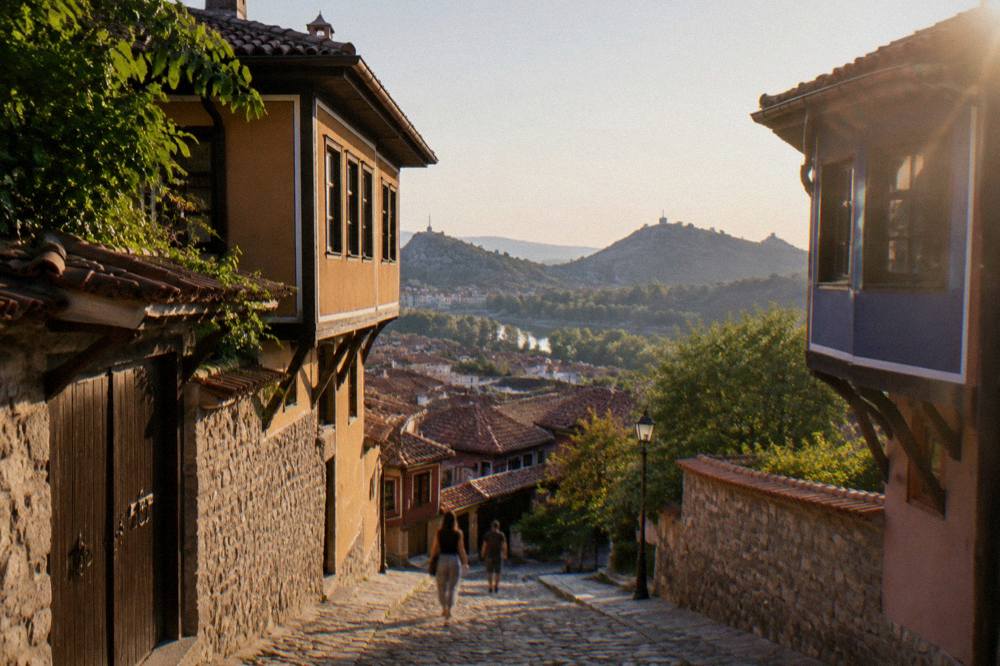
The Old Town of Plovdiv, the district on the Three Hills where the ancient city met the later merchant quarter, is dotted with large houses built by wealthy Bulgarian families during the Revival era. The city's institutions preserve a group of them as museums: Balabanov, Hindliyan, Nedkovich, Lamartine and several others all appear on the Old Plovdiv sights list, and the municipal institute's ticket page prices them together. The Old Town itself is not a single ticketed enclosure; it is a public hillside neighbourhood of which these houses are the entered, guarded pieces.
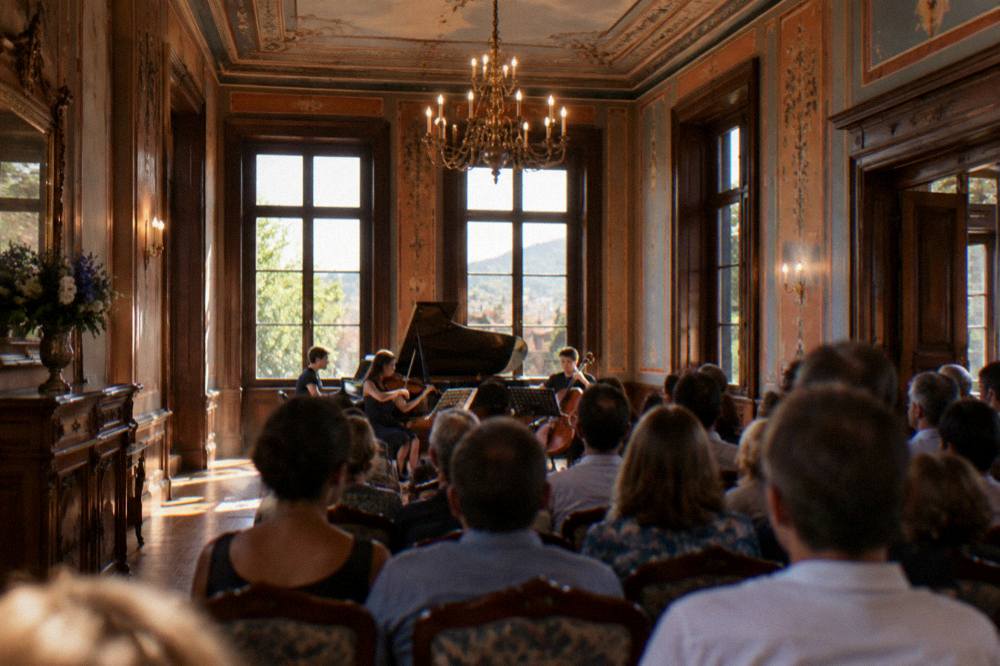
What marks Balabanov House out from the neighbouring houses is its role as a stage. The municipal programme uses it for temporary exhibitions, chamber music and official receptions, so the interior you meet may be hung with a contemporary art show as easily as with period furnishings. The building also appears on the history of Plovdiv circuit that guides walk when they trace the city from Philippopolis through the Revival and into the 2019 European Capital of Culture year.
A first visit raises three practical questions, and the rest of this page answers each from the official price and sights pages: what a ticket costs and which discounts apply, when the doors are open, and what else in the Old Town is worth attaching to the same walk. For the full city picture, the site's things to do in Plovdiv page covers everything beyond the Old Town gates, from the Roman sites to Kapana and the hills.
How Much Do Balabanov House Tickets Cost In Plovdiv?
An adult ticket to Balabanov House costs 3.58 euro on the Old Plovdiv price list, with pupils and students at 1.53 euro and a family ticket covering parents and children aged 7 to 16 at 7.16 euro. Children under 7 and visitors with more than 50 percent disability enter free, and groups over 10 pay 3.07 euro per adult.
The table below restates the one-site prices in euro only, exactly as the official list gives them.
| Ticket type | One Old Plovdiv site (euro) |
|---|---|
| Adult | 3.58 |
| Pupil / student | 1.53 |
| Family, parents plus children 7 to 16 | 7.16 |
| Group adult, over 10 people | 3.07 |
| Children under 7 | Free |
| Over 50 percent disability | Free |
The one-site ticket applies to any single Old Plovdiv site except the Bishop's Basilica, which is priced separately. So a Balabanov House ticket is the same price as a ticket to the Ancient Theatre of Philippopolis, the Small Basilica, the Roman Stadium's 3D hall (that hall has its own pricing rows) or the other house museums.
If the house is one stop on a longer Old Town afternoon, the combined ticket is the figure that matters. The official list prices a combined ticket covering up to five sites, excluding the Small Basilica and the Bishop's Basilica, as follows.
| Ticket type | Combined, up to 5 sites (euro) |
|---|---|
| Adult | 10.74 |
| Pupil / student | 4.09 |
| Family, parents plus children 7 to 16 | 21.47 |
| Group adult, over 10 people | 8.69 |
Two cautions from the price page itself. First, the validity period of the combined ticket is not published, so treat any figure you read elsewhere as unconfirmed and ask at the ticket desk when you buy. Second, the Bishop's Basilica is a separate institution on the list with its own adult price of 7.57 euro, and the basilica combinations involving the Small Basilica and the Eirene building should be checked on the mosaic and basilica pages rather than assumed. The first Thursday of the month brings free entry for students and seniors at Old Plovdiv sites per the municipal listings, and the Regional History Museum network, a separate institution, is free for everyone on first Thursdays.
Between the ticket rows, it is worth pausing on what the Old Plovdiv list tells you about the city's organisation: one municipal institute sells the same ticket for a Roman theatre, an early Christian basilica and a set of Revival mansions, which is Plovdiv's whole layered history in a single price table. Few European cities compress four millennia of sights into one tariff like this, and the Ethnographic Museum, which sits in the Kuyumdzhiev House at the top of the Old Town, is the one major Old Town collection priced outside that list.
What Are The Opening Hours At Balabanov House Plovdiv?
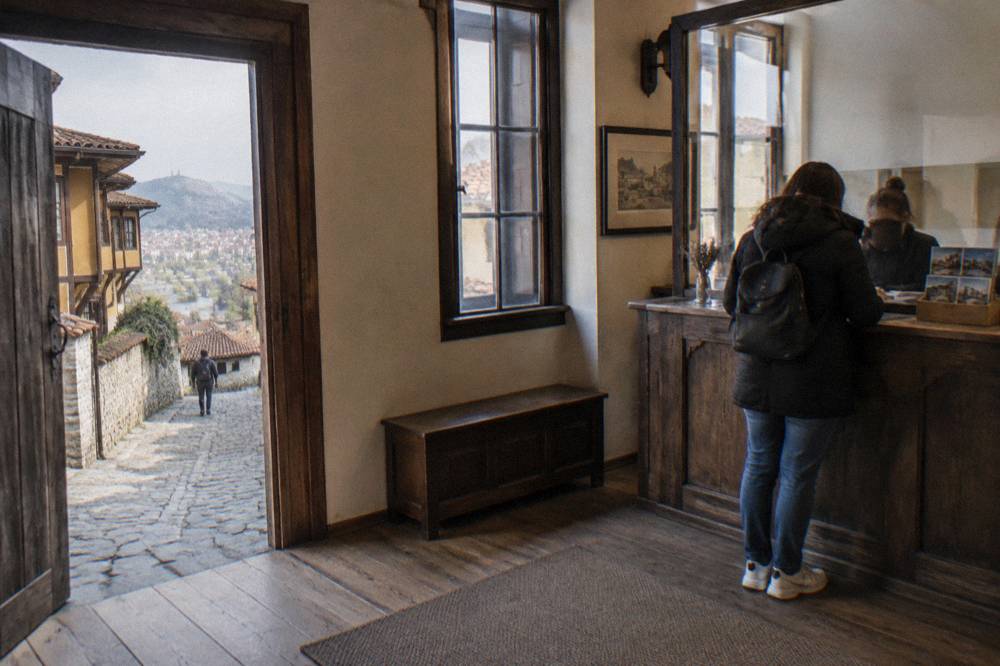
Balabanov House opens on the Old Plovdiv seasonal schedule: roughly 9:00 or 9:30 to 18:00 in the April to October season and 9:00 to 17:30 from November to March, with a lunch break around 12:30 to 13:00 and a closing day that varies among the houses, several of which close on Mondays. The municipal listings advise checking the individual sight page or the ticket office for the day's hours, because event bookings can change access.
The seasonal pattern is shared across the Old Plovdiv sites, which makes planning simpler than it first looks. The Ancient Theatre's own page, for instance, states the same April to October and November to March bands with the same lunch break, and the house museums follow suit with small variations.
| Period | Typical daily hours | Notes |
|---|---|---|
| April to October | About 9:00 or 9:30 to 18:00 | Lunch break around 12:30 to 13:00 |
| November to March | About 9:00 to 17:30 | Lunch break around 12:30 to 13:00 |
| Closing day | Varies by house | Some houses close Monday; the Ethnographic Museum closes Monday |
| Event days | Hours can shift | The house hosts concerts and receptions |
Because Balabanov House functions as a venue, the surest approach on a concert evening is to treat a daytime visit as the default and ask at the desk whether the rooms will close early for a setup. The neighbouring houses move in the same rhythm: Hindliyan House was reported in 2026 as moving to daily opening, while the Ethnographic Museum keeps its Monday closure and its winter hours, 9:00 to 17:00 from November to March.
Timing the wider neighbourhood matters as much as the house itself. The Old Town's lanes are public and always open, and the free sights, Nebet Tepe, Hisar Kapia and the viewpoints, cost nothing at any hour, but the ticketed houses all sit inside the same daytime window. A morning that starts at the Ancient Theatre, crosses to Balabanov House before the lunch break and finishes on Nebet Tepe in the late afternoon uses the whole window without rushing.
What Can You See Inside Balabanov House Plovdiv?
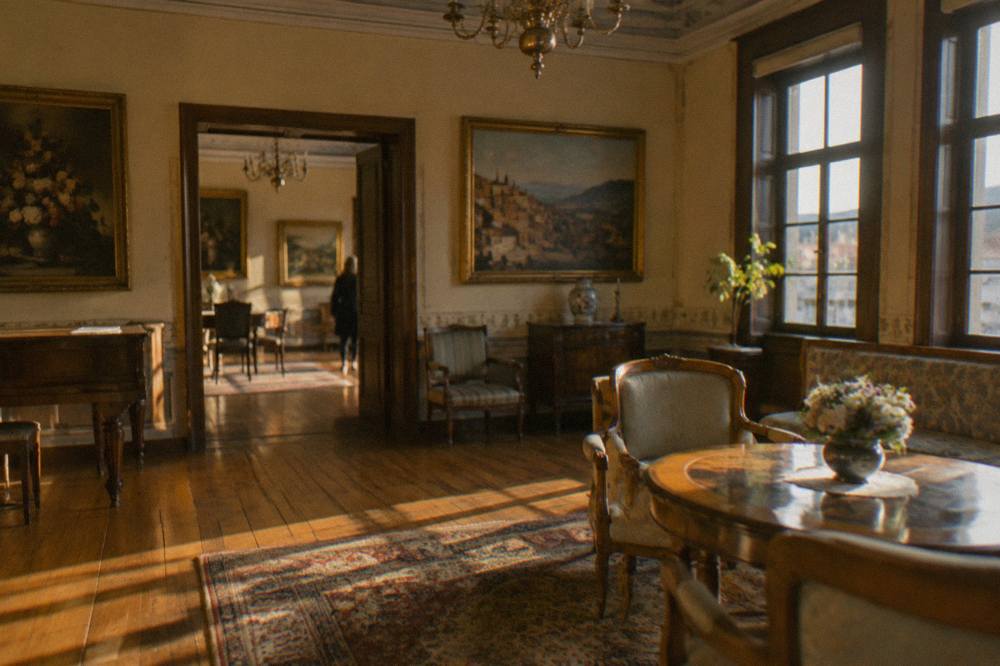
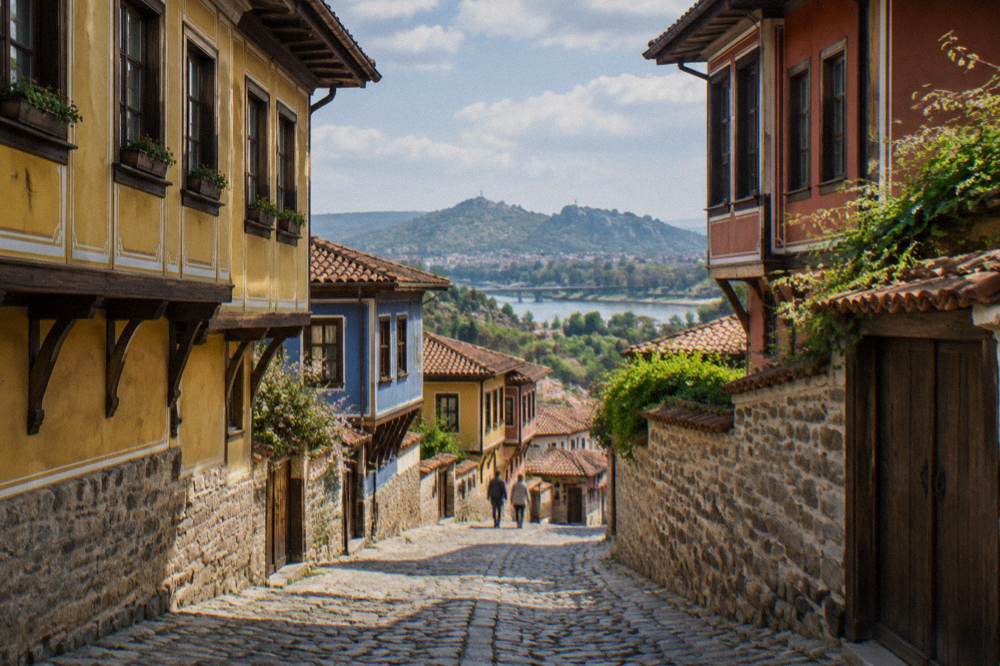
Inside, Balabanov House shows the restored rooms of a Revival mansion, high ceilings, wooden floors and painted or panelled walls, used as gallery and concert space, so the permanent appeal is the architecture itself and the temporary exhibitions hung in it rather than a single fixed collection. The Old Plovdiv listings describe it as a house museum that hosts cultural events, and the interior is arranged to be walked through room by room on the one-site ticket.
The Revival houses of Plovdiv share a family likeness: deep verandas, symmetrical facades, salons built for display. What differs is the present-day use. Balabanov House leans toward the stage and the gallery; a chamber concert in its salon is one of the more distinctive evenings the Old Town offers, and the municipal event calendar is where such evenings are announced. The house's role in the 2019 European Capital of Culture programme, when Plovdiv shared the title with Matera, put it firmly on the city's cultural circuit.
For orientation inside the wider district, the site's Plovdiv walking tour guide lays out a route past the houses, and the self-guided walk version lets you set your own pace with the same sequence of lanes and gates.
A few Revival-era houses in the district sit close enough to compare on one walk:
| Old Town house | Present character | Ticket basis |
|---|---|---|
| Balabanov House | Cultural centre, exhibitions and concerts | Old Plovdiv one-site, 3.58 euro |
| Hindliyan House | Period interiors, reported daily opening in 2026 | Old Plovdiv one-site, 3.58 euro |
| Nedkovich House | Historic house museum on the same list | Old Plovdiv one-site, 3.58 euro |
| Lamartine House | Named for the French poet Lamartine | Old Plovdiv one-site, 3.58 euro |
| Kuyumdzhiev House, Ethnographic Museum | Regional costume and craft collections | Priced separately, about 3.07 euro |
The Lamartine House and Hindliyan House pages on this site carry their own detail; the point for planning is that the one-site ticket makes a two-house visit cheap and a five-site combined ticket, at 10.74 euro, makes the whole set cheaper still.
Where Is Balabanov House And How Do You Reach It In Plovdiv?
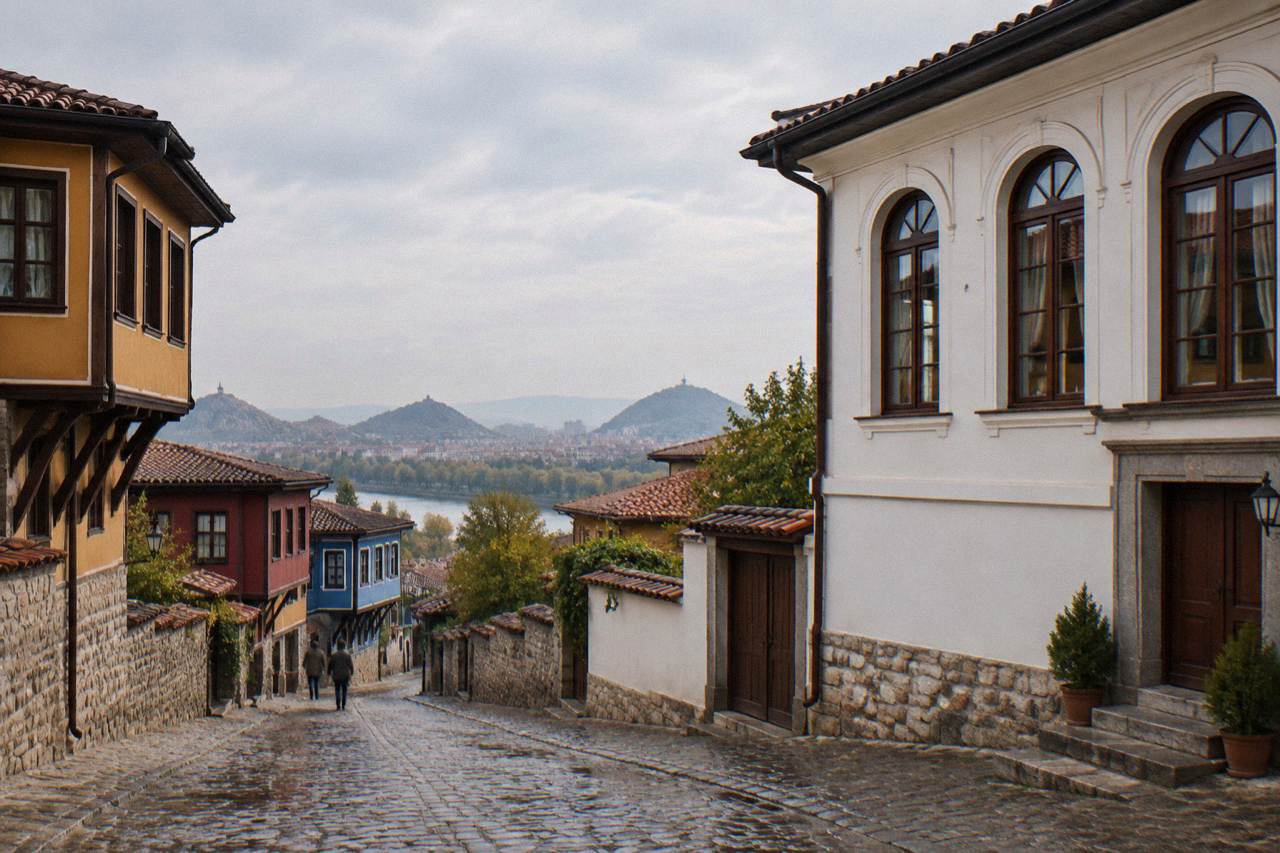
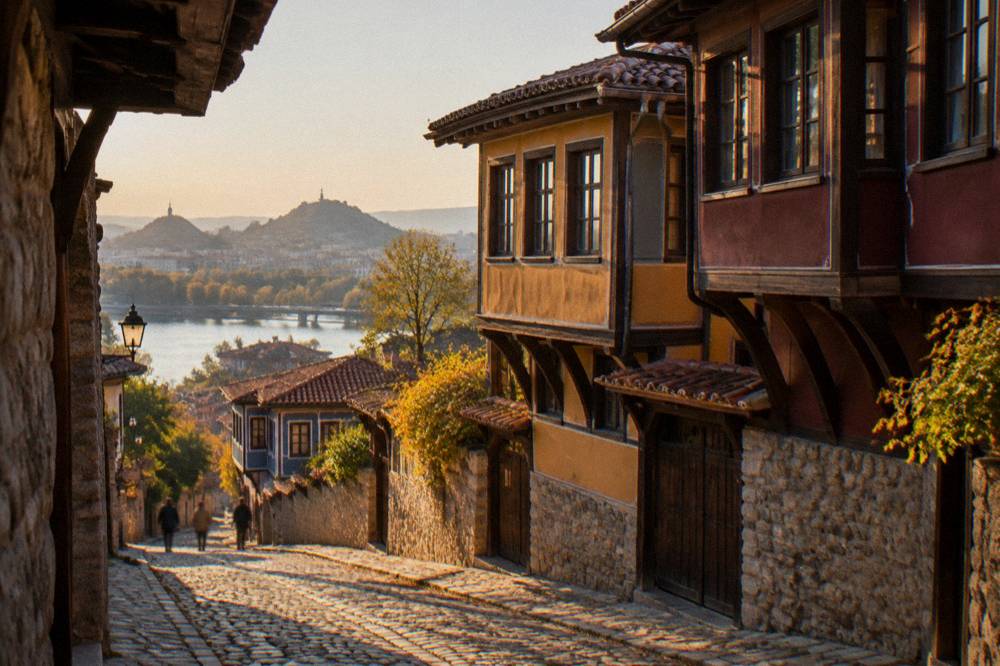
Balabanov House stands in the Old Town of Plovdiv, the hillside district above the modern Main Street, reached on foot from the city centre in a few minutes of uphill walking on cobbles, with the nearest fixed landmarks being Hisar Kapia, the old gate, and the lanes that climb toward Nebet Tepe. There is no separate transport question to solve: the house is inside the walkable core, and the city's bus and rail stations sit a short ride or a longer flat walk away from the Old Town's edge.
The Old Town is pedestrian in character, with steep cobbled streets where comfort matters more than speed. Coming from the Main Street, the pedestrian spine of the modern city described on the Main Street and the centre page, you climb into the district at one of several points and the houses appear in sequence. Hisar Kapia is the landmark gate to aim for; from there the house museums are strung along the lanes above.
The site's getting around Plovdiv guidance covers the buses and the 0.50 euro e-ticket where transport detail is needed.
| Landmark | Relation to Balabanov House | Entry |
|---|---|---|
| Hisar Kapia | Gateway landmark at the Old Town's edge | Free, always open |
| Nebet Tepe | Hilltop archaeological complex above the lanes | Free |
| Ancient Theatre of Philippopolis | Same ticket system, downhill side of the Old Town | 3.58 euro one-site |
| Roman Stadium sphendone | Northern end under the Main Street | Free to view |
| Kapana creative district | Below the Old Town toward the centre | Free, open streets |
What Else To Combine With Balabanov House In Plovdiv?
The natural combination is the whole Old Plovdiv circuit: the Ancient Theatre, the Roman Stadium's sphendone and 3D hall, the Small Basilica, the Bishop's Basilica and the other Revival houses, all within the same hillside walk, plus the free public sights of Nebet Tepe, Hisar Kapia and the Kapana district immediately downhill. A combined ticket covering up to five sites costs 10.74 euro against 3.58 euro per single site, so three or more visits make the combination the better arithmetic.
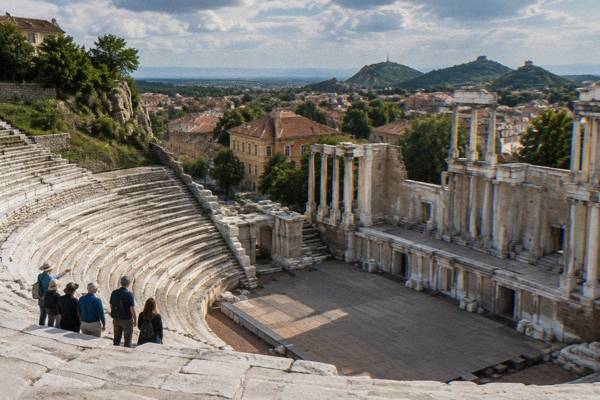
The Roman layer is the headline. The Ancient Theatre, built in the 90s of the 1st century AD with 28 concentric rows of marble seats,, and the Roman Stadium, built in the 2nd century AD on the model of the stadium at Delphi, shows its northern sphendone free of charge with paid 3D and eastern-sector halls priced on the same list. Both are described in detail on the site's Ancient Theatre and Roman Stadium pages.
Downhill from the gates, Kapana, whose name means "The Trap" for its maze of narrow streets, is the creative district of galleries, bars and workshops, and it pairs naturally with an Old Town morning. The Kapana area page maps it. Further out, the same municipal world extends to the Georgiadi House and other listed buildings, and the museum network beyond Old Plovdiv includes the Regional Archaeological Museum, which renewed its permanent exhibition with about 150 new exhibits and a bilingual audio guide in November 2025.
Can A Guided Tour Improve A Balabanov House Visit?
A guided walk can improve the visit, because the Old Town's houses reward context, and the site's featured option for this page is an audio-guided walking tour of the Old Town and the Roman landmarks that covers the district Balabanov House anchors. For travellers who want a human guide, small-group and private city walks run locally, and a food walk is the alternative that swaps depth on the houses for depth on the kitchens of the centre.
Want the stories behind the Old Town's houses? Book a guided walking tour here.
The featured tour, the Plovdiv Walking Tour AudioGuide To Old Town And Roman Landmarks, is the natural companion to this page: it walks the Old Town's lanes and the Roman sites in one self-paced route, Check availability on the operator's live listing if that format suits you. Beyond it, a classic guided city walk and a Bulgarian food walk each take a different slice of the city.
Tip-based free walks also run in Plovdiv; confirm arrangements with the guide directly, since terms and schedules sit with the operator rather than with any city body.
When Is The Best Time To Visit Balabanov House In Plovdiv?
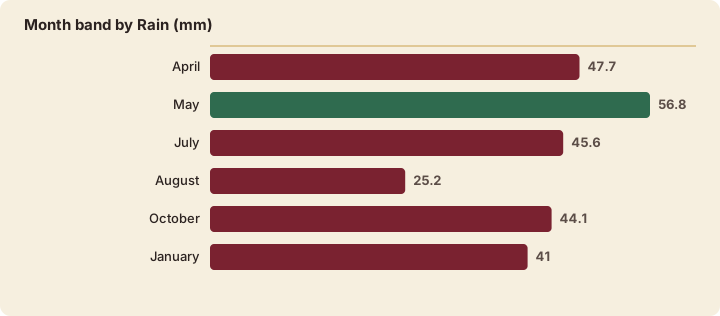
The best time to visit Balabanov House is spring through early autumn, when the April to October opening band runs to 18:00 and the ERA5 reanalysis for Plovdiv, 1991 to 2020, puts mean daily highs between 17.1 C in April and 28.6 C in August; winter visits are shorter-day affairs with a 17:30 close, and May, the month with the highest modelled rainfall at 56.8 mm, is the one to plan indoor cover for.
The climate figures are modelled normals, ERA5 reanalysis for a grid cell near the Old Town, and they describe a continental pattern: cold Januarys with a mean daily low of minus 2.6 C and warm Julys and Augusts. For a district that is walked outdoors between ticketed interiors, that pattern argues for spring and autumn as the comfortable middle. The site's best time to visit Plovdiv and Plovdiv weather pages carry the month-by-month detail.
| Month band | Mean daily high (ERA5, 1991-2020) | Rain (mm) | Old Town hours |
|---|---|---|---|
| April | 17.1 C | 47.7 | Summer band, open to 18:00 |
| May | 21.9 C | 56.8 | Summer band, open to 18:00 |
| July | 28.2 C | 45.6 | Summer band, open to 18:00 |
| August | 28.6 C | 25.2 | Summer band, open to 18:00 |
| October | 18.1 C | 44.1 | Summer band to end of month |
| January | 5.9 C | 41.0 | Winter band, closes 17:30 |
The event calendar adds a second layer of timing. Opera Open ran at the Ancient Theatre from 23 June to 9 September in 2026, and the Old Town's "Revived Heritage" festival days ran 16 to 23 September 2026 with free events across the houses, the kind of programme where a cultural venue like Balabanov House comes fully alive. Christmas in Plovdiv ran 28 November 2025 to 4 January 2026 in its 2025/26 edition and was announced for 1 December 2026 to 7 January 2027 in the next. Dates for the following year's editions are announced season by season, so check the municipal listings before building a trip around a festival.
How Does Balabanov House Fit Into A Day In Plovdiv?
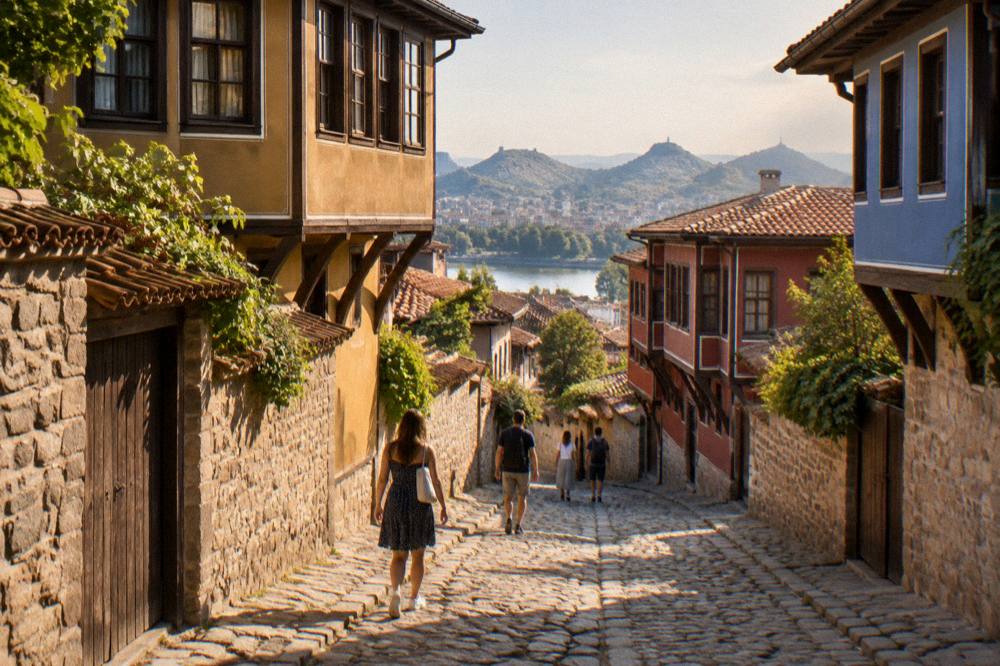
Balabanov House fits into a day in Plovdiv as the Revival-era anchor of a route that starts with the Roman sites in the morning, takes the houses before or after the 12:30 lunch break, and finishes on Nebet Tepe or in Kapana before dinner. Every ticketed Old Town stop shares the same opening window, so the only real planning decision is how many sites to buy: one at 3.58 euro, or five on the combined ticket at 10.74 euro.
The site's Plovdiv in one day and Plovdiv itinerary pages give the full sequences for short stays, and the Plovdiv in two days version relaxes the pace. The pattern that keeps recurring in all of them is the same: Roman Plovdiv in the cool hours, the house museums in the middle of the day when the theatre crowd thins, and the free hills and Kapana at the edges of the day when the light is best on the facades.
Practical Answers For Visiting Balabanov House In Plovdiv
The essentials for Balabanov House are simple to hold in one line: a 3.58 euro adult ticket on the Old Plovdiv list, opening hours that follow the seasonal 9:00 to 18:00 and 9:00 to 17:30 bands with a lunch break, a location in the walkable Old Town reached on foot from the centre, and a role as an exhibition and concert venue that makes checking the day's programme worthwhile. The questions below close the remaining gaps.
Common Questions About Balabanov House Plovdiv
How much is a ticket to Balabanov House in Plovdiv?
An adult ticket costs 3.58 euro on the Old Plovdiv one-site list, with pupils and students at 1.53 euro, a family ticket at 7.16 euro and group adults, for groups over 10, at 3.07 euro. Children under 7 and visitors with more than 50 percent disability enter free. A combined ticket covering up to five Old Plovdiv sites costs 10.74 euro for an adult, excluding the Small Basilica and the Bishop's Basilica.
Is Balabanov House open on Mondays?
Closing days vary among the Old Plovdiv houses, with several closing on Mondays, so the day of your visit should be checked on the municipal listings or at the ticket office. The Ethnographic Museum in the Kuyumdzhiev House, which is priced separately, is closed on Mondays in both its summer and winter seasons.
Can you buy a combined ticket that includes Balabanov House?
Yes. The Old Plovdiv combined ticket covers up to five sites, including the house museums, at 10.74 euro for an adult, and excludes the Small Basilica and the Bishop's Basilica. The validity period of the combined ticket is not stated on the official price page, so confirm it at the desk when you buy.
How long does a visit to Balabanov House take?
No stated visit duration is given for the house. As a working guide to the district, the Old Town's ticketed houses are compact and the main variables are the exhibition on show and whether an event or concert is scheduled; ask at the desk about the day's programme.
Is Balabanov House accessible for wheelchairs or strollers?
No accessibility detail for Balabanov House appears in the official sources, and the Old Town's steep cobbled lanes are a factor for any visit. Confirm access arrangements directly with Old Plovdiv before planning a visit with mobility needs.
Is Plovdiv Old Town a UNESCO World Heritage Site?
No. "The Ancient Plovdiv" sits on Bulgaria's UNESCO Tentative List, submitted in 2004, which is a waiting list and not an inscription. No part of the city is an inscribed World Heritage Site.
Should You Include Balabanov House On A Plovdiv Trip?
Balabanov House earns its place on a Plovdiv trip as the Revival chapter of a city whose story is usually told in Roman stones, a working cultural venue where the merchant city's grand domestic architecture is legible in one building, and at 3.58 euro on a ticket shared with the Ancient Theatre it is one of the cheaper entries into that story. Skip it only on a stay too short to leave the Roman sites.
The Plovdiv Travel Guide covers the rest of the decision: the Roman sites, the hills, Kapana, the day trips into the Rhodopes and the wine country, and the practical pages on money, transport and seasons. Balabanov House is a small stop with an outsized role, the room where the city's oldest stories meet its contemporary cultural life, and the Old Plovdiv ticket that admits you also admits the theatre that started it all. That pairing, one ticket, two millennia, is the reason the house belongs on the itinerary.