Roman Stadium Of Philippopolis: What Is Left Under Dzhumaya Square
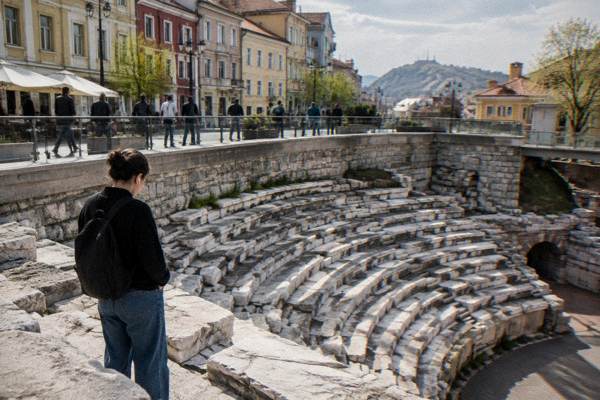
The Roman Stadium of Philippopolis in Plovdiv once held up to 30,000 spectators. Today its northern curve is open free under Dzhumaya Square, and the rest sleeps beneath the city's Main Street.
Short answer
The Roman Stadium of Philippopolis in Plovdiv, Bulgaria, was built in the 2nd century AD on the model of the stadium at Delphi and held up to 30,000 spectators. Only the northern part, the sphendone, is accessible today, and it is free to view; the rest lies under the Main Street.
Plovdiv, in southern Bulgaria, keeps one of the strangest Roman monuments in Europe: a stadium built in the 2nd century AD on the model of the stadium at Delphi, designed for up to 30,000 spectators, of which only the northern curve survives above ground. The city grew over the track and the seating, and the modern Main Street now runs along the line the runners once used. What is left is the sphendone, the curved northern end, unearthed below Dzhumaya Square and open to anyone walking past, plus a paid underground visitor experience with a 3D projection hall and an excavated eastern sector. This page lays out what the Old Plovdiv ticket list and the city's own listings say about the site, what each part costs, and how the stadium fits into the wider map of Roman Plovdiv.
What Is The Roman Stadium Of Philippopolis In Plovdiv?
The Roman Stadium of Philippopolis is a 2nd century AD sports arena in the centre of Plovdiv, Bulgaria, built on the model of the stadium at Delphi and holding up to 30,000 spectators around a long running track. The city's official listing describes games, athletic contests and gladiatorial-style events held here in Roman times. Today only the northern end, the sphendone, is visible and free to view; the remainder lies buried beneath the modern Main Street.
The stadium belonged to Philippopolis, the Roman name Plovdiv carried when it was a major city of the province of Thrace. The municipal Old Plovdiv institute, which manages the site, notes that the building followed the layout of the stadium at Delphi in Greece: a long rectangular track enclosed on three sides by tiered stone seating, with the open end at the south. Contests of the Greek athletic type, the Pythian-style games of Philippopolis, were staged here, and the crowd capacity, up to 30,000 spectators, tells you how large the Roman city and its appetite for spectacle were.
Then the city moved on. Later building levels, Ottoman construction and finally the modern pedestrian Main Street settled directly over the track. The line of the modern street follows the ancient arena, so the crowds strolling and shopping today walk, in effect, the same corridor the athletes ran. Only the northern curve was ever excavated, and even that came late. For the fuller story of the city's Roman layer, see the Roman Plovdiv overview.
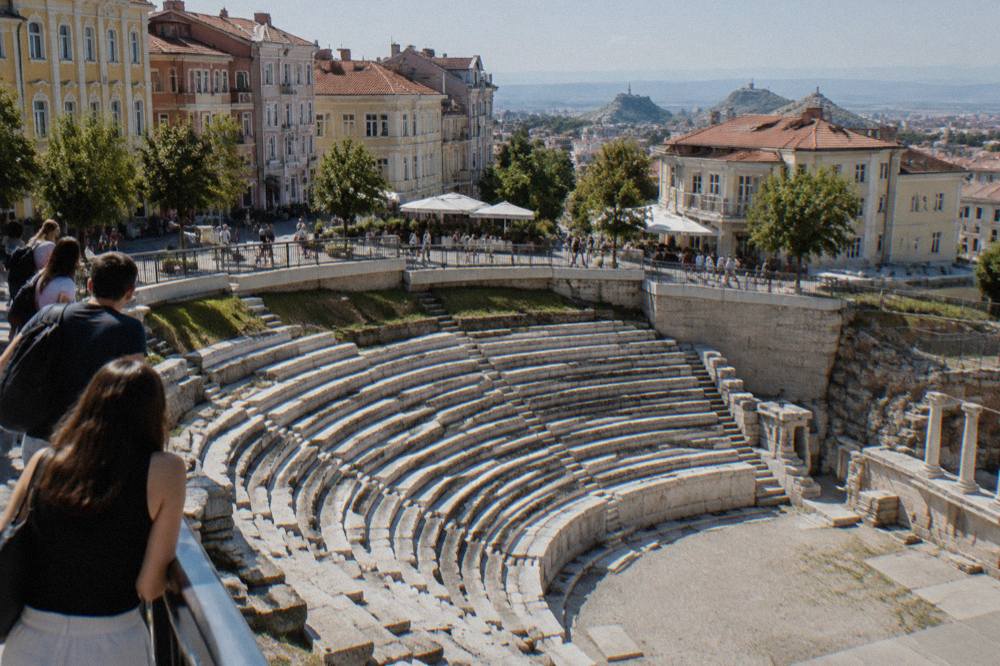
The visible remains sit a few steps below the level of Dzhumaya Square, the open plaza beside the Dzhumaya Mosque. You can look down onto the curved seating from the square itself without paying anything, which makes this one of the most accessible Roman monuments anywhere in the Balkans.
How Much Do Roman Stadium Tickets In Plovdiv Cost?
Viewing the sphendone, the curved northern end of the Roman Stadium in Plovdiv, is free. The Old Plovdiv ticket page lists the 3D projection hall at 3.68 euro for adults and 1.23 euro for students, the excavated Eastern sector at 3.58 euro for adults and 1.53 euro for students, and a combined Eastern sector plus 3D hall ticket at 5.11 euro for adults. Children under 7 enter free.
The free sphendone viewing area is the part you see from Dzhumaya Square, open to the street. The paid components are indoors or underground: the 3D hall reconstructs the stadium digitally, and the Eastern sector takes you into an excavated section of seating below street level.
| Part of the stadium | Adult | Student | Notes |
|---|---|---|---|
| Sphendone viewing, from Dzhumaya Square | Free | Free | Open-air, viewable from the square |
| 3D projection hall | 3.68 EUR | 1.23 EUR | Digital reconstruction of the full stadium |
| Eastern sector | 3.58 EUR | 1.53 EUR | Excavated seating, underground |
| Eastern sector + 3D hall combined | 5.11 EUR | 2.05 EUR | Both paid parts in one ticket |
For context, the standard one-site Old Plovdiv ticket, which covers the Ancient Theatre, the Small Basilica and the Old Town revival houses, is 3.58 euro for adults, and the combined ticket covering up to five sites is 10.74 euro. Those tickets do not include the stadium's paid halls, which are priced separately on the stadium's own rows of the list.
| Old Plovdiv ticket | Adult | Student | Family |
|---|---|---|---|
| One site, excluding the Bishop's Basilica | 3.58 EUR | 1.53 EUR | 7.16 EUR |
| Combined, up to 5 sites | 10.74 EUR | 4.09 EUR | 21.47 EUR |
| Bishop's Basilica, priced separately | 7.57 EUR | 3.58 EUR | 15.34 EUR |
Students and seniors get free entry at Old Plovdiv sites on the first Thursday of the month, per the ticket page. Groups of more than 10 people receive a discounted adult rate. If your time is short and you only want to look, the free sphendone view costs nothing and takes minutes; the paid halls reward those who want to understand the whole buried structure.
A guided walk strings the stadium together with the theatre and the rest of Roman Plovdiv, and the Old Town and Roman Theatre guided walking tour is the site's featured option for exactly that route. For independent walkers, the Plovdiv self-guided walk covers the same ground at your own pace.
What Are The Roman Stadium Opening Hours In Plovdiv?
The 3D hall and the Eastern sector of the Roman Stadium in Plovdiv are open daily, from 9:30 to 18:00 between April and October and from 9:00 to 17:30 between November and March, with a lunch break from 12:30 to 13:00, per the Old Plovdiv ticket page. The open-air sphendone viewing area is part of Dzhumaya Square and can be seen at any hour.
The seasonal split matters more here than at most attractions, because the paid parts of the stadium are small enclosed spaces that follow the standard Old Plovdiv rhythm. The lunch break is a genuine closure, not a soft pause, so a visit planned for 12:45 will find shutters. In practice the quiet strategy is to arrive near the 9:30 summer opening, or after 13:00 when the lunch break ends and the morning crowds have dispersed.
| Season | Days | Hours | Lunch break |
|---|---|---|---|
| April to October | Daily | 9:30 to 18:00 | 12:30 to 13:00 |
| November to March | Daily | 9:00 to 17:30 | 12:30 to 13:00 |
| Sphendone, open-air | Always | Freely viewable from the square | None |
No closure or renovation affecting the stadium has been announced for 2025 or 2026. The site shares its management and its ticket system with the Ancient Theatre and the Old Town houses, so a single morning can reasonably combine the stadium's halls with a walk up to the theatre. If you are building a two-day plan around these sites, the two-day Plovdiv itinerary places them in a workable order.
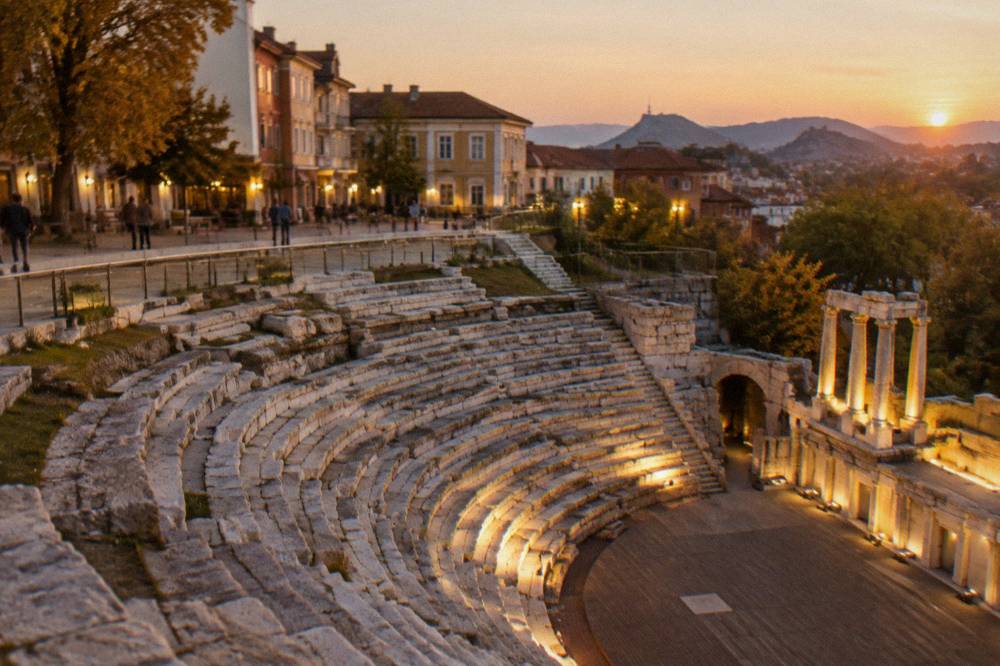
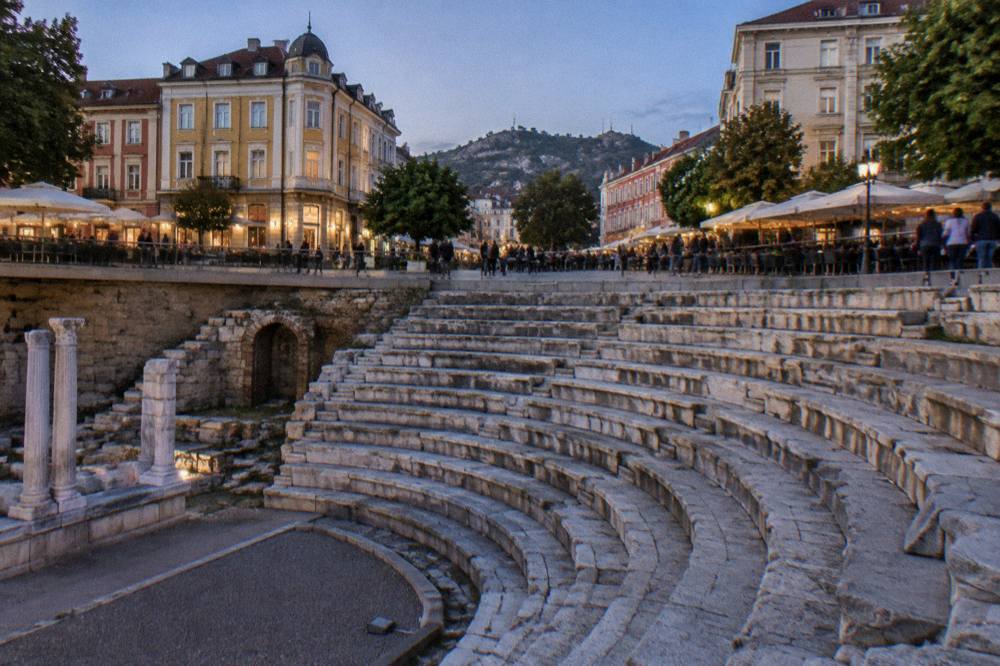
The surrounding square changes character by the hour. Morning is quiet and photographic. By afternoon Dzhumaya Square fills with cafe tables and street life, and in the evening the floodlighting on the ancient stone rows makes the sphendone one of the better free sights in the city, a point covered in more detail in the Plovdiv at night guide.
What Can You Actually See Of The Stadium Today?
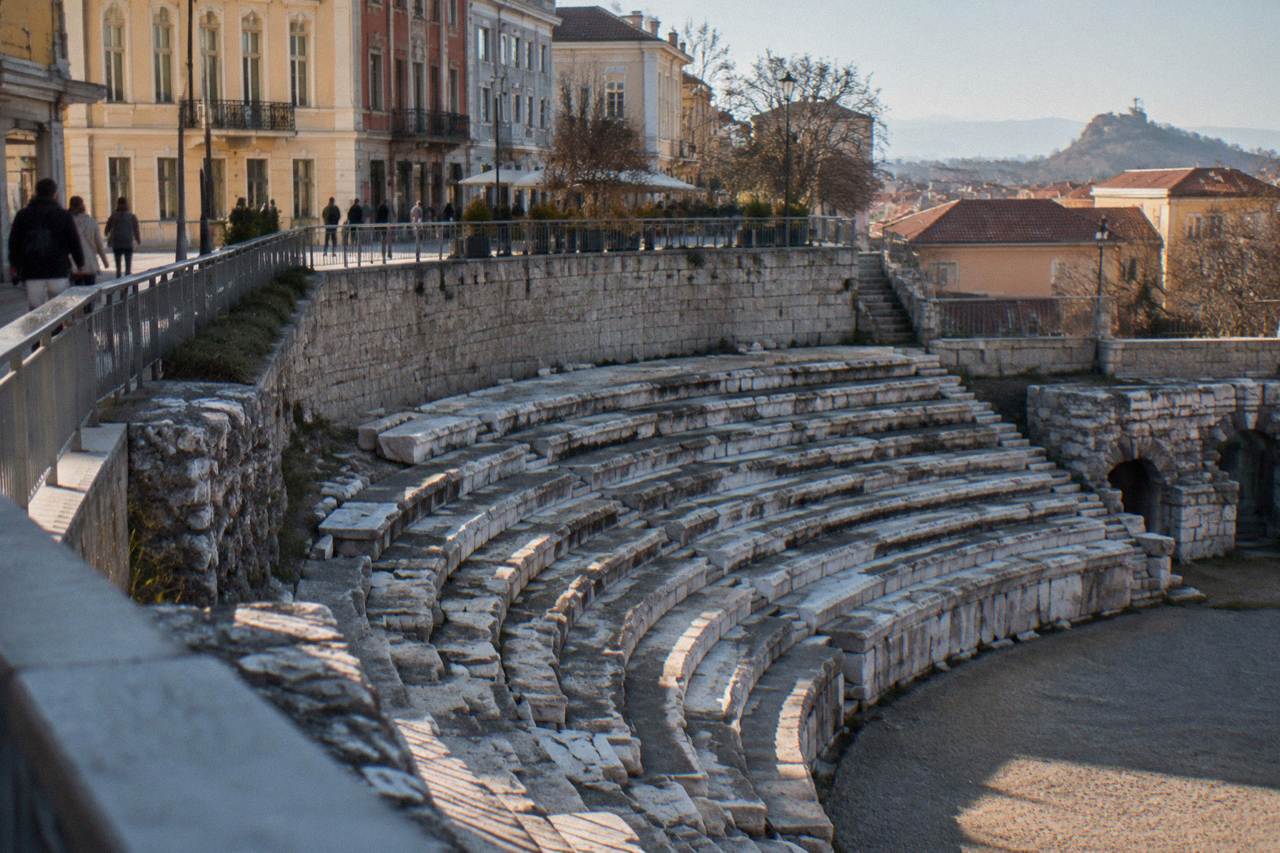
You can see the sphendone, the curved northern end of the Roman Stadium in Plovdiv, with thirteen rows of preserved stone seating, the northern entrance, and part of the track surface, all below Dzhumaya Square. You cannot see the rest: the majority of the arena lies under the modern Main Street and was never excavated, so the stadium you experience is a fragment, deliberately framed as one.
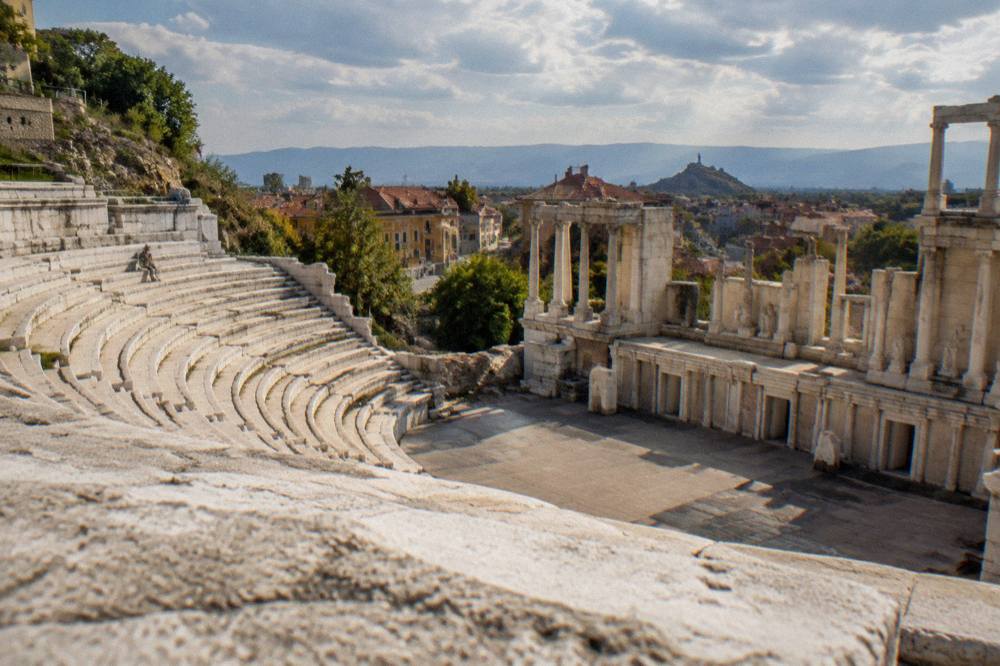
The sphendone is genuinely atmospheric. The curved rows step down below the modern street level, and the scale of the seating, even in this single curve, conveys the size of the full building. The Old Plovdiv listing describes thirteen rows of seats visible in the northern curve, together with the northern entrance and a portion of the track. From the square above, the geometry reads clearly: this was one end of something enormous.
The paid parts complete the picture. The 3D projection hall rebuilds the whole arena digitally, which is the only way to grasp a structure of which perhaps the northern sixth survives above ground. The Eastern sector ticket takes you into another excavated pocket of seating. Between the three components, the free view plus the two paid ones, you leave with a full mental reconstruction of a stadium that once ran the length of the modern street.
| Roman Plovdiv site | Period | What stands today |
|---|---|---|
| Roman Stadium | 2nd century AD | Northern sphendone with 13 rows of seats, entrance, part of the track |
| Ancient Theatre of Philippopolis | 90s of the 1st century AD | 28 concentric rows of marble seats, fully staged venue |
| Roman Forum | Roman Philippopolis | Foundation remains at the city's administrative centre |
| Roman Odeon | Roman Philippopolis | Small covered-theatre remains beside the forum |
A fair comparison: the Ancient Theatre of Philippopolis is the more complete monument and still hosts performances, while the stadium is the more haunting one precisely because so much of it is invisible. The Roman Forum and the Roman Odeon sit a short walk away and complete the civic layer of Roman Philippopolis; the regional archaeological museum holds the artefacts that came out of all of them.
Deciding whether the paid halls are worth the combined ticket is easier with a guide alongside, and a booked walk covers the whole decision in one morning.
Why Is Most Of The Stadium Buried Under The Main Street?
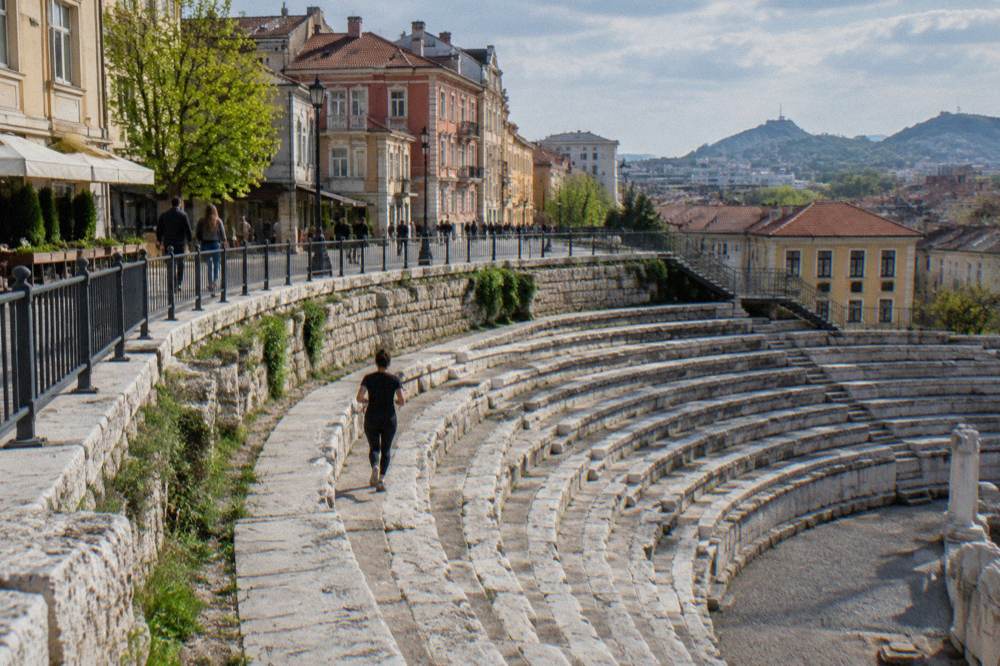
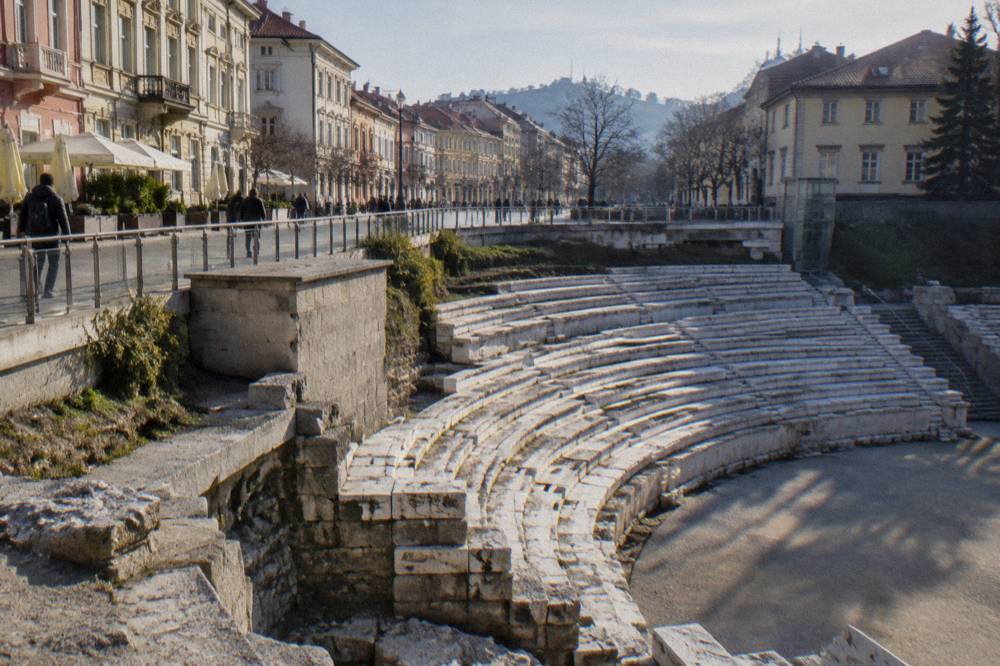
Most of the Roman Stadium of Philippopolis is buried because the modern city of Plovdiv was built directly on top of it: the Main Street follows the line of the ancient arena, and only the northern curve, the sphendone, was excavated. The Old Plovdiv listing states plainly that the rest of the stadium lies under the Main Street, which is why the monument can never be fully uncovered without dismantling the city's central pedestrian artery.
This is the defining fact about the site, and it is worth sitting with. Excavation of the northern part happened late in the modern era, after centuries of construction above. The southern end, the flanks, the seating that once rose in continuous tiers for the length of a city block: all of that remains under the paving, shops and cafes of the pedestrian street. Archaeology here is not a matter of digging deeper but of choosing what a living city is willing to surrender. More of these guides are collected on Plovdiv Travel Guide.
The result is a monument you read in fragments. The sphendone below the square is one fragment. The Main Street itself is another, an accidental memorial whose alignment preserves the arena's axis. Visitors who understand this before arriving tend to rate the site far more highly than those expecting a second Colosseum; the stadium rewards visitors who can imagine the missing parts, and the 3D hall exists exactly for that purpose.
There is a lesson in it for the whole city. Plovdiv is often described as one of the oldest continuously inhabited cities in Europe, and the stadium is the clearest demonstration of what that phrase means in practice: not ruins on the edge of town, but layer upon layer of the same streets in use for millennia. The Old Town and the Nebet Tepe hill carry the same story further back.
How Long Does A Visit Take, And What Order Works Best?
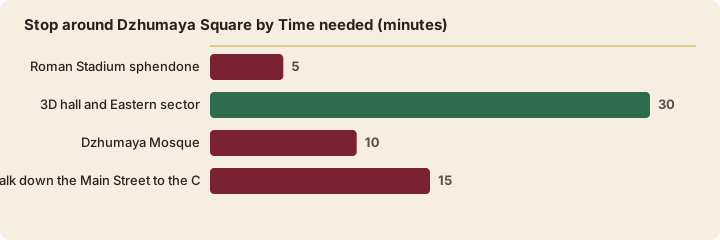
A look at the free sphendone from Dzhumaya Square takes five to ten minutes; adding the 3D hall and the Eastern sector brings a full Roman Stadium visit to roughly 45 minutes to an hour, depending on the queue at the lunch break. The best order is the sphendone first, then the 3D hall to understand the whole arena, then the Eastern sector to see the real stone, before continuing along the Main Street.
Begin at the square. The sphendone view is free, instant and orienting: you see the curve of seating, you understand the geometry, and you calibrate your expectations. Then buy the combined ticket if you want both paid parts, and start with the 3D hall. Seeing the reconstruction before the physical Eastern sector works well, because the digital model shows you where each surviving piece fits inside the whole.
The Eastern sector walk is short but real. You descend below the modern street into excavated seating, and the contrast between the ancient stone and the shops overhead is the strongest impression the site offers. Allow extra time in the summer morning, when the halls are quiet, and remember the 12:30 to 13:00 lunch break applies to both paid spaces.
From the stadium, everything in central Plovdiv is on foot. The Dzhumaya Mosque stands on the square itself, open to visits from 6:00 to 23:00 and free, with modest dress requested and prayer times to be avoided. The mosque's history is layered in the same way as the stadium's, and the city's own page gives no single construction year. The Dzhumaya Mosque page covers the visiting etiquette in detail.
| Stop around Dzhumaya Square | Cost | Time needed |
|---|---|---|
| Roman Stadium sphendone | Free | 5 to 10 minutes |
| 3D hall and Eastern sector | From 5.11 EUR combined | About 30 to 40 minutes |
| Dzhumaya Mosque | Free | 10 to 15 minutes, outside prayer times |
| Walk down the Main Street to the Central Square end | Free | 15 to 20 minutes |
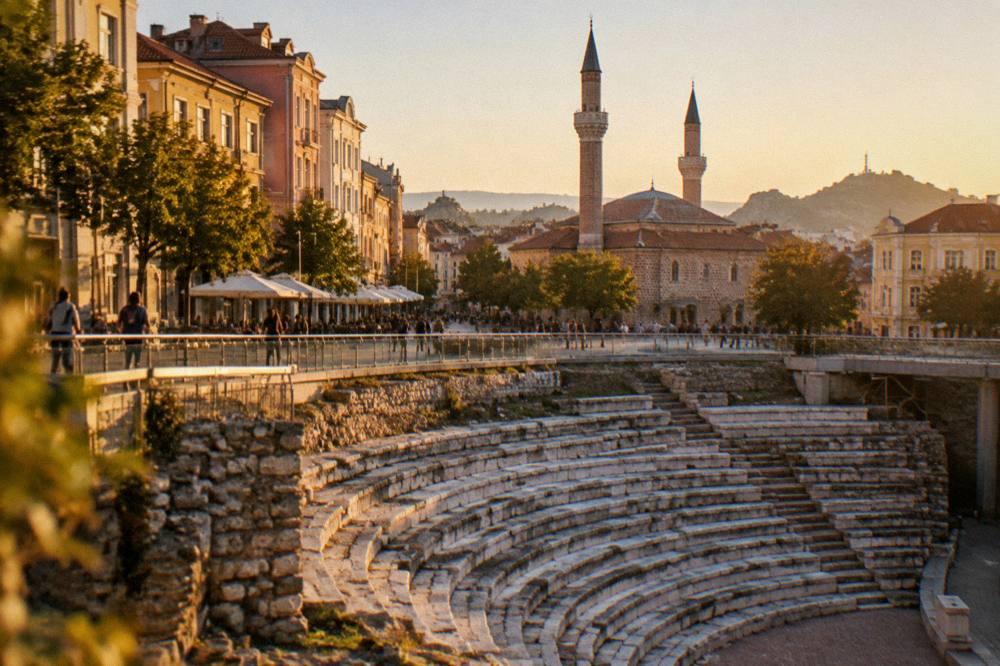
From the square, the natural continuation is north along the Main Street, following the buried track to the Central Square, where the Bishop's Basilica mosaics are displayed. Southward and uphill lies the Old Town with its revival houses, among them Balabanov House and the Ethnographic Museum. The whole cluster is compact, which is why the stadium so often becomes the hinge of a day's walk.
Is The Roman Stadium In Plovdiv Worth It Compared With The Theatre?
The Roman Stadium is worth visiting for the free sphendone and the 3D hall alone, and it pairs rather than competes with the Ancient Theatre of Philippopolis: the theatre is the complete, fully staged monument, while the stadium is the buried one whose scale you have to reconstruct. The theatre charges the standard one-site ticket of 3.58 euro and is built into a hillside with 28 rows of marble seats.
If you only have time for one, the theatre is the safer choice: it is intact, photogenic and still hosts an opera festival each summer, the Opera Open season that ran 23 June to 9 September in 2026. But the two monuments answer different questions. The theatre shows you what Roman entertainment looked like; the stadium shows you what 2,000 years of continuous city-building does to a monument. Together they make the argument for Plovdiv as a Roman destination better than either does alone.
The stadium also wins on accessibility. It sits on the flat, in the middle of the pedestrian zone, with no climb, and its core view is free. The theatre requires a walk up into the Old Town and a ticket. For travellers with limited mobility or a tight schedule, the stadium is the easier half of Roman Plovdiv, and the free sphendone view alone justifies the stop.
One honest note on the paid halls: the 3D hall is a projection experience, not a gallery of artefacts, and its value depends on how much you want to understand the missing structure. Visitors who skip it and simply study the sphendone from the square still leave with the essential story. Visitors who take the combined ticket leave with the full picture of a 30,000-seat arena running beneath their feet.
What Else Should You Pair With The Roman Stadium In Plovdiv?
The Roman Stadium pairs naturally with the Ancient Theatre, the Roman Forum and Odeon, the Dzhumaya Mosque on the same square, and the Old Town houses uphill, all within a short walk of each other. Beyond the city, the wider Roman and Thracian heritage of the region, including Hisarya and the Starosel Thracian complex, makes full-day excursions that build on the same historical thread.
Inside the centre, a single walking loop can take in the stadium, the mosque, the forum, the odeon and the theatre in a morning, and the things to do in Plovdiv overview gathers the full list. The evening version of the same loop is worth a separate mention, since the stadium and the square are among the city's better floodlit sights after dark.
Outside the city, the Roman thread continues. Hisarya, a Roman spa town with walls that still stand, makes a straightforward day trip, covered in the Hisarya day-trip guide. Further afield, Stara Zagora holds another Roman-era city site with its own remains. The Thracian layer beneath the Roman one, at Starosel and in the Valley of the Thracian Kings, deepens the story for travellers with a second or third day, and the revival-era chapter sits on top of it all in Koprivshtitsa.
For travellers based in Sofia rather than Plovdiv, the stadium and the theatre are the two Roman anchors that day tours build around. A full-day guided excursion from the capital covers the Old Town and the Roman landmarks in one loop, and the small-group option below is the featured pick for that route.
Practical Tips For Visiting The Roman Stadium In Plovdiv
Plan your Roman Stadium visit around the 12:30 to 13:00 lunch break, bring nothing larger than a day bag, and treat the free sphendone view as the anchor with the 3D hall as the optional upgrade. The site sits flat in the pedestrian zone, so it works for every mobility level, and the square around it offers cafes, shade and the mosque next door.
Payment and tickets follow the Old Plovdiv system, with prices printed in euro since Bulgaria's changeover on 1 January 2026. Students and seniors should carry identification for the reduced rates and should note the free first-Thursday policy. Photography is unrestricted in the open-air sphendone; check locally in the 3D hall, where projection conditions sometimes limit flash use.
The best light on the sphendone comes in the early morning, when the square is empty and the low sun rakes across the stone rows. Late afternoon is the busiest period, as the cafe terraces fill. Winter visits are quieter, with the shorter 9:00 to 17:30 hours, and the climate table for Plovdiv, ERA5 reanalysis 1991-2020, shows a mean daily high of 5.9 C in January against 28.6 C in August, so dress for the season.
Common Questions About The Roman Stadium In Plovdiv
Is the Roman Stadium in Plovdiv free?
Viewing the sphendone, the excavated northern curve, is free from Dzhumaya Square at any hour. The 3D projection hall costs 3.68 euro for adults and the Eastern sector costs 3.58 euro, with a combined ticket at 5.11 euro, per the Old Plovdiv ticket page.
How much of the Roman Stadium of Philippopolis is visible?
Only the northern part, the sphendone, with thirteen rows of seats, the northern entrance and part of the track. The rest of the stadium lies under the modern Main Street and has never been excavated.
How old is the Roman Stadium in Plovdiv?
It was built in the 2nd century AD, on the model of the stadium at Delphi, and held up to 30,000 spectators for athletic games and contests in Roman Philippopolis.
What are the Roman Stadium opening hours in Plovdiv?
The 3D hall and Eastern sector are open daily, 9:30 to 18:00 from April to October and 9:00 to 17:30 from November to March, with a lunch break from 12:30 to 13:00.
Is the Roman Stadium the same as the Ancient Theatre of Philippopolis?
No. The stadium is the buried athletic arena under Dzhumaya Square and the Main Street; the theatre is the separate 1st century performance venue in the Old Town with 28 concentric rows of marble seats. Both belong to Roman Philippopolis.
Can you visit the Roman Stadium and the Ancient Theatre on the same day?
Yes, easily. They lie a short walk apart, and both follow the same Old Plovdiv hours, so a single morning covers the stadium's sphendone and halls followed by the theatre in the Old Town, or the reverse order.
The Roman Stadium of Philippopolis rewards exactly the kind of traveller Plovdiv suits: someone happy to read a city in layers, where the sphendone's free curve of stone below the cafe tables is one stratum and the shopping street above it is the latest one, running along the same line the athletes ran in the 2nd century. Walk the square, take the halls if the buried whole calls to you, then follow the Main Street south and let the city show you what it built on top.