Plovdiv Rowing Canal
The Plovdiv Rowing Canal is the city's open-air water sports and recreation basin, a flat green counterpoint to the six hills and the Roman stones of the Old Town. This page sets out what the site offers, how the year's weather shapes a visit, and how to fold it into a wider Plovdiv itinerary.
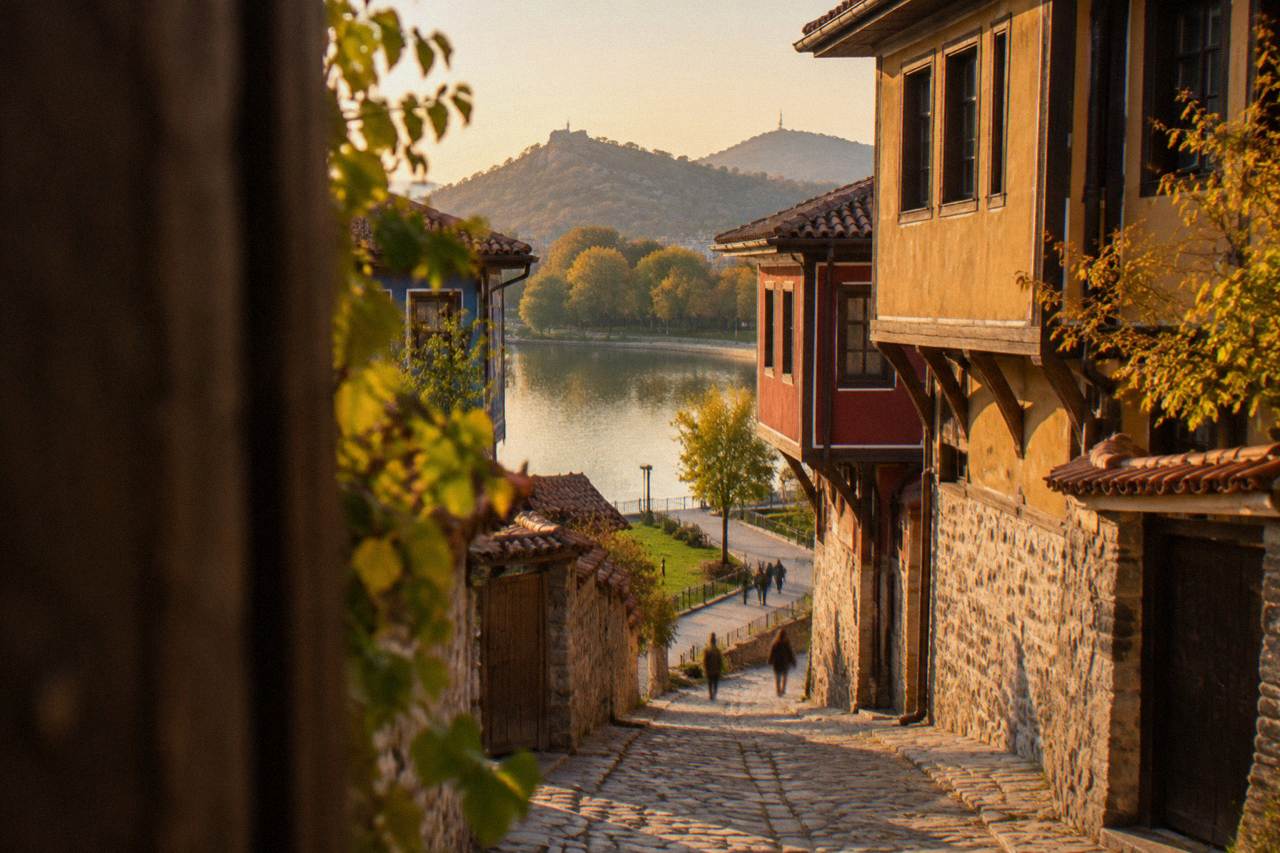
Short answer
The Plovdiv Rowing Canal is a regatta and kayaking basin on the western edge of the city, free to walk and cycle around, and reached by city bus or taxi from the centre. It suits a half-day of flat walking, water views and green space rather than monuments, and pairs naturally with the Rhodope day trips that leave from the same side of the city.
The Plovdiv Rowing Canal sits on the flat western edge of Plovdiv, Bulgaria's second-largest city, an inland town in southern Bulgaria built around six hills with no sea coast anywhere near it. That geography explains the canal at a glance: a city with no coastline still wants water for rowing, kayaking and flat waterside walking, and the basin supplies it. Plovdiv is a place usually visited for Roman theatres and revival-era houses, and the canal is the opposite kind of attraction, green, open and free of ticket queues, which is exactly why locals treat it as everyday territory rather than a sight. This page sets out what the canal is, how the year's weather shapes a visit, and how to combine it with the rest of the city.
What Is The Plovdiv Rowing Canal?
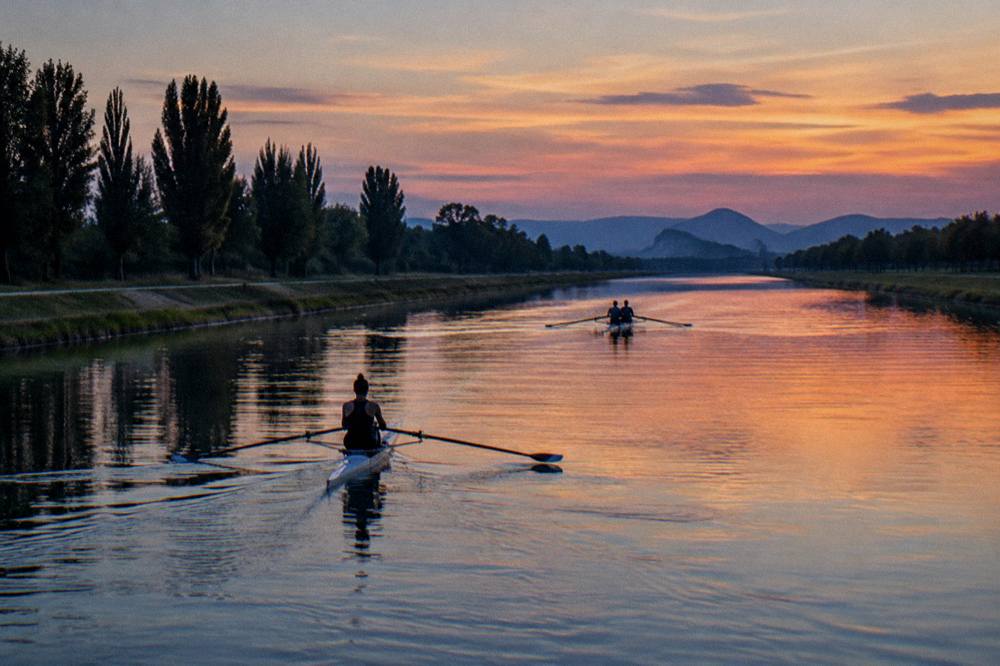
The Plovdiv Rowing Canal is a man-made regatta basin used for rowing, kayaking and canoeing, ringed by flat waterside paths on the western side of the city, and it functions as Plovdiv's main open-air water sports ground precisely because the city sits inland with no coast. Access to the surrounding paths and banks carries no ticket, in contrast to the municipal Old Plovdiv sites, where the official ticket page lists any single site at 3.58 euro for adults. The canal is a sports and recreation landscape rather than a heritage one: no Roman wall, no mosaic floor, no museum hall, just straight water, trimmed banks and long sightlines toward the hills that frame the city.
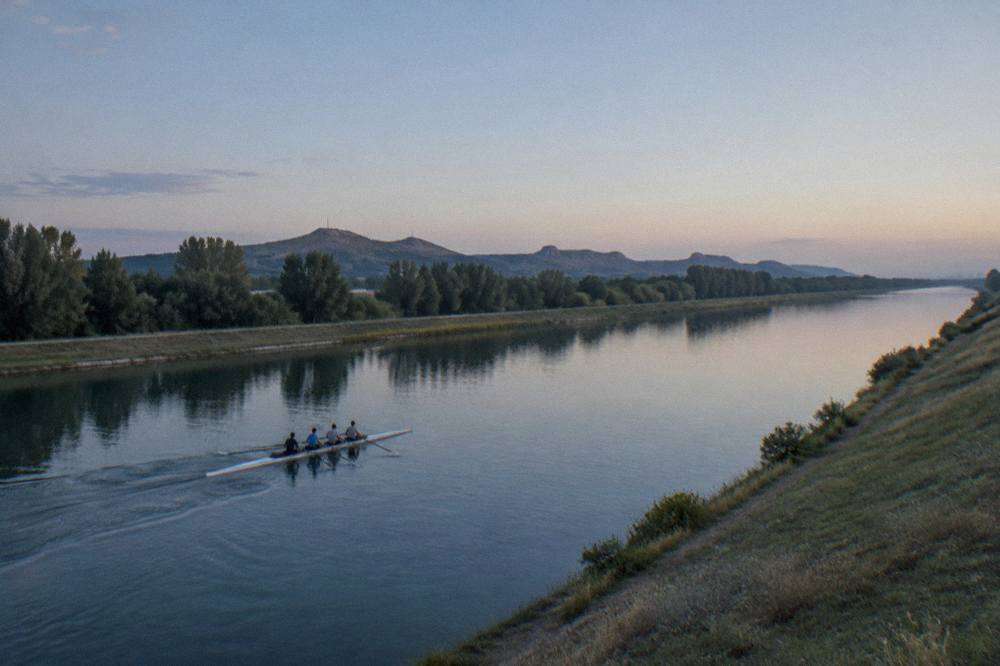
The contrast with the rest of Plovdiv is the point. The city is often described as one of the oldest continuously inhabited cities in Europe, and its core sights are dense with layered history: the Ancient Theatre of Philippopolis with its 28 concentric rows of marble seats, the Roman Stadium whose northern sphendone is the only excavated part, the Bishop's Basilica with over 2,000 square metres of floor mosaics. A visitor can spend two full days inside that stone inheritance and never stand on open grass. The canal is where the city breathes out.
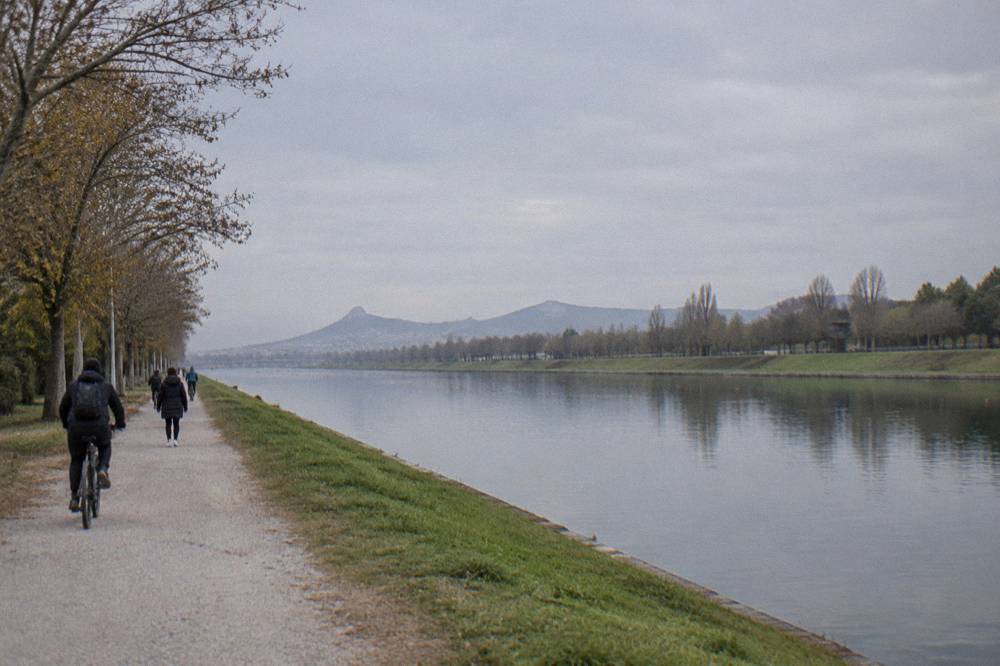
Its role in local life is ordinary and constant. Joggers, cyclists and families use the perimeter paths year round, and rowing clubs train on the water in the warmer months. Nothing about the site requires planning in the way the Old Town does: there are no opening hours printed on a ticket page because there is no ticket, and no lunch-break closure of the kind the Old Plovdiv sites observe from 12:30 to 13:00. That makes it a reliable filler for any gap in an itinerary, including a jet-lagged first afternoon or a slow Sunday morning.
How Do You Get To The Plovdiv Rowing Canal From Central Plovdiv?
The Plovdiv Rowing Canal lies on the city's western flank, reached from the centre by city bus or taxi, with the municipal e-ticket priced at 0.50 euro per ride; the basin sits beyond the built-up blocks, so it is a short deliberate hop rather than a stroll from the Old Town. For orientation, the central railway station and the Yug bus station stand side by side on Hristo Botev Boulevard, and the canal area lies away from that axis toward the city edge. Confirm the current bus route numbers locally or in the municipal transport app, since network changes are frequent and not always announced in advance.
Getting around Plovdiv generally is simple and cheap. Taxis run on meters, and crowd-reported price data puts a taxi start fare at roughly 1.10 euro, with a mid-range three-course meal for two in the city around 30 to 40 euro; treat those as planning ranges from crowd data, not official tariffs, and check the meter or the app.
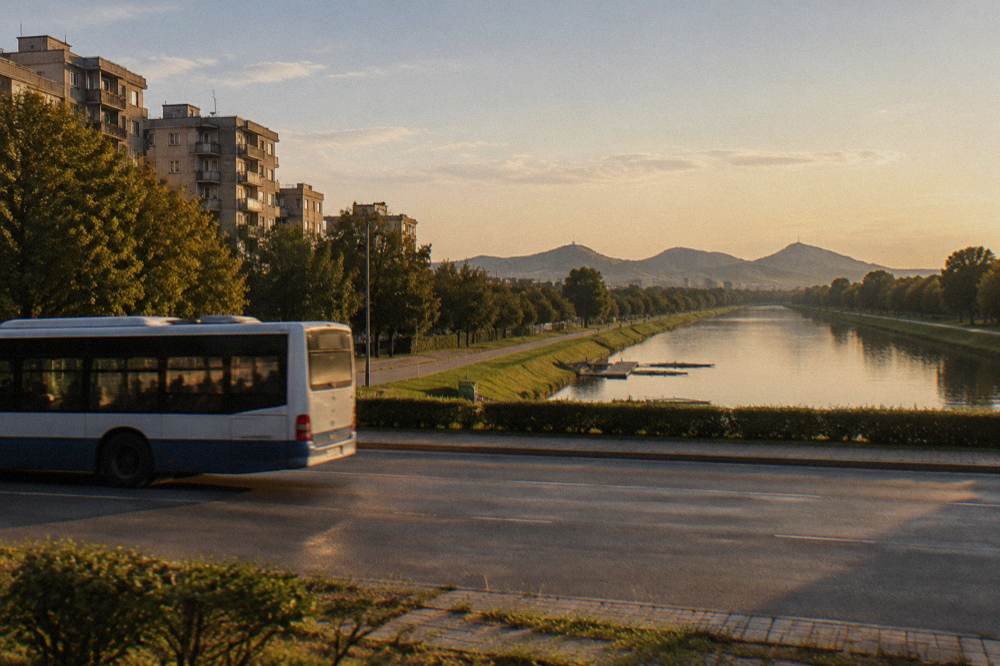
The wider transport picture matters if the canal is one stop on a longer route. Direct trains from Sofia take about 2 hours 40 minutes to 3 hours 5 minutes, and buses cover the same corridor in about 1 hour 45 to 2 hours 20, arriving at the Yug station beside the railway. Plovdiv Airport at Krumovo, about 12 to 14 kilometres southeast of the centre, lists a small route set including London, Milan, Bratislava, Birmingham, Manchester, Belfast and Tel Aviv in its own flight search. Once in the city, everything central is walkable, and the canal is the one common destination that rewards a bus or taxi leg.
For visitors weighting the day toward water and mountains rather than the flat basin alone, a structured day trip is an alternative to self-driving on unfamiliar roads.
What Can You Do At The Plovdiv Rowing Canal?
The Plovdiv Rowing Canal offers flat walking and cycling on the perimeter paths, watching rowing and kayaking training on the water, picnicking on the banks, and low-key bird and sunset watching over open water, all of it free and unticketed, which distinguishes it from every fenced heritage site in the city centre. Nothing in the municipal price lists touches this site: the Old Plovdiv institutes sell tickets for the theatre, the basilicas and the revival houses, while the canal's only costs are the ones a visitor chooses, such as a bus fare, a coffee from a kiosk or a hired bike.
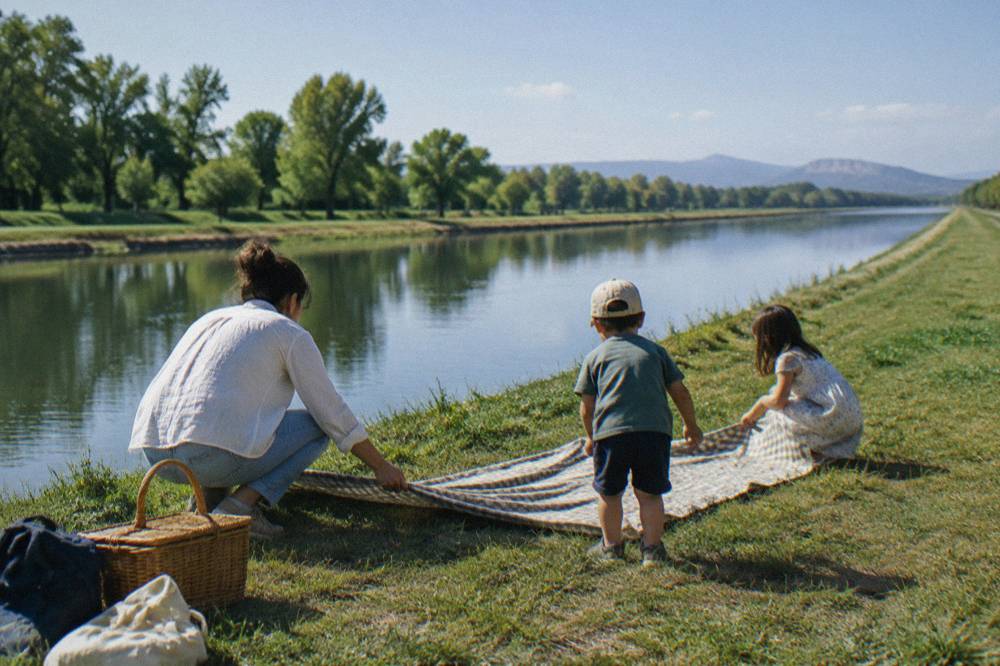
A typical visit is a loop. The paths are flat, which is rare in a city of six hills, and that alone recommends the site to runners, wheelchair users and anyone recovering from a long travel day. In the warmer months rowing shells and kayaks share the water with training crews, and the banks are close enough to watch the stroke rhythm without binoculars. On weekday evenings and weekends the paths carry a steady stream of locals, and the mood is a neighbourhood park's rather than a tourist site's.
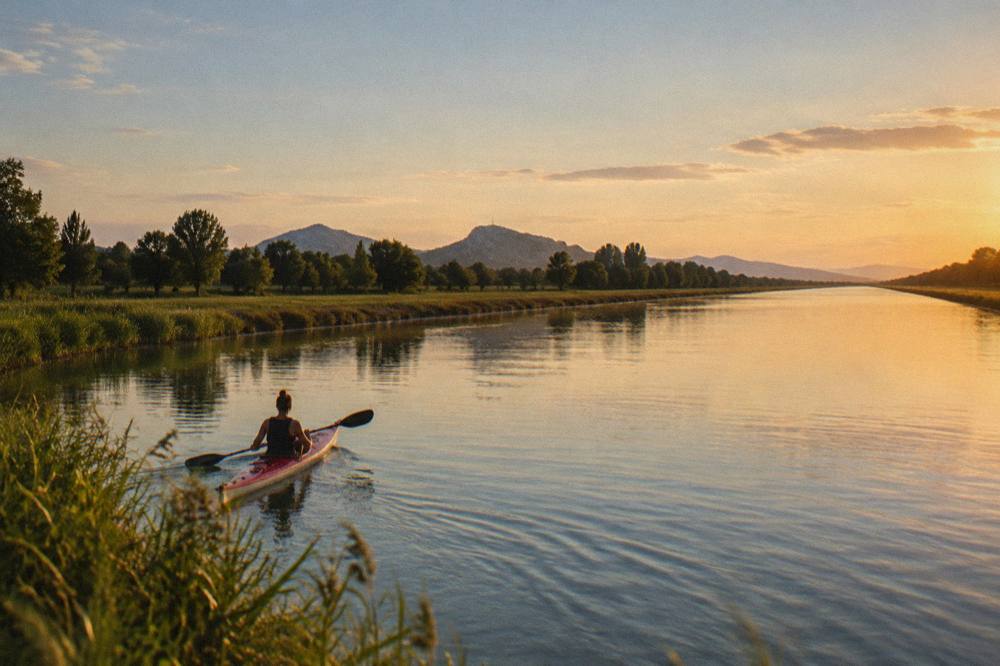
Water activities themselves depend on the clubs and seasonal operators that use the basin, and this site has no operator list, prices or booking details to print. The honest instruction is to confirm locally: ask at your accommodation or check posted notices at the clubs for kayak hire and beginner sessions. For a visitor who wants water-adjacent activity without organising anything, the walking loop alone delivers the value, and it costs nothing.
For travellers who like their open-air time delivered with logistics handled, the Rhodope option below pairs a mountain landscape with a seated lunch, and it picks up in Plovdiv.
When Is The Best Time Of Year To Visit The Plovdiv Rowing Canal?
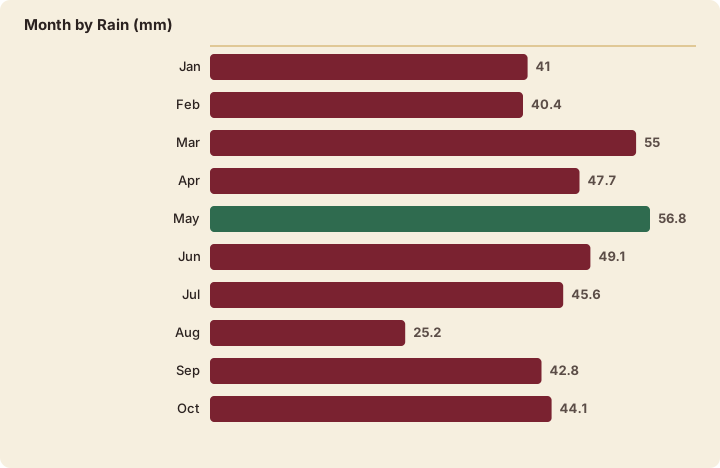
The canal is at its best from late spring to early autumn, because the ERA5 reanalysis 1991-2020 modelled normals for Plovdiv show mean daily highs of 25.9 C in June, 28.2 C in July and 28.6 C in August, with August also the driest month at 25.2 mm of rain, conditions that suit water sports and long loops on the banks. Winter use continues, but the same normals show a mean daily high of 5.9 C in January and a mean daily low of -2.6 C, which pushes the experience toward brisk walking rather than lingering by the water.
| Month | Mean Daily High (C) | Mean Daily Low (C) | Rain (mm) |
|---|---|---|---|
| Jan | 5.9 | -2.6 | 41.0 |
| Feb | 8.0 | -1.1 | 40.4 |
| Mar | 12.1 | 2.1 | 55.0 |
| Apr | 17.1 | 6.4 | 47.7 |
| May | 21.9 | 11.5 | 56.8 |
| Jun | 25.9 | 15.4 | 49.1 |
| Jul | 28.2 | 17.9 | 45.6 |
| Aug | 28.6 | 18.1 | 25.2 |
| Sep | 23.8 | 13.8 | 42.8 |
| Oct | 18.1 | 8.8 | 44.1 |
| Nov | 12.3 | 3.8 | 39.7 |
| Dec | 7.0 | -0.8 | 49.3 |
Two readings of that table matter for planning. May carries the highest monthly rain total at 56.8 mm and March follows at 55.0 mm, so spring visitors should hold a covered fallback, and the city has good ones in the museums described below. August combines the highest mean daily high, 28.6 C, with the lowest rain total, 25.2 mm, which is the statistically friendliest window for a full waterside day, though midday heat argues for a morning or evening loop. These are modelled grid-cell values from ERA5 reanalysis, 1991-2020, not a station record, and reanalysis smooths urban heat.
Seasonal events can sharpen the timing further. Opera Open ran at the Ancient Theatre from 23 June to 9 September in 2026, the autumn Kapana Fest ran 2 to 4 and 9 to 11 October 2026, and the Plovdiv Jazz Fest fall edition runs 6 to 8 November 2026 at the Boris Hristov House of Culture. A summer visit can therefore pair a morning at the canal with an evening performance in a 1st-century AD theatre, a combination few European cities can offer.
How Does The Plovdiv Rowing Canal Compare With The City's Other Open-Air Spaces?
The canal is Plovdiv's flattest and most spacious open-air area, while the city's other free outdoor landmarks, Nebet Tepe, the Three Hills, Hisar Kapia, Kapana and the Bunardzhik hill with the Alyosha monument, offer elevation, views and history rather than open water, so the choice between them is a choice of mood rather than quality. All of them share one virtue: no ticket. The city's paid sights are concentrated in the Old Plovdiv network, and the contrast in cost is stark.
| Open-Air Spot In Plovdiv | What It Offers | Ticket |
|---|---|---|
| Rowing Canal | Flat waterside paths, rowing and kayaking views, green banks | Free |
| Nebet Tepe | Excavated hilltop fortress complex, city views, restored and reopened March 2025 | Free |
| Kapana | "The Trap" creative district of narrow streets, street art, cafes | Free |
| Hisar Kapia | Ottoman-era gate in the Old Town wall | Free |
| Bunardzhik / Alyosha | Hill park with the 1957 Alyosha monument above the city | Free |
| Tsar Simeon Garden | City-centre park with the singing fountains | Free |
The paid side of the city, for comparison, is inexpensive but not free, and its prices come straight from the municipal Old Plovdiv ticket page. Any single Old Plovdiv site except the Bishop's Basilica costs 3.58 euro for an adult; the combined ticket covering up to five sites costs 10.74 euro; the Bishop's Basilica alone costs 7.57 euro; and the Roman Stadium's 3D projection hall costs 3.68 euro, with the open-air sphendone itself free to view. A family of two adults and children aged 7 to 16 pays 7.16 euro for a single Old Plovdiv site. Children up to 7 and visitors with more than 50% disability enter free, and students and seniors get free entry at Old Plovdiv sites on the first Thursday of the month, matching the standing free day at the Regional History Museum.
| Paid Site In Plovdiv | Adult Ticket | Hours Basis |
|---|---|---|
| Any one Old Plovdiv site (theatre, Small Basilica, revival houses) | 3.58 euro | Apr to Oct 9:30 to 18:00; Nov to Mar 9:00 to 17:30; lunch 12:30 to 13:00 |
| Old Plovdiv combined ticket, up to 5 sites | 10.74 euro | Same as above; validity period not published, confirm at the desk |
| Bishop's (Great) Basilica | 7.57 euro | Daily 9:00 to 18:00 |
| Roman Stadium 3D hall | 3.68 euro | Same seasonal hours as the theatre |
| Regional History Museum, one site | 5.00 euro | Free first Thursday of the month |
Against that backdrop, the canal is the free-and-flat option, the hills are the free-and-steep option, and the Old Town is the paid-and-dense option. A well-built Plovdiv day uses all three registers. More on pairing them sits in the one-day Plovdiv itinerary, which sequences the centre's walkable core.
Is The Plovdiv Rowing Canal Worth The Trip For A Short Visit?
For a visitor with one full day in Plovdiv, the canal is a worthwhile early-morning or evening add-on rather than a core stop, because the city's identity, the Ancient Theatre, the Bishop's Basilica mosaics, Nebet Tepe, Kapana and the revival houses, sits in the compact centre, and the canal adds green space and water rather than anything a short visitor would otherwise miss. With two or three days, the calculus changes and the basin earns a proper loop, especially in the warmer months when the rowing clubs are active.
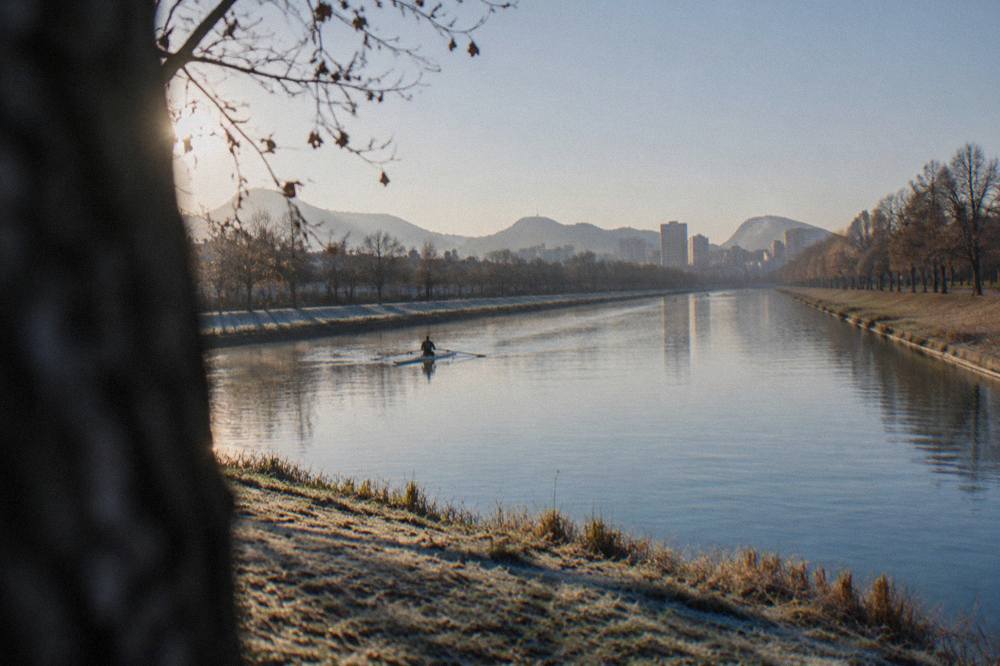
The practical sequencing that works on paper is straightforward. Spend the middle of the day inside the paid core, using the Old Plovdiv tickets above, and give the canal the shoulder hours, before the sites open at 9:00 or 9:30, or after the 17:30 to 18:00 closings, when summer heat has dropped and the light goes long across the water. Monday visitors should note that the Regional Ethnographic Museum and the Regional Archaeological Museum are closed that day, which frees a Monday for the canal, Kapana and the outdoor sights instead.
Weather emergencies have good fallbacks. The Regional Archaeological Museum, Tuesday to Sunday 10:00 to 18:00, renewed its permanent exhibition in November 2025 with about 150 new exhibits and a bilingual audio guide, and the Regional History Museum charges 5.00 euro for one site with free entry the first Thursday of the month. A rained-off canal morning converts cleanly into either.
Visitors who prefer a guided spine to their city time can pair the canal with an orientation walk of the Old Town and the Roman landmarks.
What Combines Well With The Plovdiv Rowing Canal On A Wider Trip?
The canal pairs naturally with Plovdiv's green and outdoor register: the Six Hills walking routes, Tsar Simeon Garden with its singing fountains, and, beyond the city, the Rhodope mountain day trips that cover the Wonderful Bridges, Bachkovo Monastery and Asen's Fortress, all of which sit on the same southern side of the region the canal faces. The site is also a natural leg-stretcher on arrival or departure days, since it demands no ticket, no timing and no guide.
Inside the city, the outdoor set is easy to chain. The Alyosha monument on Bunardzhik, unveiled in 1957, gives the best elevated panorama of the city and its ring of hills. The singing fountains in Tsar Simeon Garden sit in the centre and finish a day walk. The Dzhumaya Mosque, free to visit outside prayer times and open 6:00 to 23:00 per the city's own page, anchors the main square, and the free sphendone of the Roman Stadium stands steps away, its 2nd-century AD stands built on the model of the Stadium at Delphi to hold up to 30,000 spectators, of which only the northern curve is visible today.
Beyond the city, the southern day trips are the canal's natural extension, moving from flat water to mountain gorges. Bachkovo Monastery, a working monastery about 30 kilometres away reached by minibus from the Rodopi bus station in 35 to 45 minutes, is free to enter. The Wonderful Bridges arch formation in the Rhodopes, the Thracian tombs of the Valley of the Kings near Kazanlak, and the Starosel Thracian complex each anchor full-day circuits. Two structured options cover those landscapes with transport and lunch handled.
Common Questions About The Plovdiv Rowing Canal
Is the Plovdiv Rowing Canal free to visit?
Yes. The paths and banks carry no ticket, in contrast to the Old Plovdiv sites, where the municipal ticket page lists any single site at 3.58 euro for adults. Any costs at the canal are optional, such as the 0.50 euro city bus fare or hired equipment from clubs; confirm hire prices and details locally.
Can you kayak on the Plovdiv Rowing Canal?
Ask at your accommodation or at the clubs on the bank, and confirm times and prices on the spot.
How far is the Plovdiv Rowing Canal from the Old Town?
The canal lies on the city's western flank, away from the walkable Old Town core, so it is a short bus or taxi hop rather than a stroll. Take the city bus with the 0.50 euro e-ticket or a taxi, and confirm the current route number in the municipal transport app or locally before setting out.
When is the best time of day to walk the Plovdiv Rowing Canal?
The shoulder hours also let a visitor keep the middle of the day for the Old Town sites, which open 9:30 to 18:00 in the April to October season and close for lunch from 12:30 to 13:00.
Is the Plovdiv Rowing Canal good for families and children?
Yes, for the free register of things: flat safe paths, open grass, water to watch and no traffic across the loop. It is the flattest walking environment in a city built on six hills, which also suits pushchairs and wheels. Structured water activities for children depend on the clubs and should be arranged locally.
The Plovdiv Rowing Canal will never compete with a marble theatre or a mosaic floor for drama, and it does not try to. What it offers is the city's most generous piece of level open ground beside water, free at all hours, reachable for half a euro, and at its calm and glowing best in the early and late hours of the warm months, a place where Plovdiv stops being an open-air museum and behaves like the ordinary green city its residents live in every day.
