Hisarya: Roman Walls And Mineral Springs
Hisarya sits north of Plovdiv as a small spa town ringed by some of the surviving Roman walls of ancient Diocletianopolis, and this page frames it the way this site frames every day trip: from Plovdiv, with the Plovdiv facts in hand and a clear list of what to confirm locally before setting out.
Short answer
Hisarya makes a calm day trip from Plovdiv for Roman walls and mineral-spring water. Confirm Hisarya entry prices, opening hours and journey times locally or at booking, and plan the Plovdiv side with the figures below.
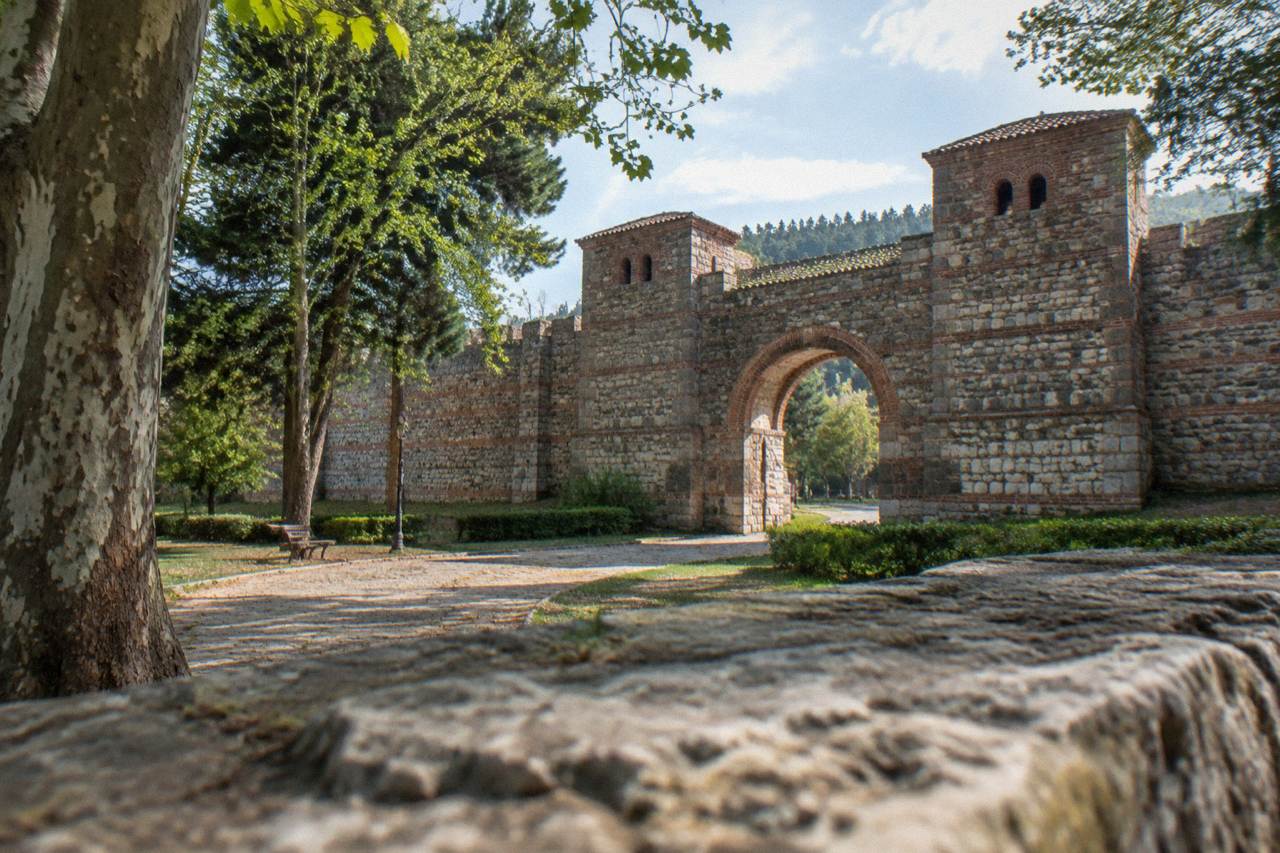
Hisarya, the modern name of Roman Diocletianopolis, is a small spa town in southern Bulgaria best known for its surviving circuit of Roman fortress walls and its mineral springs, and it works as a day trip out of Plovdiv, the region's transport hub about two hours from Sofia by direct train. Hisarya's own entry prices, opening hours and exact travel times are best confirmed locally. So the useful version of this guide does two things at once. It sets out what Hisarya is and why it draws visitors, and it plans the Plovdiv side of the trip with figures that are documented, from Old Plovdiv ticket prices to train times and climate, so the day can be built on solid ground. Plovdiv Travel Guide treats every destination the same way: state only what can be stated as fact, and tell you plainly where to check the rest.
What Is Hisarya And Why Do Day Trippers Go From Plovdiv?
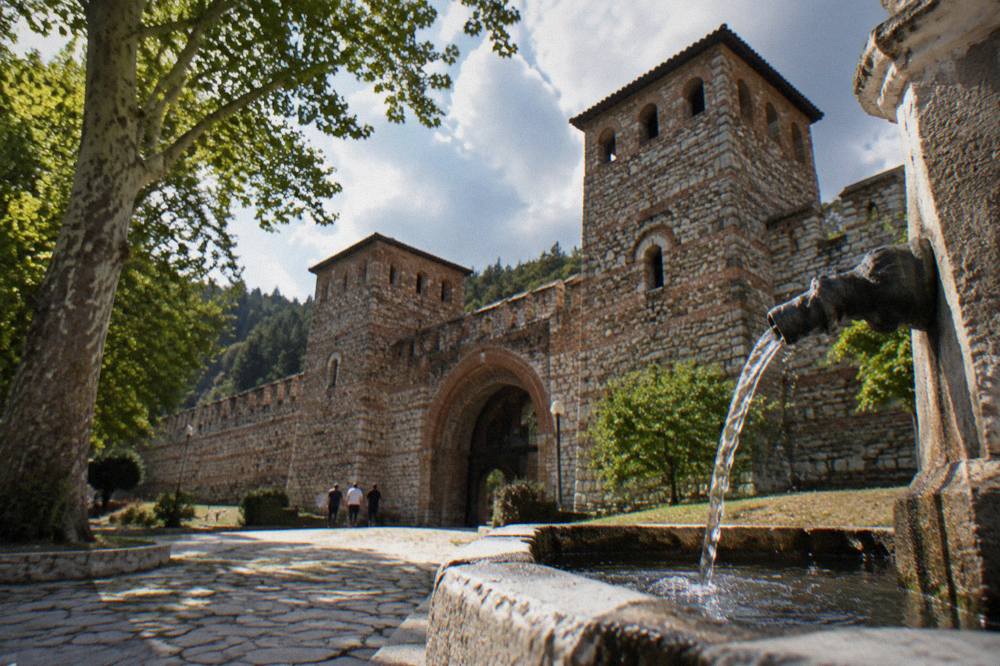
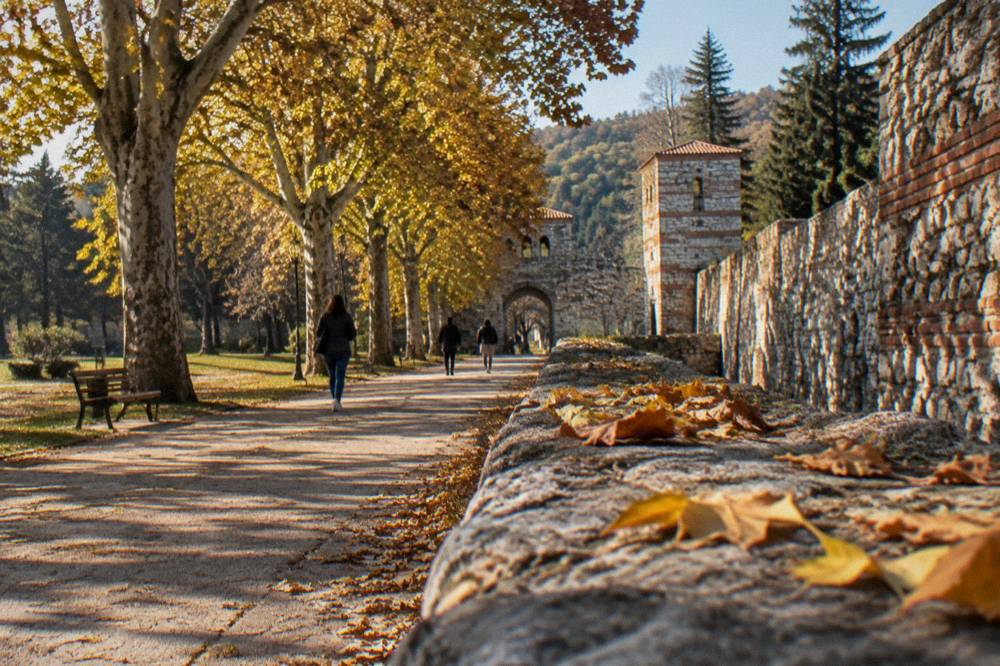
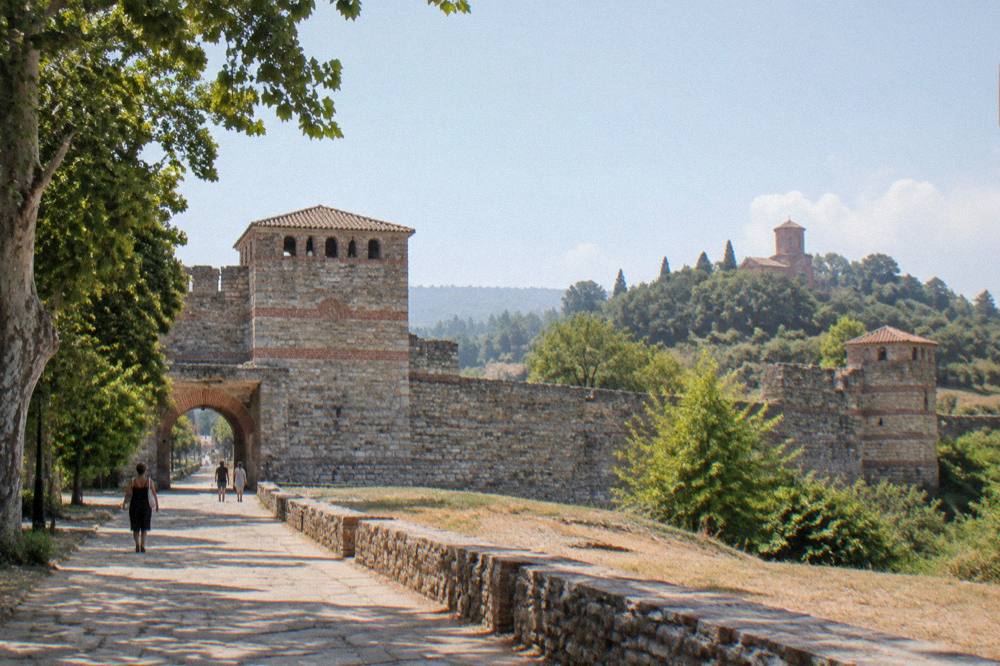
Hisarya is a spa town in southern Bulgaria, north of Plovdiv, on the site of the Roman city of Diocletianopolis, and its draw is a rare combination: long stretches of Roman fortress wall still standing, mineral springs that made it a imperial-era resort, and a quiet park town around them. Plovdiv, Bulgaria's second-largest city, is the natural base, because it holds the region's main railway line, the central bus network and its own dense layer of Roman remains. Visitors who come for Plovdiv's ancient theatre and stadium often add a spa day in Hisarya for the contrast: one is a city of 333,994 people built around six hills, the other a small town whose walls enclose gardens and spring water. This site's day-trip research documents the headline excursions from Plovdiv, and a Hisarya trip sits alongside them as the slow, water-centred option.
The Roman story is the reason the town exists on the map at all. Diocletianopolis was a spa city of the late Roman province of Thrace, and the walls that carry the modern town's name were its late-antique fortification. For travellers coming from Plovdiv, which was Philippopolis, the comparison is the point: Plovdiv keeps its theatre, stadium, forum and odeon inside a living city, while Hisarya keeps a fortification circuit and spring parks. A reader planning both will find the Plovdiv half documented in detail on the Roman Plovdiv guide, with each monument's dates and dimensions, and the Hisarya half best confirmed on arrival.
What the site can state about Hisarya is structural rather than numeric. The town is billed around its walls and springs; it is a functioning spa resort with parks, drinking fountains and sanatorium heritage; and it is reached overland from Plovdiv, since southern Bulgaria is inland and has no sea leg on any route. Confirm locally the entry price for a Hisarya museum or archaeological area, the opening hours for the walls or the local museum, and the journey time and fare from Plovdiv. Those blanks are not editorial caution for its own sake: the rule on every page of this site is that a figure without a source does not get printed.
How Do You Get From Plovdiv To Hisarya?
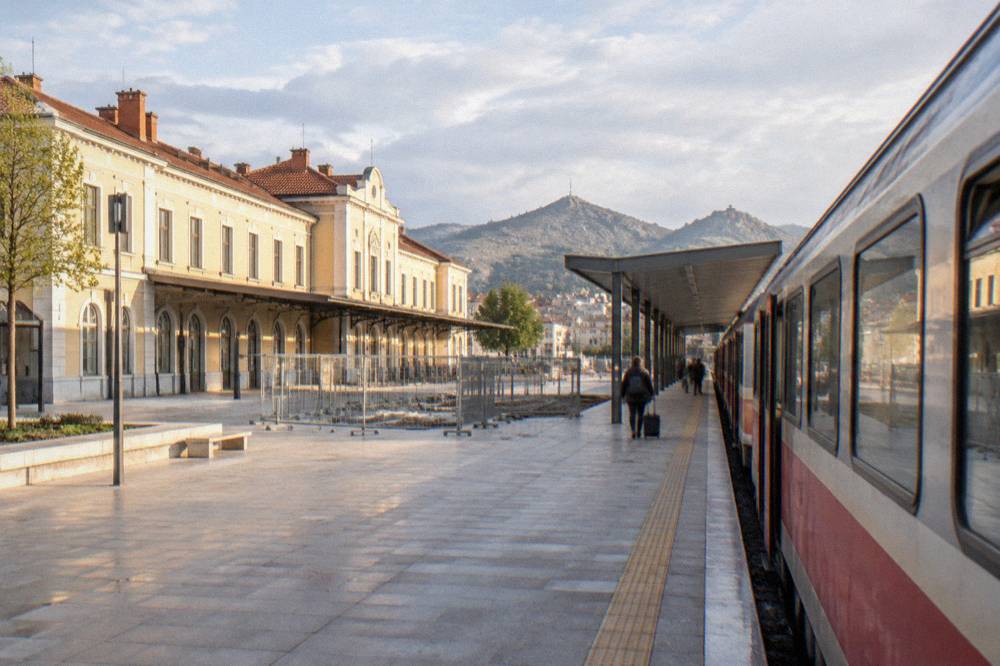
Hisarya is reached from Plovdiv by road or rail over a short inland route north of the city, and the practical advice is to treat Plovdiv as the base: the transport facts cover the Sofia to Plovdiv leg in detail, while the Plovdiv to Hisarya leg carries no published fare or timetable figure here, so confirm the connection locally at the station or with your accommodation. What can be stated is the framework. Plovdiv's central railway station and the Yug bus station stand side by side on Hristo Botev Boulevard, the Rodopi bus station serves the southern routes, and the Sever bus station the northern ones, and a town north of Plovdiv is the kind of destination served by regional bus or a mix of rail and road. The station modernisation that began around the Plovdiv railway junction was 85 percent complete in November 2025 and was due to finish in 2026, so access around the central station may still show works: allow a little extra time on the day.
For anyone building a longer itinerary, the Sofia leg is documented precisely. Direct trains from Sofia to Plovdiv take about 2 h 40 to 3 h 05 on the fastest services, with departures spread across the day, and services routed via Karlovo take far longer, so check that a connection is direct before booking. The bus alternative runs about 1 h 45 to 2 h 20 at roughly 6 to 9 euro. Those numbers buy you to Plovdiv; from there, Hisarya is a regional hop whose fare you confirm at the ticket window.
| Leg | Figure | Where it comes from |
|---|---|---|
| Sofia to Plovdiv, direct train | about 2 h 40 to 3 h 05 | the BDZ timetable |
| Sofia to Plovdiv, via Karlovo | 4 h 50 to 5 h 50 | the BDZ timetable |
| Sofia to Plovdiv, train fare | Confirm at booking | Not printed in the timetable |
| Sofia to Plovdiv, bus | about 1 h 45 to 2 h 20, roughly 6 to 9 euro | operator listings, confirm at booking |
| Plovdiv city bus, e-ticket | 0.50 euro | municipal e-ticketing |
Once you are moving inside Plovdiv itself, the city bus e-ticket costs 0.50 euro, and a proposed 1 euro paper ticket from the driver was only a concept when last reported, not an adopted fare. Taxis start around 1.10 euro with a per-kilometre rate in the 0.70 to 0.90 euro range by day, according to crowd-reported pricing data, which is useful for the station-to-hotel hop but should not be stretched into an estimate for a Hisarya round trip. For that journey, the advice is simple: ask at the station, ask at your accommodation, and check the return times before you commit, because regional services to small spa towns thin out in the evening.
What Roman Sights In Plovdiv Should You See Before Or After Hisarya?
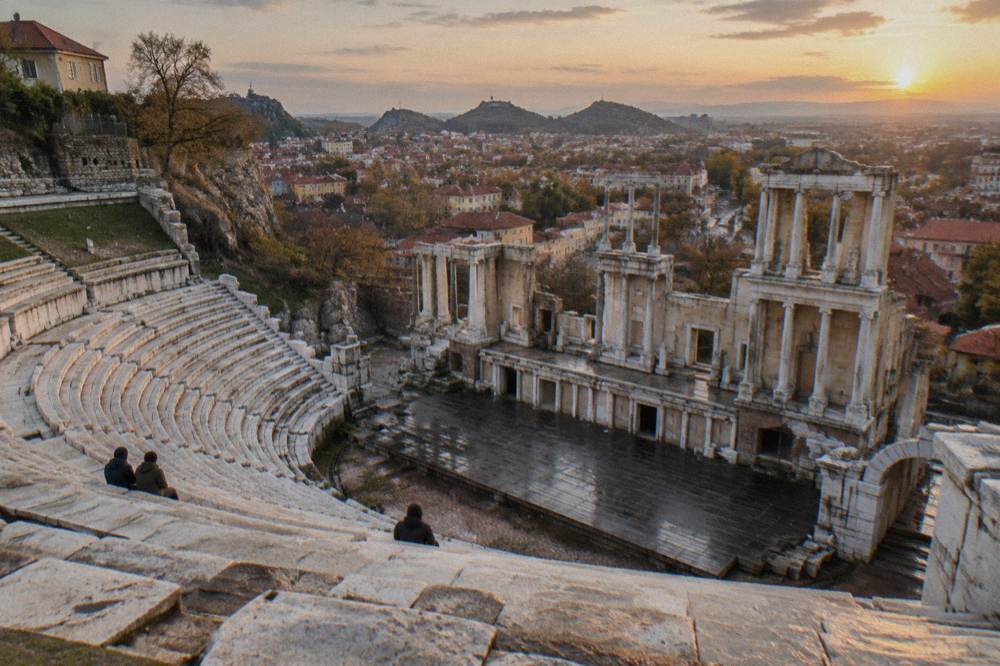
The Plovdiv half of a Roman-themed trip is fully documented: the Ancient Theatre of Philippopolis from the 90s of the 1st century AD with its 28 concentric rows of marble seats, the 2nd century Roman Stadium on the model of the stadium at Delphi with room for up to 30,000 spectators, the Bishop's Basilica at about 83 m long and 36 m wide with over 2,000 sq m of floor mosaics, plus the Roman Odeon and the Roman Forum. A single Old Plovdiv site ticket costs 3.58 euro for an adult, the Bishop's Basilica is priced separately at 7.57 euro, and the combined ticket covering up to five sites is 10.74 euro. Seeing Plovdiv's Roman layer first gives Hisarya its context: Diocletianopolis was a provincial spa sibling of Philippopolis, and the wall-building tradition you walk through in Hisarya is the same late-antique programme that reshaped cities across Thrace.
The Ancient Theatre is the anchor. Built in the 90s of the 1st century AD, it holds 28 concentric rows of marble seats and still hosts performances: the Opera Open festival ran there from 23 June to 9 September in 2026. It opens daily, 9:30 to 18:00 from April to October and 9:00 to 17:30 from November to March, with a lunch break at 12:30. The Roman Stadium, a 2nd century build modelled on Delphi, is a different case: only the northern part, the sphendone, is accessible, unearthed in the 1970s, and the rest lies under the Main Street, so no source that calls it fully excavated is telling the story straight. The sphendone viewing is free, the 3D projection hall is 3.68 euro for an adult, and a combined eastern sector and 3D ticket is 5.11 euro. The Ancient Theatre page and the Roman Stadium page carry each site in detail.
| Plovdiv Roman site | Fact | Adult price |
|---|---|---|
| Ancient Theatre of Philippopolis | built in the 90s of the 1st century AD, 28 rows of marble seats | 3.58 euro (one Old Plovdiv site) |
| Roman Stadium | 2nd century, model of Delphi, up to 30,000 spectators, only the sphendone accessible | sphendone free, 3D hall 3.68 euro |
| Bishop's Basilica | about 83 m by 36 m, over 2,000 sq m of mosaics in two layers | 7.57 euro, priced separately |
| Small Basilica | 5th to 6th century, mosaic floors | 3.58 euro (one Old Plovdiv site) |
| Roman Odeon and Forum | public Roman remains in the Old Town layer | see the Old Plovdiv ticket page |
| Combined ticket, up to 5 sites | excludes the Small and Bishop's Basilicas | 10.74 euro |
Free-entry rules matter on a budget day: children up to 7 and visitors with more than 50 percent disability enter free, and the first Thursday of the month brings free entry for students and seniors at Old Plovdiv sites, while the Regional History Museum is free for everyone the first Thursday of the month. The combined ticket's validity period is not published, so confirm it at the counter rather than assuming a window.
The two tours above are a self-paced audio walk through Plovdiv's Old Town and Roman landmarks and a guided city walk; each listing carries its own live price, rating and duration.
When Is The Best Time Of Year For A Hisarya And Plovdiv Trip?
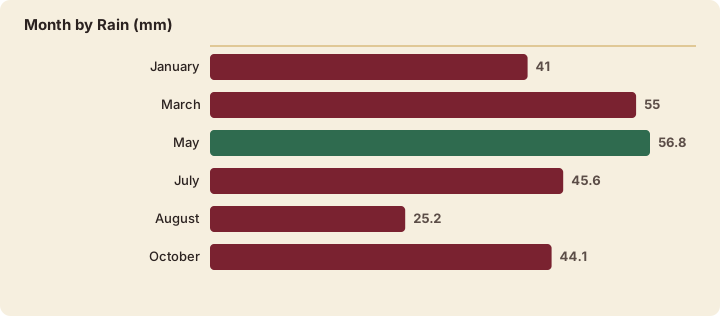
The climate is continental: ERA5 reanalysis for 1991-2020 puts Plovdiv's modelled mean daily high at 28.2 C in July and 28.6 C in August, against 5.9 C in January with a mean daily low of -2.6 C, and rain peaks in May at 56.8 mm and March at 55.0 mm while August is the low at 25.2 mm, so late spring and early autumn balance warmth against rain. Hisarya, as a park-and-walls town, follows the same rhythm: summer suits the springs and gardens but puts the warmest temperatures on any walking circuit, winter suits the spa water more than the walls, and the shoulder months give the most comfortable walking conditions. These are modelled grid-cell normals, not a station record, and reanalysis smooths urban heat, so treat them as planning ranges rather than a forecast.
| Month | Mean daily high (C) | Mean daily low (C) | Rain (mm) |
|---|---|---|---|
| January | 5.9 | -2.6 | 41.0 |
| March | 12.1 | 2.1 | 55.0 |
| May | 21.9 | 11.5 | 56.8 |
| July | 28.2 | 17.9 | 45.6 |
| August | 28.6 | 18.1 | 25.2 |
| October | 18.1 | 8.8 | 44.1 |
Two seasonal notes come from the events calendar rather than the climate model. The Christmas market in Plovdiv, the 2026/27 edition billed as the Soul of Christmas, runs 1 December 2026 to 7 January 2027 across Kapana and Central Square, which pairs well with a cold-weather spa day. In September, the Old Town festival days ran 16 to 23 September in 2026 with free events, a window that combines festival programming in the city with mild walking weather in the countryside. For the full month-by-month picture, the best time to visit guide carries the detail.
What Should A One-Day Hisarya Itinerary From Plovdiv Look Like?
A realistic day keeps Plovdiv as the base, gives Hisarya a morning-to-late-afternoon window built around the walls, the spring parks and the town's small museums, and banks the evening for Plovdiv itself, because no Hisarya opening hours or last-return timetable are published, so the day must be shaped to survive a thin evening service back to the city. Start from Plovdiv early, after a first pass through the Old Town if the theatre is on the list, since its doors open at 9:30 in the summer season. Arrive in Hisarya with the whole day in front of you, walk the wall circuit where access allows, take the spring water at the public fountains, and give the local archaeology museum whatever time it merits at its posted hours. Then return to Plovdiv for dinner and, if the season is right, an evening in the Ancient Theatre.
Confirm Hisarya's own site prices, hours and walking distances locally. What replaces them is a checklist. Confirm the first departure and the last return at the Plovdiv station. Ask your Plovdiv accommodation about the connection; spa towns of this size are a standard local question. Carry water, because the walking adds up even in a small town. And keep euro cash or a working card for small local entries, since Bulgaria has been a euro country since 1 January 2026 and prices across the country are quoted in it. Everything else covered here is indexed on Plovdiv Travel Guide.
| Time | Plan | Anchor |
|---|---|---|
| Early morning | Old Town pass in Plovdiv, Ancient Theatre from opening | opens 9:30 Apr to Oct, 9:00 Nov to Mar |
| Late afternoon | Return leg to Plovdiv, checked against the last service | confirm locally |
| Evening | Kapana or the Ancient Theatre programme | Opera Open ran 23 Jun to 9 Sep 2026 |
How Does Hisarya Compare With Plovdiv's Other Day Trips?
Hisarya is the water-and-walls option among Plovdiv's day trips, where Bachkovo Monastery is the monastery run at about 30 km with minibuses from the Rodopi station taking 35 to 45 minutes, Koprivshtitsa is the history-and-houses trip, and the Rhodope excursions are the mountain option, so the choice comes down to whether the day's theme is spa Rome, monastic Bulgaria or highland scenery. Only a handful of day-trip figures are given here, so confirm everything else locally. Bachkovo Monastery is free to enter and is a working monastery. Asen's Fortress has a small entry fee with no reliable current figure, so print none. Koprivshtitsa's six house museums run about 10 euro combined.
| Day trip from Plovdiv | Theme | Figures |
|---|---|---|
| Hisarya | Roman walls, mineral springs, spa parks | confirm locally |
| Bachkovo Monastery | working monastery, about 30 km | free entry, minibus 35 to 45 min from Rodopi station |
| Asen's Fortress | medieval fortress near Asenovgrad | small fee exists, figure unclear |
| Koprivshtitsa | revival-era houses | six-house combined about 10 euro |
The comparison is really about pace. Hisarya is the slowest of the five: a town built for drinking water and walking, with the walls as the monument and the park as the setting. The others each have a sharper single focus. A traveller with a week in Plovdiv can do all of them; a traveller with two days should pick the theme that matches the season, mountains in summer heat, houses in spring, walls and springs whenever the weather is grey, because a spa town in the rain is still a spa town.
For visitors who would rather not plan the transport themselves, guided options from Plovdiv cover the fortress-and-monastery axis, the Thracian valleys and the wine country, and every listing's price, rating and duration renders live from the operator's listing rather than from this page. The AudioGuide walk through Plovdiv's Old Town and Roman landmarks, this page's related tour, suits the day before or the evening after, and you can Check availability alongside the tour's own page.
Where Can You Learn More About Roman Bulgaria Before You Go?
The best preparation is Plovdiv's own Roman layer and its museums: the Regional Archaeological Museum, closed Monday and open Tuesday to Sunday 10:00 to 18:00, renewed its permanent exhibition in November 2025 with about 150 new exhibits and a bilingual audio guide, and its ticket price is not published on the fetched official page, so check it on arrival. The museum sits on Saedinenie Square and, together with the Old Plovdiv sites, gives the fullest picture of Roman Thrace that the region offers inside one city. Reading the Regional Archaeological Museum guide before a Hisarya day turns the walls from scenery into evidence.
Beyond the museum, the site's Roman coverage runs deep. The Roman Odeon and the Roman Forum complete the city's public-building set, and the episcopal complex, with the Bishop's Basilica's two mosaic layers, is documented on its own page. Hisarya's walls belong to the same centuries of provincial reorganisation, and a visitor who has stood in Plovdiv's theatre in the morning reads a fortress circuit differently in the afternoon. That is the argument for doing both in one trip, and it is why this page concentrates its figures on the Plovdiv side.
What Should You Budget For A Hisarya Day Trip From Plovdiv?
The Plovdiv side of the budget is documentable: a one-site Old Plovdiv ticket is 3.58 euro, the Bishop's Basilica is 7.57 euro, the five-site combined ticket is 10.74 euro, a city bus e-ticket is 0.50 euro, and crowd-reported cafe prices run about 2 euro for an espresso and about 2 euro for a half-litre of draught beer, while the Hisarya entries themselves carry no published figures and must be budgeted by asking locally. A day built around walking and spring water is structurally cheap: the two certain costs are the transport out of Plovdiv and whatever the local sites charge, and the flexible costs are food and any spa or tasting add-on.
Crowd-reported pricing, which this site always labels as such and never presents as official, puts a mid-range three-course meal for two at about 30 to 40 euro in Plovdiv, a taxi start at about 1.10 euro, and coffee in the 2 to 2.50 euro band. Tipping follows Bulgarian custom: about 10 percent in restaurants for good service, rounding up elsewhere. A tourist tax may be charged by accommodation, but its 2026 euro rate was not found in municipal sources, so confirm it at booking rather than budgeting a number from memory.
| Cost item | Figure | Nature |
|---|---|---|
| Old Plovdiv, one site | 3.58 euro adult | official price list |
| Bishop's Basilica | 7.57 euro adult | official price list |
| Combined ticket, up to 5 sites | 10.74 euro adult | official price list |
| Plovdiv city bus, e-ticket | 0.50 euro | municipal e-ticketing |
| Espresso or draught beer | about 2 euro each | crowd-reported data |
| Mid-range meal for two | about 30 to 40 euro | crowd-reported data |
The euro point matters for anyone reading older guides.
What Practical Details Should You Know For The Trip?
Bulgaria is a full Schengen member since 1 January 2025 and a euro country since 1 January 2026, citizens of the US, UK, Canada and Australia enter visa-free for 90 days in any 180, the emergency number is 112, plugs are type C and F at 230 V, and the time zone is Eastern European Time, so a Hisarya day trip runs with no border or currency friction for European visitors. The Entry/Exit System replaced passport stamping with biometric registration and was fully deployed at Schengen external borders as of 10 April 2026, which affects non-EU arrivals at the external border rather than movement inside Bulgaria.
Practicalities worth repeating for this specific day: the Plovdiv central station area has ongoing junction modernisation that was due to finish in 2026, so approach with a little time in hand. Keep your Old Plovdiv tickets if you plan multiple sites, and confirm the combined ticket's validity window at the counter, since it is not published. Museums close on Mondays: the Regional Archaeological Museum and the Regional Ethnographic Museum both do, and the Ethnographic Museum opens 9:00 to 18:00 in summer and 9:00 to 17:00 in winter, Tuesday to Sunday, at about 3.07 euro for an adult, a price carried in reporting rather than on the fetched official page. Plan Hisarya's local museum visit with the same Monday caution until confirmed otherwise.
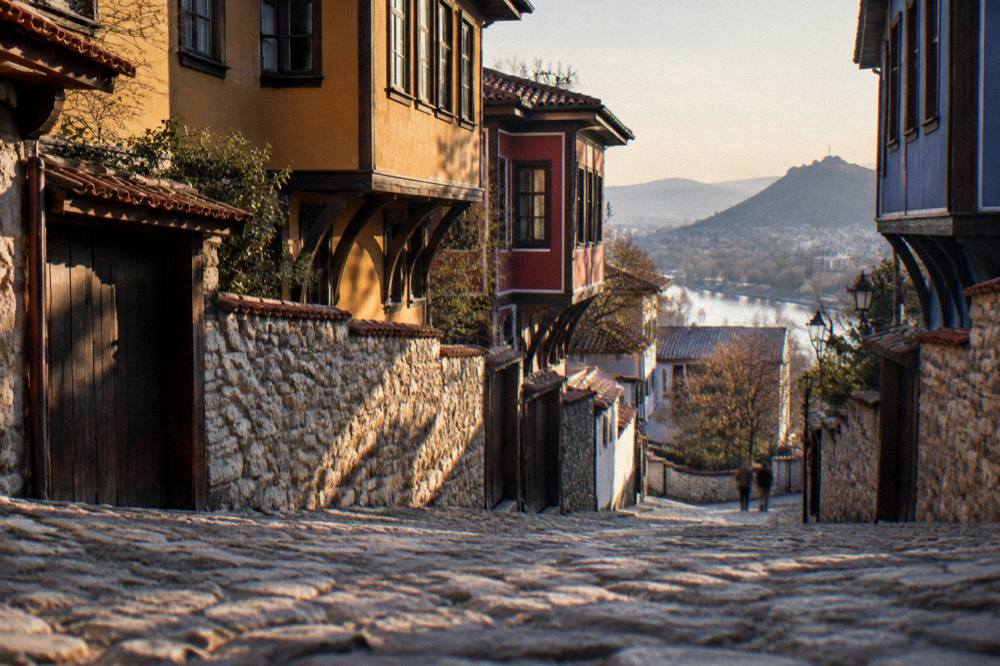
For the evening back in Plovdiv, the food walk above is one way to close a walking day, and the wider food and drink coverage, from what to eat in Plovdiv to Bulgarian wine, fills out the rest.
Common Questions About Hisarya Day Trips From Plovdiv
Is Hisarya worth a day trip from Plovdiv?
Hisarya suits travellers who want Roman walls, spring water and a slow spa-town pace rather than a monument-packed day. Confirm its own entry prices and hours locally; the Plovdiv side of the trip, from the Ancient Theatre to the Old Town tickets, makes a strong pairing.
How do you get to Hisarya from Plovdiv?
Overland by regional bus or a mix of rail and road from Plovdiv, whose central railway and Yug bus stations sit side by side on Hristo Botev Boulevard.
Can you combine Hisarya with Plovdiv's Roman sites in one trip?
Yes, and it works best with at least two days. The Ancient Theatre opens at 9:30 in the summer season, the Old Plovdiv one-site ticket is 3.58 euro, and a five-site combined ticket is 10.74 euro, leaving Hisarya as a full separate day.
When is the best time of year to visit Hisarya?
Late spring and early autumn, based on the ERA5 reanalysis 1991-2020 for nearby Plovdiv: modelled mean daily highs of 21.9 C in May and 18.1 C in October, with rain peaking at 56.8 mm in May. Summer is warmer, up to 28.2 C in July, and suits the springs more than long wall circuits.
Are there guided tours from Plovdiv that cover the region's Roman sites?
Yes, guided excursions run from Plovdiv to the fortress and monastery country and the Thracian valleys, and Plovdiv itself has guided and audio-guided walks of the Old Town and Roman landmarks. Prices, ratings and durations render live on each operator's listing, so check availability for the current figures.
Build the trip that way and the walls, the water and the walk take care of the rest.
