The Roman Forum Of Philippopolis
The Roman Forum of Philippopolis was the civic heart of Roman Plovdiv, and its remains sit in the modern city centre alongside a cluster of better-known Roman monuments. This guide sets out what is known from the city's own sources, what entry costs across the Old Plovdiv sites, and how to plan a visit.
Short answer
The Roman Forum of Philippopolis in Plovdiv, Bulgaria, is the site of the main public square of the Roman city, located in the modern centre. Visits are usually combined with the Ancient Theatre, the Roman Stadium and the Old Town; a single Old Plovdiv site ticket costs 3.58 euro per adult, per the official oldplovdiv.bg price list.
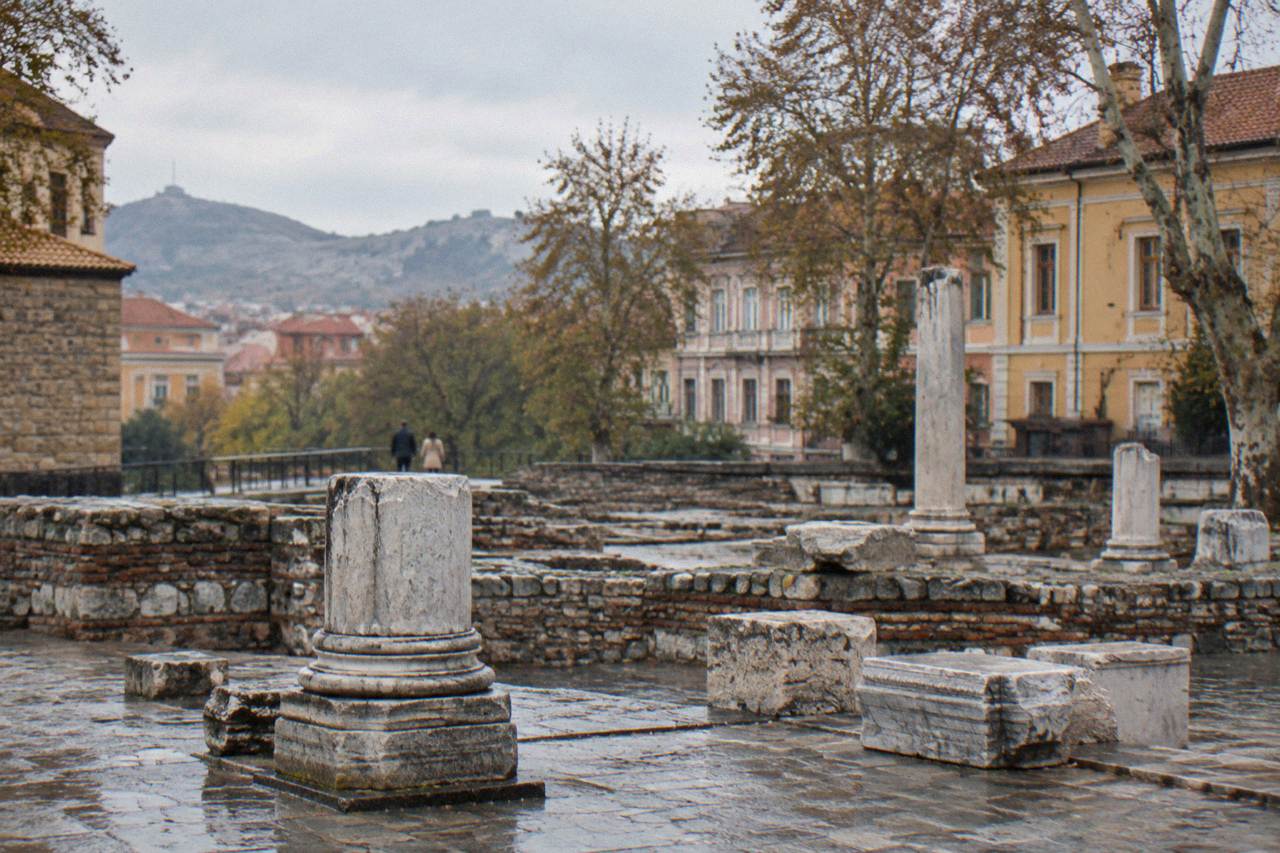
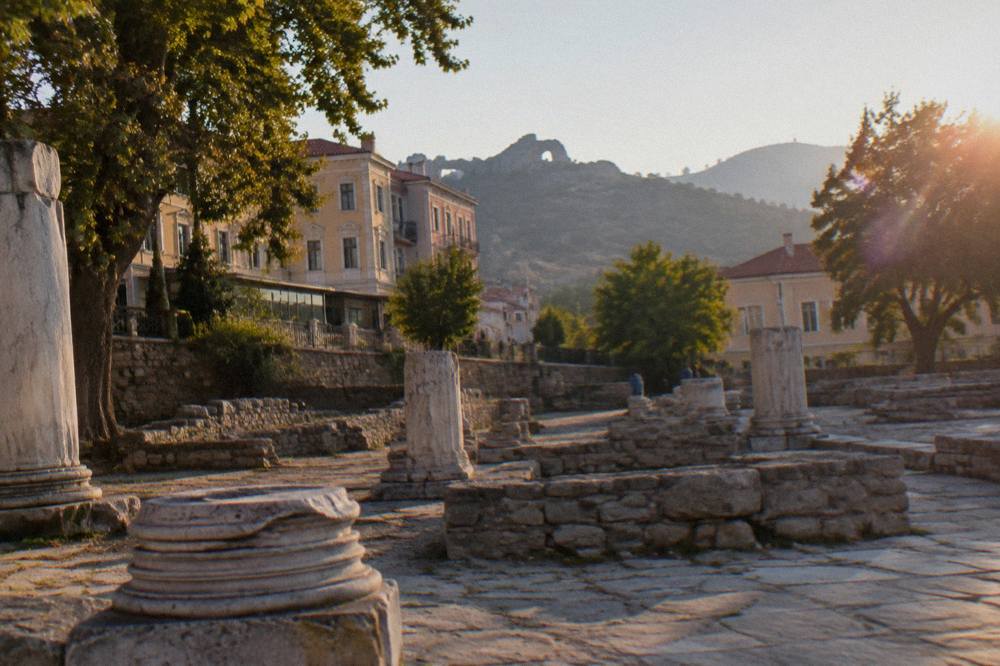
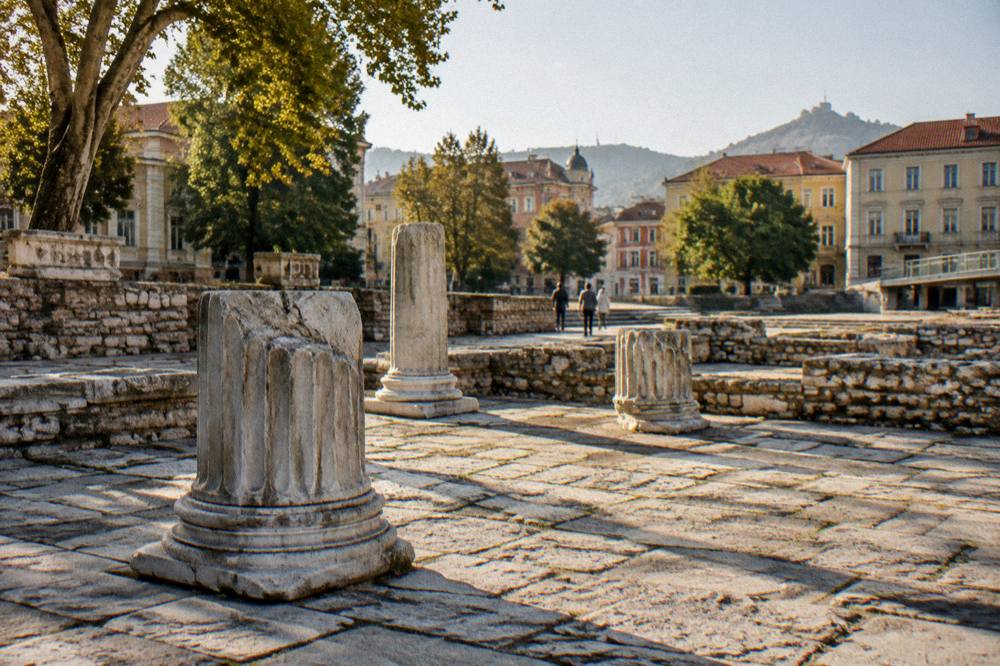
Plovdiv, in southern Bulgaria, is an inland city built around six hills, and under its modern streets lies one of the densest concentrations of Roman remains in the country. The Roman Forum of Philippopolis was the civic and administrative square of the Roman city, the space around which public life in Philippopolis was organised. Today its remains sit in the city centre, close to the pedestrian Main Street, and they are usually visited together with the Ancient Theatre of Philippopolis, the Roman Stadium and the Odeon as part of a single walk through Roman Plovdiv. This page gathers what the city's own institutions publish about those sites, what entry costs on the official Old Plovdiv price list, and how to plan the visit.
What Was The Roman Forum Of Philippopolis In Plovdiv?
The Roman Forum of Philippopolis was the main public square of Roman Plovdiv, the administrative, commercial and ceremonial centre where the city's civic life took place, and its remains stand in the modern city centre. Plovdiv is often described as one of the oldest continuously inhabited cities in Europe, and the forum belongs to the Roman layer of that long occupation, the layer the city calls Philippopolis.
Roman Philippopolis was a substantial city, and its monuments still shape the modern street plan. The municipal Old Plovdiv institute, which manages the Ancient Theatre and the other ticketed ancient sites, publishes an official price list and hours pages for each monument, and the city tourism site visitplovdiv.com carries the historical summaries. The forum's own story is easiest to understand as part of that wider Roman city: the theatre on the hillside, the stadium in the valley, and the forum as the civic space between the everyday life of the streets. For the broader picture, the site's Roman Plovdiv overview collects all of these monuments in one place, and the Plovdiv history guide traces the city from its Thracian beginnings through the Roman, Byzantine and Ottoman periods.
A useful framing for any visit: Plovdiv's Roman remains are not gathered behind one gate. They are spread through the living centre, under, beside and sometimes inside later buildings. The Roman Stadium's seating survives only in part, with the rest lying beneath the modern Main Street, and the forum stones are similarly woven into the contemporary city. That fragmentation is what makes a planned route worthwhile, whether on your own or with a guide.
Where Is The Roman Forum In Plovdiv And How Do You Reach It?
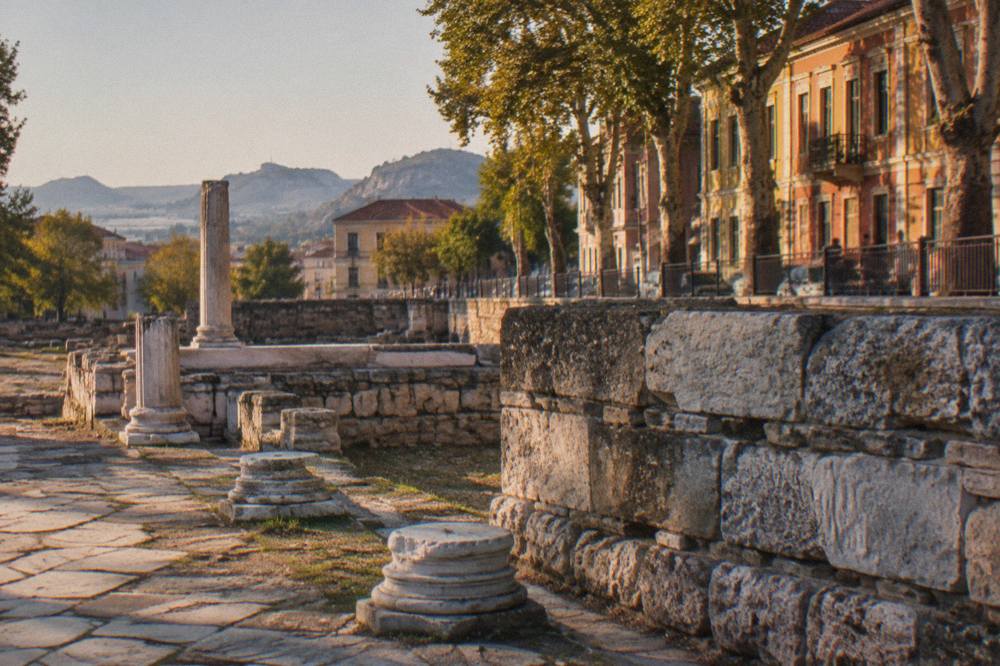
The Roman Forum site sits in central Plovdiv, in the low ground of the modern city centre where the Roman city's public buildings stood, with the pedestrian Main Street, the Roman Stadium remains and the Old Town all in the same central area. Bulgaria has used the euro since 1 January 2026, and it has been a full Schengen member since 1 January 2025, so entry and currency are straightforward for European visitors.
For travellers arriving from the capital, the BDZ timetable shows direct trains from Sofia taking about 2 hours 40 to 3 hours 5, with slower services routed via Karlovo taking far longer; buses run from Sofia's central bus station to Plovdiv's Yug station in about 1 hour 45 to 2 hours 20, per secondary transport listings. The central railway station and the Yug bus station stand side by side on Hristo Botev Boulevard, from where the centre is a straightforward continuation on foot or by city bus; the single e-ticket is 0.50 euro. Within the centre itself, everything Roman is walkable, and the city's flat valley floor between the hills makes the walking easy. The Sofia to Plovdiv guide and the getting around Plovdiv guide carry the detail for each leg.
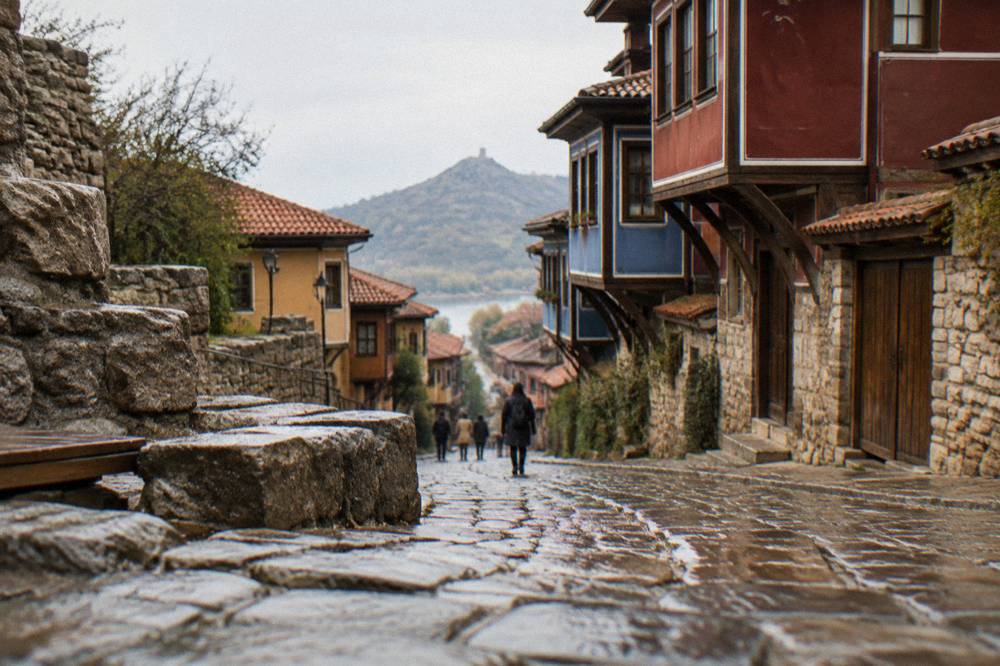
A central base puts all of it at your feet. The where to stay in Plovdiv guide maps the neighbourhoods, and the Kapana creative district, whose name means "The Trap" in a tangle of narrow streets, sits beside the Old Town with cafes and small shops. Kapana is free, open public space, so it works well as the pause between the forum area and the hillside monuments.
If you would rather have the Roman sites explained than puzzle over foundations on your own, a guided walk is the efficient choice, and the options below cover the forum area within the wider Old Town circuit.
If you'd rather have the Roman sites explained, book a guided walking tour here.
How Does The Roman Forum Compare With The Ancient Theatre And The Roman Stadium In Plovdiv?
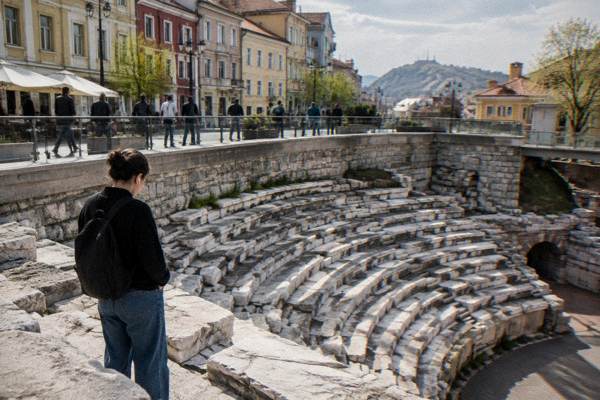
The Roman Forum was the civic square of Philippopolis, while the Ancient Theatre was its entertainment hillside and the Roman Stadium its sports venue, so the three served different functions and today offer very different visitor experiences. The theatre is the most complete, the stadium the most fragmented, and the forum the quietest, the one where you read the city plan rather than stand inside a monument.
The Ancient Theatre of Philippopolis was built in the 90s of the 1st century AD and retains 28 concentric rows of marble seats, per visitplovdiv.com; it remains a working performance venue, and the Opera Open festival ran there from 23 June to 9 September in 2026. The Roman Stadium was built in the 2nd century AD on the model of the stadium at Delphi and held up to 30,000 spectators, but only the northern part, the sphendone, is accessible: it was unearthed in the 1970s and the rest lies under the Main Street, so it should never be imagined as fully excavated. The forum, by contrast, is about the civic framework of the city, administration and public assembly rather than spectacle. The full site pages for each, the Ancient Theatre of Philippopolis, the Roman Stadium and the Roman Odeon, carry the monument-by-monument detail.
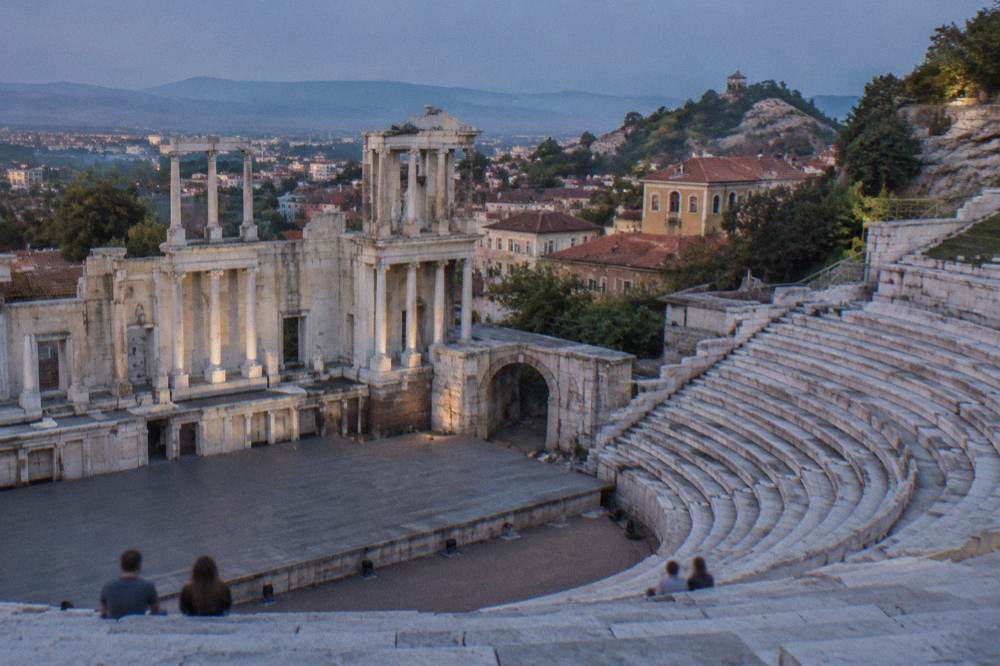
The comparison matters for planning because the three sites reward different amounts of time. The theatre deserves the longest stay, especially in the morning light. The stadium's sphendone is quick and free to view. The forum asks for a slower read, and pairs naturally with the mosaic-rich basilicas: the Bishop's Basilica, about 83 m long and 36 m wide, the largest 4th to 6th century basilica in Bulgaria, with two layers of floor mosaics covering over 2,000 square metres, per oldplovdiv.bg, covered in detail on the Eirene mosaic and Episcopal Basilica page.
The table below sets the three headline Roman sites side by side.
| Roman Site | Function In Philippopolis | What Survives Today | Ticket Status |
|---|---|---|---|
| Roman Forum | Civic and administrative square | Foundations and stonework in the modern centre | Free public ground, per the city's listings |
| Ancient Theatre | Performance venue, built in the 90s of the 1st century AD | 28 concentric rows of marble seats, still a stage in summer | Ticketed, 3.58 euro single site |
| Roman Stadium | Athletic venue, 2nd century AD, up to 30,000 spectators | Northern sphendone only, the rest under the Main Street | Sphendone viewing free, 3D hall ticketed |
What Does It Cost To See The Roman Monuments Of Plovdiv?
A single Old Plovdiv site ticket costs 3.58 euro per adult, 1.53 euro per pupil or student, and 7.16 euro for a family of parents with children aged 7 to 16, per the official oldplovdiv.bg price list, with children under 7 and visitors with more than 50 percent disability admitted free. The combined ticket, covering up to five sites but excluding the Small Basilica and the Bishop's Basilica, is 10.74 euro per adult.
The forum ground itself is public, like Kapana and Nebet Tepe, so the tickets on this list belong to the monuments you will pair it with. The Bishop's Basilica is priced separately from the one-site and combined tickets, at 7.57 euro per adult, because it is run as its own attraction with its visitor centre over the mosaics. Groups of more than 10 pay a reduced adult rate of 3.07 euro per site, and 8.69 euro on the combined ticket.
| Ticket | Adult | Pupil / Student | Family |
|---|---|---|---|
| One Old Plovdiv site (excludes Bishop's Basilica) | 3.58 euro | 1.53 euro | 7.16 euro |
| Combined, up to 5 sites | 10.74 euro | 4.09 euro | 21.47 euro |
| Bishop's Basilica only | 7.57 euro | 3.58 euro | 15.34 euro |
| Roman Stadium 3D hall | 3.68 euro | 1.23 euro | not listed |
| Stadium eastern sector plus 3D hall | 5.11 euro | 2.05 euro | not listed |
The combined ticket's validity period is not stated on the official page text, so confirm at the ticket desk before planning a split two-day use. The how expensive is Plovdiv guide and the money in Plovdiv guide cover daily costs beyond the monuments, from crowd-reported coffee prices around 2 euro to mid-range dinners.
What Are The Opening Hours For Roman Sites In Plovdiv?
The Ancient Theatre is open daily, 9:30 to 18:00 from April to October and 9:00 to 17:30 from November to March, with a lunch break from 12:30 to 13:00, per oldplovdiv.bg. The Roman Stadium's sphendone viewing is free and the 3D hall keeps the same seasonal hours, while the Bishop's Basilica is open daily 9:00 to 18:00 year round.
The forum's public ground has no gate or closing time. The ticketed monuments around it do, and the lunch break catches out visitors who arrive at half past twelve expecting a ticket office. Two closures matter for museum lovers: the Regional Archaeological Museum is closed on Monday, open Tuesday to Sunday, and the Regional Ethnographic Museum in the Old Town is also closed on Monday. The Regional History Museum is free on the first Thursday of the month, and the first Thursday also brings free entry for students and seniors at Old Plovdiv sites. The Archaeological Museum renewed its permanent exhibition in November 2025 with about 150 new exhibits and a bilingual audio guide, which makes it the natural indoor companion to the forum's outdoor stonework; details are on the Regional Archaeological Museum page.
| Site | Season | Hours | Closed |
|---|---|---|---|
| Ancient Theatre | April to October | Daily 9:30 to 18:00, lunch 12:30 to 13:00 | Never |
| Ancient Theatre | November to March | Daily 9:00 to 17:30, lunch 12:30 to 13:00 | Never |
| Bishop's Basilica | Year round | Daily 9:00 to 18:00 | Never |
| Regional Archaeological Museum | Summer listing | Tuesday to Sunday 10:00 to 18:00 | Monday |
| Regional Ethnographic Museum | April to October | Tuesday to Sunday 9:00 to 18:00 | Monday |
| Regional Ethnographic Museum | November to March | Tuesday to Sunday 9:00 to 17:00 | Monday |
Hours can shift around events: the Ancient Theatre hosts summer performances, and Opera Open ran there from late June to early September in 2026, so an evening concert day can change the daytime rhythm at the site. Check oldplovdiv.bg and the city's event listings before locking an itinerary.
When Is The Best Time Of Year To See The Roman Forum In Plovdiv?
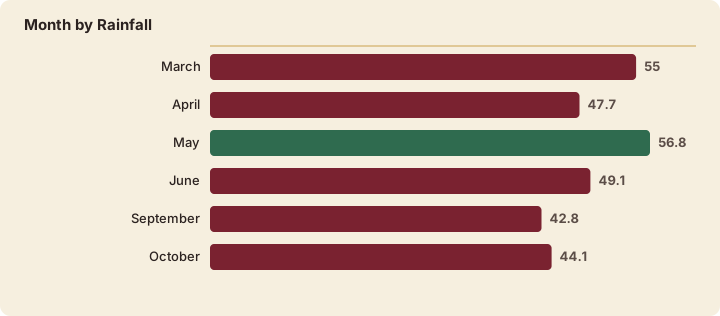
The ERA5 reanalysis for Plovdiv, covering 1991 to 2020, puts the mean daily high at 28.6 C in August and 5.9 C in January, with rainfall peaking at 56.8 mm in May and falling to 25.2 mm in August, so spring and early autumn combine comfortable temperatures with the outdoor walking that the forum, the stadium and the Old Town demand.
The forum is open-air, and so is nearly everything you will pair with it. Summer visitors get the Opera Open season and long evenings, at the price of afternoon heat on the unshaded stone; winter visitors get the theatre's short opening hours and frosty mornings on Nebet Tepe, but the museums and Kapana's cafes stay warm. The site's seasonal guides, including Plovdiv in spring, Plovdiv in summer, Plovdiv in autumn and Plovdiv in winter, break down what each period adds, and the best time to visit Plovdiv guide weighs them against each other.
| Month | Mean Daily High | Mean Daily Low | Rainfall |
|---|---|---|---|
| March | 12.1 C | 2.1 C | 55.0 mm |
| April | 17.1 C | 6.4 C | 47.7 mm |
| May | 21.9 C | 11.5 C | 56.8 mm |
| June | 25.9 C | 15.4 C | 49.1 mm |
| September | 23.8 C | 13.8 C | 42.8 mm |
| October | 18.1 C | 8.8 C | 44.1 mm |
Figures are modelled normals from the ERA5 reanalysis for the grid cell near the Old Town, not a station record, and reanalysis smooths urban heat. One calendar note for autumn visitors: Kapana Fest ran across two weekends, 2 to 4 and 9 to 11 October, in its 2026 autumn edition, and the Christmas market edition that followed ran from late November 2025 into early January 2026, so the shoulder seasons carry their own reasons to come.
What Else Sits Within The Roman Forum's Central Plovdiv Neighbourhood?
The forum's central location puts the whole ancient and Ottoman core of Plovdiv around it: the Roman Stadium sphendone under the Main Street, the Dzhumaya Mosque, Hisar Kapia, the Old Town houses on the Three Hills, and Nebet Tepe's free archaeological hilltop, all part of the same continuous centre that a visitor can cover without transport.
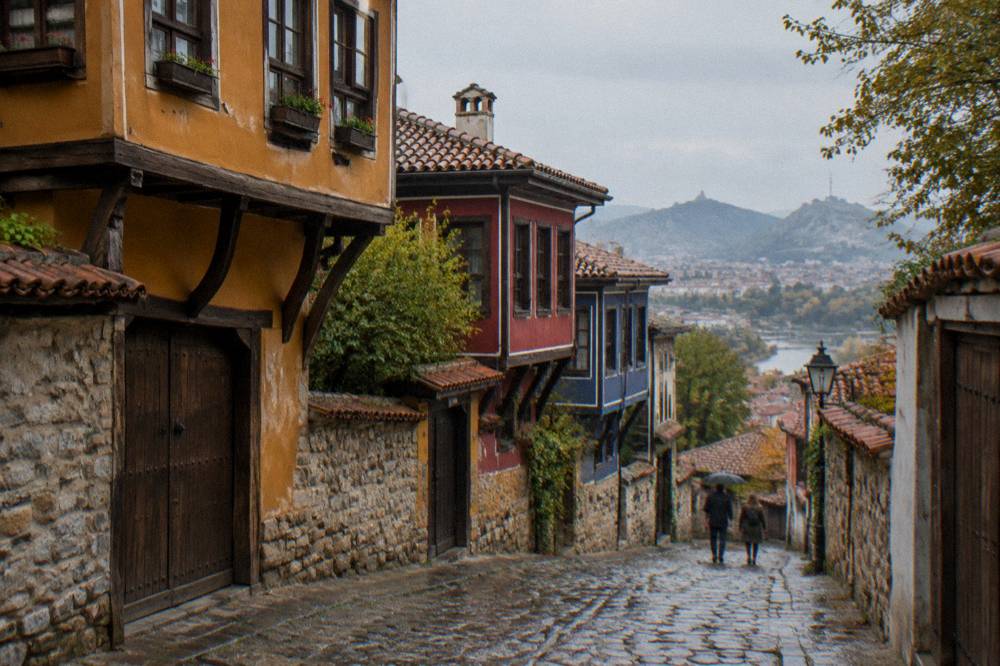
The Main Street and the centre guide maps the pedestrian spine, and from there the branches are short. The Dzhumaya Mosque, a working mosque and the second-largest in Bulgaria by built area at about 1,500 square metres, is free to visit outside prayer times with modest dress; its own page lists the etiquette. Hisar Kapia, the Ottoman-era gate, is a free public landmark, and the Hisar Kapia page places it in the Old Town's street sequence. Uphill, Nebet Tepe preserves the earliest settlement layer of the city, dated by the city tourism site to the 4th millennium BC, and after its EU-funded restoration opened in March 2025 it is free to walk. The revival houses, Balabanov House and Hindliyan House among them, sit on the same slopes.
| Site | Kind | Entry |
|---|---|---|
| Nebet Tepe | Open-air archaeological hilltop | Free |
| Hisar Kapia | Historic gate, public space | Free |
| Kapana Creative District | Streets, studios, cafes | Free |
| Dzhumaya Mosque | Working mosque | Free, modest dress |
| Roman Stadium sphendone | Open-air stadium remains | Free to view |
| Tsar Simeon Garden | City park with singing fountains | Free |
For a longer stay, the two days in Plovdiv itinerary sequences all of this, and the self-guided walk of Plovdiv does it in a single planned loop. The forum stones slot naturally into either as the Roman anchor of the central stretch.
Can You See The Roman Forum On A Guided Tour Of Plovdiv?
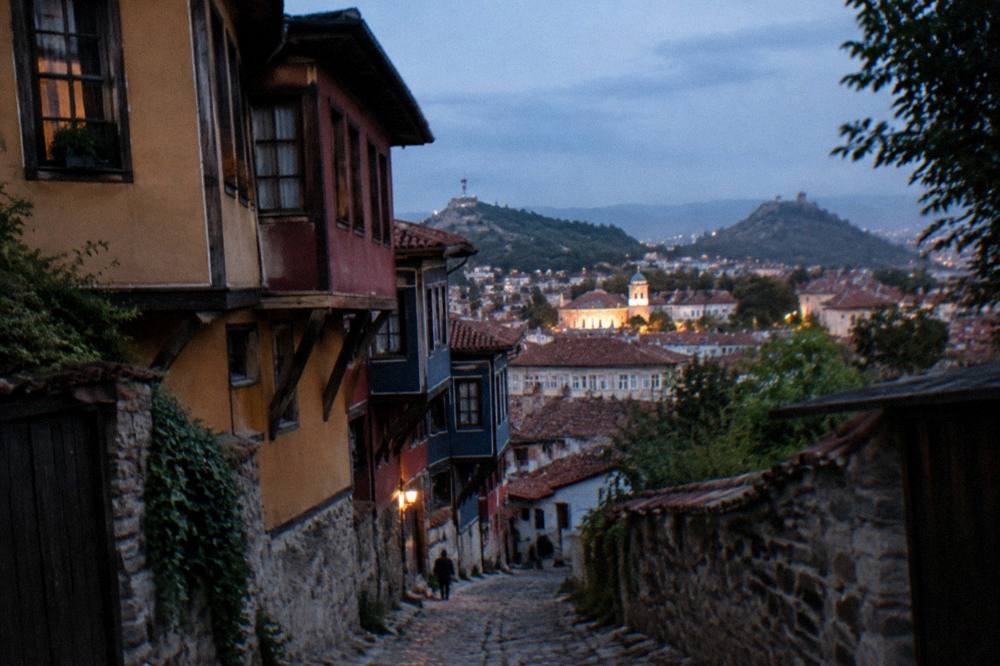
Yes: the forum area sits on the standard guided circuit of central Plovdiv, and the site's featured walk, an Old Town and Roman Theatre guided walking tour, covers the Roman landmarks as part of its route, with the listing carrying the current price and availability. Tip-based walks also run locally; if you take one, confirm the meeting point and the route with the guide directly.
A guide earns their fee in Plovdiv less for navigation than for layering: standing on forum stones that overlap a Byzantine street that overlaps an Ottoman market needs someone who can say which layer is which. The featured walk below pairs the Old Town houses with the theatre. Duration, price and rating render from the operator listing, so the figures stay current.
For visitors basing themselves in Plovdiv for several days, Roman Plovdiv is only the first layer, and the Rhodope trips make a strong contrast: a mountains-and-cuisine small-group day covers the Wonderful Bridges and Rhodope food, and the Rhodope Mountains guide sets out the wider region, from Smolyan and Pamporovo to the Trigrad gorge and Devil's Throat cave.
How Do You Plan A Forum-Centred Day In Plovdiv?
Build the day around the valley floor and one hill: start with the forum area and the Roman Stadium sphendone on the Main Street, take the Ancient Theatre in the morning before the heat, drop into the Bishop's Basilica mosaics or the Archaeological Museum over midday, then climb to Nebet Tepe and the Old Town houses for the afternoon, ending in Kapana. This sequence respects the lunch break at the ticketed sites and puts the free open-air sites in the middle of the day.
Practical notes that make the day smoother: the city bus e-ticket is 0.50 euro if you arrive from the stations, but the whole centre is on foot; confirm the combined ticket's validity at the desk if you plan to split it across two days; avoid Monday for the museums; and time the theatre visit around any performance day, since the summer programme can alter access. The Plovdiv in one day guide compresses this further, and the full Plovdiv itinerary guide stretches it.
Two day trips deserve the spare day if you have one. Hisarya, the Roman Diocletianopolis, is the region's other great Roman site, a fortress town with walls and mineral springs, and Stara Zagora holds another Roman forum and a lively street core. Both show how the Roman province of Thrace was dotted with planned cities, which is the wider story the Plovdiv forum belongs to.
For more of the centre at night, the Plovdiv at night guide and the Plovdiv theatre and concerts guide cover the evening side of a city whose ancient stage still fills in summer, and the full attraction list begins at things to do in Plovdiv. For everything else the site covers, from the Three Hills to Tsar Simeon Garden and the singing fountains, start from the Plovdiv Travel Guide homepage.
Common Questions About The Roman Forum Of Philippopolis
Is the Roman Forum of Plovdiv free to visit?
The forum's ground in the modern centre is public space, free and open, like the Roman Stadium sphendone and Nebet Tepe. The ticketed Roman monuments around it, the Ancient Theatre and the Bishop's Basilica, charge per the official Old Plovdiv price list: 3.58 euro per adult for a single site and 7.57 euro for the Bishop's Basilica.
How much is the Old Plovdiv combined ticket?
The combined ticket, covering up to five sites but excluding the Small Basilica and the Bishop's Basilica, is 10.74 euro per adult and 4.09 euro per pupil or student, per the official oldplovdiv.bg price list. Its validity period is not stated in the official page text, so confirm at the ticket desk.
Is Plovdiv Old Town a UNESCO World Heritage Site?
No. "The Ancient Plovdiv" sits on Bulgaria's UNESCO Tentative List, submitted on 14 September 2004, which is a waiting list and not an inscription. No part of Plovdiv is a World Heritage Site.
Are the Roman sites in Plovdiv open every day?
The Ancient Theatre and the Bishop's Basilica are open daily year round, with seasonal hours and a lunch break from 12:30 to 13:00 at the theatre. The Regional Archaeological Museum and the Regional Ethnographic Museum are closed on Monday.
Can you visit the Roman Forum from Sofia on a day trip?
Yes. The BDZ timetable shows direct trains taking about 2 hours 40 to 3 hours 5 each way, and buses run in about 1 hour 45 to 2 hours 20, so a day trip is practical, though an overnight stay gives the forum, the theatre and the Old Town room to breathe.