The Roman Odeon: The Small Theatre Near The Forum
The Roman Odeon in Plovdiv sits at the heart of the ancient city, a compact stone theatre beside the Roman Forum. This guide sets out what is documented about the site, how it differs from the city's larger Ancient Theatre, what nearby Roman Plovdiv survives, and how to plan a visit around it.
Short answer
The Roman Odeon in Plovdiv is a small Roman-era theatre building on the plateau of the Three Hills, next to the Roman Forum, the civic centre of ancient Philippopolis. Where the Ancient Theatre held the big performances, the odeon served the smaller public functions of the city. It is one of several Roman monuments you can cover on foot in central Plovdiv in a single day.
Plovdiv, in southern Bulgaria, is an inland city of six hills and one of the densest layers of Roman remains anywhere in the Balkans, and the Roman Odeon is the quietest chapter of that layer. The city's tourism site describes Plovdiv as often ranked among the oldest continuously inhabited cities in Europe, with the first settlement on Nebet Tepe dated to the 4th millennium BC. Under the Roman name Philippopolis it grew into a full provincial capital, and a capital needed more than one performance venue. The vast Ancient Theatre of Philippopolis, built in the 90s AD with 28 concentric rows of marble seats, took the headline shows. The odeon, tucked beside the Roman Forum at the foot of the Three Hills, handled everything smaller. This guide sets out the story of the odeon, how it compares with its larger sibling, and how to build a day around it.
What Is The Roman Odeon In Plovdiv?
The Roman Odeon in Plovdiv is a small Roman-period theatre building that belonged to the civic heart of ancient Philippopolis, standing beside the Roman Forum on the plateau between the Three Hills. An odeon is the smaller of a Roman city's two theatre types: where the large Ancient Theatre staged festival performances for thousands, the odeon served smaller gatherings such as council meetings, recitals and municipal business. Plovdiv is one of the cities where both buildings survive, which is rare.
The pairing matters for understanding the site. A Roman city of Philippopolis' standing typically built its forum first as the administrative and commercial centre, then added performance spaces as wealth allowed. Plovdiv's Roman remains still read in that order: the Roman Forum as the open civic square, the odeon attached to it for covered or semi-covered gatherings, and the great hillside theatre above for the public spectacle that no odeon could hold.
The municipal and tourism bodies that document Roman Plovdiv, oldplovdiv.bg and visitplovdiv.com, treat the odeon as part of the same ancient complex as the Forum rather than as a standalone attraction. That is how it is best visited too: as a short stop on a walk that links the Forum, the odeon, Nebet Tepe above and the Main Street below, rather than a destination in its own right.
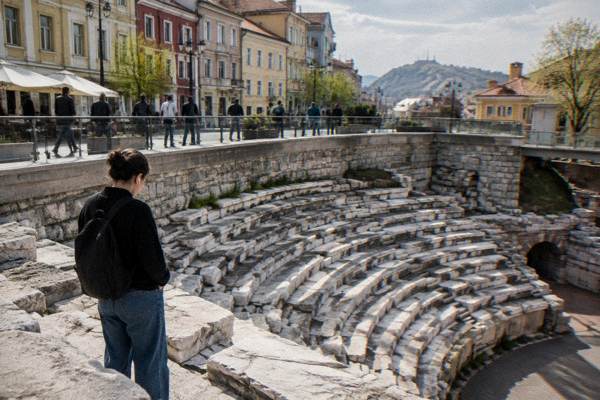
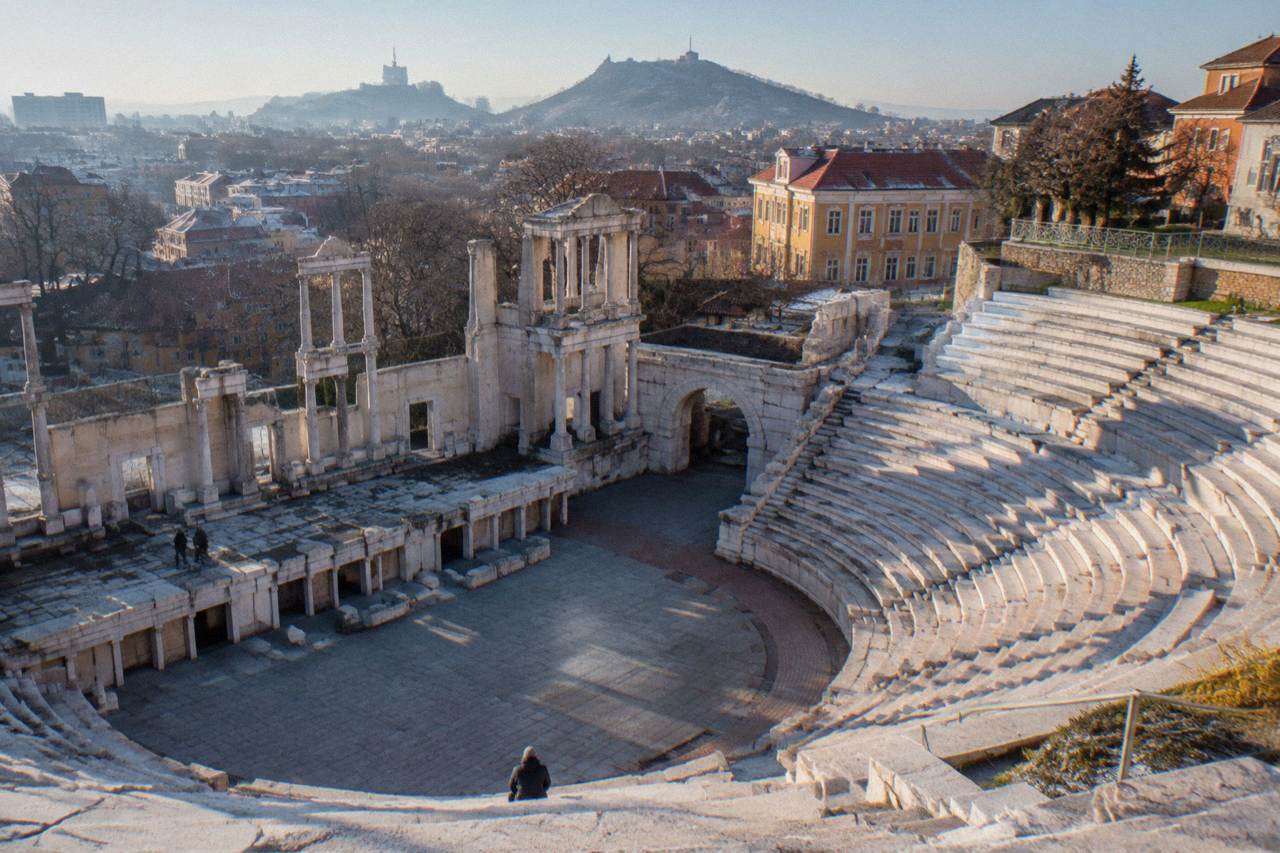
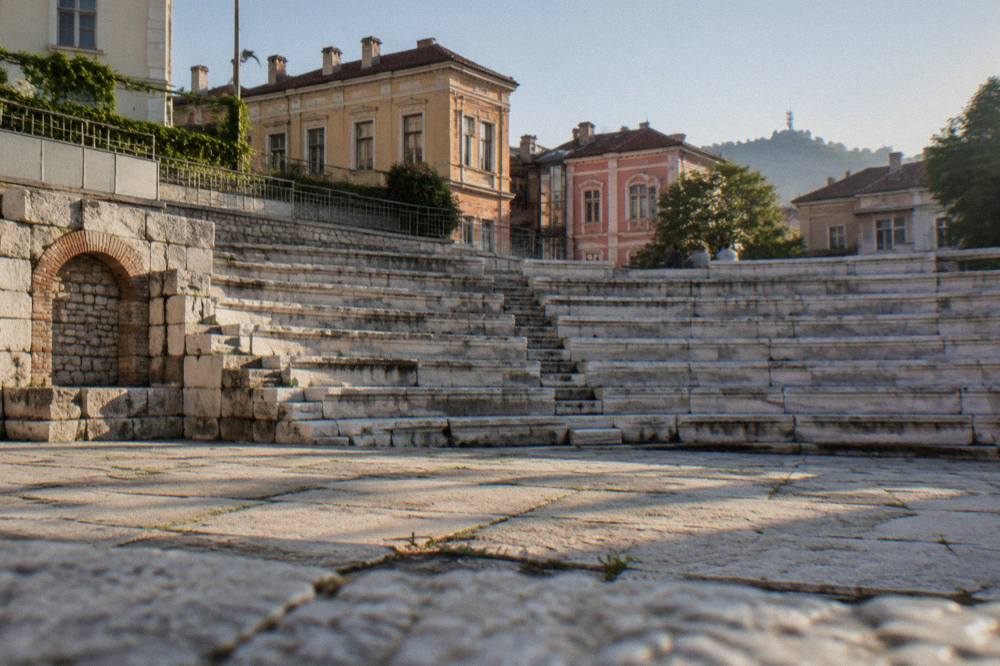
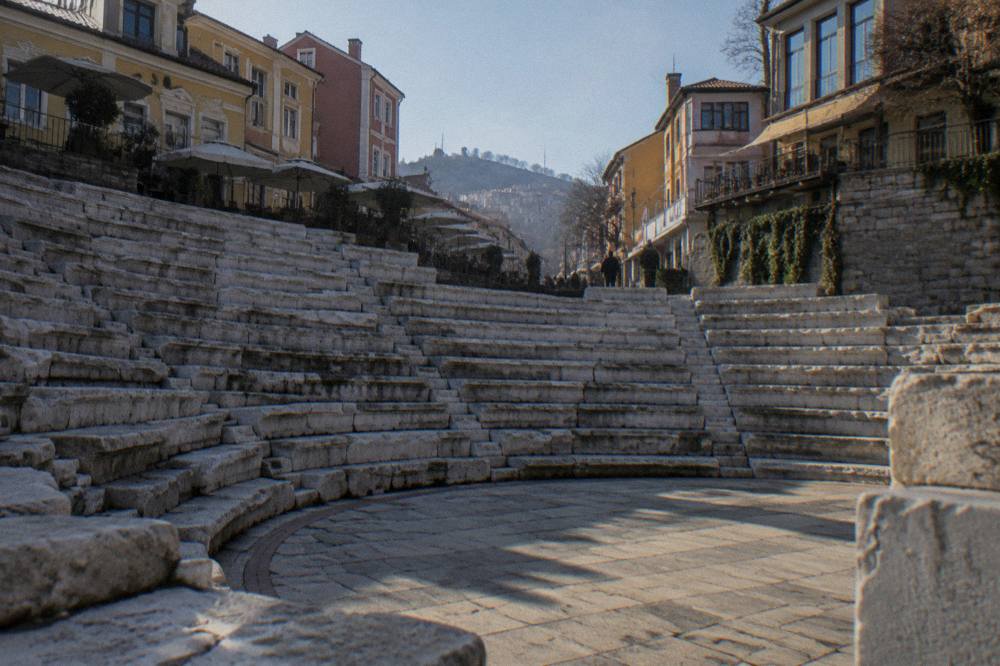
Physically it is a modest structure. The seating rises in tight stone tiers around a small orchestra floor, and the scale is the point: this was a room for a few hundred people, not a hillside for a festival crowd. Visitors coming straight from the Ancient Theatre often need a moment to recalibrate, because the odeon answers a different question, namely how a Roman city ran its daily public life.
How Does The Roman Odeon Compare With The Ancient Theatre Of Philippopolis?
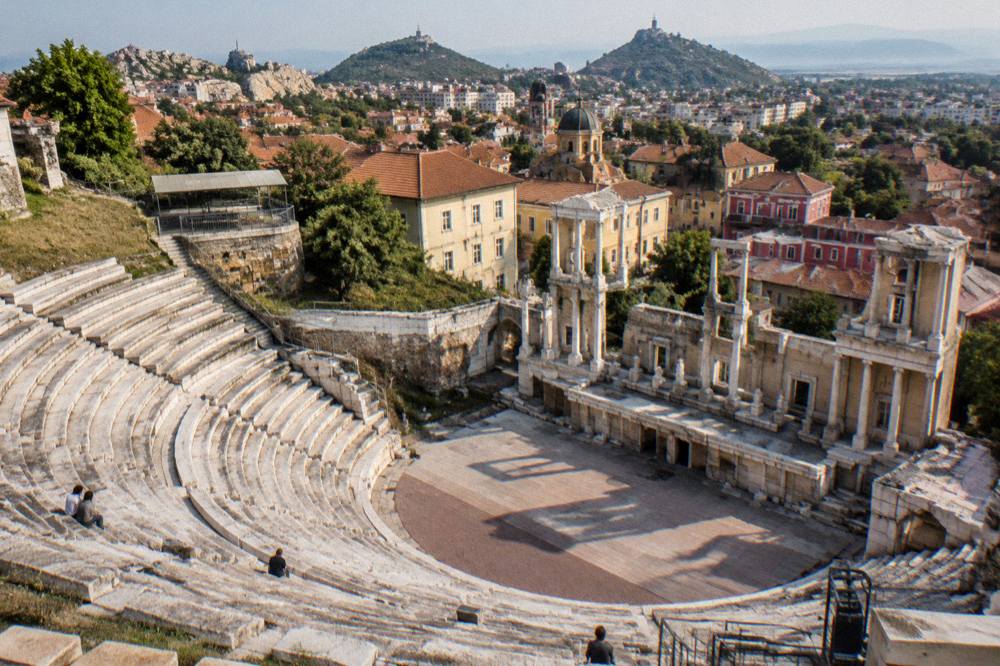
The Roman Odeon is the small, civic-scale theatre beside the Forum, while the Ancient Theatre of Philippopolis is the large hillside performance venue on the Old Town side, built in the 90s AD and described by the official tourism site with 28 concentric rows of marble seats. One served municipal functions, the other mass spectacle. Both sit within a fifteen-minute walk of each other in central Plovdiv, so the comparison is best made in person on the same afternoon.
The Ancient Theatre is the city's flagship Roman monument and the one with the fullest documented record. The visitplovdiv.com page for the theatre gives its construction date in the 90s of the 1st century AD and describes the marble seating rows; capacity figures circulating in secondary guides are not official, so the row count is the figure this site repeats. The theatre is also a living venue: the Opera Open festival ran there from 23 June to 9 September in 2026, with performances including Nabucco and Carmina Burana, per the city's event listings.
The functional distinction and the proximity are what matter here. A walk that pairs the two gives you the full range of Roman public architecture in one city, from council chamber acoustics to festival-scale seating.
| Roman venue in Plovdiv | Role in ancient Philippopolis | What the official sources state | Visiting today |
|---|---|---|---|
| Roman Odeon | Small theatre for civic gatherings beside the Forum | Part of the Forum complex in Roman Plovdiv listings | Free public square area, short stop |
| Roman Forum | Administrative and commercial centre | Documented civic square of Philippopolis | Open area beside the odeon |
| Ancient Theatre of Philippopolis | Large performance venue | Built in the 90s AD, 28 concentric rows of marble seats | Ticketed, hourly visits, festival venue |
| Roman Stadium | Athletic contests | Built 2nd century AD on the model of Delphi, up to 30,000 spectators | Only the northern sphendone is accessible |
The stadium row carries its own caution. Only the northern part, the sphendone, was unearthed, in the 1970s, and the rest of the Stadium lies beneath the modern Main Street, so any image of a fully excavated arena is wrong. The Roman Stadium guide on this site covers it in detail.
What Tickets And Opening Arrangements Apply Around The Roman Odeon In Plovdiv?
The odeon and Forum area stand in the open civic space of central Plovdiv, while the ticketed Roman monuments nearby are run by the Old Plovdiv municipal institute, whose official price list sells any one site at 3.58 euro for adults and 1.53 euro for students, with a combined ticket of up to five sites at 10.74 euro. The odeon itself is treated as part of the public Forum area rather than as a separately ticketed Old Plovdiv site, so check on site for any temporary enclosure.
The Old Plovdiv price list is the reliable anchor for planning, because it covers the Ancient Theatre, the Small Basilica and the Old Town houses such as Balabanov and Hindliyan. The Bishop's Basilica is priced separately on the same list at 7.57 euro for adults. Children under 7 and visitors with over 50% disability enter free, and the list publishes a family ticket at 7.16 euro for one site.
| Old Plovdiv ticket | Adult | Student | Family |
|---|---|---|---|
| Any one site (except Bishop's Basilica) | 3.58 euro | 1.53 euro | 7.16 euro |
| Combined, up to 5 sites | 10.74 euro | 4.09 euro | 21.47 euro |
| Bishop's Basilica, single | 7.57 euro | 3.58 euro | 15.34 euro |
| Roman Stadium 3D hall, single | 3.68 euro | 1.23 euro | listed on site |
| Roman Stadium Eastern sector + 3D hall | 5.11 euro | 2.05 euro | listed on site |
Two honesty notes on that table. The combined ticket's validity period is not published, so confirm it at the counter rather than assuming. And the sphendone viewing area of the Roman Stadium is free, with only the 3D hall and the Eastern sector carrying the fees above.
Free days exist and are worth timing around. The Regional History Museum is free the first Thursday of the month, and the Old Plovdiv list carries a first-Thursday free entry for students and seniors at its sites.
A guided walk is the simplest way to cover the odeon, the Forum and the ticketed theatre in one loop, with a guide explaining which building did what. Check availability for the Old Town and Roman Theatre walking tour, which also has its own page on this site at the Old Town walking tour listing.
To walk the odeon, forum and theatre with stories attached, book a guided walking tour here.
What Else Survives Of Roman Plovdiv Near The Odeon?
Roman Plovdiv survives in at least six distinct monuments within walking distance of the odeon: the Roman Forum it sits beside, the Ancient Theatre on the hillside, the Roman Stadium under and beside the Main Street, the Roman odeon itself, the Bishop's Basilica with over 2,000 square metres of floor mosaics, and the Small Basilica with its mosaic floors. The oldplovdiv.bg and visitplovdiv.com listings document all of them, and together they make Plovdiv one of the most walkable Roman cities in Europe.
The basilicas are the pair visitors least expect. The Bishop's Basilica of Philippopolis, about 83 m long and 36 m wide, is the largest 4th to 6th century basilica in Bulgaria, with two layers of floor mosaics covering over 2,000 square metres, per the oldplovdiv.bg site page. The Small Basilica is a 5th to 6th century three-nave building with mosaic floors. Both are covered in this site's guide to the Eirene mosaic and Episcopal Basilica.
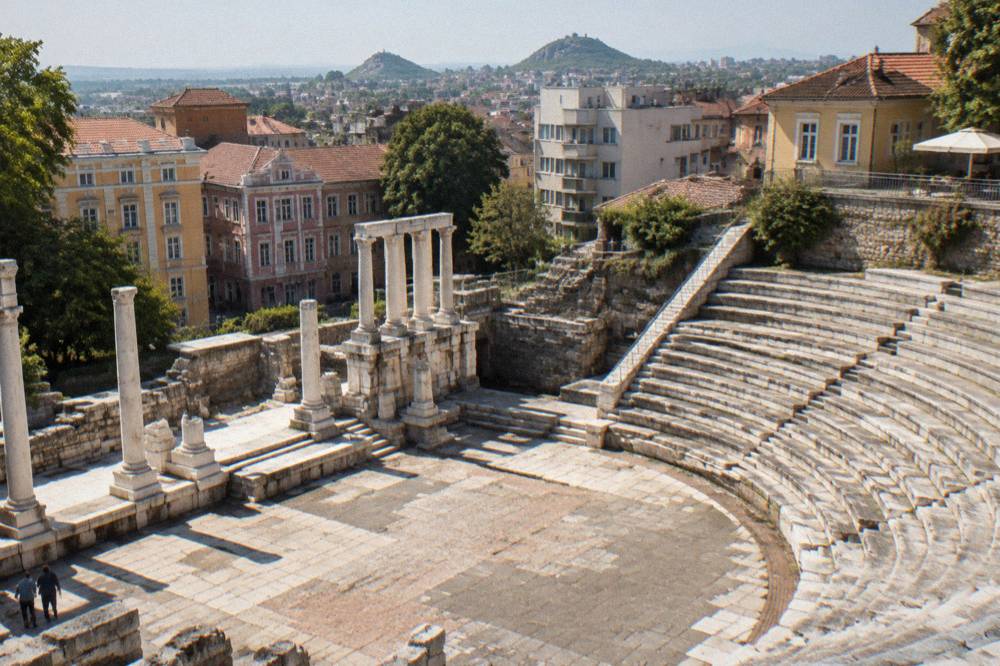
Above it all sits Nebet Tepe, the hill where the settlement began. The restoration of the Nebet Tepe complex was officially opened in March 2025 after an EU-funded conservation project, and access is free and unrestricted, per municipal reporting. The Nebet Tepe guide covers the views and the archaeology. From the top you can read the whole Roman city at a glance: the Forum plateau below, the stadium line under the modern street, and the theatre folded into the hill opposite.
| Roman monument | Century (per official pages) | Key documented figure | Ticket status |
|---|---|---|---|
| Ancient Theatre | 90s AD | 28 concentric rows of marble seats | 3.58 euro |
| Roman Stadium | 2nd century AD | Up to 30,000 spectators; sphendone only accessible | Sphendone free |
| Bishop's Basilica | 4th to 6th century mosaics | Over 2,000 sq m of floor mosaics | 7.57 euro |
| Small Basilica | 5th to 6th century | Three naves, mosaic floors | One-site ticket |
| Nebet Tepe settlement | First settlement dated 4th millennium BC | Free after March 2025 reopening | Free |
| Odeon and Forum | Roman civic complex | Beside the Forum of Philippopolis | Public area |
For the wider picture of the city under Rome, from the Thracian predecessor Evmolpias to the name Philippopolis itself, this site's Roman Plovdiv guide carries the full history, and the general things to do in Plovdiv page situates the Roman layer among everything else the city offers.
How Long Should You Spend At The Roman Odeon And The Forum?
Plan on twenty to thirty minutes for the odeon and Forum area itself, which is enough to walk the seating, read any on-site panels and take in the relationship between the two structures, and then give the surrounding Roman quarter a further two hours. A realistic half-day takes in the odeon, Nebet Tepe above, the Roman Stadium sphendone on the Main Street and the Ancient Theatre, with time for a coffee in between. A full day adds both basilicas.
That timing assumes you are walking, which is how central Plovdiv works. The core Roman sites sit inside a compact triangle between the Three Hills, the Main Street and the Old Town, and everything in this article is reachable on foot from the central square. Plovdiv's city transport charges 0.50 euro for a single e-ticket, but within the centre you will rarely need it. Other pages covering the same trip are gathered on Plovdiv Travel Guide.
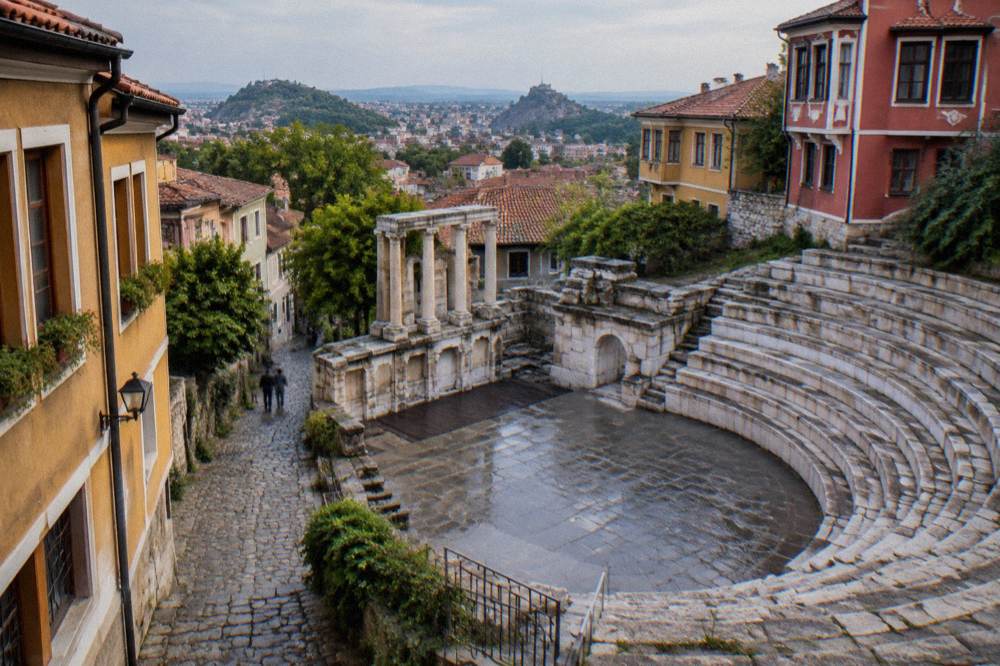
If you have two days rather than one, the natural split is Roman Plovdiv on day one and the Old Town houses plus Kapana on day two. This site's Plovdiv in two days itinerary does exactly that split, and it places the odeon mid-morning on the first day, when the Forum plateau is in good light and before the theatre queues build.
For visitors based in Plovdiv for longer, the odeon also makes a calm first stop before heading out to the Thracian heritage sites in the region. The Thracian Kings valley tours below pick up from Plovdiv and pair well with a Roman morning, since the Thracian and Roman layers of the region tell one continuous story.
When Is The Best Time Of Day And Year To See The Roman Odeon In Plovdiv?
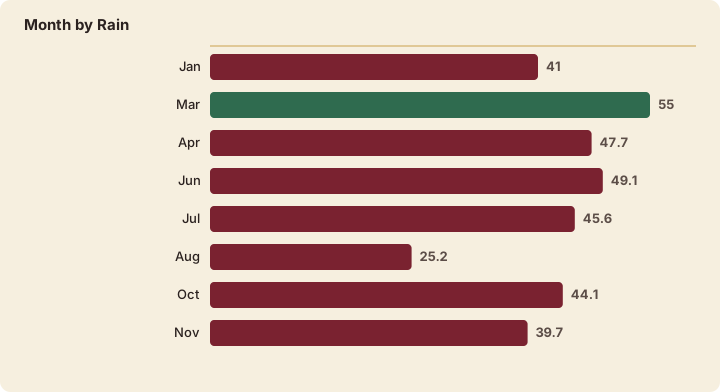
Morning light suits the odeon and Forum best, roughly 9:00 to 11:00, when the sun clears the Three Hills and rakes across the stone tiers, and the same window keeps you ahead of the midday heat in summer, when the ERA5 reanalysis for Plovdiv, 1991 to 2020, gives a mean daily high of 28.6 C in August. Spring and autumn are the comfortable seasons, with mean highs of 17.1 C in April and 18.1 C in October.
The climate table below is drawn from the ERA5 reanalysis, a modelled grid cell near the Old Town and not a weather station record, so treat it as a planning average rather than a forecast. The signal is clear anyway: July and August are hot, January is cold with a mean daily low of -2.6 C, and the shoulder months balance mild temperatures against moderate rainfall.
| Month | Mean daily high | Mean daily low | Rain |
|---|---|---|---|
| Jan | 5.9 C | -2.6 C | 41.0 mm |
| Mar | 12.1 C | 2.1 C | 55.0 mm |
| Apr | 17.1 C | 6.4 C | 47.7 mm |
| Jun | 25.9 C | 15.4 C | 49.1 mm |
| Jul | 28.2 C | 17.9 C | 45.6 mm |
| Aug | 28.6 C | 18.1 C | 25.2 mm |
| Oct | 18.1 C | 8.8 C | 44.1 mm |
| Nov | 12.3 C | 3.8 C | 39.7 mm |
None of this is a reason to skip the city: the odeon is a short walk from covered museums and the Kapana quarter, and this site keeps a dedicated guide for Plovdiv in the rain.
Seasonal events can reshape a visit. The Ancient Theatre's Opera Open ran 23 June to 9 September in 2026, Kapana Fest's autumn edition ran 2 to 4 and 9 to 11 October 2026, the Plovdiv Jazz Fest fall edition runs 6 to 8 November 2026, and the Christmas market edition runs 1 December 2026 to 7 January 2027. Dates for later editions are announced by the city each year, so check the event listings before booking around a festival.
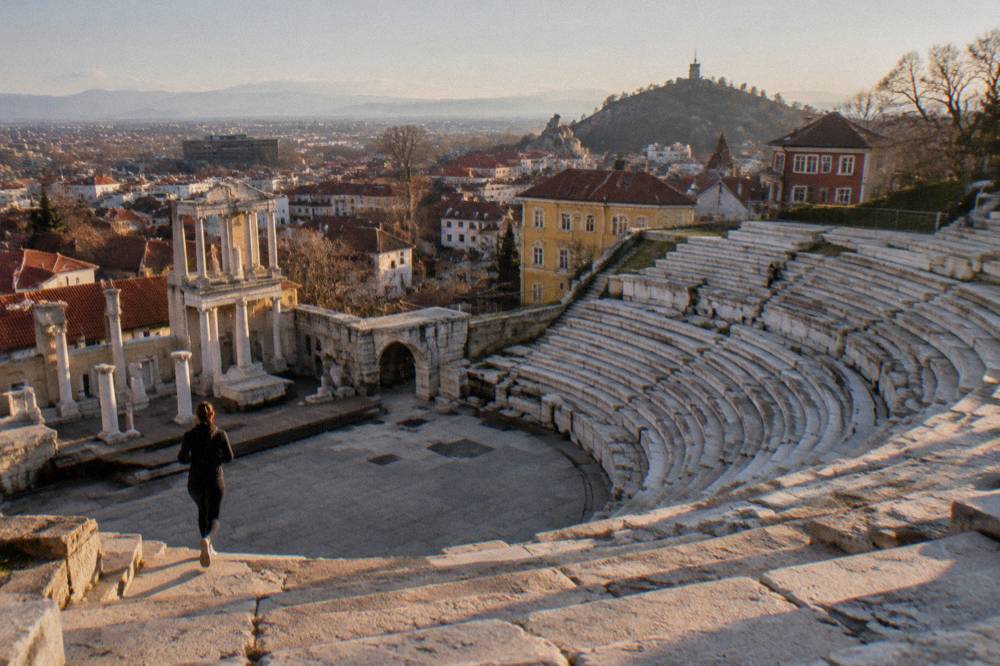
Photographers should note the evening option too. The Forum plateau catches warm side light in the last hour before sunset, and the Plovdiv at night and Plovdiv theatre and concerts guides pick up where the daylight walk ends, including which venues light their Roman stones after dark.
Can You Visit The Roman Odeon On A Day Trip From Sofia?
Yes, Plovdiv works as a day trip from Sofia, with direct BDZ trains taking about 2 hours 40 to 3 hours 5 between the capitals' stations, and the odeon and Forum sitting within walking distance of Plovdiv's centre. A day trip gives you a focused half-day in Roman Plovdiv, though it means choosing between the Old Town, the basilicas and the museums rather than doing all three.
The rail link is the practical backbone. The BDZ timetable lists several direct daily departures between Sofia and Plovdiv, the fastest around 2 hours 40, with slower routings via Karlovo taking much longer, so check the direct services when booking. Plovdiv's central railway station and the Yug bus station sit side by side on Hristo Botev Boulevard, and the Roman core is a manageable walk or a short taxi ride from there.
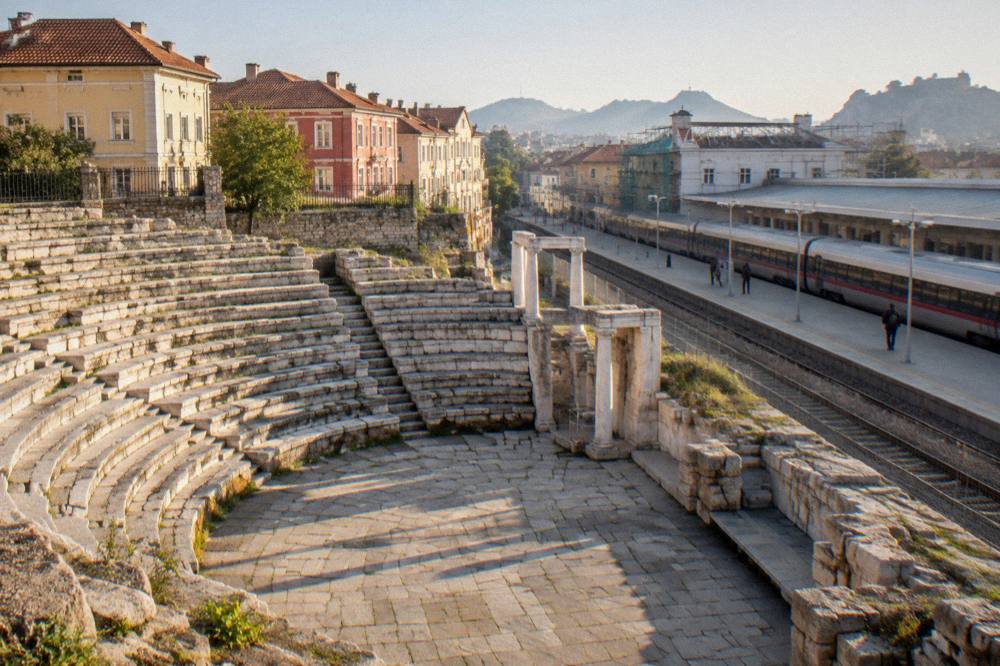
One planning note: the Plovdiv railway junction modernisation, reported 85% complete in November 2025, is due to finish in 2026, so expect some access changes around the station and allow a few extra minutes on arrival.
If a guided day trip suits you better than independent trains, several small-group options run from Sofia and include Plovdiv's Roman core in their route. Check availability for the shuttle day trip, which covers the city's main sights with transport handled.
Where Should You Eat And Drink After The Roman Odeon In Plovdiv?
The Kapana Creative District, whose name means The Trap in a maze of narrow streets, sits a short walk downhill from the odeon and is Plovdiv's eating and drinking quarter, free to wander with no ticket and no closing time. No individual restaurant, cafe or bar in Plovdiv had its address, hours or prices confirmed by this site, so no names are recommended here: go by what you find on the street and confirm prices on the menu.
What can be said with confidence is the shape of Bulgarian eating. A typical table starts with a shopska salad of tomatoes, cucumbers, peppers and sirene cheese, or tarator, a cold yogurt and cucumber soup, and moves to grilled meats such as kebapche or a clay-pot kavarma. Breakfast is often banitsa, a cheese filo pastry. Crowd-price data for Plovdiv puts an espresso at around 2 euro and a half-litre of draught beer at around 2 euro, figures to treat as indicative rather than official.
Drinks carry their own local logic. Rakia is the traditional fruit brandy poured before meals, and the Thracian Valley around Plovdiv is Bulgaria's wine heartland, growing the local Mavrud and Rubin varieties among others. A guided tasting walk is the structured way into both, and the food tour below is this site's featured pick for exactly that.
For the background rather than the booking, this site's guides to Bulgarian food and Bulgarian wine cover the dishes and the regions, and the Kapana page covers the district itself, including its artisan markets that run weekends around the quarter.
How Do You Fit The Roman Odeon Into A Full Plovdiv Itinerary?
Place the odeon and Forum as the second stop of a Roman Plovdiv morning: start at the Roman Stadium sphendone on the Main Street, walk up to the odeon and Forum, climb Nebet Tepe for the overview, then cross into the Old Town for the Ancient Theatre before lunch, and spend the afternoon in the basilicas or the museums depending on the day of the week. Monday matters, because both the Regional Archaeological Museum and the Ethnographic Museum close that day.
The Monday rule is the one scheduling fact worth memorising. The Regional Archaeological Museum opens Tuesday to Sunday, 10:00 to 18:00, and the Ethnographic Museum in the Kuyumdzhiev House opens Tuesday to Sunday, 9:00 to 18:00 in summer and 9:00 to 17:00 in winter. The Ancient Theatre is open daily year round, 9:30 to 18:00 from April to October and 9:00 to 17:30 from November to March, with a lunch break at 12:30 to 13:00, per oldplovdiv.bg.
| Stop on a Roman morning | Ticket needed | Monday open | Suggested time |
|---|---|---|---|
| Roman Stadium sphendone | No, viewing is free | Yes | 20 minutes |
| Roman Odeon and Forum | Public area, confirm on site | Yes | 30 minutes |
| Nebet Tepe | Free | Yes | 30 minutes |
| Ancient Theatre | 3.58 euro | Yes | 45 minutes |
| Regional Archaeological Museum | Confirm at desk | Closed | 45 minutes |
| Ethnographic Museum | About 3.07 euro | Closed | 45 minutes |
With two full days the pressure drops and the day trips open up. The Roman layer of the region continues beyond the city: Hisarya, a former Roman spa town with walls, makes an easy excursion covered in this site's Hisarya guide, and Stara Zagora holds the Roman forum of Augusta Traiana, covered in the Stara Zagora guide. Both pair naturally with a Roman-themed stay.
For the walking-tour version of the same route, this site's featured pick covers the Old Town and the Roman Theatre in one guided loop, and the solo card below carries the live details.
Common Questions About The Roman Odeon In Plovdiv
What is the Roman Odeon in Plovdiv?
A small Roman-period theatre building beside the Roman Forum, the civic centre of ancient Philippopolis. Where the large Ancient Theatre staged mass performances, the odeon served smaller civic functions such as council gatherings and recitals. It stands on the plateau between the Three Hills in central Plovdiv.
Do you need a ticket for the Roman Odeon in Plovdiv?
The odeon and Forum sit in the open civic area of central Plovdiv and are not on the Old Plovdiv ticket list as a separate paid site, so treat entry as free and confirm on site for any temporary enclosure. The nearby Ancient Theatre is ticketed at 3.58 euro for adults on the official list.
How is the Roman Odeon different from the Ancient Theatre of Philippopolis?
Scale and function. The Ancient Theatre, built in the 90s AD with 28 concentric rows of marble seats, was the city's large performance venue and still hosts festivals such as Opera Open. The odeon is the compact companion venue for civic and smaller gatherings beside the Forum.
How long does a visit to the Roman Odeon take?
About twenty to thirty minutes for the odeon and Forum together, which is enough to walk the tiers and read the context. Visitors can then continue to Nebet Tepe above or the Ancient Theatre across the Old Town, giving a Roman half-day of roughly two hours.
When is the Roman Odeon open?
As an open civic area it is reachable at any hour like the surrounding streets, though daylight visits are the practical choice. The ticketed Roman sites nearby keep fixed hours, for example the Ancient Theatre opens 9:30 to 18:00 from April to October, so plan the paid stops around those times.
Can you visit the Roman Odeon on a day trip from Sofia?
Yes. Direct trains between Sofia and Plovdiv take about 2 hours 40 to 3 hours 5 per the BDZ timetable, and the odeon is within walking distance of the city centre. A day trip covers the odeon, the Forum and the Ancient Theatre comfortably, with the museums saved for a second visit.
Plovdiv keeps its Roman city small enough to walk and deep enough to fill days, and the odeon is the piece that shows the everyday machinery of Philippopolis rather than only its spectacles. Walk it with the Forum, climb Nebet Tepe for the overview, and let the Ancient Theatre have the finale.