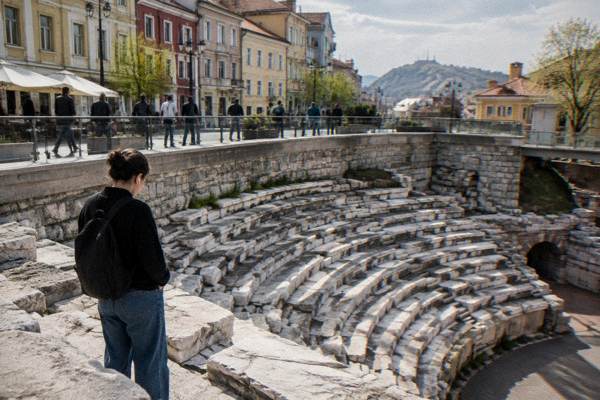
Roman Plovdiv: A Map Of Philippopolis Under The Modern City
Plovdiv, in southern Bulgaria, hides the Roman city of Philippopolis under its modern streets. This guide maps every visible ruin, what each one costs to enter and the order to walk them in.
Short answer
The visible Roman sites of Plovdiv are the Ancient Theatre, the Roman Stadium sphendone, the Bishop's Basilica, the Small Basilica, the Roman Forum and the Roman Odeon. A single Old Plovdiv site ticket costs 3.58 euro, the Bishop's Basilica is priced separately at 7.57 euro, and the whole circuit is walkable in one day.
Plovdiv, an inland city in southern Bulgaria built around six hills, carries a Roman city inside it. The settlement the Romans called Philippopolis, after Philip II of Macedon who had founded it centuries earlier, grew into one of the great cities of the province of Thrace, and its theatre, stadium, forum and basilicas still sit in the modern street plan. Some are fully visible, some survive as fragments, and one of them runs directly beneath the city's main pedestrian street. This guide maps what you can actually see today, what the oldplovdiv.bg ticket page says each part costs, and the walking order that strings them together.
What Roman Sites Can You See In Plovdiv Today?
Six Roman landmarks are visible in central Plovdiv: the Ancient Theatre of Philippopolis, the Roman Stadium (its northern sphendone and an underground visitor sector), the Bishop's Basilica with its floor mosaics, the Small Basilica, the Roman Forum and the Roman Odeon. All of them lie within roughly fifteen minutes' walk of one another across the Old Town, the Three Hills and the modern center. Four are ticketed sites managed under the Old Plovdiv umbrella, and the Forum and Odeon are open-air remains you can view from the street.
The scale of Roman Philippopolis becomes clear when you line the sites up. The city's tourism site states that the Ancient Theatre was built in the 90s of the 1st century AD, and the Roman Stadium in the 2nd century AD on the model of the stadium at Delphi, holding up to 30,000 spectators. The basilicas came later, in the 4th to 6th centuries, when Philippopolis was a Christian bishopric. Together they trace about five centuries of building.
| Site | Period | What You See | Access |
|---|---|---|---|
| Ancient Theatre | 90s of the 1st century AD | 28 concentric rows of marble seats, stage area | Ticketed, 3.58 euro |
| Roman Stadium | 2nd century AD | Northern sphendone (curved end), part of the track | Sphendone free; 3D hall and eastern sector ticketed |
| Bishop's Basilica | 4th to 6th century | Two mosaic layers over 2,000 sq m | Ticketed, 7.57 euro |
| Small Basilica | 5th to 6th century | Three-nave church with mosaic floors | Ticketed on the one-site price |
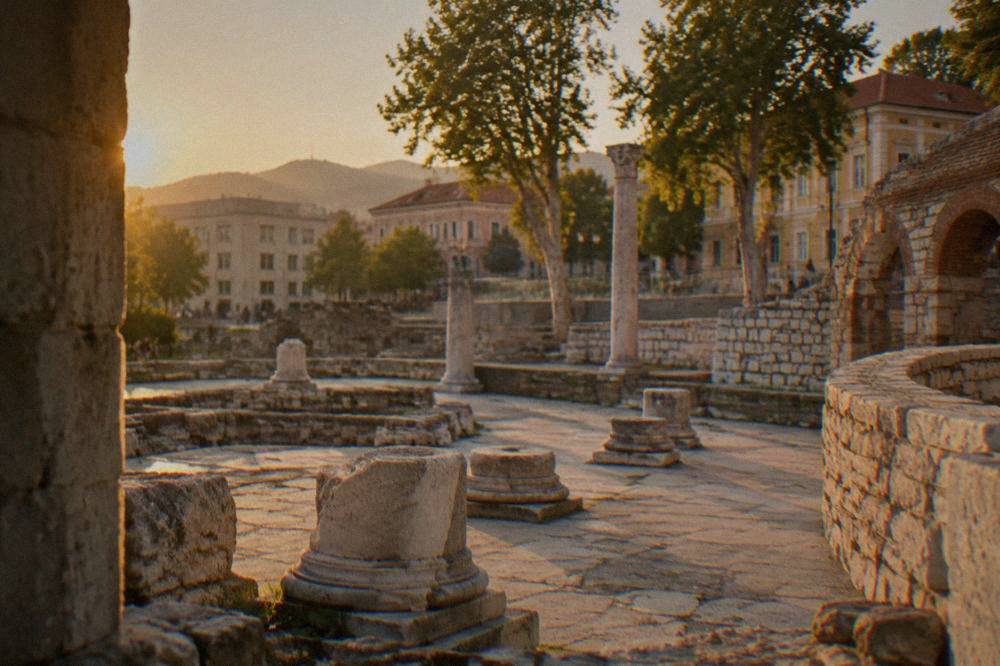
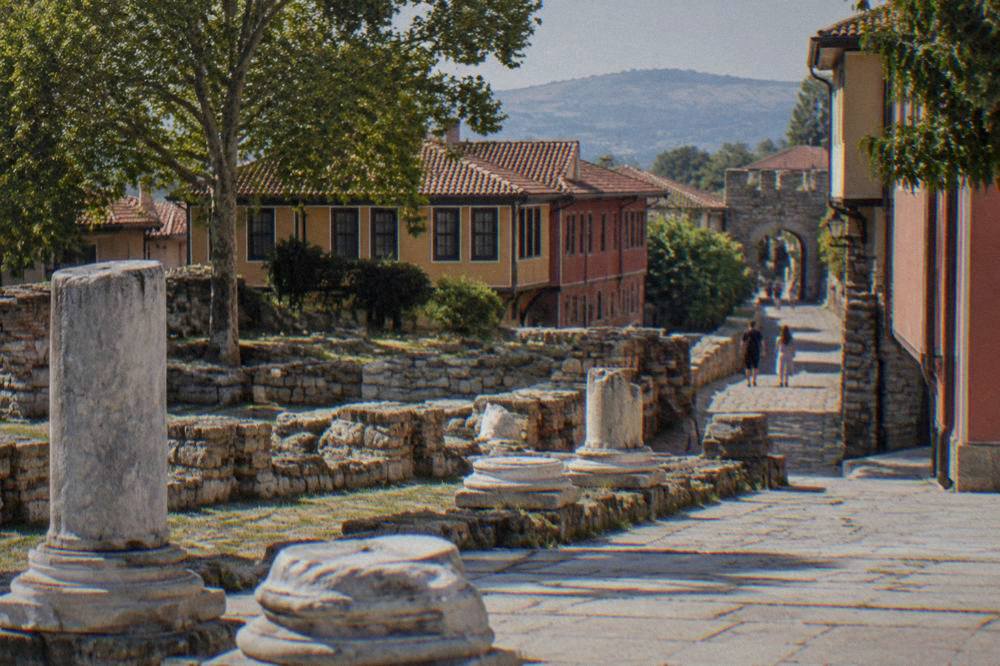
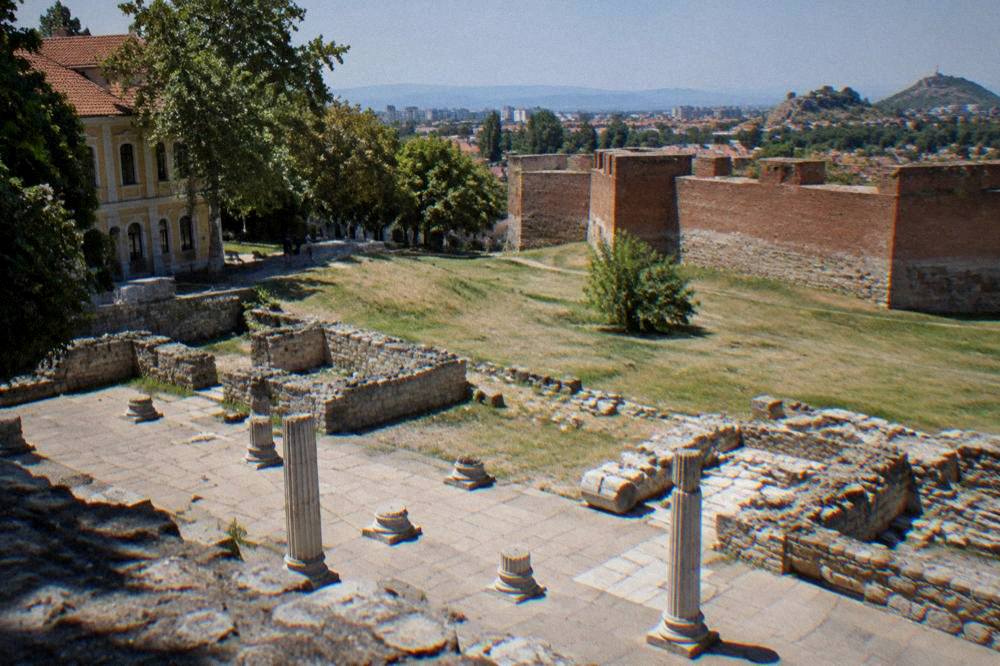
| Roman Forum | Roman period | Foundations and column fragments in the open | Viewable from the street |
| Roman Odeon | Roman period | Small covered-theatre ruin near the Forum | Viewable from the street |
The theatre and the stadium anchor the two ends of the circuit. The theatre sits high on the side of the Three Hills, looking out over the modern rooftops toward the Rhodopes. The stadium's visible sphendone sits at the bottom of the main pedestrian street, sunk below the modern ground level, a reminder that today's street surface sits on top of centuries of city. For a wider look at how the whole city is laid out, the things to do in Plovdiv overview puts the Roman layer in context with everything above it.
How Do You Visit The Ancient Theatre Of Philippopolis?
The Ancient Theatre of Philippopolis is open daily year round, from 9:30 to 18:00 between April and October and from 9:00 to 17:30 between November and March, with a lunch break from 12:30 to 13:00, according to the oldplovdiv.bg site pages. A single-site adult ticket costs 3.58 euro, with students at 1.53 euro and a family ticket at 7.16 euro. Children up to 7 enter free, and the first Thursday of the month is free for students and seniors.
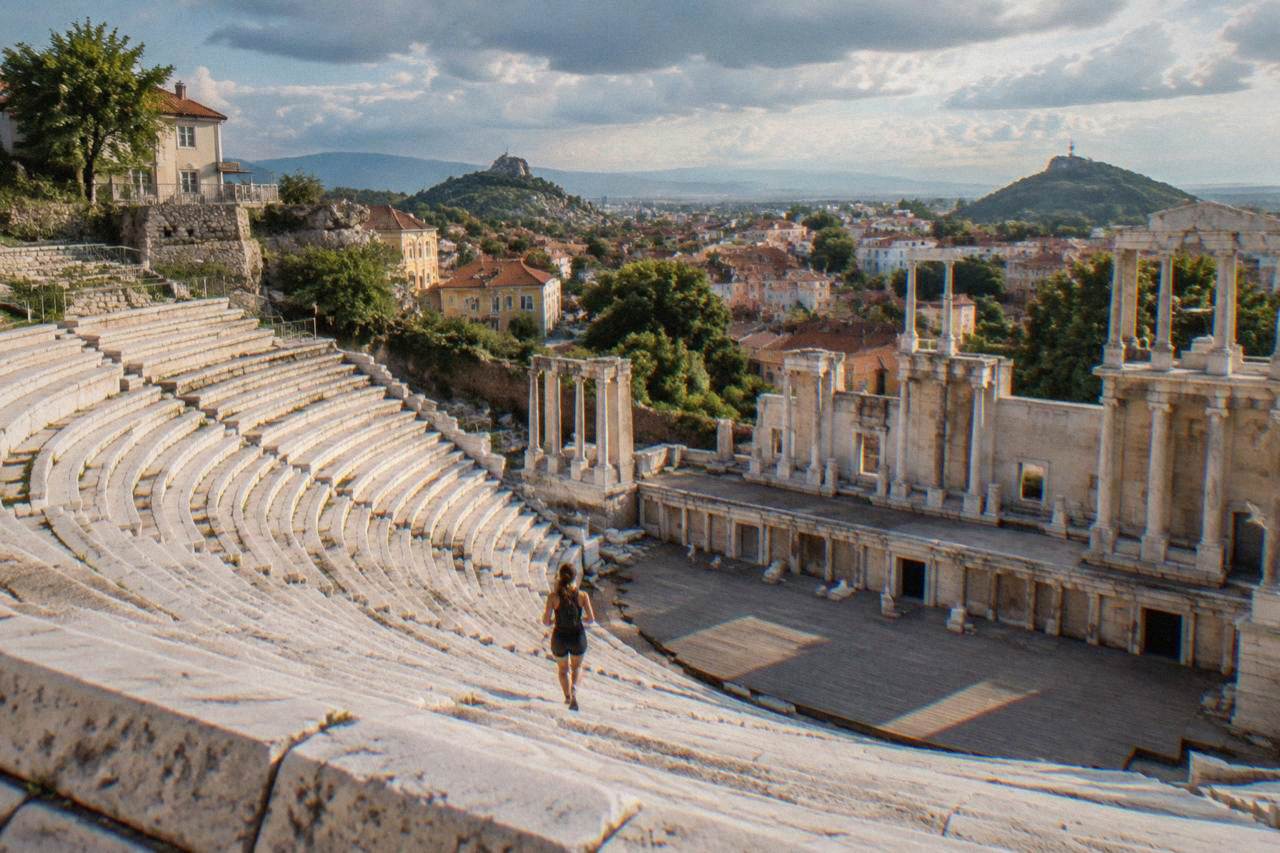
The theatre was built in the 90s of the 1st century AD, under the emperor Titus Flavius Cotis, as the city's tourism site records, and its 28 concentric rows of marble seats step up the hillside in a curve that is still close to complete. The official description uses the row count rather than a seat capacity, and that row count is the figure worth carrying: standing at the top row, the seating reads as one continuous sweep rather than a reconstruction. The theatre is also a living venue. Opera Open ran there from 23 June to 9 September in 2026, which means performance evenings can close or restrict visitor access in summer, so a morning visit is the safer plan during festival season.
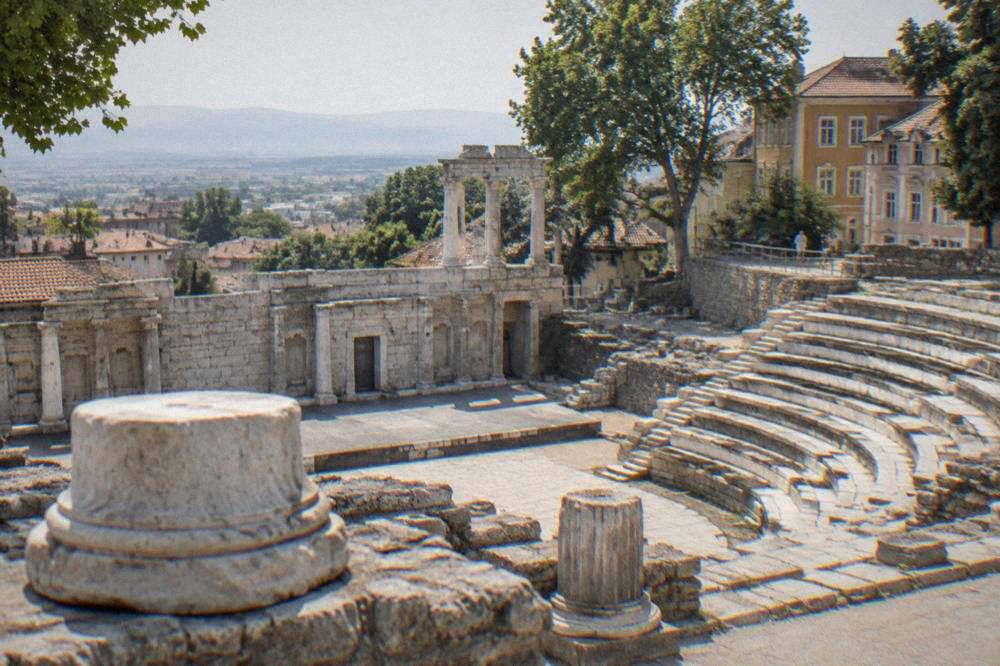
The theatre is the easiest of the Roman sites to combine with everything else in the Old Town, because it sits a few minutes' walk from Nebet Tepe, Hisar Kapia and the Revival-era houses. The dedicated Ancient Theatre of Philippopolis guide covers its history in depth, and the Plovdiv self-guided walk routes you past it on a full Old Town loop.
If you want the Roman layer explained rather than simply seen, a guided option covers the Old Town and its Roman landmarks together. The related audio-guided tour on this page below lets you move at your own pace, and there are also group walks led by a live guide:
Where Is The Roman Stadium Hidden Under Main Street?
The Roman Stadium of Philippopolis survives under Plovdiv's main pedestrian street, with only its northern curved end, the sphendone, openly visible, plus a paid underground visitor sector and a 3D projection hall. The sphendone viewing area is free. The 3D hall costs 3.68 euro for adults and 1.23 euro for students, and a combined eastern sector plus 3D ticket costs 5.11 euro, per the oldplovdiv.bg ticket page.
This is the part of Roman Plovdiv that confuses people on arrival, because the stadium does not present itself as one monument. Unearthed in the 1970s, the sphendone sits at the low end of the main street, its thirteen rows of curved stone seating dropped below the modern pavement. Walk a few hundred metres up the same street and you are walking on top of the track itself, with nothing visible at street level, since the remainder of the stadium was never fully excavated. The oldplovdiv.bg site says exactly this: only the northern part is accessible, and the rest, the bulk of a bowl that held up to 30,000 spectators, lies sealed beneath the modern street and shop basements. Never expect a full circuit; there isn't one.
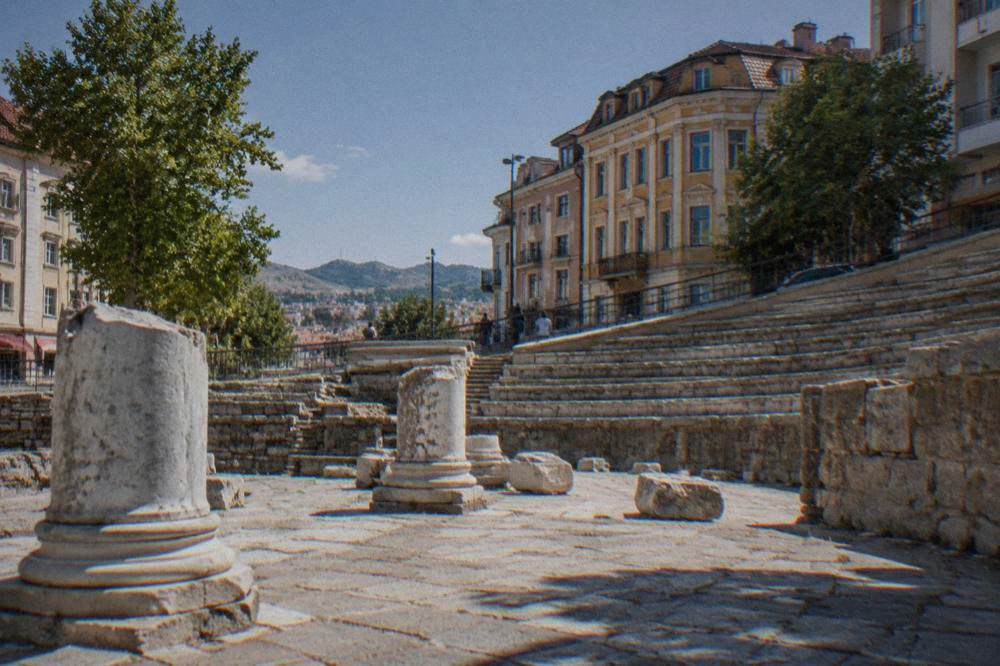
The eastern sector ticket is the one that rewards curiosity, because it takes you into the excavated entrance passage and track edge that street-level walking cannot reach, and the 3D hall reconstructs the rest of the bowl digitally. The deeper site page, the Roman Stadium guide, explains the Delphi model and how the seating was carved up by later building. For an evening angle, the stadium sphendone and the main street feature in Plovdiv at night, when the pedestrian flow thins and the stonework is lit.
One pairing decision is worth making in advance. If your time is short, see the free sphendone from above, then decide on the spot whether to pay for the 3D hall:
What Makes The Bishop's Basilica Worth The Detour?
The Bishop's Basilica of Philippopolis, about 83 metres long and 36 metres wide, is the largest 4th to 6th century basilica in Bulgaria, with two layers of floor mosaics covering more than 2,000 square metres, per the oldplovdiv.bg site. An adult ticket costs 7.57 euro, a student ticket 3.58 euro, and it is open daily from 9:00 to 18:00. It is priced separately from the one-site Old Plovdiv ticket, which does not include it.
The basilica stands a short walk west of the main street, and its scale is the surprise. The official figures give roughly 83 by 36 metres of footprint and more than 2,000 square metres of mosaic across two floor layers, meaning a later pavement was laid directly over an earlier one, and both survive. Visitors walk over the mosaics on raised gangways, with the earlier layer visible in cutaways. The building reopened after a long restoration, and a combined ticket covering the Bishop's Basilica, the Small Basilica and the Eirene building exists, and the safest approach is to confirm the combined option, its price and its conditions at the desk when you buy. The rest of the planning pages sit on Plovdiv Travel Guide.
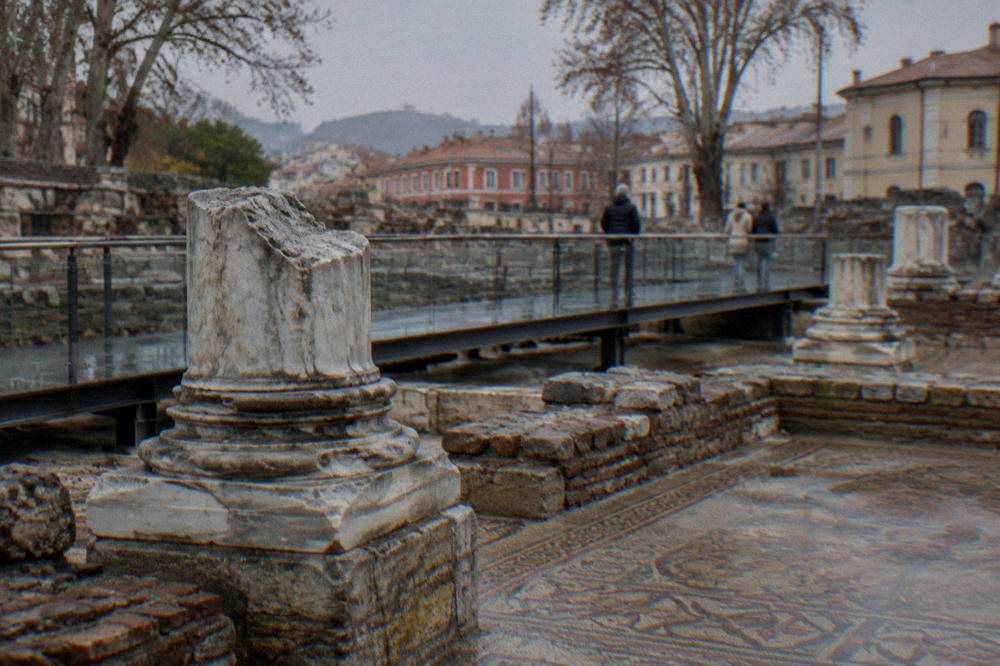
The Small Basilica, a 5th to 6th century three-nave church with its own mosaic floors, sits on the same general circuit and is covered by the standard one-site Old Plovdiv price of 3.58 euro rather than the Bishop's rate. The Eirene mosaic and Episcopal Basilica page covers the mosaic houses in detail. Both basilicas close the Roman story: Philippopolis ended its Roman life as a Christian city, and these floors are that final chapter rendered in stone.
| Ticket | Adult | Student | Notes |
|---|---|---|---|
| One Old Plovdiv site | 3.58 euro | 1.53 euro | Theatre, Small Basilica or an Old Town house |
| Bishop's Basilica single | 7.57 euro | 3.58 euro | Priced separately from the one-site list |
| Stadium 3D hall | 3.68 euro | 1.23 euro | Sphendone itself is free |
| Stadium eastern sector and 3D combined | 5.11 euro | 2.05 euro | Includes the excavated entrance passage |
| Old Plovdiv combined, up to 5 sites | 10.74 euro | 4.09 euro | Excludes Small Basilica and Bishop's Basilica |
What Are The Roman Forum And Odeon, And Can You Visit Them?
The Roman Forum of Philippopolis was the city's public square and administrative center, and the Roman Odeon, a small covered theatre built within the forum complex, served council sessions and performances; both survive as open-air remains in central Plovdiv and can be viewed from the surrounding streets without a ticket. The Odeon's seating and stage area are fenced but clearly visible. Neither carries a published separate entry fee on the oldplovdiv.bg list, and both sit minutes from the main street.
The forum and the odeon are the quiet stretch of Roman Plovdiv. Where the theatre and stadium have ticket desks, visitor halls and crowds, these two remain half-wild ruins sunk into the block between the post office and the main pedestrian street. The odeon's small curve of seating gives the clearest sense of how the forum complex worked as a civic machine: a covered chamber for the city council beside the open square for everything else. The Roman Forum and Roman Odeon pages carry the fuller history and photographs.
Walking between these six sites takes under an hour of pure walking, but the viewing, reading and mosaic-staring stretch it into a half day or more. The Plovdiv in two days itinerary schedules the Roman layer on day one and the surrounding city on day two, which is the ratio the ruins deserve.
How Much Does A Day Of Roman Plovdiv Cost?
A full Roman Plovdiv day costs about 11 euro per adult in tickets if you buy singles for the theatre, the stadium's combined sector and the Bishop's Basilica, based on the euro prices on the oldplovdiv.bg list. The free layer, the sphendone, the Forum, the Odeon, Nebet Tepe and Hisar Kapia, costs nothing. Adding the Small Basilica and the five-site combined ticket pushes the total higher still. Museum entries are priced separately.
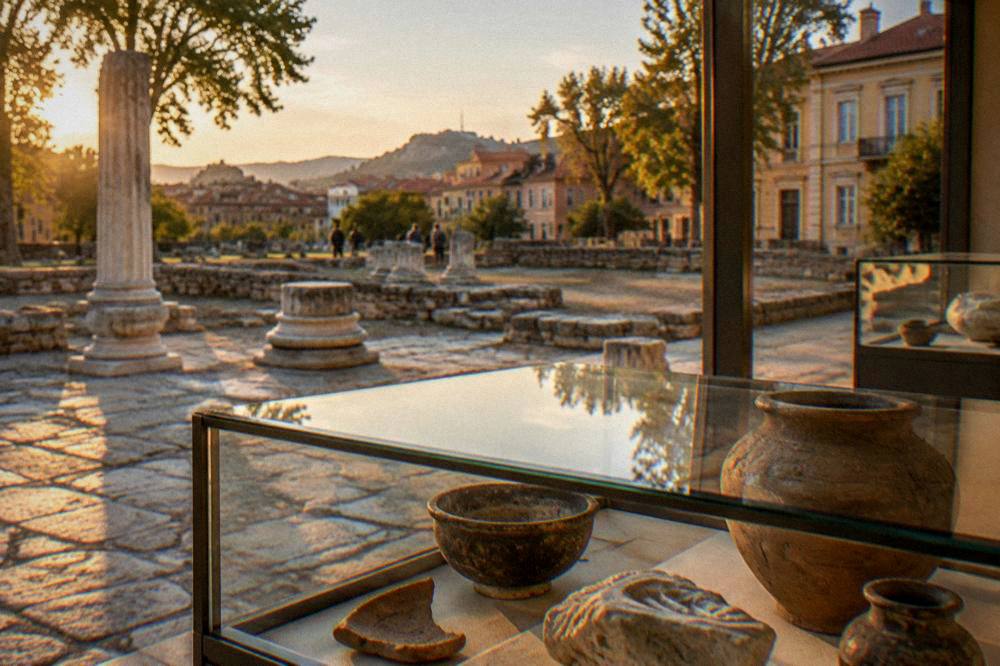
These figures are ticket arithmetic from the official list, nothing more, and they assume the published prices hold when you visit. Two practical notes from the same list: groups of more than 10 pay a discounted adult rate, and the first Thursday of the month is free for students and seniors at Old Plovdiv sites, while the Regional History Museum is free for everyone that day. The Regional Archaeological Museum, which holds many of the finds from these exact sites and renewed about 150 exhibits into its permanent display in 2025, is closed on Monday and keeps separate pricing, and its site page carries current hours.
| Layer Of The Day | What It Includes | Adult Cost |
|---|---|---|
| Free circuit | Sphendone, Forum, Odeon, Hisar Kapia, Nebet Tepe | 0 euro |
| Core ticketed set | Theatre, stadium eastern sector and 3D, Bishop's Basilica | 10.61 euro |
| Add the Small Basilica | Single Old Plovdiv site ticket | 3.58 euro |
| Five-site combined route | Up to 5 sites, excludes both basilicas | 10.74 euro |
Context matters here: Plovdiv is not an expensive city by regional standards, and the full slate of Roman tickets costs less than a single major-museum entry in many western European capitals. The how expensive is Plovdiv guide sets the ticket spend against meals, coffee and transport.
What Is The Best Walking Order For The Roman Sites?
The most efficient walking order for Roman Plovdiv is: start at the Roman Stadium sphendone at the south end of the main pedestrian street, walk north along the street over the buried track, visit the Forum and Odeon, then climb to the Ancient Theatre and Hisar Kapia in the Old Town, and finish with the Bishop's and Small Basilicas to the west. This order runs roughly level-to-hill-to-level, puts the single steep climb in the middle, and ends at the site with the longest dwell time.
The direction matters because of the hill. The theatre sits partway up the Three Hills, and doing it in the middle of the route means your legs are warm before the stairs and tired before the basilicas, which are flat gangway walking. The main street between the stadium and the forum is itself part of the tour: every step of it is the roof of the stadium's missing two-thirds. The self-guided walk itinerary maps this exact sequence with timings for the non-Roman stops you will pass, including Nebet Tepe, whose free hilltop is the layer under even the Romans, with settlement traces the city dates to the 4th millennium BC.
For visitors who would rather have a guide carry the chronology, the classic city walk covers the theatre, the stadium viewpoint and the Old Town in one loop:
Can You See More Roman Thrace On Day Trips From Plovdiv?
Yes: two day-trip destinations extend the Roman Thrace story from Plovdiv, Hisarya, a Roman spa town with well-preserved fortress walls about an hour north, and Stara Zagora, which holds the Roman forum of Augusta Traiana and its mosaics. Both are reachable as organised day trips or independently from Plovdiv's stations, and both fill in the provincial context that the Plovdiv sites alone cannot, since Philippopolis was the metropolis of a wider Roman road and spa network.
Hisarya is the standout for Roman-matters readers: a small town built inside a near-complete Roman defensive wall, with the remains of Roman baths and an amphitheatre, all on a scale Plovdiv's fragments hint at. The Hisarya day trip page covers how the town fits a Plovdiv base. Stara Zagora's Augusta Traiana ruins and the Thracian kings circuit sit further afield and pair well if you have three days or more, which the Plovdiv in three days itinerary frame extends.
Organised options run the full range from a quick taste walk to private Thracian Valley circuits:
When Is The Best Season For Roman Plovdiv?
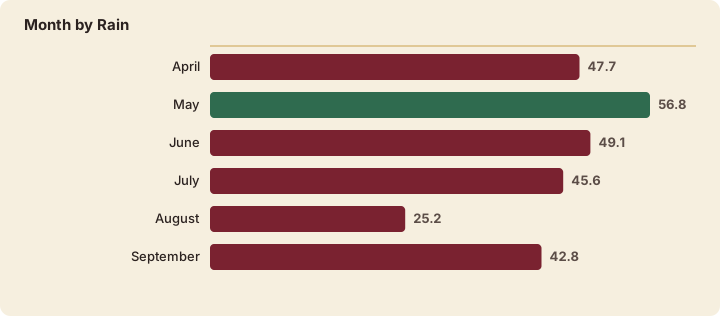
The best season for Roman Plovdiv is April to June, when all sites run their summer hours (9:30 to 18:00 at the ticketed sites) and the ERA5 reanalysis 1991-2020 puts mean daily highs between 17.1 C and 25.9 C. September and October run a close second, cooling from a 23.8 C mean high to 18.1 C. July and August bring 28.2 C and 28.6 C mean highs, making the exposed theatre seating harsh at midday.
The climate figures are modelled normals for the Plovdiv grid cell, not a station record, and they frame the one real planning problem: almost all of Roman Plovdiv is outdoors or under thin cover, and the theatre in particular is unshaded stone. Winter visits work too, since every ticketed site stays open daily on shorter hours (9:00 to 17:30), but January's mean low of -2.6 C makes the hill climb a different experience. The Plovdiv weather and best time to visit Plovdiv pages carry the full monthly tables and the festival calendar that overlaps the theatre season.
| Month | Mean Daily High (ERA5 1991-2020) | Mean Daily Low | Rain | Roman-Site Verdict |
|---|---|---|---|---|
| April | 17.1 C | 6.4 C | 47.7 mm | Excellent, full summer hours begin |
| May | 21.9 C | 11.5 C | 56.8 mm | Excellent, but the rain peak month |
| June | 25.9 C | 15.4 C | 49.1 mm | Good, theatre season starting |
| July | 28.2 C | 17.9 C | 45.6 mm | Go early in the day |
| August | 28.6 C | 18.1 C | 25.2 mm | Hot but the driest month |
| September | 23.8 C | 13.8 C | 42.8 mm | Excellent, Opera Open still running |
The second decision point is where to sleep relative to all this. The Roman circuit sits between the Old Town hill and the central grid, and the where to stay in Plovdiv guide breaks the districts down; staying in the center puts every site in this article within a short walk, and the getting around Plovdiv page covers the rest.
Common Questions About Roman Plovdiv
Are there Roman ruins in Plovdiv?
Yes. Plovdiv holds six visible Roman sites: the Ancient Theatre, the Roman Stadium sphendone, the Bishop's Basilica, the Small Basilica, the Roman Forum and the Roman Odeon, all within the central city and all walkable in a day.
Is the Roman Stadium in Plovdiv fully excavated?
No. Only the northern part, the sphendone, unearthed in the 1970s, is accessible. The rest of the stadium, which held up to 30,000 spectators, lies under the modern main pedestrian street.
How much are tickets to the Ancient Theatre of Philippopolis?
The oldplovdiv.bg ticket page lists a single-site adult ticket at 3.58 euro, students at 1.53 euro and a family ticket at 7.16 euro. Children up to 7 enter free, and the first Thursday of the month is free for students and seniors.
Is the Bishop's Basilica included in the Old Plovdiv ticket?
No. The Bishop's Basilica is priced separately, at 7.57 euro for adults, because it operates on its own list. The one-site and combined Old Plovdiv tickets cover the theatre, the Small Basilica and the Old Town houses instead.
How long does a Roman Plovdiv walk take?
Pure walking between the six sites takes under an hour, but a full visit with the theatre, the stadium's paid sector and the basilica mosaics runs to a half day or more, and the two-day itineraries on this site give the ruins a full first day.
Is Roman Plovdiv open in winter?
Yes. The ticketed sites run daily winter hours from November to March, generally 9:00 to 17:30 with a 12:30 to 13:00 lunch break, and the free open-air sites, the sphendone, the Forum, the Odeon and Nebet Tepe, remain accessible at all hours.
The Roman layer of Plovdiv rewards exactly the kind of slow, ordered wandering this map sets out: start at the buried stadium, finish in the mosaic halls, and let the sixteen centuries of city stacked between them explain themselves along the way.