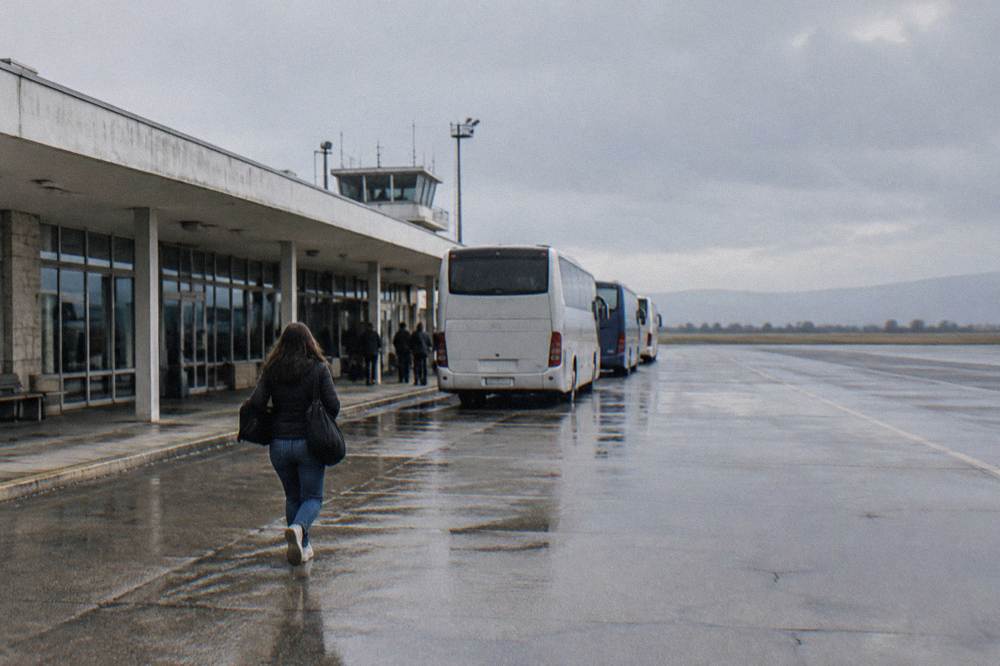
How To Get To Plovdiv: Fly, Train, Bus Or Drive
Plovdiv sits inland in southern Bulgaria, and the honest answer to how you reach it is usually a flight to Sofia followed by a direct train of under three hours, with a small airport of its own on a handful of seasonal routes.
Short answer
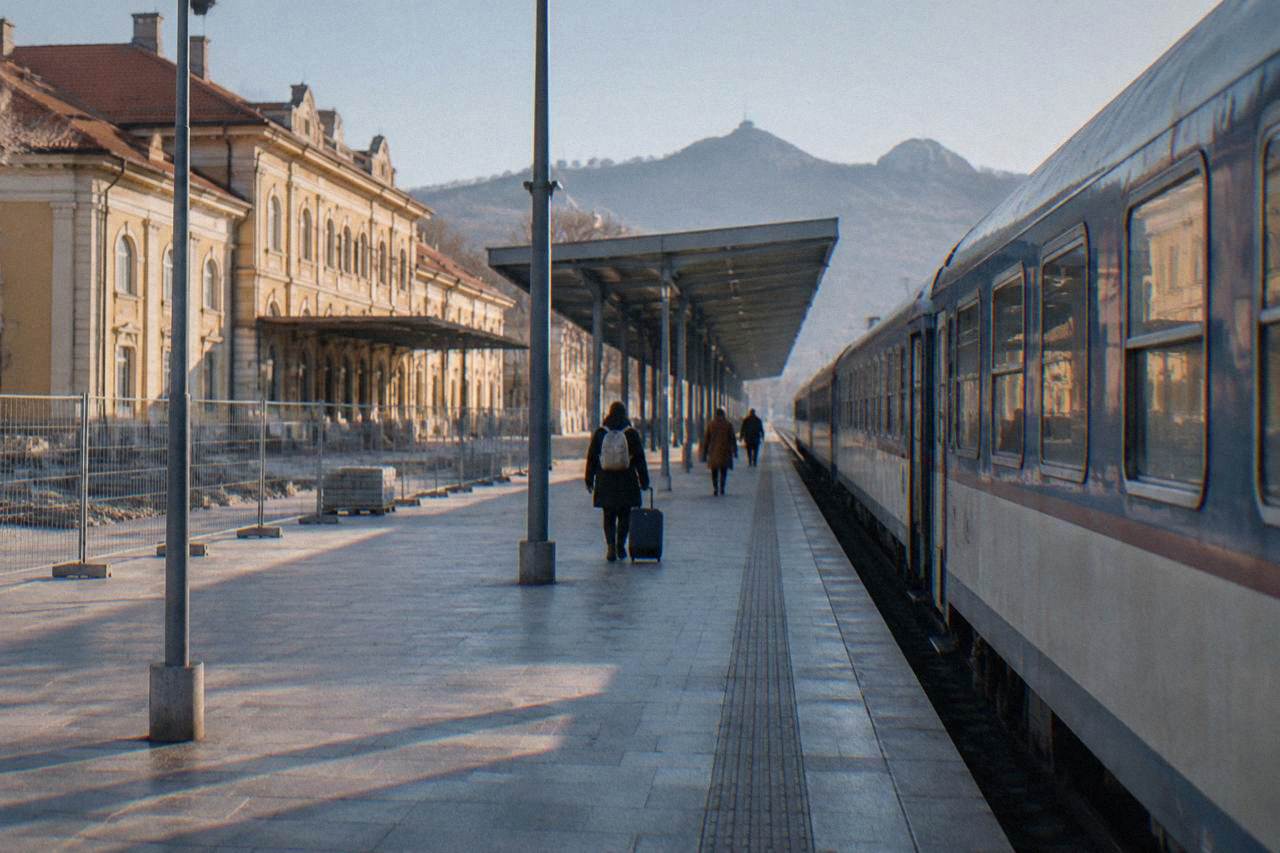
Fly to Sofia and take a direct BDZ train, which takes about 2 h 40 to 3 h 05, or a bus taking about 1 h 45 to 2 h 20. Plovdiv Airport (Krumovo) has a small route list of its own, including London, Milan and Bratislava, and lies about 12 to 14 km south-east of the centre.
Plovdiv is an inland city in southern Bulgaria, built around six hills with no sea coast, and it rewards a little planning on the way in. The main international gateway for the overwhelming number of travellers is Sofia, the capital, about two and a half to three hours away by direct train, and from there the journey is straightforward: one station, one ticket, one seat. A smaller option exists at Plovdiv Airport in Krumovo, which the airport's own flight search lists with routes to Belfast, Birmingham, Bratislava, London, Manchester, Milan and Tel Aviv. This page lays out every route, what each one costs in time and money where the figures exist, and what to expect at the stations and hills at the end of the road. The Plovdiv Travel Guide covers the city itself in depth, from the Roman Stadium to Kapana; here the subject is simply arriving.
How Do You Get To Plovdiv?
You get to Plovdiv by flying into Sofia and continuing overland: direct trains take about 2 h 40 to 3 h 05 and buses about 1 h 45 to 2 h 20. Alternatively, Plovdiv Airport (PDV, at Krumovo) receives a small set of flights, including London, Milan and Bratislava, and sits about 12 to 14 km south-east of the centre. Bulgaria is a full Schengen member since 1 January 2025 and has used the euro since 1 January 2026.
Those three facts frame every decision. Sofia Airport is the largest hub in the country and the one with the widest choice of flights, and the transfer from there is a short metro or taxi hop to Sofia Central Station followed by the train. The bus is an alternative that can be quicker on paper, though road traffic between the two cities varies. Flying directly into Plovdiv saves the transfer entirely but only works if your departure airport matches one of the routes the small airport actually serves, and that list is seasonal.
There is a third pattern worth naming: arriving overland from elsewhere in Bulgaria or from neighbouring countries. Trains connect Plovdiv onward through the interior, and buses run south into the Rhodopes from a separate station. Once the arrival is handled, the city itself is compact and walkable, and a Plovdiv walking tour or a browse of things to do in Plovdiv covers the first day easily.
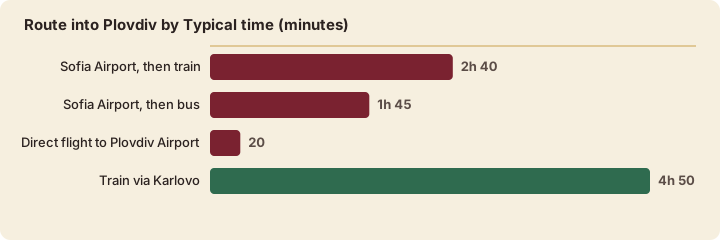
| Route into Plovdiv | Typical time | Notes |
|---|---|---|
| Sofia Airport, then train | transfer plus about 2 h 40 to 3 h 05 | direct BDZ trains, several daily; fastest option by rail |
| Sofia Airport, then bus | transfer plus about 1 h 45 to 2 h 20 | departs Sofia Central Bus Station, arrives Plovdiv Yug |
| Direct flight to Plovdiv Airport | about 20 to 35 min to centre by road | small seasonal route list; taxi about 13 to 20 euro |
| Train via Karlovo | 4 h 50 to 5 h 50 | much slower; avoid unless the timetable forces it |
One warning worth carrying from the BDZ timetable: trains routed via Karlovo take close to five hours or more, roughly double the direct services. The timetable distinguishes them clearly, and the direct trains are the ones to aim for. Times change, so the live BDZ timetable is the reference rather than any printed list.
Which Airport Should You Fly Into For Plovdiv?
For flight choice and frequency, Sofia (SOF) is the airport to use: it is the country's main hub, and the onward train or bus connection is measured in a couple of hours. Plovdiv Airport (PDV) suits travellers whose home airport is on its route list, which its own flight search shows as Belfast, Birmingham, Bratislava, London, Manchester, Milan and Tel Aviv, but that list is small and seasonal.
Sofia Airport connects to the city's Central Station by metro or taxi, and from Sofia Central the direct trains to Plovdiv run several times a day, the fastest covering the distance in about 2 h 40. The guide to the Sofia to Plovdiv run breaks the whole transfer down, including how much buffer to leave between landing and a train.
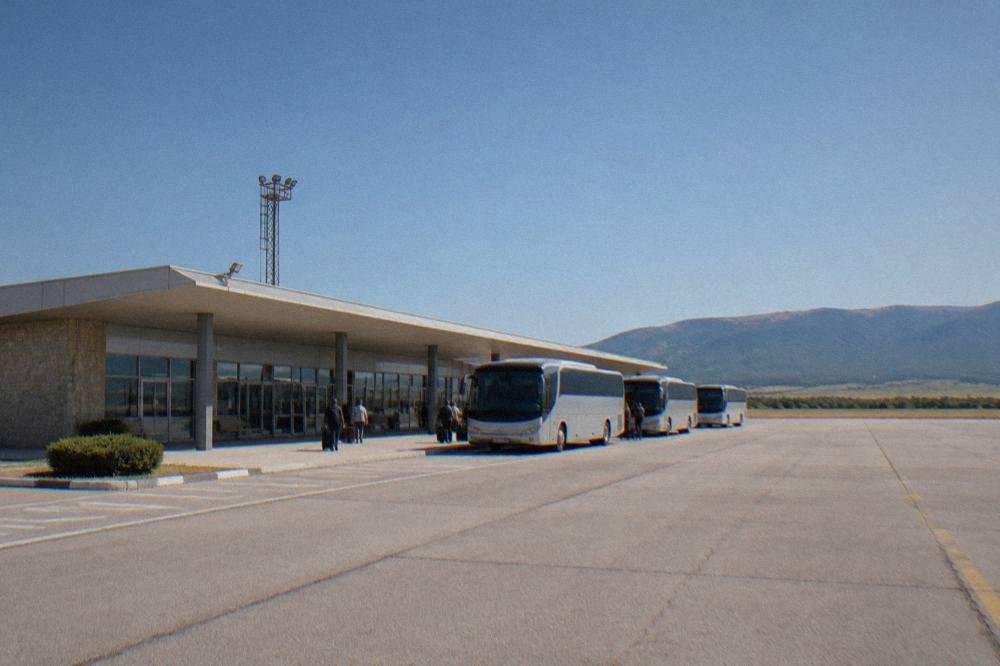
Plovdiv Airport, at Krumovo south-east of the city, is a different proposition. Its route list is genuinely small, and several routes concentrate in the winter season around ski traffic to the Rhodopes. Two additions were announced by the airport itself: Ryanair to Milan Malpensa on Fridays and Sundays from 26 October 2025, and Wizz Air to Bratislava on Tuesdays, Thursdays and Saturdays from 15 November 2025. Announced is the operative word: schedules at an airport this size change with the seasons, so the airline's own site is the final answer before booking a flight around one of them. The Plovdiv Airport guide covers the terminal, transfers and seasonal patterns in detail.
| Plovdiv Airport route | Status |
|---|---|
| London | listed in the airport's flight search |
| Milan (Malpensa) | announced by Ryanair, Fridays and Sundays from 26 October 2025 |
| Bratislava | announced by Wizz Air, Tuesdays, Thursdays, Saturdays from 15 November 2025 |
| Belfast, Birmingham, Manchester | listed in the airport's flight search, seasonal patterns apply |
| Tel Aviv | listed in the airport's flight search |
How Do You Get From Sofia Airport To Plovdiv?
The standard path is Sofia Airport to Sofia Central Station by metro or taxi, then a direct BDZ train to Plovdiv taking about 2 h 40 to 3 h 05; a bus from Sofia Central Bus Station takes about 1 h 45 to 2 h 20 and arrives at Plovdiv's Yug station. The airport-to-Plovdiv leg by bus is also sold as a through product by some operators, taking about two hours.
Practically, leave a comfortable buffer. A flight landing in Sofia, plus baggage, plus the ride to the central station, plus a ticket, is a chain with three links, and missing a train by ten minutes usually means an hour's wait for the next direct service. The BDZ timetable shows several direct departures a day spread from morning to late evening, which keeps the plan forgiving.
The bus alternative departs from Sofia Central Bus Station, which sits beside the railway station, and arrives at Plovdiv Yug on Hristo Botev Boulevard. Operator-reported fares run about 6 to 9 euro one way. During the day the bus can edge out the train on duration, but the train is less exposed to traffic and the scenery through the Thracian plain is part of the point.
For travellers who would rather not think about any of this on arrival, the same corridor is served by day tours that start in Sofia and spend the day in Plovdiv, which is one way to see the city when the itinerary is tight.
What Does The Sofia To Plovdiv Train Take?
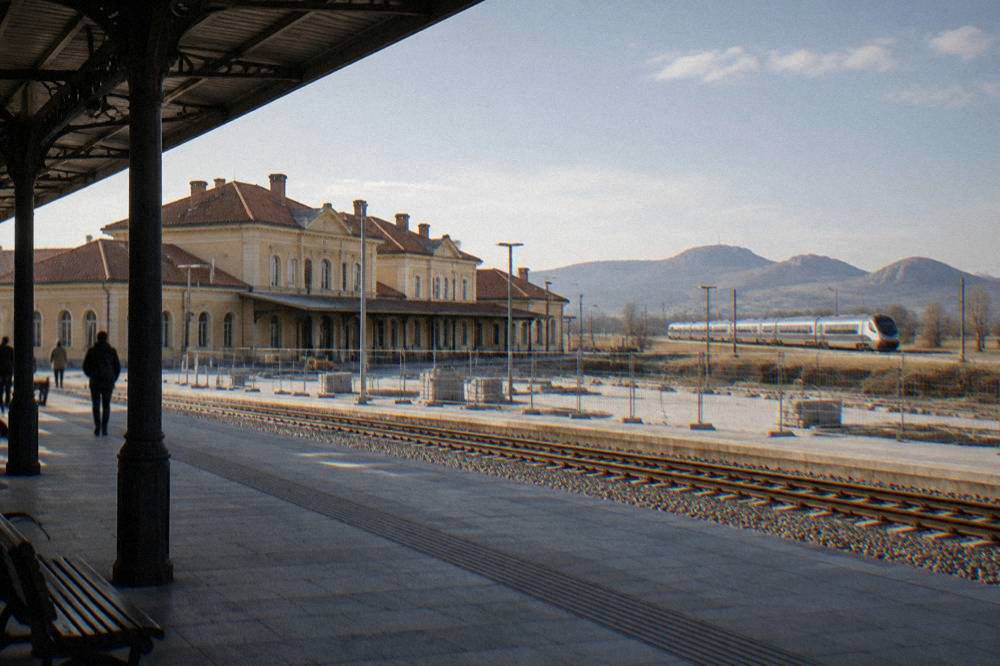
Direct trains from Sofia to Plovdiv take about 2 h 40 to 3 h 05 according to the BDZ timetable, with departures spread across the day from morning to late evening; trains routed via Karlovo take 4 h 50 to 5 h 50 and are a different, much slower service. The journey runs between Sofia Central Station and Plovdiv's central railway station.
The direct services are the workhorses of the route. The timetable of 11 October 2026, shows the fastest direct trains at about 2 h 40 and the bulk of the rest in the three-hour range, and it lists no fewer than seven direct departures between early morning and late evening. Departure times change with schedule revisions, so checking the live BDZ timetable before travelling is the practical habit; a printed list here would age badly within a season.
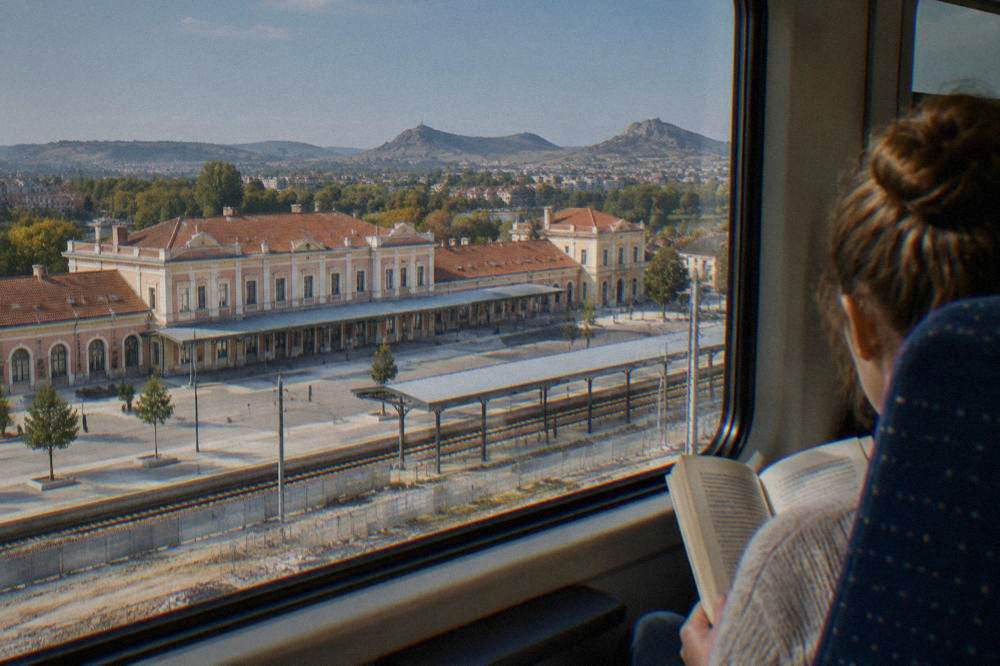
On board, the route crosses the Thracian plain south of Sofia, passing through farmland and small stations, and the last stretch runs into Plovdiv with views toward the hills that frame the city. Second class is the standard fare class. Tickets can be bought at the station, and the Plovdiv train station guide covers what waits at the other end, including the modernisation works that were reported 85 percent complete in November 2025 and are due to finish in 2026, which can mean access changes around the station.
Is The Bus From Sofia To Plovdiv Faster?
The Sofia to Plovdiv bus takes about 1 h 45 to 2 h 20, which is quicker than the train on paper, and costs about 6 to 9 euro one way; it runs from Sofia Central Bus Station to Plovdiv's Yug station, which sits beside the railway station on Hristo Botev Boulevard. Both figures are operator-reported rather than from an official tariff page.
Fancy the coach over the train for that leg? Book a bus ticket here.
Speed is the bus's pitch, and on an empty motorway it wins. Road conditions decide the real margin: the two cities are linked by a main road that carries freight and weekend traffic, and a delayed departure eats the difference fast. Against that, buses run frequently through the day, the station pairing is convenient on both ends, and the arrival point in Plovdiv is a short walk or one taxi from the centre.
The comparison that matters is not bus versus train in the abstract but bus versus the next direct train at the moment you are standing there. If a direct train leaves within half an hour, taking it costs perhaps twenty extra minutes and removes the traffic variable. If the gap is two hours, the bus wins outright. The Plovdiv bus stations guide explains the three stations, since Yug is only one of them: Rodopi station serves the southern routes toward Bachkovo and Smolyan, and Sever handles the north.
| Leg | Train (direct) | Bus |
|---|---|---|
| Journey time | about 2 h 40 to 3 h 05 | about 1 h 45 to 2 h 20 |
| Fare | Confirm at booking | about 6 to 9 euro one way |
| Sofia departure | Sofia Central Station | Sofia Central Bus Station, beside the rail station |
| Plovdiv arrival | central railway station, Hristo Botev Blvd | Yug station, Hristo Botev Blvd |
| Exposure to traffic | low | high, varies by hour |
Can You Fly Directly Into Plovdiv Airport?
Yes, on a limited set of routes: Plovdiv Airport's own flight search lists Belfast, Birmingham, Bratislava, London, Manchester, Milan and Tel Aviv, with Ryanair's Milan Malpensa service and Wizz Air's Bratislava service both announced for the winter season. The airport sits at Krumovo, about 12 to 14 km south-east of the centre, roughly 20 to 35 minutes away by road.
For anyone whose departure airport matches a route, this is the least complicated arrival in Bulgaria. The terminal is small, formalities are quick, and the city is close. The catch is seasonality: several routes concentrate around the winter months when ski traffic flows to the Rhodopes, and a route that exists in February may not in June. Treat the announced Milan and Bratislava services exactly as announced, and confirm with the airline before building an itinerary around them.
Getting from the airport into town is a short road trip. Crowd-reported transfer prices put the taxi at about 13 to 20 euro for the 20 to 25 minute ride, and a shuttle bus connects arrivals with Yug station in about 20 to 35 minutes. Those are secondary-source figures, so the standing advice is to confirm the fare before accepting a taxi at the kerb. From the centre, the whole arrival question dissolves: the Old Town, Kapana and the Roman sites are within walking distance of each other, and a Plovdiv food tour or an evening in Kapana starts on foot.
What Is It Like To Arrive At Plovdiv Train Station?
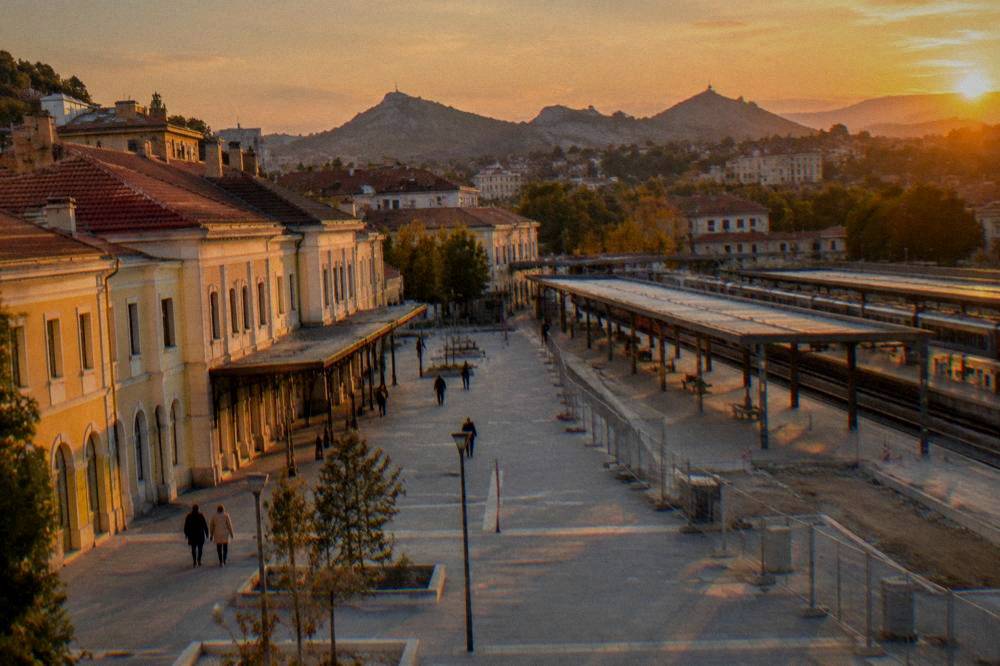
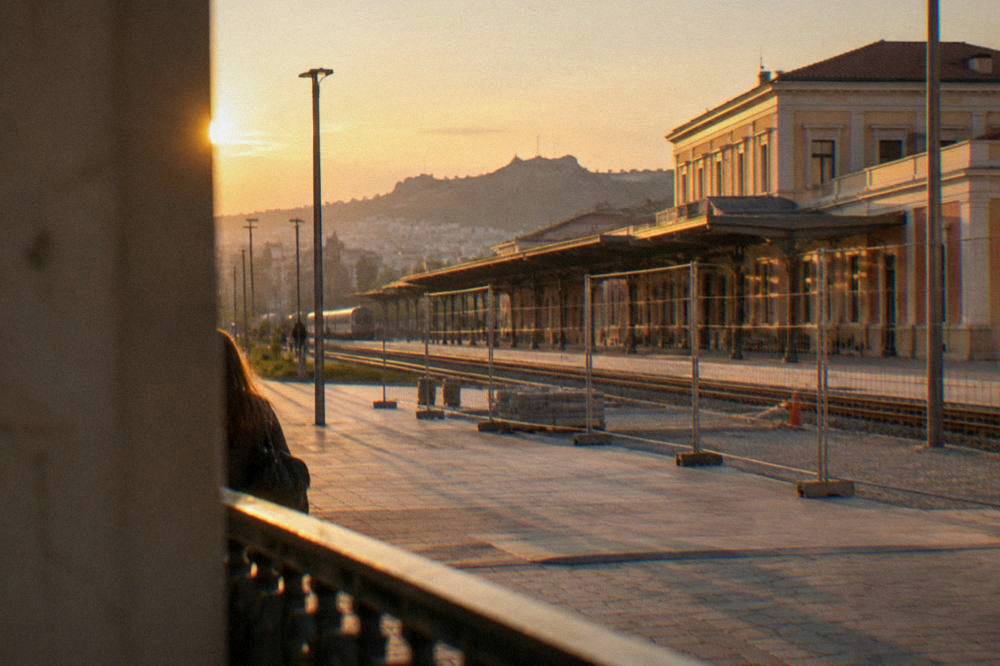
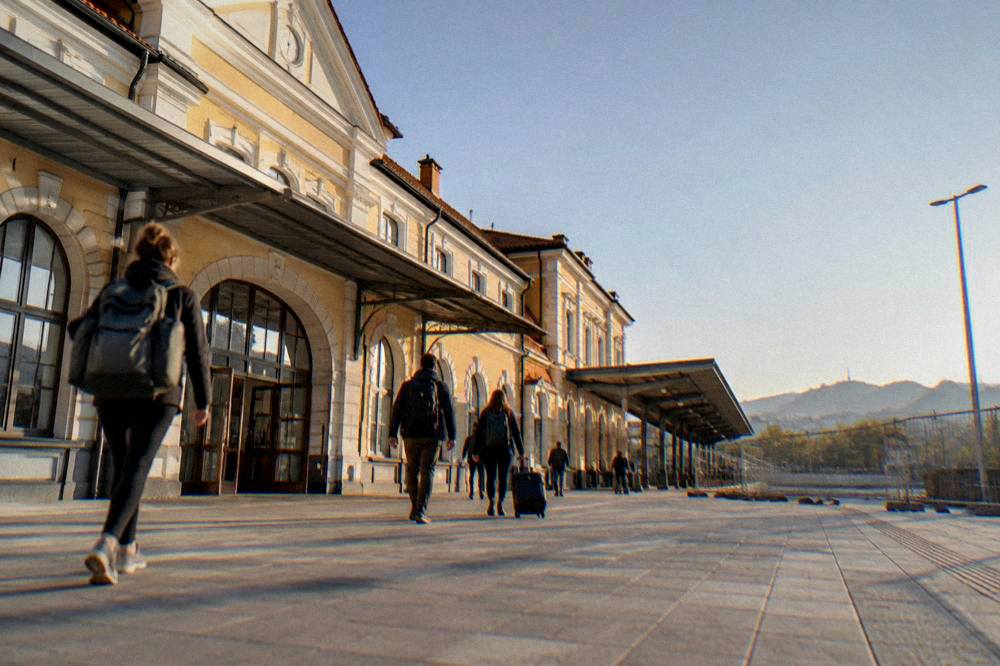
Plovdiv's central railway station shares Hristo Botev Boulevard with the Yug bus station, so train and long-distance bus arrivals land in the same place, a short hop from the centre; the station is in the middle of a large modernisation of the Plovdiv railway junction, reported 85 percent complete in November 2025 and due to finish in 2026, which means access changes around the site.
The works are the main thing to know. The project includes a new underpass beneath the station, rebuilt platforms and renewed signalling, and during construction the walking routes and entrances around the station shift. None of this stops arrivals; it just makes the last hundred metres less predictable, so building in ten minutes of slack for a pickup or a connection is sensible. The getting around Plovdiv guide covers the onward options from the station doors.
City transport from there is cheap. The single e-ticket on the city buses is 0.50 euro, a fare carried over from the pre-euro era, and a proposal from August 2026 to charge 1 euro for a paper ticket bought from the driver remained a concept rather than an adopted rule. In practice the centre is close enough that a walk or a short taxi ride covers the gap between the station and a hotel in the Old Town or the centre. For sleeping arrangements, the where to stay in Plovdiv guide maps the districts.
Should You Drive To Plovdiv?
Driving to Plovdiv is straightforward, with the city on the main Sofia to Burgas corridor, and a car earns its keep mainly for the day trips: Bachkovo Monastery is about 30 km away and the Rhodope villages further south, where public transport thins out. Within the city a car is closer to a liability: the Old Town is cobbled and steep, best done on foot, and no parking tariff, zone or restriction in Plovdiv can be stated as fact here.
That last point is deliberate. The practical guidance is to confirm parking arrangements with the accommodation before arriving by car, which in a city of narrow Old Town lanes is the question that actually decides the day.
The case for the car is the countryside. The Thracian valley wine estates, Starosel, Asen's Fortress and the deep Rhodopes toward Smolyan and Pamporovo are all easier on four wheels, and minibuses toward Bachkovo run from the Rodopi station rather than the centre. The Plovdiv car rental guide covers the rental side, and rental prices are best confirmed at booking.
For the reverse direction, the same corridor works: Plovdiv sits on the route toward Istanbul, and the Plovdiv to Istanbul guide covers that longer overland trip.
When Should You Arrive, Weather-Wise?
The modelled figures for Plovdiv, ERA5 reanalysis 1991-2020, show a mean daily high of 28.2 C in July and 5.9 C in January, with a mean daily low of -2.6 C in January; rain runs highest in May at 56.8 mm and lowest in August at 25.2 mm, so late spring through September is the comfortable arrival window and winter arrivals should budget for cold evenings.
These are modelled normals for a grid cell near the Old Town, not a station record, and reanalysis smooths the extremes a city actually feels. Even so, the pattern is clear: a continental rhythm of warm to hot summers and cold winters, with a late-spring wet bump. Arrival logistics bend with the seasons. Winter arrivals through Sofia should expect the possibility of snow on the road and rail approaches, while summer arrivals have the widest choice of trains, buses and flights, and the longest evenings to spend on arrival, since daylight stretches well past nine in midsummer.
| Season | Mean daily high | Mean daily low | Rain pattern | Arrival note |
|---|---|---|---|---|
| Spring (Mar to May) | 12.1 to 21.9 C | 2.1 to 11.5 C | rising to 56.8 mm in May | pleasant, pack a layer |
| Summer (Jun to Aug) | 25.9 to 28.6 C | 15.4 to 18.1 C | 25.2 mm in August, the lowest month | fullest transport schedules |
| Autumn (Sep to Nov) | 23.8 down to 12.3 C | 13.8 down to 3.8 C | steady, 39.7 to 44.1 mm | mild, quieting seasonally |
| Winter (Dec to Feb) | 5.9 to 8.0 C | -2.6 to -1.1 C | 41.0 to 49.3 mm | cold nights; ski-season flights at PDV |
Timing around events is its own lever. Opera Open runs at the Ancient Theatre from late June into September, and Kapana Fest fills two weekends in October, so a well-timed train arrival can end with an opera in a Roman theatre the same evening. The best time to visit Plovdiv guide and the festivals guide carry the detail.
Do You Need A Car Or A Tour Once You Arrive In Plovdiv?
Inside Plovdiv itself you need neither: the Old Town, Kapana, the Roman Stadium and the Ancient Theatre sit within a compact walkable core, the city bus e-ticket is 0.50 euro, and taxis are inexpensive. A guided walk is the efficient first move, since the layering of Thracian, Roman, Ottoman and revival-era Plovdiv is easier to read with someone who can point at it.
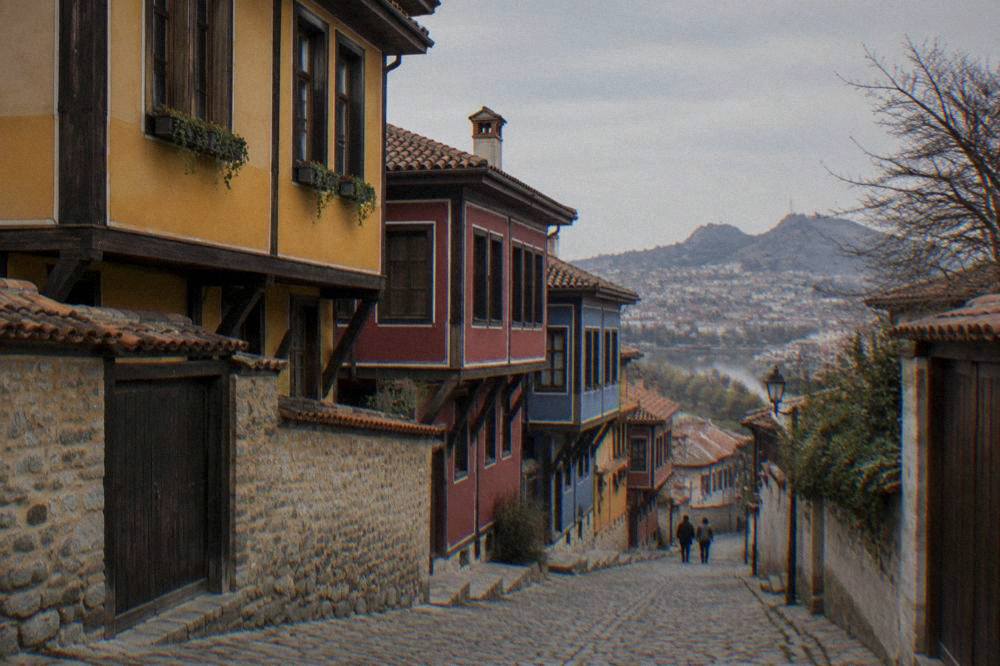
The city repays orientation. Six hills, a Roman stadium buried under the Main Street, a functioning mosque beside it, and a creative district whose name means The Trap all sit within a fifteen-minute radius, and the stories connect only when told in sequence. A guided Old Town walk with a rakia tasting folds the orientation and a first taste of local spirits into one outing, and the Old Town guide and Roman Plovdiv guide cover the same ground for independent walkers.
Beyond the city, the calculus changes. Bachkovo Monastery, about 30 km south, and Asen's Fortress above Asenovgrad are reachable by minibus from the Rodopi station, but the connections eat half a day; a day trip or a private transfer collapses the logistics.
For travellers who prefer to keep the first day unstructured, the free things to do in Plovdiv guide proves the point that the core of the city costs nothing to walk.
Common Questions About Getting To Plovdiv
Is there an airport in Plovdiv?
Yes, Plovdiv Airport (PDV) at Krumovo, about 12 to 14 km south-east of the centre. Its flight search lists Belfast, Birmingham, Bratislava, London, Manchester, Milan and Tel Aviv, and the route list is seasonal, so confirm with the airline.
How far is Plovdiv from Sofia?
By direct train about 2 h 40 to 3 h 05, and by bus about 1 h 45 to 2 h 20, per the BDZ timetable and operator-reported bus figures. Trains via Karlovo take 4 h 50 to 5 h 50.
Is Plovdiv easy to reach without a car?
Yes. The train and bus stations sit side by side on Hristo Botev Boulevard, the centre is walkable from there, and the city bus e-ticket is 0.50 euro. A car mainly helps for Rhodope and Thracian-valley day trips.
Can you take a day trip from Sofia to Plovdiv?
Yes, and it is a well-trodden one: the direct trains and buses make a morning-out, evening-back day practical, and guided day tours from Sofia also run. See the Sofia to Plovdiv guide for the transfer detail.
Do you need a visa or local currency for Bulgaria?
Bulgaria is a full Schengen member since 1 January 2025, so Schengen rules apply, and it has used the euro since 1 January 2026. Visa-free visitors from the US, UK, Canada and Australia get 90 days in any 180.
The short version: fly to Sofia unless Plovdiv Airport happens to serve your home airport, take a direct train, and let the city do the rest on foot.