Plovdiv Food Tour And Cooking Class Options
Plovdiv, in southern Bulgaria, eats well: grilled kebapche, shopska salad, banitsa and Thracian Valley wine, all within walking distance of the Old Town and Kapana.
Short answer
A Plovdiv food tour walks you through the Old Town and Kapana with stops for Bulgarian dishes, rakia and local wine; guided food walks, wine tastings and cooking-themed experiences are bookable, and self-guided eating is easy because the core districts are compact.
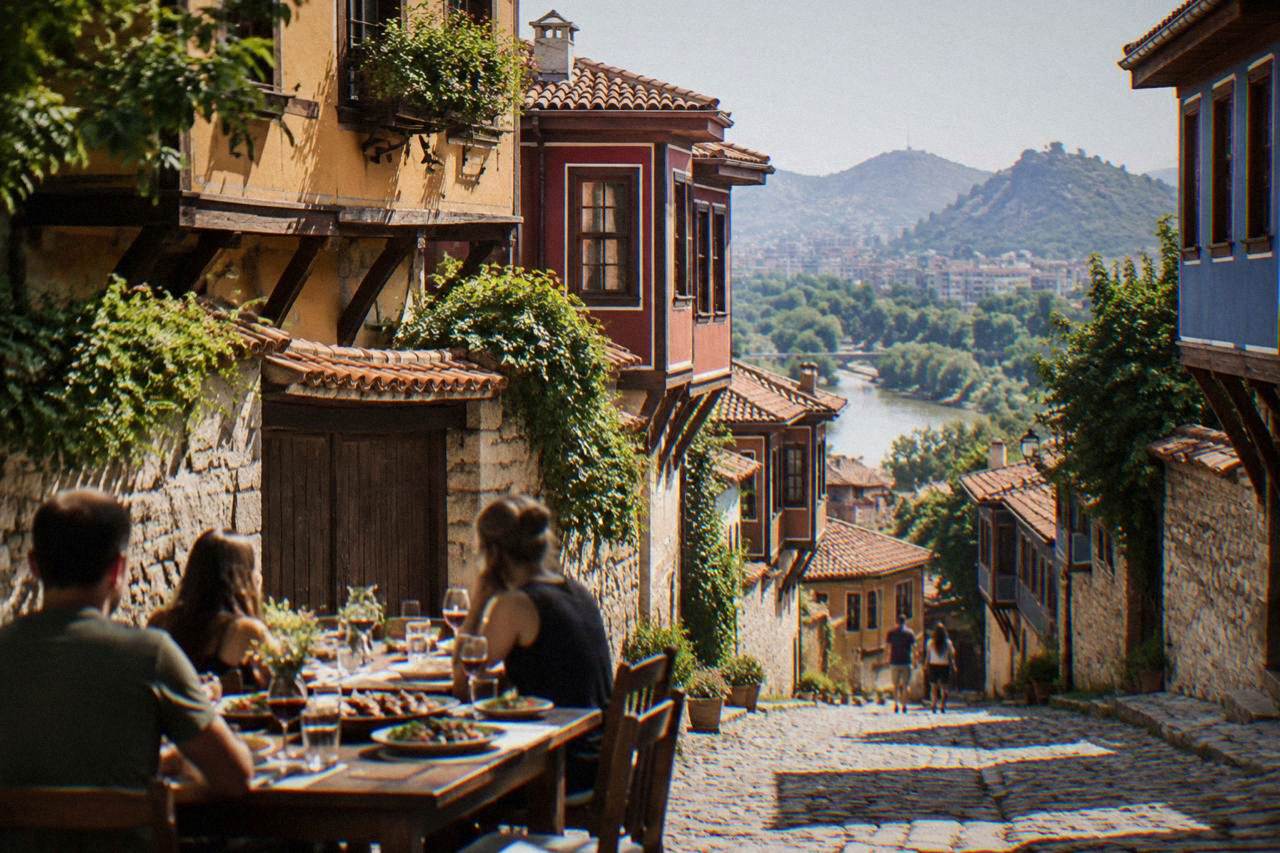
Plovdiv, Bulgaria's second-largest city, is an inland town built around six hills, and its food scene runs on grilled meat, cheese pastry, cold yogurt soup and red wine from the Thracian Valley to the south. The eating geography is compact: the Old Town holds the revival houses, Kapana, whose name means "The Trap", holds the small kitchens, cafes and creative-quarter buzz, and the two sit a few minutes' walk apart. A food tour is one of the easiest ways into that landscape, because a guide walks you between neighborhoods while explaining what each dish is and where its ingredients come from. This page lays out the tour formats that actually run in Plovdiv, what a cooking class or wine tasting involves, and what you can eat on your own if you would rather wander solo. It also covers seasons, prices on the ground and the food day trips that reach beyond the city, so the whole eating side of a Plovdiv trip can be planned from one place.
What Is A Plovdiv Food Tour And What Do You Taste?
A Plovdiv food tour is a guided walk, typically through the Old Town and the Kapana creative district, with stops for classic Bulgarian dishes: shopska salad, banitsa, kavarma, kebapche and kyufte, tarator in summer, and tastings of rakia and Thracian Valley red wine. The format pairs food with the city's history, so you move between Roman ruins and kitchens rather than sitting in one restaurant. The guided walk that anchors this category is the Food Walk: Bulgarian Food and Culture Tour, which covers both the dishes and the stories around them. If you want the city's history and its tables in one loop, that combination is the point of the format.
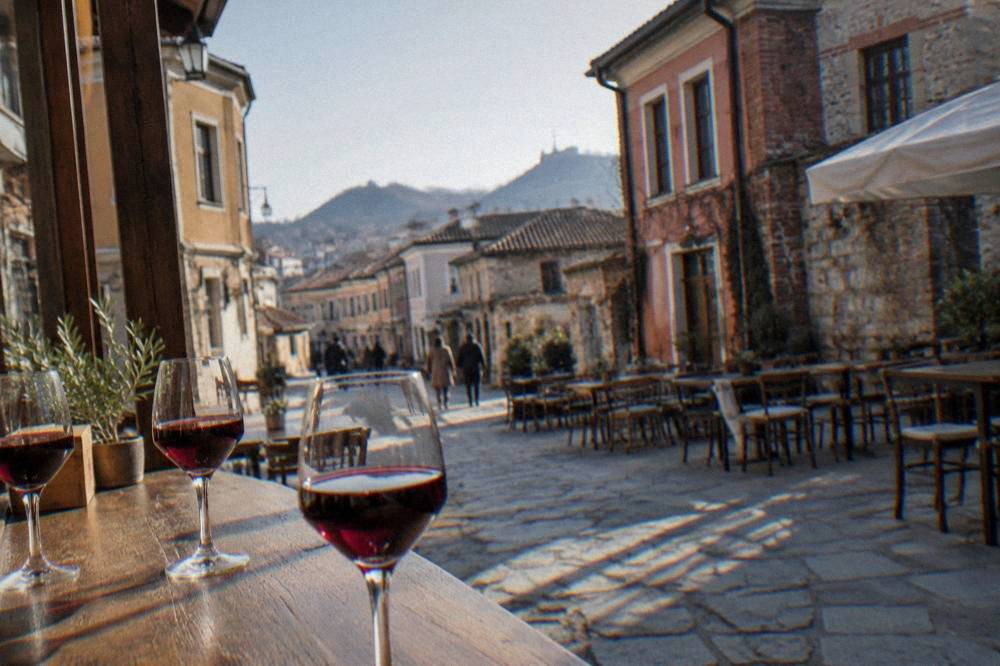
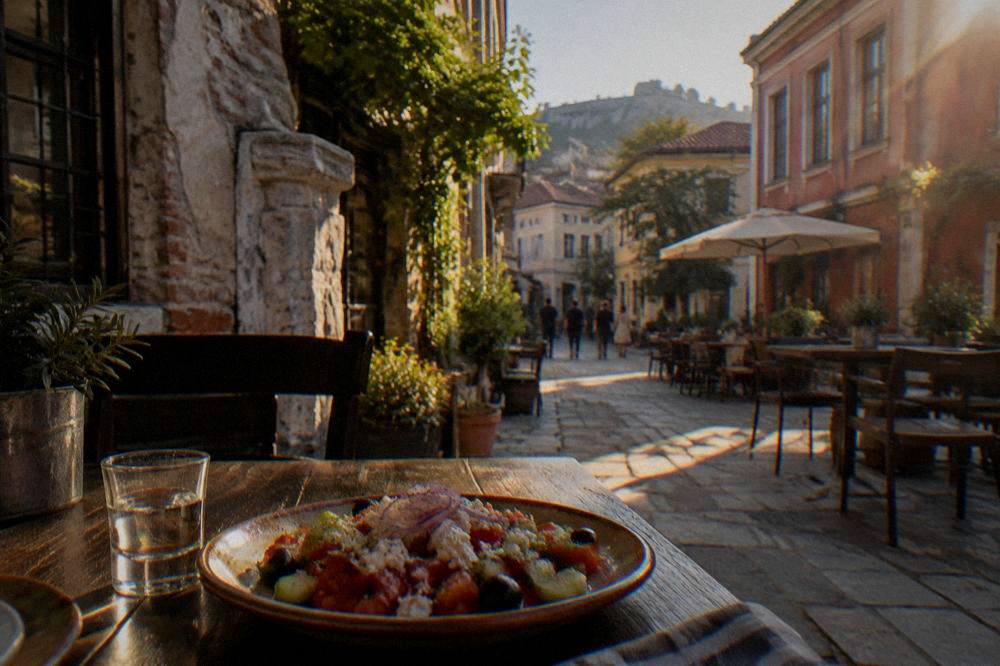
Shopska salad is chopped tomatoes, cucumbers, peppers and onion under a grate of sirene, the white brined cheese. Banitsa is filo pastry with cheese, a breakfast standard. Kavarma is meat and vegetables slow-cooked in a clay pot. Kebapche and kyufte are grilled minced-meat rolls and patties, and tarator is the cold yogurt-and-cucumber soup that appears on tables from late spring. Rakia, the fruit brandy, opens meals; Mavrud and Rubin are the local red grapes you meet in the Thracian Valley wines poured around the city.
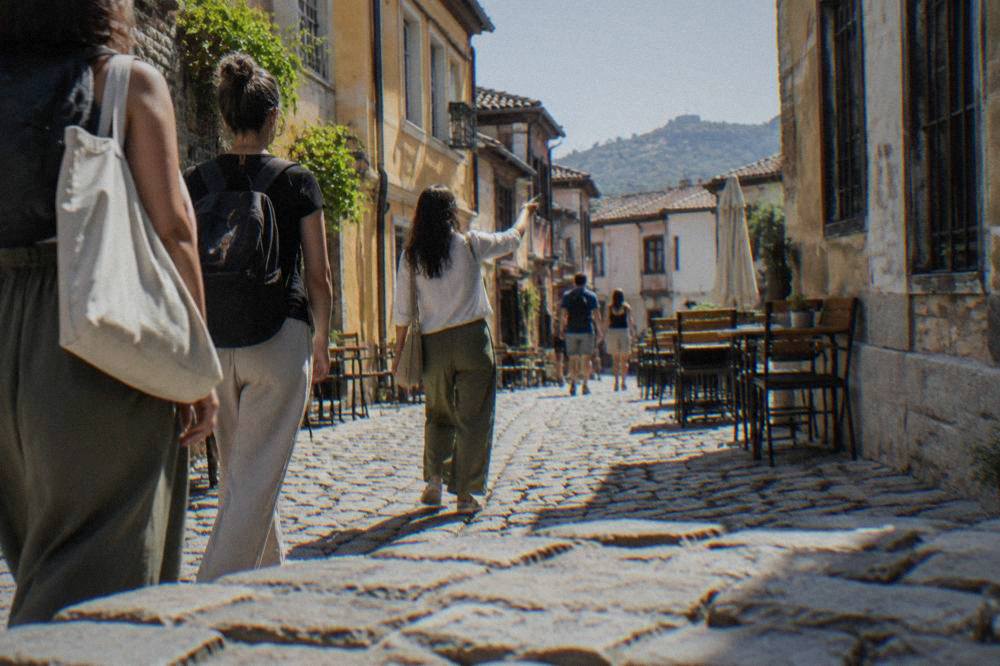
A food walk differs from a sightseeing walk mostly in pacing. The standard city walk, like the Plovdiv guided walking tour, carries you past the Ancient Theatre, the Roman Stadium and the three hills of the Old Town; the food version pauses at the same landmarks but routes the day around kitchens, markets and tasting counters. The site's longer Bulgarian food guide covers each dish in depth if you want the full menu before you book anything. A good mental model is that the sightseeing walk answers what Plovdiv is, while the food walk answers what Plovdiv eats, and the two share most of the same streets. Travellers who book both usually do the food walk first, then revisit the monuments that caught their eye with the historical context filled in.
| Dish or drink | What it is | When it is eaten |
|---|---|---|
| Shopska salad | Tomatoes, cucumber, pepper, onion, sirene cheese | Starter, all year |
| Banitsa | Filo pastry with cheese filling | Breakfast, all year |
| Kavarma | Clay-pot meat and vegetable stew | Main course, colder months |
| Kebapche and kyufte | Grilled minced meat, rolled or patted | Main course, all year |
| Tarator | Cold yogurt, cucumber, walnut, garlic soup | Summer starter |
| Rakia | Fruit brandy, often grape or plum | Before meals, toasts |
| Mavrud, Rubin | Thracian Valley red wine grapes | With mains |
Which Plovdiv Food Tour Format Fits Your Trip?
The main formats running in Plovdiv are a guided food and culture walk through the city center, short seated wine tastings, a combined city tour ending in sunset wine tasting, and longer food-plus-culture experiences. The choice comes down to how much walking you want and whether wine or full dishes are the goal; the classic food walk covers the broadest spread of Bulgarian cooking in one outing. The food walk named above is the natural first booking for a first visit. Wine-first travellers can take a seated tasting in the center; history-first travellers can pair a general city walk with a tasting at the end.
For a shorter, cheaper taste of the city there is a brief taste walk that samples a few bites while introducing the center, useful if your time is thin or you are travelling with people who will not commit to a long food outing. At the other end, a private walking tour lets you set the pace and dwell on whichever district you care about, and it can be steered toward food stops if you ask at booking. The one-day itinerary shows where a food stop fits if you are doing the city on foot by yourself. Families with children often prefer the private format for exactly this reason: the route bends around naps, picky eaters and short legs, and the guide adjusts the commentary to age.
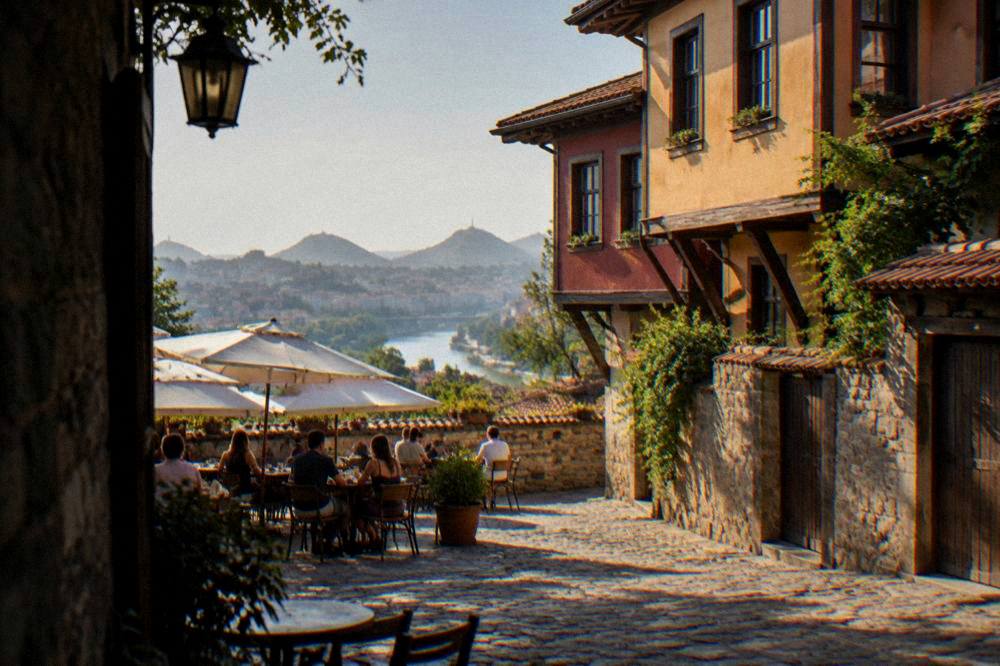
A sunset option deserves a line of its own: a guided city tour that finishes with wine as the evening comes on. Plovdiv's old core faces west across the plain, and the light on the facades from the hills in the late afternoon is part of what the format sells. The listing for each experience states exactly what is included, so check whether food, wine or both are covered before you book. Dietary needs belong in the same check: vegetarian eaters are well served by the salads, banitsa and grilled vegetables of the general cuisine, but vegan, gluten-free or allergy requirements should be flagged to the operator in advance so the kitchens along the route can prepare.
What Does Eating In Plovdiv Cost On The Ground?
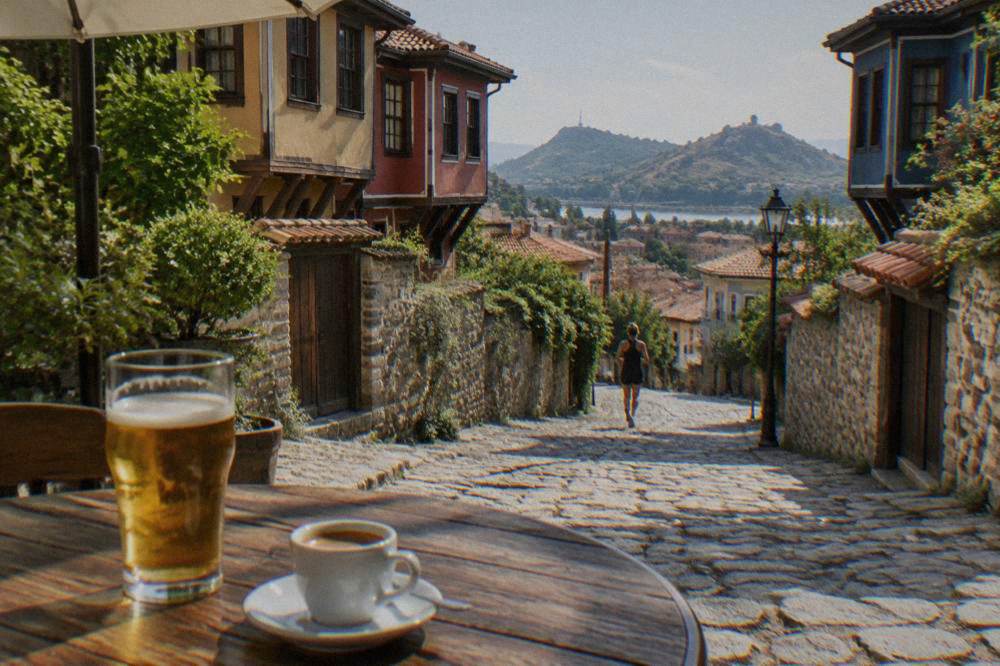
Day-to-day food prices in Plovdiv are low by Western European standards: Numbeo crowd data puts an espresso or cappuccino at around 2 euro, a half-litre of draught beer at around 2 euro, and a three-course mid-range meal for two at roughly 30 to 40 euro. A city bus ride costs 0.50 euro with an e-ticket, and Bulgaria has used the euro since 1 January 2026. Those figures are crowd-reported averages, not official tariffs, and individual restaurants vary. Product prices for the tours themselves render in the booking blocks on this page and are never quoted in prose.
The euro changeover matters for reading menus. For sightseeing around your meals, the entry prices are published: the Ancient Theatre is 3.58 euro, the Bishop's Basilica 7.57 euro, and a combined Old Plovdiv ticket covering up to five sites is 10.74 euro. The Ancient Theatre of Philippopolis and the Roman Stadium sit directly on any food-walk route through the center.
| Item | Price | Basis |
|---|---|---|
| Espresso or cappuccino | About 2 euro | Numbeo crowd data |
| Draught beer, 0.5 l | About 2 euro | Numbeo crowd data |
| Mid-range dinner for two | About 30 to 40 euro | Numbeo crowd data |
| City bus e-ticket | 0.50 euro | Municipal e-ticket fare |
| Ancient Theatre entry | 3.58 euro | Old Plovdiv ticket page |
| Bishop's Basilica entry | 7.57 euro | Old Plovdiv ticket page |
| Old Plovdiv combined ticket | 10.74 euro | Old Plovdiv ticket page |
A rough budget sketch follows from those numbers. A bakery breakfast of banitsa and an espresso starts the day cheap; a lunch of shopska salad and grilled meat keeps the midday spend modest; and the crowd data's dinner-for-two range gives a ceiling for a sit-down evening. Add a tasting flight or a food walk and the day's food budget still lands below the equivalent in most Western European cities, which is one of the reasons Plovdiv draws longer stays. Prices at any single venue can sit above or below these averages, and the crowd-data basis means the figures move as reports come in.
Can You Take A Cooking Class Or Tasting In Plovdiv?
Plovdiv's cooking-adjacent options are tastings rather than full cooking schools: a seated Bulgarian wine tasting in the city center, a wine tasting with cheese and cured meats, a private Thracian Valley wine day trip to estates outside the city, and the guided food walk itself, which teaches the cuisine by eating it. A dedicated hands-on Bulgarian cooking class is not a confirmed standing product in the city; if one matters to you, ask at booking whether kitchen participation is included. The seated formats are short and central, which suits a rest day between sightseeing blocks.
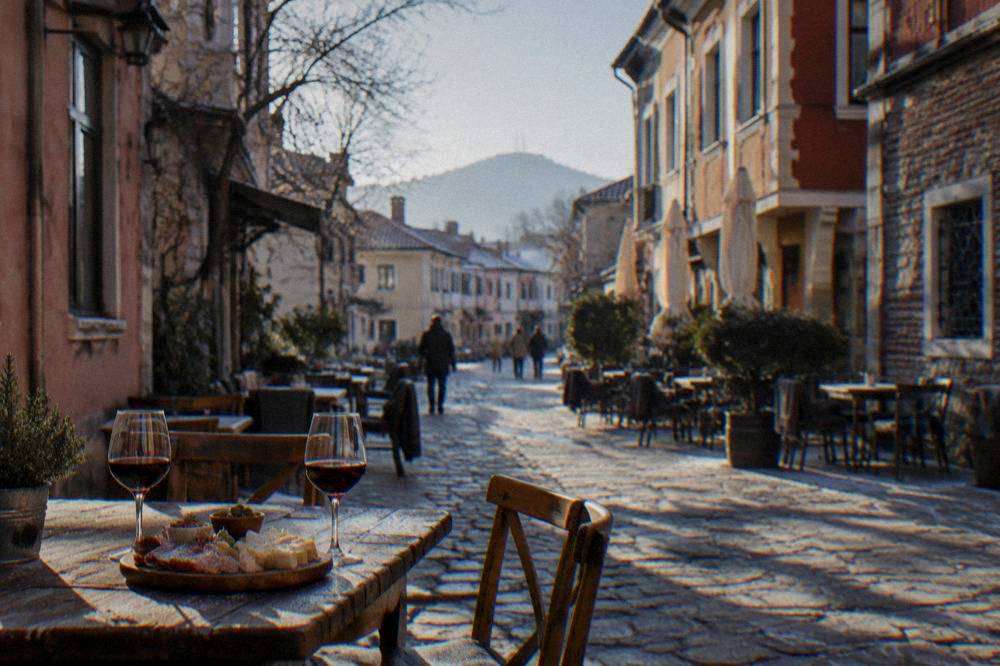
The two seated tastings differ in weight. The center tasting is a brief introduction, good for calibrating what Mavrud and Rubin taste like before you order them with dinner. The cheese-and-cured-meats version is closer to a standing meal, pairing the wines with Bulgarian sirene, kashkaval and dried meats. For a deeper dive, a private day tour reaches working wineries in the Thracian Valley, the wine region that stretches south and east of the city toward the Rhodopes; the Rhodopes day tour page covers the mountain half of that same landscape. A private wine trip also suits travellers using Plovdiv as a base without a car, since the estates sit in villages where public transport is thin.
Where Should You Eat On Your Own In Plovdiv?
Kapana is the self-guided eating district: a free, always-open maze of narrow streets whose name means "The Trap", packed with small kitchens, cafes and bars, and sitting directly south of the Old Town and the Dzhumaya Mosque. The main pedestrian street carries the chains and fast options; Kapana carries the character. No individual restaurant on this site has had its address, hours or prices confirmed, so nothing here is named as a recommendation. Wander, read menus, and let the district do the choosing.
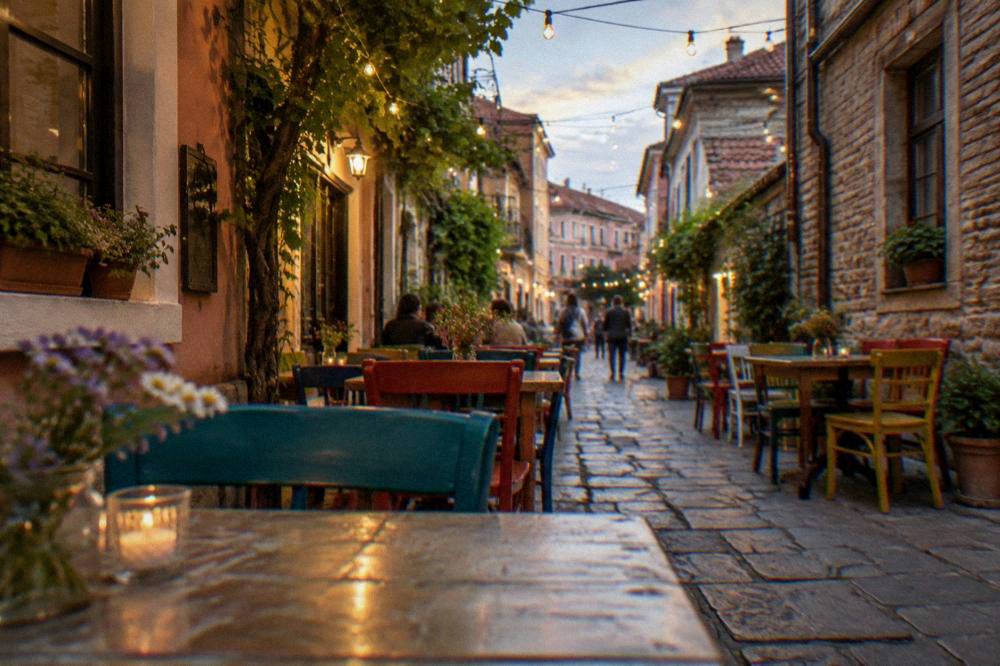
Markets give the self-guided eater a second angle. A Sunday flea and antique market runs near the central bus station in the morning and early afternoon, and Kapana hosts an artisan and creative market at weekends with street food alongside the handmade goods. The Plovdiv street food guide goes deeper on what you can eat standing up. Banitsa from a bakery is the classic budget breakfast across Bulgaria, and banitsa and the Bulgarian breakfast deserve a morning of their own.
The Old Town itself eats differently from Kapana. Its cobbled lanes and museum houses, such as Balabanov House, run on daytime hours, and tables there serve the sightseeing flow rather than a night crowd. Evening eating gravitates back toward Kapana and the streets off the main pedestrian artery, where kitchens stay open later and the creative quarter's bars fill in behind dinner. Splitting a day between the two, monuments in the morning and Kapana after dark, is the pattern that the guided food walks also follow, and it works just as well without a guide.
Tipping follows a simple custom: around 10 percent in restaurants and cafes for good service, or rounding up, common but not compulsory elsewhere. Bulgaria's language is Bulgarian, written in Cyrillic; menus in the center usually carry an English version, and a smile plus a pointed finger covers the rest. The emergency number is 112, and tap-water safety is covered separately on this site's practical pages.
| Eating zone | Character | What to expect |
|---|---|---|
| Kapana | Creative district, maze of lanes | Small kitchens, cafes, bars, weekend market |
| Main pedestrian street | City-center promenade | Faster options, chains, people-watching |
| Old Town | Revival houses, cobbles | Historic settings, quieter daytime eating |
| Sunday market, central bus station area | Flea and antique market | Morning to early afternoon, varies |
| Kapana weekend market | Artisan and food stalls | Handmade goods with street food |
How Do Bulgarian Wine And Rakia Fit Into A Plovdiv Food Tour?
Rakia and Thracian Valley wine are the two drinks a Plovdiv food tour builds around: rakia is the fruit brandy poured as an opener and a toast, and the Thracian Valley around Plovdiv grows the red grapes Mavrud and Rubin that dominate local lists. Bulgaria's wine tradition is described in general terms as long-standing. Tastings pour both, usually with a short explanation of each grape, and the food walk formats include rakia as part of the cultural briefing rather than as a drinking exercise.
The region matters here. The Thracian Valley lowlands run out from Plovdiv toward Bachkovo Monastery and the wine villages, and several estates sit within an easy drive, which is why private wine day trips operate out of the city. The Bulgarian wine guide maps the grapes and styles; rakia covers the brandy tradition on its own page. If a full valley day is too much, the seated central tastings deliver the same grapes in under an hour. Rakia also follows a seasonal logic: melon and grape rakias appear in late summer and autumn, and the heavier pours suit winter tables, so what you are offered on a tasting shifts with the calendar.
When Is The Best Season For A Food Tour In Plovdiv?
Late spring through early autumn is the comfortable window for a walking food tour in Plovdiv: ERA5 reanalysis for 1991-2020 puts July mean daily highs at 28.2 C and August at 28.6 C, with May the wettest month at 56.8 mm of rain and August the driest at 25.2 mm. Winter tours still run, but the January mean daily high is 5.9 C with lows around -2.6 C, so outdoor stalls and market eating shrink. Tarator season follows the heat; grill season follows everything.
Two event windows can sweeten a food-focused trip. Kapana Fest ran its autumn 2026 edition over the first two weekends of October, filling the district around the bridge over Gladstone Street with stalls and crowds. The Christmas market ran from late November 2025 to early January 2026 and returns from 1 December 2026 to 7 January 2027, when mulled drinks and winter dishes take over Central Square and Kapana. Both dates are the latest announced editions, so check the municipal events listings for the year you travel. Shoulder months have their own case: April and May bring the spring vegetables that make the salads shine, September cools the streets while keeping terrace weather, and October layers Kapana Fest on top of an already busy district.
| Month | Mean daily high | Mean daily low | Rain | Food-tour note |
|---|---|---|---|---|
| April | 17.1 C | 6.4 C | 47.7 mm | Spring menus begin |
| May | 21.9 C | 11.5 C | 56.8 mm | Wettest month, bring a layer |
| July | 28.2 C | 17.9 C | 45.6 mm | Peak tarator and terrace season |
| August | 28.6 C | 18.1 C | 25.2 mm | Driest month, warmest evenings |
| October | 18.1 C | 8.8 C | 44.1 mm | Kapana Fest window |
| January | 5.9 C | -2.6 C | 41.0 mm | Christmas-market food, cold walks |
All figures are ERA5 reanalysis modelled normals for the 1991-2020 period, not a station record, and reanalysis smooths urban heat, so the city core can feel warmer than the grid value on a still afternoon.
Which Food Day Trips Run From Plovdiv?
The food-adjacent day trips from Plovdiv run south and east: wine estates in the Thracian Valley reached on private wine tours, the Valley of the Thracian Kings and its Rose Valley surroundings on guided small-group trips, and Rhodope-mountain outings where the cuisine shifts to mountain dishes. Bachkovo Monastery, about 30 km away, is a half-day classic with free entry, reached by minibus from the Rodopi bus station in 35 to 45 minutes. None of these is a restaurant tour; they are landscape trips that happen to eat well.
The Thracian Kings small-group trip pairs archaeology with the Rose Valley, the region that supplies the rose oil Bulgaria is known for; the food angle is local cooking along the route rather than a set menu. The Wonderful Bridges and Rhodope-cuisine trip makes the food explicit, serving mountain dishes in the Rhodopes. A week built that way might run a city food walk on day one, a seated tasting on day two, the monastery and fortress loop mid-week, and a valley wine or mountain-cuisine trip to close, with the free sights of the free things to do in Plovdiv page filling the gaps between meals.
For planning the full week, the two-day itinerary and the wider Bulgaria itinerary show how the city's food days fit with Asen's Fortress and the mountain villages.
Common Questions About Plovdiv Food Tours
What is a Plovdiv food tour?
A guided walk, usually through the Old Town and Kapana, with stops for Bulgarian dishes such as shopska salad, banitsa, kebapche and kavarma, plus rakia and Thracian Valley wine, explained alongside the city's history.
How much does a Plovdiv food tour cost?
Tour prices render in the booking blocks on this page and are not quoted in prose. For context, Numbeo crowd data puts a mid-range three-course dinner for two in Plovdiv at roughly 30 to 40 euro, and an espresso at about 2 euro.
Can you take a cooking class in Plovdiv?
The standing cooking-adjacent products are tastings and food walks rather than hands-on classes. If kitchen participation matters to you, ask the operator at booking whether any preparation is included.
Where should you eat in Plovdiv without a tour?
Kapana, whose name means "The Trap", is the free, always-open eating district of small kitchens and cafes. No individual restaurant has had its details confirmed by this site, so read menus and choose as you wander.
What drinks are included on a Plovdiv food tour?
Rakia, the fruit brandy poured as a toast, and Thracian Valley reds from the Mavrud and Rubin grapes are the standard pours; the exact inclusions are stated on each tour's listing.
Is a food tour in Plovdiv worth it in winter?
Winter tours run, though the January ERA5 mean daily high is 5.9 C. The Christmas market from 1 December 2026 to 7 January 2027 adds a seasonal food layer across Central Square and Kapana.