Plovdiv Walking Tour: Which Old Town Walk To Book
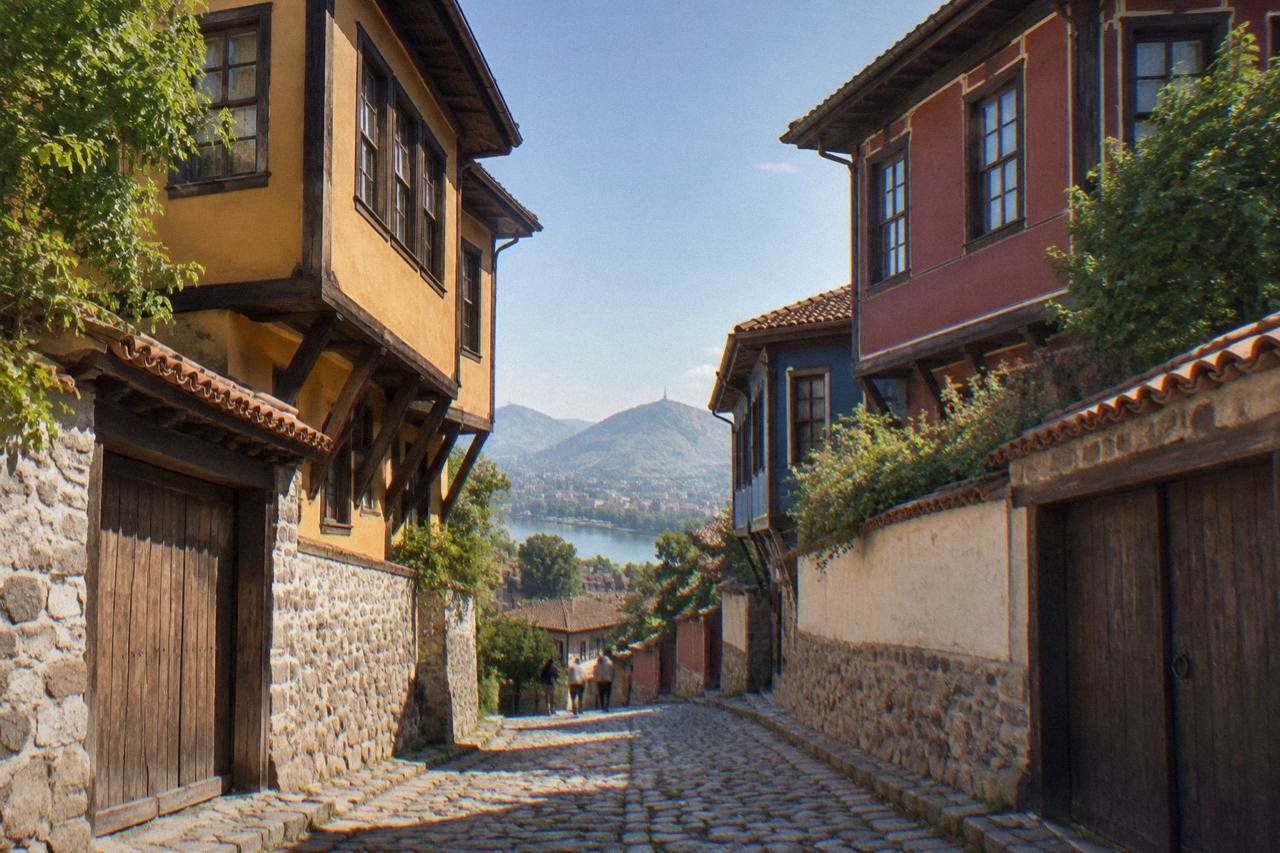
Plovdiv, in southern Bulgaria, is a city built for walking: six hills, a Roman theatre, a revival-era Old Town and the maze of Kapana, all within a compact centre. This guide explains which guided walk fits which trip and what the sights along the route cost to enter.
Short answer
A guided Old Town walk is the best first walking tour of Plovdiv for first-time visitors, because it covers the Ancient Theatre, Nebet Tepe, Hisar Kapia and Kapana in one loop from the centre, with sight tickets bought separately on the Old Plovdiv price list.
Plovdiv, in southern Bulgaria, is an inland city built around six hills, and nearly everything a visitor comes to see sits inside a walkable core: the Roman ruins of Philippopolis, the revival-era houses of the Old Town, the gate of Hisar Kapia and the tangle of streets in Kapana. A walking tour is the standard way to see it, because the distances are short but the layers are deep, and a guide turns walls and fragments into a story. This page compares the walk options available through this site, lays out what the sights along the way cost to enter, and gives a self-guided route for anyone who prefers to go alone.
Which Plovdiv Walking Tour Should First-Time Visitors Book?
For a first visit, a guided walking tour of the Old Town is the strongest choice, because it threads the Ancient Theatre of Philippopolis, Nebet Tepe, Hisar Kapia and Kapana into one loop from the city centre. The sight tickets are bought separately on the Old Plovdiv price list, and a guide covers the history the signs do not explain. A walk with a rakia tasting adds a short local tasting at the end.
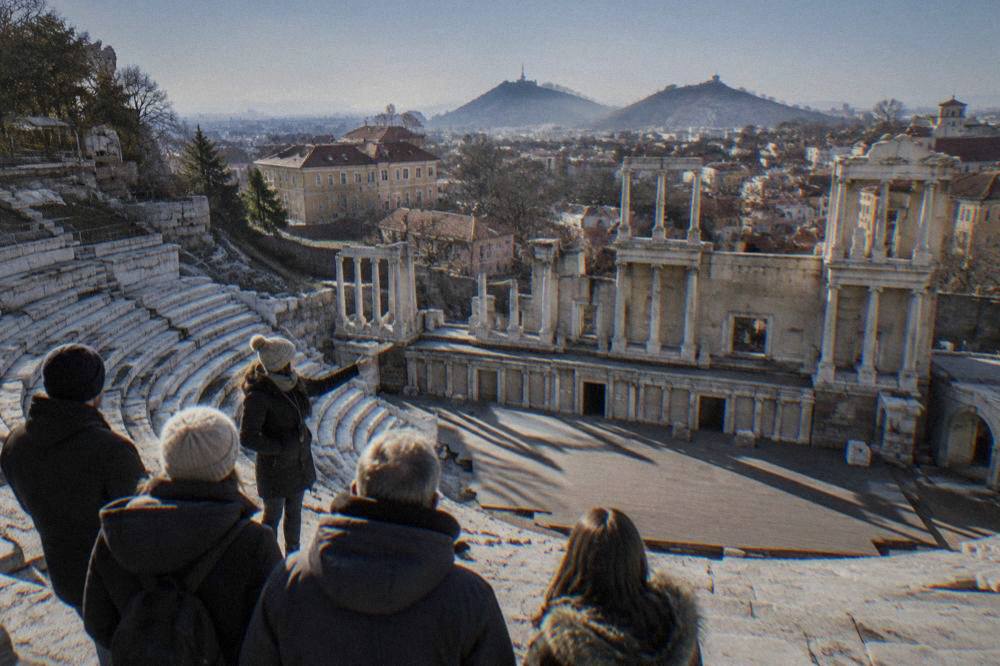
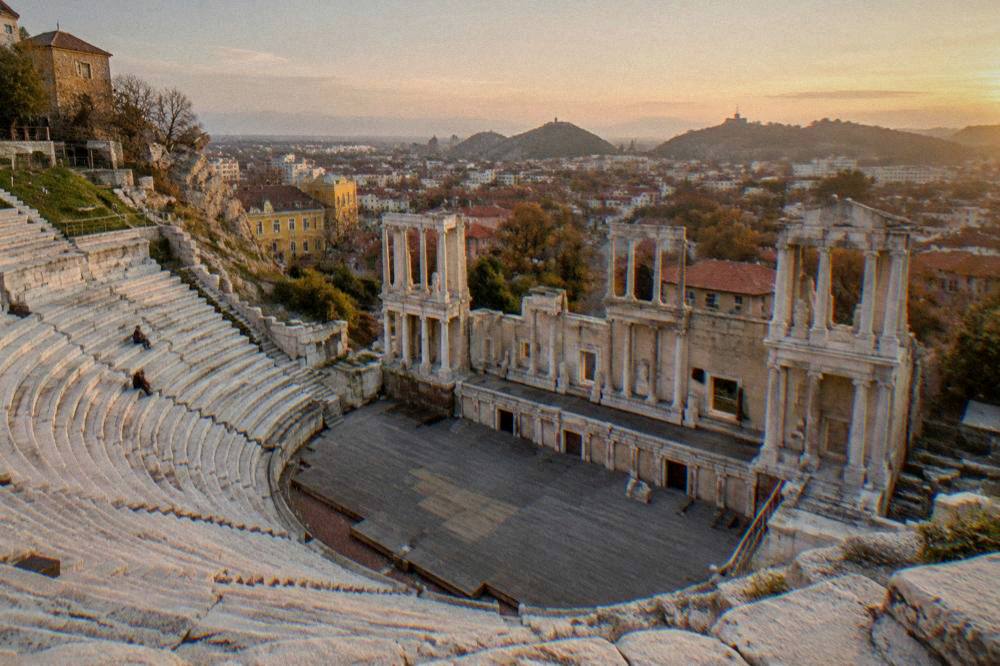
The reasoning is simple geometry. Plovdiv's core sights cluster on and around the Three Hills, and the walk between them is short but steep in places, with cobbles and steps. A guided walk keeps the route efficient and adds context the plaques do not carry, from the theatre's 28 concentric rows of marble seats to the reason the Roman Stadium disappears under the modern Main Street.
The Old Town guided walking tour with rakia tasting is this site's featured walk: it covers the Old Town core and finishes with a tasting, which suits a first evening in the city. If you are arriving from Sofia without a car, a day trip that includes a guided walk of the highlights is another common route into the city, covered further down this page.
What Does A Plovdiv Walking Tour Cost To Join?
A guided walking tour in Plovdiv starts from a low per-person price on the operator's live listing, and the big variable is what sits outside the walk itself: sight entry. A single Old Plovdiv site costs 3.58 euro per adult on the official price list, the combined ticket for up to five sites costs 10.74 euro, and the Bishop's Basilica is priced separately at 7.57 euro. Guides do not include those tickets.
That split between tour price and sight tickets is the thing to understand before booking. The Old Plovdiv municipal institute publishes its own price list, and the figures there are paid at the door of each site, not to your guide. The table below sets out the official prices.
| Ticket | Adult | Student | Family (parents with children 7 to 16) |
|---|---|---|---|
| Any one Old Plovdiv site (except Bishop's Basilica) | 3.58 euro | 1.53 euro | 7.16 euro |
| Combined ticket, up to 5 sites (excludes both basilicas) | 10.74 euro | 4.09 euro | 21.47 euro |
| Bishop's (Great) Basilica of Philippopolis | 7.57 euro | 3.58 euro | 15.34 euro |
| Roman Stadium 3D hall | 3.68 euro | 1.23 euro | not listed |
Children under 7 enter Old Plovdiv sites free, and visitors with more than 50% disability also enter free, per the same list. Students and seniors get free entry at Old Plovdiv sites on the first Thursday of the month. The validity period of the combined ticket is not stated on the official page, so confirm it at the desk when you buy.
The practical budget for a guided walk is therefore the tour price plus either one single ticket (if the walk enters only the Ancient Theatre) or the combined ticket (if you plan to visit several houses afterwards). The revival houses, including Balabanov House and Hindliyan House, all sit on the one-site and combined ticket system.
A different kind of value question is whether to pay for a private guide at all. The private city walking tour suits families and anyone who wants the route adapted, and it is the option to pick if your time is limited to a single morning.
What Route Does A Good Plovdiv Walking Tour Follow?
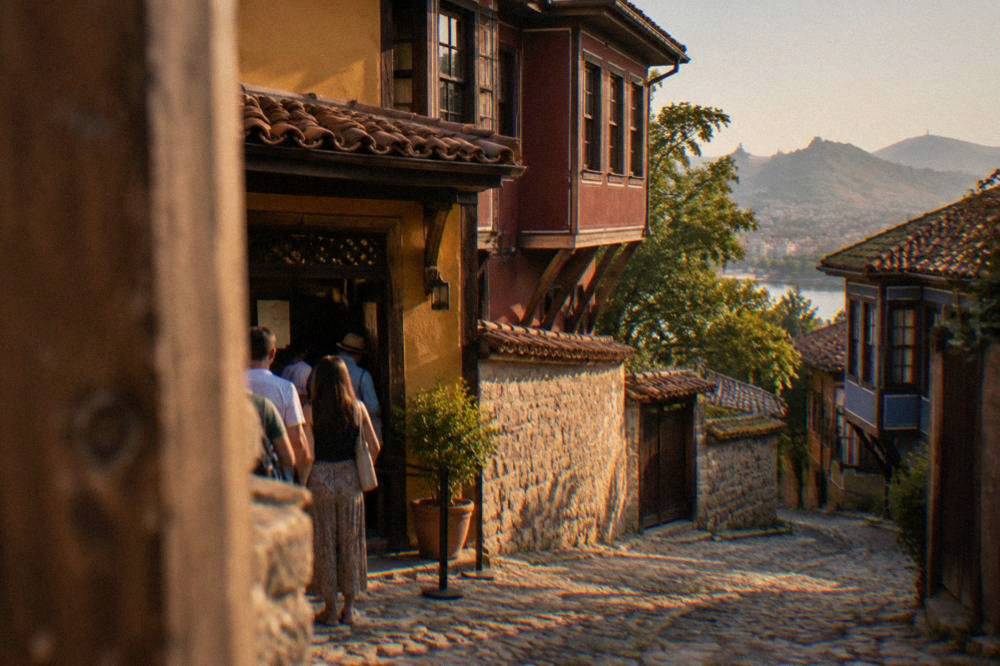
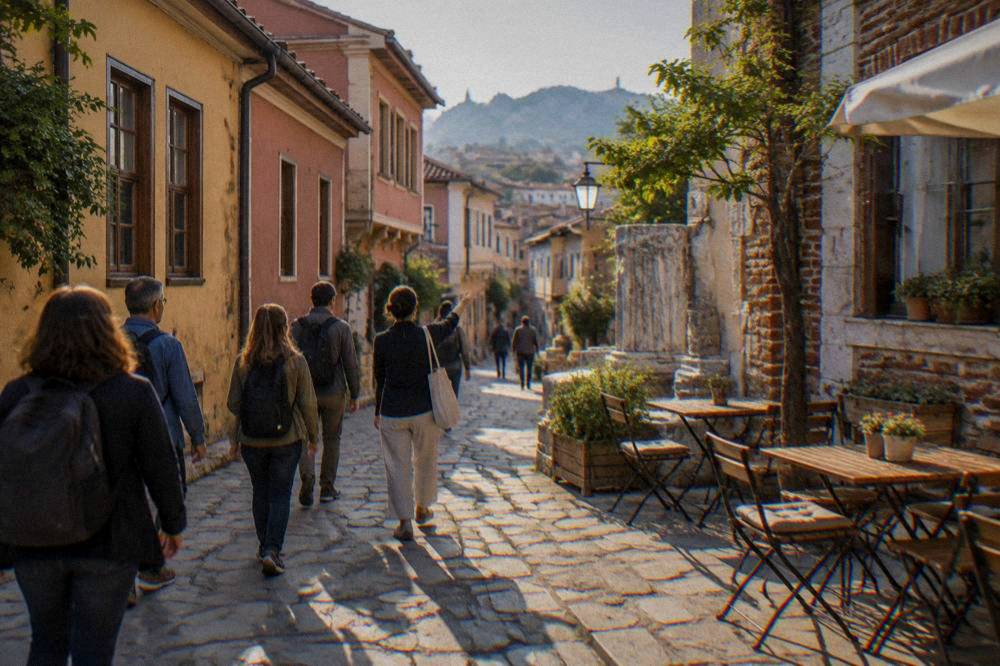
A good Plovdiv walking tour starts on the central Main Street, drops into the Roman Stadium sphendone, climbs into the Old Town past the Ancient Theatre and Nebet Tepe, exits through Hisar Kapia, and finishes in Kapana. That loop covers the city's four distinct layers, Roman, Ottoman, revival and modern creative, in a walkable circuit with no transport needed.
The Roman layer comes first. The Roman Stadium was built in the 2nd century AD on the model of the Stadium at Delphi and held up to 30,000 spectators, but only the northern part, the sphendone, is accessible today; the rest lies under the Main Street. Seeing the sphendone in the open air is free, and it is the standard opening stop of any city walk. The Ancient Theatre of Philippopolis, built in the 90s of the 1st century AD, is the paid highlight, and the view from its top rows over the city is the photograph that sells Plovdiv.
The Ottoman layer sits between them. The Dzhumaya Mosque is a working mosque, the second-largest in Bulgaria by built area at about 1,500 square metres, free to visit outside prayer times with modest dress. Sources give its construction date variously between the 14th and 16th centuries, so treat any single year you read elsewhere with caution.
| Stop | Layer | Entry cost | Notes |
|---|---|---|---|
| Roman Stadium sphendone | Roman | free | Open-air visible part only |
| Ancient Theatre of Philippopolis | Roman | 3.58 euro | 28 concentric rows of marble seats |
| Dzhumaya Mosque | Ottoman | free | Modest dress, avoid prayer times |
| Nebet Tepe | Thracian and later | free | Restoration opened March 2025 |
| Hisar Kapia | Medieval and revival | free | Public gate, open at all hours |
| Kapana | Modern creative district | free | Name means "The Trap" |
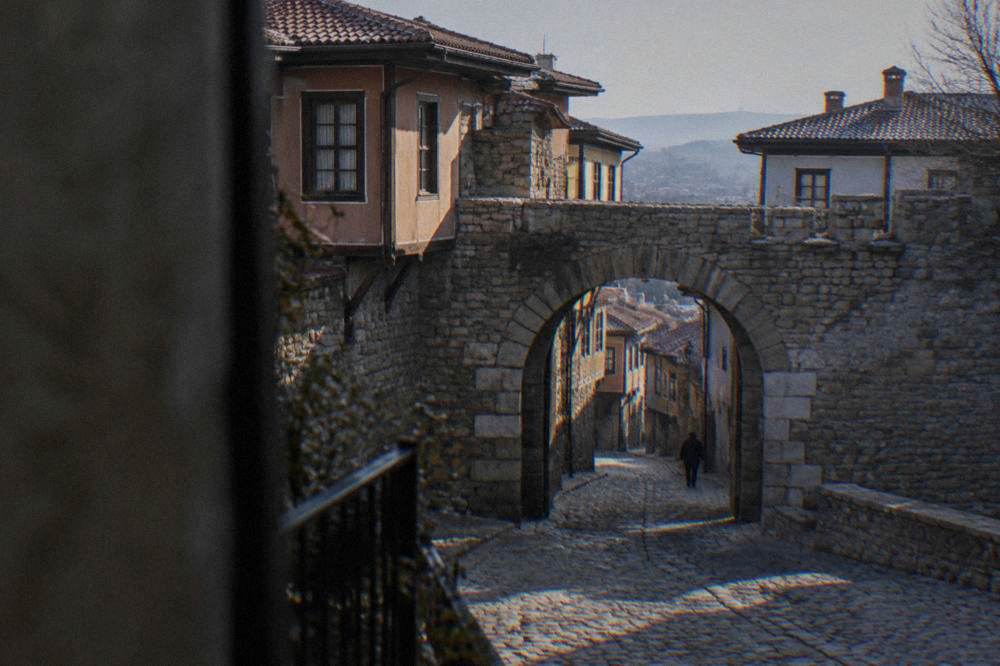
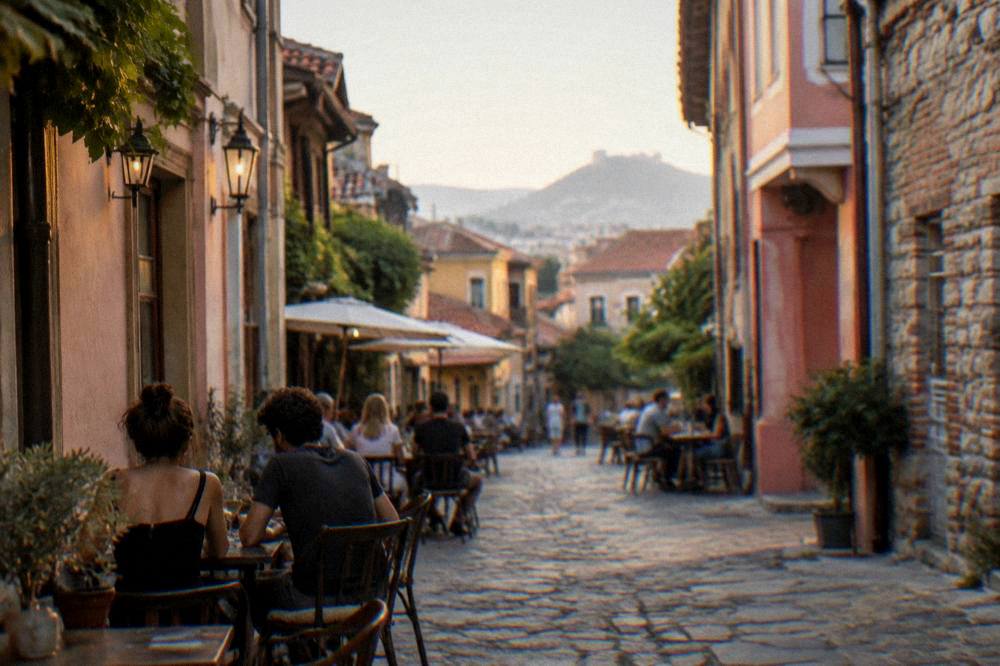
Nebet Tepe, where the city's tourism site dates the first settlement to the 4th millennium BC, crowns the hill with free, unrestricted access after its restoration project opened in March 2025. The exit through Hisar Kapia, the old gate, drops you into the final layer, Kapana, whose name means "The Trap": a deliberately maze-like district of narrow streets, now filled with studios, cafes and small shops, free and open at all hours.
For anyone who would rather not follow a guide at all, the site's self-guided Plovdiv walk covers the same loop with directions and stop-by-stop notes, and the one-day itinerary pairs it with lunch and museum choices.
Can You Take A Free Or Tip-Based Walking Tour In Plovdiv?
Tip-based walking tours do run in Plovdiv: the walk is free to join and you pay the guide what you choose at the end. This site lists one such walk, a guided tour billed as covering eight millennia of history, and the honest advice is to confirm the meeting point and schedule with the guide before you go, because tip-based walks depend on a guide being available that day.
The tip-based model suits a first evening or a tight budget, with two caveats. First, the coverage is usually the outdoor highlights rather than paid interiors; the theatre ticket is still yours to buy. Second, reliability varies with season and demand, so treat the listing's schedule as the source of truth rather than a fixed timetable. The site's free walking tour page carries the details.
Between the paid guided walk and the tip-based walk sits the audio-guided option, which covers the Old Town and the Roman landmarks at your own pace and suits travellers who want depth without a fixed departure time. Everything else covered here is indexed on Plovdiv Travel Guide.
There is also a themed walk worth knowing about even if it is not for everyone: a Jewish heritage walking tour covers a chapter of the city's history the standard route skips, including the area around the synagogue and the stories of a community that shaped central Plovdiv.
When Is The Best Time Of Day To Walk Plovdiv?
Morning is the best time to walk Plovdiv: the ERA5 reanalysis for Plovdiv, 1991-2020, puts the mean daily high at 28.6 C in August, and the Old Town's cobbled slopes hold heat through the afternoon. In winter the mean daily high drops to 5.9 C in January with a mean low of minus 2.6 C, so midday becomes the better window then, using the longer site hours.
The climate table below gives the modelled monthly picture. These are ERA5 reanalysis values for the grid cell near the Old Town, not a weather-station record, and reanalysis smooths urban heat, so treat them as planning normals rather than forecasts.
| Month | Mean daily high | Mean daily low | Rain |
|---|---|---|---|
| April | 17.1 C | 6.4 C | 47.7 mm |
| May | 21.9 C | 11.5 C | 56.8 mm |
| June | 25.9 C | 15.4 C | 49.1 mm |
| July | 28.2 C | 17.9 C | 45.6 mm |
| August | 28.6 C | 18.1 C | 25.2 mm |
| September | 23.8 C | 13.8 C | 42.8 mm |
| October | 18.1 C | 8.8 C | 44.1 mm |
Opening hours matter as much as temperature. From April to October the Ancient Theatre is open daily 9:30 to 18:00 with a lunch break 12:30 to 13:00; from November to March it runs 9:00 to 17:30 with the same break. The Dzhumaya Mosque is open to visits from 6:00 to 23:00, but avoid the main Friday prayer window around midday. The Ethnographic Museum closes on Mondays, which makes Monday the day to plan a walk that sticks to outdoor sights.
Evening walks deserve a mention: the theatre hosts Opera Open from late June to early September, and Plovdiv at night is a different city, with the theatre lit and Kapana at its liveliest. The site's Plovdiv at night guide covers that shift.
What Should You Know Before Walking The Old Town Of Plovdiv?
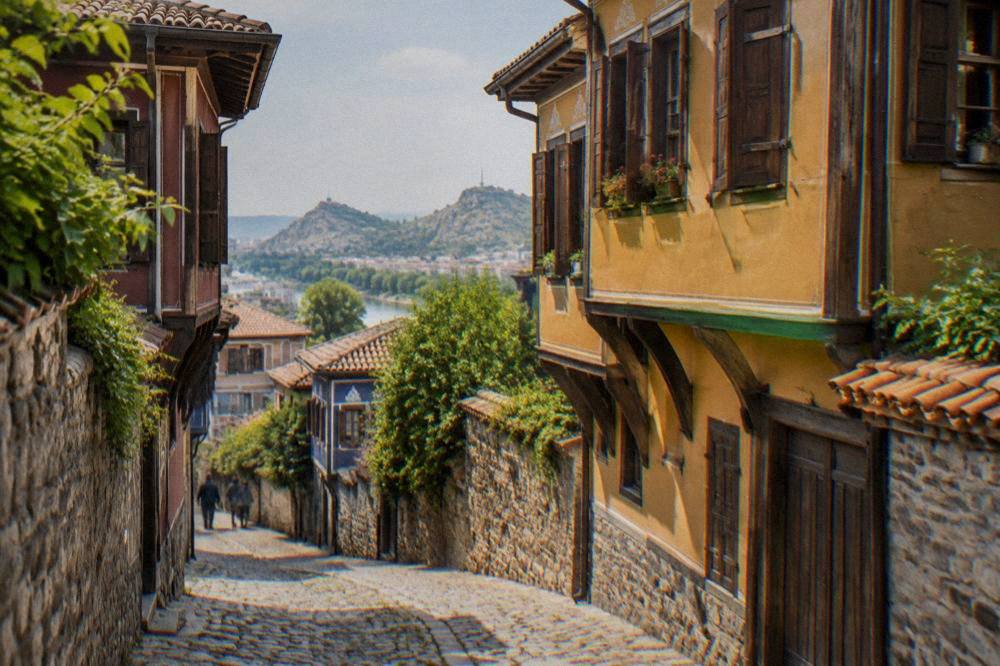
Wear closed shoes with grip, carry euro in coins and small notes, and expect hills: the Old Town sits on the Three Hills and the lanes between the theatre and Nebet Tepe are steep, cobbled and stepped.
The currency point matters more than visitors expect. Prices were dual-displayed during the January 2026 changeover, and the official Old Plovdiv page continues to show both currencies; the euro figures in the table above are the ones to use. Cards work in the museums but small vendors in Kapana can prefer cash.
Dress rules apply at the mosque: shoulders and knees covered, shoes off inside, and women should cover their hair; robes and scarves are often provided at the entrance. At the theatre, the marble rows are original and uneven, so the shoes advice doubles as safety advice.
A few planning notes:
| Topic | What applies |
|---|---|
| Old Town surface | Cobbles, steps and steep lanes on the Three Hills |
| Free sights | Nebet Tepe, Hisar Kapia, Kapana, the stadium sphendone, the mosque |
| UNESCO status | Not inscribed; "The Ancient Plovdiv" is on Bulgaria's Tentative List since 2004 |
| City card | No official Plovdiv city card exists |
| Free museum day | First Thursday of the month, students and seniors at Old Plovdiv sites |
That UNESCO row is worth spelling out, because guides and listings get it wrong: Plovdiv Old Town is not a World Heritage Site. It has sat on Bulgaria's Tentative List, under the name "The Ancient Plovdiv", since a submission dated 14 September 2004, and a tentative listing is a waiting list rather than an inscription. The city's genuine title is European Capital of Culture 2019, shared with Matera in Italy.
Families should know the walk is doable with children, though the hills and the museum houses test patience; the site's Plovdiv with kids guide suggests where to break the loop. And anyone driving in should read the parking guide before heading into the Old Town, whose streets are narrow and restricted.
What Are The Alternatives If You Are Staying In Sofia?
If you are based in Sofia, guided day tours to Plovdiv run daily and pair the city walk with the transfer, so you see the Old Town core without organising trains yourself. Direct trains from Sofia take about 2 h 40 to 3 h 05, which makes an independent day trip equally viable for confident travellers.
The trade-off is control versus convenience. A day tour handles the transport and bundles a guided walk of the must-see sights, which suits a short Bulgaria trip where Plovdiv is one stop among several. Going independently means the BDZ timetable and a self-guided route, plus the freedom to linger in Kapana; the site's Sofia to Plovdiv coverage explains the station and transfer details at the Plovdiv end.
Some Sofia-based tours add a second stop. Options include Koprivshtitsa, the revived national-revival town, Asen's Fortress and Bachkovo Monastery in the Rhodopes, or the Thracian valley wineries, so the choice is really whether Plovdiv alone is your day or the headline of a longer loop.
Whichever way you arrive, the walk itself is the point. Plovdiv rewards being on foot more than any other Bulgarian city, because its history is vertical: a Roman track under the Main Street, a medieval gate in a revival wall, a Thracian hill above both, and a creative district spilling out below. Choose the guided walk that matches your pace, buy sight tickets at the door in euro, and keep the afternoon free for Kapana.
Common Questions About Plovdiv Walking Tours
How long is a typical Plovdiv walking tour?
Product durations render on each operator's live listing, and this site never states them in prose. In practice the Old Town loop is compact: the route from the Main Street through the theatre, Nebet Tepe, Hisar Kapia and Kapana is short in distance, with hills and stops making the pace, so check the listing for the exact figure before booking.
Do Plovdiv walking tours include sight tickets?
No. Old Plovdiv sights are ticketed separately by the municipal institute: 3.58 euro per adult for any one site, 10.74 euro for the combined ticket covering up to five sites, and 7.57 euro for the Bishop's Basilica. Children under 7 enter free.
Can you walk Plovdiv without a guide?
Yes. The core loop is easy to follow, several sights are free outdoor spaces, and the site's self-guided walk page gives the route with notes. A guide adds history and context that the plaques do not carry.
Are free walking tours available in Plovdiv?
Tip-based walks run locally: the walk is free to join and you pay the guide what you choose. This site lists one such walk on its free walking tour page; confirm the meeting point and schedule with the guide before you go.
Is Plovdiv Old Town difficult to walk?
Parts of it are. The Three Hills mean steep, cobbled, stepped lanes between the theatre, Nebet Tepe and Hisar Kapia. Wear closed shoes with grip, and in summer walk in the morning, when the ERA5 reanalysis normals show the city well below its afternoon mean high.
What should you wear on a Plovdiv walking tour?
Comfortable shoes with grip, and clothing that covers shoulders and knees if the route includes the Dzhumaya Mosque, where women should also cover their hair and everyone removes their shoes inside. Scarves and robes are often provided at the entrance.