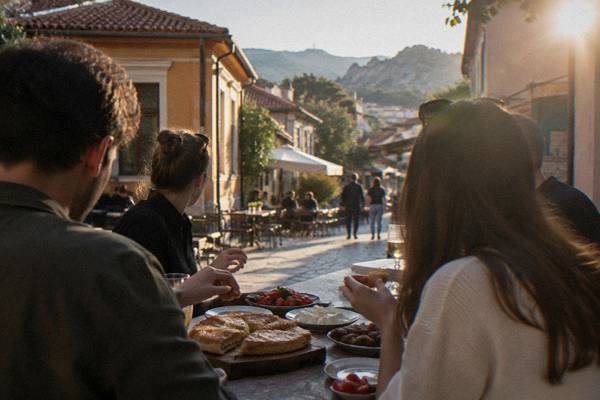
Best Restaurants In Plovdiv: Where To Book By Budget
Plovdiv's dining scene runs from Old Town houses serving Bulgarian classics to the creative kitchens and street food of Kapana. This guide covers where to book by budget, what to order, and what a meal realistically costs.
Short answer
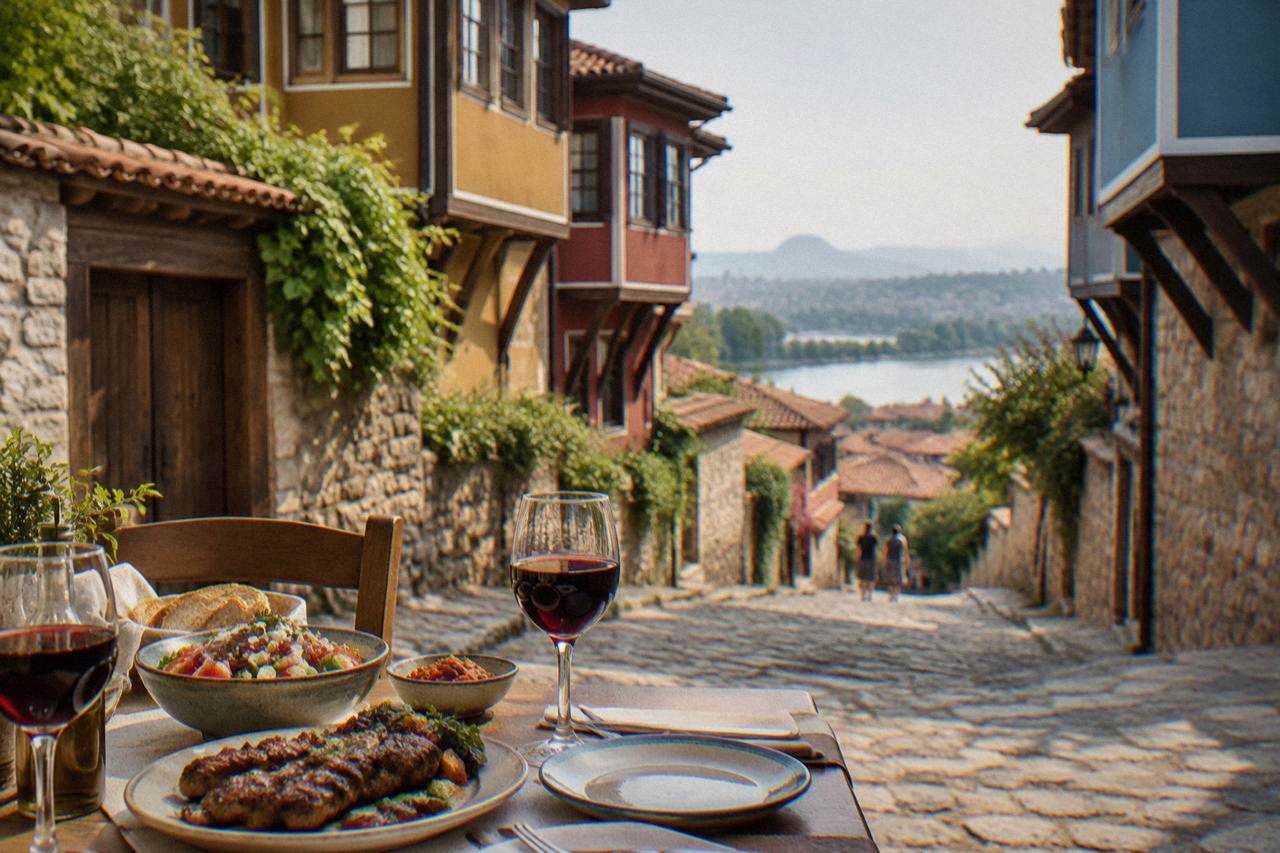
Eat in Kapana for variety and street food, in the Old Town for traditional Bulgarian cooking in revival-era houses, and along Main Street for quick central options. A mid-range dinner for two runs about 30 to 40 euro by crowd-sourced cost data, and dishes to order include shopska salad, kavarma, kebapche and Thracian Valley wine.
Plovdiv, Bulgaria's second-largest city, sits inland in the south of the country, built around six hills, and its food scene has quietly become one of the main reasons to stay more than a night. The city's dining map divides naturally into a few zones: the Old Town with its revival-era houses, the Kapana creative district with its maze of narrow streets, the long pedestrian Main Street, and the neighborhoods spreading out from the Three Hills. This guide covers how to choose where to book, what to order, and what a meal actually costs in a city where an espresso still runs around 2 euro by crowd-sourced cost data.
Confirm hours and prices locally before you commit to a table. Dishes are described as general Bulgarian custom, and price levels come from crowd-sourced cost data rather than official tariffs.
What Kind Of Food Scene Does Plovdiv Have?
Plovdiv's food scene is anchored by traditional Bulgarian cooking: shopska salad, banitsa, kavarma, kebapche and tarator are the backbone of menus, served in settings that range from revival houses in the Old Town to informal kitchens in the Kapana creative district. The city was European Capital of Culture in 2019, shared with Matera, and the dining culture that grew around that year still shapes how the city eats.
The tradition runs deep here. Bulgarian food as the country cooks it is built on vegetables, sirene cheese, yogurt, grilled minced meat and slow clay-pot stews, and Plovdiv's restaurants serve all of it. Breakfast means banitsa, the cheese filo pastry that is the national morning staple. Lunch and dinner tables start with salads, of which shopska, tomatoes, cucumbers, peppers, onion and grated sirene, is the defining example. Grills carry the mains: kebapche and kyufte, minced meat shaped into fingers and patties. In summer, tarator, a cold yogurt and cucumber soup, appears everywhere.
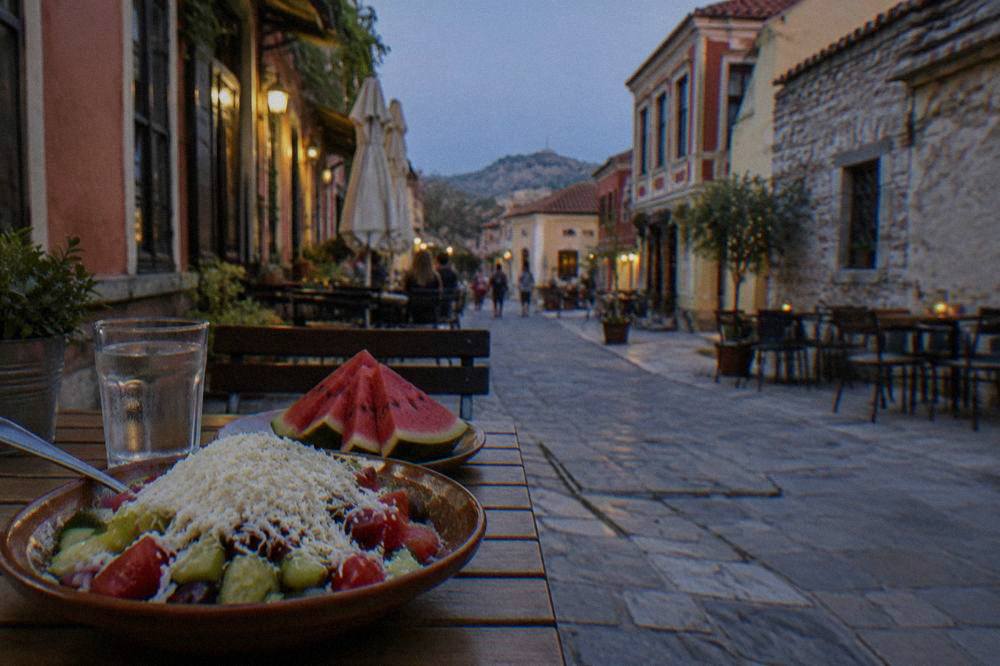
Around that core, the city has layered newer layers. Kapana, whose name literally means "The Trap", a reference to its tangle of narrow streets, remade itself as a creative district, and with that came street food, small plates, specialty coffee and cocktail bars. The Old Town kept the classical side: house museums and restaurants inside painted revival mansions. Main Street, the long pedestrian spine, holds the quick, central options. For the broader picture of the cuisine, read the companion pages on Bulgarian food and what to eat in Plovdiv.
Which Plovdiv Neighborhoods Should You Eat In?
Kapana is the district for variety: street food, small kitchens, cafes and bars packed into a walkable grid of narrow streets. The Old Town is the setting for traditional Bulgarian cooking inside revival-era houses. Main Street and the center hold the quick, everyday options, and Karshiyaka, across the Maritsa river, is where locals eat away from the sightseeing trail.
Kapana deserves the first booking of any trip. The district is free, open public streets, no ticket and no closing time, and its creative-district status since the European Capital of Culture years means the food offering changes constantly. Sunday brings an artisan and creative market with handmade goods and street food, roughly 10:00 to 18:00 per secondary listings. It is also the heart of the city's coffee and nightlife scenes, covered in detail on Plovdiv nightlife and Plovdiv coffee and cafes.
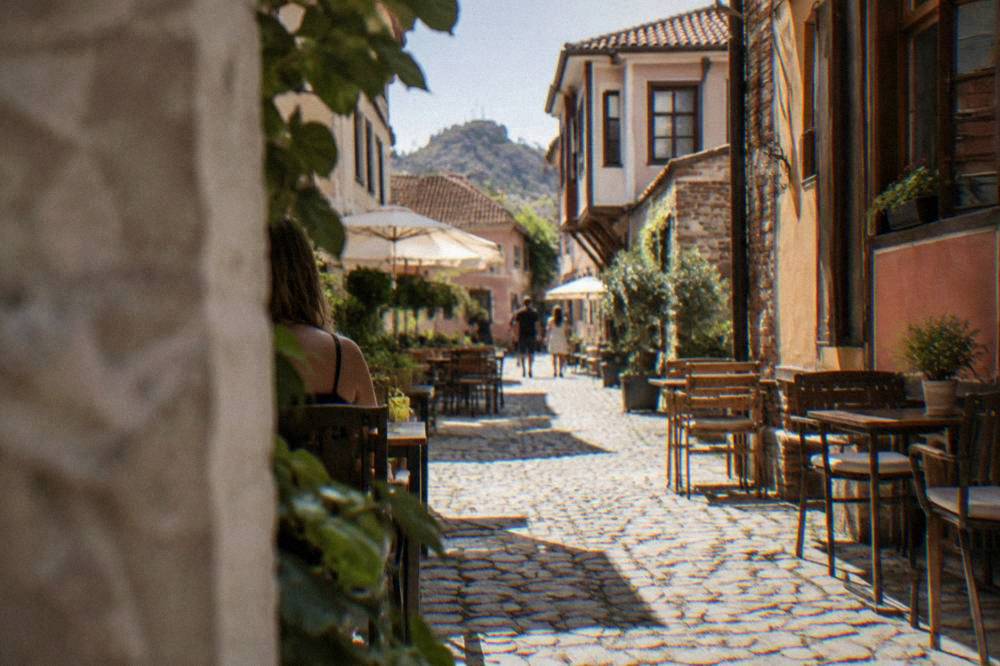
The Old Town, on the Three Hills, works differently. It suits a slow lunch between sightseeing or a long dinner. Note that no specific restaurant there is named here, and the museums among those houses, Balabanov, Hindliyan, Nedkovich, keep their own hours and tickets, so plan food around the visit rather than assuming a combined stop.
Main Street, the pedestrian axis, holds the everyday layer: bakeries for banitsa, quick grills, chains and cafes, convenient because the Roman Stadium's visible sphendone sits right beside it and the whole center is walkable. Karshiyaka, the district across the river, is the residential counterweight, where the dining is aimed at locals rather than visitors, and reaching it is straightforward on the city's buses, which charge a 0.50 euro e-ticket.
What Should You Order In Plovdiv?
Order shopska salad and tarator to start, kebapche or kavarma as a main, banitsa at breakfast, and finish with Bulgarian wine from the Thracian Valley or a rakia. Those are the dishes Bulgarian cooking is built on, and every traditional kitchen in Plovdiv will serve its own version of all of them.
The salads are the easiest entry point. Shopska, the national standard, pairs with a beer or a rakia before any main arrives. Tarator, the cold yogurt, cucumber, garlic and dill soup, is the summer version of the same idea: cooling, salty, everywhere. From the grill come kebapche, the finger-shaped minced meat, and kyufte, its round patty cousin, typically served with sides rather than alone.
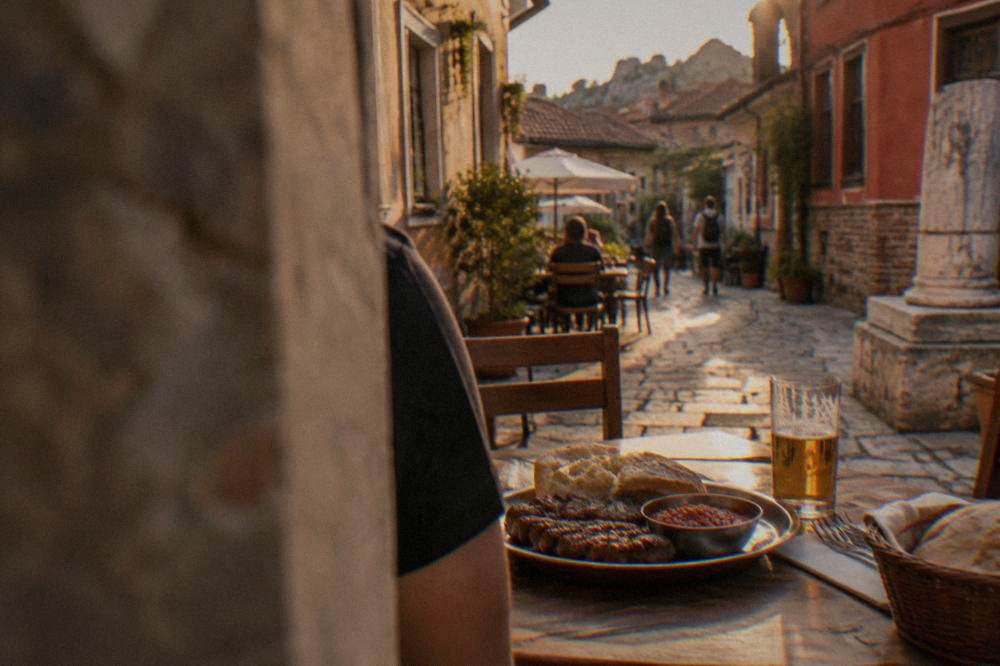
The dish that best represents slow Bulgarian cooking is kavarma, a clay-pot stew of meat and vegetables, and it is the thing to look for on a menu when the weather turns cold. Plovdiv's continental climate brings ERA5 reanalysis, 1991-2020, mean daily highs of 5.9 C in January against 28.2 C in July, so the kitchen logic shifts by season: grills and tarator in summer, kavarma and stews in winter. The full dish-by-dish breakdown, including breakfast and street food, sits on the what to eat in Plovdiv page.
| Dish | What it is | When it is eaten |
|---|---|---|
| Banitsa | Cheese filo pastry, the breakfast staple | Morning, often with ayran or boza |
| Shopska salad | Tomatoes, cucumbers, peppers, onion, grated sirene | Starter, any season |
| Tarator | Cold yogurt, cucumber, garlic and dill soup | Summer starter |
| Kebapche and kyufte | Grilled minced meat, finger and patty shapes | Main, usually with sides |
| Kavarma | Clay-pot meat and vegetable stew | Main, autumn and winter |
A guided introduction can carry this further. A food walk led by a local covers Bulgarian dishes and the culture behind them across the city center, and the Food Walk: Bulgarian Food and Culture Tour in Plovdiv page has the details of what it includes.
How Much Does A Meal Cost In Plovdiv?
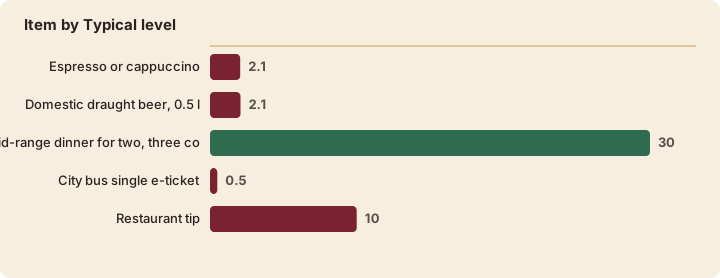
By crowd-sourced cost data, a mid-range dinner for two with three courses runs about 30 to 40 euro, an espresso about 2 euro, and a half-litre of domestic draught beer about 2 euro. Those are crowd-sourced averages, not official prices, and individual restaurants set their own tariffs, so treat them as planning levels rather than guarantees.
The price structure is one of Plovdiv's practical advantages. Tipping follows the local norm of around 10 percent in restaurants for good service, or simply rounding up; it is customary rather than mandatory. The how expensive is Plovdiv and money in Plovdiv pages carry the full budget picture.
| Item | Typical level | Basis |
|---|---|---|
| Espresso or cappuccino | About 2.06 to 2.53 euro | Crowd-sourced cost data (numbeo.com) |
| Domestic draught beer, 0.5 l | About 2.08 to 2.30 euro | Crowd-sourced cost data (numbeo.com) |
| Mid-range dinner for two, three courses | About 30 to 40 euro | Crowd-sourced cost data (numbeo.com) |
| City bus single e-ticket | 0.50 euro | Municipal e-ticket fare |
| Restaurant tip | Around 10 percent | Bulgarian custom |
By budget, the practical split looks like this. The lowest tier is self-assembled: a banitsa from a bakery, street food in Kapana on market days, and coffee standing at a counter. The middle tier is the classic Bulgarian restaurant meal, the 30 to 40 euro dinner for two described above, where salads, a grill main and a bottle of Thracian Valley wine fit comfortably. The upper tier is the Old Town and the hotel-adjacent dining, where the setting is part of what the tariff buys; no individual house's prices appear on this page because none was checked, so confirm menus on arrival or at booking.
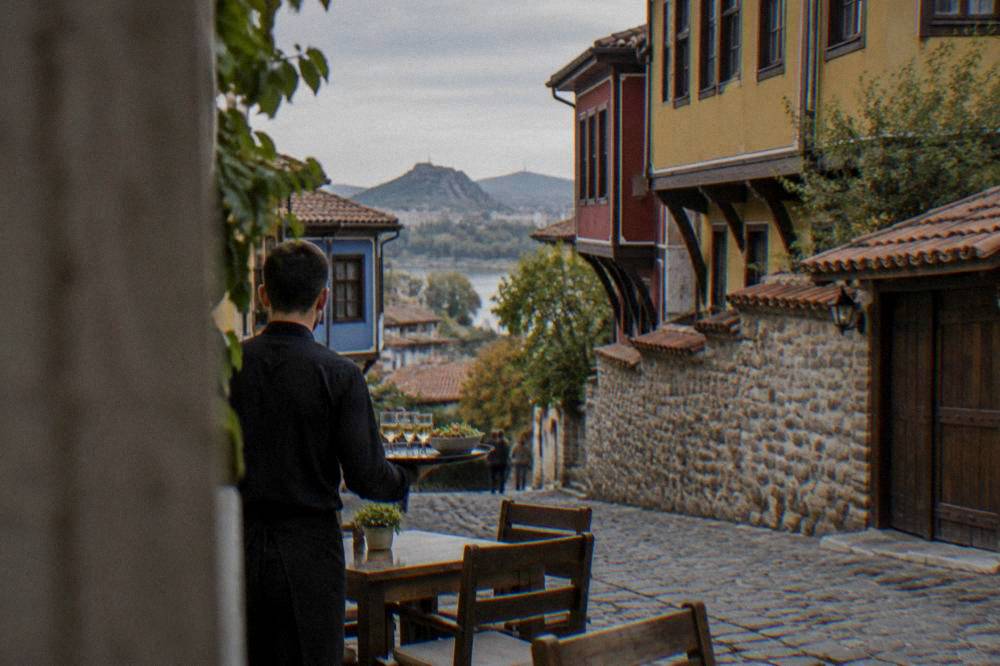
One cost that does not apply: Plovdiv's museums and dining are separate budgets, and the sightseeing side is cheap enough to leave room for food. A single Old Plovdiv site ticket, the Ancient Theatre or one of the revival houses, costs 3.58 euro for an adult, and a combined ticket for up to five sites costs 10.74 euro, per the Old Plovdiv ticket page. Eating well and seeing the Roman layers on the same day is not a stretch.
Where Can You Eat Near The Old Town Sights?
The sights cluster tightly enough that no meal requires a detour: the Ancient Theatre, Nebet Tepe, Hisar Kapia and the Kapana district sit within a short walk of one another, so the pattern is to eat in Kapana or the Old Town between sights rather than travel for food. Main Street, with the Roman Stadium sphendone beside it, runs between them and holds the quick options.
The geography does the work. The Ancient Theatre of Philippopolis, built in the 90s of the 1st century AD with 28 concentric rows of marble seats, stands at the top of the Old Town. Nebet Tepe, the free open-air complex where restoration works were completed and opened in March 2025, anchors the Three Hills. Hisar Kapia, the public gate, open at all hours, marks the seam where the Old Town gives way to Kapana. A day of sightseeing on this arc, described step by step on Plovdiv in one day, naturally passes more dining options than any visitor needs.
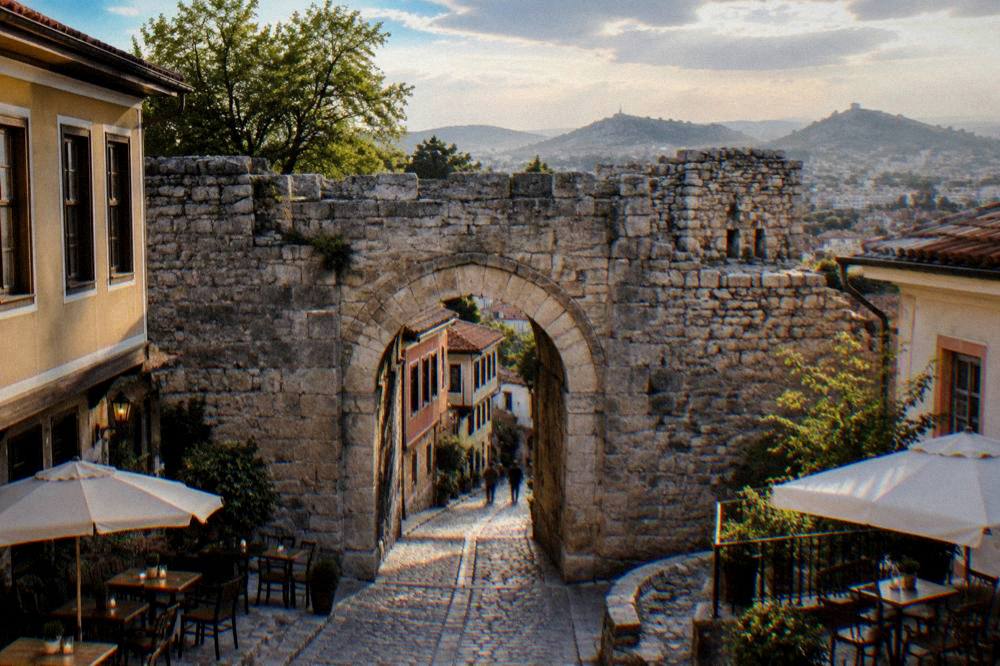
Timing matters more than location. The sightseeing sites keep set hours, the Ancient Theatre from 9:30 to 18:00 between April and October with a lunch break at 12:30, while Kapana's streets never close. The natural rhythm is a morning of Roman Plovdiv, lunch in Kapana or the Old Town, museums in the afternoon, then dinner back in whichever district won lunch. The Plovdiv walking tour option covers the city's landmarks with a guide, and pairing a walk with a food stop is the standard shape of a first day here.
The evening version of the same arc is covered on Plovdiv at night, which follows the dining hour into the bars and the lit Old Town lanes. In summer, note that the Ancient Theatre doubles as a performance venue, Opera Open ran 23 June to 9 September in 2026, so a concert evening can end with a late dinner in Kapana, where kitchens run late by Bulgarian urban custom.
What About Wine, Rakia And Coffee In Plovdiv?
Bulgarian wine comes from the Thracian Valley around Plovdiv, with Mavrud and Rubin as the local red grapes to look for, and rakia is the traditional fruit brandy that opens a meal. Coffee culture is strong and cheap, with an espresso running about 2 euro by crowd-sourced data, and Plovdiv hosts the annual Vinaria wine fair each February as part of the International Fair programme.
The wine story is regional. The Thracian Valley stretches around the city, and wineries within a short drive of Plovdiv pour Mavrud, Rubin and the broader Bulgarian range; several estates sit 15 to 45 minutes away and offer tours and tastings of those local varieties. In the city itself, wine bars and cellars pour the same bottles, and guided tastings in the center introduce the local grapes with cheese and cured meats beside them. The Bulgarian wine and rakia pages cover both drinks in depth.
| Drink | What it is | Where it fits a meal |
|---|---|---|
| Mavrud | Red grape of the Thracian Valley | With grilled meat and kavarma |
| Rubin | Red grape, a Bulgarian crossing | With richer meat dishes |
| Rakia | Traditional fruit brandy | Aperitif, with shopska salad |
| Ayran | Salted yogurt drink | With banitsa at breakfast |
| Bulgarian espresso | Strong, about 2 euro by crowd data | After the meal, or all day in Kapana |
Rakia deserves its own sentence of caution and praise: it is strong, it is served before food, and refusing a pour from a shared bottle is harder than drinking it. The Bulgarian custom is a small glass, a toast, and a salad to follow. Coffee, meanwhile, has become a Kapana speciality in its own right, with the creative district's roasteries and cafes making the city a genuine coffee stop, as the Plovdiv coffee and cafes page sets out.
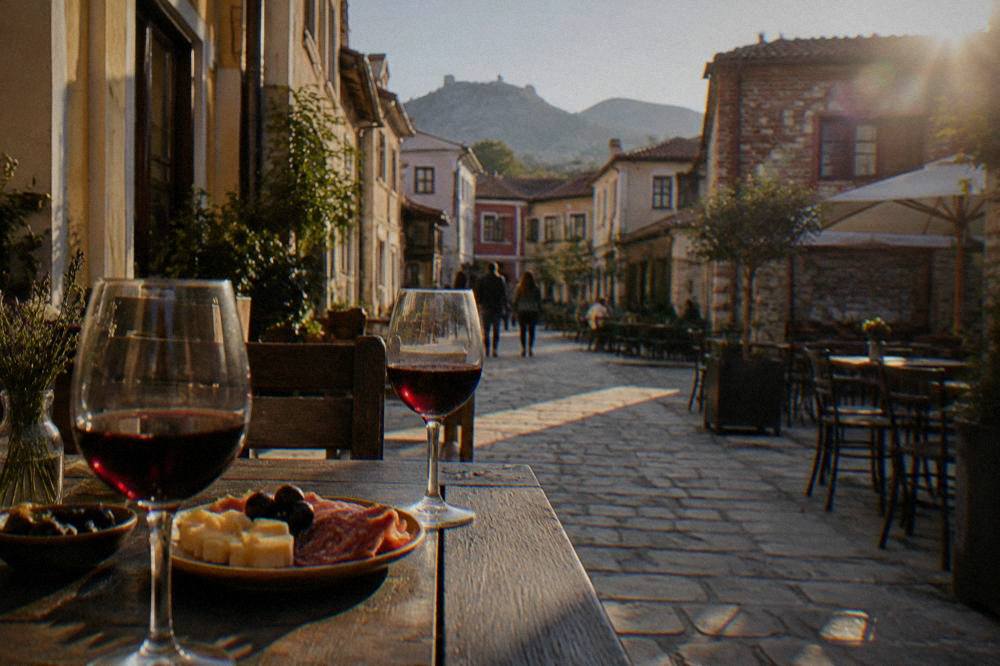
For travellers who want the wine without organizing a car, a private tasting day trip from Plovdiv into the Thracian Valley covers estates and pours with a driver included, and a tasting experience in the city center fits the same interest into less time. Both options are listed on the site's food and drink pages with full details.
The city version needs no car at all. Book a Bulgarian wine tasting here.
How Do You Book A Table In Plovdiv?
Book ahead for dinner in the Old Town and for weekend tables in Kapana, walk in for lunch on weekdays, and confirm any specific restaurant's hours and prices directly. Weekends around Kapana Fest and the Christmas market in December are the times a reservation matters most.
The booking logic follows the calendar. Kapana Fest ran across two weekends in early October in 2026, 2 to 4 and 9 to 11 October, filling the district around the bridge over Gladstone Street and Central Square. The Christmas market, in its 2026/27 edition billed as running 1 December 2026 to 7 January 2027 in Kapana and Central Square, does the same in winter. On those weekends, and on Opera Open performance evenings at the Ancient Theatre in summer, tables near the action go early. The Plovdiv festivals and events page tracks the calendar.
| Situation | Booking advice |
|---|---|
| Weekday lunch in Kapana or Main Street | Walk in |
| Weekend dinner in Kapana | Book ahead |
| Dinner in the Old Town | Book ahead, especially in summer |
| Kapana Fest weekends (early October) | Book well ahead, expect crowds |
| Christmas market period (December to early January) | Book ahead in Kapana and the center |
Language is rarely a barrier in the center, and menus in English are standard in the visitor-facing districts. Bulgarian itself is written in Cyrillic, so learning to recognize the words for the dishes above, in Cyrillic script, is the one practical trick that pays off in the places further from the center. Payment is in euro everywhere since 1 January 2026, and cards are widely accepted, though carrying a little cash for market stalls and small grills is sensible.
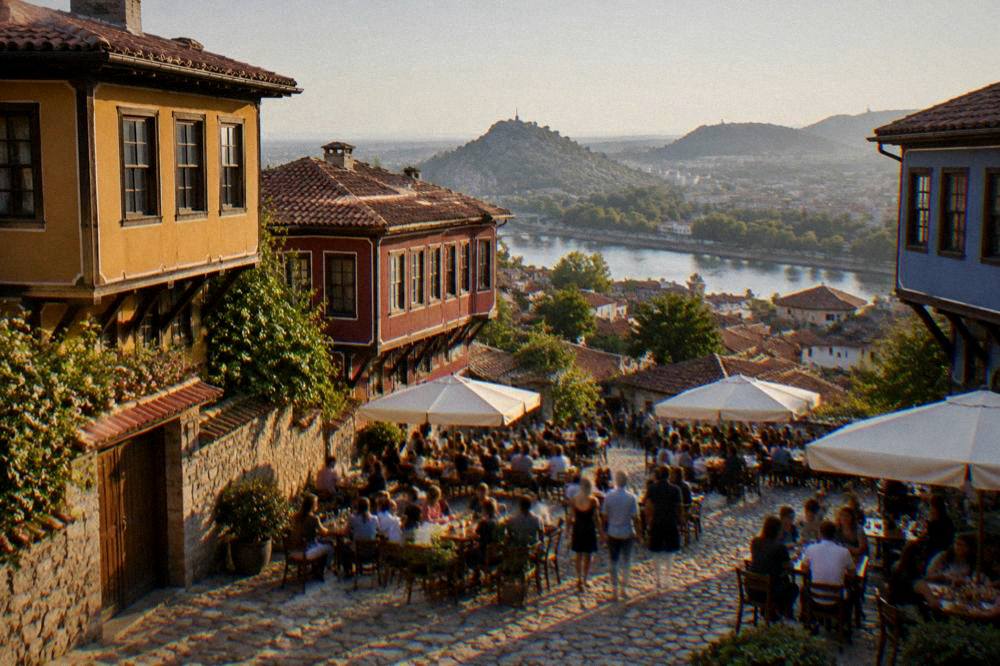
A guided walk can double as a table-finder: a classic guided walking tour of the city covers the main landmarks with a local guide, and local guides are the fastest route to knowing which kitchen in Kapana is worth the wait on a Saturday. Tip-based walks also run locally in Plovdiv; confirm the arrangement with the guide on the day.
Common Questions About Restaurants In Plovdiv
What are the best restaurants in Plovdiv?
No individual restaurant in Plovdiv is named on this site, because none had its address, hours or prices checked. The reliable pattern is this: traditional Bulgarian cooking in the Old Town's revival houses, variety and street food in the Kapana creative district, and quick everyday options along the pedestrian Main Street. Confirm specific venues locally or at booking.
How much does dinner cost in Plovdiv?
Crowd-sourced cost data puts a mid-range dinner for two with three courses at about 30 to 40 euro, an espresso at about 2 euro and a half-litre of domestic draught beer at about 2 euro. Those are averages from crowd data, not official prices; individual restaurants set their own tariffs.
What food is Plovdiv known for?
Traditional Bulgarian dishes: shopska salad, tarator in summer, kebapche and kyufte from the grill, kavarma from the clay pot, and banitsa at breakfast. Thracian Valley wine, especially the Mavrud and Rubin reds, and rakia complete the local table.
Where should first-time visitors eat in Plovdiv?
Split the visit between Kapana, the creative district whose name means "The Trap", for street food, cafes and variety, and the Old Town for traditional cooking in historic houses. Both sit within a short walk of the Ancient Theatre, Nebet Tepe and Hisar Kapia, so no meal needs a detour from the sightseeing route.
Is tipping expected in Plovdiv restaurants?
The Bulgarian custom is around 10 percent of the bill in restaurants and cafes for good service, or rounding up. It is customary rather than mandatory, and it is less standard in taxis and other services.
Can you drink tap water with a meal in Plovdiv?
Bulgaria uses the euro since 1 January 2026, so settling a bill is straightforward, and restaurant meals typically end with coffee rather than a digestive. For the tap-water question specifically, the site carries a dedicated answer page on the subject of drinking water in the city.
For everything that surrounds the table, the things to do in Plovdiv page maps the full city, from the Roman layers under Main Street to the hills above the Old Town, and a well-timed dinner in Kapana is the natural end to any of it.