Free Walking Tour Plovdiv: Tip-Based Walks Compared
Plovdiv, in southern Bulgaria, is an inland city of six hills where a free walking tour is genuinely free: you join, you walk, and you tip the guide at the end. This page explains how tip-based walks work, what the standard route covers, how the walk compares with paid guided tours, and which parts of the city cost nothing at all.
Short answer
A free walking tour in Plovdiv is a tip-based guided walk, usually starting near the Dzhumaya Mosque or the central square, that covers the Roman Stadium, the Old Town, Nebet Tepe viewpoints and the Kapana district. The tour itself costs nothing: you pay the guide what you choose at the end. Book a place through the operator's live listing, and confirm the meeting point and start time with the guide before you go.
A free walking tour here is genuinely free of a ticket price. The model is tip based, meaning the guide runs the walk for whoever shows up and each walker hands over what they think the walk was worth at the end. This page sets out how that works, what the standard route covers, what the sights along it charge if you enter them, and how a tip-based walk stacks up against the paid guided options listed on this site.
How Does A Free Walking Tour In Plovdiv Actually Work?
A free walking tour in Plovdiv is a tip-based walk: there is no ticket price, you reserve a place through the operator's live listing, you meet the guide at an announced central point, and at the end you pay the guide whatever you decide the walk was worth. The walk covers the same ground a paid city walk covers, the Roman Stadium, the Old Town, Nebet Tepe and Kapana, and the guide's income is the tips alone, so a fair tip is what keeps the model running.
The mechanism is simple and worth stating plainly, because the phrase "free walking tour" confuses people who expect a catch. There is no catch, but there is an expectation. The guide works for tips, walkers pay what they choose, and the operator's listing is where you reserve a spot so the guide knows how many people to expect.
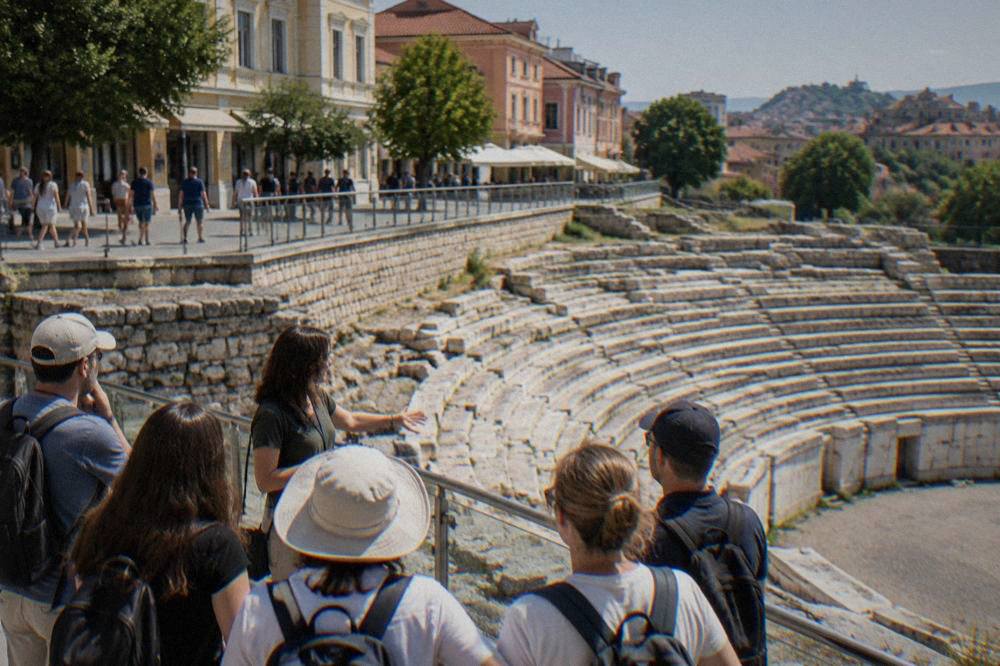
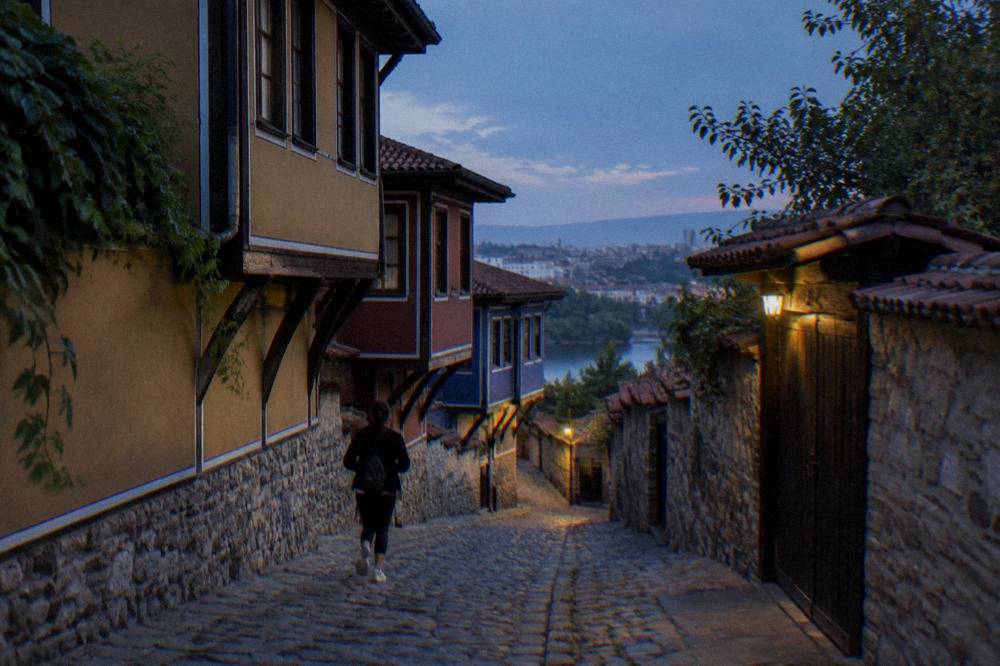
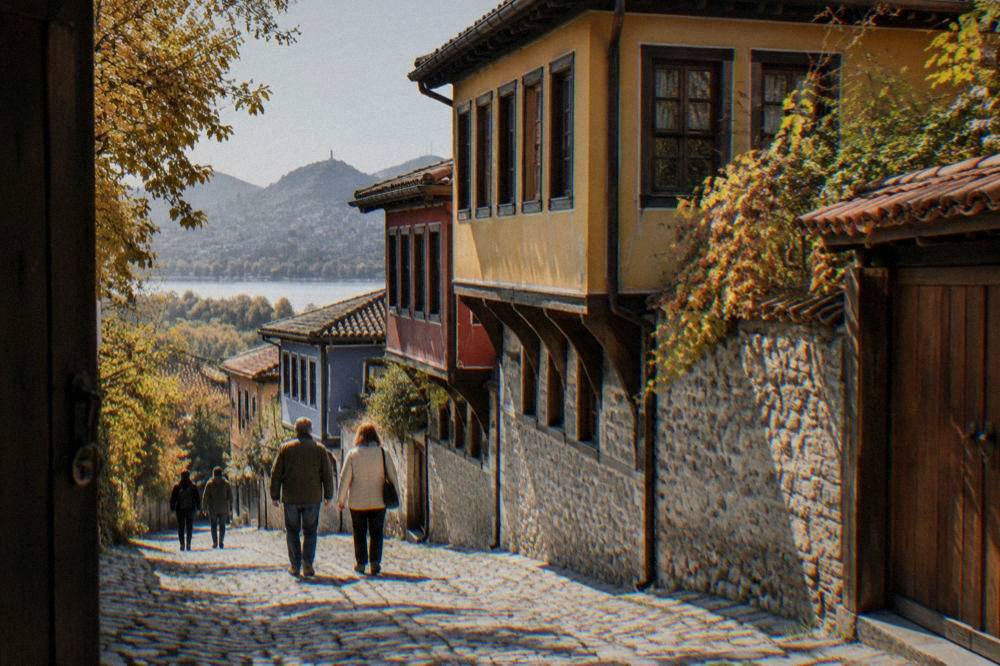
What the walk is not is a free pass into the sights. The route moves through public space, which in Plovdiv is generous: the Roman Stadium sphendone is visible in the open air at no charge, Nebet Tepe is a free open-air archaeological complex, Hisar Kapia is a public gate, and Kapana is a web of open streets. The ticketed places, the Ancient Theatre of Philippopolis, the Bishop's Basilica, the old revival houses, charge separately, and the walk normally pauses outside them rather than entering. If you want the interiors, plan an hour or two after the walk ends.
One caution belongs here. Tip-based walks run locally with independent guides, and schedules change with the season. The listing for the walk this site carries is the single place to confirm times, meeting points and language, and it is the only place to reserve. Nothing on this page should be read as a fixed timetable.
What Does The Standard Plovdiv Free Walking Tour Route Cover?
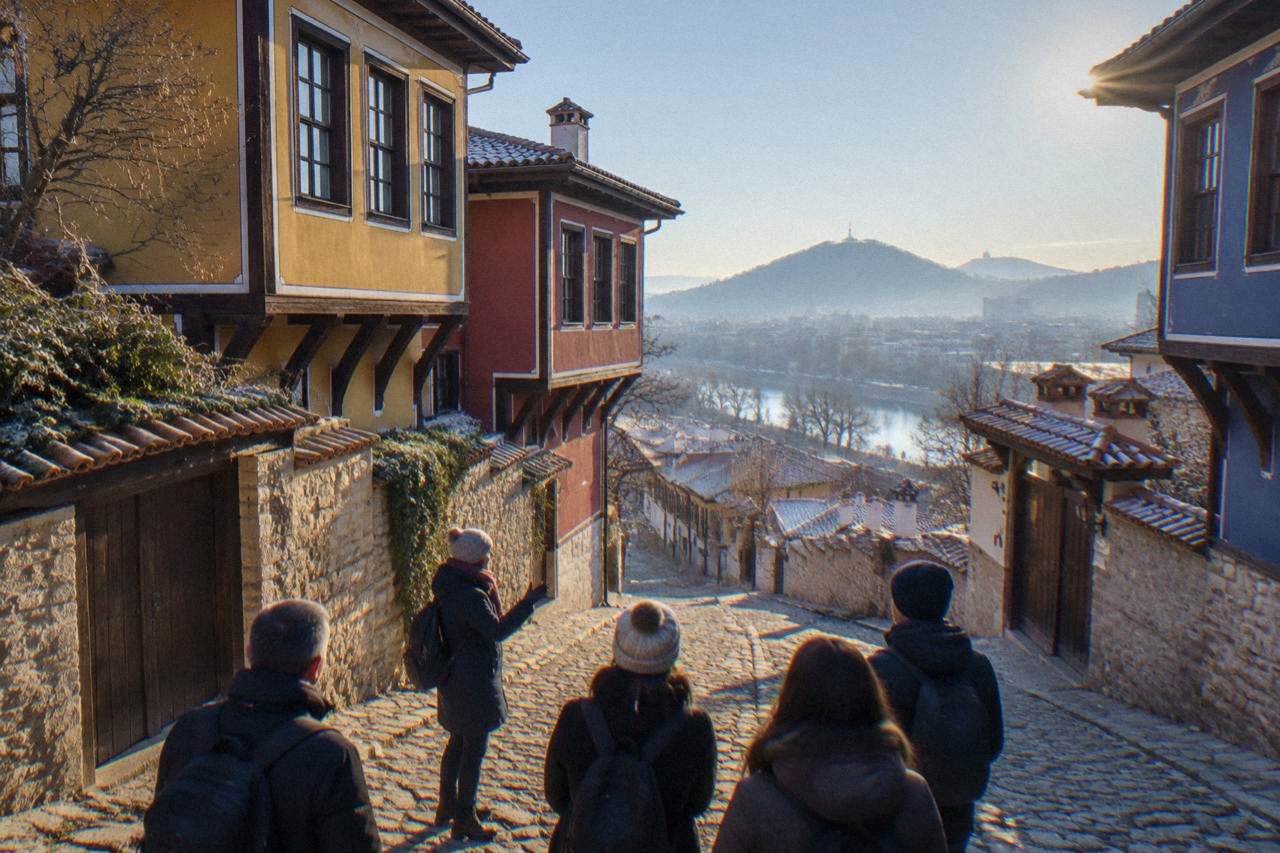
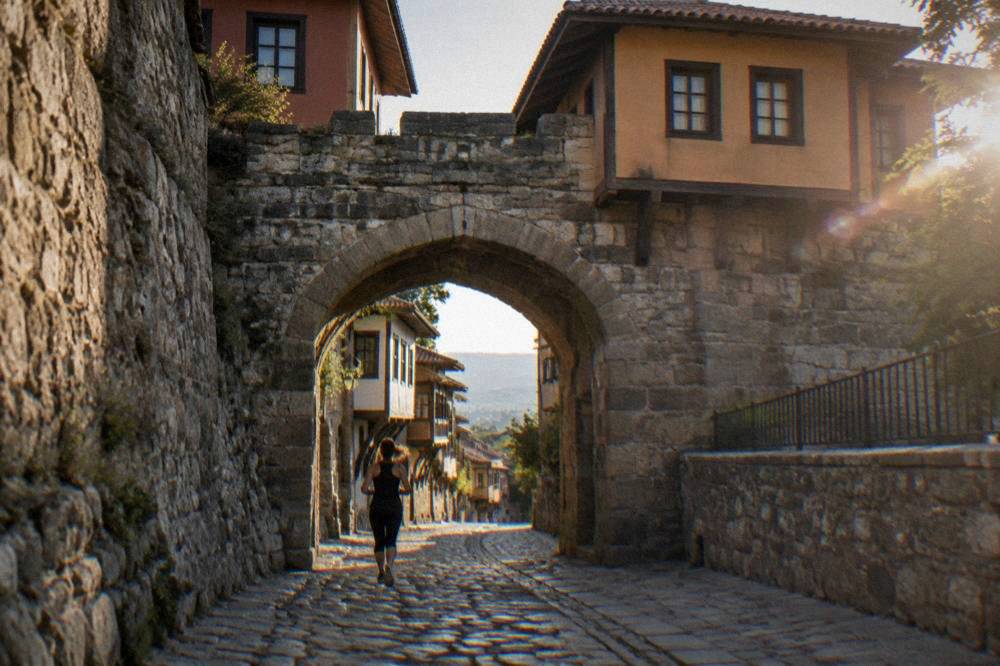
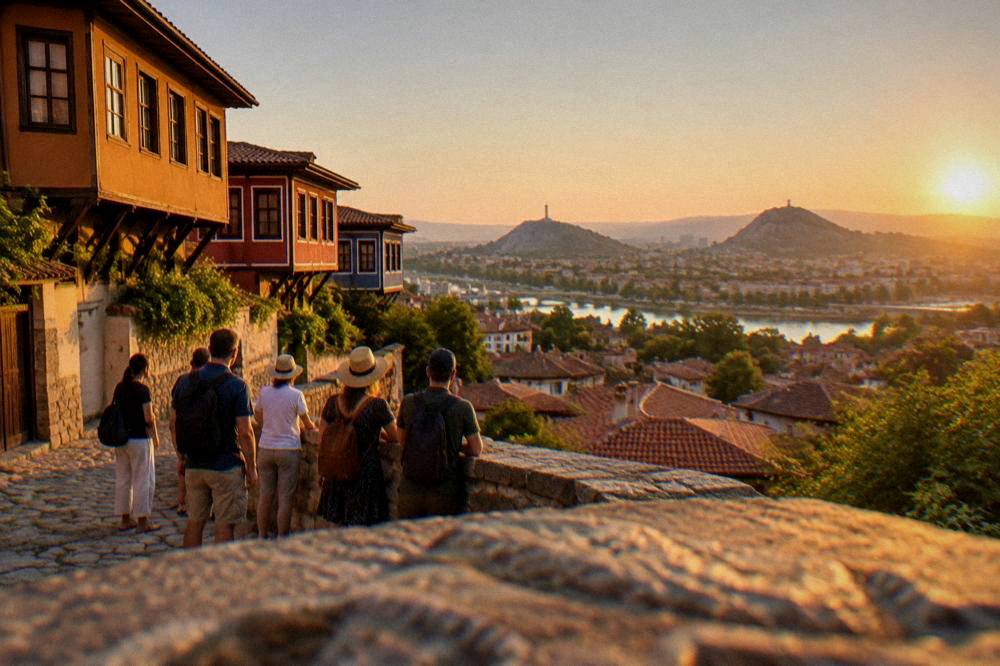
The standard tip-based route in Plovdiv links the central square and the Dzhumaya Mosque with the exposed northern curve of the Roman Stadium, climbs through Hisar Kapia into the Old Town revival houses, reaches the Nebet Tepe lookout over the Three Hills, and finishes by dropping into the Kapana creative district, whose name means "The Trap" for its maze of narrow streets. Every one of those stops is public space, so the walk itself never needs a ticket.
The route works because Plovdiv's centre is compact and stacked in layers. The walk usually opens at the flat city level, where the Roman Stadium survives in fragments beneath the modern Main Street, then rises into the Old Town on the Three Hills. Along the way the guide points out the Dzhumaya Mosque, a working mosque and the second-largest in Bulgaria by built area at about 1,500 square metres, free to visit outside prayer times with modest dress. The mosque's construction date is deliberately vague in the city's own materials: sources give years between the 14th and 16th centuries, and a guide who states one firm year is oversimplifying.
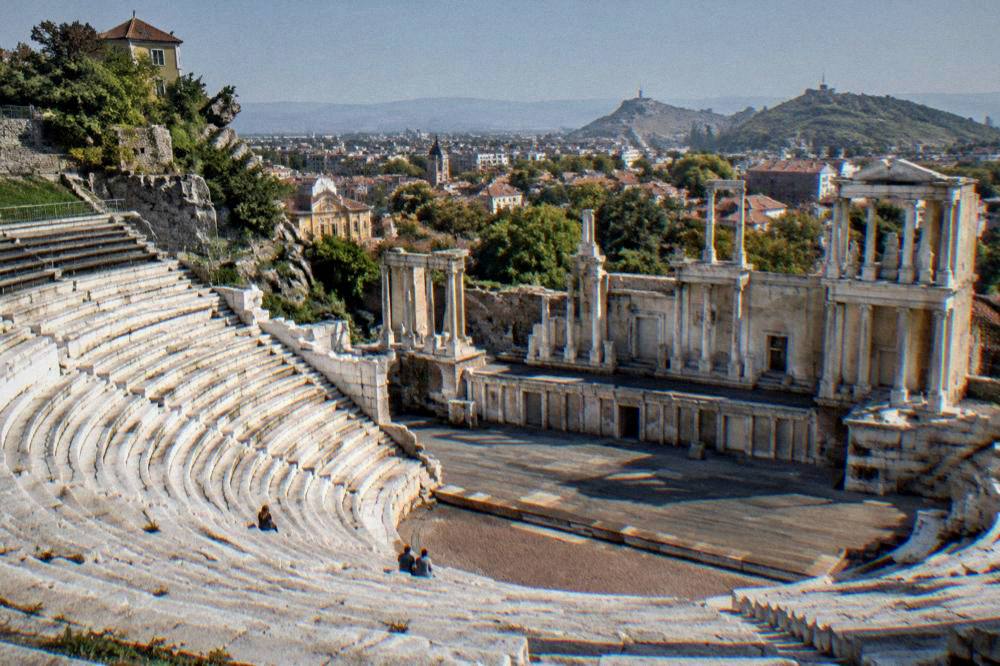
In the Old Town the walk passes the painted facades of houses like Balabanov House and Hindliyan House, which are ticketed museums inside, and the Ancient Theatre of Philippopolis, built in the 90s of the 1st century AD with 28 concentric rows of marble seats, which charges admission to enter but can be glimpsed from public ground nearby. The high point, in both senses, is Nebet Tepe, where the city's tourism site dates the first settlement to the 4th millennium BC. The restoration of the complex finished and it officially opened in March 2025, and access is free. The descent ends in Kapana, the artisan quarter whose name the municipal tourism site translates as "The Trap".
For walkers who want to go deeper on a single sight afterwards, this site carries dedicated pages, including the Ancient Theatre guide, the Roman Stadium explained and the Nebet Tepe walkthrough.
The Route Stop By Stop
| Stop | What It Is | Cost To Walk Past | Cost To Enter |
|---|---|---|---|
| Central Square and Main Street | Modern pedestrian spine over Roman remains | free | free |
| Roman Stadium sphendone | Exposed northern curve of a 2nd-century AD stadium | free in the open air | 3D hall 3.68 euro adult, reported |
| Dzhumaya Mosque | Working mosque, free to visit outside prayer times | free | free, modest dress |
| Hisar Kapia | Public Ottoman-era gate into the Old Town | free | free |
| Old Town revival houses | Ticketed house museums (Balabanov, Hindliyan and others) | free to walk the streets | 3.58 euro per site, reported |
| Nebet Tepe | Open-air archaeological hilltop complex | free | free |
| Kapana | Creative district, name means "The Trap" | free | free |
How Much Should You Tip On A Plovdiv Free Walking Tour?
There is no fixed tip, and the walk's operator publishes none: the standard practice on tip-based walks across the Balkans is to hand the guide cash at the end, with amounts typically ranging from about 10 to 20 euro per person for a satisfying city walk, more for a private-feeling small group, and less for a short or crowded one. The tour price itself is zero, so the tip is the entire payment, and the guide will not ask for a specific sum.
Because the tip is cash-in-hand, plan for it practically. Small denominations help, since a guide juggling a group cannot make change easily. If the walk was excellent, say so when you hand it over: on a tip-based model the feedback and the payment are the same gesture.
A fair way to calibrate is to ask what a paid alternative would cost. This site lists paid guided walks of the same core sights, and their from-prices render on their listings. If the free walk delivered the same ground with the same depth, a tip in the same region is honest; if the group was enormous and the guide rushed, walkers adjust downward. The model self-regulates, which is precisely why it has spread.
How Does A Free Walk Compare With Paid Guided Tours In Plovdiv?
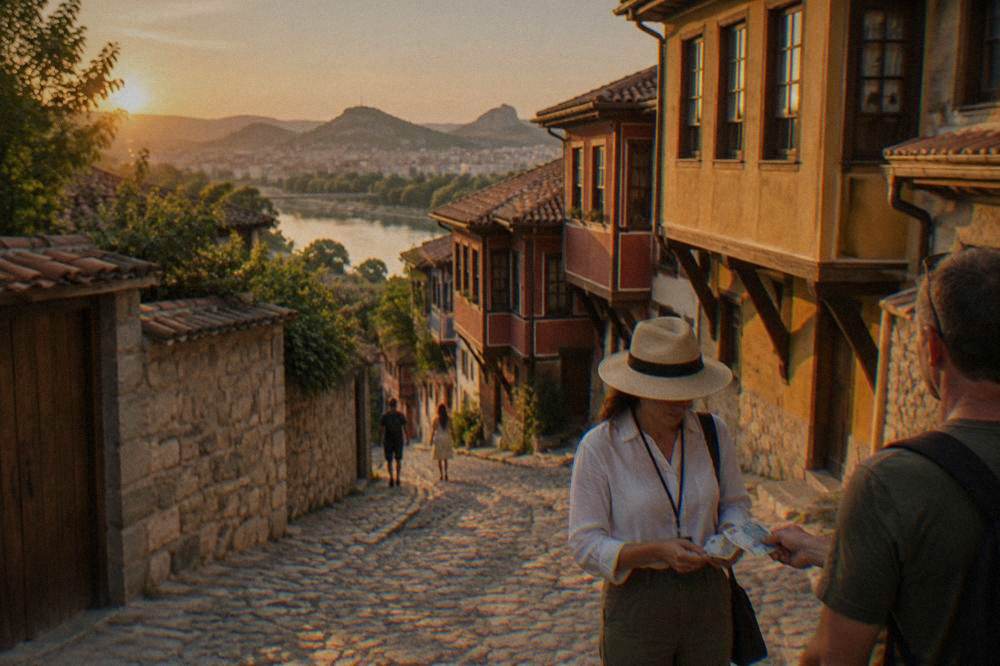
The real difference is scope and depth, not quality: a tip-based walk gives you the central highlights in a group of mixed strangers, while paid options add fixed itineraries, guaranteed small groups or private guides, thematic routes such as food or Jewish heritage walks, and day trips out of the city to Bachkovo Monastery, Asen's Fortress or Koprivshtitsa that a city-centre free walk never touches. Price is the wrong axis to compare on, because the free walk's price is zero by design.
The free walk's strength is the zero-risk first orientation. It suits a first morning in the city, when you want someone to fix the geography of the Three Hills, the Main Street and Kapana in your head before you explore alone. Its weakness is that it cannot enter ticketed sights without slowing the group, and its content has to serve everyone from school groups to retired historians.
Paid walks buy specificity. The listings this site carries include a classic guided city walk, an Old Town and Roman Theatre focused walk, a private walking option, a Jewish heritage walk, an audioguide format for walkers who prefer their own pace, and food walks that pair the streets with tastings. Then there are the day trips: Plovdiv works as a base for Asen's Fortress and Bachkovo Monastery to the south, Koprivshtitsa to the north, and the Rhodope mountains beyond, none of which a central free walk covers. The comparison table below keeps the axes straight.
Free Walk Versus Paid Options
| Option | Format | What It Adds Over The Free Walk |
|---|---|---|
| Tip-based free walk | Group, city centre, no ticket price | Orientation, low commitment, tip only |
| Old Town and Roman Theatre walk | Paid walk focused on two sights | Deeper commentary inside the core sights |
| Private city walk | Private guide | One-to-one pace, customisable route |
| Food walk | Paid group walk with tastings | Bulgarian dishes and tastings along the route |
| Day trips from Plovdiv | Coach or minibus out of the city | Bachkovo, Asen's Fortress, the Rhodopes, Koprivshtitsa |
For walkers weighing the self-guided alternative, this site's Plovdiv self-guided walk covers the same ground at your own pace, and the free things to do in Plovdiv page lists the no-cost sights in full.
Which Sights On The Route Are Free, And Which Charge?
The genuinely free sights on and beside the route are Nebet Tepe, Hisar Kapia, the Kapana streets, the Alyosha monument hill, the open-air view of the Roman Stadium sphendone and the Dzhumaya Mosque, while the Ancient Theatre, the Bishop's Basilica, the Old Town revival houses and the Roman Stadium's 3D hall all charge, with the single-site Old Plovdiv ticket reported at 3.58 euro adult and the Bishop's Basilica at 7.57 euro adult.
The single-site ticket covers any one Old Plovdiv site except the Bishop's Basilica, and a combined ticket for up to five sites is reported at 10.74 euro adult. The combined ticket's validity period is not published, so confirm it at the gate before relying on it. Present all figures as reported and check at the ticket desk, since the institute adjusts its list.
Ticketed Sights Reported By The Old Plovdiv List
| Sight | Adult Price (reported) | Notes |
|---|---|---|
| Any one Old Plovdiv site | 3.58 euro | Theatre, revival houses, Small Basilica; pupil or student 1.53 euro |
| Combined ticket, up to 5 sites | 10.74 euro | Excludes Small and Bishop's Basilicas; validity unconfirmed |
| Bishop's Basilica | 7.57 euro | Open daily 9:00 to 18:00 |
| Roman Stadium 3D hall | 3.68 euro | Sphendone itself free in the open air |
| Ancient Theatre | one-site ticket 3.58 euro | Apr to Oct 9:30 to 18:00, Nov to Mar 9:00 to 17:30, lunch break 12:30 to 13:00 |
A practical pattern follows from these numbers. Do the free walk first, note which interiors you actually want, then buy the combined ticket only if you will use at least four sites, and do the maths on the gate. The Old Town area guide and the Kapana guide on this site go deeper on each quarter.
When Is The Best Season For A Walking Tour In Plovdiv?
Plovdiv's walkable season runs roughly April through October, with ERA5 reanalysis 1991-2020 modelled mean daily highs of 17.1 C in April, 21.9 C in May and 25.9 to 28.6 C across June to August, while January sits at 5.9 C with a mean nightly low of minus 2.6 C, so spring and autumn give the most comfortable walking weather and midsummer afternoons are better avoided for a hilly route that climbs to Nebet Tepe.
The rainfall pattern matters less than the temperature, but it is not nothing: the modelled normals put May at 56.8 mm and March at 55.0 mm as the higher-rain months, and August at 25.2 mm as the lower. Summer walks are hot but largely dry; spring walks are mild but carry a rain-jacket case. The Old Town's cobbles and the climb to Nebet Tepe argue for closed shoes with grip in any season, and in winter the same stones can be icy in shade.
Season also changes what the walk passes. Opera Open ran at the Ancient Theatre from 23 June to 9 September in 2026, and Kapana Fest's autumn edition ran across two October weekends, 2 to 4 and 9 to 11 October 2026, so a walk in those windows crosses a city in festival mode. Christmas in Plovdiv ran from 28 November 2025 to 4 January 2026 in its last edition, with the next announced for 1 December 2026 to 7 January 2027. A winter walk therefore trades warmth for a market atmosphere on the central square.
Monthly Walking Conditions, ERA5 Reanalysis 1991-2020
| Month | Mean Daily High | Mean Daily Low | Rain |
|---|---|---|---|
| Jan | 5.9 C | -2.6 C | 41.0 mm |
| Apr | 17.1 C | 6.4 C | 47.7 mm |
| May | 21.9 C | 11.5 C | 56.8 mm |
| Jul | 28.2 C | 17.9 C | 45.6 mm |
| Aug | 28.6 C | 18.1 C | 25.2 mm |
| Oct | 18.1 C | 8.8 C | 44.1 mm |
These are modelled grid-cell normals, not a station record, and reanalysis smooths urban heat, so treat them as planning ranges rather than a forecast.
Is A Free Walking Tour In Plovdiv Right For Your Trip?
A tip-based walk is the right call for a first visit, a short stay or a tight budget, because it delivers the core geography of the Six Hills city at a price of zero plus a tip, while it is the wrong call if you want interiors, a fixed small group, a theme such as food or Jewish heritage, or a trip beyond the city to the Rhodopes or Bachkovo Monastery, where paid products are the only realistic option.
Match the format to the trip, not the other way round.
For a one-day visit, the free walk plus a combined ticket for the interiors is a coherent plan, and the Plovdiv in one day itinerary shows how to sequence it. For two days or more, do the free walk on the first morning, then spend the second day out of town: the listings this site carries include monastery and fortress trips and Rhodope routes, and the Rhodopes day tour page covers the mountain option.
Two practical footnotes close the decision. First, Plovdiv has no official city card of any kind, so do not plan around one; the combined tickets listed above are the only bundling that exists. Second, arrival logistics matter more than the walk itself for timing: direct trains from Sofia take about 2 h 40 to 3 h 05 per the BDZ timetable, and the Sofia to Plovdiv guide covers the connections, while travellers already in Plovdiv can simply walk to the announced meeting point.
Common Questions About Free Walking Tours In Plovdiv
Is a free walking tour in Plovdiv really free?
Yes, in the sense that there is no ticket price. The walk is tip based: you reserve a place on the operator's live listing, join the guide at the announced meeting point, and hand the guide a cash tip at the end based on what you thought the walk was worth.
Where do free walking tours in Plovdiv meet?
Tip-based walks in Plovdiv meet at central, easy-to-find points, typically near the Dzhumaya Mosque or the central square. The exact point and start time are set by the operator and can change with the season, so confirm both on the live listing before you set out.
Does the free walking tour enter the Ancient Theatre?
No. The route moves through public space, and the Ancient Theatre of Philippopolis charges admission, reported at 3.58 euro for the single-site Old Plovdiv ticket. The walk pauses outside; if you want the interior, buy a ticket before or after the walk.
How much should I tip the guide?
There is no published amount. Common practice on tip-based walks is roughly 10 to 20 euro per person for a satisfying city walk, adjusted up for small groups and down for crowded ones. Bulgaria has used the euro since 1 January 2026, so bring euro cash in small notes.
Can I do the same route without a guide?
Yes. Every stop on the standard route is public space: the Roman Stadium sphendone, Hisar Kapia, the Old Town streets, Nebet Tepe and Kapana are all free to wander. This site's self-guided walk itinerary covers the same ground at your own pace.
Are free walking tours in Plovdiv good for kids?
The route is short enough and mostly flat until the Old Town climb, and the stops are open public spaces, so families commonly join. The climb to Nebet Tepe is on cobbles and uneven stone, so carry small children or use a sturdy buggy, and check the season, since summer afternoons are hot for the uphill stretch.