Plovdiv Self-Guided Walk: Eleven Stops Through Philippopolis
Plovdiv, in southern Bulgaria, packs a Roman theatre, a buried stadium, a hilltop fortress and a maze of artisan streets into a walkable core. This route strings them together in eleven stops.
Short answer
A self-guided walk of Plovdiv covers roughly eleven stops across the Old Town, the Roman core and Kapana. A single Old Plovdiv site ticket costs 3.58 euro for adults, the combined ticket for up to five sites is 10.74 euro, and many stops, including Nebet Tepe, Hisar Kapia and the Roman Stadium sphendone, are free. Allow a full day with breaks.
Plovdiv, Bulgaria's second-largest city, sits inland in the south of the country, built around six hills and threaded by a pedestrian Main Street that runs straight through two thousand years of urban history. The city is often described as one of the oldest continuously inhabited cities in Europe, and a walk through its core explains why: a Roman theatre, a stadium buried under the modern shopping street, a fortress hill and a revival-era Old Town all sit within about a kilometre of each other. This route strings them into eleven stops that can be done in one long day, with tickets, hours and rest points laid out stop by stop. The Plovdiv Travel Guide desk built it from what the official Old Plovdiv ticket page, the municipal tourism site and the city's own listings say, not from guesswork.
What Is The Plovdiv Self-Guided Walk Route?
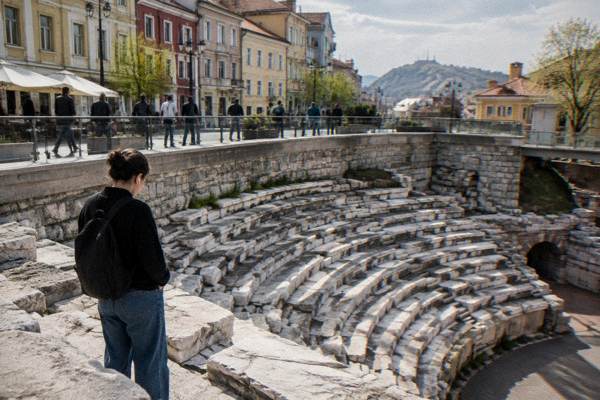
The route runs in one broad loop: it starts at the Ancient Theatre of Philippopolis on the Old Town slope, descends through the revival-era houses to Hisar Kapia, crosses into Kapana, passes the Dzhumaya Mosque and the Roman Stadium sphendone on the Main Street, then climbs Nebet Tepe before ending at the Bishop's Basilica mosaics near the central square. Eleven stops, all inside the walkable core, none more than a few minutes' stroll from the next. The order below front-loads the paid sites while legs are fresh and leaves the free hilltop for late afternoon, when the light across the Thracian plain is at its best for photographs.
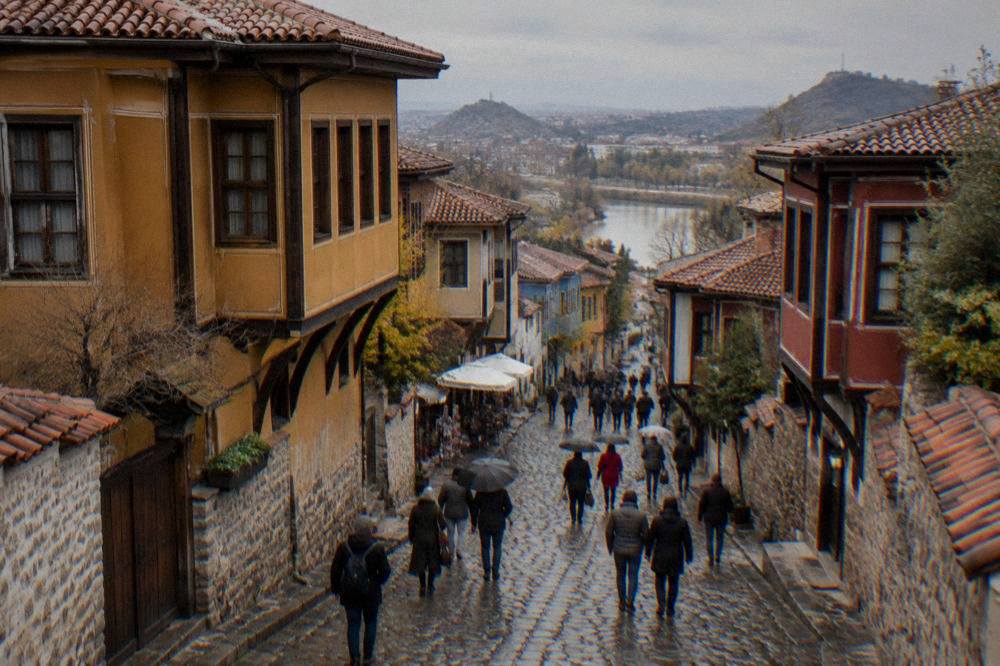
The loop works in either direction, but starting high at the Ancient Theatre and working downhill saves the steepest climb for the cool of the evening. The Old Town's cobbles are uneven in places, so shoes with grip matter more than speed. There is no need for a car at any point: every stop in this itinerary is reachable on foot from the central square area, and the whole route stays inside the belt of the six hills.
Here is the full sequence, with what each stop is and what it costs:
| Stop | What It Is | Ticket |
|---|---|---|
| 1. Ancient Theatre of Philippopolis | 1st-century Roman theatre, 28 concentric rows of marble seats | 3.58 euro adult, one-site ticket |
| 2. Balabanov House | Revival-era house museum in the Old Town | 3.58 euro adult, one-site ticket |
| 3. Hindliyan House | Old Town house with painted interiors | 3.58 euro adult, one-site ticket |
| 4. Hisar Kapia | Ottoman-era gate into the Old Town | Free, public space |
| 5. Kapana | Creative district, name means "The Trap" | Free, open streets |
| 6. Dzhumaya Mosque | Working mosque, free to visit outside prayer times | Free |
| 7. Roman Stadium sphendone | Northern curve of a 2nd-century stadium, open air | Free to view |
| 8. Roman Stadium 3D hall | Visitor centre under the Main Street | 3.68 euro adult |
| 9. Nebet Tepe | Hilltop archaeological complex, oldest settlement layer | Free |
| 10. Regional Ethnographic Museum | Bulgaria's large ethnographic collection in a revival house | About 3.07 euro adult |
| 11. Bishop's Basilica | 4th to 6th century basilica with over 2,000 sq m of floor mosaics | 7.57 euro adult |
The order above mixes paid and free stops deliberately, so the day never becomes a queue of ticket desks. A deeper background on the Roman layer of the city is in the site's Roman Plovdiv overview, which pairs well with this route if the history is the reason for the trip.
How Long Does The Walk Take, And When Should You Start?
A realistic pace is five to six hours of actual walking and site visits for all eleven stops, spread across a full day from mid-morning to early evening, with a long lunch in Kapana and a coffee stop on the Main Street. The Old Plovdiv sites share a common timetable, April to October 9:30 to 18:00 and November to March 9:00 to 17:30, with a lunch break from 12:30 to 13:00 at the ticketed sites, so a 9:30 start in the warm months catches every door open and leaves the free hilltop for the end of the day.
Morning light falls on the Ancient Theatre's seating rows from the east, which photographers will want for stop one. The lunch break at the ticketed sites is a natural window to be in Kapana anyway, since the district's kitchens and courtyards are the obvious midday halt. Afternoon suits the descent to the flat Main Street, where the Roman Stadium sphendone sits in the open air, and the final climb to Nebet Tepe rewards the day's last effort with the whole city laid out below.
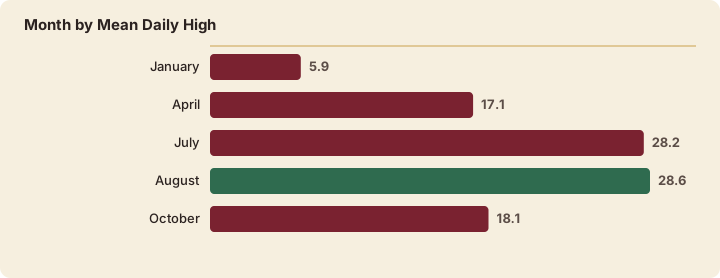
Season matters for the timing. The ERA5 reanalysis, 1991-2020, puts the mean daily high at 28.2 C in July and 28.6 C in August, against 5.9 C in January, so summer walkers should start early and shift the hill climbs to the morning, while winter days are short enough that a 9:00 opening start is the only way to fit everything. Rain changes the plan less than you might think, and the site has a separate Plovdiv in the rain itinerary for exactly those days.
| Month | Mean Daily High | Mean Daily Low | Rain |
|---|---|---|---|
| January | 5.9 C | -2.6 C | 41.0 mm |
| April | 17.1 C | 6.4 C | 47.7 mm |
| July | 28.2 C | 17.9 C | 45.6 mm |
| August | 28.6 C | 18.1 C | 25.2 mm |
| October | 18.1 C | 8.8 C | 44.1 mm |
What Does The Walk Cost, And Which Tickets Should You Buy?
An adult walking all eleven stops pays 3.58 euro for any one Old Plovdiv site, 10.74 euro for the combined ticket covering up to five Old Plovdiv sites, 7.57 euro for the Bishop's Basilica, which is priced separately, and about 3.07 euro for the Regional Ethnographic Museum, while Nebet Tepe, Hisar Kapia, Kapana, the Dzhumaya Mosque and the open-air sphendone cost nothing at all. The combined ticket is the obvious buy for this route, because stops one to three on the Old Town slope are all Old Plovdiv sites and the ticket covers up to five of them.
Students pay 1.53 euro for a single site and 4.09 euro for the combined ticket. A family ticket covering parents and children aged 7 to 16 is 21.47 euro combined. Children under 7 enter free, as do visitors with more than 50 percent disability.
| Ticket | Adult | Student | Family |
|---|---|---|---|
| One Old Plovdiv site | 3.58 euro | 1.53 euro | 7.16 euro |
| Combined, up to 5 sites | 10.74 euro | 4.09 euro | 21.47 euro |
| Bishop's Basilica (separate) | 7.57 euro | 3.58 euro | 15.34 euro |
| Roman Stadium 3D hall | 3.68 euro | 1.23 euro | not listed |
| Ethnographic Museum | about 3.07 euro | about 1.02 euro | 5.11 euro |
Two cautions from the official pages. The combined ticket excludes the Small Basilica and the Bishop's Basilica, so the basilica mosaics at stop eleven always need their own ticket. The validity period of the combined ticket is not published, so confirm at the desk how long yours lasts before planning a two-day split. The first Thursday of the month brings free entry at the Regional History Museum, and students and seniors get free first-Thursday entry at Old Plovdiv sites, which can rearrange the budget if the dates align.
If a self-guided day turns out to be more architecture than story, a guide fills the gap. The site's featured Plovdiv guided walking tour covers the same core with a local explaining it, and Check availability if that sounds like the better use of a day. Tip-based walks also run locally, and for those the only rule is to confirm the meeting point and the tipping custom with the guide directly.
Prefer the same walk with a local telling the stories? Book a guided walking tour here.
Stops One To Four: The Ancient Theatre And The Old Town Houses
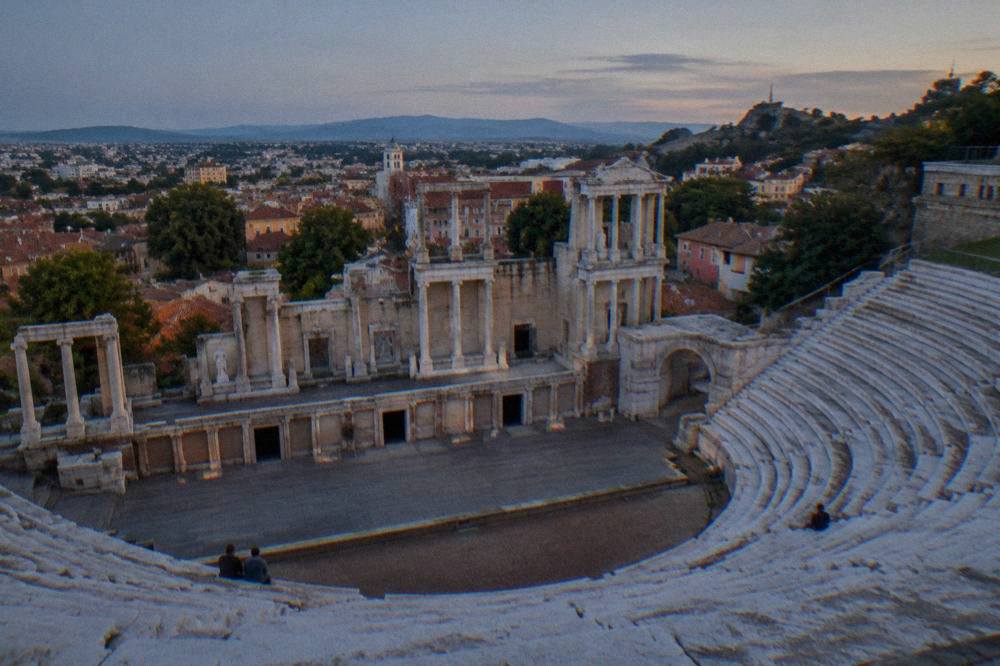
Stop one is the Ancient Theatre of Philippopolis, built in the 90s of the 1st century AD and described by the official tourism page as having 28 concentric rows of marble seats, followed by the Balabanov and Hindliyan houses on the Old Town slope and the Hisar Kapia gate at its foot, with the theatre at 3.58 euro on the one-site ticket and the houses covered by the same Old Plovdiv list. The theatre is the single most photographed space in the city, and the official page gives no seat-capacity figure, only the row count, so this page does the same.
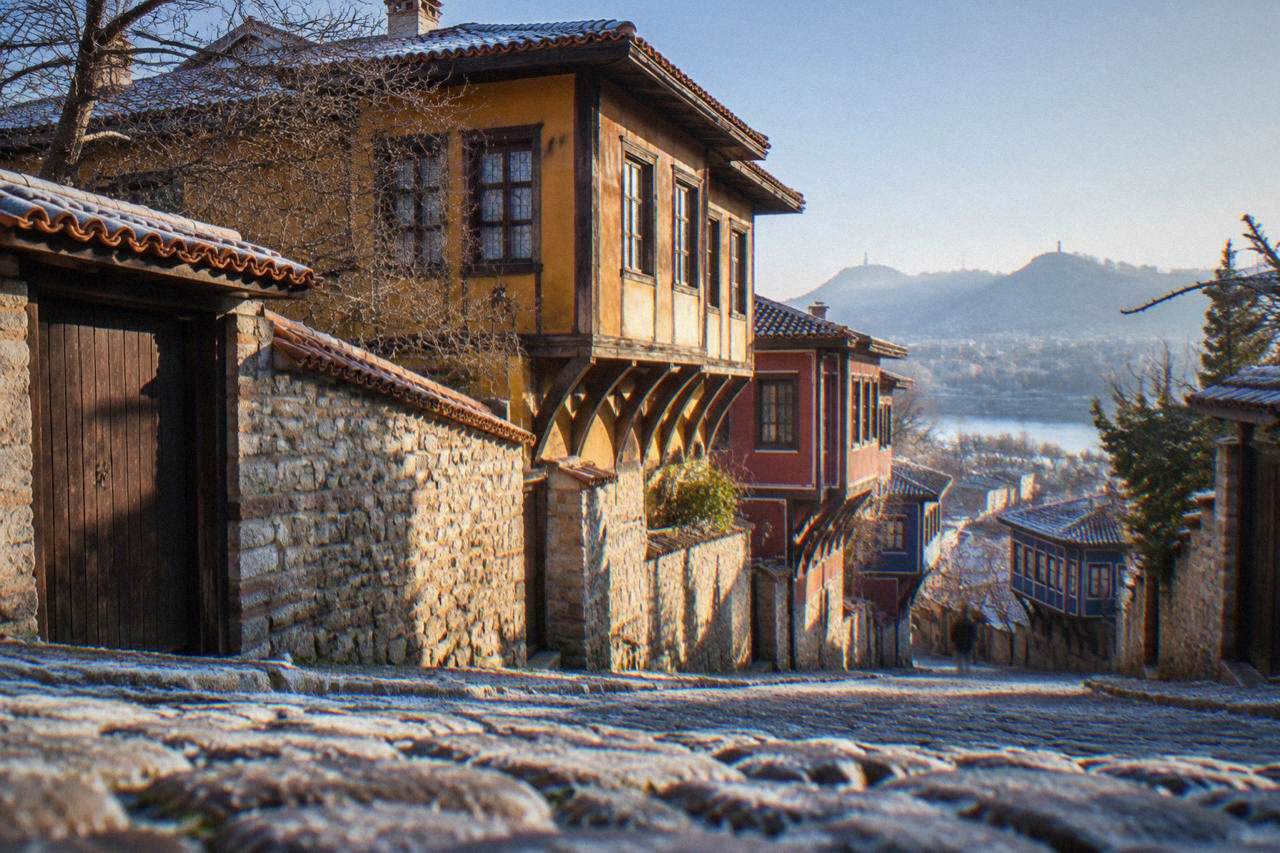
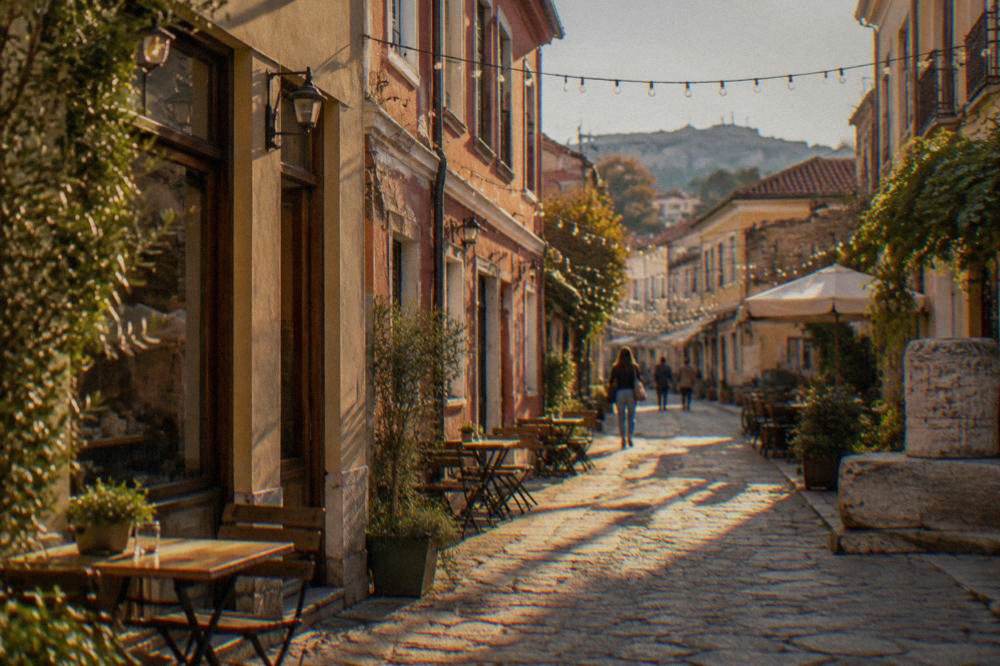
From the theatre, the route drops through the Old Town's revival-era streets. Balabanov House and Hindliyan House are the two house museums worth the interior time: both are on the Old Plovdiv ticket list, and a report from the autumn of 2026 says Hindliyan House now opens every day. The Old Town as a whole is not a UNESCO World Heritage Site, a point worth knowing because many summaries get it wrong: "The Ancient Plovdiv" sits on Bulgaria's Tentative List, submitted in 2004, which is a waiting list rather than an inscription. The site's Ancient Theatre page and the Balabanov House page carry the detail on each building.
Hisar Kapia, stop four, is a gate and a public space, free and open at all hours, where the Old Town's slope meets the flat city. The gate is the natural turn point of the route: everything above it is hills and houses, everything below is Roman flatland and commerce.
Stops Five To Seven: Kapana, The Mosque And The Buried Stadium
Stop five is Kapana, the creative district whose name means "The Trap", a free maze of narrow streets, stop six is the Dzhumaya Mosque, free to visit outside prayer times, and stop seven is the Roman Stadium sphendone, the open-air northern curve of a 2nd-century stadium that held up to 30,000 spectators, visible without a ticket. All three sit within a few minutes of one another on the flat ground between the Old Town and the Main Street, and none of the three requires a purchase.
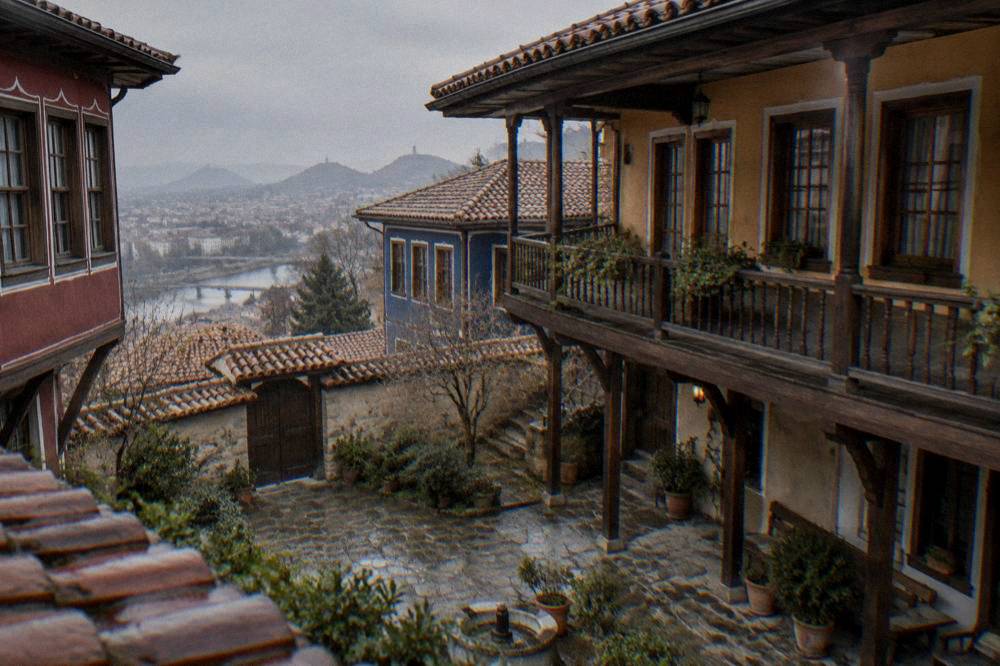
Kapana is where the long lunch belongs. The municipal tourism site explains the district's name as "The Trap", from the tangle of narrow streets that made visitors lose their way, and today the trap catches you in bookshops, studios and kitchens rather than dead ends. The Dzhumaya Mosque, a working mosque and the second-largest in Bulgaria by built area at about 1,500 square metres, welcomes visitors outside prayer times, with modest dress expected and shoes off inside. Its construction year is uncertain.
The Roman Stadium is the stop that reorganises how you see the city. Built in the 2nd century AD on the model of the stadium at Delphi, it lies mostly under the modern Main Street, with only the northern part, the sphendone, accessible, unearthed in the 1970s. Standing at the exposed curve and then looking up at the shops above makes the layering of the city physical. The site's Roman Stadium page has the full story, and the Ethnographic Museum sits close enough to slot in as stop ten without backtracking.
Stops Eight To Eleven: The 3D Hall, Nebet Tepe, The Museum And The Basilica
Stop eight is the Roman Stadium's 3D projection hall at 3.68 euro for adults, stop nine is Nebet Tepe, the free hilltop archaeological complex where the city's settlement layer began, stop ten is the Regional Ethnographic Museum at about 3.07 euro, and stop eleven is the Bishop's Basilica, about 83 m long and 36 m wide, whose two layers of floor mosaics cover over 2,000 square metres, at 7.57 euro. The last four stops move from underground to hilltop to mosaic floor, and the basilica is the natural finale.
The 3D hall reconstructs the stadium that the Main Street now buries, which is the point of it: you have just stood in the surviving curve, and the projection shows you the whole. Nebet Tepe then takes you to the beginning, the hill where the city's tourism site dates the first settlement to the 4th millennium BC. The complex's restoration was finished and officially opened in March 2025, and access is free, with no ticket and no closing gate on the open-air hill. The Nebet Tepe page covers what the excavations show.
The Regional Ethnographic Museum, closed Mondays, holds the national-scale collection inside a revival house, and its adult price of about 3.07 euro comes from the museum's own listing. The Bishop's Basilica, open daily 9:00 to 18:00, is the largest 4th to 6th century basilica in Bulgaria, and its mosaic floors are the strongest single reason to end the walk with a paid stop rather than on the hill. The basilica is priced separately from the Old Plovdiv tickets, a quirk of the official price list that catches out walkers who assume the combined ticket covers everything.
Where To Eat And Rest Along The Walk?
Kapana is the lunch stop the route is built around, with the Main Street's cafes covering the coffee breaks, and the day's two natural rest points are the long midday break in the creative district and a short stop near the central square before the final basilica visit. The ticketed Old Plovdiv sites all close their tills for a 12:30 to 13:00 lunch break, which conveniently forces the walker out of museum mode and into a chair at the same hour the kitchens fill up.
No individual restaurant, cafe or bar is named on this page, because none was checked against its own listing, and a recommendation with an invented address is worse than none. The shape of the day holds up: Kapana's open streets hold the creative district's kitchens and studios, the Main Street is the pedestrian spine lined with cafes, and the central square area sits at the foot of the final basilica stop. Crowd-reported price levels put an espresso in Plovdiv at around 2 euro and a mid-range three-course meal for two at roughly 30 to 40 euro, figures to treat as ballpark, not promises.
| Break | Where On The Route | What For |
|---|---|---|
| Mid-morning | Old Town slope, after the theatre | Coffee before the house museums |
| Lunch, 12:30 onward | Kapana | Long break while ticket desks pause |
| Mid-afternoon | Main Street near the sphendone | Short sit-down before the hill |
| Early evening | Central square area | Drink before the basilica finale |
Water and shade matter in July and August, when the ERA5 reanalysis, 1991-2020, shows mean daily highs above 28 C, and the hill climbs have little cover. In January, at a mean daily high of 5.9 C, the same route works but wants gloves, and the views from Nebet Tepe come with a wind off the plain.
What If You Want A Guide, Or Only Have Part Of A Day?
A guided walk covers the same core in a single organised block, and the site's featured option is the Plovdiv guided walking tour, which visits the Old Town's landmarks with a local guide, while walkers with only half a day should keep stops one, five, seven and nine, the theatre, Kapana, the sphendone and Nebet Tepe, which deliver the city's four distinct faces in the shortest distance. The guided option suits anyone who wants the stories attached to the stones, and the self-guided route suits anyone who wants to set their own pace and linger where a guide would move on.
The half-day cut keeps one paid stop and three free ones, so it also happens to be the budget version of the walk. The full eleven-stop version is a complete day, and travellers with more time can widen it: the site's Plovdiv in one day and Plovdiv in two days itineraries add the pacing, and Plovdiv in three days extends the stay into the hills and the Thracian plain beyond.
For visitors arriving from the capital, the guided day trips from Sofia bundle the transfer with the walk, which removes the train planning entirely. The Plovdiv train station guide covers the arrival side for anyone doing the route independently, including the station works that the railway junction modernisation has been running through 2026.
An audio-guided option also exists for walkers who want narration without a fixed group time, and it covers the Old Town and the Roman landmarks that this route passes. Check availability if a set-your-own-hours commentary fits the plan better than a scheduled departure.
What Should You Know Before Setting Out?
Bring the euro, not the lev, since Bulgaria adopted the euro on 1 January 2026, expect the Old Town's cobbles to demand proper shoes, plan the ticketed stops around the 12:30 to 13:00 lunch break, and check the first Thursday of the month for free-entry days at the museums. Bulgaria is a full Schengen member since 1 January 2025, so travellers moving from elsewhere in Schengen cross no internal land border checks, and the Entry/Exit System now registers biometrics at external borders instead of passport stamps.
A few practicalities complete the picture. The emergency number is 112, the standard EU-wide number. Plugs are type C and F at 230 V. Tipping runs at around 10 percent in restaurants for good service, common rather than compulsory. The city's e-ticket for buses is 0.50 euro, though this walk needs no bus at any point. A tourist tax may be charged by your accommodation, so confirm the amount at booking.
| Practicality | The Detail |
|---|---|
| Schengen | Full member since 1 January 2025 |
| Ticketed-site hours | Apr to Oct 9:30 to 18:00, Nov to Mar 9:00 to 17:30, lunch 12:30 to 13:00 |
| Free days | First Thursday of the month, museums |
| Emergency number | 112 |
| Plugs | Type C and F, 230 V |
Common Questions About The Plovdiv Self-Guided Walk
Can you walk Plovdiv without a guide?
Yes. The eleven stops on this route are all inside the walkable core, the Old Plovdiv sites share one ticket system, and the free sights, including Nebet Tepe, Hisar Kapia, Kapana and the Roman Stadium sphendone, need no booking or guide at all.
How much does a self-guided walking tour of Plovdiv cost?
An adult visiting the paid stops pays 3.58 euro for one Old Plovdiv site or 10.74 euro for the combined ticket covering up to five, plus 7.57 euro for the Bishop's Basilica, which is priced separately, and about 3.07 euro for the Ethnographic Museum. Students pay 1.53 euro for a single site.
How long does the walk take?
Plan a full day, roughly five to six hours of walking and site visits plus breaks, starting at 9:30 in the warm months when the ticketed sites run to 18:00. A half-day cut keeping the theatre, Kapana, the sphendone and Nebet Tepe works if time is short.
Is Plovdiv Old Town a UNESCO site?
No. "The Ancient Plovdiv" is on Bulgaria's UNESCO Tentative List, submitted in 2004, which is a waiting list, not an inscription. The Old Town is a protected historic district under Bulgarian care regardless.
What is the best time of day to start?
A 9:30 start in April to October catches every ticketed site at opening, front-loads the Old Town climb while it is cool, and leaves the free Nebet Tepe hilltop for the evening light. In November to March the sites open at 9:00 and close at 17:30.
Do I need to book anything in advance?
Not for the walk itself: Old Plovdiv tickets are bought at the sites and the free stops need nothing. A guided walk is the one element worth booking ahead, and even those usually come with free cancellation, so the self-guided day can be swapped late if plans change.
The route ends where the city began, on the mosaic floors of the basilica with the hills behind you, and every stop between is a layer of the same long story, walked in a single day at your own pace.