Old Town: Cobbled Lanes And Revival Houses On Three Hills
Plovdiv Old Town spreads across three of the city's six hills, mixing Roman ruins with National Revival houses painted in ochre and blue. Here is what the official ticket list charges, when the sites open, and how to walk it.
Short answer
Plovdiv Old Town sits on the Three Hills, the Dzhambaz, Nebet and Taksim group in the centre of Plovdiv. A single Old Plovdiv site costs 3.58 euro, the combined ticket for up to five sites costs 10.74 euro, and the Bishop's Basilica is priced separately at 7.57 euro.
Plovdiv Old Town climbs the Three Hills in the centre of Plovdiv, a city in southern Bulgaria, inland and built around six hills, with no sea coast anywhere near it. The quarter layers a Roman theatre, a Roman stadium edge, a Roman gate and early Christian basilicas under and between the painted houses of the Bulgarian National Revival. "The Ancient Plovdiv" sits on Bulgaria's UNESCO Tentative List, submitted in 2004, which is a waiting list rather than an inscription. This page lays out what the Old Plovdiv ticket list charges, when the houses and museums open, which streets cost nothing, and how to fit the quarter into a day, with the background story on the city itself in the Plovdiv history guide.
What Is The Plovdiv Old Town And Where Exactly Does It Sit?
The Plovdiv Old Town is the historic quarter on the Three Hills, the Dzhambaz Tepe, Nebet Tepe and Taksim Tepe group in central Plovdiv, Bulgaria's second-largest city, an inland city in southern Bulgaria with no sea coast. The city was built around six hills, not seven: there were seven until quarrying partly destroyed Markovo Tepe in the 1930s, and the municipal tourism site lists the six that remain, from Youth Hill at 285.5 m down to Taksim Tepe at 195 m. The Old Town occupies the group that ancient writers called Trimontium, the Three Hills, and the settlement on Nebet Tepe is dated by the city's tourism site to the 4th millennium BC, which is why Plovdiv is often described as one of the oldest continuously inhabited cities in Europe.
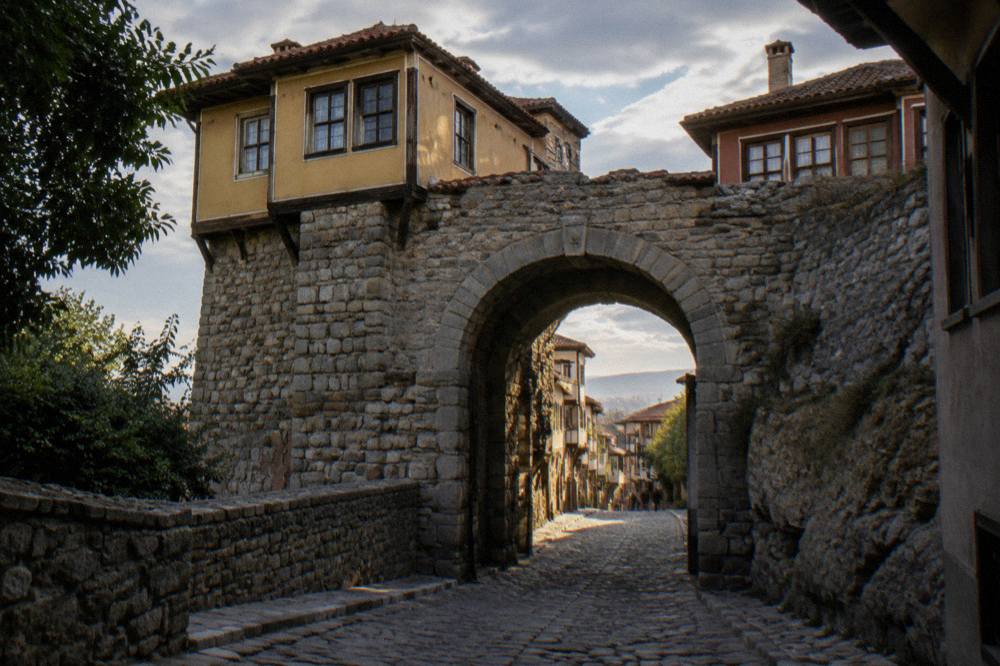
The boundaries are simple on the ground. The Old Town runs uphill from the Central Square end of the pedestrian Main Street, is capped by the open-air Nebet Tepe complex, and drops toward the Dzhumaya Mosque on one side and the Kapana creative district on the other. Hisar Kapia, a preserved medieval gate, is the landmark most people use as the back entrance, and it stands open at all hours with no ticket.
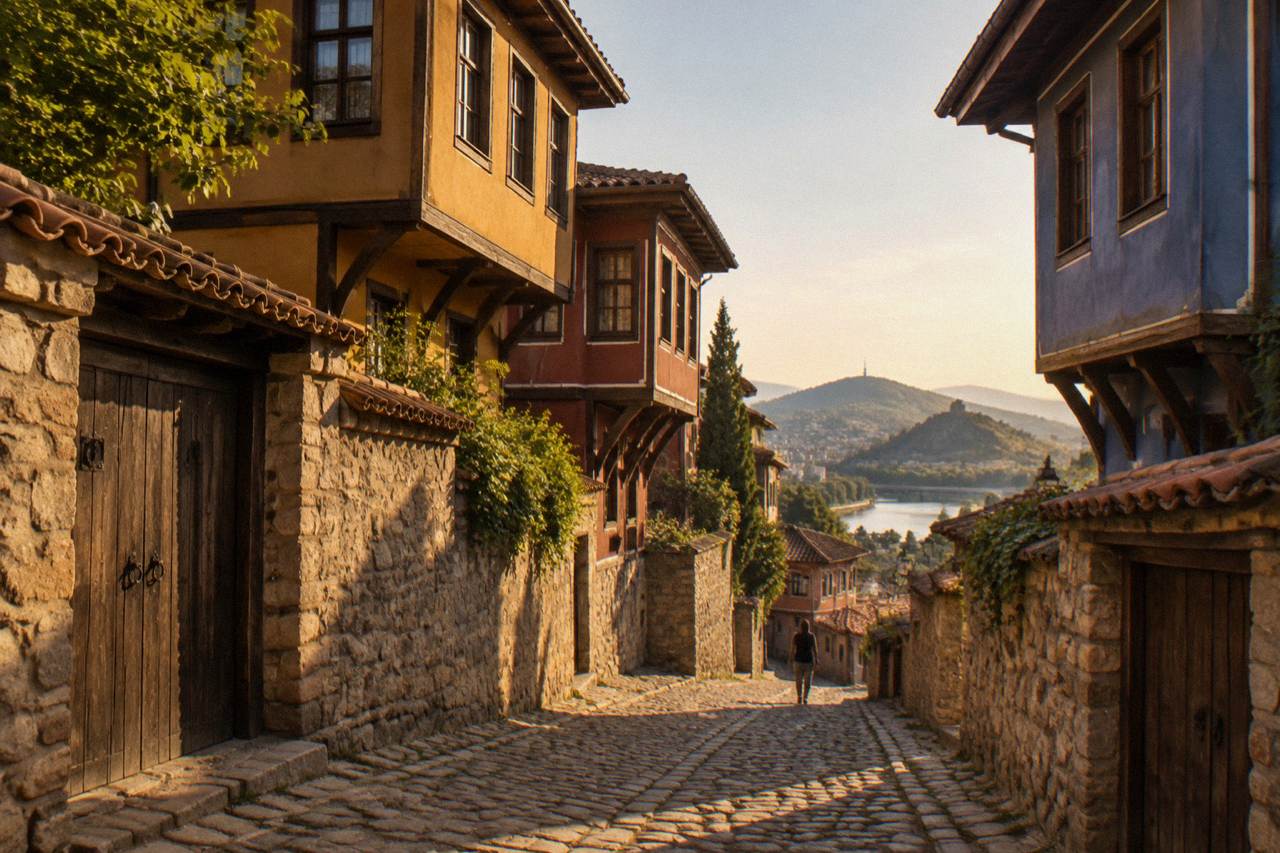
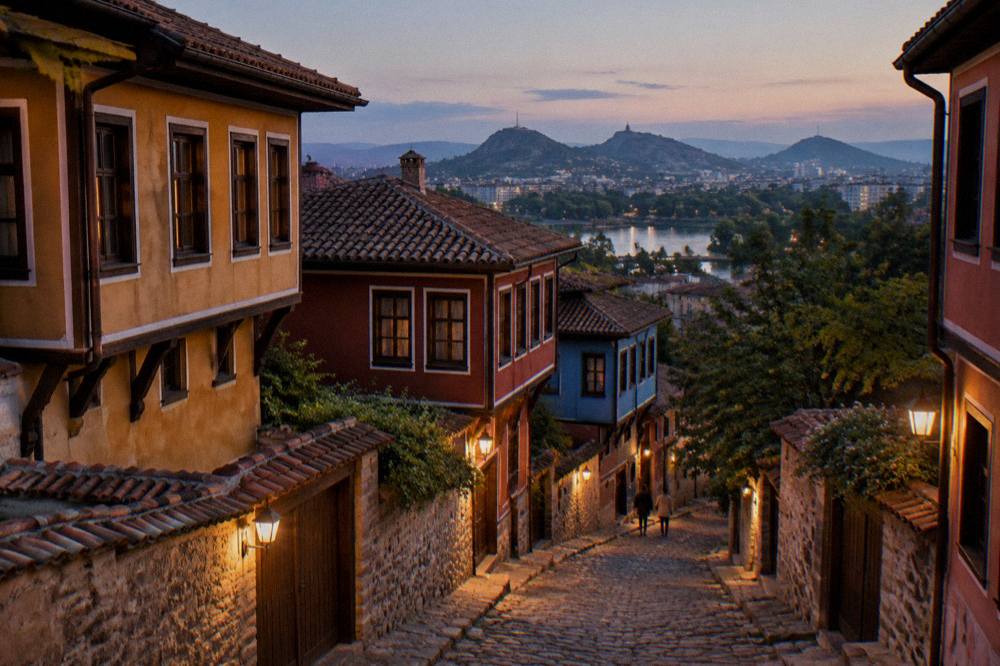
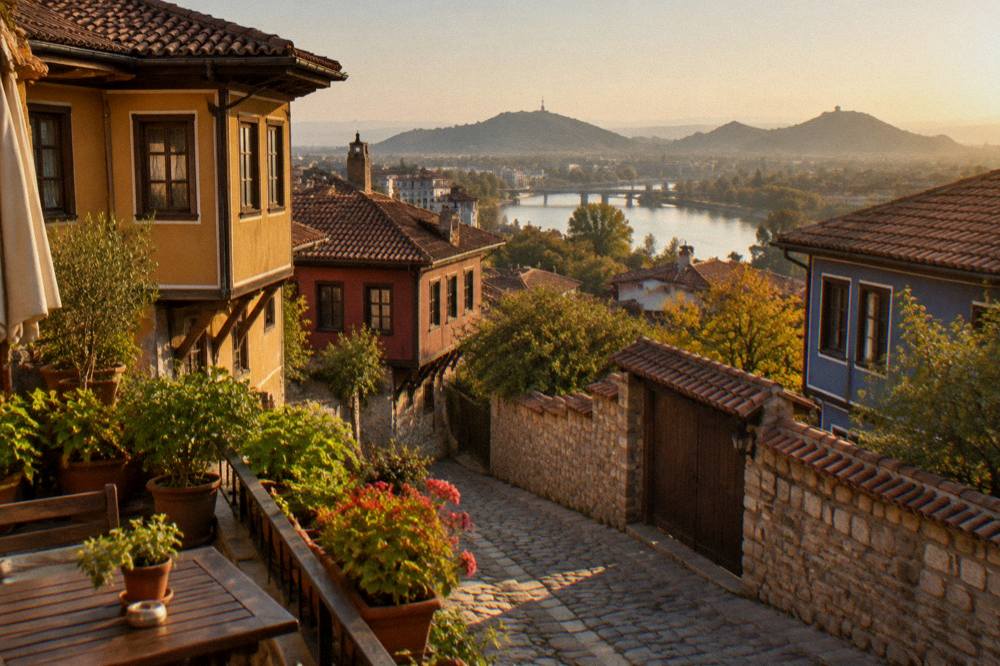
The quarter's character comes from the National Revival period, when Plovdiv merchants built large houses in the Revival style: two storeys, deep eaves, painted facades in ochre, blue and green, and salons built to overhang the street on wooden braces. Several of these houses are now museums run by the Old Plovdiv municipal institute, and their ticket prices are published together on a single official list. The hills themselves are covered in the guide to the Three Hills, which separates the Old Town group from the other three.
What Do Old Town Tickets Cost In Plovdiv?
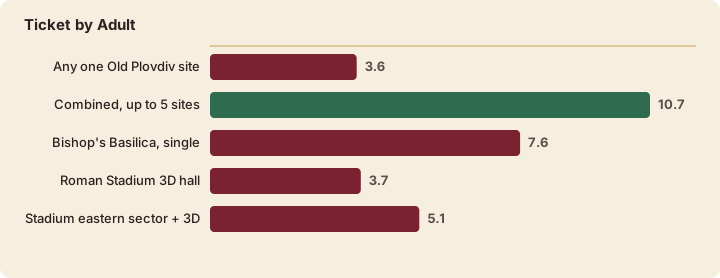
A single Old Plovdiv site costs 3.58 euro for an adult, 1.53 euro for a pupil or student, and 7.16 euro for a family of parents with children aged 7 to 16, per the official Old Plovdiv ticket list. The combined ticket, covering up to five sites but excluding the Small Basilica and the Bishop's Basilica, costs 10.74 euro for an adult, 4.09 euro for a pupil or student and 21.47 euro for a family. The Bishop's Basilica is priced on its own line: 7.57 euro for an adult and 3.58 euro for a pupil or student. Children under 7 and visitors with more than 50% disability enter free at the listed sites, and groups over 10 pay a discounted adult rate of 3.07 euro.
The single ticket covers any one site on the list except the Bishop's Basilica: the Ancient Theatre, the Small Basilica, or one of the Revival houses such as Balabanov, Nedkovich or Lamartine. The official page does not state how long the combined ticket stays valid, so plan to use it across a short visit rather than assuming it lasts days, and confirm at the desk when you buy.
| Ticket | Adult | Pupil / Student | Family |
|---|---|---|---|
| Any one Old Plovdiv site | 3.58 euro | 1.53 euro | 7.16 euro |
| Combined, up to 5 sites | 10.74 euro | 4.09 euro | 21.47 euro |
| Bishop's Basilica, single | 7.57 euro | 3.58 euro | 15.34 euro |
| Roman Stadium 3D hall | 3.68 euro | 1.23 euro | not listed |
| Stadium eastern sector + 3D | 5.11 euro | 2.05 euro | not listed |
Two museums sit in or beside the quarter with separate pricing. The Regional History Museum charges 5.00 euro for one site, 8 euro for two and 10 euro for three, with free entry the first Thursday of the month. The Regional Ethnographic Museum in the Kuyumdzhiev House, the flagship Revival house museum, is closed on Mondays and charges about 3.07 euro for an adult. Prices for the Regional Archaeological Museum are not published on its own page, so confirm there before visiting.
Which Revival Houses Are Worth Entering In Plovdiv Old Town?
Balabanov House, Hindliyan House and Nedkovich House are the three most-visited Revival house museums on the Old Plovdiv list, each covered by the 3.58 euro single ticket, alongside Lamartine House and the Regional Ethnographic Museum in the Kuyumdzhiev House, which charges about 3.07 euro on its own list. Balabanov House is the reconstructed merchant house used for concerts and exhibitions, a venue as much as a museum. Hindliyan House is the one with the painted interiors and the wall niches, and it moved to daily opening in autumn 2026, so the old advice about restricted days no longer applies. Nedkovich House holds an ornate carved salon ceiling, and Lamartine House commemorates the French poet's stay in the city.
The Ethnographic Museum deserves its own hour. It is the largest house museum of the set, closed on Monday, open 9:00 to 18:00 in summer and 9:00 to 17:00 in winter, and it carries the costumes, looms and crafts displays that give the Revival period its texture. The house-by-house detail, including what each interior actually shows, is in the Balabanov House and Hindliyan House pages.
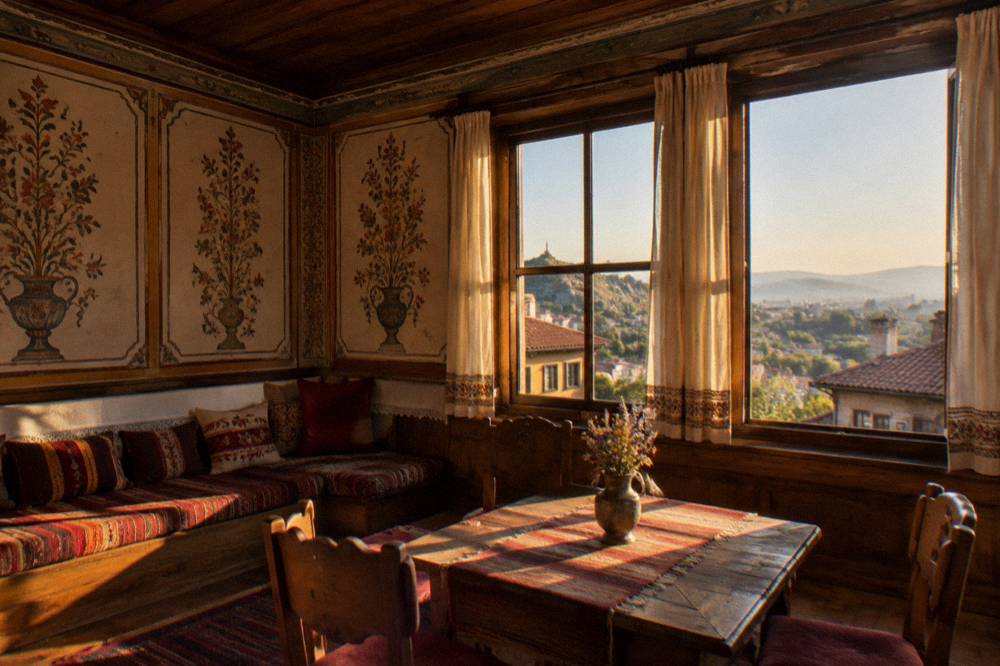
| House | What it is known for | Ticket |
|---|---|---|
| Balabanov House | Reconstructed merchant house, concerts and exhibitions | Single or combined |
| Hindliyan House | Painted interiors, wall niches, daily opening | Single or combined |
| Nedkovich House | Ornate carved salon ceiling | Single or combined |
| Lamartine House | The poet's stay in the city, small display | Single or combined |
| Kuyumdzhiev House | Regional Ethnographic Museum, costume and craft displays | About 3.07 euro, separate |
The lanes between the houses cost nothing and are arguably the point. Saborna Street is the spine of the quarter, and the cobbled side streets off it dead-end into gardens, gates and views over the plain below. Georgiadi House, now the Centre for Contemporary Art, adds a modern counterpoint inside another Revival shell, and the Georgiadi House page covers what shows there.
What Are The Opening Hours For Old Town Sites In Plovdiv?
The Ancient Theatre and the ticketed Roman sites open daily year round, from 9:30 to 18:00 between April and October and 9:00 to 17:30 between November and March, with a lunch break from 12:30 to 13:00, per the Old Plovdiv site pages. The Bishop's Basilica keeps daily hours of 9:00 to 18:00 all year. The house museums vary: the Ethnographic Museum closes on Monday, and the Archaeological Museum on Saedinenie Square is also closed on Monday, open Tuesday to Sunday 10:00 to 18:00. Public spaces, meaning Nebet Tepe, Hisar Kapia, the lanes and Kapana, have no hours at all.
Plan around two things. First, the lunch break is real and short, and arriving at 12:35 means twenty-five minutes on a bench with a view, which is not the worst outcome in the world. Second, Monday thins the options: the paid Roman sites stay open, but both the Ethnographic Museum and the Archaeological Museum shut, so a Monday visit becomes an outdoor day.
| Site | Days | Hours | Cost |
|---|---|---|---|
| Ancient Theatre of Philippopolis | daily | Apr to Oct 9:30 to 18:00; Nov to Mar 9:00 to 17:30 | 3.58 euro |
| Bishop's Basilica | daily | 9:00 to 18:00 | 7.57 euro |
| Roman Stadium sphendone | open air | unrestricted viewing | free |
| Roman Stadium 3D hall | daily | Apr to Oct 9:30 to 18:00; Nov to Mar 9:00 to 17:30 | 3.68 euro |
| Ethnographic Museum | Tue to Sun | summer 9:00 to 18:00; winter 9:00 to 17:00 | about 3.07 euro |
| Regional Archaeological Museum | Tue to Sun | 10:00 to 18:00 | confirm on site |
| Nebet Tepe, Hisar Kapia, Kapana | public space | always open | free |
Free-entry days matter to a budget. The Regional History Museum is free the first Thursday of the month, a fact stated on its own admission page, and the first Thursday also brings student and senior free entry at Old Plovdiv sites per the ticket list. The Theatre's calendar carries the extra caveat that performance evenings close it to sightseers, since Opera Open runs there through the summer, from 23 June to 9 September in 2026.
How Do You Walk The Plovdiv Old Town In A Few Hours?
A sensible Old Town walk runs from the Central Square and the Roman Stadium sphendone, up Saborna Street past the house museums to the Ancient Theatre, across to Nebet Tepe, then down through Hisar Kapia into Kapana, and it fits comfortably into a half day at walking pace. The distance is short; the quarter is steep in places, on cobbles, so the time goes into footing and standing in rooms rather than covering ground. Start at the northern end so the hills unfold uphill rather than down, and end in Kapana where the cafes are.
A route in order, with the costs as they stand:
| Stop | What you get | Cost |
|---|---|---|
| Roman Stadium sphendone | The exposed northern curve of a 2nd century AD stadium | free |
| Ancient Theatre | 28 concentric rows of marble seats, built in the 90s of the 1st century AD | 3.58 euro |
| Nebet Tepe | The settlement hill, fortress walls, city views | free |
| Hindliyan or Balabanov House | A Revival interior on the single ticket | 3.58 euro |
| Hisar Kapia | The medieval gate, no ticket | free |
| Kapana | Lanes, studios, street food | free to enter |
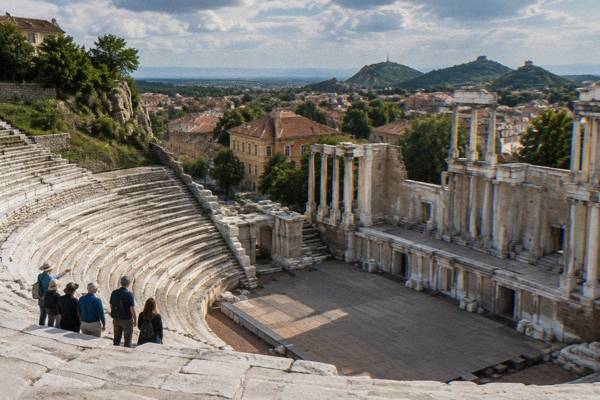
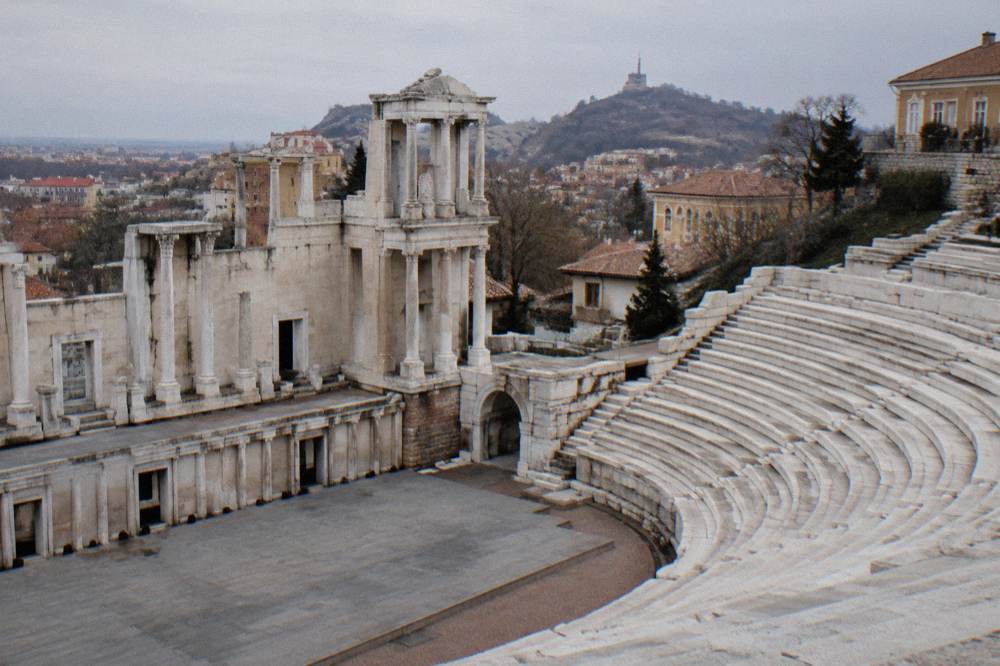
The Theatre deserves the longest stop. It was built in the 90s of the 1st century AD under Titus Flavius Cotise, according to the city's tourism site, and its official description counts 28 concentric rows of marble seats rather than a capacity figure. The stage structure still stands to a height that frames performances, and the rows face south toward the Rhodopes on the horizon. The fuller treatment of the monument, including the Opera Open season, is on the Ancient Theatre of Philippopolis page.
For anyone who prefers a guide to a map, the Old Town and Roman Theatre guided walking tour covers exactly this sequence with a guide, and Check availability works through the operator's live listing. Tip-based walks also run locally in Plovdiv; confirm the meeting point and the terms with the guide directly, since arrangements change. A structured comparison of routes, hours and seasons sits in the one day in Plovdiv itinerary.
Where Do The Roman Sites Sit Inside The Plovdiv Old Town?
Four Roman monuments frame the Old Town: the Ancient Theatre on the south slope, the Roman Stadium's sphendone at the northern foot, the Odeon in the middle of the quarter, and the Bishop's Basilica with its mosaics at the eastern edge. The Theatre is the intact showpiece. The Stadium survives only in its northern part, unearthed in the 1970s, with the rest still lying under the modern Main Street, so any photo showing a complete oval race track is a reconstruction drawing, not the site. It was built in the 2nd century AD on the model of the stadium at Delphi and held up to 30,000 spectators.
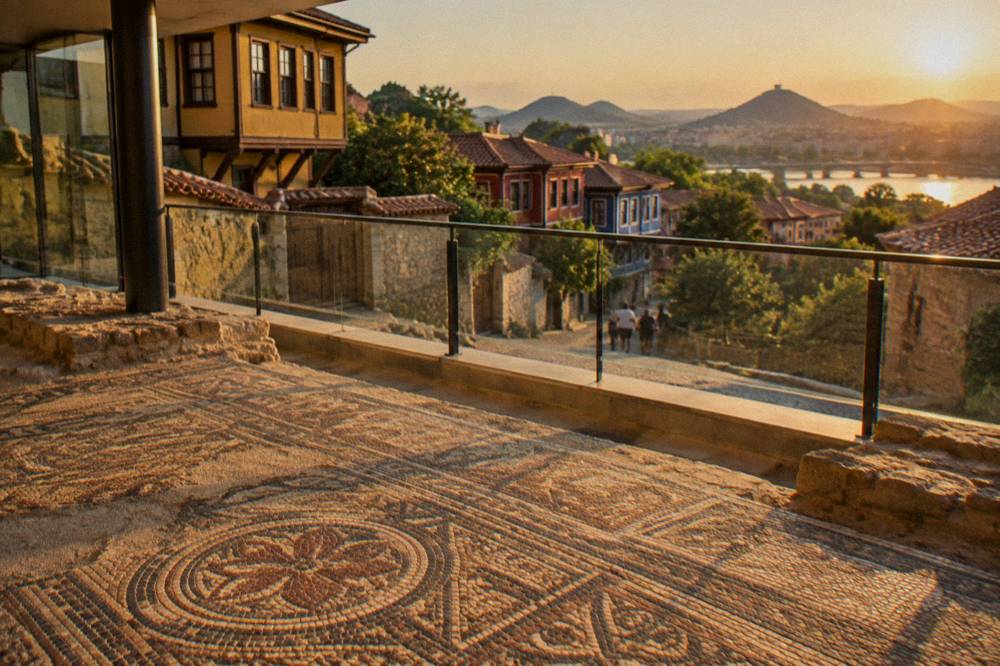
The Bishop's Basilica is the piece people underestimate. About 83 m long and 36 m wide, it is the largest 4th to 6th century basilica in Bulgaria, with two layers of floor mosaics covering over 2,000 sq m, and it sits in a purpose-built visitor centre with elevated walkways over the floors. The Small Basilica, a 5th to 6th century three-nave building with its own mosaic floors, is on the single ticket list, and the Eirene mosaic building joins it in the same archaeological strand.
The order that works: Stadium sphendone first, because it is free and takes ten minutes, then the Theatre while your legs are fresh, then Nebet Tepe for the layered fortifications, then downhill to the basilicas if the day allows. The Roman strand of the city, including the Forum and the Odeon, is pulled together in the Roman Plovdiv overview, which places each monument on the modern street plan.
What Is Free In The Plovdiv Old Town?
Nebet Tepe, Hisar Kapia, the Roman Stadium sphendone, every lane and viewpoint in the quarter, and the whole of neighbouring Kapana are free and open at all hours, which makes a rewarding Old Town visit possible without buying a single ticket. Nebet Tepe is the anchor: the settlement hill where the city began, conserved along its fortress walls in an EU-funded project that officially opened in March 2025, and open to anyone at any hour. The views from the top take in the plain, the Maritsa river and the Rhodopes on a clear day.
Hisar Kapia, the gate at the southern edge of the quarter, is the second free landmark. It stands in a small square with houses pressing against it on both sides, and it marks the line where the Old Town hands over to Kapana. The Hisar Kapia page covers its layers, which run from Roman foundations through medieval rebuilding. Kapana itself, whose name means "The Trap" in a reference to its maze of narrow streets, is a creative district of studios, bars and wall art that costs nothing to wander, and the Kapana area guide maps it.
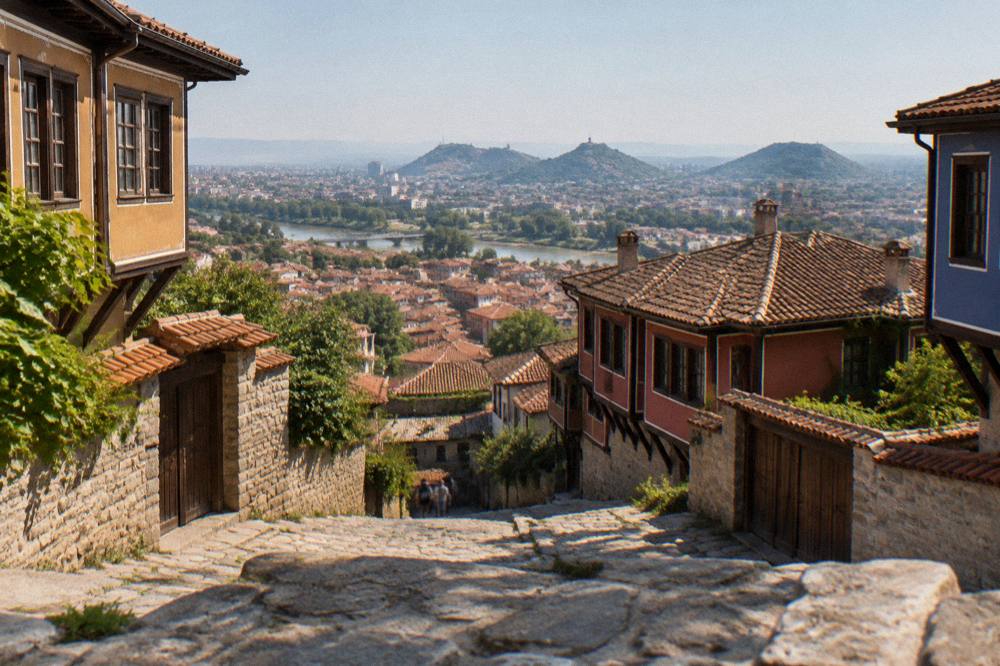
The free list has a shape: two of the four Roman monuments are viewable without a ticket, the hill that started the city is a public park of stones, and the two best quarters for walking are public streets. What you pay for is interiors: the Theatre's rows, the basilica mosaics, and the painted rooms of the Revival houses. More free options across the whole city are collected in the free things to do in Plovdiv roundup.
When Is The Best Time Of Day For The Plovdiv Old Town?
Early morning and the last two hours before closing are the quietest windows for the Plovdiv Old Town, because the quarter's lanes are narrow, the Theatre faces south, and the ERA5 reanalysis for Plovdiv puts the mean daily high at 28.2 C in July and 28.6 C in August. Mornings also dodge the tour groups that arrive mid-morning from Sofia, whose day trips time their Plovdiv stop around late morning and lunch. Evening changes the quarter rather than closing it: the lanes stay public, Nebet Tepe stays open, and sunset from the Theatre rows or the hilltop is the photograph the quarter is known for.
The seasonal logic is straightforward from the climate normals, ERA5 reanalysis, 1991-2020: July and August heat the cobbles, May carries the highest monthly rain total at 56.8 mm, and January means a daily low of -2.6 C with a mean high of 5.9 C, which is perfectly walkable in a coat and almost empty of crowds. April, May, September and October balance mild air against long daylight. The month-by-month detail sits in the best time to visit Plovdiv guide companion pages on seasons.
One timing rule matters more than the rest: check the Theatre's event calendar before you build a day around it. Opera Open occupied the stage from 23 June to 9 September in 2026, and performance evenings close the monument to sightseers or clear it early. The venue's schedule, not the weather, is the thing that can break a plan.
Where Should You Stay Near The Plovdiv Old Town?
The neighbourhoods that put you within walking distance of the Old Town are the Old Town itself, Kapana just south of Hisar Kapia, the Main Street and centre district to the north, and Karshiyaka across the river for quieter, cheaper rooms. Staying inside the quarter means Revival houses converted into small guesthouses, cobbles under the window and car access that is awkward, which the Plovdiv parking guide explains street by street. Kapana puts the bars and studios at the door and the Old Town five minutes uphill.
Comparing where to stay around the quarter? Book a hotel in Plovdiv here.
North of the quarter, the Main Street and centre district is the practical pick: flat, pedestrian, with the full range of hotels and apartments, and the Three Hills still a short climb away. Karshiyaka, on the left bank of the Maritsa, trades a river crossing for lower rates and greener streets. The trade-offs, price bands by area and the walk times are compared in the where to stay in Plovdiv guide.
A tourist tax may be charged by the accommodation, and its 2026 euro rate is not published as a single figure, so confirm the amount at booking rather than budgeting a guess.
Common Questions About The Plovdiv Old Town
Is Plovdiv Old Town a UNESCO World Heritage Site?
No. "The Ancient Plovdiv" is on Bulgaria's UNESCO Tentative List, submitted in 2004, which is a waiting list rather than an inscription. No part of the city is inscribed as World Heritage.
How many hills is the Old Town built on?
The Old Town occupies three of Plovdiv's six hills: Dzhambaz Tepe, Nebet Tepe and Taksim Tepe. There were seven hills until quarrying partly destroyed Markovo Tepe in the 1930s, leaving six.
Can you visit Plovdiv Old Town for free?
Yes, substantially. Nebet Tepe, Hisar Kapia, the Roman Stadium sphendone, the lanes and viewpoints, and neighbouring Kapana are all free and open at all hours. Paid tickets cover the Theatre, the basilicas and the house museums.
Is everything open on Monday in Plovdiv Old Town?
The ticketed Roman sites, including the Ancient Theatre and the Bishop's Basilica, open daily. The Ethnographic Museum and the Regional Archaeological Museum close on Monday, so Mondays are best spent outdoors.
Do you need to book the Ancient Theatre in advance?
No, entry is sold on site at the standard ticket price. The exception is performance evenings: Opera Open and other events close the monument to sightseers, so check the event calendar for the date of your visit.
Whether the Old Town is a half day or the whole reason for the trip, the sequence holds: free sphendone, ticketed Theatre, free hilltop, painted rooms, gate, Kapana, in that order or reversed, with a combined ticket if three or more interiors make the list. The longer itineraries, two days in Plovdiv and the full Plovdiv itinerary, extend the same walk with the Rowing Canal, the west bank and day trips into the Rhodopes, all of which have their own pages.