What Is Bulgaria Most Famous For?
Bulgaria is famous for its ancient cities, and Plovdiv, its second-largest city, carries the deepest history. Here is what the country and city are known for.
Bulgaria is famous for its ancient history, rose oil, wine, monasteries, mountains and Black Sea coast, and the city where that history runs deepest is Plovdiv, the country's second-largest city, an inland place in southern Bulgaria built around six hills with no sea coast at all. The city tourism site dates the first settlement on Nebet Tepe to the 4th millennium BC, and Plovdiv is often described as one of the oldest continuously inhabited cities in Europe. It was European Capital of Culture in 2019, shared with Matera. For a fuller city rundown, the things to do in Plovdiv overview lists the sites in order, and this page answers the country question in detail.
What Is Bulgaria Most Famous For?
Bulgaria is most famous for four things: a very long settlement history centred on Plovdiv, rose oil from the Rose Valley around Kazanlak, Thracian heritage including gold and tombs, and Orthodox monasteries such as Bachkovo and Rila set in mountain landscapes that run from the Rhodopes to the Balkan range. Added to those: wine from the Thracian Valley, yogurt and grilled food, Cyrillic script, and, since 1 January 2026, the euro as its currency. Plovdiv holds several of these threads at once, which is why it, not the capital, was picked as a European Capital of Culture in 2019.
Each of those strands deserves a sentence of grounding. Rose oil: the Rose Valley near Kazanlak is the historic centre of rose cultivation, and day trips to it run from Plovdiv. Thracian heritage: the Valley of the Thracian Kings, also reachable from Plovdiv, holds tombs and temple complexes such as Starosel. Monasteries: Bachkovo Monastery, a working monastery about 30 km from Plovdiv with free entry, reported, is one of the country's most visited religious sites. Mountains: the Rhodopes rise directly south of the city. Language and script belong on the list too: Bulgarian is written in Cyrillic, and the alphabet itself is part of the national story that neighbouring countries share.
If the rose fields and Thracian tombs appeal, book a Rose Valley private tour here.
Why Plovdiv Carries Bulgaria's Oldest Reputation
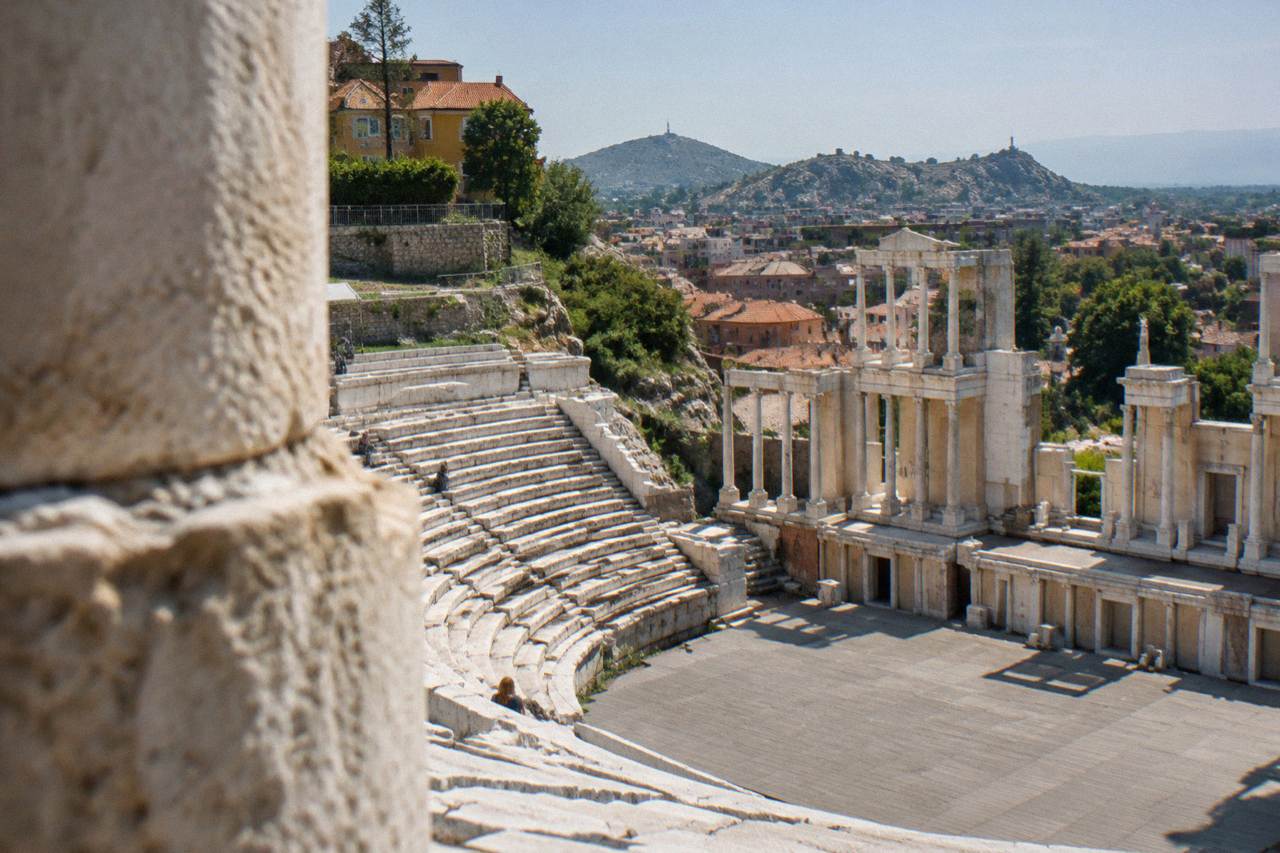
Plovdiv carries the country's deep-history reputation because it is often described as one of the oldest continuously inhabited cities in Europe, with the city tourism site dating the first settlement on Nebet Tepe to the 4th millennium BC, and because its Roman layer, the Ancient Theatre of Philippopolis built in the 90s of the 1st century AD with 28 concentric rows of marble seats, still stands open for visits almost two thousand years later. The city's many names, Philippopolis, Trimontium, Puldin, Filibe, record every civilisation that passed through.
One caution matters here. Plovdiv is not a UNESCO World Heritage Site. "The Ancient Plovdiv" sits on Bulgaria's Tentative List, submitted on 14 September 2004, which is a waiting list and not an inscription. Guides that say otherwise are cutting a corner. There were once seven hills; Markovo Tepe was partly quarried away in the 20th century and six remain, so the "city of seven hills" phrase is a historical note rather than a present fact.
The Roman heritage is genuinely the headline. The Roman Stadium, built in the 2nd century AD on the model of the Stadium at Delphi and sized for up to 30,000 spectators, survives in its northern part, the sphendone, with the rest lying under the modern Main Street. The Ancient Theatre still hosts Opera Open, which ran 23 June to 9 September in 2026. A guided walk is the efficient way to take that layer in: the Plovdiv guided walking tour covers the Old Town and Roman landmarks, and Check availability shows current slots. The Plovdiv walking tour guide also lays out a self-guided version for travellers who prefer their own pace.
Rose Oil, Wine And Bulgarian Food Fame
Bulgaria is famous for rose oil from the Rose Valley, for wine from the Thracian Valley where local varieties such as Mavrud and Rubin grow, and for a national table built on shopska salad, banitsa, kavarma, kebapche and tarator, with crowd-reported prices in Plovdiv around 2 euro for an espresso or a 0.5 litre draught beer. Bachkovo Monastery, free to enter per the listings, sits inside the same southern landscape, and the Rhodope cuisine that surrounds it is part of the same food fame.
The rose connection runs through Kazanlak and the Rose Valley, a standard day trip from Plovdiv. No 2027 Rose Festival date had been announced, so travellers planning around it should confirm locally. The wine story is closer: wine estates sit in the countryside around Plovdiv, and tastings of Bulgarian varieties run both in the city centre and as countryside trips. Bulgarian food deserves its own page: the what to eat in Plovdiv guide covers the dishes in detail, and the Bulgarian food overview gives the national picture. Breakfast alone carries weight here, from banitsa with boza to the slower morning table described in the Bulgarian breakfast guide.
| What Bulgaria Is Known For | Where To See It From Plovdiv | Details |
|---|---|---|
| Ancient history | Old Town, Nebet Tepe, Ancient Theatre | First settlement on Nebet Tepe dated to the 4th millennium BC by the city tourism site |
| Roman heritage | Ancient Theatre, Roman Stadium | Theatre built in the 90s of the 1st century AD; Stadium built in the 2nd century AD |
| Monasteries | Bachkovo Monastery | Working monastery about 30 km away; free entry, reported |
| Rose oil | Kazanlak and the Rose Valley | Day trips run from Plovdiv; festival dates unconfirmed for 2027 |
| Wine | Thracian Valley estates and city tastings | Mavrud and Rubin named as local varieties in the listings |
| Food | Kapana and the city centre | Crowd data puts an espresso around 2 euro in Plovdiv |
A wine tasting with cheese and cured meats in the centre of Plovdiv is one of the simplest ways to taste the national fame in one sitting. The Bulgarian wine guide explains the varieties before the glass arrives.
What Plovdiv Shows Of Bulgaria Better Than Anywhere Else
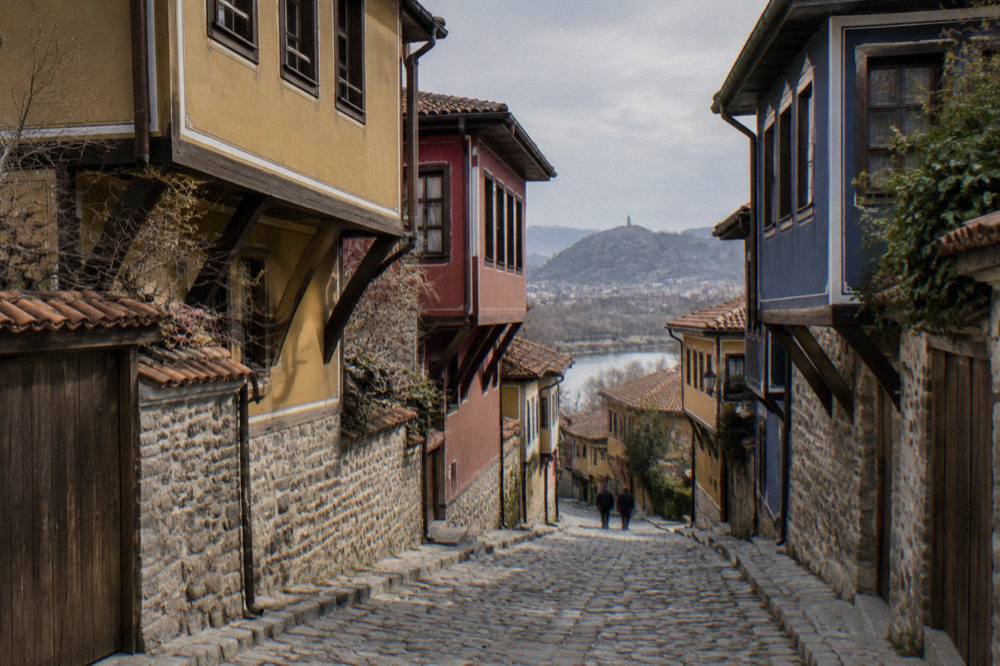
Plovdiv shows Bulgaria's layers better than anywhere else because a single walk crosses Nebet Tepe's excavated fortress walls, the Ancient Theatre's marble rows, Hisar Kapia's medieval gate, the Dzhumaya Mosque's Ottoman-era dome and the pastel National Revival houses of the Old Town, all within about a kilometre, and the entry price for any single Old Plovdiv site is 3.58 euro on the official ticket page. The combined ticket for up to five sites costs 10.74 euro. The Bishop's Basilica, with over 2,000 square metres of floor mosaics, is priced separately at 7.57 euro.
| Old Plovdiv Ticket | Adult Price |
|---|---|
| Any one site except the Bishop's Basilica | 3.58 euro |
| Combined ticket, up to 5 sites | 10.74 euro |
| Bishop's (Great) Basilica | 7.57 euro |
| Roman Stadium 3D hall | 3.68 euro |
| Nebet Tepe, Kapana, Hisar Kapia | Free |
Two working notes from the ticket page. The Dzhumaya Mosque, open to visits from 6:00 to 23:00, is free and asks for modest dress outside prayer times; no single construction year is settled for it, the dates falling across late medieval and early Ottoman times. And the Roman Stadium is not fully excavated: only the northern sphendone is accessible, unearthed in the 1970s, with the rest under the Main Street. The Roman Stadium guide unpacks what is and is not visible. For the atmosphere between the monuments, Kapana, whose name means "The Trap" in a maze of narrow streets, is free, open at all hours and packed with studios and small stages.
Mountains, Monasteries And Day Trips Around Plovdiv
Bulgaria is famous for its mountains, and from Plovdiv the Rhodopes begin almost at the city edge, with Asen's Fortress above Asenovgrad, Bachkovo Monastery in the valley below it, and the Wonderful Bridges, Trigrad Gorge and the caves of Devil's Throat all reachable on organised day trips, while minibuses to the monastery region leave from Plovdiv's Rodopi bus station and take roughly 35 to 45 minutes to the monastery approach. The Rhodopes are the range the city looks south toward.
Monastery fame is not only Rila, which sits on day-trip circuits from Sofia. Bachkovo is the local answer: free to enter, reported, and working. The fortress above Asenovgrad is the region's dramatic medieval sight, its entrance fee unclear, so confirm on arrival. For planning depth, the Bachkovo Monastery guide, the Asen's Fortress guide and the Rhodope Mountains overview cover each in turn. Weather shapes these trips: the ERA5 reanalysis, 1991-2020, puts the mean daily high at 28.6 C in August and 5.9 C in January, with 25.2 mm of rain in August against 56.8 mm in May, so late summer is the modelled dry window for mountain roads.
Common Questions About What Bulgaria Is Famous For
What Is Bulgaria Most Famous For?
Bulgaria is most famous for ancient history centred on Plovdiv, rose oil from the Rose Valley, Thracian tombs and gold, Orthodox monasteries such as Bachkovo and Rila, Rhodope and Balkan mountain landscapes, Thracian Valley wine and dishes like shopska salad and banitsa.
Is Plovdiv Part Of Why Bulgaria Is Famous?
Yes. Plovdiv is often described as one of the oldest continuously inhabited cities in Europe, was European Capital of Culture in 2019 shared with Matera, and holds a Roman theatre from the 90s of the 1st century AD that still hosts performances.
What Food Is Bulgaria Famous For?
Shopska salad, banitsa, kavarma, kebapche and kyufte, tarator and Bulgarian yogurt, plus wine from varieties such as Mavrud and rakia as the national spirit. The Bulgarian food guide covers the table in full.
What Is The Best Base For Seeing Bulgaria's Famous Sights?
It depends on the trip. Plovdiv sits closer to the Rhodopes, Bachkovo Monastery, the Rose Valley and the Thracian Kings, while Sofia serves Rila Monastery and the west. The Plovdiv versus Sofia comparison and the how many days in Plovdiv answer help with the choice.
Is Bulgarian Famous For Roses?
The Rose Valley around Kazanlak is the historic heart of rose oil production, and rose oil remains one of the country's signature exports. Festival dates had not been announced for 2027, so confirm before planning a trip around them.
The short version: Bulgaria's fame is a country-wide story, but Plovdiv is where the oldest, most quotable chapter is written, from Nebet Tepe's 4th millennium BC settlement to a Roman theatre that still sells tickets at 3.58 euro. Read the Plovdiv Travel Guide home page for the full site map, or start with the Plovdiv itinerary planner.
