Plovdiv European Capital Of Culture 2019: What Remains
Plovdiv, Bulgaria's second-largest city, shared the 2019 European Capital of Culture title with Matera, and the year left physical traces you can still walk through: a restored basilica, an opened fortress hill and a creative district that never closed again.
Short answer
Plovdiv was European Capital of Culture in 2019, shared with Matera in Italy. The legacy includes the restored Bishop's Basilica mosaics, the reopened Nebet Tepe archaeological complex, the Kapana creative district and annual events such as Opera Open in the Ancient Theatre.
Plovdiv, an inland city in southern Bulgaria built around six hills, held the European Capital of Culture title in 2019, shared with Matera in Italy, and the year was less a festival than a construction site that turned into one. The municipal tourism site describes the Plovdiv 2019 foundation that ran the programme, and the projects it prepared, from mosaic floors under glass to a fortress hill reopened to the sky, are now the parts of the city a visitor spends the day walking through. This page explains what the title year actually built, what it changed permanently, and what still runs every summer because of it.
What Was The Plovdiv European Capital Of Culture Year?
Plovdiv was the European Capital of Culture in 2019, sharing the title with Matera in Italy, and ran its programme through a foundation named Plovdiv 2019, according to the city's own tourism site. It was the first Bulgarian city to hold the title. The year's programme stretched across the Old Town, Kapana and the central squares, and its preparation coincided with major restorations in the historic core.
The title is awarded by the European Union to cities that propose a year-long cultural programme, and Plovdiv's bid rested on a simple argument: a city often described as one of the oldest continuously inhabited cities in Europe, layered with Thracian, Roman, Byzantine, Ottoman and revival-era remains, had stories to stage that few other candidates could match. The city tourism site dates the first settlement on Nebet Tepe to the 4th millennium BC, and that depth of occupation became the narrative spine of the year.
The foundation's projects were not only performances. The preparation period overlapped with the long restoration of the Bishop's Basilica and its floor mosaics, work the city had been running toward for years, and with the EU-funded conservation of Nebet Tepe. The visitplovdiv.com events pages from that period list hundreds of projects, exhibitions and co-productions with partners across Europe, and the city retains the networks and venues that the year created.
One thing the title did not do: it did not inscribe the Old Town on the UNESCO World Heritage List. "The Ancient Plovdiv" sits on Bulgaria's Tentative List, submitted on 14 September 2004, which is a waiting list rather than an inscription. Guides that claim otherwise are wrong, and the distinction matters if heritage status is part of your reason for visiting.
What Did The 2019 Project Physically Leave In Plovdiv?
The visible legacy includes the restored Bishop's Basilica of Philippopolis with over 2,000 square metres of floor mosaics, the reopened Nebet Tepe archaeological complex above the Old Town, the reshaped Kapana creative district, and renewed museum spaces such as the Regional Archaeological Museum's permanent exhibition, refreshed in November 2025 with about 150 new exhibits.
Start with the basilica, because it is the single largest object the era produced. The Old Plovdiv institute's page describes the Bishop's Basilica as about 83 metres long and 36 metres wide, the largest 4th to 6th century basilica in Bulgaria, with two layers of floor mosaics covering over 2,000 square metres. Restoration ran for years and the building opened to the public around 2019. Today it is open daily from 9:00 to 18:00 year round, and it is the one Old Plovdiv site priced separately from the others: the ticket page lists an adult ticket at 7.57 euro, with a reduced student ticket at 3.58 euro.
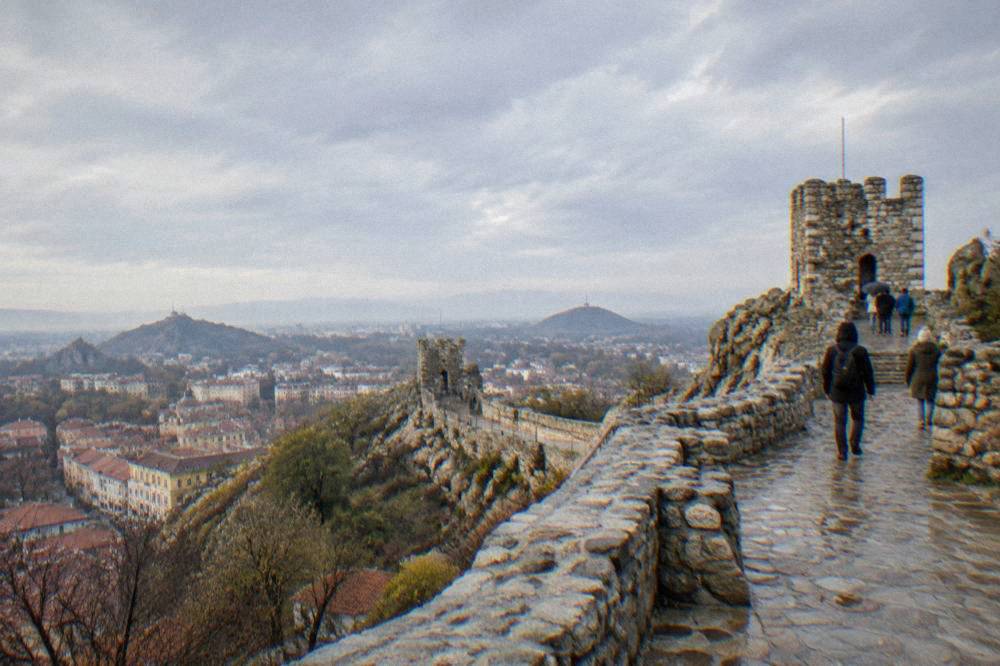
Nebet Tepe is the second piece. The EU-funded project "Along the Fortress Walls of Philippopolis" conserved the hill's remains and was officially opened in March 2025, and access is free and unrestricted, according to local reporting on the site. The hill is where the city began, and the viewing platform at the top is now one of the free highlights described on the site's free things to do in Plovdiv page.
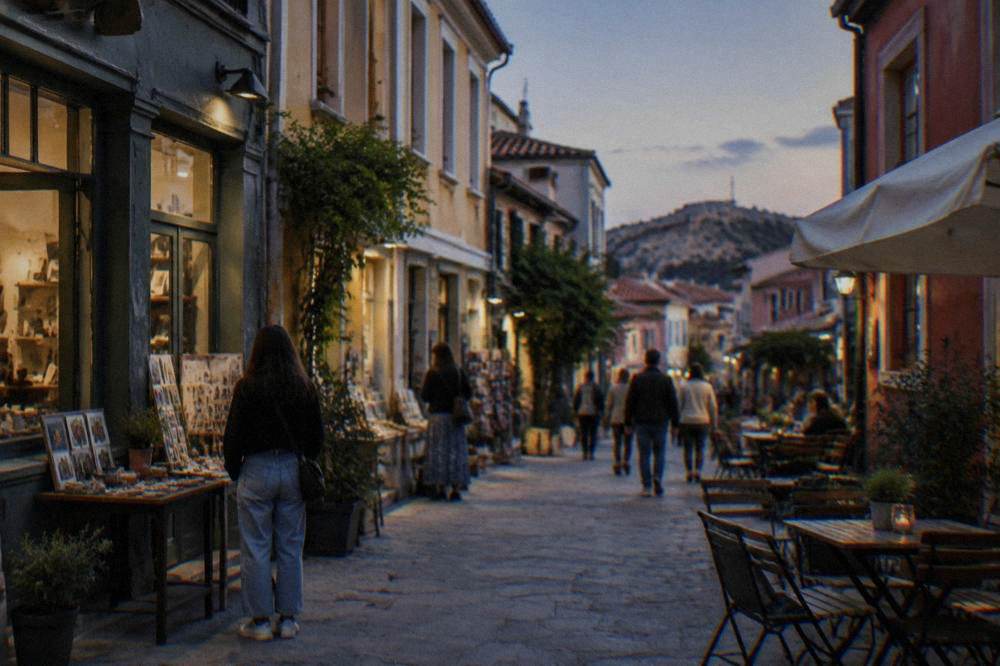
The Kapana district is the third. The name means "The Trap", the city tourism site explains, a maze of narrow streets that became the creative quarter of the title year and stayed that way: galleries, studios and small venues in public streets that are free and open at all hours. The site's Kapana guide covers the district street by street.
| Legacy site | What the era left | Ticket |
|---|---|---|
| Bishop's Basilica | Restored basilica with two mosaic floors, over 2,000 sq m | 7.57 euro adult, 3.58 euro student |
| Small Basilica | Conserved 5th to 6th century mosaic floors under a protective cover | Old Plovdiv one-site ticket, 3.58 euro |
| Nebet Tepe | Conserved fortress complex, opened March 2025 | Free |
| Kapana | Permanent creative district of studios, galleries and venues | Free, public streets |
| Regional Archaeological Museum | Renewed permanent exhibition, about 150 new exhibits since Nov 2025 | Confirm at the museum |
The table shows the pattern of the legacy: the two big restorations charge admission, and the open-air parts, the fortress hill and the creative district, cost nothing. A reasonable day takes in one paid site in the morning and the free hill and district in the afternoon, with the Roman Stadium's open-air sphendone, also free, somewhere between them.
Which 2019 Venues Can You Still Visit In Plovdiv Today?
The Ancient Theatre of Philippopolis, the Roman Stadium sphendone, the Bishop's and Small Basilicas, the Old Town revival houses and Nebet Tepe are all open, with no closures announced for 2025 or 2026. The Ancient Theatre keeps daily hours, 9:30 to 18:00 from April to October and 9:00 to 17:30 from November to March, with a lunch break at 12:30.
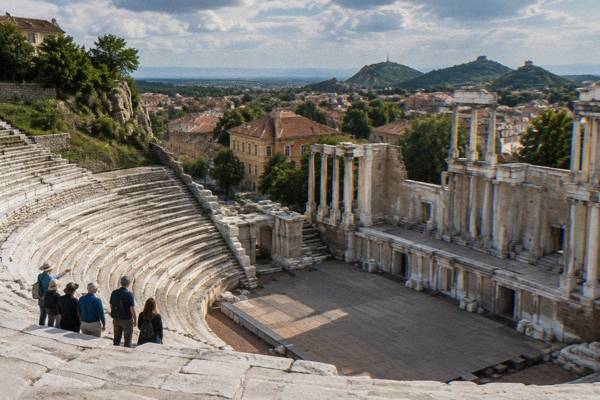
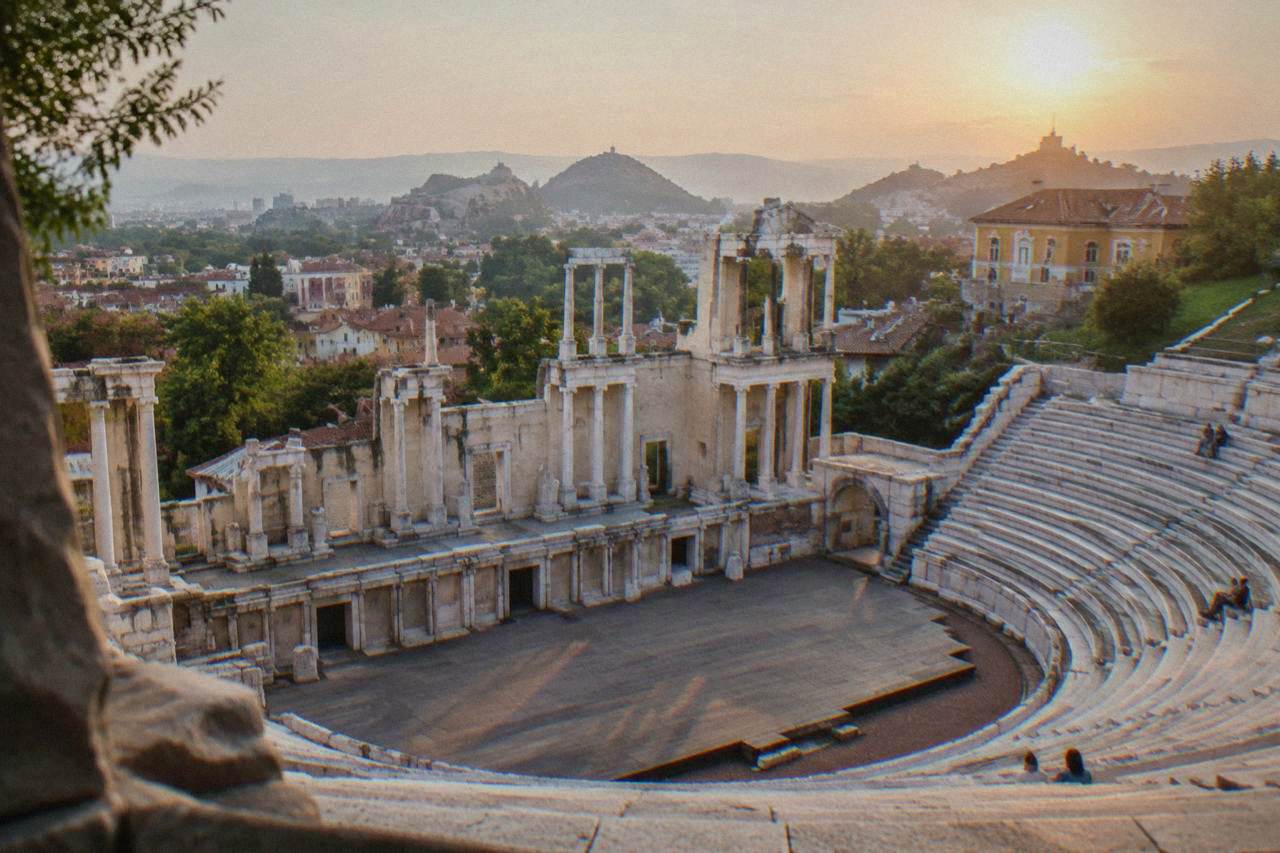
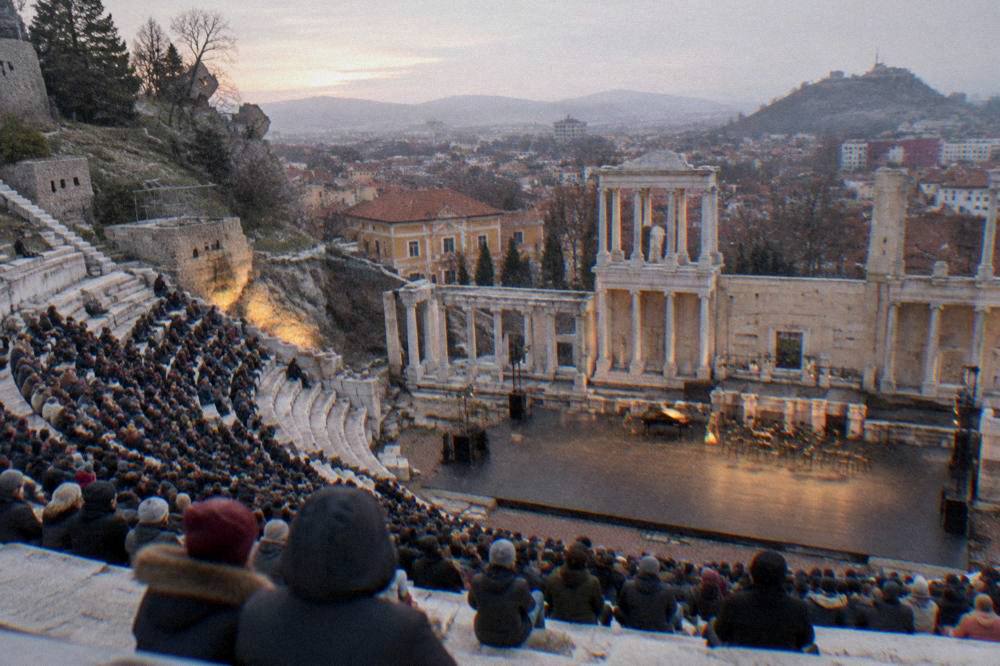
The Ancient Theatre is the venue the title year used most, and it still works as one. Built in the 90s of the 1st century AD and laid out in 28 concentric rows of marble seats, it hosts the Opera Open festival every summer, which ran from 23 June to 9 September in 2026. A daytime visit costs the standard Old Plovdiv one-site ticket of 3.58 euro for adults, 1.53 euro for students.
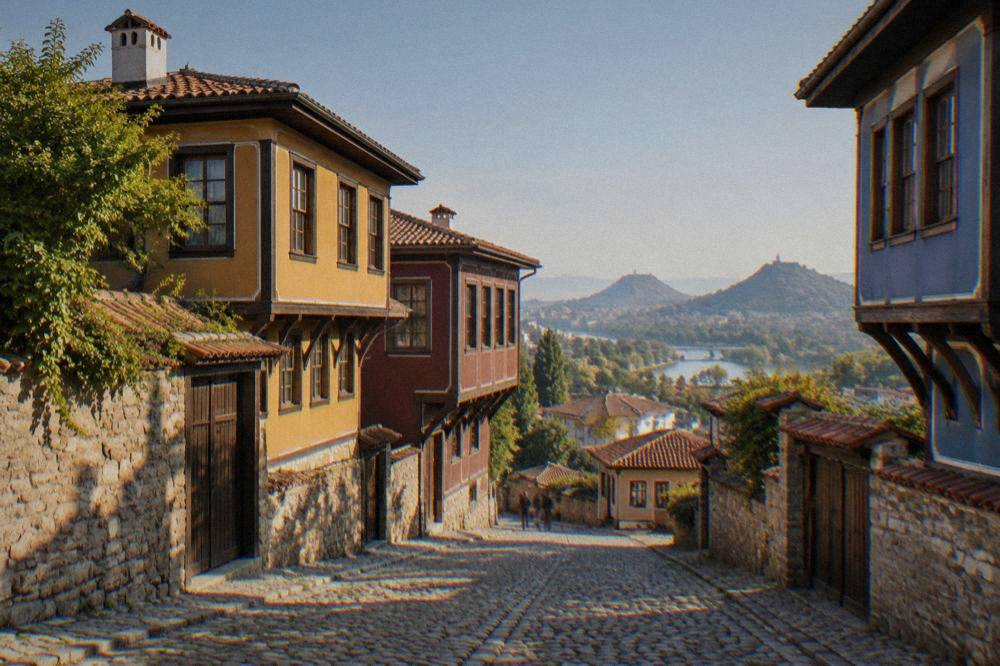
The Old Town houses around it, Balabanov, Hindliyan, Nedkovich and their neighbours, sit on the same ticket list, and a combined ticket covering up to five sites (excluding the two basilicas) is 10.74 euro. Hindliyan House moved to daily opening according to a September 2026 report, a small legacy-era shift toward longer access. The site's Old Town guide and the Ancient Theatre page carry the detail.
A guided walk is the efficient way to see these venues, and the roster includes an Old Town and Roman Theatre walking tour that covers exactly the streets and monuments the title year restored. Check availability if that format suits your dates; the walk pairs well with a free afternoon on the hill.
What Cultural Events In Plovdiv Came From The 2019 Year?
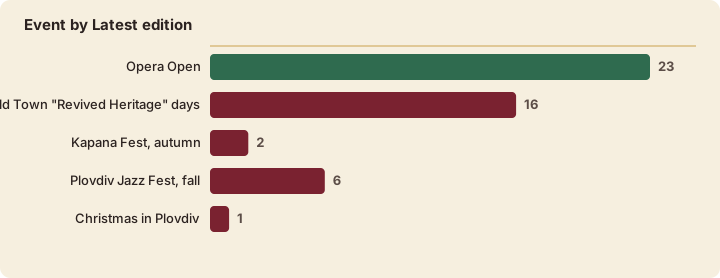
Opera Open in the Ancient Theatre, which ran 23 June to 9 September in 2026, is the flagship continuation, alongside the Kapana Fest street festival (2 to 4 and 9 to 11 October 2026), the Plovdiv Jazz Fest fall edition (6 to 8 November 2026) and the Old Town "Revived Heritage" festival days (16 to 23 September 2026).
Opera Open is the one to plan a trip around if open-air opera appeals. The programme sits inside a 1st century Roman theatre, which is the entire point: the city's tourism pages list the 2026 edition's galas, Carmina Burana and Nabucco among them, running through the summer. Tickets are sold per performance, and the venue's daytime visiting hours shift around rehearsals and shows, so check the theatre's schedule before choosing a day.
Kapana Fest fills the creative district and the Central Square area with music and street events twice a year, and the autumn 2026 edition ran across two October weekends. The Jazz Fest's fall edition plays indoors at the Boris Hristov House of Culture. The Old Town festival days in September put free exhibitions and performances into the revival houses, and the Christmas programme, which ran 28 November 2025 to 4 January 2026 for the last edition, closes the year in the Central Square and Kapana areas.
| Event | Latest edition | Venue |
|---|---|---|
| Opera Open | 23 June to 9 September 2026 | Ancient Theatre |
| Old Town "Revived Heritage" days | 16 to 23 September 2026 | Old Town houses |
| Kapana Fest, autumn | 2 to 4 and 9 to 11 October 2026 | Kapana and Central Square |
| Plovdiv Jazz Fest, fall | 6 to 8 November 2026 | Boris Hristov House of Culture |
| Christmas in Plovdiv | 1 December 2026 to 7 January 2027 | Kapana and Central Square |
The site's festivals and events guide tracks the calendar across the year, and the best time to visit Plovdiv page weighs festival season against summer heat, when the ERA5 reanalysis 1991-2020 mean daily high reaches 28.2 C in July and 28.6 C in August.
Is The Kapana Creative District The Living Legacy Of The Title Year?
Kapana, whose name means "The Trap", is the district the 2019 programme converted into a permanent creative quarter, and it remains free, open and active, with artisan shops, studios, venues and a weekend creative market. The city tourism site presents it as the title year's neighbourhood project rather than a temporary festival zone.
The conversion worked because the district already had the right bones: a tangle of narrow streets where craftsmen had worked for centuries, which the title year filled with designers, printmakers, galleries and small food venues. Nothing about it is ticketed. You walk in off the Main Street, get temporarily lost, which is the joke built into the name, and come out near the Dzhumaya Mosque or the Roman Stadium depending on which exit the maze gives you. The rest of the planning pages sit on Plovdiv Travel Guide.
The district also carries the evening weight of the city's cultural calendar. Jazz Fest satellite events, Kapana Fest stages and the Christmas market's Kapana section all land here, and the site's nightlife guide picks up where the culture programme ends. For food, the restaurants guide and the page on what to eat in Plovdiv cover the district's tables.
How Does The Basilica Restoration Connect To The Capital Of Culture Story?
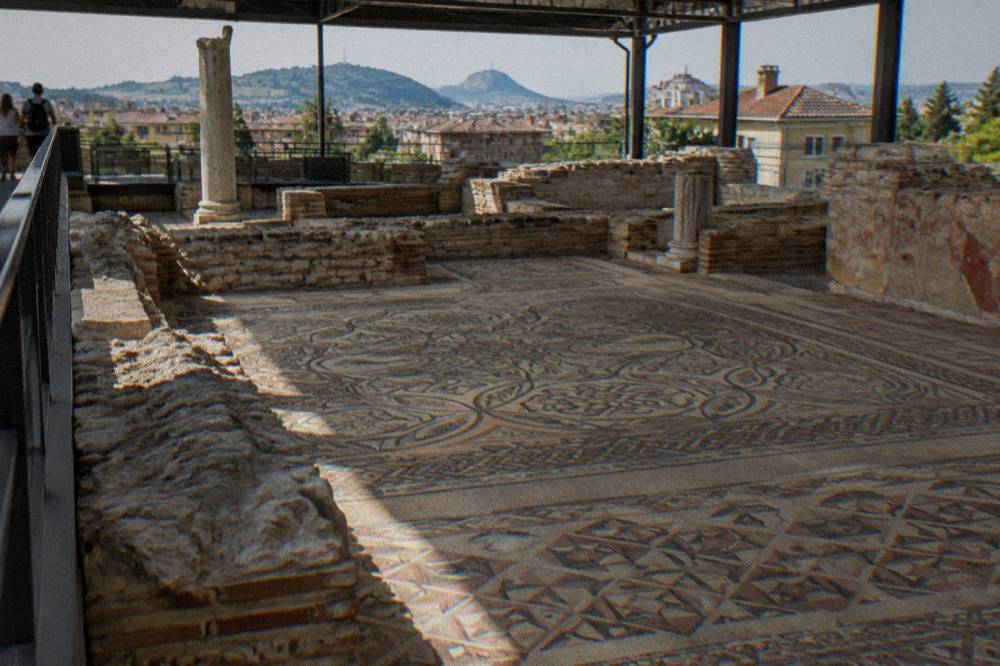
The Bishop's Basilica of Philippopolis, about 83 metres long with two layers of floor mosaics covering over 2,000 square metres, was restored during the run-up to the title year and opened to the public around 2019, and it is now the flagship indoor monument of the legacy, open daily 9:00 to 18:00 with an adult ticket of 7.57 euro.
The building is a 4th to 6th century cathedral base, and the Old Plovdiv page describing it calls it the largest basilica of that period in Bulgaria. The mosaics are the draw: geometric and figurative floors from two successive buildings, visible from raised walkways. There is also a basilicas-combined ticket covering the Bishop's Basilica, the Small Basilica and the Eirene building, though you should confirm current combinations at the ticket desk or on the official tickets page before buying.
The Small Basilica, a 5th to 6th century three-nave church with mosaic floors, sits under a modern protective cover a short walk away and is included on the standard Old Plovdiv ticket list rather than the basilica pricing. The site's page on the Eirene mosaic and Episcopal Basilica covers both buildings in detail, and the wider Roman Plovdiv guide places them among the theatre, stadium, odeon and forum.
| Old Plovdiv ticket | Adult | Student |
|---|---|---|
| Any one site (except Bishop's Basilica) | 3.58 euro | 1.53 euro |
| Bishop's Basilica, single | 7.57 euro | 3.58 euro |
| Bishop's + Small Basilica + Eirene, combined | Confirm on site | Confirm on site |
| Combined ticket, up to 5 sites (excludes both basilicas) | 10.74 euro | 4.09 euro |
| Family ticket, one site | 7.16 euro |
The first Thursday of the month brings free entry for students and seniors at Old Plovdiv sites, per the ticket listings, and children under 7 enter free. Children aged 7 to 16 are covered by the family ticket price of 7.16 euro for one site.
What Else Should You Know Before Visiting Plovdiv For Its Culture?
Plovdiv is easy to reach: direct trains from Sofia take about 2 hours 40 to 3 hours 5, Plovdiv Airport at Krumovo keeps a small seasonal route list, and the city centre is walkable between all the legacy sites. Bulgaria is a full Schengen member since 1 January 2025 and uses the euro since 1 January 2026, so there is no currency exchange to plan for.
Arrival logistics are covered on the site: the Sofia to Plovdiv page handles the train and bus options, Plovdiv Airport explains the Krumovo route list, and getting around Plovdiv covers the city's buses, whose single e-ticket is 0.50 euro. For staying, where to stay in Plovdiv sorts the centre, Kapana and Karshiyaka; the Old Town and Kapana put every legacy site within a walk. Confirm any accommodation tax with your booking before you arrive.
Budget-wise, the how expensive is Plovdiv page assembles the picture, and the cultural core is unusually cheap for a European title city: the free sites, Nebet Tepe, Kapana, the stadium sphendone, Hisar Kapia, cost nothing, and a full day of paid entry, basilica included, still lands under 15 euro at list prices.
If you have two or three days rather than one, Koprivshtitsa makes a strong pairing with the city, a revival-era town whose house museums are covered on the site's Koprivshtitsa page, and the roster includes a Koprivshtitsa half-day tour from Plovdiv. Check availability if that fits your itinerary.
Did The Title Year Change How Plovdiv Presents Its History?
Yes: the 2019 programme pushed the city toward presenting its layers as one continuous story, with Nebet Tepe conserved as the origin point, the basilicas as the late-Roman chapter, and the revival houses as the Bulgarian National Revival chapter, all under a single Old Plovdiv ticket structure that still operates today.
Before the title year, the sites were individually run and unevenly presented. The consolidation is visible in small ways: the ticket page that prices the theatre, the houses and the Small Basilica together, the renewed archaeological exhibition at the Regional Archaeological Museum, refreshed in November 2025 with about 150 new exhibits and a bilingual audio guide, and the conservation projects that keep opening, such as the Pavliti (Blue House) conversion into a museum of modern Plovdiv, tendered in June 2026 for 284,000 euro with 180 days of works.
The city's historical narrative is also told better now than in most guidebooks. The Plovdiv history page walks through the names, Kendrissos, Evmolpias, Philippopolis, Trimontium, Filibe, and the title-year legacy sits on top of that story rather than replacing it. The one correction worth carrying: the city is often described as one of the oldest continuously inhabited cities in Europe, and that phrasing, rather than any superlative claim, is the accurate one.
What Is The Best Plan For A Culture-Focused Day In Plovdiv?
A workable order is the Ancient Theatre and one Old Town house in the morning on a one-site or combined ticket, Nebet Tepe before the midday heat, the Bishop's Basilica after lunch, and Kapana and the Roman Stadium sphendone in the late afternoon and evening, with an Opera Open performance in the theatre if your dates allow.
The logic is partly geographic and partly thermal. The Old Town climbs a hill, and the ERA5 reanalysis 1991-2020 puts the mean daily high at 25.9 C in June and 28.2 C in July, so the uphill parts go early. The basilica is indoors and cool. Kapana and the stadium sphendone sit on the flat, and the district improves as the evening does. The site's Plovdiv in one day itinerary builds exactly this kind of day, and Plovdiv in two days adds the museums at a humane pace.
| Time | Plan | Cost at list price |
|---|---|---|
| Morning | Ancient Theatre plus one Old Town house, combined ticket | 10.74 euro, or 3.58 euro single site |
| Late morning | Nebet Tepe fortress complex | Free |
| Afternoon | Bishop's Basilica mosaics | 7.57 euro |
| Late afternoon | Roman Stadium sphendone and Kapana | Free |
| Evening | Opera Open performance, summer season | Per-performance ticketing |
For food between the sites, the Bulgarian food and Bulgarian wine pages set up the ordering, and the roster's taste-the-city walk covers the same ground with a guide. Check availability for your dates.
Common Questions About Plovdiv European Capital Of Culture
Plovdiv held the European Capital of Culture title in 2019, shared with Matera in Italy, and the year left permanent sites, restored basilicas, a conserved fortress hill and a creative district, alongside annual events such as Opera Open in the Ancient Theatre. The questions below answer the details visitors ask before booking, from tickets to timing.
When was Plovdiv European Capital of Culture?
In 2019, shared with Matera in Italy. It was the first Bulgarian city to hold the title, run through the Plovdiv 2019 foundation named on the city's tourism site.
Is Plovdiv Old Town a UNESCO World Heritage Site?
No. "The Ancient Plovdiv" is on Bulgaria's UNESCO Tentative List, submitted on 14 September 2004, which is a waiting list rather than an inscription.
What is the legacy of the 2019 title year?
The restored Bishop's Basilica with over 2,000 square metres of mosaics, the conserved Nebet Tepe complex opened in March 2025, the Kapana creative district and the annual events that continue, including Opera Open in the Ancient Theatre, which ran 23 June to 9 September in 2026.
How much do the Capital of Culture legacy sites cost?
A single Old Plovdiv site is 3.58 euro for adults, the combined ticket for up to five sites is 10.74 euro, and the Bishop's Basilica is priced separately at 7.57 euro. Nebet Tepe, Kapana and the Roman Stadium sphendone are free.
Can you attend performances in the Ancient Theatre?
Yes. The theatre hosts the Opera Open festival each summer, which ran from 23 June to 9 September in 2026, plus concerts listed by the city. Daytime visiting hours can shift around performances, so check the schedule before you go.
Is Plovdiv worth visiting for its culture alone?
Yes, and the title year is the reason the core is so dense: a Roman theatre still in use, mosaic basilicas, fortress walls, six hills and a creative district, nearly all within walking distance. The site's things to do in Plovdiv page lays out the full range.