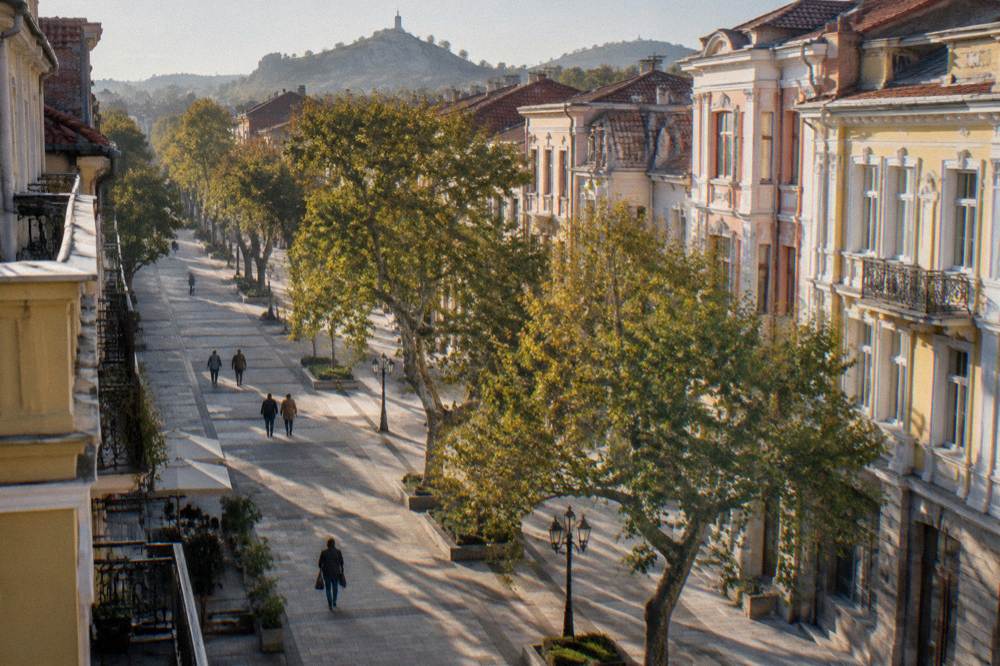
Bulgaria Road Trip: Plovdiv To The Black Sea
Plovdiv sits inland in southern Bulgaria, and that is exactly what makes it a strong base for a road trip: the Rhodopes, the Thracian valley and the road east to the Black Sea all start within an hour of its six hills.
Short answer
Base a Bulgaria road trip in Plovdiv for three to four nights, drive the Old Town and Kapana on foot first, then head south to Bachkovo Monastery and Asen's Fortress, continue into the Rhodopes, and finish with the long drive east to the Black Sea coast.
Plovdiv, Bulgaria's second-largest city, sits inland in the south of the country, built around six hills and surrounded by the kind of geography that rewards a car: the Rhodope Mountains rise to the south, the Thracian valley spreads west toward Sofia, and the Black Sea coast waits at the end of a long, drivable plain to the east. A Bulgaria road trip that starts in Plovdiv avoids the problem that trips starting in Sofia face, which is that the capital sits at the wrong end of the country for the mountains and the coast both. This page lays out a route that works: how many days to give it, what to see in the city before the driving starts, which southern stops earn their place, and how to think about the long run to the sea.
How Many Days Does A Bulgaria Road Trip From Plovdiv Need?
A road trip that bases itself in Plovdiv and reaches the Black Sea needs at least seven days, and nine or ten is the comfortable version: two or three nights in Plovdiv itself, one or two in the Rhodopes, and two or three on the coast, with the drives between them taking up half-days rather than whole days. Anything shorter forces a choice between the mountains and the sea, because the two sit in opposite directions from the city. The itineraries this site publishes for the city alone, such as the Plovdiv in three days itinerary, already fill three full days without a single kilometre of driving, which is the clearest sign that a compressed road trip should not try to do everything.
The first decision is directional. South from Plovdiv lie Bachkovo Monastery, Asen's Fortress and the Rhodope roads toward Smolyan and Pamporovo. West lies the road to Sofia, which most international travellers arrive through, and Koprivshtitsa sits along the way. East lies the Thracian plain and, beyond it, the Black Sea. A loop that goes south first, then east, and returns to Plovdiv or Sofia at the end is the shape that wastes the least time.
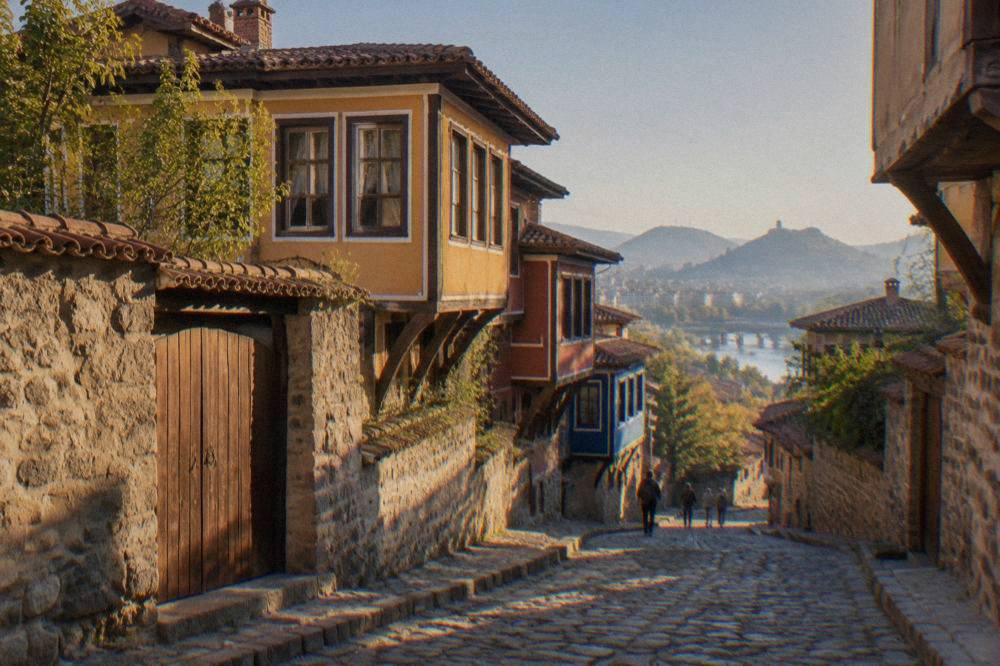
The second decision is how much of the city itself to keep. Plovdiv's core sights, the Ancient Theatre, the Roman Stadium, Nebet Tepe and the Old Town lanes, are all walkable from a central base, and a car is a burden there rather than a help. The Old Town is cobbled and steep, best done on foot, and parking rules in the centre should be confirmed with your accommodation rather than guessed at, because no reliable published summary of Plovdiv's parking zones and tariffs exists.
Prefer someone to walk you through those lanes? Book a guided walking tour here.
A sample shape for a nine-day trip:
| Days | Base | What the driving covers |
|---|---|---|
| 1 to 3 | Plovdiv | No car needed: Old Town, Kapana, the Roman sites, the hills |
| 4 | Plovdiv or Asenovgrad | Bachkovo Monastery and Asen's Fortress, about 30 km south |
| 5 to 6 | Smolyan or Pamporovo | Rhodope roads, gorges and villages |
| 7 | Eastern Bulgaria | The long drive across the Thracian plain toward the coast |
| 8 to 9 | Black Sea coast | Coastal towns, then a return west or a flight home |
The site's Bulgaria itinerary page covers the country-wide version of this question, including how Sofia fits at either end of the loop.
What Should You See In Plovdiv Before The Driving Starts?
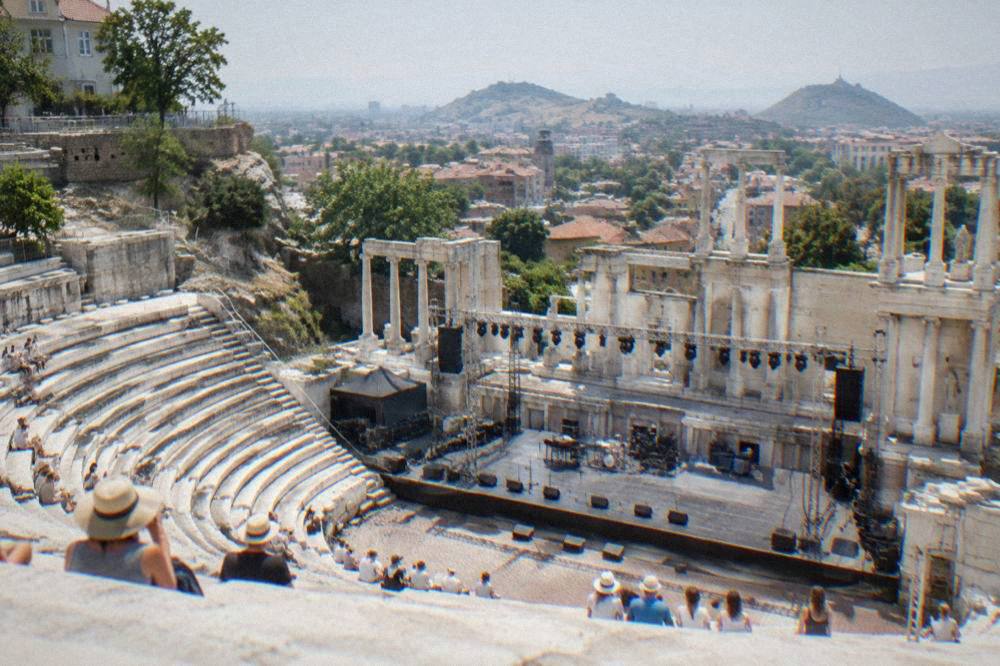
Give Plovdiv's Old Town and centre two full days on foot before touching the car: the Ancient Theatre of Philippopolis, the Roman Stadium sphendone, Nebet Tepe, the Bishop's Basilica mosaics and the Kapana creative district are all within a short walk of one another, and the one-site Old Plovdiv ticket costs 3.58 euro with a combined ticket covering up to five sites for 10.74 euro. The theatre, built in the 90s of the 1st century AD, holds 28 concentric rows of marble seats and still stages open-air opera in summer. The stadium, built in the 2nd century AD on the model of the Stadium at Delphi, held up to 30,000 spectators, though only its northern curve, the sphendone, is visible today.
The practical detail that matters for a road-trip budget is the ticket structure. The Old Plovdiv institute prices its sites in euro, and the combined ticket excludes the two basilicas, which are priced separately.
| Ticket | Adult price |
|---|---|
| One Old Plovdiv site (theatre, Small Basilica, revival houses) | 3.58 euro |
| Combined ticket, up to 5 sites | 10.74 euro |
| Bishop's Basilica, single | 7.57 euro |
| Roman Stadium 3D hall, single | 3.68 euro |
| Roman Stadium Eastern sector plus 3D hall | 5.11 euro |
| Children under 7, at all listed sites | Free |
Nebet Tepe, the hill where the city's tourism site dates the first settlement to the 4th millennium BC, is free and open at all hours after a restoration project that finished in 2025. Kapana, whose name means "The Trap" for its maze of narrow streets, is likewise free and open. The Old Town area page and the Kapana guide walk both districts in detail, and the Plovdiv self-guided walk strings the Roman landmarks together in a single loop.
Two days of city sightseeing also let the trip absorb a rainy day without losing driving time. The Regional Archaeological Museum, closed on Mondays, renewed its permanent exhibition in November 2025 with about 150 new exhibits and a bilingual audio guide, and the Regional Ethnographic Museum, also closed on Mondays, fills the Kuyumdzhiev House with revival-period interiors. The Plovdiv in the rain itinerary covers exactly this scenario.
For travellers who want the city's Roman layer explained rather than just seen, an audio-guided walk of the Old Town and its Roman landmarks exists as a bookable product, and the listing carries its own price and availability:
Where Should You Stop Between Plovdiv And The Rhodopes?
The two stops that earn their place on the road south from Plovdiv are Bachkovo Monastery, about 30 km away near Asenovgrad, with free entry as a working monastery, and Asen's Fortress on the cliff above the Asenovgrad road, which charges a small entry fee whose figure is unclear between sources, so confirm it on arrival. Minibuses from Plovdiv's Rodopi bus station reach the monastery in 35 to 45 minutes, but a road trip makes these stops trivially easy, which is the strongest argument for having the car at all on this leg.
Bachkovo Monastery is the second-largest monastery in Bulgaria and a working monastic community whose refectory frescoes and courtyard make it worth an unhurried hour rather than a photo stop. The Bachkovo Monastery day trip page covers its history and practicalities, and the fortress above Asenovgrad adds a short, steep walk to a ruined citadel with a view over the Asenitsa valley.
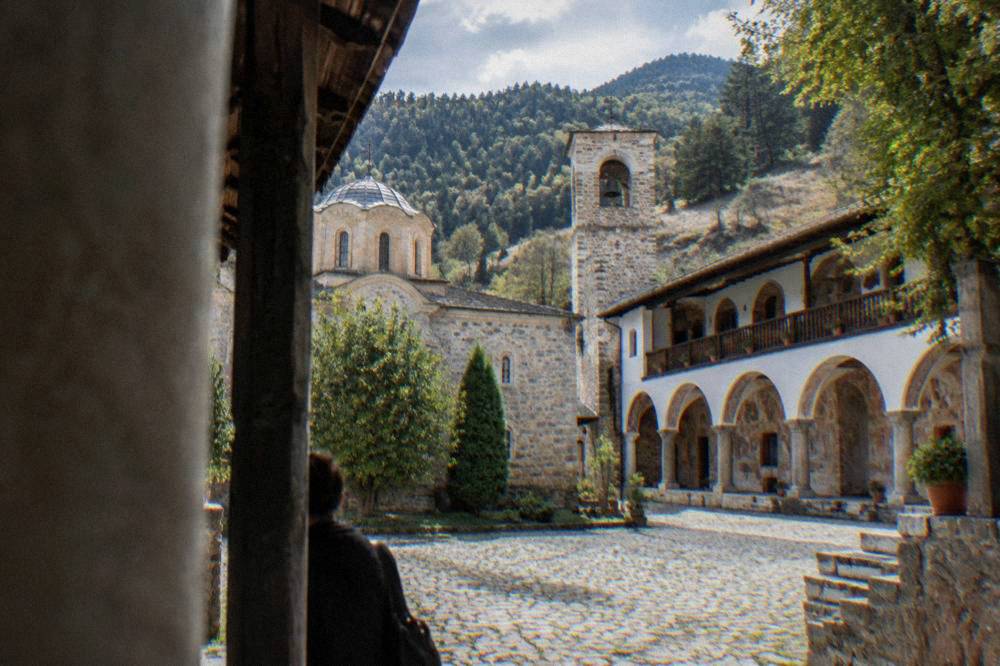
If you would rather not drive this leg yourself, a private trip from Plovdiv covers both stops with a driver, and the booking page shows the current price:
The same route continues naturally into the mountains, and the site's Plovdiv and the Rhodopes itinerary extends it to Smolyan, Pamporovo and the gorges beyond. Three products fit this leg of a road trip particularly well, whether as replacements for driving or as depth-adders on days the car rests:
Is The Rhodopes The Best Driving Section Of A Bulgaria Road Trip?
The Rhodopes are the most rewarding driving section of any Bulgaria road trip that starts in Plovdiv: the road from Asenovgrad south to Smolyan runs about 104 km through the Asenitsa valley and gorge country, buses need two to two and a half hours for it, and a car unlocks the villages, caves and viewpoints that public transport barely touches, including Trigrad Gorge and the Wonderful Bridges. The mountains are the reason to base a road trip in Plovdiv rather than in Sofia, because they sit on the city's doorstep.
The trade-off is road character. Rhodope roads are winding and shoulder seasons can bring fog and ice, so the driving days here should be short and unhurried. Smolyan and Pamporovo are the practical bases, both reachable by bus from Plovdiv's Rodopi station for anyone on a car-free version of the trip, but the scattered sights, Trigrad's Devil's Throat Cave, the Yagodinska caves, the Wonderful Bridges rock arches, are where the car pays for itself.
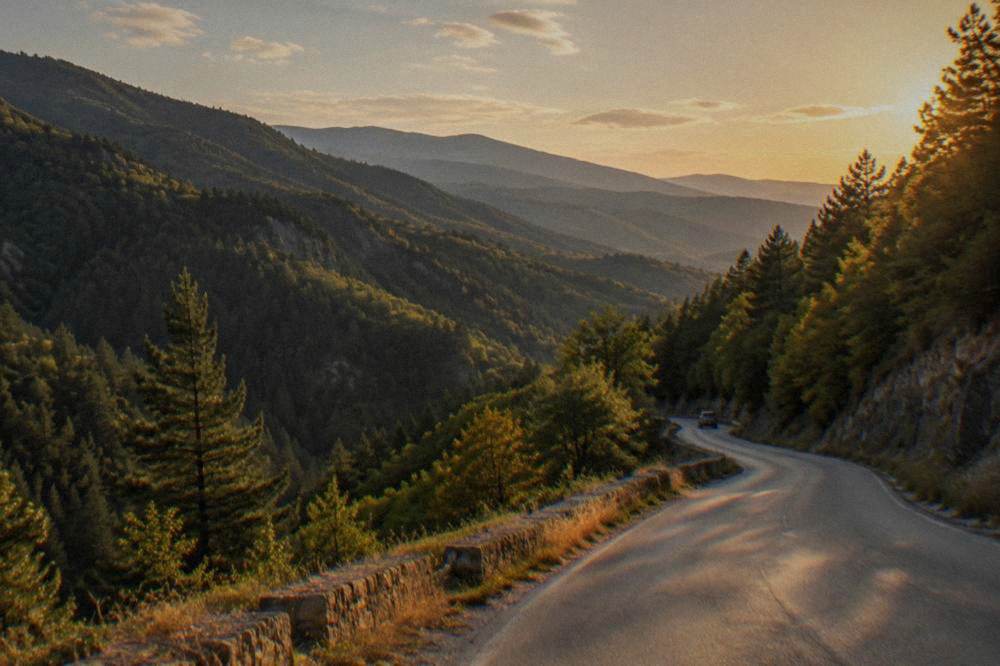
For depth on individual destinations, the site carries dedicated pages on Smolyan and Pamporovo, Trigrad Gorge and Devil's Throat Cave, Devin and the Wonderful Bridges, all reachable from the itineraries hub. A guided small-group option exists for the Wonderful Bridges with Rhodope cuisine, and for the Eagle's Eye viewpoint hike, both listed with their own prices and dates on the site's day-trip pages.
| Rhodope stop | What it is | Getting there without a car |
|---|---|---|
| Bachkovo Monastery | Working monastery, free entry | Minibus from Rodopi station, 35 to 45 min |
| Asen's Fortress | Cliff citadel near Asenovgrad | Short detour on the Asenovgrad road |
| Smolyan | Mountain town, about 104 km south | Bus from Rodopi station, 2 to 2.5 hours |
| Pamporovo | Resort village in the heart of the range | Bus toward Smolyan |
| Trigrad Gorge | Gorge with Devil's Throat Cave | Limited direct transport, car or tour recommended |
What Does The Drive From Plovdiv To The Black Sea Involve?
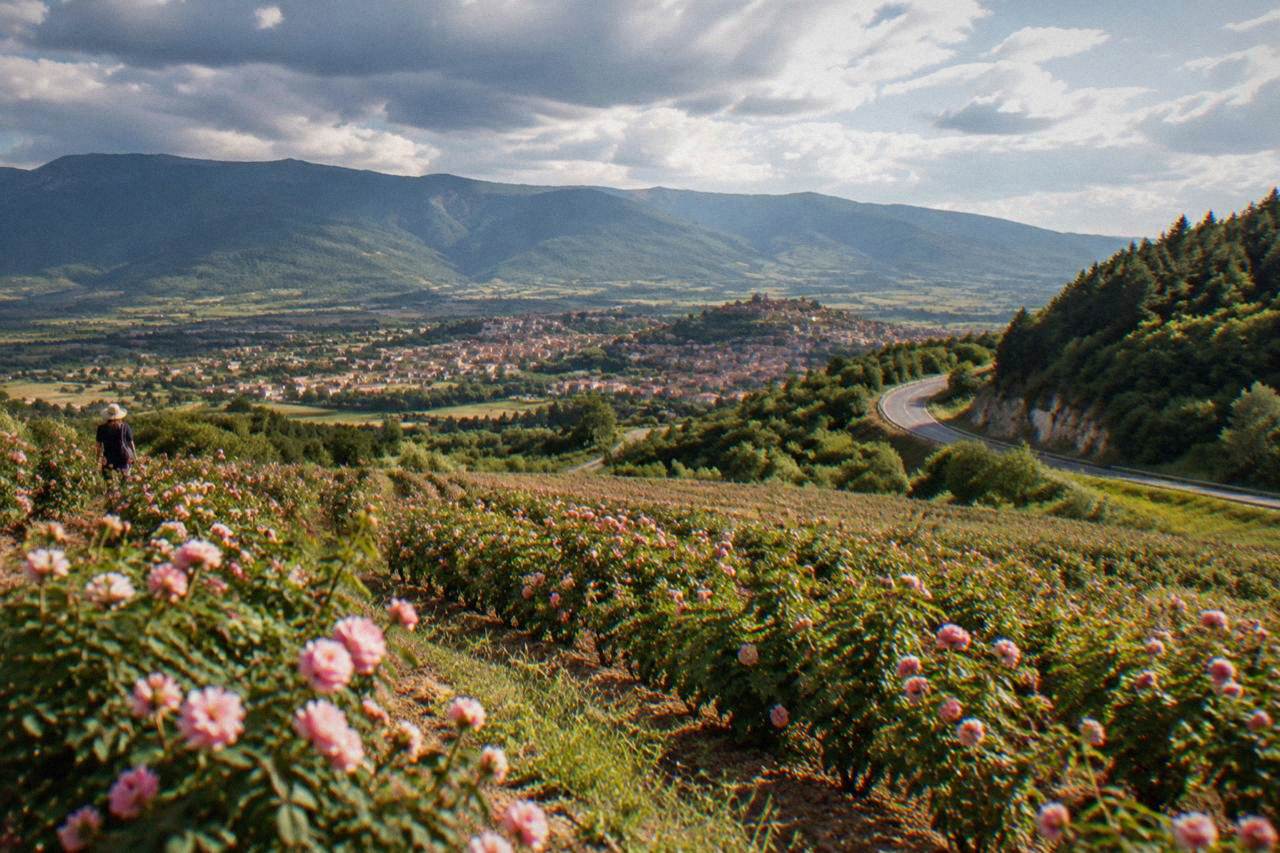
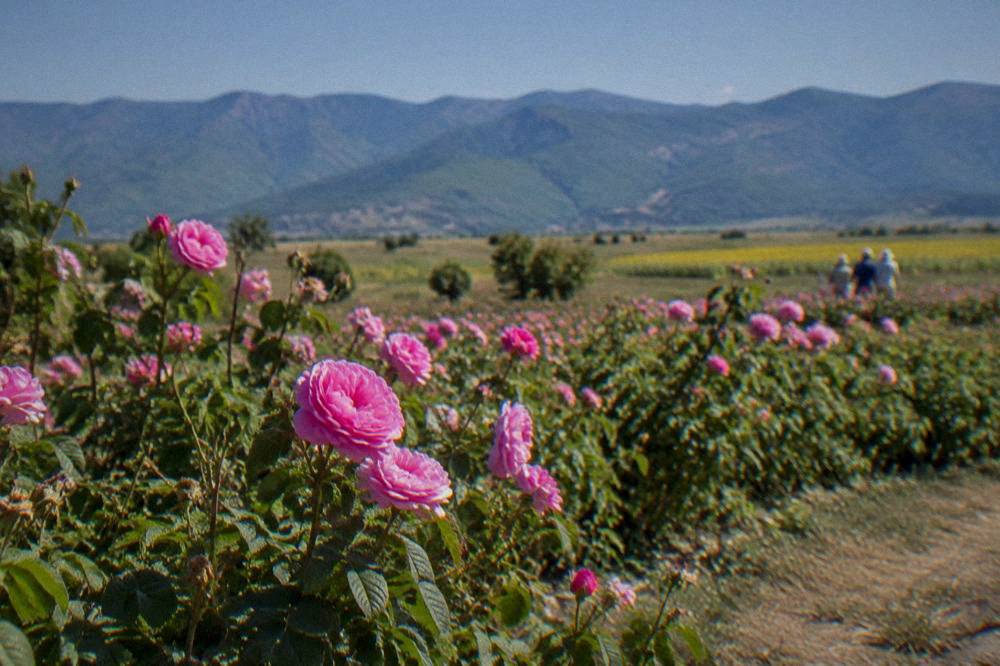
The drive from Plovdiv to the Black Sea coast crosses the whole of the Thracian plain eastward, and it is a long single-day run rather than a scenic one: the road passes Stara Zagora and the Rose Valley country around Kazanlak, and the sensible version breaks it with a stop at the Thracian tomb country or the Starosel temple rather than driving it in one push.
What the plain offers is archaeology rather than scenery. The Starosel Thracian cult complex sits in the hills north of the road, though its pre-euro ticket figures mean no reliable current price can be printed here, so confirm on arrival. Kazanlak anchors the Rose Valley, whose harvest season falls in late spring, and the Valley of the Thracian Kings spreads its burial mounds across the same country. The site's Kazanlak and the Rose Valley page and the Starosel page cover both in detail. The wider set of guides lives on Plovdiv Travel Guide.
The coast itself lies beyond the scope of Plovdiv-based research, so this page stays deliberately quiet about which coastal town to choose: confirm locally or in a coast-specific guide. What can be said is that the return leg works best as a loop, either back across the plain to Plovdiv or north and west toward Veliko Tarnovo, which the site covers on its own page, and then on to Sofia for the flight home.
When Is The Best Time Of Year For A Road Trip Around Plovdiv?
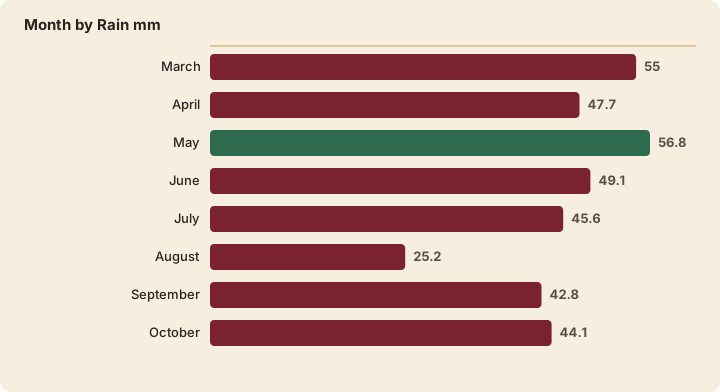
Late May through September is the window for a road trip around Plovdiv: ERA5 reanalysis for 1991 to 2020 shows mean daily highs of 21.9 C in May rising to 28.6 C in August, with rainfall at its modelled low of 25.2 mm in August, while January's mean high of 5.9 C and mean low of minus 2.6 C make winter driving in the Rhodopes a different kind of trip entirely. The trade-off is crowds and heat in July and August against uncertain roads in the shoulder months.
The full monthly picture from the modelled normals:
| Month | Mean high C | Mean low C | Rain mm |
|---|---|---|---|
| March | 12.1 | 2.1 | 55.0 |
| April | 17.1 | 6.4 | 47.7 |
| May | 21.9 | 11.5 | 56.8 |
| June | 25.9 | 15.4 | 49.1 |
| July | 28.2 | 17.9 | 45.6 |
| August | 28.6 | 18.1 | 25.2 |
| September | 23.8 | 13.8 | 42.8 |
| October | 18.1 | 8.8 | 44.1 |
May carries the highest modelled monthly rainfall of the year at 56.8 mm, and March follows at 55.0 mm, so spring trips should plan for wet days, which the city handles well thanks to its museums. The best time to visit Plovdiv page extends this analysis, and the Plovdiv weather page carries the full monthly table.
The calendar matters as much as the climate. Opera Open runs at the Ancient Theatre from 23 June to 9 September 2026, and the autumn Kapana Fest ran across the first two weekends of October 2026. A road trip timed to either gets a city festival on top of the driving.
Where Should You Sleep And Eat On A Plovdiv Road Trip?
Sleep in Plovdiv's centre for the city nights, since every core sight is walkable and the car can rest, then shift to Smolyan or Pamporovo for the Rhodope nights and a coastal town for the sea leg, and treat food as part of the route: the Thracian valley around Plovdiv is Bulgarian wine country, and the Rhodope leg is where the local cuisine shifts to mountain dishes.
The eating layer is easier to plan than the sleeping one. Plovdiv's restaurant and food pages cover the city, and the Bulgarian wine page explains the local grapes, Mavrud and Rubin among them, that the Thracian valley grows. The Brestovitsa wine region sits close enough to Plovdiv to be a short drive on a city day, and wineries there offer tastings that should be booked ahead. The what to eat in Plovdiv page lists the dishes worth ordering, from shopska salad to kavarma, and the Rhodope leg adds its own mountain specialties that the Wonderful Bridges cuisine tour samples.
| Item | Figure | Note |
|---|---|---|
| Currency | Euro | Since 1 January 2026 |
| City bus e-ticket in Plovdiv | 0.50 euro | For the days the car rests |
| Espresso in the city | Around 2 euro | Crowd-reported average |
| Mid-range meal for two | Around 30 to 40 euro | Crowd-reported average |
| Emergency number | 112 | Free, EU-wide |
| Plugs | Type C and F, 230 V | Same as most of Europe |
Do You Even Need A Car For A Trip Based In Plovdiv?
You need a car for the Rhodopes, the Thracian-valley wineries and the run to the Black Sea, but not for Plovdiv itself or the classic Bachkovo and Asen's Fortress stops, which minibuses and private day trips cover, so the honest answer is a partial yes: hire the car for the mountain and coastal legs and let it rest during the city days. The site's Plovdiv car rental page covers the hire side, and no rental price is printed here.
For the car-free days, the alternatives are real. The Koprivshtitsa full-day tour from Sofia suits travellers who start or end in the capital, since the town sits on the Sofia side of the country, and its six house museums cost about 10 euro combined on a self-guided visit. The Sofia day trips hub gathers the capital-based options, and the Sofia to Plovdiv page covers the transfer itself, with direct trains taking about 2 hours 40 to 3 hours between the two cities.
For travellers who want a handled version of the southern leg, three products cover the bases, from a private monastery-and-fortress trip to an audio-guided city walk and a Koprivshtitsa full-day option:
Common Questions About A Bulgaria Road Trip From Plovdiv
How many days do I need for a Bulgaria road trip starting in Plovdiv?
Plan on seven days as a minimum and nine or ten as the comfortable version: two or three nights in Plovdiv, one or two in the Rhodopes, and two or three on the Black Sea coast, with driving legs of half a day each.
Is Plovdiv a good base for a road trip in Bulgaria?
Yes, because it sits between the Rhodope Mountains to the south, the Thracian valley and Sofia to the west, and the road east to the Black Sea, so a loop from Plovdiv wastes less time than one based in the capital at the country's western edge.
Can I visit Bachkovo Monastery without a car?
Yes. Minibuses from Plovdiv's Rodopi bus station take 35 to 45 minutes for the roughly 30 km trip, and entry to the working monastery is free.
Does the Plovdiv Old Town combined ticket include the basilicas?
No. The combined ticket covers up to five Old Plovdiv sites but excludes the Small Basilica and the Bishop's Basilica, which are priced separately, with the Bishop's Basilica at 7.57 euro for an adult single ticket.
Do I need a car in Plovdiv itself?
No. The Old Town, Kapana, the Roman sites and the museums are all walkable from a central base, the Old Town is cobbled and steep, and a city bus e-ticket costs 0.50 euro, so the car earns its keep only on the mountain, valley and coastal legs.
A final planning note ties the route together: the loop that works best starts and ends with the city, gives the Rhodopes the middle, and treats the Black Sea as the finish line, and the Plovdiv itinerary hub holds the shorter, city-only versions if the driving days have to shrink.