Sahat Tepe: The Clock Tower Hill
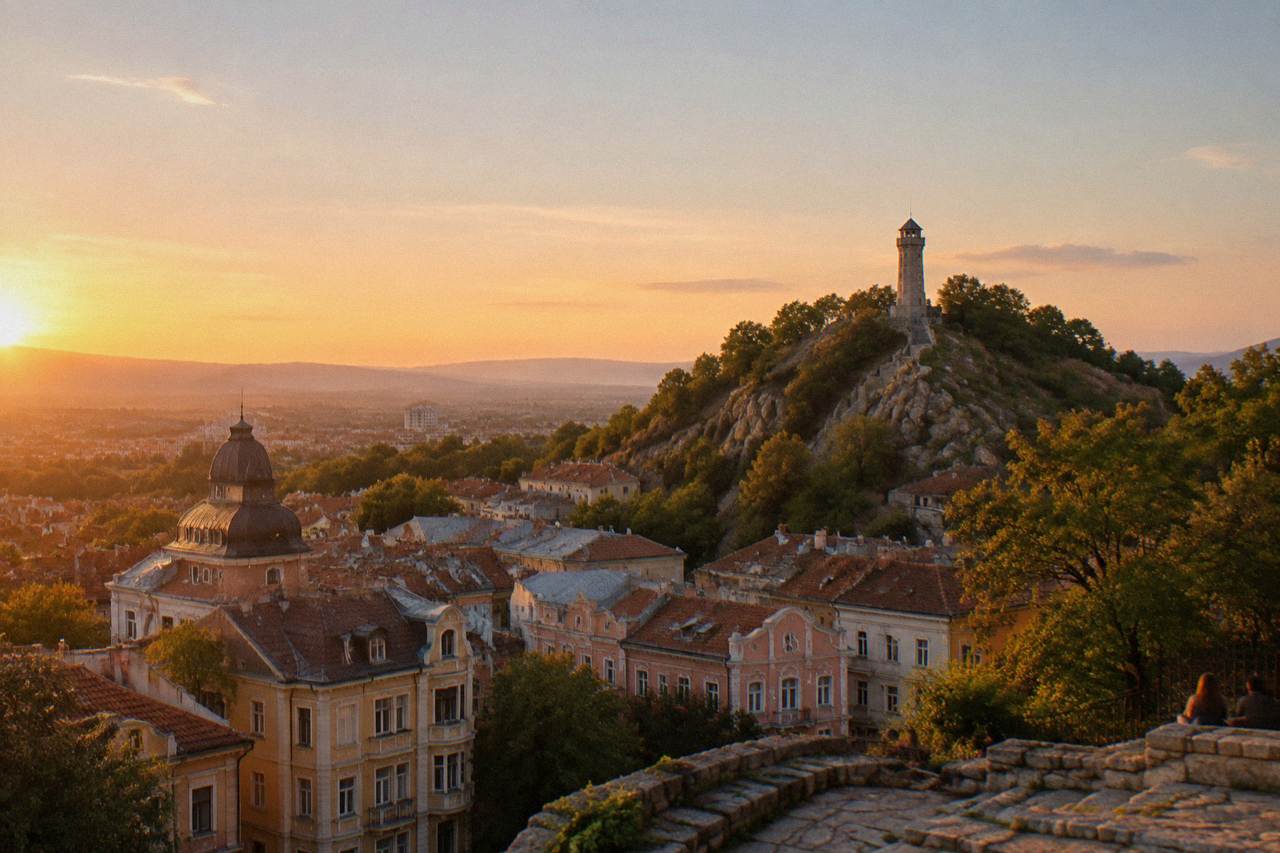
Sahat Tepe, the clock tower hill in the centre of Plovdiv, southern Bulgaria, rises 227 m over the Old Town, the Roman Stadium and the Dzhumaya Mosque, and it costs nothing to climb.
Short answer
Sahat Tepe, or Danov Hill, is one of the six hills of Plovdiv. It stands 227 m high, carries the city's historic clock tower, and is free to visit at any hour, a few minutes' walk from the Roman Stadium and Dzhumaya Mosque.
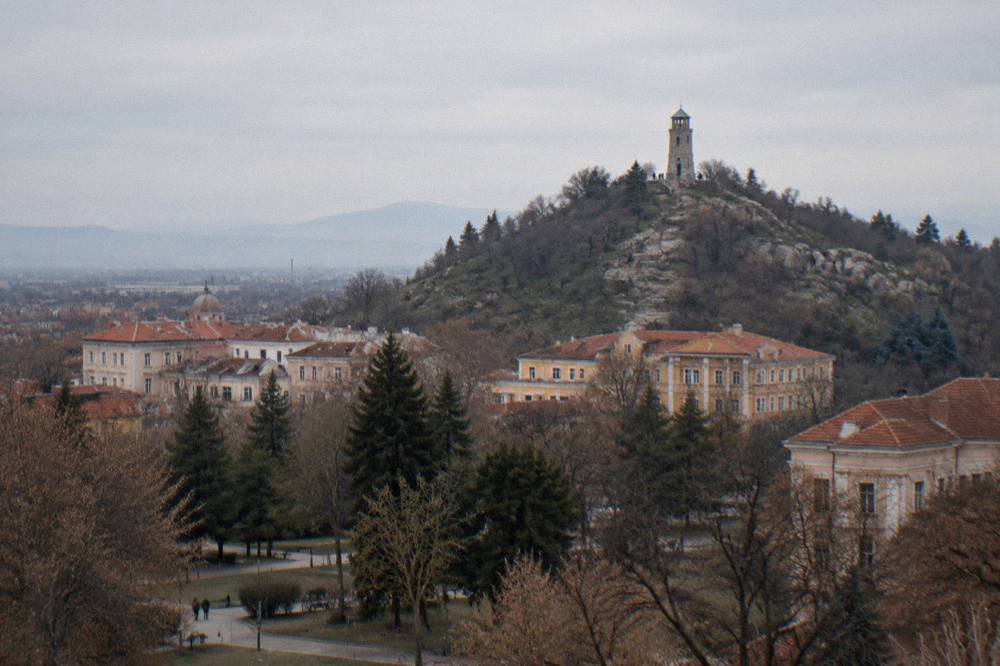
Sahat Tepe, known in Bulgarian sources as Danov Hill, is one of the six hills around which Plovdiv in southern Bulgaria is built, and at 227 m it is the third highest of them. The city's tourism site lists it among the six heights that survived into the present: there were seven until Markovo Tepe was partly quarried away in the 1930s, leaving six intact. The hill carries the landmark clock tower that gives it its everyday Turkish-derived name, and unlike nearly every ticketed sight in the Old Town below it, the hill itself is a public open space with no fence, no booth and no closing time.
The reward for the short climb is a view that takes in the whole lowland bowl of the city: the Three Hills of the Old Town to the south, the flat plain of the Maritsa valley, and the Rhodopes on the horizon.
Where Is Sahat Tepe In Plovdiv And What Exactly Is It?
Sahat Tepe sits directly north of the Old Town in central Plovdiv, between the main pedestrian street and the Dzhumaya Mosque, and it is the hill formally listed as Danov Hill, 227 m high, one of the city's six surviving hills. The municipal relief page on visitplovdiv.com names all six with their heights, and Danov Hill (Sahat Tepe) is third on that list at 227 m, behind Youth Hill (Dzhendem Tepe) at 285.5 m and the Hill of the Liberators (Bunardzhika) at 265 m. The name Sahat Tepe comes from the clock tower that stands on the summit, "sahat" being the old Ottoman-era word for clock, and that is the name locals use in practice.
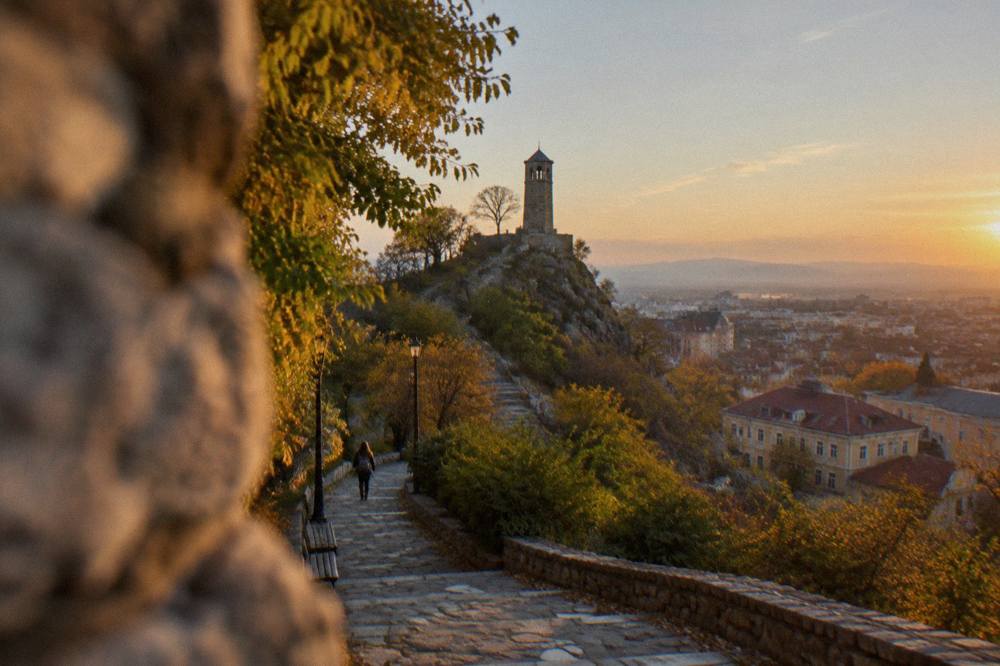
The hill matters to the shape of a visit because it is the closest high point to the main pedestrian axis. The Roman Stadium lies at its foot, the Dzhumaya Mosque stands a short walk to the south, and the Kapana creative district begins just beyond the mosque. In practical terms, a visitor walking the main street from the central square will pass the stadium's excavated northern end and can detour up the hill in a matter of minutes.
The six hills, as the city lists them, are these:
| Hill | Also called | Height |
|---|---|---|
| Youth Hill | Dzhendem Tepe | 285.5 m |
| Hill of the Liberators | Bunardzhika | 265 m |
| Danov Hill | Sahat Tepe | 227 m |
| Dzhambaz Tepe | part of the Three Hills | 212 m |
| Nebet Tepe | part of the Three Hills | 207 m |
| Taksim Tepe | part of the Three Hills | 195 m |
The heights come from visitplovdiv.com's relief page. Markovo Tepe, the seventh hill, was partly destroyed by quarrying in the 1930s and is absent from the list, which is why any guide that tells you Plovdiv has seven hills today is working from an old map.
A guided walk is one way to put the hill in context with the rest of the centre, and the site's own tour pages cover several options, including a Jewish heritage walk of Plovdiv whose route runs through the streets at the hill's base.
Does Sahat Tepe In Plovdiv Cost Anything To Visit?
No, Sahat Tepe is a free public hill with no ticket, no gate and no posted hours, according to the city listings, which treat it as an open public space in the same category as Hisar Kapia and the Bunardzhik slope. The same is true of the view itself and of the park paths on the slopes, all of which sit outside every ticketing scheme in the city. That makes it one of the genuinely free high points in a city whose main archaeological sites are all ticketed: the Old Plovdiv institute sells a one-site ticket at 3.58 euro for adults and a combined ticket covering up to five sites at 10.74 euro, and none of that applies here. The only money a visitor is likely to spend on Sahat Tepe is a coffee on the way down.
For planning, it helps to know which sights around the hill are free and which are not:
| Sight near Sahat Tepe | Entry |
|---|---|
| Sahat Tepe hill and clock tower | Free, open public space |
| Roman Stadium sphendone (northern end) | Free to view |
| Dzhumaya Mosque | Free, modest dress, avoid prayer times |
| Nebet Tepe | Free, open-air complex |
| Ancient Theatre of Philippopolis | 3.58 euro adult one-site ticket |
| Roman Stadium 3D hall | 3.68 euro adult |
| Bishop's Basilica | 7.57 euro adult, priced separately |
The Old Plovdiv combined ticket covers up to five sites but excludes the Small Basilica and the Bishop's Basilica, and the validity period of that combined ticket is not stated on the institute's page, so check it at the counter before relying on it across two days.
If a guided visit appeals, the site features a dedicated Old Town walking tour page with a fuller comparison of the options.
What Can You See From The Top Of Sahat Tepe In Plovdiv?
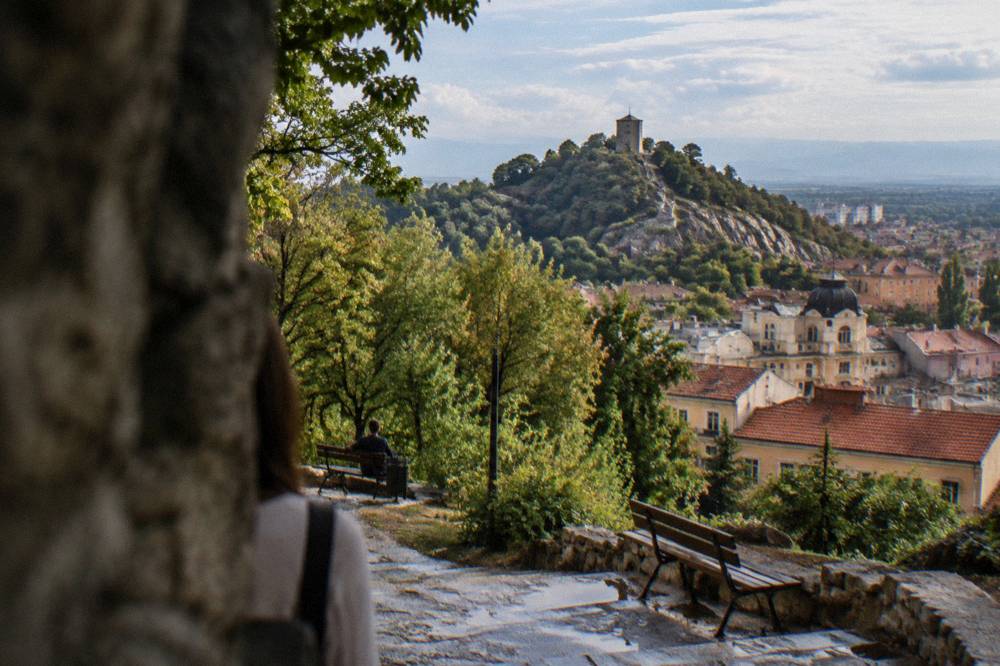
From the summit of Sahat Tepe the view spans the whole of central Plovdiv: the Three Hills of the Old Town, the Dzhumaya Mosque and the Roman Stadium immediately below, the plain of the city spreading north to the Maritsa river, and the Rhodopes on the southern horizon. At 227 m the hill is high enough to read the city's layout at a glance but low enough that the climb is gentle. The position between the main street and the Old Town makes it a natural midpoint on a walking circuit, and the city's listings treat it as a viewpoint rather than a museum, which is exactly how it behaves.
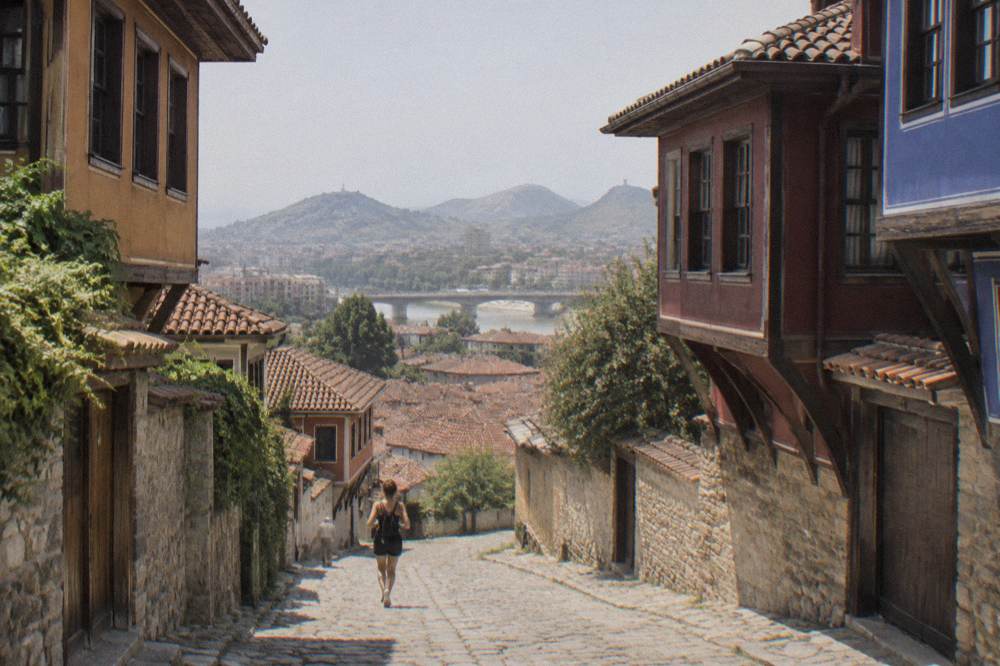
The closest landmark below is the Roman Stadium, whose northern end, the sphendone, was unearthed in the 1970s and is the only part accessible today: the rest of the structure still lies beneath the modern main street, as the Old Plovdiv site's own page explains. The stadium was built in the 2nd century AD on the model of the Stadium at Delphi and held up to 30,000 spectators, which the tourism site states plainly. Beyond it, the Dzhumaya Mosque, the second-largest mosque in Bulgaria by built area at about 1,500 sq m per the city's churches page, anchors the edge of the pedestrian zone. Its construction date is not settled even in official sources, which give a range of conflicting years rather than one, so no single year should be trusted.
To the south the Three Hills rise: Nebet Tepe, Dzhambaz Tepe and Taksim Tepe, with the Ancient Theatre cut into the slope between them. The theatre was built in the 90s of the 1st century AD and retains 28 concentric rows of marble seats, the figure the tourism site prefers to any seat-capacity number. The site's pages on Nebet Tepe and the Ancient Theatre cover both in detail.
A short walking circuit that uses Sahat Tepe as its hinge looks like this:
| Stop | What it is | Ticketed |
|---|---|---|
| Roman Stadium sphendone | 2nd-century AD stadium's excavated northern curve | Free viewing |
| Dzhumaya Mosque | Working Ottoman-era mosque | Free |
| Sahat Tepe summit | Clock tower and city viewpoint | Free |
| Hisar Kapia | Old Town gate | Free |
| Nebet Tepe | Open-air archaeological complex | Free |
Two of those stops, the stadium's sphendone viewing and Nebet Tepe, are free in the way the hill is free; the mosque asks only for modest dress and visits outside prayer times.
When Is The Best Time To Climb Sahat Tepe In Plovdiv?
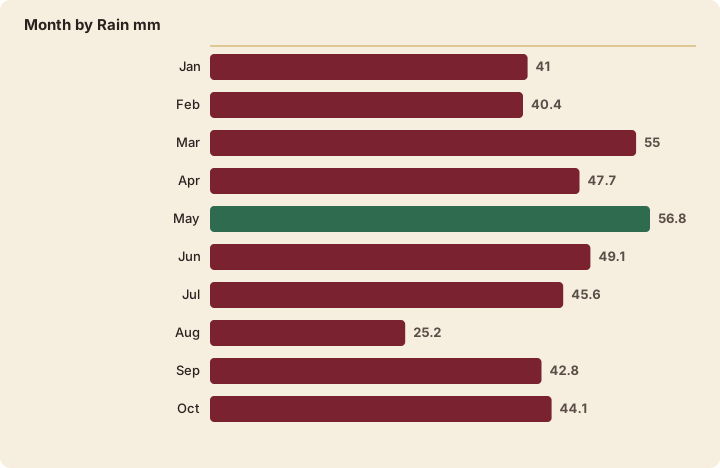
The hill is climbable year round and at any hour, but the ERA5 reanalysis for Plovdiv, 1991-2020, shows the comfortable climbing months are April, May, September and October, with mean daily highs between 17.1 and 21.9 C in spring and 18.1 to 23.8 C in early autumn. July and August bring mean daily highs of 28.2 and 28.6 C, which pushes sensible climbing toward the morning or evening, and January's mean daily low of -2.6 C means ice on the paths after a cold night. Rain is modest by European standards: May averages 56.8 mm, March 55.0 mm, and August just 25.2 mm across the modelled normals.
| Month | Mean high C | Mean low C | Rain mm |
|---|---|---|---|
| Jan | 5.9 | -2.6 | 41.0 |
| Feb | 8.0 | -1.1 | 40.4 |
| Mar | 12.1 | 2.1 | 55.0 |
| Apr | 17.1 | 6.4 | 47.7 |
| May | 21.9 | 11.5 | 56.8 |
| Jun | 25.9 | 15.4 | 49.1 |
| Jul | 28.2 | 17.9 | 45.6 |
| Aug | 28.6 | 18.1 | 25.2 |
| Sep | 23.8 | 13.8 | 42.8 |
| Oct | 18.1 | 8.8 | 44.1 |
| Nov | 12.3 | 3.8 | 39.7 |
| Dec | 7.0 | -0.8 | 49.3 |
These are modelled normals from the ERA5 reanalysis grid, not a station record, and reanalysis smooths urban heat, so a July afternoon on the paving of the main street will feel warmer than 28.2 C. The practical reading is simple: in summer, climb before midday or after the shadows lengthen; in winter, go mid-afternoon when the ice has softened; in spring and autumn, any time works.
The events calendar also shapes a visit. Opera Open ran 23 June to 9 September 2026 at the Ancient Theatre, Kapana Fest's autumn edition ran 2 to 4 and 9 to 11 October 2026, and the Plovdiv Jazz Fest fall edition runs 6 to 8 November 2026, all per the tourism site's own listings. On performance evenings the whole central grid fills, and the hill is a free vantage point above the crowd noise. The site's best time to visit Plovdiv guide works through the seasons in more depth.
How Does Sahat Tepe Fit Into A Day In Plovdiv?
A sensible day puts Sahat Tepe early or late: climb it after the Roman Stadium and before the Old Town, or save it for sunset over the Three Hills, because the hill is free, always open and sits exactly between the two halves of a standard Plovdiv walking day. The site's Plovdiv in one day itinerary already follows that spine: main street, stadium, Old Town hill, and the evening back down through Kapana. Inserting the clock tower hill costs minutes and no money.
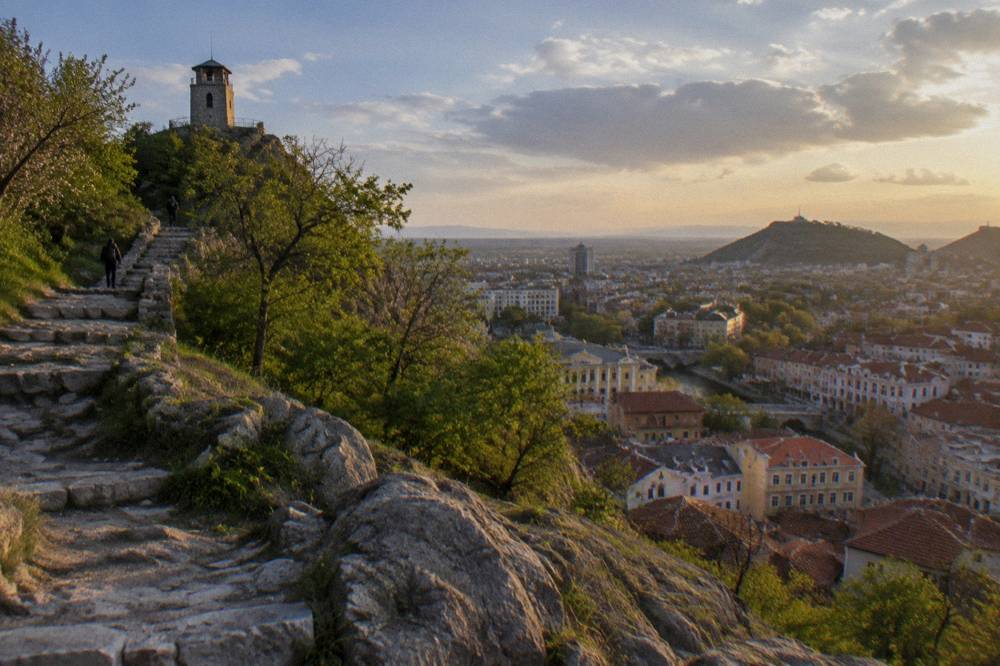
The reason the hill works as a hinge is geography. The main pedestrian street runs east to west along the line of the buried Roman Stadium; the Old Town climbs the Three Hills to the south; Sahat Tepe rises just to the north of the mosque that marks the stadium's western end. Nothing ticketed interrupts the sequence, and the two museum clusters that do charge, the Old Town houses and the basilicas, sit on the far side of the walk. The Ethnographic Museum in the Kuyumdzhiev House, for instance, is closed on Monday and charges about 3.07 euro for adults, so it belongs to the Old Town half of the day rather than the hill.
A rough ordering for a full day:
| Part of day | Where | Notes |
|---|---|---|
| Morning | Main street and Roman Stadium | Sphendone free; 3D hall ticketed |
| Late morning | Sahat Tepe | Free climb, city orientation |
| Midday | Kapana for lunch | Public streets, free to wander |
| Afternoon | Old Town, Nebet Tepe, Ancient Theatre | Ticketed sites, hours below |
| Evening | Hisar Kapia and dinner | Public gate, always open |
Note that the Old Plovdiv sites keep seasonal hours: April to October daily 9:30 to 18:00, November to March daily 9:00 to 17:30, with a lunch break from 12:30 to 13:00 at the Ancient Theatre. Those hours never bind the hill itself, which is the point of using it as filler: it absorbs whatever time the museums cannot.
What Is Close To Sahat Tepe In Plovdiv For A Longer Walk?
Within a short walk of Sahat Tepe stand the Dzhumaya Mosque, the Roman Stadium, Hisar Kapia, the whole Old Town house cluster, Kapana, and the churches of the central grid, a concentration the site's attractions section covers one landmark at a time. The Dzhumaya Mosque and Hisar Kapia sit closest. The Balabanov House and Hindliyan House are uphill in the Old Town under the one-site ticket. Kapana, whose name means "The Trap" and refers to its maze of narrow streets, spreads west of the mosque, free and open.
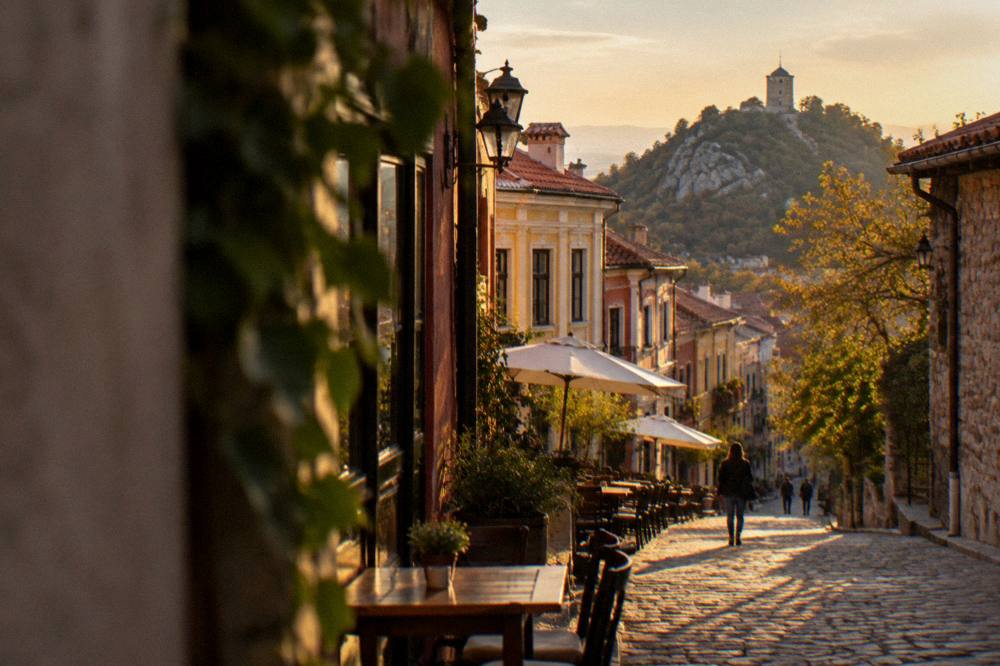
For visitors with more than a day, the other hills extend the walk. The Alyosha monument on Bunardzhika, unveiled in 1957, is the next summit north, and the Danov Hill and Youth Hill guide on this site covers the pair together. Beyond the city, the site's day-trip pages reach the Rhodope mountains and Bachkovo Monastery, whose entry is free, per the tourism listings.
Practical costs for a day built around the hill stay low. The city bus e-ticket is 0.50 euro, an espresso runs about 2 euro per crowd-reported price data, and the only compulsory spend is a ticket if you choose to enter the theatre or a museum house. A tourist tax may be charged by your accommodation, but its 2026 euro rate is not published in the municipal sources, so confirm at booking.
Is Sahat Tepe In Plovdiv Worth The Climb?
Yes, for the simple reason that it is the only free, always-open high point sitting directly on the main walking route, and it orients you for everything else: from 227 m you can see the Old Town, the stadium line, the mosque and the river plain in one turn of the head. The city's own listings treat the hill as public space in the same breath as Bunardzhik and Hisar Kapia, and the only costs involved are the optional ones below it. If a visit is short and the weather holds, the climb is a better use of twenty minutes than another museum.
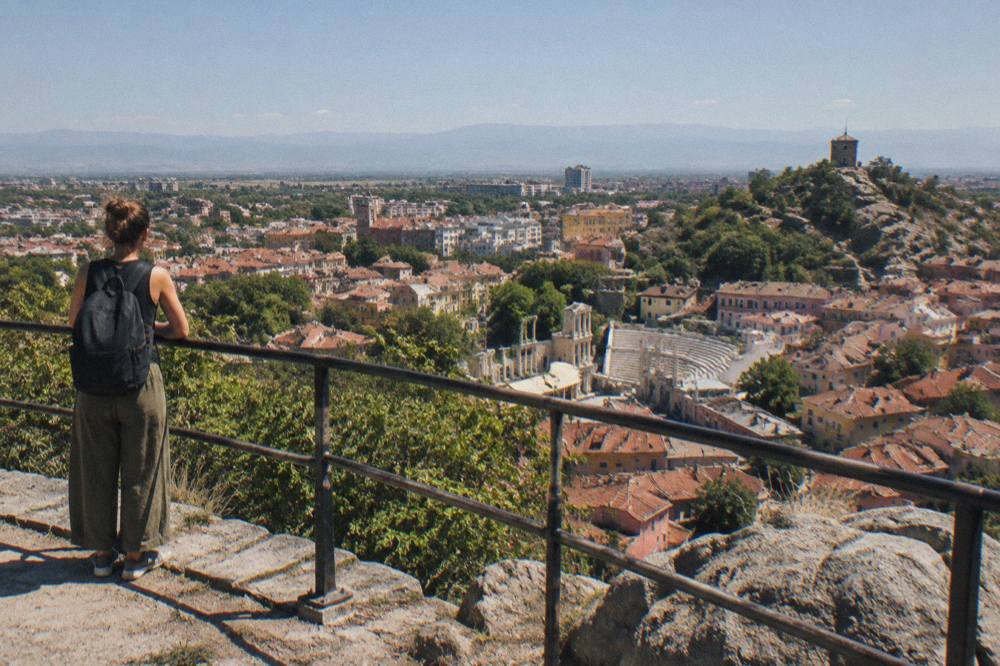
The honest limits are these. The hill's value is the view and the position, and it delivers both without a queue, a ticket or a closing time, which in a city whose main sites keep lunch breaks and Monday closures is worth planning around.
Common Questions About Sahat Tepe In Plovdiv
Is Sahat Tepe in Plovdiv free to visit?
Yes. The hill is a public open space with no ticket, no gate and no posted hours, the same status the city's listings give to Bunardzhik and Hisar Kapia. Only the museums and the Ancient Theatre below it charge entry.
How high is Sahat Tepe in Plovdiv?
Danov Hill, as the municipal relief page names it, stands 227 m, making it the third highest of Plovdiv's six surviving hills after Youth Hill at 285.5 m and the Hill of the Liberators at 265 m.
When was the clock tower on Sahat Tepe built?
No single construction year is settled in the official sources, and secondary sources disagree. Confirm any date you read elsewhere against the city's own materials.
How long does it take to climb Sahat Tepe in Plovdiv?
The hill sits directly beside the main pedestrian street, and the climb is a short one on park paths. The city sources give no official walking time, so plan it by eye: it is a detour, not an expedition.
What can you see from Sahat Tepe in Plovdiv?
The summit looks over the Roman Stadium, the Dzhumaya Mosque, the Three Hills of the Old Town including Nebet Tepe and the Ancient Theatre, and the plain of the city toward the Rhodopes on clear days.
Does Plovdiv have six or seven hills?
Six. There were seven until Markovo Tepe was partly destroyed by quarrying in the 1930s, as the city's own relief page records, and the six that remain are Youth Hill, the Hill of the Liberators, Danov Hill (Sahat Tepe), Dzhambaz Tepe, Nebet Tepe and Taksim Tepe.
For everything else the hill overlooks, the Plovdiv Travel Guide home page carries the full run of sight, food and day-trip pages, each with its own ticket and hours detail.
